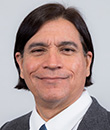
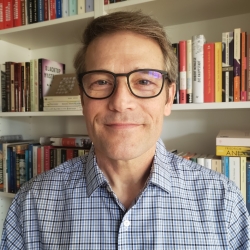
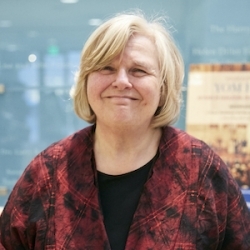
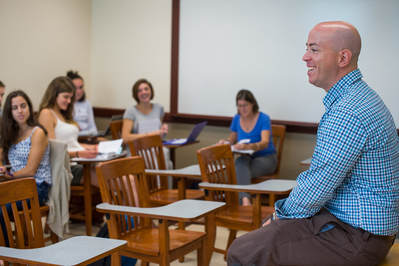
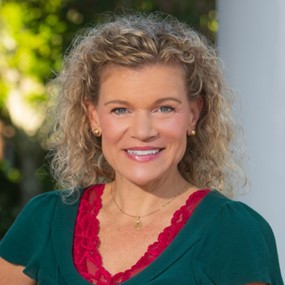
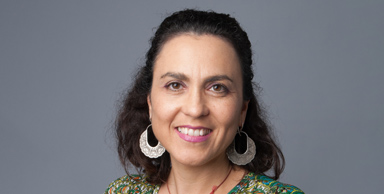
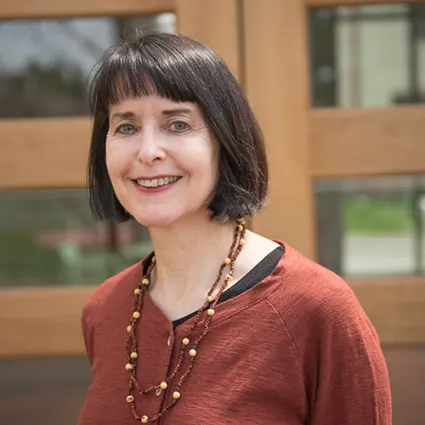
Fatima Serra is a Professor in the Department of World Languages and Cultures at Salem State University. She holds a BA in Anglogermanic Philology from Universidad de Oviedo and a PhD in Hispanic Literatures from UMASS Amherst. Her academic career spans teaching undergraduate and graduate courses, coordinating Spanish study abroad programs, and developing curriculum. Selected Courses : SPN 202, SPN 351, SPN 402, SPN 405, SPN 415A, SPN 480N, SPN 706, SPN 710, WLC 190H Education : BA - Universidad de Oviedo; PhD - UMASS Amherst Her research focuses on Contemporary Spanish Literature , Women's Writings , Transnational Cinema , and Spanish as a Foreign Language . She explores themes like gender representation , post-crisis cultural narratives , Basque identity , and Maghrebi intersectionality in Spanish and Latin American media. Recent publications analyze Eva G. Sáenz de Urturi's noir fiction, Katixa Agirre's feminist critique of patriarchy, and Dolores Redondo's narrative innovations. Her work intersects with transnational cinema , historiography , and digital learning methodologies .
Vincent Perez is an Associate Professor of English at the University of Nevada, Las Vegas (UNLV) and an active member of the Alliance of Latino Faculty. His scholarship centers on U.S. Latina/o literary studies, Race and Ethnic Studies, and Hemispheric American Studies, with particular attention to how literary texts function as archives of cultural memory and counter-history. Education: B.A. in Spanish Literature, University of California, Santa Cruz M.A. in Latin American Studies, Stanford University Ph.D. in Modern Thought and Literature, Stanford University Dorothy Danforth Compton Fellow, Stanford University Research Interests: Professor Pérez’s research interrogates the ways in which Latino/a literary narratives preserve and contest dominant historical accounts. His current project examines early twentieth-century Latino/a immigration narratives, while his monograph Remembering the Hacienda explores the intersection of nineteenth-century ranch economies and Mexican American cultural memory in the Southwest. Publications Trajectory: Across more than two decades, Pérez has produced a steady stream of journal articles and book chapters that collectively chart the evolution of Chicano/a and broader Latino/a literary criticism. Thematic threads include the politics of memory, the symbolic weight of land and community, and the interplay between modernity and historical narrative. Scientific Awards: Dorothy Danforth Compton Fellowship, Stanford University Teaching & Mentorship: At UNLV he regularly teaches undergraduate courses in American and Latino/a literature and offers graduate seminars in comparative and Hemispheric American literature. While specific advisees are not listed, his engagement with both levels underscores a commitment to mentoring emerging scholars in Latina/o literary studies. Laboratory & Research Groups: No dedicated laboratory or research group is mentioned; his research is primarily archival and textual, situated within the Department of English.
Joanne Burnett is a Professor of French and Second Language Acquisition at the University of Southern Mississippi, affiliated with the School of Social Science and Global Studies and the World Languages department. Her work bridges qualitative research in second language pedagogy, French cultural studies, and digital humanities. Education Ph.D. in Second Language Acquisition, Pennsylvania State University (1997) M.A. in Second Language Acquisition, University of Illinois at Urbana-Champaign (1986) B.A. in English Literature minor, Central Methodist University-College of Liberal Arts and Sciences (1984) Burnett’s research focuses on innovative approaches to second language education, including technology integration, online learning, and cross-cultural analysis. She has contributed to scholarship on Francophone film, literature, and media, alongside translating works on environmental conservation in Madagascar and colonial histories in French Louisiana and Guadeloupe. Her professional activities include coordinating summer study abroad programs in Paris and teaching French language, culture, and pedagogy at all levels within the Master of Arts in the Teaching of Languages program. Courses taught include French in the Americas , French and Francophone Film , The Life and Times of Marie Antoinette , and French Cuisine . Joanne Burnett’s office is located in Liberal Arts Building 452, Hattiesburg, and she can be reached via email at Joanne.Burnett@usm.edu. She is proficient in English (Native), French (Full Professional), Spanish (Limited Working), and Dutch (Elementary).
Christian Kroll is an Associate Professor of Spanish and Humanities at the Spanish Department, Reed College , where he has worked since 2014. He holds a PhD in Romance Languages and Literatures (Spanish) from the University of Michigan (2012) and a Master’s in Urban and Regional Planning from the same institution (2006). Prior to academia, he worked as a practitioner architect at Universidad Francisco Marroquín (2000). Education : PhD in Romance Languages and Literatures (Spanish), University of Michigan, 2012 MA in Urban and Regional Planning, University of Michigan, 2006 BA in Architecture (Licenciatura en Arquitectura), Universidad Francisco Marroquín, 2000 Kroll specializes in 20th- and 21st-century Latin American literature and culture, with a focus on contemporary Central America, Mexico, and Peru. His research critically interrogates liberal humanism’s role in structuring domination, neoliberal rationality’s impact on subjectivity, and the intersections of culture, politics, and space production. Key themes include state violence, resistance discourses, and post-anthropocentric thought. His published work spans peer-reviewed articles and academic reviews, emphasizing neoliberalism’s effects on memory, trauma, and collective action. Topics range from Zapatismo and Guatemalan postwar literature to critiques of sovereignty and the ethical dimensions of representing violence. He teaches courses on posthumanism, space and power, Latin American revolutions, and critical theory frameworks.
Dane Johnson is a Professor and Undergraduate Coordinator in the Department of Comparative and World Literature at San Francisco State University, where he has served since 1995. His academic home resides within the humanities division of the university, focusing on cross-cultural literary analysis across the Americas. Education: Ph.D. in English and Comparative Literature, Stanford University (1994) B.S.F.S. in International Relations, Georgetown University (1985) Research Focus: Professor Johnson specializes in 19th-20th century multicultural literatures of Latin America and the United States through a cultural studies lens, examining the interplay between literary form and identity construction. His expertise centers on canonical authors including William Faulkner, Gabriel García Márquez, and Toni Morrison, while maintaining deep engagement with theories of literary value, canonization processes, censorship mechanisms, and world literature pedagogy. His work consistently bridges national literary traditions to explore transnational identity politics. Scholarly Trends: His publication record reveals a sustained investigation into how geographical re-mapping intersects with literary representation, particularly regarding the Americas. By juxtaposing authors across national boundaries (especially U.S. Southern and Latin American traditions), he analyzes how political contexts like dictatorships shape narrative forms and how literary value emerges through pedagogical frameworks. His work demonstrates consistent attention to multicultural perspectives while deconstructing cosmopolitan narratives through spatial and identity-based analyses. Academic Engagement: Beyond research, Professor Johnson actively develops curriculum such as his course 'Typical American': Multicultural Literatures of the Americas, 1492 to the present, reflecting his commitment to world literature pedagogy. His trilingual capabilities (English, Spanish, French) directly inform his cross-cultural scholarship and teaching practice.
Kitty Millet is a Professor of Jewish Studies and Department Chair of Comparative and World Literature at San Francisco State University. She teaches courses including Holocaust & Genocide, Holocaust & Law, Kabbalah & Jewish Mysticism, Judaism, Religion and Text, Holocaust and Literature, Jewish Literatures of the Americas, and European Jewish Literatures. Her academic leadership extends to serving as Chairperson of the ICLA Research Committee on Religion, Ethics and Literature and as Editor of Comparative Jewish Literatures. Ph.D., Comparative Literature, University of Minnesota (1996) M.A., Comparative Literature, University of Minnesota (1989) B.A., Comparative Literature, UCI (1986) Millet's research focuses on Holocaust and Genocide Studies, Kabbalah, testimonio in Latin American Jewish Narratives, Jewish Messianism, Secular Jewish Studies, Modern Jewish Thought, and Comparative Jewish Literatures. Her work explores the intersection of Jewish thought with literary theory, examining how mystical traditions transform literature's ontology and function in the modern world. She investigates the victim experience across different historical contexts of persecution, challenging conventional comparative frameworks. Her publications reveal a consistent engagement with Holocaust representation, Jewish mysticism, and comparative victim experiences. Millet's work moves beyond the 'continuity thesis' to examine victim experiences on their own terms, while simultaneously exploring how Kabbalistic thought transforms literary aesthetics and messianic drives. Her scholarly approach bridges Jewish Studies, literary theory, and historical analysis. Kabbalah and Literature (2024) Derrida's Marrano Passover (2024) Jewish Imaginaries of the Spanish Civil War (2024) Fault Lines of Modernity (2018) The Victims of Slavery, Colonization and the Holocaust (2017) Millet has advised on numerous scholarly projects and served as editor for significant publications in Jewish literary studies. Her work on Deleuze and queer theory, particularly 'A Thousand Queer Plateaus,' demonstrates her interdisciplinary approach that connects philosophical thought with Jewish studies. She has developed innovative courses that examine the intersections of law, literature, and Holocaust studies, as well as Jewish mystical traditions in global literary contexts.
Carla F Burns is an Associate Professor in the Department of Modern and Classical Languages at George Mason University. She specializes in Latin American colonial and transatlantic studies, with a focus on religious women's roles in society and Spanish heritage language education. Ph.D. in Spanish from the Catholic University of America M.A. in Spanish from George Mason University Her research includes a paleographic transcription project for an 18th-century religious manuscript from Mexico City. She also serves as Faculty Advisor for the Hispanic Culture Review , a bilingual graduate literary journal. Contact: cburns1@gmu.edu | Office: Horizon Hall 5137 | Office Hours: Tuesdays and Thursdays 1:30–3:00 PM or by appointment
Daniel Chávez is an Associate Professor at the Department of Languages, Literatures and Cultures, University of New Hampshire. He specializes in Latin American and LatinX studies, with expertise in contemporary Mexican and Nicaraguan literature, visual culture, film studies, and new media. Education B.S. in Biochemical Engineering, Instituto Tecnológico y de Estudios Superiores de Monterrey (ITESM) M.A. in Spanish and Latin American Studies, Ohio University Ph.D. in Romance Languages, University of Michigan (with Film Studies certification) Research Interests focus on the intersection of Latin American literature, visual representation, and political discourse. He explores topics like Mexican film noir, transnational cultural production, graphic novels, and biopolitics in contemporary narratives. His work bridges literary analysis with visual media and critical theory. Publications span Mexican cinema, Nicaraguan political utopias, and intermediality in Latin American comics. His 2016 book on Nicaragua was recognized by Foreign Affairs, and his 2010 poetry award-winning collection reflects his creative scholarship. Teaching includes courses on Hispanic literature, film history, Latin American civilization, and advanced Spanish language studies. He has taught at multiple institutions, including University of Oregon, University of Virginia, and Vassar College. Scientific Awards Efraín Huerta National Poetry Award (2010) Foreign Affairs "Best of Books of 2016" recognition Principal Investigator for UNH-funded Spanish Spring Workshops (2018–2019)
Scott Weintraub is Professor of Spanish in the Department of Languages, Literatures, and Cultures at the University of New Hampshire, specializing in 20th-21st century Latin American literature with emphasis on Chilean experimental poetry and digital humanities. His scholarly profile integrates literary criticism, philosophy, and technological innovation across transnational contexts. His educational foundation includes: A.B. in Spanish from Dartmouth College Ph.D. in Spanish from Emory University (2006) Research focuses on Contemporary Latin American literature , particularly Chilean poetry (Martínez, Huidobro, Zurita), evolving into Digital humanities and Electronic literature . He examines literature's intersections with philosophy, science, and technology through avant-garde movements, with recent work analyzing digital poetics and computational literary production. His theoretical framework bridges Literary theory , Critical theory , and Cultural studies to explore concepts like authorship, futurity, and intermediality. Publication trends reveal sustained engagement with Latin American experimentalism, increasingly incorporating digital methodologies. His scholarship demonstrates thematic continuity in examining literary innovation while adapting to new media paradigms, particularly through electronic literature studies and digital textual analysis. Key recognition includes: Fulbright Specialist award (2019) Research leadership spans multiple funded initiatives including NECLAS Secretariat (2017-2019), Fulbright Specialist projects, and UNH Center for Humanities grants supporting the Puerto Rico Lab and Latin American Digital Poetics. His editorial direction of special journal issues and book series demonstrates collaborative scholarly infrastructure building. He actively shapes the field through presidency of the New England Council of Latin American Studies (NECLAS), senior editorship of A Contracorriente , and participation in the Puerto Rico Lab initiative, fostering interdisciplinary networks in Latin American literary and digital humanities scholarship.
Silvia López serves as Chair of Spanish and holds the Maxine H. and Winston R. Wallin Professorship in Spanish and Latin American Studies at Carleton College, where she has been a faculty member since 1997. Her educational qualifications include: MA from University of California-Santa Barbara PhD from University of Minnesota Professor López's research centers on Latin American literary traditions with specialized focus on Mexican urban narratives, as demonstrated by her course SPAN 376: Mexico City: The City as Protagonist. Her scholarly work spans: Latin American Literature Spanish Language Latin American Cultural Studies Urban Literary Representation Hispanic Identity Studies No scientific awards were documented in the source material. Information regarding graduate student supervision and research funding was not provided in the available text. Research facilities or collaborative teams were not mentioned in the institutional profile.
Jana Gutiérrez Kerns is an Associate Professor in the Department of World Languages, Literatures & Cultures at Auburn University , specializing in Spanish American poetry and U.S. Latino literature. She earned her PhD from the University of North Carolina - Chapel Hill, an MA from Middlebury College, and another MA from the University of Alabama at Tuscaloosa, with a BA from Southern Methodist University. Education : PhD (UNC-Chapel Hill), MA (Middlebury College, UA-Tuscaloosa), BA (Southern Methodist University) Her research focuses on Spanish American poetry, U.S. Latino literature, and literary translation as tools for cultural and racial reconciliation. Recent publications explore transatlantic dialogues, queer identities, and urban narratives in Latin American and Latino/a contexts. Notable scientific recognition includes the Feministas Unidas Essay Prize for her work on Dulce María Loynaz. She teaches courses ranging from Spanish phonetics to advanced literary criticism and poetry analysis.
Maura Crowley is an Associate Professor (Teaching) in the Department of Spanish at the Dornsife College of Letters, Arts and Sciences at the University of Southern California. Her research focuses on nineteenth-century Latin American literature, particularly its engagement with national identity and nation-building. Her current work examines a mid-nineteenth-century literary newspaper published in Havana. This periodical, ostensibly dedicated to art and history, is analyzed for its covert promotion of Cuban independence under colonial censorship. The study highlights how symbolic representations of indigenous Siboneyes were used to articulate revolutionary ideals through poetry, historical essays, and short stories.
Beatriz Calvo-Peña serves as Associate Professor of Spanish and Foreign Languages Coordinator at Barry University, with prior teaching appointments at Christopher Newport University, Saint Louis University in Madrid, Universidad Carlos III, and Universidad Camilo José Cela. Her academic credentials include: BA and MA in Romance Languages from Universidad Complutense de Madrid Ph.D. in Romance Studies (Spanish concentration) from University of Miami (2006, summa cum laude) Her research integrates Spanish Linguistics , Literature , and Translation with specialized Cultural Studies foci on Caribbean societies, digital activism, and gender dynamics. She pioneers pedagogical frameworks for Spanish for Business , Nursing , and Marketing contexts while examining 19th-century Latin American literary traditions. Prestigious recognition includes funding and honors from: National Endowment for the Humanities University of Miami Florida International University Spain’s Ministry of Education Her external engagements encompass a decade-long professional translation and journalism career alongside academic leadership in foreign language program coordination.
David W. Bird is a Professor of Spanish at Saint Mary’s College of California since 2006, with dual affiliations to the School of Liberal Arts and the Integral Program. He holds a Ph.D. in Hispanic Studies (2007) and M.A. in Spanish Literature (2004) from the University of Kentucky, alongside a B.A. in Spanish and German (2001) from Florida State University. Education: Ph.D. Hispanic Studies, University of Kentucky M.A. Spanish Literature, University of Kentucky B.A. Spanish and German, Florida State University Bird’s research focuses on the intersection of literature and philosophy in 19th- and 20th-century Spain, particularly Catalan literature, Baroque poetry, and the Generación del 98 . His work explores epistemology in Galdós’s novels, political modernism in Gabriel Alomar i Villalonga’s essays, and the theory/practice of translation. Recent publications highlight trends in Spanish modernist thought, critical analysis of Iberian intellectuals like Ganivet, and comparative studies of Catalan and Mexican literature. His academic contributions span edited volumes, peer-reviewed articles, and conference presentations. Scientific Awards: Dissertation Year Fellowship (2005) John E. Keller Award (2004) Daniel R. Reedy Award (2001) Multi-Year Fellowship (2001-2003) Bird serves as Department Chair for World Languages and Cultures and leads a collaborative travel grant project with Spain’s Biblioteca Nacional. He teaches courses on Spanish literature, culture, and the Integral Program’s Junior Seminar, integrating classical and modern philosophical texts like Kant.
Marguerite Itamar Harrison is Professor of Spanish & Portuguese at Smith College, where she teaches interactive language and interdisciplinary courses in Portuguese and Brazilian Studies. She contributes to programs in Latin American and Latino/a Studies and the Study of Women and Gender, and is affiliated with the Concentration in Translation Studies. Harrison's educational background includes a Ph.D. from Brown University, an M.A. from the University of Texas at Austin, and a B.A. from Mary Baldwin College. Prior to Smith, she taught at Harvard University and was a Mellon Postdoctoral Fellow at Brown. Professor Harrison's research focuses on contemporary Brazilian fiction and art, examining how literature and visual culture contribute to raising social consciousness regarding gender, class, and race. Her scholarship particularly addresses Brazilian filmmaking and its commentary on the dictatorship's effects on marginalized groups, with emphasis on women filmmakers' challenges to dominant cinematic codes. Raised in a Brazilian-American household, she is also a practitioner of literary translation and has guest-edited a special issue of the translation journal Metamorphoses devoted to contemporary Brazilian fiction. Harrison's recent publications demonstrate consistent engagement with Brazilian cultural production, particularly examining intersections of gender, race, and class through literature and film. Her work increasingly incorporates visual arts and interdisciplinary approaches, with notable focus on women filmmakers, contemporary authors like Luiz Ruffato and Adriana Lisboa, and street artists like OSGEMEOS, showing how artistic expression challenges dominant social narratives in Brazil. Sherrerd teaching award Professor Harrison has edited volumes including Uma Cidade em Camadas, a collection of transnational essays on contemporary Brazilian writer Luiz Ruffato. Her teaching portfolio includes innovative courses such as The Brazilian Body, Eco Brazil: Key Environmental Issues, Questions of Travel: Narratives of Journeys and Migrations, and Multiple Lenses of Marginality: New Brazilian Filmmaking by Women, reflecting her interdisciplinary approach to Brazilian studies. She maintains active office hours for Fall 2025, demonstrating ongoing commitment to student mentorship. Her work bridges literary scholarship, film studies, and cultural analysis, with particular attention to marginalized perspectives in Brazilian society and the ways artistic expression challenges dominant narratives through multiple media forms.