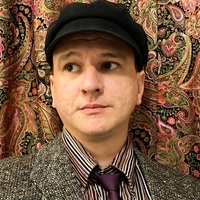
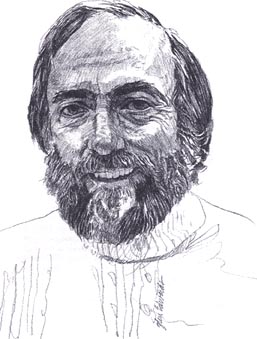
Bas Peeters is a Lecturer in the Department of Finance at Vrije Universiteit Amsterdam's School of Business and Economics. He holds a PhD in Theoretical Physics from Stony Brook University (1995) and has over 25 years of experience in quantitative finance, spanning academia and the financial industry. His current focus is on quantitative research in asset management, factor investing, and sustainability-related financial strategies. Affiliations: VU Amsterdam (current), Syzygy Solutions (consultant) Education: PhD in Theoretical Physics (1995), Stony Brook University No undergraduate details provided Research interests center on quantitative investment management methodologies, including risk premium analysis, portfolio construction, and factor-based investing. His work intersects sustainability considerations with traditional financial modeling. He has published in both financial mathematics and theoretical physics journals. His publications span theoretical physics (pre-1998) and financial engineering (post-2003), reflecting his transition from academia to finance. Notable contributions include discrete-time hedging strategies and risk premium models. Grants & Advising: Active as a quantitative consultant for institutional investors through Syzygy Solutions. No graduate student supervision listed. Labs/Teams: No formal lab affiliations mentioned, but collaborates with institutional clients through Syzygy Solutions.
Prof. Michael Walter is a Full Professor (W3 Chair) in Quantum Information at Ruhr University Bochum, affiliated with the Faculty of Computer Science and the Cluster of Excellence CASA. Previously, he held a Tenure-Track Assistant Professorship in Mathematics and Theoretical Physics at the University of Amsterdam (2017-2021) and was a Postdoctoral Scholar at Stanford University (2014-2017). He earned his Dr. sc. (PhD) from ETH Zurich in 2014 under Matthias Christandl, with a thesis on quantum state marginals. His research focuses on quantum information theory, tensor networks, and their connections to holography, complexity theory, and invariant theory. Education: Dipl. Math. from University of Karlsruhe (KIT) and Georg-August-University Göttingen (2005-2010), advised by Thomas Schick. Postdoctoral work at Stanford expanded his expertise in quantum many-body systems and computational methods. Research Interests: Quantum information’s intersection with geometry and algebra, including quantum entanglement, tensor network models of holography, and computational complexity. He explores applications of optimization theory and representation theory to quantum problems, such as the quantum marginal problem and non-commutative optimization. Awards: ERC Starting Grant (2022), Early Career Award (KNAW, 2020), NWO Veni Laureate (2017), and ETH Medal (2014). His work bridges quantum computing, mathematics, and theoretical physics, with contributions to quantum gravity via tensor networks and algorithmic approaches to quantum states. Grants & Leadership: Leads the Chair of Quantum Information, collaborating internationally on projects like holographic duality and quantum resource theories. His research group develops theoretical frameworks for quantum technologies and foundational quantum mechanics. Labs/Teams: Active in CASA (Cluster of Excellence) at Ruhr University, focusing on advanced data science and computational methods. Collaborates with institutions like QuSoft (Amsterdam) and IQC (Waterloo).
Yang Xiao is an Assistant Professor in the Department of Pathology and Clinical Laboratories at the University of Michigan Medical School, with affiliate roles in Biomedical Engineering and Computational Medicine and Bioinformatics. Her research focuses on molecular pathogenesis and bioengineering to study cerebral microenvironment changes post-traumatic brain injury, integrating spatial transcriptomics, epigenomics, and proteomics to map brain cellular landscapes. Education includes a BSc in Molecular Biology from McGill University (Canada), PhD in Biomedical Engineering from Yale University under Dr. Rong Fan, and postdoctoral work at Columbia University in Systems Neuroscience/Gene Editing with Dr. Kam Leong. Research interests span spatial systems biology, gene regulatory mechanisms, and translational bioengineering. Current projects aim to uncover molecular pathways linking traumatic brain injury to mood disorders using multi-omics approaches. Her work bridges clinical pathology and computational systems biology, with a focus on developing novel diagnostic tools through spatial systems analysis. Active collaborations include the Single Cell Spatial Analysis Program.
Claudia de Rham is a Professor of Theoretical Physics at Imperial College London, affiliated with the Department of Physics within the Faculty of Natural Sciences. Her research focuses on quantum gravity, cosmology, gravitational waves, and particle physics. She holds additional roles such as Director of the Abdus Salam Centre for Theoretical Physics and chairs the PPGPtheory STFC panel. Dr. de Rham earned her PhD from the University of Cambridge, with MSc degrees from École Polytechnique and École Polytechnique Fédérale de Lausanne. Her work bridges quantum field theory, cosmology, and gravity, particularly exploring modified gravity theories and the nature of dark energy. Research Interests: She investigates gravitational theories beyond Einstein, including massive gravity, galileons, and the implications of gravitational wave physics. Her work addresses fundamental questions like the acceleration of the universe and the behavior of spacetime at extreme scales. Recent projects include studying decoherence in expanding universes and causality constraints in effective field theories. Publications & Media: Over 120 peer-reviewed articles, including influential works on effective field theories and gravitational wave propagation. She has given over 25 public talks annually, including at the Royal Institution and World Science Festival. Her popular science book The Beauty of Falling details her journey in theoretical physics. Awards & Grants: Recipient of the Blavatnik Award, Simons Investigator, and Royal Society Wolfson Merit Award. Her research is supported by ERC grants and collaborations with institutions like CERN and the Perimeter Institute. Labs & Teams: Leads theoretical physics groups at Imperial and Case Western Reserve University, fostering interdisciplinary research in cosmology and fundamental physics.
Professor Toby Wiseman is a theoretical physicist at Imperial College London's Department of Physics, part of the Faculty of Natural Sciences. His research focuses on quantum gravity, black holes, quantum field theory, and cosmology, with a particular emphasis on combining string theory with Einstein's gravity. He is affiliated with multiple research groups including the Physics of Universe and Theoretical Physics networks. Wiseman holds a professorial position and contributes to outreach activities, such as lectures on spacetime and cosmology, and has participated in discussions commemorating Stephen Hawking's scientific legacy. His work bridges foundational questions in gravity and quantum mechanics, reflecting his role as a leading figure in theoretical physics. He can be contacted via t.wiseman@imperial.ac.uk and is based in the Huxley Building at Imperial's South Kensington Campus.
Professor John Pendry is a renowned physicist at the Department of Physics, Imperial College London, specializing in metamaterials and electromagnetic phenomena. His work includes pioneering research on invisibility cloaks, negative refractive index materials, and quantum electrodynamics in time-varying systems. He has contributed significantly to the development of metasurfaces and their applications in light manipulation, photonics, and plasmonics. Pendry's theoretical frameworks have bridged macroscopic and nanoscale optics, influencing fields from telecommunications to quantum computing. Key achievements include the 2013 Newton Medal for contributions to surface science and photonics, and the 2024 Kyoto Prize in Physics. His research explores nonlocal effects in materials, time-varying systems, and Casimir physics, with recent work focusing on synthetic motion in optical metasurfaces and THz amplification in graphene-based devices. Pendry collaborates across disciplines, advancing metamaterials from theoretical concepts to practical engineering solutions. He leads research groups and has authored over 200 papers, including seminal works on transformation optics and metamaterial cloaking. His labs at Imperial College explore topics like plasmonic exceptional points, spacetime modulation, and energy loss in superlenses. Pendry's future work aims to integrate quantum effects into metamaterial systems and develop next-gen photonic devices.
Prof. Dr. Ekrem Aydiner is a Professor of Physics at Istanbul University's Faculty of Science and a visiting researcher at Princeton University and Koç University. His research spans theoretical physics, cosmology, and interdisciplinary fields including quantum technologies, chaos theory, and biological systems modeling. He holds visiting appointments at global institutions such as Leeds University and Potsdam University. Education: BSc from Ankara University, PhD from Çukurova University. He has trained 12 Master's and 12 Doctoral students. His work includes groundbreaking contributions like the Chaotic Universe Theory (2018), discovery of Joule-Thomson expansion in black holes (2017-2018), and defining chaos in physics as 'minimum action of interacting systems.' He organizes major physics meetings including the Istanbul Condensed Matter Physics Meeting and chairs the Frontiers of Fundamental Physics symposium. His research has produced over 77 WoS publications and 23 projects, with articles receiving tens of thousands of reads. He serves as a referee for top journals like Nature and Physical Review Letters.
Frans Pretorius is a Professor of Physics at Princeton University, affiliated with the Department of Physics. He holds a Ph.D. in Physics from the University of British Columbia, Vancouver, Canada. His research focuses on Einstein's theory of general relativity, particularly black holes, gravitational waves from binary compact object mergers, and critical phenomena in gravitational collapse. He also explores higher-dimensional black hole dynamics and cosmological singularities. Key awards include the Dirac Medal (2021), Galileo Galilei Medal (2021), and New Horizons Prize in Physics (2016). He is a Fellow of the American Physical Society and the International Society on General Relativity and Gravitation. Pretorius advises three graduate students: Zack Gelles, Hengrui Zhu, and Josef Zimmerman. His work often involves numerical relativity and computational methods, as seen in his studies of black hole mergers and spacetime dynamics.
David Potter is an Associate Lecturer (PhD Teaching Fellow) in European Studies at the University of Sydney's Faculty of Arts. He holds an MPhil and BA (First Class Honours) from the University of Sydney and is currently completing his PhD thesis titled 'Mystical Time and Other Worlds in Late Nabokov' under the supervision of Vrasidas Karalis and Benjamin Nickl. His educational background includes extensive archival research at the Library of Congress, Harvard Library, and the New York Public Library, focusing on Vladimir Nabokov's papers. Potter's academic journey has been supported by numerous prestigious scholarships including the Research Training Program (RTP) Scholarship and the James Kentley Memorial Funds Scholarship. Potter's research explores the intersections of literature, mysticism, and metaphysical thought, particularly in twentieth-century works that engage with spectral and multidimensional iconography. His scholarship focuses on how writers like Schulz and Nabokov incorporate mysticism, esotericism, quantum theory, and neurological models of perception into their fiction, creating innovative approaches to fictional spacetime. His work spans interdisciplinary fields including International and Comparative Literature Studies, English, Film Studies, Jewish Studies, and American Studies. His recent publications examine Nabokov's engagement with time philosophy, particularly through the lens of J.W. Dunne's theories, and explore the complex temporal structures in works like Ada and Pale Fire . Potter's scholarship reveals patterns of paramnesia, anticipatory memory, and multidimensional time across Nabokov's late fiction, demonstrating how these texts encode their authors' interests in esoteric traditions and theoretical physics. James Kentley Memorial Funds Scholarship, University of Sydney (2024) Research Grant for Archival Research, International Vladimir Nabokov Society (2024) Postgraduate Research Support Scheme (PRSS), University of Sydney (2023) Doctoral Research Travel Grant, University of Sydney (2022) Research Training Program (RTP) Scholarship, University of Sydney (2021-present) Potter teaches EUST2005: Institutions of the European Union and previously taught ENGL1002: Narratives of Romance and Adventure (2018-2019). He is an active member of the International Vladimir Nabokov Society (2018-present) and the French Nabokov Society (2023-present), regularly presenting at international conferences. His current projects include completing his PhD thesis, translating Bruno Schulz's book reviews, and writing memoiristic essays about Dan Curtis's Dark Shadows .
Stijn Van Vooren is a researcher affiliated with the Faculty of Engineering at Vrije Universiteit Brussel (VUB), specializing in Applied Physics and Photonics. His work focuses on theoretical physics, particularly the Dirac equation, black hole dynamics, and computational methods in nonlinear systems. He contributed to a 2019 JHEP publication analyzing cosmic censorship in higher-dimensional black hole spacetimes. His recent activities include proposing a Tier 1 compute grant and presenting research on photonic Ising machines enhanced by the Adam-optimizer, as well as exploring synergistic information transfer as early warning signs for phase transitions in complex systems. Education: Doctoral scholarship holder and PhD in Applied Physics and Photonics. Research interests span quantum field theory in curved spacetime, perturbation techniques, and applications of machine learning (e.g., Adam-optimizer) in photonic systems. His conference talks and proposals highlight interdisciplinary approaches bridging theoretical physics and computational methods. No scientific awards are explicitly mentioned in the provided texts. Grants and collaborations include a 2025 Tier 1 compute grant proposal (with Guy Verschaffelt) and participation in multi-author presentations on nonlinear dynamics and quantum systems.
Kip S. Thorne is the Feynman Professor of Theoretical Physics at the California Institute of Technology (Caltech). He is affiliated with the department of Theoretical Physics and is a leading figure in gravitational physics, general relativity, and astrophysics. His research focuses on black holes, gravitational waves, relativistic stars, and foundational aspects of spacetime. Thorne is notably involved with the LIGO project, which detected gravitational waves, and contributed to scientific advising for the film Interstellar . Thorne's address is 350-17, Caltech, Pasadena, CA 91125-0001. He can be reached via email at kip@caltech.edu . Administrative support is provided by JoAnn Boyd. His work is associated with teams and initiatives such as TAPIR (a theoretical astrophysics group at Caltech) and LISA (Laser Interferometer Space Antenna). Research interests include the membrane paradigm of black holes, gravitational collapse, and the hoop conjecture. Thorne has mentored PhD students, though specific names are not listed here. He maintains an active presence in academic outreach, including lectures and technical writing tips shared on his website.
Eran Palti is a Full Professor in the Department of Physics at Ben-Gurion University of the Negev (BGU), where he leads a research group dedicated to theoretical physics, particularly string theory and quantum gravity. His work bridges fundamental aspects of high-energy physics with cosmological implications, focusing on topics such as the Swampland program, compactification, and emergent phenomena. His research interests lie at the forefront of theoretical physics, exploring the deep structure of string theory, M-theory, and their connections to quantum gravity. Key areas include F-theory, supersymmetry, supergravity, and the mathematical foundations of Calabi-Yau manifolds. He investigates how physical laws emerge from more fundamental principles, particularly in the context of topological strings and non-perturbative effects. The recent trend in his publications reveals a strong focus on the Swampland conjectures, emergence, and the interplay between string theory and quantum gravity. His work frequently addresses constraints on effective field theories from quantum gravity, the behavior of massive particles in Regge limits, and the thermodynamic and geometric properties of string vacua. These studies contribute to a deeper understanding of the landscape of string theory and the boundaries of consistent physical theories. Regge growth of isolated massive spin-2 particles and the Swampland Emergence in string theory and Fermi gases Self-binding energies in AdS On Calabi-Yau manifolds at strong topological string coupling Non-perturbative topological string theory from M-theory Prof. Palti is actively involved in multiple research projects, including an ongoing German-Israeli collaboration on holography and the Swampland funded by the German Research Foundation. He previously led a project on the cosmology of string and M-theory supported by the Science and Technology Facilities Council. He advises a research group comprising postdoctoral researchers and collaborators such as Nicolo Petri, Stefano Andriolo, and Marco Michel, fostering a collaborative environment in theoretical physics. His research group, part of the Department of Physics at BGU, focuses on advancing the frontiers of quantum gravity and string theory. The team explores topics such as string compactifications, emergent spacetime, and the mathematical structures underlying physical theories. The group maintains strong international collaborations, particularly with institutions in Germany, contributing to the global effort to unify quantum mechanics and general relativity.
Juan Antonio Morales Lladosa is a Professor in the Department of Astronomy at the Faculty of Mathematics, Universitat de València, Spain. His research is centered in Theoretical Physics, particularly in the areas of General Relativity and Gravitation, and he is a member of the REPOCO research group focused on Relativity, Relativistic Positioning, and Cosmology. His research interests lie primarily in the foundations of General Relativity, including the definition and uniqueness of energy and momentum in spacetime, relativistic positioning and navigation systems, and the geometric structure of solutions in spherical symmetry. His work often investigates how coordinate choices, such as Painlevé-Gullstrand or maximal slicings, affect physical interpretations in black hole and cosmological spacetimes. The trends in his publications, spanning from 2009 to 2014, show a consistent focus on foundational problems in gravitational theory. His work frequently addresses the energy content of spacetimes, particularly in the Schwarzschild and cosmological contexts, and explores the mathematical structure of relativistic reference frames and positioning systems in both flat and curved spacetimes. No scientific awards were mentioned in the provided text. Juan Antonio Morales Lladosa has collaborated extensively with researchers such as Ramon Lapiedra, Bartolomé Coll, and Joan Josep Ferrando. His work has been published in leading journals in the field, including General Relativity and Gravitation and Classical and Quantum Gravity . There is no information provided about research grants or student advisement. He is a key member of the REPOCO (Relativity, Relativistic Positioning and Cosmology) research group at the Universitat de València, which conducts theoretical research on spacetime structure, relativistic effects in positioning, and cosmological models.
Benno Willke is a Senior Scientist and group leader at the Albert Einstein Institute (Max Planck Institute for Gravitational Physics) in Hannover, affiliated with Leibniz Universität Hannover. He leads the Laser Development and Advanced LIGO group, focusing on laser interferometry and gravitational wave astronomy. His work is integral to the LIGO Scientific Collaboration and the GEO600 project. Institution: Leibniz Universität Hannover Research Institute: Max Planck Institute for Gravitational Physics (AEI) Group: Laser Development and Advanced LIGO Location: Hannover, Germany Willke earned his PhD in 1992 and completed his Habilitation in 2009, both from Leibniz Universität Hannover. He has held academic and research positions continuously since 1993, including Junior Scientist (1993–1997), Senior Scientist (since 1998), and Feodor-Lynen Fellow at Stanford University (1997–1998). His academic title of Apl. Prof. reflects his status as an extraordinary professor. His primary research interests include laser interferometry , gravitational wave detection , squeezed light , and laser stabilization . He has made significant contributions to the development and commissioning of high-precision laser systems for gravitational wave detectors like GEO600 and Advanced LIGO. His work enables unprecedented sensitivity in detecting spacetime ripples from cosmic events such as black hole mergers. His recent publications (2022–2025) span major journals including Physical Review D , Classical and Quantum Gravity , and Optics Express . The research trends emphasize detector characterization , quantum noise reduction via squeezed light , laser cavity design (e.g., for ALPS II), and gravitational wave data analysis . These works reflect a strong focus on cutting-edge instrumentation and its application in multi-messenger astrophysics. Willke has received numerous prestigious awards, recognizing his pivotal role in gravitational wave astronomy: Berthold Leibinger Innovation Prize (2023) Bruno Rossi Prize (2017) Group Achievement Award, Royal Astronomical Society (2017) Princess of Asturias Award (2017) Gruber Prize (2016) Special Breakthrough Prize (2016) He has held leadership roles in major scientific collaborations, including the LIGO Science Collaboration (since 1997), the GEO Executive Committee (since 2000), and advisory committees for EGO and LIGO. He has delivered lectures on laser interferometry and experimental physics. Although no formal students are listed, his role as group leader implies mentorship of junior researchers and PhD candidates. He has contributed to large-scale funded projects such as Advanced LIGO and GEO600, involving substantial grants from international agencies. Willke leads the Laser group at the Albert Einstein Institute, which is central to developing and maintaining the laser systems for gravitational wave detectors. The team works on high-power lasers, frequency stabilization, and quantum-enhanced interferometry using squeezed light. They also contribute to next-generation experiments like ALPS II, which searches for axion-like particles using light-shining-through-walls techniques.
Peter Millington is a Senior Research Fellow in the Theoretical Physics Group at the University of Manchester, holding a PhD in Physics from the same institution (2012). He actively supervises PhD students and maintains extensive international collaborations, with 83 research outputs spanning theoretical physics and fundamental science. His educational background: PhD in Physics, University of Manchester, 2012 (Thesis: 'Thermal Quantum Field Theory and Perturbative Non-Equilibrium Dynamics' under A. Pilaftsis) Millington's research centers on theoretical particle physics and cosmology, with deep expertise in leptogenesis, symmetry breaking, and fermion physics. His work extends to atom interferometry for dark matter detection and gravitational wave research, while recent contributions address sustainability and equity in particle physics. This dual focus bridges fundamental quantum phenomena with societal impact through UN Sustainable Development Goals. Publication trends reveal consistent quantum field theory foundations evolving toward experimental techniques like atom interferometry and policy-oriented work on sustainability, reflecting a strategic expansion from pure theory to applied physics and science policy. As an academic mentor, Millington accepts PhD students and contributes to major initiatives like the European Strategy Update for Particle Physics. His collaborative network spans 32+ international institutions, evidenced by co-authorship on projects including Long-Baseline Atom Interferometry and sustainability frameworks. He is integral to the University of Manchester's Theoretical Physics Group, which conducts cutting-edge research in quantum gravity and cosmology while engaging with global consortia such as the European Strategy for Particle Physics and ICHEP conferences.




.jpg)