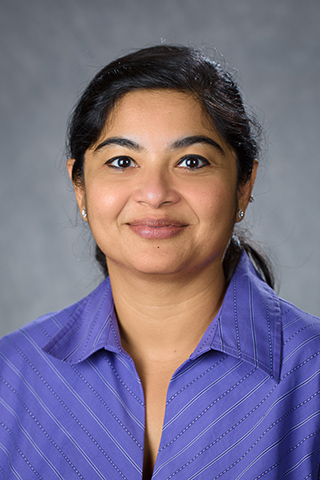
Professor Aardra Kachroo, affiliated with the University of Kentucky's Martin-Gatton College of Agriculture, Food and Environment in the Department of Plant Sciences, is a leading researcher in plant defense mechanisms and lipid signaling. Her work focuses on systemic acquired resistance (SAR), RNA-mediated signaling, and crop improvement through biotechnology. Ph.D., Microbiology (1999), Maharaja Sayajirao University & Salk Institute M.S., Biotechnology (1993), Maharaja Sayajirao University B.S., Microbiology (1991), Ramnarian Ruia College Her research spans plant molecular biology, immune signaling, and lipid metabolism, with emphasis on salicylic acid transport, cuticle function, and RNA-based mechanisms. Articles highlight non-coding RNA applications, soybean genomics, and small RNA roles in SAR. Recent publications address lipid-regulated immunity, mobile signals in plant defense, and metabolic feedback loops in stress responses. Awards include the Michael Goodin Global Aspirations Award. Michael Goodin Global Aspirations Award She leads the Aardra Kachroo Lab, contributing to interdisciplinary undergraduate research and plant biotechnology advancements.
Dandan Shao serves as a Postdoctoral Research Associate at the John W. and Jeanne M. Rowe Center for Research in Virology, Morgridge Institute for Research, where she investigates viral genome replication mechanisms using molecular, cellular, and biochemical approaches. Her work bridges fundamental virology with agricultural applications, focusing on plant-pathogen systems. Her research expertise spans Virology , Molecular Biology , Plant Pathology , and Fungal Genetics , with specific emphasis on gene silencing and plant-microbe interactions . She employs viral vectors to target fungal pathogens in crops, studies effector proteins in necrotrophic fungi, and develops molecular tools for pathogen quantification, aiming to elucidate infection mechanisms and engineer disease resistance. Analysis of her publication record (2014-2021) reveals a cohesive trajectory in plant virology-pathology interfaces, particularly in soybean and specialty crops. Her work integrates viral vector technology with fungal pathogenesis research, demonstrating consistent innovation in host-induced gene silencing applications and molecular diagnostics for oomycete and fungal pathogens. Dr. Shao operates within the Rowe Center for Research in Virology, a specialized unit dedicated to advancing virology through interdisciplinary collaboration. The center provides infrastructure for cutting-edge studies on viral replication, host interactions, and translational solutions for viral diseases, positioning her work at the intersection of basic virology and agricultural biotechnology.
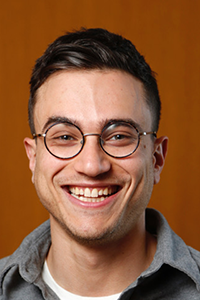
Emile Gluck-Thaler is an Assistant Professor in the Department of Plant Pathology at the University of Wisconsin-Madison, affiliated with the College of Agricultural and Life Sciences. His research focuses on fungal genetics, horizontal gene transfer, and genome evolution, particularly in plant pathogens. Education: PhD in Plant Pathology, The Ohio State University BS in Life Sciences with Microbiology Specialization, McGill University, Canada Research Interests span fungal genomics, transposable elements, and mechanisms of pathogen adaptation. He investigates how mobile genetic elements drive diversity and resistance in plant pathogens like Macrophomina phaseolina and Pyricularia species. Notable Trends in Research include the role of giant transposons in horizontal gene transfer, geostatistical modeling for pathogen distribution, and the evolutionary implications of metabolic gene clusters in fungi. Labs & Collaborations: He works in the Discovery Building at UW-Madison, contributing to interdisciplinary research on fungal biology and plant-microbe interactions.
Khalid Meksem is a Professor in the Department of Plant, Soil, and Agricultural Systems at Southern Illinois University's College of Agricultural Sciences. He joined SIU as an Assistant Professor in 2000, advanced to Associate Professor in 2005, and was promoted to full Professor in 2009. His academic journey includes positions spanning over two decades at SIU where he has established himself as a leading researcher in plant genetics and genomics. Dr. Meksem's educational background demonstrates international training in plant sciences: Ph.D. (1995) from the University of Cologne at the Max-Planck Institute for Plant Genetics and Breeding M.S. (1990) from the University of Paris XI, France, in Plant Molecular and Cellular Biology and Plant Biotechnology B.S. (1989) from the University of Casablanca and the University of Fes, Morocco, in Biology and Genetics His research focuses on the molecular dissection of plant disease resistance mechanisms, particularly against nematodes and fungi, with significant work on soybean and potato genetics. Dr. Meksem's laboratory investigates both structural and functional genomics, exploring genetic diversity and crop improvement through mutation breeding and the generation of alternative alleles. His work bridges fundamental plant science with practical agricultural applications, particularly in developing disease-resistant crop varieties. Analysis of Dr. Meksem's publication history reveals a clear evolution from foundational genomic research to applied biotechnology. Early work focused on mapping disease resistance genes in soybean and potato, while more recent publications demonstrate a strategic shift toward developing transgenic solutions for agricultural challenges, particularly in modifying soybean oil composition and enhancing resistance to cyst nematodes. His research spans plant molecular biology, genomics, bioinformatics, and agricultural biotechnology, with consistent emphasis on practical applications for crop improvement. Dr. Meksem has received significant recognition for his research contributions: College of Agricultural Sciences Research Scholar award (2014) College of Agricultural Sciences Research Scholar award (2008) As an active member of the scientific community, Dr. Meksem serves as an editor and ad hoc reviewer for numerous international scientific journals and for national, federal, and international granting agencies. His laboratory has produced over 60 refereed manuscripts and 3 book chapters, in addition to editing 3 books. Dr. Meksem's research program has been supported through multiple patents, with recent work focusing on soybean genetic engineering for improved oil profiles and nematode resistance. His laboratory maintains active collaborations with other institutions, including the University of Missouri, as evidenced by joint patent applications.
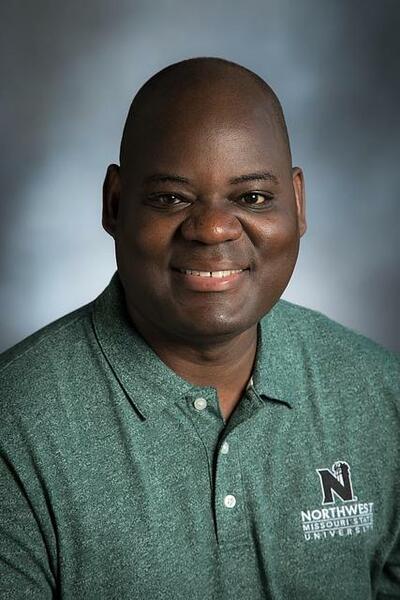
Dr. Paul Okello is an Assistant Professor in the College of Agricultural Sciences at Northwest Missouri State University, where he joined in 2024. His expertise lies at the intersection of plant pathology, sustainable agriculture, and crop protection, with a specific focus on soilborne fungal pathogens affecting major crops like soybean and corn. Dr. Okello holds a Ph.D. in Plant Science from South Dakota State University, an MBA from the Swiss School of Management in Rome, and a degree in Natural Resources Management from Egerton University in Kenya. This diverse educational background equips him with both scientific expertise and management skills for addressing agricultural challenges. Ph.D. Plant Science; South Dakota State University, USA MBA; Swiss School of Management, Rome - Italy Natural Resources Management; Egerton university, Kenya Dr. Okello's research centers on sustainable agriculture , particularly examining host plant-pathogen interactions and soilborne fungal pathogens . His work investigates Fusarium species causing root rot in soybean and corn, Diaporthe species causing stem canker, and interactions between pathogens like Phytophthora sojae and soybean cyst nematode. He also emphasizes science communication , translating complex plant pathology concepts for broader audiences. Analysis of Dr. Okello's publication record from 2015-2024 reveals a consistent focus on Fusarium and Diaporthe pathogens affecting major crops. His research spans multiple disciplines including plant pathology, genetics, agronomy, and microbiology, with particular attention to disease resistance mechanisms, pathogen identification, and crop management strategies. Recent work has increasingly incorporated genomic approaches to understand resistance mechanisms in soybean. Dr. Okello serves as a reviewer for several prestigious journals including Plant Health Progress, Plant Disease, and the Canadian Journal of Plant Pathology. He is also an active member of The American Phytopathological Society, contributing to the broader plant pathology community through peer review and professional engagement. As an educator, Dr. Okello teaches courses in Plant Science, Introduction to Precision Agriculture (co-taught), and Integrated Crop Management. His diverse educational background, combining scientific training with business management, likely informs his approach to both research and teaching in agricultural sciences.
Dr. Zhou Zhou is an Assistant Professor in the Department of Biological Sciences at Purdue University Fort Wayne, where he joined in January 2025. He leads the Plant Functional Genomics & Biotechnology Lab, focusing on genetic crop improvement using integrated molecular approaches. His research bridges fundamental plant biology and applied biotechnology to address global agricultural challenges. Education Ph.D. in Agricultural Sciences, Southern Illinois University (2020) M.Sc. in Plant Genetics, Genomics, and Breeding, Southern Illinois University (2013) B.Sc. in Biology Science, Southwest University, China (2009) Research Focus Dr. Zhou's program employs genetics, molecular biology, biochemistry, and multi-omics technologies to enhance nutritional quality, disease resistance, and abiotic stress tolerance in plants. Key focus areas include functional genomics of cereal and legume crops, metabolic engineering of oil biosynthesis pathways, and epigenetic regulation of plant traits. Publication Trends His 16+ publications demonstrate consistent focus on crop biotechnology, particularly using genomics tools like TILLING-by-Sequencing+ to modify oil/fatty acid profiles in soybean and oat. Recent work emphasizes transcriptome reprogramming and enzyme regulation to improve seed composition while maintaining plant-microbe symbiosis. Academic Activities Dr. Zhou teaches undergraduate courses including Principles of Structure and Function (BIOL 11900), Principles of Functional Biology (BIOL 21900), and Cell Biology (BIOL 38100/38200). He actively recruits students for his lab, which investigates genetic improvement strategies for staple crops.
Dr. Seth O’Conner is an Assistant Professor in the Department of Biology at Kentucky Wesleyan College, where he teaches Genetics, Microbiology, Immunology, and Cellular and Molecular Biology. He holds a B.S. from the University of Northwestern St. Paul, a Ph.D. in Biology from Mississippi State University, and completed a SPIRE Postdoctoral Fellowship at the University of North Carolina—Chapel Hill. His research integrates bioinformatic and molecular approaches across two primary domains: (1) Genetic adaptation to novel environments using Arabidopsis thaliana clinostat experiments to simulate microgravity effects, coupled with Oxford Nanopore Sequencing and CRISPR gene editing; and (2) Environmental antibiotic resistance surveillance through the PARE network, enhanced by metagenomic analysis. Additional focus areas include orphan gene evolution in Arabidopsis and Drosophila systems. Publications demonstrate concentrated work in plant biotechnology, particularly CRISPR-mediated crop enhancement for protein yield and disease resistance in soybean and rice. Evolutionary studies explore mitochondrial genome contributions to orphan gene origination, while molecular investigations reveal transcription factors governing plant immunity and development. Awards & Grants: SPIRE Postdoctoral Fellowship (UNC-Chapel Hill) Association of Biological Laboratory Education Grant for developing the CURE course 'Plant Biotechnology in Space' Mentors 11+ undergraduate researchers in projects spanning CRISPR engineering, Drosophila genomics, and spaceflight botany, resulting in presentations at national conferences including Entomology Society of America and PURC Symposium. Leads the O’Conner Lab focusing on orphan gene evolution and environmental antibiotic resistance.
Michael Graves is an Associate Professor in the Department of Biological Science at the Kennedy College of Sciences, University of Massachusetts, Lowell. His research focuses on molecular biology and virology, with specialized expertise in chlorella viruses that infect algae. He holds a Ph.D. in Molecular Genetics and Virology from Oregon State University (1992) and a B.S. in Biology from the University of Nebraska, Lincoln (1986). Research Focus Dr. Graves investigates chlorella viruses distributed globally, characterized by large genomes encoding unique proteins like glycosylation enzymes. His work spans viral genomics, host-pathogen interactions, and viral biochemistry, with emphasis on mechanisms independent of host cellular machinery. Research extends to applications in algal bioreactor technology and environmental virology. Publication Trends His publications emphasize viral genome sequencing (e.g., ATCV-1, MT325, FR483), functional analysis of viral genes, and interdisciplinary studies linking virology with neuroscience. Recent work explores viral glycosylation pathways, translational regulation, and neuroprotective biochemical mechanisms under oxidative stress. Awards Teaching Appreciation Award (2008), Student Government Association, UMass Lowell Teaching Excellence Award (2005), Department of Biological Sciences, UMass Lowell Phi Beta Kappa (1986), University of Nebraska Grants and Contracts Principal Investigator for multiple projects including: Algal Virus Genomics (NSF Microbial Genome Sequencing, 2003) Chlorella spp. Genome Sequencing (DOE Joint Genome Institute) Microeukaryote Diversity in the Gulf of Maine (Census of Marine Sciences) Algae Photobioreactor Evaluations (2011, 2012) Protein-Protein Interactions in Infected Algae (UMass Lowell Seed Funding) Laboratory Leads research on chlorella virus genetics, genomics, and host interaction mechanisms at UMass Lowell.