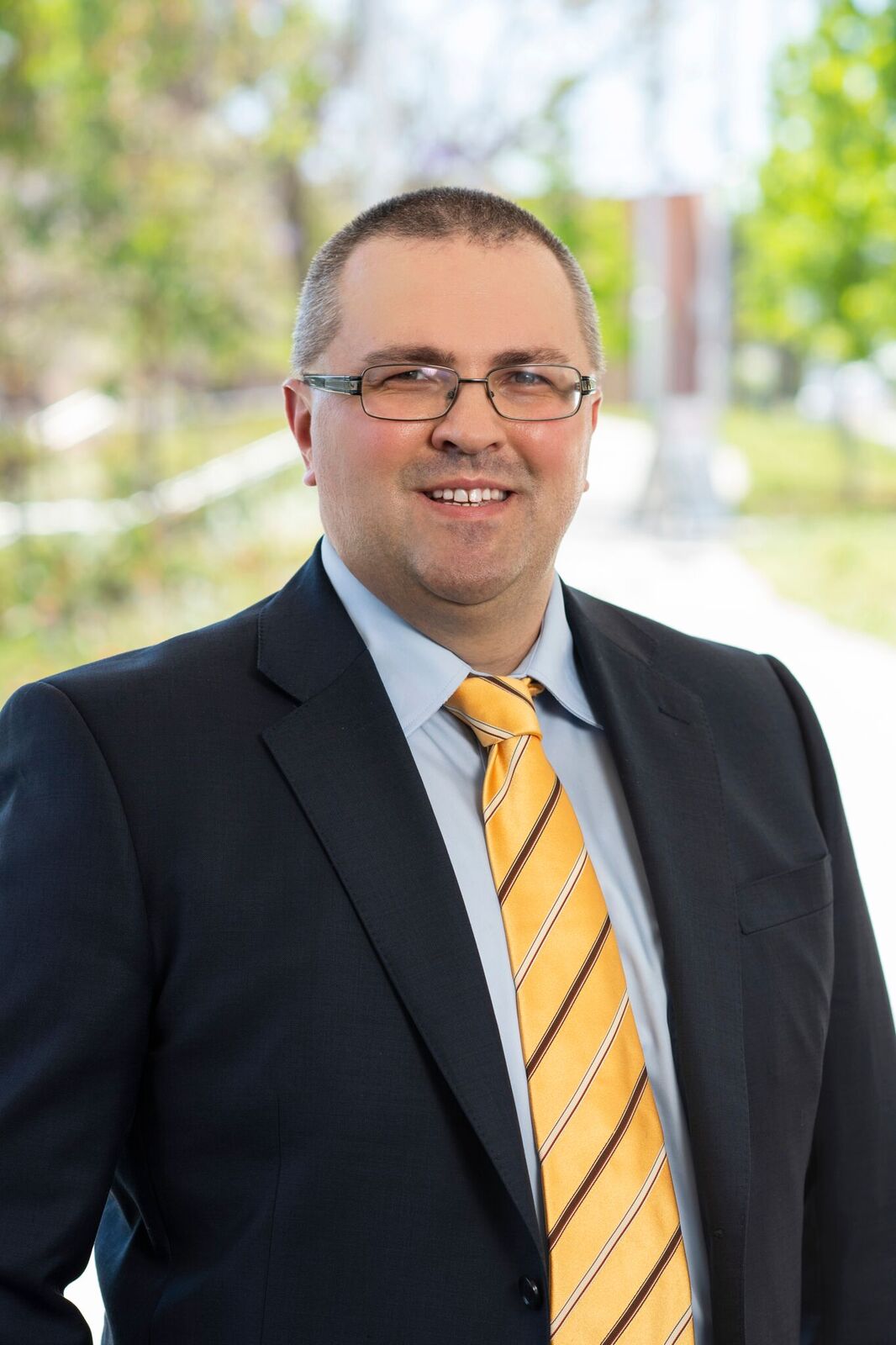
Dr Filip Slaveski is a Senior Lecturer in Russian/Soviet and East European History at the School of History, The Australian National University. He specializes in Soviet Empire studies, focusing on mass conflict, food crises, political control, and their contemporary echoes. His work examines Ukraine, Russia, and post-WWII dynamics, particularly Soviet governance and post-war reconstruction. Slaveski holds a PhD in History and has published extensively on Soviet famines, post-war Ukraine, and Soviet-German occupation policies. His notable works include Remaking Ukraine after WWII (2021) and The Soviet Occupation of Germany (2013). He has received funding through ARC DECRA grants and contributed to major projects on Soviet famines and post-war recovery. Research Interests: Soviet Union, Ukraine, Conflict Studies, Famine, Repression, Nationalism. Grants: ANU Futures Scheme (2023–2026) and The Last Soviet Famine Project (2021–2025).
Kevin Carrico is a Senior Lecturer in Chinese Studies at Monash University and Research Director for the School of Languages, Literatures, Cultures and Linguistics. He holds a PhD in Sociocultural Anthropology from Cornell University (2013), focusing on nationalist identification through China's Han Clothing Movement. His research focuses on nationalism theories, ethnic relations in China, Hong Kong politics, and Tibetan history. Notable works include The Great Han: Race, Nationalism, and Tradition in China Today (2017) and Two Systems, Two Countries (2022), the first English-language study of Hong Kong's independence movement. Current projects include ethnographic research on pro-China activists in Taiwan. His work is funded by the U.S. Department of Education, Australian Research Council, and Chiang Ching-kuo Foundation. He translates Tibetan and Chinese works, including Tsering Woeser's Tibet on Fire and Guan Jun's Silencing Chinese Media .曾为香港苹果日报专栏作家,该报于2021年因政治压力关闭。His media contributions appear in Foreign Policy, the Age, and Hong Kong Free Press. He supervises PhD students researching compatible topics in Chinese politics, nationalism, and cultural studies. Grants include two major projects (2018-2024) on Hong Kong nationalism construction.
Professor Adam David Morton is a leading scholar in Political Economy at the University of Sydney's Discipline of Political Economy, within the Faculty of Arts and Social Sciences. His career includes roles at the University of Nottingham (2005-2014), Lancaster University (2002-2005), and postdoctoral research at Aberystwyth University. He has held visiting positions at institutions like the University of Madison-Wisconsin and the University of Manchester. Research focuses on political economy, geography, and historical sociology, with a specialization in modern Mexico and global capitalism. Key works include Unravelling Gramsci (2007) and Revolution and State in Modern Mexico (2011), which won the BISA IPEG Book Prize. His current project, The Frontiers of Capital , explores Cormac McCarthy's novels through a political-geographical lens. Morton emphasizes dialogical teaching methods, receiving awards like the 2018 Excellence in Teaching Award and the Sir Bernard Crick Prize. He has supervised 20 PhD candidates, co-authoring papers on figures like Rosa Luxemburg and Georg Lukács. He co-edits the Progress in Political Economy book series with Manchester University Press and maintains the PPE blog. Awards include the ISA Online Media Caucus Award (2017, 2018) for the PPE blog. Grants funded projects on housing value, Indigenous politics in Latin America, and Henri Lefebvre's rural sociology theories.
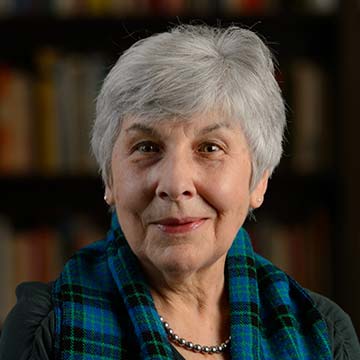
Professor Sheila Fitzpatrick is a leading historian of modern Russia and the Soviet Union, currently based at the Institute for Humanities and Social Sciences at Australian Catholic University (ACU) in Melbourne. She previously held distinguished academic positions in the United States, including Bernadotte E. Schmitt Distinguished Service Professor at the University of Chicago, before returning to Australia in 2012. She holds full HDR supervision accreditation and is actively engaged in research on Soviet and transnational history, migration, and life writing. Research Interests: Her work spans transnational history , social history of the Soviet Union , migration and displacement , life writing and autobiography , and Russian music . She emphasizes the lived experiences of individuals under Stalinism and explores the movement of people across political and cultural borders during and after WWII. The most recent publications and projects reflect a strong focus on Soviet displaced persons, repatriation, anti-communism in Australian immigration policy, and Cold War transnational histories. Her articles over the past decade reveal consistent engagement with themes of identity, memory, migration, and state surveillance. Scientific Awards and Honors: Prime Minister’s Literary Award for Non-Fiction (2016) for On Stalin’s Team American Historical Association Award for Scholarly Distinction (2012) Elected Fellow, Australian Academy of Humanities (1996) Elected Fellow, American Academy of Arts and Sciences (2005) John Simon Guggenheim Fellowship (1988) MacArthur Foundation Research & Writing Award (1987–8) Grants and Supervision: She has been a Chief Investigator on multiple ARC Discovery Projects, including studies on Russian immigrants in Cold War Australia and postwar displaced persons. She serves as a full HDR supervisor and has mentored numerous scholars through collaborative research. Her editorial roles include long-term service on the Journal of Modern History and several international journals in Soviet and Russian studies. Public Engagement: She is actively involved in public history, contributing to London Review of Books , The Guardian , and The Conversation , and participating in writers’ festivals, radio interviews (ABC, BBC), and public lectures across Australia, the US, Europe, and Asia.
Professor Sheila Fitzpatrick is a leading historian of modern Russia and Soviet social/cultural history, affiliated with the Department of History at the University of Sydney . She focuses on Stalinist-era society, transnational migration, and Cold War displacement, particularly Russian migration to Australia. Education: BA (Melbourne), DPhil (Oxford) Key Research: Soviet social identity, post-WWII repatriation, cross-cultural encounters, and archival research. Recent Publications (2021–2022) span Soviet repatriation efforts, Cold War migration, and concise historical narratives. Themes include displacement, refugee policies, and Soviet-Australian relations. Scientific Awards : Prime Minister’s Literary Award (2016), American Historical Association Award (2012), Andrew W. Mellon Fellowship (2002), and ARC Discovery Grants (2012–2019). Grants : ARC-funded projects on postwar Russian displaced persons and Soviet Stalinism research.
Dr. Matilda Mroz is a Lecturer in Film Studies at the University of Sydney's Faculty of Arts and Social Sciences, where she also serves as Honours Coordinator and School Social Inclusion Representative. She joined the University of Sydney in October 2020 after holding positions as Senior Lecturer in Film Studies at the University of Sussex and Programme Leader for the BA (Hons) Film Studies at the University of Greenwich, London. Dr. Mroz is a member of both the Sydney Environment Institute and the Charles Perkins Centre. Dr. Mroz earned her BA (Hons) from the University of Sydney and completed her PhD at the University of Cambridge (Faculty of English) in 2008. Her doctoral research formed the basis of her first monograph, Temporality and Film Analysis (Edinburgh University Press, 2012). Between 2008-2011, she held a British Academy Postdoctoral Research Fellowship at Cambridge and was the Charles and Katherine Darwin Research Fellow at Darwin College (2009-2011). Dr. Mroz's research focuses on film theory, philosophy and aesthetics, with particular emphasis on global cinematic engagements with violence, genocide and death, Polish cinema, filmed environments and ecologies, and animals in film. Her work explores how film represents traumatic historical events, particularly the Holocaust in Polish visual culture, and how cinematic representations negotiate complex relationships between humans, animals, and environments in post-conflict spaces. She employs interdisciplinary approaches drawing from film-philosophy, eco-criticism, and memory studies to examine these topics. Her recent publications demonstrate a consistent focus on Polish cinematic responses to historical trauma, particularly regarding Polish-Jewish relations and Holocaust memory. The publications reveal a trajectory from early work on cinematic temporality to more recent explorations of posthumous ecologies and the materiality of violence in Holocaust film and art. Her research increasingly incorporates elemental approaches to world cinema, examining how earth, fire, water, and air function as cinematic elements across global film cultures. Dr. Mroz has received numerous prestigious awards throughout her career: British Academy Mid-Career Fellowship (2019-2020) British Association for Slavonic and East European Studies Women's Forum Article Prize, Honorable Mention (2019) Research Pump Priming Award, University of Greenwich (2015) British Academy Small Grants (2013-2015) Early Career Research Excellence Award, University of Greenwich (2013) Charles and Katherine Darwin Research Fellowship, Darwin College, University of Cambridge (2010-2011) British Academy Postdoctoral Research Fellowship, University of Cambridge (2008-2011) Dr. Mroz currently supervises PhD students including Audrey MITCHELL, whose research examines "Gesture, Conversation, and 'Vision': Ethical Nodalities and Contemporary Cinema," and Lee STEENBERGEN, researching "Changing the Nature of Consumption in Documentary: The Foragers." She has secured significant research funding through British Academy fellowships and grants, focusing on Polish visual culture's engagement with Holocaust memory and post-conflict landscapes. Dr. Mroz serves on the editorial board of Film-Philosophy and is an active member of several scholarly associations including the British Association of Film, Television and Screen Studies, the British Association for Slavonic and East European Studies, and the Society for Cinema and Media Studies. Her current research projects include "Framing the Holocaust in Polish Aftermath Cinema: Posthumous Materiality and Unwanted Knowledge," which examines how Polish film and visual culture has responded to recent historical scholarship concerning Polish acts of violence against Jewish neighbors during the Holocaust, and "Posthumous ecologies," which explores how moving images negotiate global histories of violence and conflict through the complex networks between human remains, landscapes, and their cinematic representation.
Professor Gary Magee is a leading academic in economic history at Monash University's Department of Economics within the Faculty of Business and Economics. He holds concurrent roles as a Research Affiliate at the Australian National University's Centre for Economic History and has previously served as Director of the Asian Economics Centre (University of Melbourne), Head of La Trobe University's School of Economics and Finance, and Deputy Dean (Research) at Monash. Education: B.A. History (Monash University), First-Class Honours in Economics (La Trobe University, D.M. Myer Medallist), PhD (Nuffield College, Oxford as a Commonwealth Scholar). Research Focus: Economic history, political economics, authoritarian societies, innovation, globalisation. Awards: Fellowships from the Academy of Social Sciences (Australia) and Royal Historical Society (UK). Visiting Roles: Held fellowships at institutions including the University of Oxford, Russian Academy of Sciences, King's College London, and China Development Institute. Publications span monographs like Palgrave Studies in Economic History , contributions to Cambridge Economic History series, and top journals including Economic History Review and Journal of Economic History .
Dr. Alexey Muraviev is an Associate Professor of National Security and Strategic Studies at Curtin University's School of Media, Creative Arts and Social Inquiry (Faculty of Humanities). He leads the Strategic Flashlight forum and previously served as Academic Lead of Curtin's Defence strategic initiative. His expertise spans Russian defense policy, maritime security, and Asia-Pacific geopolitics. Education: Bachelor of Arts with 1st Class Honours (Social Sciences), Curtin University (2000) Doctor of Philosophy (Political Science), Curtin University (2005) Research Interests: Focus on maritime security (modern naval power, maritime terrorism), Russia's strategic policy and military modernization, Russia's role as a Pacific power, alliances in the Asia-Pacific, and future warfare trends. Key projects include studies on the Russian Pacific Fleet, Russian defense modernization in the Far East, and maritime terrorism. Media and Awards: Multi-award-winning analyst, with accolades including the 2019 Globelynx Award for International Media Engagement and multiple Curtin Media Commentary awards. Regular contributor to BBC, CNN, and The New York Times. Recognized as an ARC 'Expert of International Standing' (2007-2010). Teaching: Postgraduate courses on Russian/Eurasian Studies, Indian Ocean security, and strategic geography.
Associate Professor Terri Bird is an artist and academic at Monash University's Department of Fine Art, within the Faculty of Art, Design and Architecture. Her research explores sculptural practices that interrogate material dynamics and their intersections with geology, colonisation, and the Anthropocene. She co-founded OSW (Open Spatial Workshop), recipients of the 2005 Melbourne Prize for Urban Sculpture, known for works like Converging in Time (2017) at MUMA. Bird holds a PhD in Visual Culture (2007) from Monash, alongside earlier degrees from RMIT and the University of Melbourne. Her research interests emphasize material force and ethics, with projects analyzing resource extraction, territorial politics, and feminist materialism. Notable collaborations include the West Brunswick Sculpture Triennial (2009) and ongoing work with OSW on geo-social assemblages. Bird has authored essays such as Registering Surfaces, Excavating Inheritances (2016) and contributed to exhibitions addressing climate-aware creative pedagogy and sustainable art practices. Awards include the 2018 National Works on Paper Prize finalist recognition and the AAANZ Best Exhibition Catalogue Prize. Her work bridges studio practice with critical theory, advocating for art's role in addressing environmental and colonial histories. Current research priorities include Climate Aware Creative Practices, focusing on ethics of making and decolonial perspectives. Terri Bird supervises graduate research and has led projects funded by Creative Victoria and the Australia Council for the Arts. Her interdisciplinary approach integrates sculpture, installation, and curatorial practice to explore urgent contemporary issues.
Benoit Berthelier is a Lecturer at the University of Sydney, specializing in Korean studies with a focus on North Korean literature, technology, and cultural politics. His work bridges literary analysis with Cold War history, cybernetics, and digital media, particularly examining how ideology shapes cultural production and technological development in North Korea. Education & Affiliations: PhD in Korean Studies (details unspecified) Currently affiliated with the University of Sydney's School of Arts and Social Sciences (implied by research focus) Research Interests: North Korean literature and its role in state propaganda Cybernetics and sovereignty in Cold War contexts Language technology divides between North and South Korea Media sentiment analysis in politically charged regions like Hong Kong His work combines textual analysis with computational methods to explore how literature and technology reflect and reinforce political systems. Grants: 2020: 'Propaganda in China's Social Media News Targeting Taiwan and Hong Kong' funded by the Chiang Ching-Kuo Foundation Labs/Teams: None explicitly listed, but collaborations with institutions like the College de France are indicated through publications.
Dr. Euridice Charon-Cardona is a Honorary Associate Lecturer at the University of Newcastle , affiliated with the School of Humanities, Creative Industries and Social Sciences and specializing in History . Her career at the University of Newcastle began as a casual tutor in Anthropology, and she has since collaborated on numerous research projects, including a co-authored monograph shortlisted for the NSW Premier’s History Prize in 2013. Research Interests span historical and anthropological analysis, with a focus on Soviet and Cuban history, gendered wartime experiences, migration studies, and socialist education systems. Her work includes archival research and interviews on topics such as Soviet women’s roles in WWII, Arab migration to Cuba, and Cold War educational policies. Publications highlight her expertise in Soviet home front economy, Cuban diaspora, and socialist internationalism, with recent contributions to journals like Journal of Historical Geography and European Education: Issues and Studies . She has presented at international conferences including the Comparative Education Society in Europe and CIES . Scientific Awards: Shortlisted for NSW Premier’s History Prize (2013) Grants include funding from the University of Newcastle for projects on Soviet visual propaganda, travel support for academic conferences, and strategic networks grants for interdisciplinary research on religion and secularism.
Dr David Brophy is a Senior Lecturer in Modern Chinese History at the University of Sydney, affiliated with the China Studies Centre. He holds an ARC Discovery Early Career Research Fellowship for his project on 'Empire and Religion in Early Modern Inner Asia.' His research focuses on the social and political history of China’s northwest, particularly Xinjiang Uyghur Autonomous Region, and its connections with the Islamic and Russian/Soviet worlds. Brophy completed his MA and PhD at Harvard University before joining the University of Sydney in 2013. Research Interests: History of Qing and Republican China Early Modern Eurasia Colonialism and National Movements Islamic Studies (Sufism) Teaching: Courses include 'China in the Nineteenth-Century World,' 'Modern Chinese History,' and 'Beyond the Great Wall: China’s Frontiers.' He supervises research on modern Chinese history, Xinjiang politics, and Eurasian empires. Awards: ARC Discovery Early Career Research Fellowship (2017–present) Labs/Teams: Active member of the China Studies Centre. His work bridges historical analysis with contemporary geopolitical discourse, evidenced by his media engagement on Sino-Australian relations.
Professor Greg Barton is a prominent academic at Deakin University, holding the Chair in Global Islamic Politics within the Faculty of Arts and Education and the Alfred Deakin Institute for Citizenship and Globalisation. With expertise in Religious Studies, Political Science, and Criminology, his research focuses on countering violent extremism, religious populism, and the intersection of technology with Islamic education. Education: Doctor of Philosophy, Monash University Bachelor of Arts, Monash University Research Interests: Professor Barton's work spans multiple domains including Violent Extremism , Religious Populism , Counter-terrorism Policy , Gender Dynamics in CVE , Southeast Asian Security , and Technology in Islamic Education . He explores how digital media influences radicalization, the role of civil society in countering extremism, and the sociopolitical implications of religious diversity. Grants and Contracts: His career is funded by numerous grants from the Australian Research Council, Department of Home Affairs, and international bodies like Plan International. Key projects include SEAN-CSO initiatives, Religious Populism and Emotions , and Development Interventions to Violent Extremism . Supervision: He actively supervises doctoral students in the School of Humanities and Social Sciences, focusing on topics like gender in radicalization, Australian CVE policy, and community-based extremism prevention. Key Publications: Recent work includes analyses of Salafi jihadi terrorism, LGBTQIA+ youth perspectives in Indonesia, and systematic reviews of CVE programming. His research is frequently cited in policy documents and academic discourse.
Professor Philip Mendes is a leading academic in Social Work at Monash University's Department of Social Work, directing the Social Inclusion and Social Policy Research Unit. His work focuses on youth transitioning from out-of-home care, income support systems, Indigenous social policy, and Jewish community responses to institutional abuse. He has authored 12 books and over 100 peer-reviewed works, including seminal texts like *Australia's Welfare Wars* (2017) and *Empowerment and Control in the Australian Welfare State* (2019). Key research collaborations include the Transitions to Adulthood International Research Group and projects funded by the Australian Research Council (ARC). Notable projects include improving outcomes for care leavers (2023–2027) and advancing healthy ageing for care leavers entering aged care (2023–2025). His work aligns with UN SDGs addressing poverty eradication and social inclusion. Professor Mendes has received awards including the 2019 Faculty of Medicine Dean's Award and the 2022 Australian Journal of Political Science Mayer Prize. His advocacy extends to policy reforms for care leavers, emphasizing extended care frameworks and equitable housing solutions. He actively engages in policy debates on welfare conditionality and social justice, challenging neoliberal policy approaches.
Associate Professor Alice Gorman at Flinders University is a pioneering space archaeologist and author of the award-winning book Dr Space Junk vs the Universe . She co-directed the first archaeological survey on the International Space Station in 2022 and works extensively on space heritage, off-Earth mining, and lunar policy. As Vice-Chair of the Global Expert Group on Sustainable Lunar Activities, she contributes to international space policy frameworks. Teaches undergraduate archaeology and graduate cultural heritage management Senior Fellow of the American Institute of Aeronautics and Astronautics Vice-Chair of ICOMOS International Scientific Committee for Aerospace Heritage Her research spans space junk, planetary landing sites, and material culture in microgravity environments. She has received multiple awards including the John Mulvaney Book Award and Bragg Press Prize . Gorman's work was archived by the National Library of Australia for its scientific significance, and she maintains an active media presence as an expert on Aboriginal issues and space history.