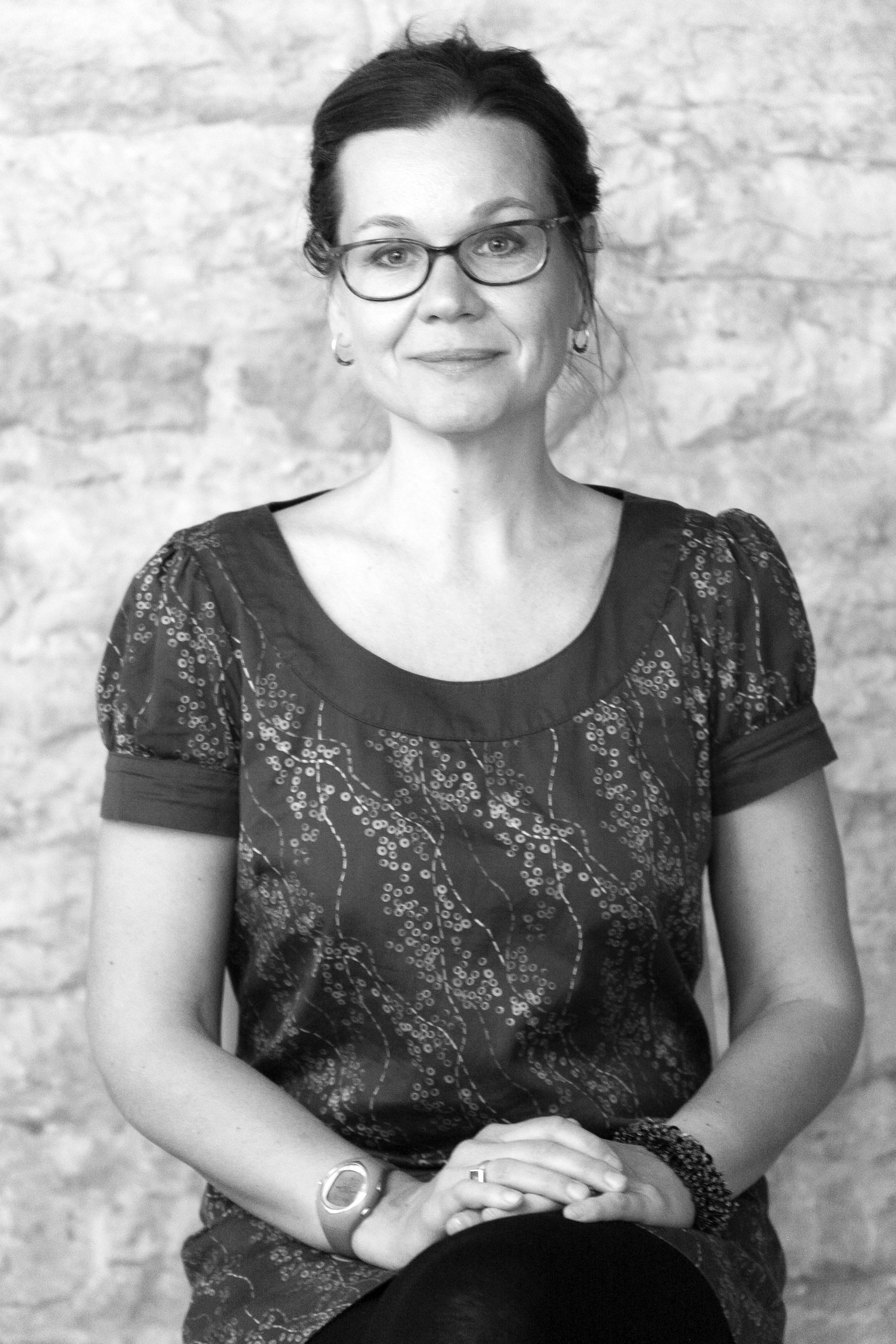
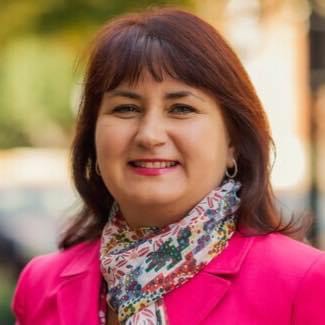
Ain Riistan is a Lecturer in New Testament Studies at the University of Tartu's School of Theology and Religious Studies. He has held academic roles including Associate Professor (Dotsent) at the Estonian Free Church Theological Seminary and Programme Director for Religious Studies programs. His research focuses on New Testament social-historical contexts, early Christian texts' hermeneutics, and the intersection of theology with historical and cultural analysis. Education includes a Doctor of Theology (2011) from Tartu University, researching the historical Jesus within religious science contexts, and a Master's in Theology (1998) analyzing Ignatius of Antioch's Christology. Awards include the 1999 Estonian Ministry of Education diploma for his master's thesis. His work spans biblical scholarship, religious conflict analysis (e.g., Moscow Patriarchate's role in Ukraine), and post-Christian cultural dynamics. He contributes to academic societies like the Society of Biblical Literature and European Association for the Study of Religions. Current projects include the ARS MORIENDI ESTONIA 2030 initiative exploring death literacy through medical anthropology and linguistics.
Katre Luhamaa is an Associate Professor of European and Comparative Law at the University of Tartu’s School of Law under the Faculty of Social Sciences. She holds a PhD (2015) and Research Master’s Degree (2005) in Law from the University of Tartu, specializing in international law and human rights. Her career includes roles as a legal expert at the Supreme Court of Estonia (2001–2004, 2017–2017), researcher at the University of Bergen (2018–2020), and legal advisor for the Council of Europe’s HELP program (2016–2018). She has supervised the Telders International Moot Court Competition team at Tartu University (2001–2018). Her research focuses on human rights, international law, and child rights, with projects like analyzing the evolution of human rights in post-Soviet legal systems and the effectiveness of CRC Committee recommendations in Estonia. She contributed to the IUT20-50 project on human rights discourse in Russia and Europe (2014–2019). Recent work includes comparative studies on child welfare systems across jurisdictions and the impact of Soviet legal legacy on adoption policies. Key publications explore child vulnerability in legal systems, cross-border adoption regulations, and constitutional identity in post-communist states. She actively participates in legal organizations like the European Society of International Law and the Estonian Academic Law Association.
Eret Talviste is a Research Fellow in Contemporary English Literature at the University of Tartu , affiliated with the Faculty of Arts and Humanities and Institute of Foreign Languages and Cultures . She joined Tartu in 2020 as a part-time researcher in Raili Marling’s project Imagining Crisis Ordinariness and received the Estonian Research Council’s postdoctoral fellowship (2022-2024) for her project Women, Nations, and Affect . PhD (2020) from Northumbria University MA (2015) from University of Glasgow BA (2014) from University of Portsmouth Her research bridges transnational modernist women writers and critical theory , focusing on intersections of feminism , posthumanism , affect theory , and postcolonialism . She explores themes like wonder and wander , race and ethnicity , and ecocriticism through works by Elizabeth Bowen, Virginia Woolf, Zora Neale Hurston, and Leida Kibuvits. Recent publications highlight her expertise in Estonian-UK comparative studies and decolonial approaches to English literature. She has contributed to journals such as Feminist Modernist Studies , Journal of Baltic Studies , and Keel ja Kirjandus , with a forthcoming monograph Strange Intimacies (Edinburgh University Press, 2025). Her awards include the Estonian Research Council’s postdoctoral fellowship and a 2016 Northumbria scholarship. Eret is keen to supervise BA and MA theses on comparative studies between Estonia and Ireland, Scotland, Wales, Canada, or England. She has served in administrative roles, including organizing conferences like BodyWorks and editing The Kelvingrove Review .
Siobhan Kattago is an Associate Professor in the Department of Philosophy at the University of Tartu. Her work bridges Philosophy, Sociology, and Politics, with a focus on memory studies, political theory, and Hannah Arendt's thought. She holds a PhD (1997) and MA (1993) in Sociology from The New School for Social Research, followed by postdoctoral research at New York University and the New School University. Her research explores the intersections of memory, modernity, and time. Key areas include the ethics of remembrance, political theology, and the legacy of totalitarian regimes. Notable publications include Ambiguous Memory: The Nazi Past and German National Identity (2001), Memory and Representation in Contemporary Europe (2012), and Encountering the Past within the Present (2020). Recent articles address the Russia-Ukraine war’s temporal dimensions and the pandemic’s impact on time perception. Her scholarship emphasizes pluralism and responsibility in confronting historical trauma, drawing on Arendtian and Kantian frameworks. Current projects include analyses of memory in post-Soviet contexts and the ethical dimensions of collective memory in global conflicts.
Atko-Sulhan Remmel is an Associate Professor of Religious Studies at the University of Tartu's Faculty of Arts and Humanities, School of Theology and Religious Studies. His career spans roles from 2011-2016 as Research Fellow at the University of Tartu, followed by senior researcher positions (2017-2020) and current associate professorship (2024-). He holds a doctorate in Theology (2011) and a Research Master's in Theology (2004) from the University of Tartu, with Fulbright and Kent University methodological training. Remmel's research focuses on nationalism and (non)religion, Soviet antireligious policies, Estonian cultural secularism, and contemporary religiosity trends. His work bridges historical analysis of Soviet-era religious suppression with modern nonreligion studies, examining eco-nationalist narratives and post-Christian existential frameworks. His recent publications analyze quantitative nonreligion surveys, Estonian secular identity, and nature-spirituality intersections. He leads projects like 'Methods for the Study of Religion' (€25,000) and 'Mapping the Existential Field in Post-Christian Context' (€17,000), funded by the Estonian Language Institute and University of Tartu. Remmel's scientific awards include the 2021 Keel ja Kirjandus journal prize for cultural history and the 2016 Marie Curie Fellowship. He serves on editorial boards for Religio and e-Rhizome , and leads the Nonreligion and Secularity Research Network (2024-2025). He has supervised 5 master's theses including topics on Estonian religious media, secular identity, and interfaith relations. His grants include the John Templeton Foundation's €16,862 study on Estonian unbelief (2018-2019) and a €84,650 Södertörn University grant for transcendence relocation research (2017-2022).
Katrin Kivimaa is a Senior Researcher at the Institute of Art History and Visual Culture within the Faculty of Arts and Culture at the Estonian Academy of Arts. She holds a PhD in Art History from the University of Leeds and previously served as Professor of Modern Art History at the same institution (2006–2017). Her academic background includes studies in history, art history, and gender studies at the University of Tartu and Central European University. Her research centers on feminist reinterpretations of art history, with emphasis on Estonian modern/contemporary art, nationalism, social art projects, feminist curating, and representations of femininity in visual culture. She investigates how gender and national identity intersect in post-Soviet contexts, often through historiographical analysis. Kivimaa's publications (2009–2022) demonstrate consistent focus on gender politics in Eastern European art, Soviet-era visual culture, feminist curatorial methodologies, and Baltic art historiography. Her work frequently employs exhibition histories, interviews, and ideological critique to challenge canonical narratives. Awards: Ervin Pütsep Prize (2009) for the best art history monograph in Estonian She has led significant curatorial projects including co-curating The Soviet Woman in Estonian Art (Kumu Art Museum, 2010) and participating in the international research team for Gender Check: Femininity and Masculinity in the Art of Eastern Europe (Vienna/Warsaw, 2008–2010). Her editorial work includes anthologies on feminist curating and Baltic art geographies.
Anne Lange is an Estonian academic and translator with a distinguished career at Tallinn University, where she served as an Associate Professor at the School of Humanities since 2015. Her work bridges translation studies, cultural history, and linguistics, with a focus on ideological and political dimensions of translation in Estonia's historical context. Doctoral studies at Tallinn University (2003–2007) Doctorate in Philology from Tallinn University (2007) Undergraduate at Tartu University (1980–1985) Various educational institutions (1977–1980, 1969–1977) Her research explores translation as a cultural and political act, particularly in Soviet and post-Soviet Estonia. She has contributed to understanding translation under communism, ideological constraints, and the interplay between poetics and politics. Recent publications include analyses of social activism in translation, historical contextualization of Russian literature in Estonia, and theoretical developments in translation historiography. These works span keywords like cultural transmission, political discourse, and ideological framing. Annual prize of 'Looming', 2001 Aleksander Kurtna Translation Prize, 1997 & 2003 Annual prize of 'Sirp', 1999 2015 winner of best essays prize Lange has supervised novice translators through the Master-Apprentice program and chaired translation award juries. Her editorial and organizational roles include co-editing Translation Under Communism and The Routledge Handbook of Translation History , as well as organizing international conferences like 'Itineraries in Translation History.'
Jaak Tomberg is an Associate Professor of Contemporary Literature at the University of Tartu, specializing in philosophy of literature, poetics, science fiction, and literary utopias. He holds a PhD in Comparative Literature (2009) alongside earlier degrees in Estonian and Comparative Literature. His research explores intersections between literary forms and socio-technological contexts, with key works analyzing cyberpunk poetics, dystopian narratives, and the evolution of realism in a globalized digital age. Tomberg has published three monographs, including the 2023 work How to Fulfil a Wish , which examines the status of science fiction in contemporary culture. He co-edited avant-garde journal VIHIK and contributed to experimental literary criticism. His 2014 Science Fiction Research Association Pioneer Award recognized groundbreaking essayistic scholarship. Beyond academia, Tomberg has written plays, translated fiction, and engaged in cultural theory through edited volumes on place/location semiotics. His work bridges academic rigor with creative practice, maintaining a focus on speculative fiction’s role in mediating technological and cultural realities.
Valentyna Kharkhun is a Professor at Nizhyn Mykola Gogol State University (Ukraine) and currently serves as a Researcher at the School of Humanities, Tallinn University (Estonia). Her expertise focuses on the intersection of ideology and culture, particularly Ukrainian modernist literature, Soviet cultural policies, and memory politics in museums. She holds a habilitation PhD (2011) in Theory of Literature from the Shevchenko Institute of Literature, National Academy of Sciences of Ukraine. Her research encompasses the socialist realist canon in Ukrainian and Russian literatures, representation of communism in Central/Eastern European museums, and the role of literature in ideological frameworks. Key contributions include two award-winning books and over 100 articles in journals like Nationalities Papers , Canadian Slavonic Papers , and Journal of Soviet and Post-Soviet Politics and Society . Recent work emphasizes Ukrainian historical memory through museums (e.g., Bykivnia memorial landscape) and re-examines Soviet-era narratives in literature and cultural institutions. Her 2010 Book of the Year Prize recognized her scholarly contributions to Ukrainian literary studies. Education: PhD (habilitation) in Theory of Literature, 2011 (Shevchenko Institute of Literature) Publications span monographs analyzing Volodymyr Vynnychenko’s works and socialist realism, alongside articles on WWII literary representations and post-Soviet museum politics. Her interdisciplinary approach bridges literary analysis with cultural history and memory studies.
Tanel Kerikmäe is a Full Professor of European Legal Policy and Law & Technology at TalTech School of Business and Governance. He serves as Director of the Law School and holds affiliations including foreign membership at the Ukrainian Academy of Legal Sciences and academic fellowships at NUS Law School's TRAIL Centre. His career spans over three decades, with tenures at institutions like the University of Cambridge, Nagoya University, and Paññāsāstra University of Cambodia. Education includes a PhD in European Legal Systems (2009) and advanced qualifications from Universities of Helsinki, Oxford, and Tartu. His research focuses on governance with new technologies, AI regulation, and EU Digital Market Law, with contributions to over 596 publications. Research interests emphasize future governance frameworks, legal challenges of AI, and e-governance innovations. Recent articles address disinformation in the metaverse, EU-Vietnam trade strategies, and digital sovereignty mechanisms. Awards include Doctor Honoris Causa from Jaroslav Mudryi National Law University and recognition from the Turkish Association of Law & Technology. He advises governments on digital policy, including Estonia’s AI strategy and space law. Editorial roles include Chief Editor of TalTech Journal of European Studies (Scopus-indexed). Active in 60+ international networks, he coordinates doctoral programs in Law and Digital Technologies.
Kristiina Tõnnisson is a Lecturer in Public Management at the Johan Skytte Institute of Political Studies, University of Tartu. She has held leadership roles including Head of the Institute (2016–2018) and Director of EuroCollege (2014–2015). Her research focuses on public sector management, local governance, and New Public Management principles in transitional economies. She has extensive administrative experience in academic governance and international cooperation, including leading projects on good governance in Eastern Partnership countries. Tõnnisson holds a PhD from the University of Tartu and has taught courses such as 'Public Administration and Multi-Level Governance' and 'Project Management in the EU.' She has received multiple awards including the University of Tartu Medal (2024) and the Estonian Government's Citizen’s Day certificate (2017). Education: PhD in Public Administration (2006), University of Tartu MSc in Public Management (2000), New York University MA in Public Administration (1999), University of Tartu Bachelor of Arts in Public Administration (1997), University of Tartu Research Interests: Her work examines governance reforms in post-Soviet contexts, public sector marketing, and the implementation challenges of New Public Management principles in local governments. She has published extensively on regional policy, EU pre-accession strategies, and civic engagement mechanisms. Publications: Recent works include annual reports on Estonian regional policy (2020–2024) and studies on post-Soviet urban governance. Her 2006 doctoral thesis analyzed NPM applicability in Estonian local government. Awards & Recognition: University of Tartu Medal (2024) Citizen’s Day certificate of honour (2017) Merit Badge of the University of Tartu (2015) Advisory & Grants: Led teams in EU-funded projects like EU-PREACC (2013–2017) and served as an evaluator for the Estonian Research Council. Her grants include Volkswagen Foundation support (2002) and Muskie Fellowship (1999). Labs/Teams: Active in COST Action networks on local governance reforms and disaster bioethics. Member of the Johan Skytte Institute Board and the Faculty of Social Sciences Council.
Ingrid Ruudi is a Senior Researcher at the Institute of Art History and Visual Culture, Faculty of Art and Culture, Estonian Academy of Arts. She holds a Doctorate in Art History and has served in various academic roles including Visiting Associate and Extraordinary Associate Professor. Her work bridges architectural history, curatorial practice, and gender studies, with a focus on Estonian architecture from the late Soviet period to the present. She is currently leading a research project on care environments in socialist and post-socialist Estonia and serves as editor-in-chief of Studies on Art and Architecture . Doctor of Philosophy, Estonian Academy of Arts, 2020 Research Master’s Degree, Estonian Academy of Arts, 2001 Art History, Estonian Academy of Arts, 1997–2001 Her research centers on the intersections of architecture, art, and spatial culture, with a strong emphasis on gender studies in architecture. She investigates how power, identity, and social change are reflected in built environments, particularly during transitional periods such as the late Soviet and post-Soviet eras. Her work explores feminist critiques of architectural practice, the spatial politics of care and disability, and the role of exhibitions as research tools. She has made significant contributions to the historiography of Estonian architecture, especially in uncovering the roles of women architects and marginalized communities. The most recent articles demonstrate a consistent focus on gender, spatial justice, and post-socialist transformation. Themes include feminist architectural theory, the politics of public space, and curatorial methodologies. Her publications often analyze how architecture reflects and constructs social identities, especially under ideological constraints. She frequently contributes to both scholarly journals and public discourse, blending academic rigor with cultural critique. Estonian Research Council’s national competition for best dissertations, special prize of the Estonian Heritage Board for the best doctoral thesis (2021) Estonian Academy of Arts research prize for best monographic publication (2021) Best architecture publication of magazine Maja and cultural weekly Sirp (2021) Medal of the Union of Estonian Architects for conceptualization activities (2015) Grand prize of the Endowment for Visual Arts of the Estonian Cultural Endowment for the installation 'Gas Pipe' at the Venice Biennale (2008) Ingrid Ruudi has supervised doctoral and master’s theses and has been actively involved in academic governance, including serving on the Senate of the Estonian Academy of Arts and the board of the Estonian Centre for Architecture. She has secured competitive research grants, including a major project funded by the Estonian Research Council. Her curatorial work, such as the exhibition 'A Room of One’s Own. A Feminist’s Questions to Architecture', functions as both public engagement and scholarly inquiry. She founded the interdisciplinary project space MÄRZ and has contributed extensively to architectural criticism and translation of specialized literature. She is a key member of the Institute of Art History and Visual Culture and contributes to the Graduate School of Culture Studies and Arts. Her editorial leadership of Studies on Art and Architecture and previous editorship of Estonian Architectural Review underscores her influence in shaping architectural discourse in Estonia.
Roman Leibov is an Associate Professor of Russian Literature at the University of Tartu's Faculty of Arts and Humanities, within the Institute of Foreign Languages and Cultures. He has held academic positions since 1988, specializing in 19th-century Russian literature, particularly Fyodor Tyutchev, Alexander Pushkin, and Leo Tolstoy, as well as the formation of the Russian literary canon and Soviet song. He earned his Doctorate in 2000 with a thesis on Tyutchev's lyrical fragments. His research includes projects on the reception of Russian literature in Estonia, the ideological dynamics of translation, and the Russian literary canon. He has participated in international projects like 'The Future of Russian: Language Culture in the Era of New Technology' (2009–2012). Key research interests span Russian poetic concepts, Stalinist-era literature, Pushkin's narrative techniques, and Soviet cultural heritage. His publications include monographs and articles on Russian literary history, poetics, and cultural theory.
Ivo Pilving is an Associate Professor of Administrative Law at the University of Tartu's Faculty of Social Sciences, School of Law (0.5 FTE). He concurrently serves as the Chairman of the Administrative Law Chamber of the Supreme Court of Estonia since 2014. Previously, he held roles as a judge, legal advisor, and contributor to legislative processes, including Estonia’s administrative procedure and liability laws. His career spans academia, judiciary, and public service. Education: PhD in Law (2006, Tartu University), specializing in the legal impact of administrative acts; Master of Laws (2000, Freiburg University, Germany), focusing on public law information actions. Research focuses on administrative procedures, state liability, EU law integration, and algorithmic governance. Key themes include: the rule of law in crises, legal frameworks for automated decision-making, and historical evolution of Baltic administrative justice. Recent work addresses challenges in public procurement, AI ethics, and constitutional compliance in digital governance. Publications span 50+ articles, including analyses of Estonia’s legal responses to crises, algorithmic accountability, and historical jurisprudence. He contributed to legislative drafting and chairs judicial councils, emphasizing institutional governance and legal modernization.
Kaarel Piirimäe is an Associate Professor of Contemporary History at the University of Tartu's Faculty of Arts and Humanities, Institute of History and Archaeology. He has held academic and research positions at institutions including the Estonian War Museum, Estonian Military Academy, and Helsinki Collegium for Advanced Studies. His career spans over two decades of research, teaching, and project leadership. PhD, University of Cambridge (2010) Research Master's, University of Cambridge (2006) Research Master's, University of Tartu (2005) BA/MA, University of Tartu Dr. Piirimäe's research focuses on International History , Political History , and Baltic Studies , with emphasis on Cold War dynamics, post-Soviet transitions, and military-diplomatic interplay. His work explores national self-determination, historical imagination, and Baltic-Allied relations. His 15 most recent publications (2022-2025) address topics such as NATO enlargement, Baltic independence campaigns, Soviet security systems, and Estonian-US relations. These contributions blend diplomatic history and geopolitical analysis across 20th-century conflicts , post-Cold War integration , and historical memory . Scientific Awards: Vilis Vītols Prize (2017) Golden Prize of 'Akadeemia' (2016) Contemporary History Fund Stipend (2016) Foundation Archimedes Scholarships (2005-2006) Dr. Piirimäe leads major projects including 'The History of Estonian Diplomacy, Foreign and Security Policy' (2025-2028) and 'From Experts to Revolutionaries: Intelligentsia in Soviet Estonia' (2025-2028). He has organized international conferences on Baltic Cold War issues and contributed to journals like Journal of Baltic Studies and Diplomacy and Statecraft .