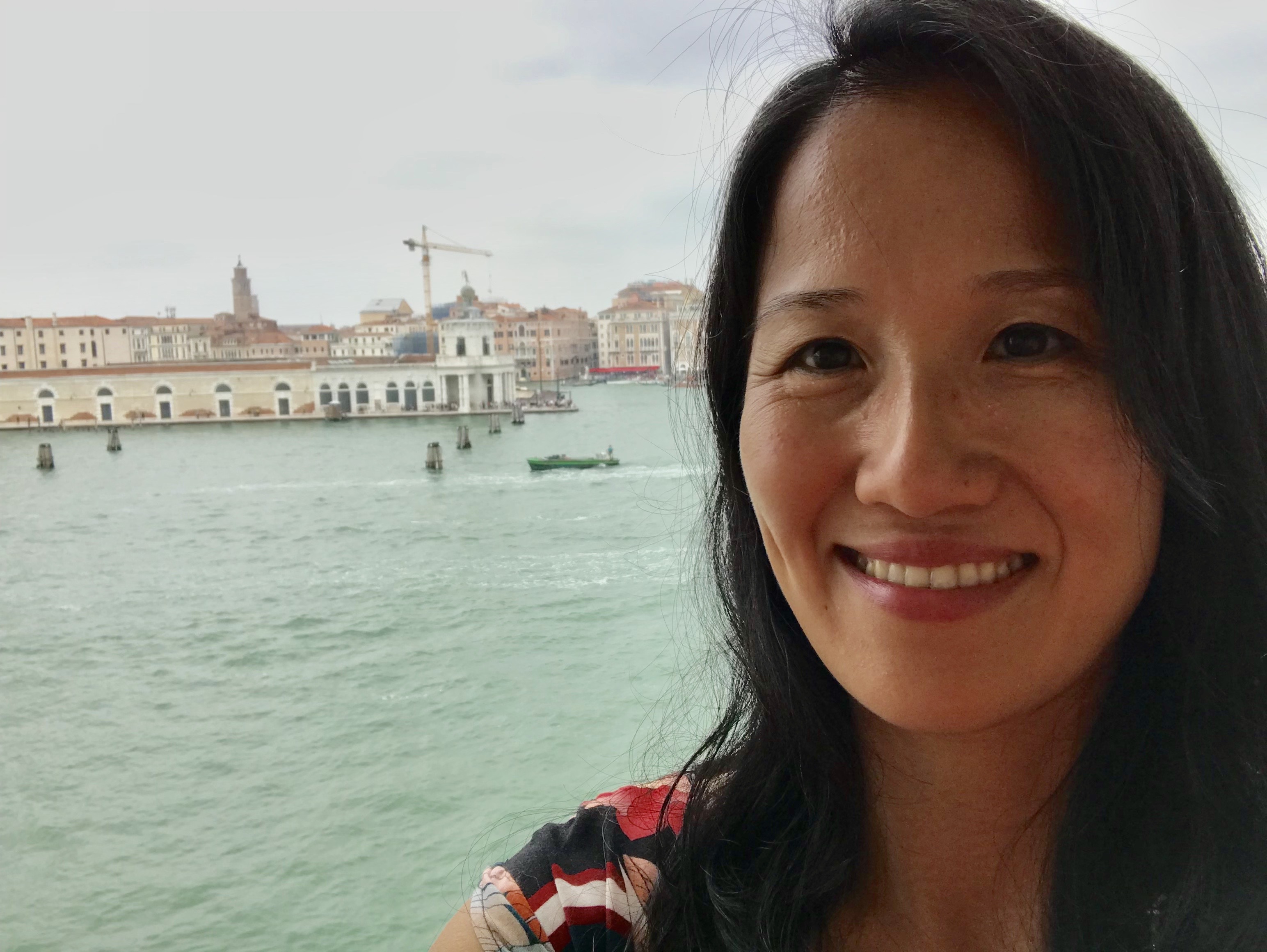
University of California, Los AngelesUnited States
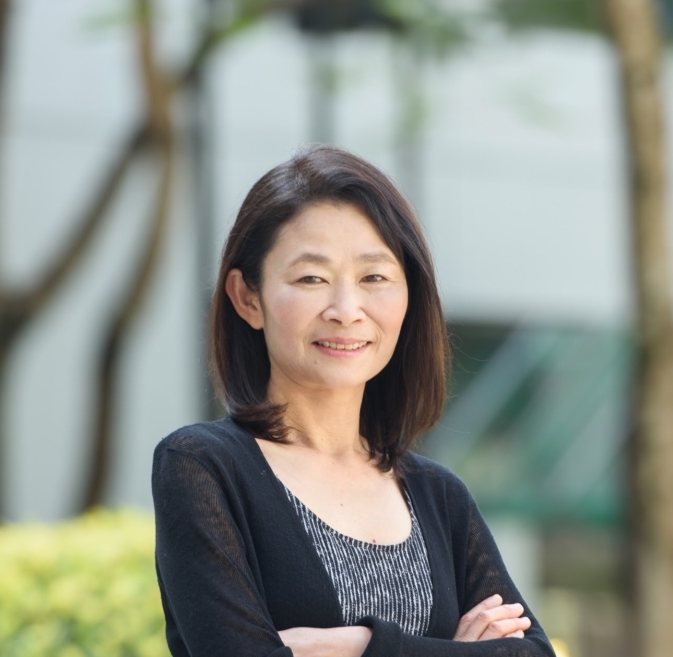
Ching Kwan Lee is a Professor of Sociology at the University of California, Los Angeles (UCLA). Her work focuses on global and comparative issues, including labor politics, political sociology, decolonization, and the dynamics of Chinese capitalism. She is renowned for her trilogy on Chinese labor and global expansion, including Gender and the South China Miracle , Against the Law , and The Specter of Global China . Lee has also authored groundbreaking studies on Hong Kong’s decolonization struggles and African-China relations. Education: PhD in Sociology from the University of California, Berkeley. Research Interests : Globalization and its social impacts Comparative labor movements and protest dynamics Decolonization and postcolonial state formations Sino-African economic and labor relations Hong Kong’s political trajectory and transnational activism Her recent work explores resistance to 'global China,' including mass mobilizations in Hong Kong documented in Forever Hong Kong: A Global City’s Decolonization Struggle (2025). She co-edits the Cambridge Elements in Global China and leads the Global Hong Kong Studies @UC initiative. Awards & Recognition : 2024 Distinguished Career in Political Sociology Award Multiple book prizes for The Specter of Global China Fellowships at Stanford’s Center for Advanced Study and Princeton’s Institute for Advanced Study Grants & Initiatives : Lead researcher on NSF grants studying platform capitalism and labor in China Initiated comparative projects on Brazil, India, China, and South Africa ( Southern Interregnum ) Co-editor of volumes on Hong Kong’s Umbrella Movement and global labor studies
David Glovsky serves as Assistant Professor of History and African and African American Studies within Harvard University's Faculty of Arts and Sciences, focusing on 19th-20th century West Africa with regional expertise in Senegal, Gambia, Guinea-Bissau, and Guinea. His research examines borderlands through lenses of mobility, citizenship, and alternative geographies, challenging state-imposed borders with community-driven spatial narratives. His educational foundation includes a B.A. in History and Human Geography from Dartmouth College and a Ph.D. in African History from Michigan State University. Prior academic appointments include the Department of Africana Studies at University at Albany and the Department of History at Boston University, following Peace Corps service in southern Senegal that redirected his career from sports media into academia. Glovsky's research program centers on social justice-oriented historical narratives of marginalized West African communities, particularly Fulbe populations. His work synthesizes oral histories and archival research across six nations to analyze how borderland residents construct fluid geographies that transcend colonial/postcolonial boundaries. Key themes include migration as resistance , gendered border experiences , and Islam's role in transnational community formation , with methodological innovation in spatial history and decolonial approaches. Analysis of his nine recent publications (2019-2023) reveals consistent engagement with West African borderland resilience , demonstrating how communities maintain cross-border networks despite state fragmentation. His work bridges historical scholarship and contemporary migration debates , employing interdisciplinary frameworks from anthropology, geography, and postcolonial theory to document alternative spatial organizations that challenge Western cartographic traditions. ACLS Fellowship supporting book project Borderlanders: Popular Geographies, Mobility, and Belonging in West Africa Glovsky actively mentors graduate students interested in African history, emphasizing pathways for underrepresented scholars into U.S. academia. His research has received competitive external funding including the ACLS Fellowship, while his collaborative work on the NEH ‘Ajamī Project advanced accessibility of Pulaar manuscripts through digitization and multilingual translation. He maintains strong community ties with West African scholars and institutions, particularly in Senegambia. Though not leading a formal laboratory, Glovsky collaborates with international research teams across West Africa on borderland studies and manuscript preservation, working closely with scholars in Kolda (Senegal), Dakar, and Guinea-Bissau to document community histories through participatory methodologies.
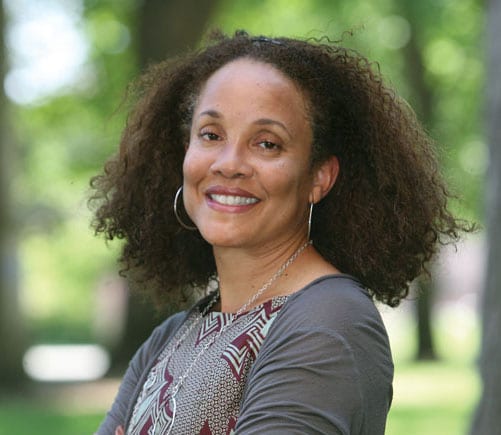
Dr. Carola Weil serves as Dean of McGill University's School of Continuing Studies and Associate Professor in the Department of Political Science since July 2018, following leadership roles as founding Dean at American University and Senior Associate Dean at USC's Annenberg School. Her educational background includes: Post-Doctoral Fellowship, University of Southern California School of International Service Post-Doctoral Fellowship, Harvard University John F. Kennedy School of Government Belfer Center Ph.D. and M.A. in Political Science, University of Maryland Master of Public Management, University of Maryland B.A. in History (Minor in Politics), Bryn Mawr College Dr. Weil's research centers on human security, migration, and conflict transformation with specialized expertise in gender dynamics in international relations and public diplomacy . Her work bridges policy analysis and practical applications in humanitarian intervention, while her recent focus explores lifelong learning systems and the impact of digital technologies on adult education , addressing evolving workforce demands through innovative educational frameworks. Her publication trajectory reveals a strategic evolution from foundational work on women in international security (1990s) to contemporary analyses of digital media diversity and global communication challenges in higher education. Early scholarship examined military intervention dilemmas in humanitarian crises, later pivoting toward systemic analyses of information ecosystems and educational accessibility in the digital age. Dr. Weil co-founded Women In International Security (WIIS) and serves on multiple non-profit boards, leveraging her dual German-American citizenship and multilingual capabilities to advance organizational development initiatives. Her peacebuilding consultancy spans Pakistan, Afghanistan, Darfur, Colombia, and the African Great Lakes region with specific attention to gender-inclusive journalism practices. Her leadership extends to advising on global strategy for technology-enhanced education and future workforce development, though no formal student advisement lists or grant details appear in the source material.
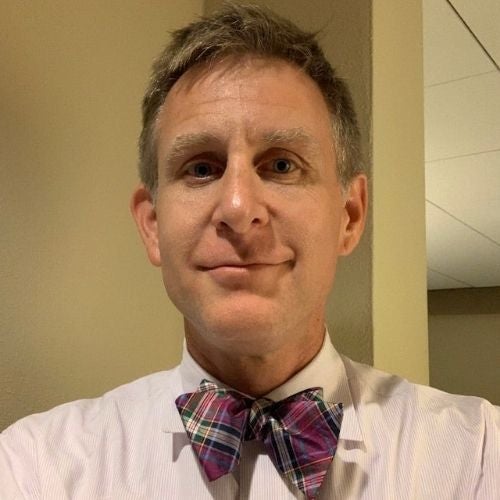
Joshua B. Guild is an Associate Professor in the Department of African American Studies at Princeton University. He is also an Associated Faculty member in the Program in Urban Studies and has been involved with the Center for Digital Humanities. His scholarly work bridges historical research with public engagement and digital innovation. His education includes a PhD in History and African American Studies from Yale University and an undergraduate degree from Wesleyan University, where he was a Mellon Mays Undergraduate Fellow. Professor Guild's research centers on 20th- and 21st-century African American social and cultural history, urban history, and the modern African diaspora. His interests include migration, black internationalism, black popular music, and the black radical tradition. He is deeply engaged in the digital humanities and public scholarship, organizing seminars and contributing to podcasts and public exhibitions. The recent publications and projects reflect a strong focus on urban Black communities, transnational migration, and cultural politics. Themes include the Great Migration, postwar New York and London, New Orleans after Katrina, and the Black 1980s. His work combines historical analysis with cultural critique and social justice advocacy. Scientific Awards and Fellowships: Mellon Mays Undergraduate Fellowship Andrew W. Mellon Foundation Fellowship Ford Foundation Fellowship Woodrow Wilson National Fellowship Foundation Award Charles Warren Center Fellowship (Harvard University) W.E.B. Du Bois Institute Fellow (Harvard University) Professor Guild has advised graduate students through seminars and collaborative projects, though no individual students are named. He has led initiatives supported by institutional grants, particularly in digital humanities and public engagement. His leadership in the 'Black Studies in the Digital Age' seminar and editorial work on the 'Black 1980s' special issue demonstrates his commitment to advancing the field through interdisciplinary collaboration. He is affiliated with the Program in Urban Studies and the Center for Digital Humanities at Princeton, where he contributes to shaping curricula and research directions in African American Studies and digital scholarship.
Sophie Oldfield is Professor and Chair of the Department of City and Regional Planning at Cornell University's College of Architecture, Art, and Planning. She is internationally recognized for her research on cities in the Global South, with a particular focus on African urbanism, informality, governance, and collaborative planning. She previously held a joint professorship at the University of Cape Town and the University of Basel from 2016 to 2021. Ph.D., Geography, University of Minnesota M.A., Geography, Syracuse University Her research interests center on urban studies in the Global South , especially African cities, where she investigates informality, housing struggles, participatory planning, and the epistemologies of urban knowledge production . She is deeply committed to collaborative and community-engaged research, challenging traditional academic boundaries between the university and community. Her work emphasizes fieldwork, theory, and practice, and explores how urban governance shapes everyday life in marginalized settlements. Her recent publications reflect a strong trend toward co-produced knowledge, feminist urban praxis, and critical urban theory from southern perspectives . She frequently examines how urban theory can be reimagined through partnerships with communities, activists, and practitioners. Her scholarship spans interdisciplinary areas including geography, planning, urban studies, and social policy. Society of South African Geographers Fellowship (2020) Distinguished African Scholar, Cornell University (2018) British Academy Newton Advanced Fellow (2015–2018) University of Cape Town Social Responsiveness Award (2014) Mandela Mellon Fellow, Harvard University (2010) She has supervised and collaborated with numerous students, particularly through participatory research projects such as Building Bit-by-Bit , which involved master’s students from the University of Cape Town and the University of Basel. She has secured significant research funding through fellowships and institutional support. Her work is closely tied to initiatives like the African Centre for Cities and the Critical Urbanisms program at the University of Basel . She continues to be an active voice in rethinking urban scholarship through collaboration, equity, and southern epistemologies.
Tera W. Hunter is the Edwards Professor of American History and Professor of History and African American Studies at Princeton University, serving as Chair of the Department of African American Studies. A specialist in 19th and 20th century U.S. history, her scholarship centers on the intersections of gender, race, labor, and Southern histories. Her educational background includes: B.A. in History with Distinction from Duke University M.Phil. in History from Yale University Ph.D. in History from Yale University Professor Hunter's research illuminates African American family structures , gender dynamics under slavery , and labor systems in the postbellum South . Her work reveals how Black communities navigated oppression through familial bonds and social organization, challenging narratives of victimhood with evidence of agency and resilience. She bridges academic rigor with public engagement through frequent media commentary. Her publications demonstrate consistent focus on historical roots of contemporary racial issues, particularly through the lens of marriage and family across centuries. Books like Bound in Wedlock and opinion pieces in major publications form a cohesive body examining systemic injustice through intimate historical narratives. Her accolades include: Stone Book Award (Museum of African American History) Joan Kelly Memorial Prize (American Historical Association) Littleton-Griswold Prize (American Historical Association) H.L. Mitchell Award (Southern Historical Association) Letitia Brown Memorial Book Prize (Association of Black Women's Historians) Professor Hunter has mentored numerous doctoral students and secured significant research funding including National Humanities Center and Radcliffe Institute fellowships. Current projects include The African American Marriage Gap in the Twentieth Century and co-authoring The Making of a People: A History of African-Americans with Robin D.G. Kelley and Earl Lewis.
Dr. Robert W. Widell, Jr. (he/him) is an Associate Professor at the University of Rhode Island, where he chairs the Department of History and directs the Oral History Lab. His work focuses on African American history, late-20th-century U.S. political movements, and the American South. Ph.D., Emory University, 2007 M.A., Emory University, 2003 B.A., Duke University, 1996 His research examines the Black Freedom Struggle, including his book Birmingham and the Long Black Freedom Struggle (2013) and ongoing work on capital punishment and mass incarceration in Alabama during the 1970s–1980s via the case of Johnny “Imani” Harris. He also contributes to oral history methodologies. Dr. Widell’s publications span topics such as the Alabama Black Liberation Front and the transnational influence of the Black Panther Party, reflecting his interest in radical politics and community activism. He resides in Wakefield, Rhode Island, and balances academic life with parenting, running, and supporting the Liverpool Football Club and Auburn University Tigers.
Jessica Brannon-Wranosky is a Professor in the Department of History within the College of Humanities, Social Sciences and Arts at East Texas A&M University. She specializes in women, gender and sexuality history and digital humanities applications, and currently serves as Project Director for the Handbook of Texas Women, a statewide public education initiative of the Texas State Historical Association. Her educational background includes: Ph.D. in History from the University of North Texas M.S. in History from Texas A&M University-Corpus Christi B.S. in Political Science from Texas A&M University-Corpus Christi Dr. Brannon-Wranosky's research centers on 19th-20th century U.S. women's history with regional focus on Texas and the South, examining suffrage movements, gender dynamics, and digital historical methodologies. Her work bridges academic scholarship with public engagement through digital platforms and educational outreach. Her publication portfolio reveals consistent thematic focus on Texan women's historical agency, with recent works emphasizing digital curation of primary sources and intersectional analysis of suffrage activism. The Handbook of Texas Women project exemplifies her commitment to transforming archival materials into accessible public resources. Her scholarly contributions have been recognized with: John H. Jenkins Award (Texas State Historical Association, 2015) Best Article Award (Texas Oral History Association, 2016) Liz Carpenter Award (2016) for co-edited volume Texas Women/American Women As lead investigator for the Handbook of Texas Women project, she directs a multidisciplinary team developing digital infrastructure for statewide historical content, collaborating with museums and educational institutions to produce exhibits like the Bob Bullock Texas History Museum's 2019-2020 suffrage exhibition.
Tamika Nunley serves as Research Professor of History at Duke University within the Arts & Sciences division, holding the prestigious William & Sue Gross Professorship. Her scholarly work centers on the intersection of slavery, gender, and early American history, with particular expertise in African American women's experiences during the 19th century. Her research interests focus on the history of slavery , African American women's and gender history , the early Republic , and the American Civil War . Through meticulous examination of nineteenth-century newspapers, government documents, letters, abolitionist records, legislation, and memoirs, she reconstructs how Black women navigated oppressive systems to develop conceptions of liberty, self-respect, and power. Her work reveals enslaved and free Black women as active agents in shaping Washington D.C.'s history and broader nineteenth-century transformations. Analysis of her publications shows consistent focus on gendered experiences within legal frameworks , Black intellectual traditions , and resistance strategies across her monographs and journal articles. Her scholarship bridges legal history, gender studies, and African American intellectual history through examination of freedom suits, clemency petitions, and literary production. Her scientific recognition includes: 2021 Letitia Woods Brown Book Prize for best book in African American women's history 2021 Pauli Murray Book Prize for best book in Black intellectual history 2021 Mary Kelley Prize for best book in women, gender, or sexuality in the Early American Republic 2023 Cary and Ann Maguire Chair in Ethics and American History from the Library of Congress Nunley's scholarly impact extends through editorial service on Civil War History , The Journal of Southern History , and The Journal of the Civil War Era , alongside committee work for major historical associations. Her research has received substantial support from the Andrew Mellon Foundation, Woodrow Wilson Foundation, American Association of University Women, and Bright Institute Fellowship program. As a lifetime member of the Association of Black Women Historians, she actively contributes to academic communities focused on African American women's historical experiences and intellectual traditions.
Hélène Charlery is a Lecturer in Anglophone Studies at the Université Toulouse - Jean Jaurès, affiliated with the Center for Anglophone Studies (CAS). She has held this academic position since 2008 and is actively engaged in research and scholarly activities. Her primary research interests center on intersectionality in American cinema and series , with a specific focus on Black American female directors and the representation of African American women in film and media. Her work critically examines the intersections of race, gender, and sexuality in visual narratives. Her recent publications, including the 2024 journal issue Mainstreaming Intersectionality in Contemporary Cinema and Television which she co-edited, and articles on films by Dee Rees, Ava DuVernay, and Jordan Peele, demonstrate a consistent and evolving scholarly trajectory. Her research analyzes how contemporary films and television series negotiate complex social identities and political themes, particularly through the lens of Black feminism. Scientific Responsibilities Co-Secretary of the Society for the History of Women in the Americas (SHAW) Thesis Supervision Co-supervised the doctoral thesis of Mikael Toulza on Voodoo in North American audiovisual fiction. She has presented her research at numerous international conferences, contributing to academic discourse on gender, race, and representation in the English-speaking world.
Prof. Dr. Laura Bieger is a professor of American Studies at Ruhr University Bochum (Germany), specializing in literary theory, critical theory, and cultural history. She holds a Magister from Freie Universität Berlin and a Dr. Phil. from FU Berlin (2006), followed by a Habilitation in 2013. Previously, she held professorships at the Albert-Ludwigs-Universität Freiburg (2014–2017) and the Rijksuniversiteit Groningen (2017–2022). Her research explores the relationship between aesthetics, politics, and social practices in U.S. cultural history, with a focus on public space, literary engagement, and democracy. Education: Magister in American Studies, History, and Philosophy, Freie Universität Berlin Dr. Phil., Freie Universität Berlin (2006) Habilitation (Venia Legendi in Americanistik), Freie Universität Berlin (2013) Positions: Professorin für amerikanische Literatur und Kultur, Albert-Ludwigs-Universität Freiburg (2014–2017) Professorin für American Studies, Political Culture and Theory, Rijksuniversiteit Groningen (2017–2022) Universitätsprofessorin American Studies, Ruhr-Universität Bochum (since 2022) Her work bridges literary analysis with interdisciplinary inquiries into space, democracy, and cultural practices. Key publications include Ästhetik der Immersion (2007), Belonging and Narrative (2018), and the forthcoming Reading for Democracy (2024). She has been a research fellow at Harvard University, NYU, and UC Berkeley. Current projects examine literature’s role in fostering democratic engagement and rethinking humanist concepts in American art. Laura Bieger’s research emphasizes praxeological approaches, treating literature as a social practice shaped by networks of actors and institutions. Her work on public intellectuals, cultural fields, and transnational American Studies highlights intersections between aesthetics, politics, and societal change. Collaborative projects include edited volumes on Richard Wright, spatial narratives, and the humanist imagination in American art.
Dr. Meera Sabaratnam is an Associate Professor of International Relations at the University of Oxford and a Tutorial Fellow in Politics at New College. She previously held positions at SOAS University of London, the University of Cambridge, and the London School of Economics (LSE), where she earned her MSc and PhD. Her work focuses on the colonial and postcolonial dimensions of world politics, challenging Eurocentric frameworks in International Relations (IR) theory and practice. Education MA in Philosophy, Politics, and Economics (PPE), Balliol College, University of Oxford MSc and PhD in International Relations, London School of Economics (LSE) Her research examines how imperial histories shape contemporary international order, with a particular focus on structural violence , epistemic justice , and anti-colonial resistance . She is currently writing a book titled Complex Indebtedness , analyzing material and moral debts in the liberal international order. Scientific Awards and Grants : Senior Fellowship of the Higher Education Academy Leverhulme Trust Research Fellowship RF-2021-235 Co-investigator for Czech Science Foundation grant (2025-2027) on postcolonial order Previous funding from the Economic and Social Research Council (ESRC) Dr. Sabaratnam co-founded the Colonial/Postcolonial/Decolonial Working Group at the British International Studies Association (BISA) and serves on editorial boards of International Studies Quarterly , Security Dialogue , and Cambridge Review of International Affairs . Her methodological innovations include contrapuntal analysis and histories from below , particularly in studying the Great War's impact on southeast Africa.
James Darsey is a Professor of Communication at Georgia State University, specializing in rhetorical theory, GLBTQ+ studies, and social movements. He is renowned for his award-winning book *The Prophetic Tradition and Radical Rhetoric in America* (1997), which earned multiple accolades including the National Communication Association's Diamond Anniversary Book Award. His research spans cosmopolitan rhetorics, prophetic discourse, and LGBTQ+ identity formation. He has delivered guest lectures at institutions such as the University of Texas and Notre Dame, and founded the Southern Colloquium on Rhetoric, fostering regional academic collaboration. Key awards include the Winans/Wichelns Award, the Marie Hochmuth Nichols Award, and a National Endowment for the Humanities Fellowship. His publications, including analyses of James Baldwin and Barack Obama, reflect his interdisciplinary focus on power, identity, and historical memory. Education: Ph.D., University of Wisconsin, Madison (1985) Scientific Awards: Diamond Anniversary Book Award Winans/Wichelns Award for Scholarship in Rhetoric and Public Address Marie Hochmuth Nichols Award Randy Majors Award B. Aubrey Fisher Award National Endowment for the Humanities Fellowship
Jocelyn Alexander is Professor of Commonwealth Studies and Head of Department at the University of Oxford's Department of International Development (ODID). She teaches primarily on the MPhil in Development Studies and the DPhil in International Development, and serves on the editorial board of the Journal of Southern African Studies and the publications committee of the International Africa Institute. Her research interests include: Southern African social and political history Liberation movements and their legacies Violence and memory Political imprisonment Rural politics and state-making Political & International Dimensions of Development Sub-Saharan Africa Professor Alexander is currently working on a Leverhulme-funded collaborative research project titled 'Global Soldiers in the Cold War: Making southern Africa's liberation armies', and writing a history of political imprisonment in Zimbabwe. Her research uses qualitative methodologies, notably oral history and archival research, and she is interested in cross-disciplinary approaches combining history, anthropology, politics, and literature. Her recent publications demonstrate a strong focus on transnational histories of Southern African liberation movements, political imprisonment in Zimbabwe, and the legacies of violence in post-colonial states. She has made significant contributions to understanding the connections between liberation movements, the Cold War context, and the formation of post-colonial states in Southern Africa. Scientific awards: Leverhulme grant for project on Cold War-era 'global soldiers' (2019) Professor Alexander has supervised numerous doctoral students working on topics related to Southern African politics, history, and development. She has also co-authored important works including 'Violence and Memory: One Hundred Years in the 'Dark Forests' of Matabeleland' (2000) and authored 'The Unsettled Land: The Politics of Land and State-making in Zimbabwe, 1893-2003' (2006). She has taught at Sussex and Bristol Universities and has been a Research Associate at the University of Zimbabwe, bringing extensive regional experience to her academic work.
Ana Paulina Lee is an Assistant Professor of Writing and Digital Humanities in the Comparative Literature, English, and Creative Writing Department at the American University of Paris. She joined AUP in 2025 after teaching Latin American literature and culture at Columbia University for eight years and serving as a Mellon Postdoctoral Fellow at Tulane University. Her interdisciplinary scholarship bridges literature, history, law, and urban studies with particular focus on marginalized narratives in the Americas. Ph.D. from University of Southern California M.A. from New York University B.A. from Binghamton University Professor Lee's research examines how stories—archival, fictional, oral—shape legal imagination, social life, and urban experience in the Americas. She specializes in the intersections of magic, law, and literature in Latin America, with particular focus on Asian and African diasporas in Brazil. Her work traces how narrative functions as both historical record and catalyst for social transformation, exploring themes of slavery, emancipation, colonial legacies, and urban memory. She approaches these topics through interdisciplinary lenses combining literary analysis with histories of labor, migration, and performance. Lee's recent publications reveal a consistent focus on marginalized narratives and their impact on social structures. Her scholarship connects legal history with cultural production, showing how magical thinking and narrative practices shape urban spaces and social relations. Works like 'Urban Sorcery, Segregation, and Spectacle in Twentieth-Century Rio de Janeiro' and 'Black Magic City' demonstrate her innovative approach to understanding the relationship between occult logics and legal frameworks in Brazilian contexts. Her research on diasporic communities, particularly Chinese and Japanese experiences in Latin America, contributes significantly to transnational and comparative race studies. David B. Larson Fellowship in Health and Spirituality, Kluge Center, United States Library of Congress (2025-2026) National Endowment for the Humanities Fellowship (2025) Social Sciences Research Council, Inaugural Recipient of Interdisciplinary Projects in the Social Sciences (2020-2023) Institute for Ideas and Imagination Fellowship, Columbia University in Paris, France (2021-2022) Provost's Tsunoda Senior Fellowship, Visiting Scholar, Waseda University, Tokyo, Japan (2019) Heyman Center Fellow, The Heyman Center for the Humanities, Columbia University (2017-2018) Fulbright, Lisbon, Portugal (2013-2014) Professor Lee's scholarly activities have been generously supported by major research grants from the National Endowment for the Humanities, the Social Sciences Research Council, and the Library of Congress. Her work demonstrates a commitment to interdisciplinary approaches that bridge humanities and social sciences, particularly through projects examining intersections of race, migration, and cultural production in the Americas. Her publication 'Socially Engaged Oral History Pedagogy Amid the COVID-19 Pandemic' indicates a strong commitment to innovative teaching methods and community-based research. While specific details about current advisees aren't provided, her research program suggests engagement with graduate students interested in diaspora studies, urban history, and literary-cultural analysis. Though not explicitly mentioned in the available information, Professor Lee's research on urban spaces, magic, and law in Brazil likely involves collaborative work with scholars across disciplines. Her participation in centers like the Institute for Ideas and Imagination at Columbia University suggests engagement with interdisciplinary research communities focused on global cultural production and social transformation. Her work contributes to ongoing conversations about how narrative practices shape legal frameworks and social structures in the Americas, particularly regarding racial formation and diasporic experiences.