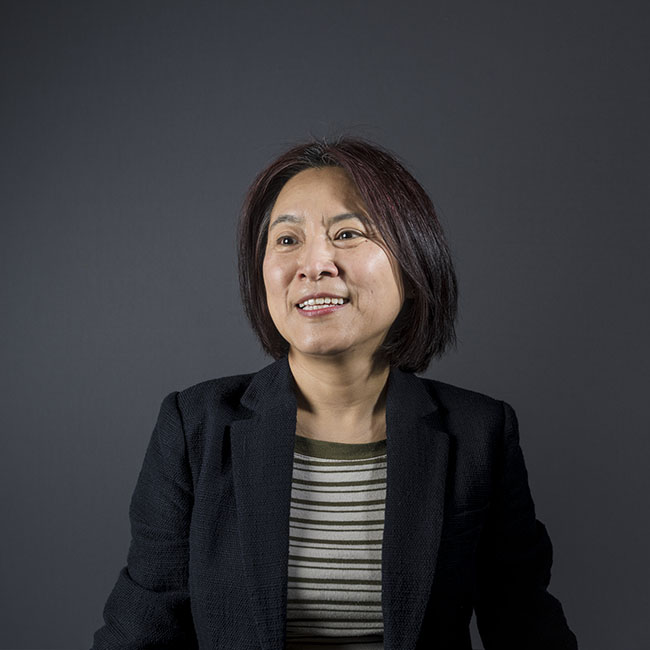
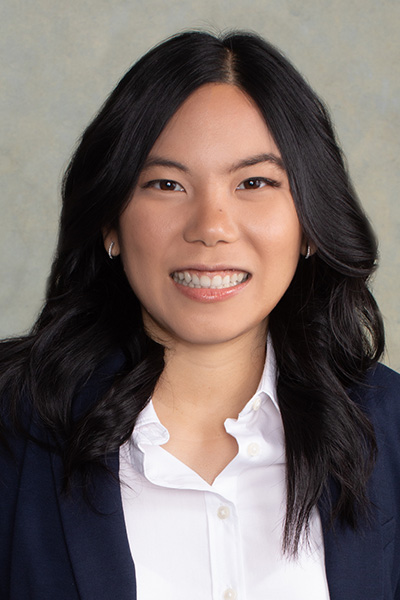
Dr. Qinling Li is a Senior Lecturer in Thermo-Fluids at the Department of Engineering and Mathematics, Sheffield Hallam University, and part-time member of the CFD Lab at the University of Cambridge. Her research focuses on computational fluid dynamics (CFD), supersonic jet dynamics, energy storage, and turbomachinery design. She holds a PhD from Southampton University and has held roles including Research Associate at the University of Cambridge and Loughborough University. Education: PhD in Aerodynamic Flight Mechanics, Southampton University, 2003 MSc and BSc from Xi'an Jiaotong University, China Research Interests: LES of Supersonic Jet in Crossflow (SJICF) Direct Numerical Simulation (DNS) of compressibility effects Turbomachinery design and performance optimization Shockwave-boundary layer interaction Fluid-structure interaction (FSI) Teaching Modules: Further Thermodynamics and Fluid Mechanics Advanced CFD Body Styling & CFD Professional Activities: Reviewer, Journal of Applied Computational Methods (2018–present) Visiting Scholar, Beijing Institute of Technology (2016–2017) Member of IMechE, AIAA, and RAeS Labs/Teams: Active contributor to the CFD Lab (Cambridge) and the Materials and Engineering Research Institute (MERI) at Sheffield Hallam.
Rudolf Widmer-Schnidrig is a Researcher at the Institute of Geodesy within Faculty 06 at the University of Stuttgart. He is affiliated with the Black Forest Observatory (BFO) , where he specializes in low-frequency seismology to study Earth's mantle and core structure through elasto-gravitational free oscillations. His work extends to analyzing data from the InSight mission on Mars, contributing to understanding planetary interiors and Martian atmospheric processes. Recently, he has explored signatures of compact dark matter objects using terrestrial gravimeter data. Research focuses include seismic sensor calibration (e.g., DAS systems), atmospheric-seismic interactions, and long-period Earth oscillations. He has been instrumental in testing seismometers for Mars missions and interpreting InSight's seismic/meteorological data. His collaborative efforts span global seismology networks and interplanetary geophysical comparisons. Publications highlight innovations in sensor technology, Mars regolith characterization, and detection of rare seismic phenomena like 9-day Greenland fjord tsunamis. While no formal awards are listed, his contributions to planetary science and gravitational wave research are notable.
Prof. Dr. Gülerman Sürücü is a Professor of Environmental Engineering at the Middle East Technical University (METU), Ankara, Turkey. He has held the position since 1988, previously serving as Associate Professor (1982–1988) and holding administrative roles as Head of the Environmental Engineering Department from 1982–1986 and 1988–1994. His expertise spans water pollution control, industrial wastewater treatment, and solid waste management. He earned a Ph.D. in Environmental Engineering from the University of Illinois Urbana-Champaign (1975), following M.S. (1968) and B.S. (1967) degrees in Civil Engineering from METU. Education: Ph.D., 1975, University of Illinois Urbana-Champaign, Environmental Engineering M.S., 1968, METU, Civil Engineering B.S., 1967, METU, Civil Engineering Research interests focus on sustainable wastewater management, industrial pollution control, and solid waste strategies. He has led projects such as the Mogan and Eymir Lakes pollution prevention initiative and the design of wastewater treatment systems for industries like carpet manufacturing and paper production. His work emphasizes low-cost, scalable solutions for developing regions. Scientific awards include a WHO Ph.D. Fellowship (1971–1973) and the J.F. Kennedy Scholarship (1963–1967). He has advised on over 30 projects, including municipal waste management and industrial pollution control, and served on national committees for environmental standards and water quality. His publications span over 50 peer-reviewed articles and conference papers, covering topics from microbial treatment methods to policy frameworks for sustainable development. Labs/Teams: Active in METU’s Environmental Engineering labs, focusing on applied research for industrial and municipal wastewater challenges. Collaborates with international organizations like WHO and TÜBİTAK on environmental policy and technology transfer.
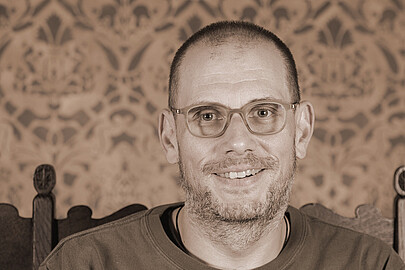
Robert J. Messinger serves as an Associate Professor within the Department of Chemical Engineering at the City College of New York (CCNY), part of the City University of New York (CUNY) system. His academic office is situated in Steinman Hall, Room 327, and he maintains professional contact via telephone at 212-650-8204 and electronic correspondence at rmessinger@ccny.cuny.edu. His position reflects substantial scholarly contributions to electrochemical engineering and energy storage research. Professor Messinger's research program centers on advanced battery systems including aluminum-sulfur, lithium-ion, and zinc-based chemistries, with particular focus on extreme-environment operation (high and low temperatures) and sustainable resource recovery. He employs nuclear magnetic resonance spectroscopy to investigate fundamental electrochemical mechanisms such as ion intercalation, electrodeposition, and interfacial phenomena. His work extends to rare earth element recycling using peptide-based surfactants and foam fractionation techniques, addressing critical challenges in energy storage sustainability and materials science. Analysis of his 2023-2025 publications reveals dominant research trajectories in electrolyte engineering for temperature-resilient batteries, mechanistic studies of multivalent-ion systems, and biomimetic separation methods for critical minerals. Key trends include the development of chloroaluminate and ionic liquid electrolytes, molecular-level characterization of electrode processes via NMR, and innovative approaches to rare earth element recovery that minimize environmental impact. His work consistently bridges fundamental electrochemistry with practical battery engineering applications. No scientific awards or major recognitions are documented in the provided source material. Similarly, details regarding graduate student mentorship, sponsored research grants, or laboratory infrastructure are absent from the available information.
Prof. Dr. Sebastian Polarz is a Professor at the Institute of Inorganic Chemistry, Leibniz University Hannover, within the Faculty of Natural Sciences. He leads the Inorganic Molecular and Materials Chemistry group and serves on the executive board of the institute, contributing to curriculum and admissions committees. His research focuses on nanomaterials, semiconductor materials, and energy-related applications. Key projects include hierarchical nanomaterials for anti-biofilm applications, functional interfacial additives in hybrid perovskites, and porous supercrystals for solar cells. He has secured funding from prestigious sources like the ERC and DFG, notably receiving an ERC Starting Grant in 2014 for research on inorganic surfactants. Publications highlight advancements in perovskite microcrystals, magnetic surfactants, and stimuli-responsive materials. His work bridges chemistry, physics, and engineering, with implications for energy technology, environmental remediation, and biomedical applications. Collaborations with institutions like the Particle Analysis Center (SFB) further underscore his interdisciplinary approach. Scientific awards include the ERC Starting Grant (2014). His grants encompass topics like carbon capture, defect engineering in semiconductors, and functional gradient materials. Research labs and teams under his leadership explore cutting-edge areas such as adaptive colloids and photocatalytic systems.
Hakim BOUDAOUD is a Professor at ENSGSI - Groupe INP in Nancy, France. He coordinates 2nd Year Engineering Projects and teaches courses in Mechanical Engineering, including Modeling, Design, Thermal Mechanics, Vibration Mechanics, and Circular Economy. His research focuses on additive manufacturing, polymer recycling, and sustainable materials. He holds a PhD in Mechanical Engineering from Centrale de Lille and an Engineering Degree. His teaching responsibilities include courses such as Functional Materials and Design, Non-deformable Solid Mechanics, and the IDEAS Master’s program in Innovation and Design. He is involved in engineering degree programs in Systems and Innovation Engineering, offering apprenticeship and continuing education tracks. BOUDAOUD’s research emphasizes distributed recycling via additive manufacturing, vibration analysis of composite structures, and open-source fabrication technologies. His work bridges mechanical engineering with environmental sustainability, addressing challenges in material science and circular economy.
Professor Alistair Duffy is Professor of Electromagnetics and Associate Dean of Research and Innovation at De Montfort University. His research focuses on computational electromagnetics validation and electromagnetic compatibility (EMC) testing methods. Research Focus: Key areas include: Validation of computational electromagnetic models EMC testing methodologies for physical layer components Partial discharge location using time-reversal techniques Uncertainty analysis in EMC measurements Recent work develops AI applications for EMC and addresses shielding effectiveness in aviation connectors and PCBs. His publications demonstrate consistent focus on measurement reliability and industrial applications. Leadership: Serves as Associate Dean of Research and Innovation, leading initiatives in electronic engineering research and industry collaboration.
New Jersey Institute of Technology (NJIT)United States
Alexander Haimovich is a Distinguished Professor in the Department of Electrical and Computer Engineering at New Jersey Institute of Technology (NJIT). He received his Ph.D. in Systems Engineering from the University of Pennsylvania in 1989 and joined NJIT in 1992. His leadership roles include directing the New Jersey Center for Wireless Telecommunications and serving as a visiting fellow at Princeton University. He holds the Ying Wu Endowed Chair and is a Fellow of the IEEE. Education: Ph.D., Systems Engineering, University of Pennsylvania, 1989 M.S., Electrical Engineering, Drexel University, 1983 B.S., Electrical Engineering, Technion - Israel Institute of Technology, 1977 Research Focus: Professor Haimovich specializes in wireless communications, radar systems, and signal processing. His work explores fundamental limits of detection and estimation theory, with applications in cognitive radar, MIMO systems, and interference mitigation. Current projects involve adaptive radar detection using meta-learning and blind source separation techniques for frequency-hopping signals. Publication Trends: His recent articles demonstrate strong focus on radar waveform optimization, machine learning applications in signal processing, and sub-Nyquist radar systems. Works frequently address challenges in spectral congestion and real-time adaptive detection. Awards: Fellow of the IEEE Academic Leadership: Oversees graduate research programs and maintains collaborations with defense and telecommunications industries. Manages laboratory facilities for wireless system prototyping.
Dr. Jason M. Unrine is an environmental toxicologist and chemist at the University of Kentucky, serving as Director of the Kentucky Water Resources Institute. His research focuses on solving societal challenges through interdisciplinary collaborations in four key areas: environmental chemistry/toxicology of nanomaterials, disinfection byproducts in drinking water, trace-element toxicology, and nanocarriers for RNA delivery in sustainable agriculture. Education includes: Ph.D. in Toxicology from University of Georgia B.S. in Biology from Antioch College Research interests span nanomaterial transformations, bioavailability mechanisms, trophic transfer processes, and biological control technologies. His work utilizes advanced analytical techniques to investigate environmental transformations and adverse effects at molecular through population levels. Recent publications demonstrate strong focus on nanotoxicology, water quality, and sustainable agriculture technologies. Article trends show increasing emphasis on practical applications of nanotechnology in agriculture and water treatment. Administrative service includes co-directing analytical cores and faculty supervision of nutrient analysis laboratories. Research training has produced numerous postdocs, graduate students, and undergraduates now in academic, government, and industry positions.
Dr. Tong Yang is a Senior Lecturer in Construction, Architecture & BIM at Middlesex University, affiliated with the Faculty of Science and Technology and the Design Engineering & Mathematics department. Her research focuses on sustainable building design, energy efficiency, and innovative technologies like BIM and renewable energy systems. She has contributed to projects such as the MDX Living Pavilion, recognized for its sustainable and collaborative design. Dr. Yang holds a PhD in computational fluid dynamics and has extensive experience in teaching and supervising postgraduate students. Education and Qualifications: Dr. Yang’s academic background includes a PhD, MSc in Renewable Energy and Architecture, and professional certifications such as Chartered Engineer (CEng) and Fellow of the Higher Education Academy (SFHEA). She has also conducted postgraduate teaching qualifications. Research Interests: Her work spans natural ventilation modeling, human thermal comfort, BIM integration, solar thermal facades, and smart building technologies. She emphasizes bridging academic research with practical applications in construction and urban planning. Publications: Dr. Yang’s recent research includes optimizing heat exchangers, machine learning for urban wind simulations, and sustainable building frameworks. Her work often addresses energy efficiency, renewable energy systems, and smart city technologies. Awards: She received recognition as runner-up for Teaching Excellence at the Guardian University Awards 2020 for the MDX Living Pavilion project, which highlights her commitment to innovative education and sustainable design. Teaching and Supervision: Dr. Yang leads modules in Architectural Technology, BIM Management, and Construction Technology at both undergraduate and postgraduate levels. She currently supervises PhD student Olagoke Faromika and serves as an examiner for MSc and PhD programs. Labs and Collaborations: Her work involves transdisciplinary collaborations, such as the MDX Living Pavilion project, which integrates education, sustainability, and community engagement. She actively connects academic research with industry practices through her roles in professional committees like the CIBSE Intelligent Buildings Group.
Dr. Ben Shirley is Associate Professor in Audio Technology at the University of Salford's Acoustics Research Centre. He holds an MSc from Keele University (2000) and PhD from Salford (2013). As co-founder/Director of Salsa Sound Ltd, he develops award-winning audio solutions for live sports broadcast. Research focuses on spatial audio processing, accessibility solutions for hearing-impaired audiences, and personalization of object-based audio systems. Current projects involve AI-driven automatic mixing for live broadcasts and immersive XR experiences. His doctoral thesis pioneered methods for improving television sound accessibility. Dr. Shirley supervises PhD candidates in broadcast audio, immersive sound, and accessible media. He has led projects funded by UK Department of Culture Media and Sport (5G Edge-XR) and contributes to standards for next-generation audio broadcasting.
Devina Sanjaya serves as an Assistant Professor in the Department of Mechanical, Aerospace and Biomedical Engineering at the University of Tennessee, Knoxville. She leads the Scientific Computing and Fluid Dynamics Lab (SCFDL) and has been with the institution since July 2019, initially as a Research Assistant Professor before transitioning to a tenure-track Assistant Professor position in August 2019. Her educational background includes a Ph.D. in Aerospace Engineering and Scientific Computing from the University of Michigan (2019), an M.S. in Aeronautics and Astronautics from Stanford University (2014), and a B.S. in Aerospace Engineering with minor in Mathematics from the University of Michigan (2011). Dr. Sanjaya's research focuses on developing advanced computational methods for fluid dynamics simulations. Her work centers on high-order computational fluid dynamics methods, mesh adaptation and optimization, error estimation, verification and validation techniques, and applying scientific machine learning to enhance computational fluid dynamics. She has made significant contributions to the field of scalable, high-order CFD methods, particularly in the area of curved mesh generation and optimization. Her recent publications demonstrate a strong focus on solution verification, uncertainty quantification, and the development of open-source tools for CFD verification. Her research spans both fundamental computational methods and practical applications in aerospace engineering and nuclear reactor design, showing an increasing integration of machine learning techniques with traditional numerical methods. MGB-SIAM Early Career Fellowship (2023-2025) UTK Office of the Provost Research Development Academy Scholar (2022) François-Xavier Bagnoud Fellowship (2016-2019) Zonta International Amelia Earhart Fellowship (2016-2017) Michigan Institute for Computational Discovery and Engineering Fellowship (2015-2016) Dr. Sanjaya actively mentors several graduate students including Ph.D. candidates Aidan Lay, Justin Weinmeister, Trenton Henderson, and Nicole Nutter, along with M.S. student Luc Lipcius. She has secured funding from multiple sources including the Air Force Office of Scientific Research (AFOSR) Computational Math Program, National Science Foundation (NSF REU), and Office of Naval Research. Her professional service includes leadership roles in the AIAA Meshing, Visualization, and Computational Environments (MVCE) Technical Committee, where she currently serves as Meshing Sub-Committee Chair and will chair the MVCE Student Paper Competition for the 2026 AIAA SciTech Forum. She directs the Scientific Computing and Fluid Dynamics Lab (SCFDL), which hosts undergraduate researchers, REU students, and collaborates with national laboratories including Oak Ridge National Laboratory. The lab focuses on developing computational methods for fluid dynamics with applications ranging from aerospace engineering to nuclear reactor design, and has established partnerships with organizations like Flexcompute for sponsorship and research collaboration.
Andrew C. Singer is a distinguished academic holding dual roles as the Dean of the College of Engineering and Applied Sciences at Stony Brook University and a Professor in the Department of Electrical and Computer Engineering. He also holds a courtesy appointment in the Institute for Advanced Computational Science and the School of Marine and Atmospheric Sciences at Stony Brook. Previously, he served as the Fox Family Professor at the University of Illinois Urbana-Champaign's Grainger College of Engineering, where he led innovation initiatives as the Associate Dean for Innovation and Entrepreneurship. His research focuses on signal processing, underwater acoustic communications, and biomedical applications of acoustics, with contributions to underwater acoustic localization, sensor networks, and machine learning for signal processing. Education and Career: While specific educational details are not provided, Singer’s extensive academic leadership roles and research output indicate a strong background in electrical engineering and signal processing. His work spans academia and industry, with notable contributions to acoustic communication systems, biomedical implants, and emergency medical devices (e.g., the emergency ventilator for pandemic response). Research Interests: Singer’s research integrates theoretical and applied aspects of signal processing, including underwater acoustic signal processing, biomedical acoustics, and the design of robust communication systems. He leads projects like Task Force Ocean (underwater acoustic signal processing) and ACOMS+X (acoustic communications in diverse environments), emphasizing practical applications in oceanography, healthcare, and emergency systems. Grants & Collaborations: His work is supported by grants from agencies such as the National Science Foundation, with collaborations extending to medical institutions, geotechnical engineering teams, and robotics researchers. Notable projects include through-soil wireless communication systems and ultrasonic biomedical implants for in vivo video transmission. Labs & Teams: The Singer Research Group at UIUC and Stony Brook focuses on advancing acoustic technologies, with projects like the Mechatronic Acoustic Research System and cooperative microphone array systems for speech enhancement. His team collaborates with engineers, physicians, and data scientists to bridge theoretical and applied challenges.
Laszlo Mihaly is a tenured Professor in the Department of Physics & Astronomy at Stony Brook University (SBU), part of the State University of New York (SUNY). He has held leadership roles including Chair of the Department of Physics & Astronomy (2009–2015) and Interim Dean of the College of Arts and Sciences (2014). His research focuses on condensed matter physics, particularly electron correlations in solids, using techniques like infrared spectroscopy and electron spin resonance. He has led a research group and administered over $2 million in grants. Education and Early Career: Ph.D. in Physical Sciences from the Hungarian Academy of Sciences (1993) Postdoctoral positions at University of Paris (Orsay, France) and UCLA Research Scientist roles at institutions in Budapest and Hungary Research Interests: Electron correlations in solids Superconductivity and fullerides Magnetoresistance in transition metal oxides Spin dynamics and antiferromagnetic systems Applications of synchrotron-based spectroscopy His work has contributed to understanding high-temperature superconductors, doped fullerenes, and magnetic materials. Awards and Memberships: AAAS Fellow (2013) External Member, Hungarian Academy of Sciences (2010) SUNY Chancellor's Award for Teaching (2003) and Faculty Service (2017) Fellow of the American Physical Society (2006) Administrative Roles and Leadership: Directed SBU's Physics Graduate Program (2003–2009) Initiated new research areas: Accelerator Physics and Physics Education Co-chair of University Re-accreditation Steering Committee (2021–2024) Participated in NSF and international grant review panels Publications and Impact: Authored a widely used textbook "Solid State Physics: Problems and Solutions" (Wiley) Over 138 publications with ~4,700 citations and an h-index of 33 Pioneering studies on superconducting fullerenes and cuprate superconductors
Martin Radfar is an Assistant Professor in the Department of Computer Science at Stony Brook University, affiliated with the Institute for AI-Driven Discovery and Innovation. He holds a Ph.D. in Machine Learning and Signal Processing from the University of Toronto (2014). His academic roles include teaching courses such as CSE215 (Foundations of Computer Science), CSE351 (Introduction to Data Science), and ISE316 (Introduction to Networking). He has advised PhD student Xuan Xu and MS student Pranavi Meda. Radfar's research focuses on voice-based human-machine interfaces, auditory scene analysis, Bayesian networks, and cancer drug target prediction using machine learning. His expertise spans signal processing, computational biology, and healthcare applications. Notable contributions include developing the PGMLAB library for Bayesian networks and pioneering work in microRNA target prediction. His academic achievements include awards such as the NSERC Postdoctoral R&D Fellowship (2014) and the Edward S. Rogers Graduate Scholarship (2008). His teaching emphasizes foundational computer science, data science tools (Python, Jupyter notebooks), and network architecture. He has published widely in venues like IEEE Signal Processing Society journals and ACM Transactions, addressing topics like speech separation, genomic data analysis, and network protocols.