Professor Andrew Johnson at the University of Bath is a leading researcher in materials chemistry for energy applications , specializing in precursor design for advanced thin film growth techniques including Chemical Vapour Deposition (CVD) and Atomic Layer Deposition (ALD) . His work spans sustainable technologies, graphene science, and nanoparticle synthesis, with a focus on enabling next-generation electronics and climate solutions. Department of Chemistry, University of Bath Centre for Sustainable Chemical Technologies (CSCT) Institute of Sustainability and Climate Change Collaborations with University of Leeds, University of California Davis, and industry partners like Pragmatic Printing Research Interests: Development of volatile, non-toxic molecular precursors for metals/oxides ALD/CVD of metastable materials (e.g., SnO, α-Fe2O3) Carborane chemistry for early transition metals and lanthanides Surface engineering for automotive lubricant alternatives Photoanodes for solar water splitting Flexible electronics with sustainable materials Collaborations & Grants: Funded by EPSRC and Innovate UK , with projects on low-power flexible electronics and complementary semiconductor systems. Collaborates with physics, chemical engineering, and industry partners for mechanical property testing and device fabrication.
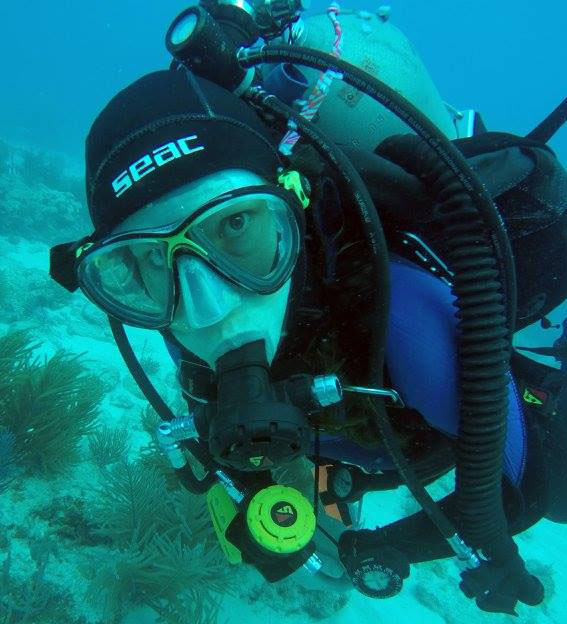
Dr. Patricia Spellman is an Assistant Professor in the School of Geosciences at the University of South Florida, specializing in karst hydrogeology, island hydrology, and hydrological modeling. She holds a Ph.D. in Civil Engineering from Michigan Technological University and leads multiple state-funded projects on aquifer systems. Research expertise encompasses karst vadose zone dynamics, surface-groundwater interactions in carbonate landscapes, and sustainable water management in island environments. Current projects focus on Floridan Aquifer nitrates, Bahamian blue hole systems, and agricultural impacts on water quality. Publications demonstrate consistent focus on karst hydrology innovations, with recent work advancing spectral analysis techniques for vadose zone characterization and multivariate statistical approaches for contamination tracking. Fieldwork spans Florida, Alaska, and Bahamian archipelago. Grants & Projects: Florida DEP Springs Monitoring ($142k) Suwannee River WMD Projects ($67k) NSF RAPID Storm Response ($25k) Florida Fish & Wildlife Isotope Analysis ($22k) Teaching includes Environmental Hydrology and Numerical Modeling courses. Advises 8 graduate students on topics ranging from San Salvador Island hydrology to agricultural impacts on water chemistry. Extensive field methodology expertise including cave diving and sensor deployment.
Prof. İpek İmamoğlu is a Professor of Environmental Engineering at Middle East Technical University (METU), Ankara, Turkey, specializing in environmental chemistry and pollutant fate. She holds leadership roles, including former Vice Dean of the Faculty of Engineering (2012-2015) and Vice Chair of the Environmental Engineering Department (2009-2012). Her research focuses on organic compound fate, microplastic interactions, contaminated site management, and receptor modeling for pollutants like PCBs and PBDEs. Education: PhD from University of Wisconsin-Milwaukee (2001), M.S. from University of Newcastle upon Tyne (1996), and B.S. from METU (1995). Awards include the METU Ph.D. Dissertation Supervision Award (2017, 2010) and the British Chevening Scholarship (1995/96). She has supervised over 20 PhD and MS students in environmental chemistry and engineering. Research spans contaminated sediment remediation, PCB/PBDE degradation pathways, and policy impacts of microplastics. Her projects include TUBITAK-funded studies on microplastic-organic interactions and POPs management. She advises on national policies, including Turkey’s implementation of the Stockholm Convention on POPs. Key Projects: Molecular Level Microplastic-Organic Interactions (TUBITAK 2021), PCB Fate in Aquatic Sediments (TUBITAK 2015), and Zeolite-Wastewater Treatment (METU Funded 2002). Awards: UWM Dissertator Fellowship, NATO Travel Grant, and ISO 17025 Auditor Certification. Her publications (over 80) cover environmental forensics, receptor modeling, and bioremediation. She actively participates in international conferences and serves as a consultant for UNDP and EU-funded initiatives.
Miguel F. Anjos is Professor and Chair of Operational Research at the School of Mathematics, University of Edinburgh , and holds the NSERC-Hydro-Québec-Schneider Electric Industrial Research Chair on Optimization for Smart Grids at Polytechnique Montréal. He received his B.Sc. (1992), M.S. (1994), and Ph.D. (2001) from McGill, Stanford, and Waterloo respectively. Research Theme Head of Data and Decisions at Edinburgh Founding Director of Trottier Institute for Energy Editor-in-Chief of Optimization and Engineering Research Interests: His work bridges mathematical optimization with smart grid applications , focusing on conic optimization, optimal power flow, demand response, and facility layout. He applies these techniques to energy storage, electric transportation, and industrial systems. Scientific Awards: Méritas Teaching Award (2012) Humboldt Research Fellowship (2009) Queen Elizabeth II Diamond Jubilee Medal (2013) Elected Fellow of EUROPT and Canadian Academy of Engineering Academic Service: Served on Mathematical Optimization Society Council, SIAM Activity Group on Optimization, INFORMS Optimization Society Vice-Chair, and Mitacs Research Review Committee. Hosts benchmark datasets: QAPLIB, FLPLIB, Jones Benchmark.
Giovanna Tinetti is a Professor of Astrophysics and Vice Dean (Research) at King's College London's Faculty of Natural, Mathematical & Engineering Sciences. She leads the European Space Agency's Ariel mission, a space telescope surveying exoplanet atmospheres, set to launch in 2029. As co-founder of the London Centre for Space Exochemistry Data and Blue Skies Space Ltd, she pioneers satellite technology for scientific data collection. She holds a PhD in Theoretical Physics from the University of Turin, with prior affiliations at Caltech/JPL, the Institute of Astrophysics in Paris, and University College London (UCL), where she was a Royal Society University Research Fellow. Her research focuses on exoplanetary atmospheres, molecular spectroscopy, and advanced data science techniques. With over 300 publications, her 2019 paper on water vapor in K2-18b's atmosphere achieved the highest altmetric score in Physical Sciences that year. She has delivered over 350 international talks and lectures. Education: PhD in Theoretical Physics (University of Turin) Affiliations: King's College London, UCL (past), ESA's Ariel Mission, Blue Skies Space Ltd Research Interests: Exoplanet atmospheres, molecular spectroscopy, space science, data-driven analysis methodologies, and atmospheric modeling. Her work bridges observational astronomy with computational chemistry to interpret exoplanet compositions and climates. Awards: Royal Society University Research Fellow Highest Altmetric Score (2019 Physical Sciences) Grants & Projects: Principal Investigator for ESA's Ariel mission Co-leader of the Ariel Data Challenge 2025 Labs/Teams: London Centre for Space Exochemistry Data, Blue Skies Space Ltd technical team, and the international Ariel collaboration network.
Heidi Ottevaere is a Professor at the Faculty of Engineering of the Vrije Universiteit Brussel (VUB) since October 1, 2009. She serves as the head of the Instrumentation and Metrology platform at the Photonics Innovation Center and leads the 'biophotonics' research unit of the Brussels Photonics Team (B-PHOT), which is chaired by Prof. Hugo Thienpont. Her work focuses on the design, fabrication, and characterization of photonic components and systems for diverse applications in medical diagnostics, environmental monitoring, and industrial processes. Dr. Ottevaere earned her Electrotechnical Engineering degree with majors in Photonics from Vrije Universiteit Brussel in 1997 and completed her PhD in Applied Sciences at the same institution in 2003. Her doctoral research focused on 'Refractive microlenses and micro-optical structures for multi-parameter sensing: a touch of micro-photonics.' Professor Ottevaere's research spans multiple cutting-edge areas of photonics with particular emphasis on biophotonics, micro-optics, and optical metrology . Her work bridges fundamental science with practical applications, developing novel photonic components and systems that address real-world challenges. She has pioneered research in miniaturized optical systems for medical diagnostics, environmental monitoring, and industrial applications. Her current research focuses on advancing lab-on-a-chip technologies, microfluidic optical sensors, and novel optical fiber systems for biomedical applications. She has developed microminiaturized, integrated plastic detection units for absorbance and laser-induced fluorescence measurements in microfluidic channels, enabling portable, robust, and disposable diagnostic systems. Her recent publications demonstrate a strong trend toward integrated optical sensing systems with applications in medical diagnostics and environmental monitoring. There's a clear progression from fundamental optical component design to complete system integration, with increasing emphasis on artificial intelligence for data analysis and computational imaging techniques. Her work bridges photonics with biomedical engineering, materials science, and data science, reflecting the interdisciplinary nature of modern photonics research. Dr. Ottevaere has been recognized with several prestigious awards: Best Application award (2008) Educational award - Bronze (2019) MOC09 Contribution Award Winners (2009) As an educator and mentor, Professor Ottevaere has promoted 9 PhD students and supervised numerous master's theses. She has secured substantial research funding from diverse sources including the Fund for Scientific Research Flanders (FWO), the Institute for the Promotion of Innovation by Science and Technology in Flanders (IWT), and multiple European Framework Programs. Her current portfolio includes projects on miniaturized biosensors for drinking water screening, precision manufacturing, and photonics education initiatives in Uzbekistan. She has coordinated multiple strategic research and networking projects with regional, national, and international funding bodies. Professor Ottevaere leads the biophotonics research unit within the Brussels Photonics Team (B-PHOT), one of Europe's leading photonics research groups. Her team includes researchers working on optical metrology, micro-optics fabrication, and biophotonic applications. She collaborates extensively with industry partners including Melexis, Umicore, and Anteryon, as well as academic institutions across Europe through various EU-funded projects. She has been instrumental in developing the interuniversity engineering curriculum 'Master in Photonics' which received the EC Erasmus Mundus quality label in 2006, and continues to be the driving force behind photonics education at VUB.
David Lewis is the Head of the Department of Materials and Professor of Materials Chemistry at the University of Manchester. His research focuses on energy-generation materials, including inorganic thin films and nanomaterials for applications in thermoelectrics, photocatalysis, and photovoltaics. He leads an internationally collaborative group exploring solution-phase synthesis routes and additive manufacturing techniques. Lewis holds editorial roles at Scientific Reports and Materials Science in Semiconductor Processing . Education: PhD in Chemistry MSc in Chemistry (1st Class Hons), University of Birmingham Research Interests: Lewis’s work centers on designing low-temperature syntheses of nanomaterials using molecular precursors. Key areas include layered and 2D materials (e.g., MoS2, black phosphorus), high-entropy materials, and superhydrophobic nanomaterials. His lab pioneers scalable methods like aerosol-assisted CVD and liquid-phase exfoliation. Grants & Awards: Lewis has secured £3.1M+ in funding, including EPSRC grants for nanofabrication and corrosion-resistant electrocatalysts. He received the IAAM Medal (2021) and FIMMM fellowship. His group hosts students via scholarships like the Presidential Doctoral Scheme. Labs & Teams: His lab collaborates globally on energy materials. Capacity-building initiatives include the Royal Society-funded CaGSUMI project for African solar cell development.
Davin Wallace is an Associate Professor at the University of Southern Mississippi's School of Ocean Science and Engineering, where he investigates coastal and marine system responses to storms, sea-level rise, and sediment dynamics across timescales ranging from days to millennia. His research employs field observations, laboratory analyses, and numerical modeling, with active sites across the Gulf of Mexico, Bermuda, and the Philippines. Education: Ph.D. in Earth Science, Rice University (2007-2010) B.S. in Geology and German, Tulane University (2003-2006) Research Focus: Dr. Wallace's work bridges paleotempestology, coastal geomorphology, and sedimentary processes. His research examines hurricane impacts on sediment structures, barrier island resilience under sea-level rise, and Holocene coastal evolution. He specializes in reconstructing historical storm patterns using geologic proxies and assessing anthropogenic influences on coastal erosion. Publication Trends: His recent articles demonstrate interdisciplinary approaches to coastal vulnerability, combining geophysical data, machine learning, and multiproxy sediment analysis. Work consistently addresses climate change impacts, with emphasis on sedimentation mechanisms during extreme events and Quaternary landscape evolution. Scientific Recognition: No major awards documented in provided sources. Academic Leadership: Leads the USM Coastal Evolution and Hazards Research Lab, supervising field campaigns and collaborative projects. Secured grants for Gulf Coast studies from NSF and NOAA. Mentors graduate students in geological oceanography programs and coordinates international research teams across field sites.
Diane M. Styers is an Associate Professor in the Department of Geosciences and Natural Resources at Western Carolina University's College of Arts and Sciences. Her work integrates geospatial technologies with community engagement to address global climate resilience challenges through human-centered research approaches. Her educational qualifications include: Postdoctoral Research in Remote Sensing and Geospatial Analysis, University of Washington Ph.D. in Forest Ecology, Auburn University M.A. in Geography, Georgia State University B.S. in Human Development & Family Studies, University of North Carolina at Greensboro Dr. Styers specializes in public participatory GIS (PPGIS) to incorporate local landscape knowledge into climate adaptation strategies. Her technical expertise spans LiDAR data analysis, object-based image analysis (OBIA), MODIS/Landsat time series, multi-sensor integration, forest ecology, and dendroecology. She investigates how social-ecological processes drive landscape changes affecting Earth's resources, with particular focus on community resilience against climate-related risks. Her publication record reveals strong thematic trends in applying geospatial methods to socio-ecological systems, with increasing emphasis on rivercane conservation, forest community dynamics in Appalachia, biodiversity education using NEON data, and vector-borne disease mapping. Recent works demonstrate sophisticated integration of remote sensing with community-based adaptation frameworks. Dr. Styers actively mentors students through co-authored publications and teaches diverse courses including Introduction to Geospatial Analysis, Remote Sensing, GIS applications, and field-based programs like Sustainability in Costa Rica. Her instructional approach emphasizes authentic science engagement using big data resources.
Dr. Sharon O'Rourke is an Assistant Professor and Ad Astra Fellow at the University College Dublin (UCD) School of Biosystems and Food Engineering since 2019. Previously, she held roles at the University of Sydney and UCD's School of Agriculture and Food Science, focusing on soil science and environmental protection. She holds a BAgrSc from UCD and a PhD in Soil Nutrient Management from Queen's University Belfast. Research Interests: Her work centers on sustainable soil management, soil carbon sequestration, and environmental protection. She employs spectral techniques (e.g., mid-infrared, hyperspectral imaging) and modeling to study soil geochemistry, carbon dynamics, and climate change mitigation. Current projects include ClimateCropping (EU-wide soil carbon management), PRISM (in-field soil sensors), and CFunction (carbon-nutrient stoichiometry). Grants & Projects: Key grants include funding from Teagasc, the Department of Agriculture, and the Sustainable Energy Authority of Ireland. Notable projects include proximal soil sensing for carbon monitoring and bio-based product development via pyrolysis. Teaching: She coordinates modules such as 'Carbon & Sustainability,' 'Soil Technology,' and 'Research Skills,' emphasizing agricultural systems and climate-smart practices. Awards: Recognized as an Ad Astra Fellow, highlighting her contributions to innovative soil science research.
Zhixin Yu is a Professor of Natural Gas Technology at the Department of Energy and Petroleum Technology, Faculty of Science and Technology, University of Southeastern Norway. His research is centered on advanced energy technologies with a strong focus on CO 2 utilization, hydrogen production, electrocatalysis, and next-generation battery systems. He actively collaborates with a broad network of researchers in materials science and chemical engineering. His research interests span CO 2 capture and conversion , green hydrogen production via electrocatalysis and photocatalysis , design of single-atom and nanostructured catalysts (including MOFs, carbon-based materials) , and advanced energy storage systems such as lithium-ion, lithium-sulfur, and lithium-ion capacitors . His work integrates experimental synthesis with theoretical modeling, particularly density functional theory (DFT), to understand and optimize catalytic and electrochemical processes. The recent publications (2021–2025) reveal a strong thematic trend toward electrocatalytic CO 2 reduction to value-added chemicals , hydrogenation reactions using sustainable catalysts , and interface engineering in battery materials to improve stability and performance . The keywords consistently include catalysis, energy materials, CO 2 utilization, and electrochemistry, highlighting his role at the forefront of sustainable energy technology development. Scientific Awards: No scientific awards mentioned in the provided text. Advising and Grants: While specific students or grant details are not listed, Professor Yu appears to lead or significantly contribute to a research group focused on energy materials. His extensive co-authorship with early-career researchers (e.g., Song Lu, Obinna Egwu Eleri, Frederik Thorbjørn Huld) suggests active mentorship and advising. The volume and quality of publications indicate successful acquisition of research funding, likely from national and international sources supporting sustainable energy and materials science. Labs and Teams: No specific lab or research team name is provided. However, his frequent collaboration with colleagues such as Fengliu Lou, Song Lu, and Kun Guo indicates a well-integrated research group within the Department of Energy and Petroleum Technology, likely focused on catalytic materials and energy storage devices.
Nikita Kavokine serves as Tenure Track Assistant Professor at École Polytechnique Fédérale de Lausanne (EPFL) within the School of Basic Sciences . His dual appointments span the Institute of Chemical Sciences and Engineering (ISIC) and the School of Chemical Sciences and Engineering (SCGC) , where he leads the Quantum Plumbing Lab (LNQ) and contributes to graduate teaching. Based at Building CH A2 398 in Lausanne, he maintains active research and instructional roles across EPFL's chemistry and chemical engineering programs. His research pioneers quantum nanofluidics and nanoscale transport phenomena , focusing on electron-ion coupling mechanisms in confined geometries. Key investigations include quantum friction in water-carbon interfaces, hydroelectric energy conversion through nanochannels, and plasmon-hydron resonances in two-dimensional materials. His work bridges condensed matter physics, electrochemistry, and fluid dynamics to develop fundamental principles for next-generation nanofluidic devices and quantum sensors. Analysis of his 15 most recent publications (2023-2025) reveals three dominant research thrusts: quantum-enhanced energy conversion (evident in hydroelectric drag and electron cooling studies), non-classical ion transport (including ionic Coulomb blockade and interaction confinement), and emergent quantum hydrodynamics (momentum tunneling, collective modes). These publications consistently integrate advanced numerical methods with nanoscale experimental systems, establishing new paradigms for solid-liquid quantum interactions. Kavokine currently supervises three PhD students: Gispert Peter , Lu Hao , and Rigaux Killian David . His teaching portfolio includes graduate courses in Statistical Mechanics for Chemistry and Nanofluidics , emphasizing theoretical frameworks for many-particle systems and nanoscale fluid dynamics. Research funding supports his laboratory's exploration of quantum effects in nanofluidic channels, though specific grant details are not provided in source materials. The Quantum Plumbing Lab (LNQ) operates at the forefront of nanoscale quantum transport research, utilizing advanced nanofabrication and characterization techniques to probe electron-ion coupling phenomena. The lab's interdisciplinary team combines expertise in quantum physics, electrochemistry, and fluid dynamics to investigate fundamental limits of energy conversion and transport at atomic scales, with particular focus on graphene-based systems and angstrom-scale confinement.
Dr. Beata Bajorowicz serves as an Adjunct Professor at the Department of Environmental Technology within the Faculty of Chemistry at the University of Gdańsk, where she is actively engaged in research at the Laboratory of Photocatalysis. Her research expertise spans advanced materials engineering with core focus areas including: Photocatalytic hydrogen generation through water splitting Quantum dot-decorated metal-organic frameworks (MOFs) and covalent organic frameworks (COFs) Nanocomposites for lithium/sodium ion battery applications Synthesis and characterization of semiconductor hybrid materials Analysis of her 15 most recent publications (2022-2024) reveals a dominant research trajectory toward COF/MOF-quantum dot hybrid systems, with significant emphasis on optimizing photocatalytic efficiency for environmental remediation and renewable energy applications. Her work demonstrates methodological innovation in hydrogen detection techniques and increasingly explores multifunctional materials for simultaneous energy storage and environmental solutions. Dr. Bajorowicz's laboratory activities center on the development of next-generation photocatalytic technologies within the University of Gdańsk's research infrastructure. No information regarding scientific awards, academic advising responsibilities, or specific grant funding was available in the provided sources.
Dr. Qilin Li is a Professor of Civil and Environmental Engineering at Rice University, serving as Co-Director of the NSF Nanosystems Engineering Research Center for Nanotechnology-Enabled Water Treatment (NEWT). She leads research on advanced water treatment technologies, membrane processes, and nanotechnology applications to address global water challenges. Her work focuses on membrane distillation, nanomaterials for disinfection, and sustainable infrastructure solutions. Dr. Li holds a Ph.D. and M.S. from the University of Illinois at Urbana-Champaign and a B.E. from Tsinghua University. Her research group investigates membrane fouling, desalination, and recovery of valuable metals from wastewater. Key projects include nanophotonics-enhanced solar desalination and electrochemical processes for contaminant removal. She has been awarded the CAPEES/Nanova Frontier Research Award and the Roy E. Campbell Faculty Development Award. Dr. Li advises multiple Ph.D. students and postdoctoral researchers, advancing innovative water treatment technologies. Dr. Li’s contributions span academic leadership, industry collaborations (e.g., SolMem LLC), and policy-oriented research to enhance urban water resilience. Her lab develops materials and processes for energy-efficient water reuse, with a focus on sustainable solutions for industrial and municipal systems.
Professor Simon Pollard OBE DIC PhD DSc FREng FHEA is a Professor of Environmental Risk Management at Cranfield University's School of Water, Energy and Environment. With over 20 years of service at Cranfield, he has held numerous leadership positions including Pro-Vice Chancellor for the School of Water, Energy and Environment (2014-2021) and Pro-Vice-Chancellor International (2018-2024). He has served on the University's Executive for a decade and chaired key committees including Cranfield's Board for Energy and Environment, Health and Safety Committee, and International Committee. As an environmental engineer, Professor Pollard earned his PhD from Imperial College and his DSc from Cranfield University. His academic journey has positioned him as a leading authority in environmental risk governance, with significant contributions to government guidelines on environmental risk and leadership of risk centers for EPSRC and NERC. Professor Pollard's research focuses on environmental risk governance, preventative risk management, and regulatory design, with recent work exploring risk governance in the international water sector. His scholarship directly addresses the green economy, seeking to reconcile society's concerns about pollution with organizational responsibilities for safe management. His work spans carbon and climate risk, environmental policy, corporate sustainability, waste management, and resource efficiency. His extensive publication record demonstrates expertise across environmental engineering, risk assessment methodologies, water utility management, and sustainable waste practices, consistently bridging theoretical frameworks with practical applications. Professor Pollard has been honored with several prestigious awards including: Order of the British Empire (OBE) in 2020 Fellowship of the Royal Academy of Engineering (FREng) Fellowship of the Higher Education Academy (FHEA) Professor Pollard has served in numerous advisory capacities beyond academia, including membership on the Government's Interdepartmental Liaison Group on Risk Assessment, the joint engineering institutions' Hazards Forum, and BBSRC's Beringer Panel. As editor of Science of the Total Environment for 16 years, he has significantly influenced environmental research publication standards. His international engagement includes visiting professorships at the University of South Australia, Jiangsu University, and most recently, the University of Salerno (2024). Professor Pollard has led significant initiatives in responsible internationalization, resetting Cranfield's approach to academic partnerships amid changing geopolitical climates and renewing the university's approach to knowledge diplomacy. His work has directly influenced UUKi's commitment to international postgraduate education.