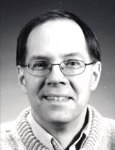
Jonathan F. Vance is a distinguished academic and historian at Western University, serving as the Distinguished University Professor and J.B. Smallman Chair in the Department of History. His research focuses on military history, Canadian history, and social memory, particularly regarding the First and Second World Wars, prisoners of war, and commemoration practices. He has authored numerous books and chapters, including The True Story of the Great Escape and Death So Noble: Memory, Meaning and the First World War . He holds a PhD from York University (1993) and has received prestigious awards such as the Charles P. Stacey Prize, Floyd S. Chalmers Award, and membership in the Royal Society of Canada. His research is supported by the Ley and Lois Smith War, Memory, and Popular Culture Research Collection, a key resource for studies on war and society. Teaching includes courses like HIST 1810E - Wars that Changed the World and supervises graduate students at both master’s and doctoral levels. His work bridges historical analysis with cultural studies, examining how societies remember and represent conflict.
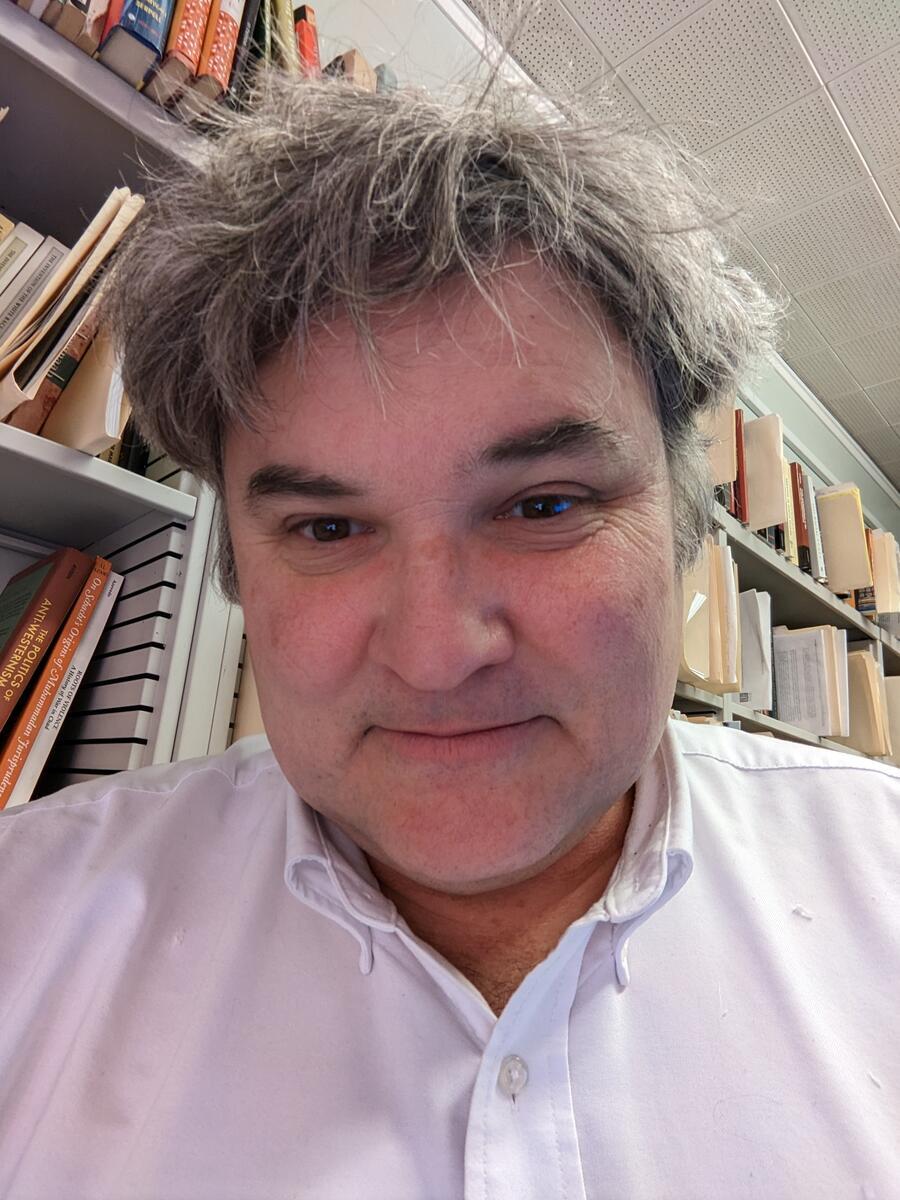
Bruce S. Hall is an Associate Professor at the University of California, Berkeley specializing in the intellectual and social history of West Africa's Sahel region. His research focuses on Muslim intellectual culture, slavery, race, and economic history in Mali, Niger, and Mauritania, with particular attention to Timbuktu and the Niger Bend through Arabic manuscript analysis. Education: PhD, University of Illinois at Urbana-Champaign, 2005 MA, Queen's University (Canada), 1995 BA, University of Toronto, 1994 Research Interests: Hall's work centers on the intersection of Muslim intellectual culture and social structures in pre-colonial and colonial West Africa. He examines how Arabic manuscripts document racial ideologies, slavery systems, and commercial networks, particularly through Timbuktu's 19th-century correspondence. His research reveals how Islamic legal frameworks interacted with social hierarchies and colonial disruptions in circum-Saharan societies. Publications Trends: Hall's scholarly output (2010-2020) consistently analyzes Arabic manuscripts to reconstruct West African intellectual history. Dominant themes include slavery emancipation processes, Islamic legal interpretations of commerce, race conceptualizations across Muslim societies, and Timbuktu's role as a scholarly hub. His work demonstrates increasing engagement with film studies and vernacular media while maintaining core focus on manuscript-based historiography. Scientific Awards: Martin A. Klein Prize (2012) for A History of Race in Muslim West Africa, 1600-1960 Conover-Porter Award (2016) for contribution to Arabic Literature of Africa. Volume 5 Advising and Projects: Hall serves as general editor of the West African Arabic Manuscript Database (WAAMD), a major bibliographic initiative cataloging Arabic materials across West Africa. While specific student advisees aren't listed, his leadership in WAAMD demonstrates extensive collaborative project management involving international scholars and library professionals focused on manuscript preservation and accessibility. Labs and Teams: Hall directs the WAAMD project team housed at UC Berkeley Library, coordinating researchers who catalog and analyze Arabic manuscripts from Mauritania, Mali, and Niger. This digital humanities initiative creates critical infrastructure for West African manuscript studies while training specialists in Arabic paleography and historical methodology.
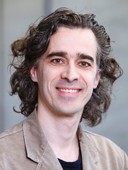
Lerrel Pinto is an Assistant Professor of Computer Science at New York University's Courant Institute, where he leads the General-purpose Robotics and AI Lab (GRAIL). His research focuses on enabling robots to generalize and adapt in unstructured environments through advancements in robot learning, decision making, and multimodal sensing. Before joining NYU, he completed a postdoc at UC Berkeley, a PhD in Robotics at Carnegie Mellon University, and an undergraduate degree in Mechanical Engineering at IIT Guwahati. Key research areas include large-scale robot learning, representation learning for sensory data, reinforcement learning for adaptability, and open-source robotics hardware. Notable achievements include the Sloan Fellowship (2025), NSF CAREER Award (2024), and Best Paper Awards at multiple robotics conferences. Pinto's lab has developed influential systems such as the AnySkin tactile sensing framework and the OPEN TEACH teleoperation system. Education highlights include a PhD from CMU (2019) under Abhinav Gupta, a postdoctoral stint with Alexei Efros and Pieter Abbeel at Berkeley, and undergraduate studies at IIT Guwahati. He has authored over 65 publications in top conferences like ICRA, NeurIPS, and CVPR. Pinto teaches courses on robotics, reinforcement learning, and AI at NYU. His service contributions include roles on program committees for ICML, NeurIPS, and IROS, as well as organizing workshops on topics like Dexterous Manipulation and Vision-Language Models for Robotics. His team actively collaborates through the GRAIL lab, with current projects exploring tactile sensing, zero-shot policy deployment, and multimodal robot learning systems. Ongoing research emphasizes bridging the gap between human and robotic dexterity through novel reward structures and adaptive control frameworks.
Prof. Jeroen Anton van Bokhoven is a Full Professor at ETH Zurich's Department of Chemistry and Applied Biosciences and Head of the Laboratory for Catalysis and Sustainable Chemistry at Paul Scherrer Institute. His research focuses on establishing structure-performance relationships in heterogeneous catalysts to enable sustainable chemical processes through advanced catalyst design. Education: B.Sc. in Chemistry, Utrecht University (1995) Ph.D. in Inorganic Chemistry and Catalysis (with honours), Utrecht University (2000) Research Focus: Van Bokhoven's group pioneers operando characterization techniques, particularly X-ray absorption spectroscopy and scattering methods, to study catalysts under realistic reaction conditions. Key research thrusts include methane conversion to value-added products (methanol, methyl esters), zeolite catalysis for olefin production, and design of stable catalysts for high-temperature oxidation processes. His work bridges fundamental surface science with industrial applications in sustainable energy and chemical manufacturing. Scientific Recognition: Swiss Chemical Society Werner Prize (2008) Academic Leadership: Van Bokhoven leads a multidisciplinary research group spanning ETH Zurich and Paul Scherrer Institute, supervising doctoral candidates and postdoctoral researchers. His group maintains strategic partnerships with industrial catalyst manufacturers and operates specialized facilities for in situ spectroscopy at the Swiss Light Source synchrotron. Current projects address carbon dioxide utilization, biomass conversion, and fundamental mechanisms of catalyst deactivation. Research Infrastructure: The group leverages state-of-the-art capabilities at the Laboratory for Catalysis and Sustainable Chemistry (PSI), including custom operando cells for XAS, XPS, and electron microscopy under reactive gas environments, enabling atomic-scale observation of catalytic transformations.
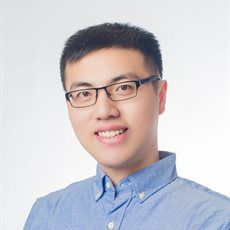
Xiaocheng Shang is an Associate Professor in Mathematical Optimisation and Data Science at the University of Birmingham's School of Mathematics. His research focuses on numerical methods for stochastic differential equations, with applications in computational mathematics, statistics, physics, and data science. He is affiliated with the Optimisation and Numerical Analysis Group, Statistics and Data Science Group, and the Institute for Data and AI. Shang holds a PhD in Applied and Computational Mathematics from the University of Edinburgh (2016) and completed postdocs at the University of Edinburgh, Brown University, and ETH Zurich before joining Birmingham in 2019. His academic achievements include fellowships from The Alan Turing Institute, the LMS Emmy Noether Fellowship, and the EUniWell Leadership Fellowship. He has secured funding from EPSRC, the Royal Society, and the Isaac Newton Institute. Shang is actively involved in supervising PhD students and co-organizing research initiatives such as the Data Science and Computational Statistics Seminar. Research interests include structure-preserving integrators, Bayesian sampling techniques, and machine learning applications in dynamical systems. His work bridges numerical analysis, probability theory, and multiscale modeling in materials science. Recent projects involve neural networks for complex dynamical systems and numerical algorithms for deterministic/stochastic systems.
Xia Ben Hu is a Professor in the Department of Computer Science at Rice University's Brown School of Engineering. He leads research in automated and interpretable machine learning algorithms with applications across social informatics, health informatics, and information security. His work has resulted in widely adopted systems including AutoKeras, TODS, and RLCard. Education: PhD from Arizona State University (supervised by Dr. Huan Liu) Master and Bachelor degrees from Beihang University Prof. Hu's research focuses on developing automated and interpretable machine learning algorithms for large-scale, networked, dynamic and sparse data. His work spans automated machine learning (AutoML), deep learning, fairness in AI, time series analysis, and interpretable AI. He has made significant contributions to neural architecture search, collaborative filtering, anomaly detection, and reinforcement learning in imperfect information games. His publication record shows a clear progression from foundational work in network embedding and collaborative filtering (2017) to more recent work on LLM optimization, quantization, and extending context windows (2024). A consistent thread throughout his research is the focus on making complex machine learning systems more accessible, efficient, and interpretable. Selected Awards: ACM SIGKDD Rising Star Award (2021) NSF CAREER Award (2018) Teaching + Research Excellence Award, Rice University (2023) Multiple Best Paper Awards at top venues including ICML, CIKM, and AMIA Prof. Hu has successfully mentored numerous graduate students, with recent graduates securing tenure-track positions at major universities. His research is generously supported by federal agencies including DARPA (XAI, D3M, NGS2), NSF (CAREER, III, SaTC), NIH, and industrial sponsors such as Adobe, Apple, Google, LinkedIn, and JP Morgan. He has served as General Co-Chair for WSDM 2020 and ICHI 2023, and Program Chair for AIHC 2024. He leads the DATA Lab at Rice University, which develops open-source systems for automated machine learning and reinforcement learning. The lab's AutoKeras system has over 8,000 GitHub stars and 1,000 forks, and their work has been integrated into TensorFlow, Apple production systems, and Bing production systems.
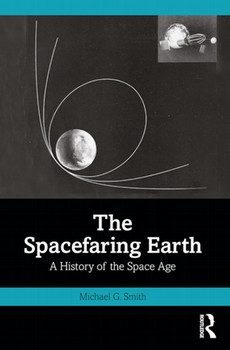
Michael G. Smith is a Professor of History at Purdue University's College of Liberal Arts, specializing in Russian History and Aerospace History. His office is located in BRNG 6170, where he holds office hours by appointment and before or after class. Dr. Smith teaches a diverse range of courses including History of Russia to 1861 (HIST 238), History of Russia from 1861 (HIST 239), History of Aviation (HIST 384), and History of the Space Age (HIST 387), along with numerous advanced seminars on Russian history, aerospace history, and global historical topics. Dr. Smith earned his Ph.D. from Georgetown University in 1991 and has established himself as a leading scholar in both Russian revolutionary history and aerospace history. His research demonstrates remarkable interdisciplinary breadth, connecting linguistic studies with political history in the Soviet context while simultaneously exploring the cultural dimensions of space exploration and aviation history. His scholarly output reveals two major research trajectories: deep investigations into the Russian Revolution with particular focus on language policy, nationalities issues, and revolutionary violence in Azerbaijan and the Caucasus region; and pioneering work on the history of aerospace, space exploration, and the cultural dimensions of the Space Age. These dual interests converge in his examination of how technological innovation intersects with political ideology and national identity formation. Dr. Smith has successfully mentored numerous undergraduate and graduate students whose research has resulted in publications in respected journals such as the Journal of Purdue Undergraduate Research, Quest: The History of Spaceflight Quarterly, and Astropolitics. His students have explored diverse topics including Purdue's aviation pioneers, NASA mission insignia, Shuttle-Mir program, and regional impacts of space programs. Working closely with the Purdue Archives, Dr. Smith has developed innovative archival-research seminars that have produced multiple student publications and special projects including Flight Paths: Purdue University's Aerospace Pioneers and Purdue Students Study Boilermaker Eugene Cernan's Remarkable Career. His commitment to connecting historical research with contemporary technological heritage has created unique opportunities for students to engage with primary sources related to aerospace history.
Vincent Brown serves as the Charles Warren Professor of American History and Professor of African and African American Studies at Harvard University, based in the Center for Government and International Studies (CGIS) South Building. His academic work centers on Atlantic history with a focus on the African diaspora and slavery in the Americas. His research expertise spans Atlantic History, African Diaspora Studies, and Slavery, with deep engagement in Digital History methodologies, Early American History, Imperial History, and Race studies. Brown examines power dynamics, resistance movements, and cultural identity formation within 17th-18th century Atlantic contexts, particularly in the Caribbean. His interdisciplinary approach integrates spatial analysis and digital tools to reinterpret historical narratives of slavery and empire. Analysis of his publications (2011-2024) reveals sustained focus on slave revolts as transnational phenomena, spatial history through digital mapping, and multimedia scholarship. His work demonstrates evolution from textual analysis in The Reaper's Garden (2008) to immersive cartographic projects like the Jamaican slave revolt mapping (2012-2016), culminating in documentary production ( Herskovits at the Heart of Blackness , 2009; The Bigger Picture , 2022). Recent outputs show increasing engagement with public history and interdisciplinary connections between political geography, racial terror, and cultural memory. The source materials do not specify details regarding student advising, grant funding, or laboratory teams.
Professor Mark Stoyle is a distinguished historian at the University of Southampton's Faculty of Arts and Humanities, Department of History, specializing in early modern British history. His research focuses on the English Civil War, Tudor Rebellions, and Witchcraft studies, with particular emphasis on regional histories of Devon and Cornwall. His research interests include: The English Civil War crisis of the 1640s Tudor Rebellions including the Western Rising of 1549 ('Prayer Book Rebellion') Early modern witchcraft prosecutions, especially in Exeter Urban society in early modern Britain Analysis of his recent publications reveals consistent thematic focus on marginalized historical narratives - particularly maimed soldiers' petitions from the Civil War period, witchcraft prosecutions in Southwest England, and Tudor-era popular uprisings. His work demonstrates interdisciplinary approaches combining archival research with cultural memory studies and public history engagement. His scientific awards include: Helyer an Gof Prize (2023) for best book on Devon history (2022) Helyer an Gof Prize (2023) for best book on Cornwall history (2022) Professor Stoyle actively supervises PhD students including Conor Byrne, Charlotte Kelly Rebecca Samways, and Imogen Bryony Tozer, while leading major AHRC-funded projects. His external engagements include serving on the Royal Historical Society Council, the Victoria County History advisory board, and BBC History Magazine's editorial panel. He has appeared on over 50 radio and television programs including 'The World at One' and 'Who Do You Think You Are?'. His current research includes transcribing maimed soldiers' petitions for the 'Conflict, Welfare and Memory' project, completing a monograph on the Western Rising of 1549, and researching post-Restoration witchcraft prosecutions in Exeter.
Nevin Reda serves as Associate Professor of Muslim Studies and Director of the Muslim Studies program (MPS) at Emmanuel College, Victoria University within the University of Toronto. Her academic leadership spans Qur'anic scholarship, Islamic legal theory, and interfaith education, with active teaching in courses such as Surat al-Baqara, Islamic Law, and Bible-Qur'an Dialogue. Her educational foundation includes: BSc, Cairo University (1989) MA, University of Toronto (2003) PhD, University of Toronto (2010) Dr. Reda's research centers on Qur'anic poetics and narrative structure, integrating literary theory, Islamic spiritual care, and Biblical Hebrew studies. She pioneers spiritually integrative approaches to Islamic ethical-legal theory (uṣūl al-fiqh) and develops interreligious pedagogies that bridge theological divides. Her work critically engages gender justice, domestic violence interpretations, and democratic theology through Qur'anic exegesis, emphasizing contextual hermeneutics and feminist perspectives. Analysis of her 15 most recent publications (2024-2010) reveals dominant trends in Qur'anic narrative analysis, gender-ethics intersections in Islamic law, and postcolonial interfaith dialogue frameworks. Key subfields include spiritually integrative readings of verse 4:34, reform of uṣūl al-fiqh for marriage ethics, and comparative Torah-Qur'an exegesis, demonstrating consistent methodological innovation across disciplines. No scientific awards were documented in the source material. As MPS Director, Dr. Reda mentors graduate students in Muslim Studies while advancing curriculum development for intercultural theological education. Her scholarly output—including two monographs and collaborations with institutions like Women and Memory Forum—reflects sustained research leadership, though specific grant details remain unreported. Current projects focus on Qur'anic structure theory and decolonizing epistemologies in religious studies.
Handan Kulan serves as Assistant Professor at Yeditepe University's Faculty of Computer and Information Sciences, Department of Information Systems and Technologies since 2024. Previously, she held faculty positions at Istinye University (2023), Uskudar University (2022), and Beykoz University (2020) across computer engineering and software engineering departments. Education: Ph.D. in Computer Engineering, Kadir Has University (2016-2020): Thesis on critical proteins in Down syndrome learning processes M.S. in Computer Science and Engineering, Sabanci University (2013-2014): Thesis analyzing protein residue networks B.S. in Genetics and Bioengineering, Yeditepe University (2007-2013) Second Major in Computer Engineering, Yeditepe University (2009-2013) Her research integrates machine learning with biomedical challenges, specializing in Down syndrome proteomics, neural network analysis of brain aging, and immune system disorders. She develops computational models for protein identification and applies gradient boosting algorithms to biological datasets, bridging AI with healthcare decision systems as demonstrated in her 2023 Springer book. Publications reveal consistent focus on computational approaches to Down syndrome, with recent conference presentations expanding into statistical clustering of biological data and gene ontology analysis for drug discovery. Her work demonstrates methodological evolution from protein network analysis to advanced predictive analytics. Awards: No specific scientific awards documented in source materials. Dr. Kulan actively supervises graduate theses while teaching core computer science courses including Deep Learning, Artificial Intelligence, and Data Structures at both undergraduate and graduate levels across multiple institutions. Her teaching portfolio reflects direct alignment with her research in AI-driven biomedical analysis.
Paul Anderson serves as Professor of Biblical and Quaker Studies at George Fox University's School of Theology, where he has taught since January 1989. His academic journey includes a PhD from Glasgow University, MDiv from Earlham School of Religion, graduate studies at Trinity Lutheran Seminary and Portland State University, and a BA from Malone University. Anderson maintains significant international academic connections as extraordinary professor of religion at North-West University of Potchefstroom (South Africa) and adjunct professor at Barclay College and Portland Seminary. Anderson's research centers on the Gospel of John, Jesus studies, and Quaker theology. He pioneered cognitive-critical analysis of Johannine traditions to address Christological tensions, developing his "Bi-Optic Hypothesis" for understanding John's composition. His influential book The Fourth Gospel and the Quest for Jesus argues for John's significance in historical Jesus research, while From Crisis to Christ provides a contextual New Testament introduction bridging ancient and contemporary contexts. His work on Quaker spirituality, including Following Jesus , explores practical Christian discipleship within the Friends tradition. As a prolific scholar with over 400 published essays, Anderson has shaped Johannine studies through his founding role in the John, Jesus, and History Project (SBL 2002-2016) and co-editing of four major volumes in its series. His recent publications (2021-2024) demonstrate continued scholarly vitality, focusing on Johannine theology, historical Jesus research, and Quaker thought. These works reveal his consistent engagement with dialectical tensions in John, universalism/exclusivism debates, and the application of biblical insights to contemporary spirituality. Founding member of the John, Jesus, and History Project (SBL 2002-2016) Editor of Biblical Interpretation series (E.J. Brill) Editor of Johannine Monograph Series Editor of Quakers and the Disciplines series (FAHE) Former editor of Evangelical Friend (1990-1994) and Quaker Religious Thought (2000-2011) Anderson's academic leadership extends through visiting professorships at Yale Divinity School (where he taught 1998-1999) and Princeton Theological Seminary, along with international appointments as DAAD professor at the University of Mainz and Fulbright Specialist at Radboud University of Nijmegen. His work bridges scholarly rigor and practical spirituality, particularly in Quaker contexts, while maintaining active engagement with contemporary theological debates through his extensive publication record and editorial work.
Audrey Truschke is Professor of South Asian History and Director of Asian Studies at Rutgers University–Newark, within the Department of History, Faculty of Arts and Sciences. She holds a Ph.D. from Columbia University and specializes in the cultural, imperial, and intellectual history of early modern and modern India (c. 1500–present). Her scholarship bridges deep historical inquiry with urgent contemporary debates, particularly around religious identity, nationalism, and decolonization. Truschke earned her B.A. in Religious Studies from the University of Chicago (2004) and her Ph.D. in Middle Eastern, South Asian, and African Studies from Columbia University (2012). Her academic journey includes prestigious fellowships at Stanford University, the University of Cambridge, and the University of Sorbonne Nouvelle Paris III. Her research centers on South Asian history, with a focus on the Mughal Empire, Indo-Muslim rule, Sanskrit-Persian cultural exchanges, and the historical construction of Hindu identity. She critically examines how premodern histories are mobilized in modern political projects, especially Hindu nationalism (Hindutva). Her work spans cultural, intellectual, and religious history, emphasizing philology, translation, and the politics of historical memory. Truschke’s recent publications reveal a consistent trajectory: analyzing the evolution of religious and ethnic identities, particularly 'Hindu' and 'Han', through longue durée historical lenses. Her articles explore how empires, religions, and languages interacted in South Asia, and how these pasts are weaponized in the present. She frequently engages with themes of hegemony, identity formation, and the dangers of historical falsification, especially in the context of Hindutva ideology and its global manifestations. Scientific Awards and Honors: Karwaan Book Award (2022) National Endowment for the Humanities Public Scholars Fellowship (2021) Rutgers Board of Trustees Research Fellowship for Scholarly Excellence (2020) John F. Richards Prize in South Asian History, American Historical Association (2017) Andrew W. Mellon Postdoctoral Fellowship (2013–2016) Fulbright-Hays Doctoral Dissertation Research Abroad Fellowship (2009–2010) Truschke is an active advisor and mentor, though specific student names are not listed in the provided texts. She has secured significant research funding, including grants from the NEH and Princeton University Press. Her public scholarship includes contributions to the South Asia Scholar Activist Collective , the Hindutva Harassment Field Manual , and the Reporting Guide on Hindu Nationalism . She is currently writing a single-volume history of India for Princeton University Press, forthcoming in 2025. She is affiliated with several research initiatives, including the South Asia Scholar Activist Collective (SASAC), and maintains an active public presence through her personal website, media appearances, and public writings. Her work bridges the academy and public discourse, challenging dominant narratives and promoting historical accuracy in understanding South Asia.
Boris Murmann is Professor at Stanford University, specializing in integrated circuit design, mixed-signal computing, and energy-efficient AI hardware. His research advances neural interface technologies, analog design automation, and tinyML systems. Recent work develops ultra-low-power neural recording ICs for brain-computer interfaces, RRAM-based memory systems, and open-source semiconductor design frameworks. Publications demonstrate innovations in compressive sensing for neural data, hardware-algorithm co-design, and reinforcement learning for analog circuit synthesis. Significant contributions include Medusa (TinyML processor), EMBER (RRAM macro), and methodologies for coarsely-quantized computer vision and analog design automation.
Dr. Jochen Lingelbach is a Research Associate at the Chair of African History within the Faculty of Cultural Studies at the University of Bayreuth, working in the Cluster of Excellence "Africa multiple. Reconfiguring African Studies" since 2019. He earned his doctorate in 2018 from the Institute of African Studies at the University of Leipzig, where he had previously worked as a doctoral student and research assistant in the DFG Research Training Group "Fracture Zones of Globalization" from 2012-2016. Prior to that, he was a Research Associate at the Centre Marc Bloch in Berlin (2016-2017). His academic background includes studies in Geography and African Studies at the University of Leipzig and the University of Dar es Salaam (2003-2010). Dr. Lingelbach's research focuses on migration history, particularly colonial history (with emphasis on German and British contexts), the history of East Africa (especially Tanzania and Uganda), and the history of refugee camps and international refugee aid organizations. His work demonstrates a strong interdisciplinary approach that bridges historical analysis with contemporary refugee studies. His publication record reveals consistent scholarly output with a clear thematic focus on refugee movements during and after World War II, particularly examining Polish refugees in colonial Africa. His recent work has expanded to include comparative analyses of refugee experiences across different historical periods, including connections to contemporary refugee situations such as the Ukrainian crisis. The publications demonstrate expertise in both European and African historical contexts, with particular attention to the intersections of race, colonial administration, and refugee status. Dr. Lingelbach is actively involved in several academic networks including the Working Group Africa in the Refugee Research Network, the Network for Displaced Persons Research, and AEGIS CRG African Migration, Mobility, and Displacement (AMMODI). His current research project, "Africa in the Global History of Refugee Camps (1940s to 1950s)," builds upon his completed doctoral work on "Polish refugees during and after the Second World War in East and Central Africa," demonstrating a sustained commitment to understanding refugee movements within colonial contexts and their implications for contemporary refugee studies.