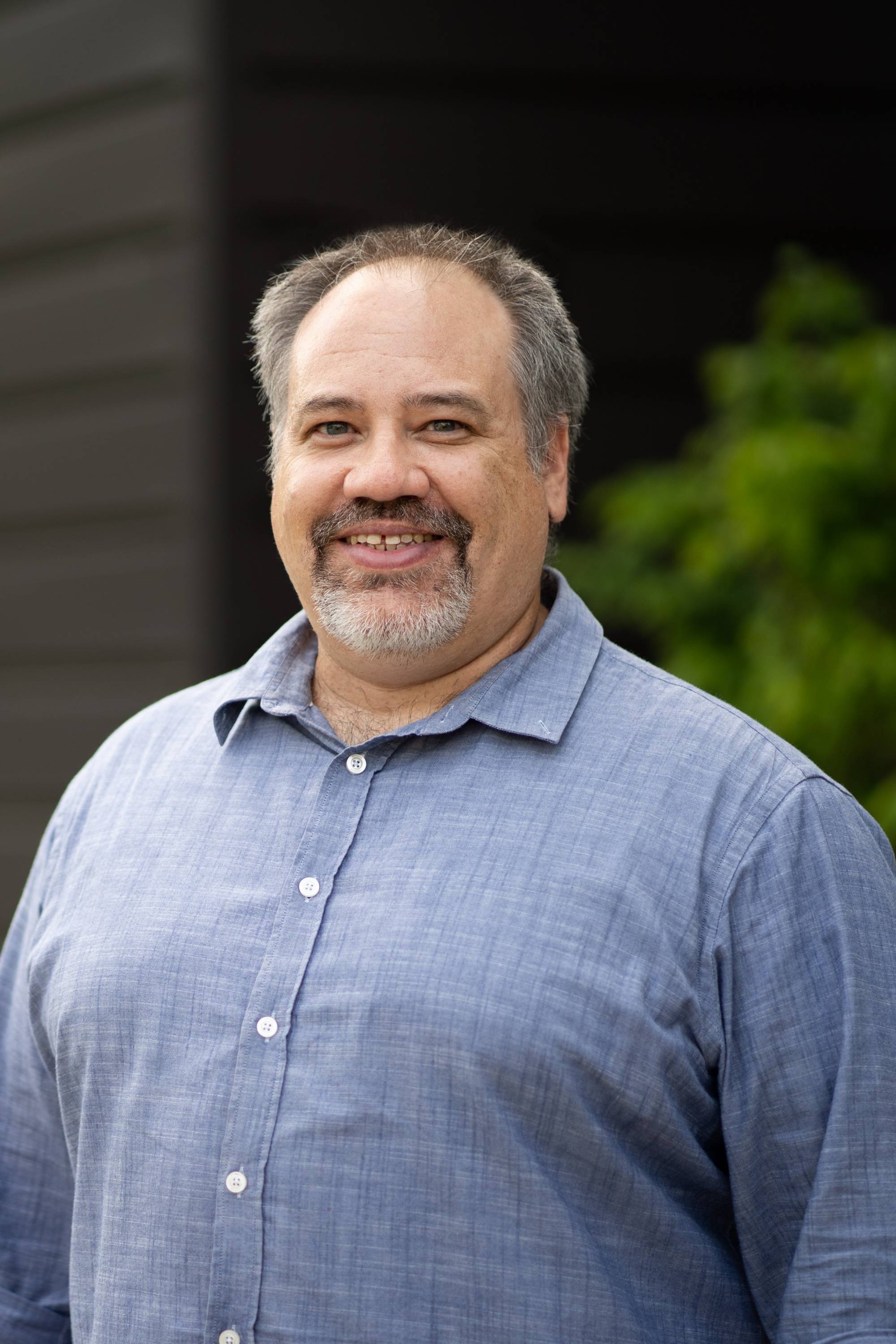
Prof. Christian Tetzlaff holds a W2 Professorship at the Department for Neuro- and Sensory Physiology, University Medical Center Göttingen. He leads the Computational Synaptic Physiology group, focusing on integrating computational methods to understand neural systems' principles and translating these into technologies like robotics and neuromorphic engineering. His work spans scales from synaptic protein interactions to large neural networks, leveraging disciplines such as nonlinear dynamics and machine learning. Educational Background: 2009: Diploma in Physics, Georg-August University Göttingen 2013: PhD in Physics (Dr.rer.nat.), Georg-August University Göttingen Research Leadership & Grants: Principal Investigator in EU Horizon 2020 Projects (Plan4Act, ADOPD, Human Brain Project's FIPPA) Lead in DFG-funded SFB 1286 (Quantitative Synaptology) INRC member (Intel Neuromorphic Research Community) BMBF-funded KISSKI project (2022–present) Research Interests: His lab explores synaptic mechanisms underlying learning, memory consolidation via synaptic tagging-and-capture, and neuromorphic hardware implementations. Recent work emphasizes calcium signaling in synapses, memristive devices for synaptic working memory, and robust trajectory generation using neuromorphic chips like Loihi. Affiliations: Co-coordinator of Plan4Act (2017–2021) and active in the Göttingen Graduate Center for Neurosciences (GGNB). Collaborates globally with institutions like the Weizmann Institute and Columbia University. Laboratory: Visit tetzlab.com for lab activities and open-source tools like Plastic Arbor .
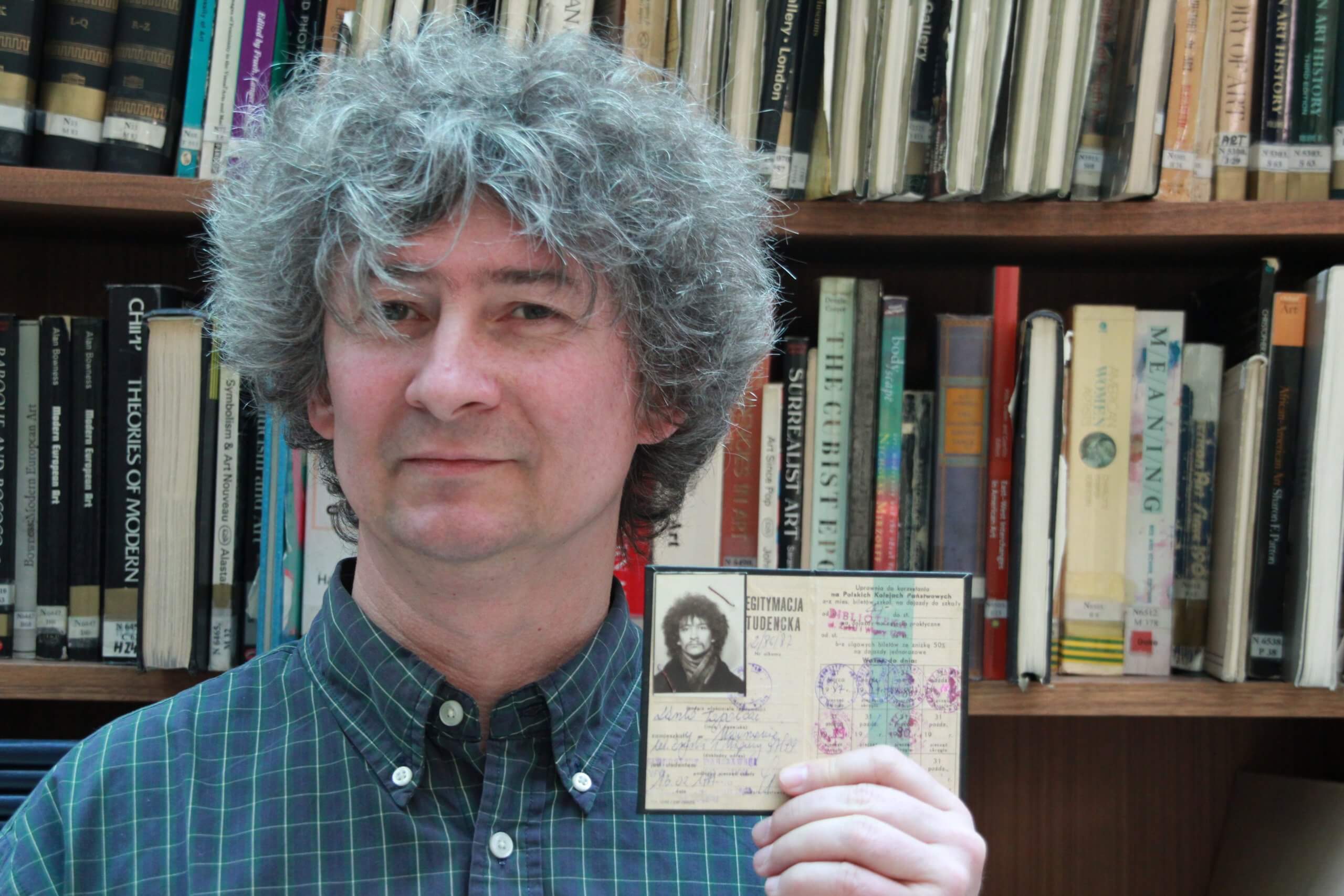
László Tapolcai is a researcher at the Institute of History, Faculty of Humanities, Eötvös Loránd University (ELTE), where he has been employed since 1999. He holds a PhD (2007) and Habilitation (2018) in History from ELTE, following a diploma in Polish Philology (1991). His earlier academic positions include roles at Janus Pannonius University in Pécs (1991–1992) and the Department (later Centre) for Research on the History of Central Europe, Hungarian Academy of Sciences (1992–1998). PhD in History, ELTE, 2007 Habilitation in History, ELTE, 2018 Diploma in Polish Philology, ELTE, 1991 His research focuses on the early medieval history of East Central and Eastern Europe, particularly state formation processes, social and religious changes, origin myths, and medieval culture and literature. He investigates how identities and dynastic legitimacy were constructed through historical narratives and literary sources. His recent scholarly articles, published between 2008 and 2017, center on the early Piast state, the evolution of foundational myths, and the representation of figures like Queen Wanda and Prince Bolesław Krzywousty in chronicles. These works reflect a consistent engagement with medieval historiography, myth, and cultural memory in Poland and broader Central Europe. While no formal scientific awards are listed in the provided text, his habilitation and sustained publication record indicate significant scholarly recognition. László Tapolcai has contributed to academic advising and research supervision through his long-standing role at ELTE’s Institute of History. Although no specific grants or funded projects are mentioned, his publications in edited volumes and journals demonstrate active participation in collaborative scholarly networks. He is affiliated with the Institute of History at ELTE, contributing to research on Central European medieval history, particularly through textual analysis and historiographical critique.
Monica Jato is a Professor of Hispanic Studies in the Department of Modern Languages at the University of Birmingham, where she teaches Spanish language, literature, and culture courses including specialized modules on Digital Media and Spanish Youth Culture, and Spanish Exile Culture. Her academic leadership spans cross-cultural exile studies and contemporary Spanish literary analysis. Her educational background includes: Licenciada en Filología Hispánica from Universidad de Deusto, Bilbao PhD from Michigan State University Professor Jato's research centers on cross-cultural comparative approaches to exile and migration, examining exile as a cultural topology where refugees transform dehumanizing spaces into sites of cultural resistance. She investigates intergenerational memory care, testimony in film, contemporary Spanish poetry, and 20th-21st century Spanish peninsular literature through postcolonial and cultural lenses. Her work critically engages with displacement, transnationality, resilience, and inclusivity in migration processes while recovering marginalized women's voices in literary canons. Analysis of her 14 recent publications (2014-2024) reveals consistent focus on exile experiences across Nazi Germany and Francoist Spain, with emphasis on inner/territorial exile duality, letter-writing networks, and testimonial expression in poetry and film. Key interdisciplinary patterns include spatial analysis of refugee journeys, gendered perspectives on evacuation legacies, and cultural strategies for adaptation in displaced communities. Scientific Awards: No specific awards listed in source materials Professor Jato currently supervises doctoral research on contemporary Spanish women writers, Spanish Civil War memory texts, carceral writing, and forced migration. She served as Co-Investigator for the Leverhulme Trust-funded project 'Inner and Territorial Exile in Nazi Germany and Francoist Spain' (2017-2019), producing comparative analyses of oppression writing. She actively participates in international research networks including GEXEL (Grupo de Estudios del Exilio Literario), Fenix (Network for Research on Female Exiles, Refugees and Migrants), and PoGEsp (Spanish Poetry and Gender), collaborating on transnational studies of exile literature and gendered migration experiences.
Ali W. Elshaari is an Associate Professor at the Royal Institute of Technology (KTH) in Stockholm, Sweden. He holds a B.S. in Electrical Engineering from the University of Benghazi (2007) and a Ph.D. in photonics from the Rochester Institute of Technology (2011). His postdoctoral research at TU Delft’s Kavli Institute of Nanoscience focused on quantum transport. Currently, he leads the Quantum Nano Photonics Group, pioneering work in topological and quantum integrated photonics to develop high-performance circuits for communication, sensing, and metrology. His research spans hybrid quantum photonics, strain-tunable systems, and superconducting detectors, with applications in quantum communication and quantum materials characterization. Elshaari's research interests include integrating single-photon emitters into CMOS-compatible platforms, exploring quantum phenomena like entanglement and coherence, and developing advanced photonic materials (e.g., hexagonal boron nitride and Cu₂O). He has contributed to on-chip single-photon generation/filtering, strain-tunable photonic circuits, and slow-wave superconducting detectors. His work bridges experimental and theoretical approaches, leveraging imaging techniques and phase retrieval algorithms. Elshaari is an editorial board member for Nature Portfolio - Scientific Reports , Wiley Advanced Quantum Technologies , and EPJ Quantum Technology . He teaches courses in quantum technology, electromagnetism, and optical physics. His funding includes grants from the Wallenberg Foundation, Swedish Research Council, Vinnova, and the European Research Council. His lab actively recruits students for bachelor’s and master’s projects in quantum photonics and nanophotonics.
Julia Esser-von Bieren is an Associate Professor in the Department of Immunobiology (DIB) at the Faculty of Biology and Medicine, University of Lausanne (UNIL), a position she has held since September 1, 2022. Her academic journey includes a PhD from the Karolinska Institute and postdoctoral research at EPFL, followed by leadership of a research group at the Technical University of Munich. Her research focuses on the molecular and immunological mechanisms underlying allergic and parasitic diseases. Specifically, her group investigates type 2 immune responses in asthma, nasal polyposis, and helminth infections, with a strong emphasis on the roles of lipid mediators and macrophages. A key aspect of her work involves identifying and characterizing helminth-derived molecules that regulate inflammatory pathways. Additionally, her team studies innate immune memory as a mechanism contributing to chronic airway inflammation. The trends in her research, as described, indicate a sustained focus on immunomodulation in chronic inflammatory conditions, bridging basic immunology with translational applications in allergy and parasitology. Her work combines molecular immunology, host-pathogen interactions, and chronic disease mechanisms. Scientific Awards: DGAKI Award "New Immunological Therapies" (German Prize for Allergy Research), 2020 Henning Løwenstein Research Award (International Allergy Research Award), 2021 Helmholtz Young Investigator Scholarship, Helmholtz Zentrum München, 2018 Julia Esser-von Bieren has led independent research as a Research Group Director since 2015 and is currently building her academic team at UNIL. While specific details about her advisees or grant funding are not provided in the source text, her leadership roles and prestigious awards indicate significant research activity and mentorship potential. She is affiliated with the Department of Immunobiology and contributes to the broader research ecosystem of the Faculty of Biology and Medicine at UNIL. Her research unit operates within the Department of Immunobiology at the University of Lausanne, where she leads a research group dedicated to understanding immune regulation in allergy and helminth infections.
Benjamin Pohl is Professor of Medieval History in the Department of History at the University of Bristol's Faculty of Arts, appointed to this position in 2024 after serving as Associate Professor (Reader) since 2022, Senior Lecturer since 2018, and Lecturer since his 2015 appointment. He maintains external affiliations as Corresponding Member of the Centre for Medieval Studies at the University of Bamberg (since 2024), External Examiner for Medieval Studies at Trinity College Dublin (since 2023), and External Examiner for History at Cardiff University (since 2022). His research centers on medieval European history with specialized expertise in manuscript studies, palaeography, codicology, book history, and cultural memory. His work frequently examines monastic documentary cultures, Norman history, and the materiality of medieval texts, as evidenced by his focus on cartularies, chronicles, and illuminated manuscripts across 12th-13th century Europe. His recent publications reveal strong thematic continuity in medieval documentary practices, with emerging emphasis on community heritage projects and interdisciplinary approaches combining historical analysis with material science. The 2025 monograph on the Aynho Cartulary exemplifies his methodological innovation in documentary culture studies. Fellow of the Royal Historical Society (FRHistS) Fellow of the Higher Education Academy/AdvanceHE (FHEA) Councillor of the Bristol Record Society Member of AHRC Peer Review College Life Fellow of the Alexander von Humboldt Foundation Pohl has supervised six research students and secured significant research funding, including as Principal Investigator for the Aynho Cartulary project (2022-2023) and the Rework of History for the community project (2019-2021). His collaborative SABM project developing the Bristol-Macquarie Strategic Alliance demonstrates international research leadership. He directs the Centre for Medieval Studies at Bristol and co-edits the Bristol Studies in Medieval Cultures series, while also contributing to the journal Tabularia: Sources écrites des mondes normands médiévaux.
Professor Jonathan I. Maletic is affiliated with the University of Kent, UK, and is a leading researcher in software engineering with a particular focus on program comprehension and eye tracking in software development. He has published extensively in top venues such as Empirical Software Engineering, IEEE Transactions on Software Engineering, and the International Conference on Program Comprehension.
Xindi He is an Assistant Professor of Finance at the Scheller College of Business, Georgia Institute of Technology. He holds a Ph.D. in Financial Economics from the University of Chicago Booth School of Business and the Kenneth C. Griffin Department of Economics (2023), and a B.A. in Economics from Guanghua School of Management, Peking University (2018). Ph.D. in Financial Economics, University of Chicago (2023) B.A. in Economics, Peking University (2018) His research lies at the intersection of behavioral finance, asset pricing, and macroeconomics, with a focus on how investor behavior , psychological biases , and bounded rationality influence financial markets. He investigates topics such as trading heuristics, mental accounting of brokerage cash, risk perception based on historical price paths, and self-evaluation of trading talent. His work aims to uncover the financial and macroeconomic implications of the coexistence of fully and limitedly rational agents. The recent working papers demonstrate a strong empirical and experimental approach, utilizing retail and institutional trade data, quasi-natural experiments, and online experiments. Collectively, his research contributes to understanding how investors form beliefs , make portfolio decisions , and perceive risk in real-world settings, often challenging standard assumptions in financial economics. Currently, no scientific awards or honors are publicly listed. Xindi He is actively engaged in research, with several working papers under his name, often in collaboration with co-authors. While no formal advisees are listed, as a new faculty member (joined in 2023), he is likely beginning to mentor graduate students. There is no mention of external grants or funding sources in the provided text. His work is primarily theoretical and empirical, developed through individual and collaborative research efforts. There is no mention of a specific lab or research team, but his work appears to be conducted within the academic environment of the Scheller College of Business, potentially in collaboration with behavioral finance and asset pricing research groups.
Jie Ding is an Associate Professor at the University of Minnesota's School of Statistics with graduate faculty appointments in Electrical Engineering, Computer Science, and the Data Science Program. He serves as a core faculty member of the Data Science and AI Hub and holds an Amazon Scholar position with the Amazon AGI Team focusing on foundation model training. His educational background includes a Ph.D. in Engineering Sciences from Harvard University (2017), postdoctoral work at Duke University (2018), and a B.S. from Tsinghua University where he participated in both the Math & Physics Academic Talent Program and Electrical Engineering program. Ding's research sits at the intersection of artificial intelligence, statistics, and scientific computing, with focus areas including Agentic AI for autonomous data science workflows, AI Foundations for interpretability and trustworthiness, Scalable Modeling for broader AI accessibility, Decentralized and Collaborative AI systems, and AI Safety addressing privacy and security concerns. He developed the STAT 8931 Generative AI course with open-source materials available at genai-course.jding.org . His recent publications demonstrate strong activity across multiple AI subfields, particularly in value alignment (MAP framework), AI safety mechanisms, federated learning innovations, and statistical foundations for modern AI systems. The breadth of venues (ICML, ICLR, NeurIPS) indicates significant impact across the AI research community. NSF CAREER Award (2024) Army Early Career Program (Young Investigator) Award (2023) Cisco Research Award (2022-25) AWS Cloud Credits for Research (2021-22) Meta/Facebook Faculty Research Award (2021-22) UMN Thank-A-Teacher Teaching Award (2019-20) Ding leads the Agentic AI for Data Science Benchmark initiative, collaborating with University of Minnesota colleagues and Minnesota industry partners to evaluate AI agent capabilities across healthcare, insurance, retail, energy and other sectors. His research group actively recruits PhD students interested in AI/Statistics intersections, with focus on developing theoretically grounded yet practically impactful AI systems.
Dr. Emily Carman is an Associate Professor at Chapman University 's Lawrence and Kristina Dodge College of Film and Media Arts , where she teaches courses on American cinema and media history. She holds a Ph.D. and MA from University of California, Los Angeles and BA from University of Florida , with expertise in Studio-era Hollywood, archival research, and gender studies. Key affiliations: UCLA Film and Television Archive, Society of Cinema and Media Studies, Academy Film Archive Research focus: Media historiography, film censorship, stardom, and transitional Hollywood eras Her recent articles explore topics like transitional stardom in postwar Hollywood and archival practices, while her 2016 book Independent Stardom received critical acclaim. Carman has been interviewed by major media outlets including The New York Times and BBC , and contributes to documentaries on Hollywood history. She also leads a travel course to Bologna's Il Cinema Ritrovato Film Festival since 2012.
Jana Wohlmuth Markupová serves as Assistant Professor in the Department of Historical Studies at Charles University's Faculty of Humanities, specializing in oral history and contemporary history since 2017. She currently holds leadership roles including Chairperson of the Czech Oral History Association (2025–present) and Deputy Guarantor for research programs, with extensive contributions to biographical methodology and Czechoslovak dissent studies. Her academic credentials include: Ph.D. in General Anthropology (specialization: historical anthropology), Faculty of Humanities, Charles University (2015–2021) Mgr. summa cum laude in Oral History–Contemporary History, Faculty of Humanities, Charles University (2011–2014) Bc. in Liberal Arts and Humanities, Faculty of Humanities, Charles University (2008–2011) Her research centers on biographical approaches to contemporary history, microhistory, and oral history methodology, with particular focus on Czechoslovak dissident culture (1968–1989). She examines ethical dimensions of writing about living subjects, unconventional historical sources, and the reconstruction of recent history through personal narratives, bridging academic rigor with public historical discourse. Analysis of her 15 most recent publications (2017–2025) reveals consistent thematic focus on biographical microhistory, ethical challenges in oral testimony, and Czechoslovak revolutionary narratives. Key trends include pandemic-era oral history methodology (2021–2023), Velvet Revolution memory studies (2019–2025), and theoretical frameworks for historical biography, demonstrating interdisciplinary integration of anthropology, political science, and narrative theory. Her recognition includes: Josef Hlávka Foundation Award for 2014 As Principal Investigator for Technology Agency of the Czech Republic-funded projects (2017), she developed oral history methodologies for scientific institutions while leading pandemic-response oral history initiatives. Her editorial work for Biography Studies (Brill) and conference organization—including the 2024 Biographical Research workshop at Charles University—showcases grant management and academic leadership. She directs Czech Oral History Association initiatives and co-founded the Oral History Center at Charles University, leading international collaborations like the 2023–2025 Erasmus+ teaching exchanges with Groningen University. Her team coordinates longitudinal studies of 1989 revolution participants and maintains digital archives of dissident cultural networks.
Anika Nicolosi is Associate Professor of Greek Language and Literature at the University of Parma , Department of Humanities, Social Sciences and Cultural Enterprises. Since 2020 she has held this rank, having previously served as University Researcher (2008-2020). She has been awarded two National Qualifications for Full Professor (2019) and three for Associate Professor (2013, 2016-2018), covering Greek Language & Literature and Classical & Late-Antique Philology. Education Classical High-School Diploma, L. Ariosto State High School, Reggio Emilia (1997-1998) Laurea (110/110L) in Classical Literature, University of Parma (2002) – thesis in Greek Language & Literature PhD in Greek and Latin Philology, University of Parma (19th cycle) Teaching qualification for secondary-school Latin & Greek Diploma in Archival Science, Paleography and Diplomatics, State Archives of Parma Specialization courses in Papyrology (Lecce & Florence) Research visits: Oxford, Würzburg, Cologne (2004-2006) Research Interests Her scholarship focuses on the history of the Greek language , philological and literary analysis of archaic Greek poetry , Hellenistic and Imperial epigram , Greek theatre , Greek lexicography , and Imperial prose . She is deeply engaged in textual criticism and papyrology , exploring the relations between Greek and Latin literature, and investigating the history of classical philology . Digital approaches to fragmentary poetry and the creation of XML/LOD critical editions constitute an emerging research strand. Recent Publication Trends Between 2022-2025 her output reveals a concentration on archaic iambic and elegiac poetry (Archilochus, Hipponax, Semonides), Hellenistic epigrammatists (Meleager, Hedylus, Strato), and reception studies spanning from Strabo to Botticelli and medieval Latin authors. Cross-generic intertextuality, gendered discourse, and botanical/erotic imagery are recurrent analytical lenses, while digital philology projects (CLARIN-IT, XML editions) foreground methodological innovation. Scientific Awards & Recognition National Scientific Qualification (ASN) for Full Professor (2019, two sectors) National Scientific Qualification (ASN) for Associate Professor (2013, 2016-2018) FFABR 2017 funding for basic research (Italian Ministry) FIL research grants, University of Parma (continuous since 2008) Reviewer for MIUR programs, VQR 2011-2014 & 2015-2019 Member, Editorial Board Eikasmós (Tier A journal) Anonymous referee for multiple Tier A national & international journals Doctoral Training & Grants Since 2024 she sits on the Teaching Board of the PhD Programme in Historical and Textual Sciences (XL cycle, University of Parma); she has been a board member for the PhD in Philological-Literary, Historical-Philosophical and Artistic Sciences (2013-ongoing) and for earlier cycles in Greek and Latin Philology (2008-2012). She has participated in three consecutive PRIN national research projects (2008, 2010-11, 2022) and has been PI of local FIL grants every year since 2008. Laboratory & Outreach Activities She coordinates digital-edition initiatives such as the HT-Archilochus XML archive and CLARIN-IT working groups for ancient Greek fragmentary poetry. As President of the Parma Delegation of the Italian Association of Classical Culture (and former Secretary, 2003-2018), she organizes public lectures, school events, and editorial projects to promote classical studies in the region.
Rachel S. Goldman is a Professor at the University of Michigan with joint appointments in Materials Science & Engineering , Physics , and Electrical Engineering & Computer Science . She serves as the Maria Goeppert Mayer Collegiate Professor (2023–present) and Associate Director of Applied Physics (2010–present). Her research focuses on experimental materials science, particularly in semiconductor films, nanostructures, and heterostructures, with applications in quantum computing, spintronics, and optoelectronics. Education: B.S. in Physics, University of Michigan (1988) M.S. in Applied Physics, Cornell University (1992) Ph.D. in Materials Science, University of California, San Diego (1995) Research Interests: Goldman develops strategies for atomic manipulation in inorganic materials, emphasizing processing-structure-property correlations. Her work spans high-efficiency solar cells, long-wavelength light emitters, high-temperature electronics, and quantum computing, using ultra-high vacuum techniques like molecular-beam epitaxy and scanning tunneling microscopy, alongside computational modeling. Scientific Awards: Fellow of AAAS (2021), APS (2012), and AVS (2012) National Science Foundation Career Award (1998–2003) Peter Mark Memorial Award (2002) and MRS Graduate Student Gold Award (1994) Williams' Award (1988) and Alumni Giving Scholarship (1984) Advising and Grants: Goldman has advised numerous graduate students and led over 20 grants, including NSF MRSEC (2023–2029) and a DoD MURI project (2023–2026) on topological states in dislocations. She also chairs editorial roles for Journal of Applied Physics (2017–present) and serves on multiple national review panels.
Joel Quamme is an Associate Professor in the Psychology Department at Grand Valley State University. His research focuses on human memory, particularly the cognitive and neural mechanisms underlying recognition decisions through familiarity and recollection. Education: B.A. from Jamestown College, M.A. and Ph.D. from University of California, Davis Courses Taught: PSY 101 - Introductory Psychology, PSY 365 - Cognition, PSY 370 - Cognitive Neuroscience. Research Interests: Dr. Quamme investigates how people use general familiarity versus specific recollection when making recognition decisions, with a focus on neural correlates, event boundaries, and associative memory in narrative contexts. Recent Publications: His work explores memory decision-making, the impact of event boundaries on associative recognition, and differences in recollection and familiarity among older adults. Contact: Office in 1311 Au Sable Hall, phone (616) 331-2153, email quammej@gvsu.edu.
Lorena Rizzo is a Senior Lecturer at the Department of History , University of Basel , and a Research Associate at the Centre for African Studies . She is a Member of the Management Board of the eikones Center (Center for the Theory and History of the Image). University: University of Basel Department: Department of History Email: lorena.rizzo@unibas.ch Research Interests: African History with focus on Namibia and Southern Africa Gender History analyzing women's roles in colonial contexts Visual Culture through photography and image analysis Oral History and archival research Colonial Studies examining imperial structures and resistance Article Trends: Her publications span 20th-21st century African history , with emphasis on colonial visual culture , oral narratives , and archival analysis . Key subfields include Namibian history , photography in Africa , and gendered colonial experiences . Collaborations: She works with institutions like the Basler Afrika Bibliographien and eikones Center , focusing on photographic archives and colonial resistance narratives .