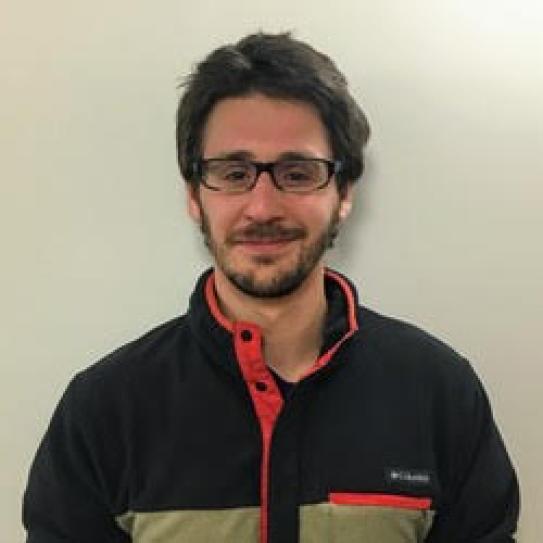
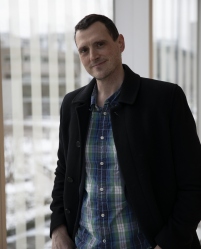
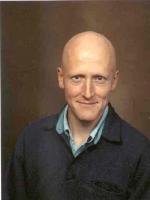
Eugene Vinitsky is an Assistant Professor at NYU Tandon School of Engineering, holding joint appointments in Civil and Urban Engineering and Computer Science. His research develops multi-agent reinforcement learning systems for autonomous vehicles and traffic control, with applications in robotics and intelligent infrastructure. He directs the Computational Transportation Systems Lab and leads projects like CIRCLES on congestion reduction. Research Focus: Designs algorithms enabling complex behaviors through unsupervised agent interactions, human-AI compatibility, and environment synthesis for autonomous systems. Awards & Leadership: NSF Graduate Fellow (2016), Eisenhower Fellow (2018, 2020), and PI on multiple grants including Amazon Research Awards. Mentored 14+ graduate students and organized international RL conferences.
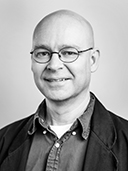
Martin Norgren is a Professor at KTH Royal Institute of Technology, leading the Department of Electromagnetic Fusion Physics. His research focuses on electromagnetic inverse problems, including material characterization, biomedical imaging (e.g., brain current sources), environmental monitoring (e.g., snow and avalanche prediction), and smart grid technologies. He specializes in reconstructing object properties using electromagnetic measurements and has contributed to applications in healthcare, energy systems, and environmental science. His work involves advanced analytical and numerical methods such as mode-matching techniques, perturbation theory, and convex optimization. Notable projects include noncontact current measurement in power grids and transformer diagnostics using microwave radiation. Norgren teaches courses in electromagnetic field theory and electrical engineering design, emphasizing practical applications and interdisciplinary collaboration. Recent research trends highlight advancements in glide/twist symmetry-based metamaterial design, waveguide analysis, and inverse scattering techniques. His studies bridge fundamental physics with applied engineering, addressing challenges in energy infrastructure and medical diagnostics. As a department head, he oversees educational and research programs at KTH, fostering innovation in electromagnetism and fusion physics. His contributions to curriculum development include project-based courses integrating theory and hands-on design.
Sylvain Barbot is an Associate Professor of Earth Sciences at the University of Southern California (USC) Dornsife College of Letters, Arts and Sciences. His research focuses on understanding the physics of fault systems, earthquake mechanics, and tectonic processes. He holds a Ph.D. in Earth Sciences from Scripps Institution of Oceanography, University of California San Diego (2009), followed by postdoctoral training. His work integrates field observations, geodetic data analysis, and numerical modeling to study fault dynamics, frictional processes, and deformation in Earth's crust and upper mantle. Research interests include: Fault slip stability and earthquake nucleation Thermomechanical behavior of fault zones Seismic cycle modeling in subduction zones and continental margins Interactions between tectonic deformation and climate Remote sensing applications in geohazard assessment Recent studies analyze rupture segmentation, asthenosphere flow modulation during earthquake cycles, and the structural controls on seismic hazards. His computational tools, such as the Motorcycle numerical method, advance simulations of multi-fault systems. He has contributed to understanding the 2014 Iquique, 2023 Kahramanmaraş, and 2022 Kaikōura earthquakes through geodetic and mechanical analyses. No scientific awards were explicitly mentioned in the provided texts. He advises no listed students but collaborates on large-scale geodynamic projects. His work interfaces with international initiatives like the SEAS community code verification exercises for earthquake simulations.
Michael Carley is a Senior Lecturer in the Department of Mechanical Engineering at the University of Bath. His research focuses on acoustics, aeroacoustics, boundary element methods (BEM), and numerical methods. He actively contributes to teaching aircraft stability and control, acoustics, and fluid dynamics. He is willing to supervise doctoral students in acoustics, vortex methods, and BEM applications. Dr. Carley has secured significant research funding, including EU Horizon 2020 grants for noise reduction in aviation and a Leverhulme Trust project on motorcycle helmet noise. His work spans collaborations in civil aviation, computational acoustics, and fluid dynamics modeling. Key research areas include rotor noise suppression, numerical methods for acoustic simulations, and metamaterial applications. He has published extensively on BEM advancements and noise shielding techniques. His projects emphasize practical engineering solutions, such as developing noise reduction technologies for eVTOL aircraft and optimizing acoustic metasurface designs. Grants: AERIALIST (EU Horizon 2020, 2017–2020): Focused on aircraft noise alleviation using metamaterials. Motorcycle Helmet Noise (Leverhulme Trust, 2010–2011): Investigated noise reduction strategies. Peer Review: Active reviewer for the Journal of the Acoustical Society of America (JASA Express Letters) and UK Research and Innovation (UKRI EPSRC).
Daniel Beat Müller serves as Professor at the Industrial Ecology Programme within the Department of Energy and Process Engineering at the Norwegian University of Science and Technology (NTNU), Trondheim. His office is located at Realfagbygget Gløshaugen (E4-120) with contact details daniel.mueller@ntnu.no and +4791897755. His research centers on analyzing human needs in relation to material/energy flows and environmental impacts, with two primary focus areas: (i) urban evolution and associated material flows for managing building/infrastructure stocks, and (ii) national/global metal cycles to identify supply constraint reduction strategies. His methodology integrates design, modeling, and decision-making through transdisciplinary stakeholder engagement. Müller teaches Material Flow Analysis and Systems Analysis of the Built Environment for Industrial Ecology and Civil Engineering Master's students. His research outputs demonstrate strong trends in circular cities, critical mineral management, and urban metabolism, with recent publications emphasizing building information modeling, electric vehicle battery systems, and phosphorus cycling. His work consistently addresses resource criticality within energy transition contexts. As (ad interim) chair of the International Society of Industrial Ecology’s MFA-ConAccount section, he contributes to methodological standardization. He previously served on the U.S. National Research Council’s Committee on Defense Stockpiles and remains active in Switzerland's National Research Programme 65 "New Urban Quality". Müller supervises numerous Master's and doctoral students, with thesis topics spanning lithium-ion battery recycling, building stock dynamics, and urban resource flows. His projects frequently involve industry collaboration for practical implementation of material stewardship strategies.
David Daney is a Senior Researcher (Directeur de recherche) at Inria and HDR-qualified academic, currently serving as Head of Science for the Inria Center at the University of Bordeaux since July 2024. He is the team leader of the Auctus research group, focusing on robotics, cobotics, and human-robot interaction. He is affiliated with Inria and the École Nationale Supérieure de Cognitique (ENSC) at the University of Bordeaux, within the College of Engineering and the Department of Robotics. His research interests include Robotics, Cobotics, Human-Robot Interaction, Human Posture Analysis, Cable-driven Robots, Parameters Identification, Calibration, Interval Analysis, and Haptic Guidance. His work bridges theoretical robotics with industrial applications, particularly in aerospace, automotive, and sustainable agriculture. He has led and participated in numerous industrial collaborations with Airbus, Stellantis, Solvay, AKKA, and Farm3. His recent publications (2023–2025) demonstrate a strong focus on human-robot physical interaction, including real-time capacity estimation (Pycapacity), haptic guidance, model predictive control for dynamic environments, and musculoskeletal modeling for collaborative robotics. These works appear in top-tier journals such as IEEE Transactions on Robotics, Journal of Biomechanical Engineering, and Robotics and Autonomous Systems. HDR (Habilitation à Diriger des Recherches) Principal Investigator of ANR Pacbot Head of Science for Inria Center at University of Bordeaux Erdös number = 3 David Daney supervises multiple PhD students, including Alicia Barsacq, Ahmed-Manaf Dahmani, and Alexis Boulay. He has been principal investigator in several research projects such as LiChIE and ANR Pacbot, focusing on satellite production and human-robot collaboration. He also leads the SHAARE associate team with KAIST’s IRiS lab, advancing shared haptic control. His team develops tools for teleoperation, ergonomic analysis, and robot calibration, with applications in industrial and assistive robotics. He leads the Auctus team at Inria, which develops control and analysis techniques for human-robot physical interaction. The team collaborates with KAIST (SHAARE), ONERA, Pprime Institute, and industrial partners. The MOVER project studies human motor variability for ergonomics, and the Farm3 collaboration explores teleoperated vertical farming robotics.
Lu Jiao serves as Senior Lecturer in the Department of Accounting and Corporate Governance at Macquarie University, Australia. With an h-index of 12 and 121 Scopus citations, her research significantly contributes to management accounting and organizational behavior literature, particularly within Australian nonprofit contexts. Her research portfolio spans: Management accounting practices and competitive advantage Organizational culture-revenue strategy interrelationships Transformational leadership accountability mechanisms Revenue growth drivers in nonprofit organizations Porter's competitive forces in performance management Traditional versus contemporary accounting practice impacts Recent publications (2023-2025) demonstrate methodological consistency through survey analysis and structural equation modeling, revealing how interactive/diagnostic controls moderate culture-performance relationships in Australian nonprofits. Her work increasingly examines holistic accountability frameworks while maintaining strong empirical focus on measurable organizational outcomes. Scientific Awards: No awards, fellowships, or medals documented in source materials Lu Jiao secured research funding as Chief Investigator for the 2016-2017 project "The effect of emotional intelligence and work values on job stress, wellbeing and academic performance of Australian accounting and finance academics," establishing collaborative networks with Harrison and Chen that yielded multiple high-impact publications. Current research shows sustained focus on nonprofit financial sustainability through management control innovations.
Dr. Matteo Fadel is a Researcher in the Department of Physics at the University of Basel, working in the Quantum Optics Lab led by Prof. Philipp Treutlein. He completed his PhD (2014-2018) and Postdoc (2018-2021) in the same group, focusing on quantum many-body systems, entanglement, and quantum metrology. His research explores foundational aspects of quantum physics using ultracold atoms and hybrid atom-optomechanical systems, with applications in quantum technologies like quantum memories and sensors. Education: B.Sc. Physics, University of Padua (2008-2011) M.Sc. Physics, ETH Zurich (2011-2013) Key Research Interests: Entanglement in macroscopic systems (e.g., Bose-Einstein condensates) Einstein-Podolsky-Rosen steering and quantum nonlocality Quantum memories and optical storage in atomic vapor cells Hybrid quantum systems (e.g., atom-mechanical oscillator coupling) Publications Highlight: Recent work includes observing the EPR paradox in two Bose-Einstein condensates (2023), developing microfabricated quantum memories (2024), and studying spin squeezing in helium-3 (2021). These contributions bridge fundamental quantum physics with technological applications. Awards: Prix Schläfli 2019 (Swiss Academy of Sciences) Contributor to Paul Ehrenfest Best Paper Award 2017 Teaching: Fadel has contributed to courses such as Physik IV, Quantum Optics I, and Introductory Computational Quantum Mechanics at the University of Basel.
Vincenzo Liberatore is an Associate Professor in the Department of Computer and Data Sciences at Case Western Reserve University’s Case School of Engineering, and currently serves as Associate Chair. His research focuses on smart grid technologies, real-time network control, distributed systems, and randomized algorithms. He holds a PhD and MS in Computer Science from Rutgers University (1998 and 1994), and a BS in Electrical Engineering from Sapienza University of Rome (1992). Dr. Liberatore developed the Energy Information Dashboard (EIDA) with FirstEnergy, an educational tool modeling electricity markets and grid dynamics. He has contributed to patents like the 2014 'High-Performance Streaming Dictionary.' His work spans publications in control systems, theoretical computer science, and energy grid communication. He has served on program committees for the Workshop on Factory Communication Systems (WFCS) and International Conference on Mobile Data Management (MDM). Teaching responsibilities include courses in computer science and engineering, reflecting his expertise in both academia and industry-relevant research.
Morten Ambye-Jensen is an Associate Professor in the Department of Biological and Chemical Engineering at Aarhus University, specializing in biorefinery technology and sustainable protein production. His work focuses on optimizing green biorefining processes for agricultural residues to produce high-value products like biochar, proteins, and bio-based materials while minimizing environmental impact. Key research interests include: Development of integrated biorefinery systems for grasses and legumes Protein extraction from residual biomass for food and feed applications Life cycle assessment of bio-based technologies Waste-to-resource valorization strategies Climate-smart agricultural practices He leads or collaborates on major projects such as Green Valleys 2.0 (2023-2025) and ENTRANCE (2022-2025), which aim to create circular bioeconomies and reduce reliance on imported soybeans. His research also explores energy-efficient processing techniques and biochar applications in agriculture. Notable achievements include advancing fractionation technologies for alfalfa and grass-clover biomass, and demonstrating how pyrolysis integration can enhance biorefinery energy efficiency while producing valuable biochar.
Iolanda Costa Galinha is an Assistant Professor at the Faculty of Human Sciences, University of Porto, and a researcher at the Research Centre for Psychological - Family and Social Wellbeing (CRC-W). She holds a PhD in Psychology from the University of Porto, awarded in 2006, with a focus on cognitive, temperamental, and contextual factors of subjective well-being. Institution: University of Porto School: Faculty of Human Sciences Research Unit: Research Centre for Psychological - Family and Social Wellbeing (CRC-W) Academic Rank: Assistant Professor Her research is centered on psychological and social well-being, with a strong emphasis on subjective well-being, authenticity, cognitive function, and socioemotional development across the lifespan. She investigates both children and older adults, applying intervention-based methodologies such as guided imagery for schoolchildren and community singing programs for the elderly. Recent publications (2023–2025) reflect a consistent trend in randomized controlled trials assessing psychosocial and physiological outcomes of behavioral interventions. Her work integrates psychological theory with public health applications, particularly in educational and community settings. Keywords across her research include socioemotional learning, cognitive function, mental health, authenticity, and intervention efficacy. While no formal awards are listed in the provided text, her extensive publication record and leadership in multiple RCTs indicate significant scholarly impact. She has not received any explicitly mentioned scientific awards in the source material. Iolanda Costa Galinha supervises research and contributes to academic training, though specific student names are not listed. She has secured research activity over two decades, with continued output through 2025. Her work involves interdisciplinary collaboration, particularly in health psychology, gerontology, and education. She is involved in research labs and teams focused on psychological well-being, including the CRC-W, where she contributes to projects on mental health, cognitive development, and community-based interventions. Her recent trials (e.g., MindRegulation, Sing4Health) suggest leadership in designing and evaluating innovative psychosocial programs.
Wiebke Meesenburg is an Assistant Professor in the Department of Civil and Mechanical Engineering at the Technical University of Denmark (DTU), specializing in Thermal Energy. She is actively involved in research on large-scale heat pump systems, district heating integration, and digital twin applications for energy optimization. Her research focuses on sustainable thermal energy systems, particularly the design, monitoring, and optimization of heat pumps in district heating networks. Key areas include dynamic modeling, real-time adaptation, fouling mitigation, and the integration of renewable energy sources. She contributes to advancing energy efficiency and sustainability in urban infrastructure. The recent publications highlight a strong trend toward digitalization and optimization of thermal systems, with an emphasis on model-based monitoring, digital twins, and operation scheduling using advanced algorithms. Her work bridges mechanical engineering, energy systems, and computational modeling to improve system performance and reliability. She has supervised PhD research and contributed to major projects such as the implementation of digital twins for heat pump systems and EnergyLab Nordhavn. Collaborations involve key figures in energy research at DTU, including Professor Brian Elmegaard. While no formal awards are listed, her active participation in conferences and project leadership demonstrates recognition in her field. Wiebke Meesenburg has been involved in organizing and presenting at international events, including the 35th International Conference on Efficiency, Cost, Optimization, Simulation and Environmental Impact of Energy Systems and workshops on Modelica and flexible heat supply. Her work is embedded in interdisciplinary teams focused on future energy infrastructures and smart urban energy systems.
Isabella Di Lenardo is a Lecturer and Scientist at the Digital Humanities Institute (DHI) at École Polytechnique Fédérale de Lausanne (EPFL), where she also serves as the coordinator of the EPFL Time Machine Unit and the European Local Time Machines. She holds affiliations across multiple departments, including DHI-GE, SAR-ENS, SHS-ENS, and EDDH-ENS, reflecting her interdisciplinary role in teaching and research. Her educational background includes a PhD in Theories and Art History, with postdoctoral and faculty experience at institutions such as INHA (Paris), EPFL, and IUAV (Venice). Her research spans Digital Humanities, Art History, Urban History, and GIS , with a focus on digital urban reconstruction, historical cadastres, and AI applications in cultural heritage. She employs advanced computational methods including machine learning, 4D modeling, and semantic segmentation to analyze historical maps, cadastral records, and art archives. Her work bridges humanities scholarship with computer science, particularly in reconstructing urban evolution and analyzing visual patterns. The recent publications reveal a consistent trend in AI-powered historical data analysis , especially in processing non-standardized historical documents, reconstructing urban spaces, and developing open-source tools for digital heritage. Her work frequently involves large-scale datasets from Venice, Lausanne, Paris, and Jerusalem, demonstrating a transnational and interdisciplinary approach. She has contributed to significant collaborative projects such as the Venice Time Machine , Parcels of Venice , and Time Machine Organization , often acting as a principal investigator or project leader. Her role involves coordinating diverse teams of researchers, engineers, and cultural institutions. Scientific contributions include: Development of the Morphograph tool for visual pattern recognition in art archives Automatic vectorization and analysis of Napoleonic cadastres Creation of 4D models for historical cities AI-driven text and pattern extraction from historical maps Building discovery engines for digital art history She actively teaches ex cathedra courses in Digital Urban History and Art History at EPFL and internationally. Her work in grants and projects emphasizes open data, reproducibility, and interdisciplinary collaboration. She has led research funded by organizations supporting digital heritage innovation. She is a key member of the Digital Humanities Laboratory at EPFL and the Time Machine Organization , where she fosters collaboration between computer scientists, historians, and cultural institutions. Her work in the Replica Project and ARCHiVe center highlights her leadership in digitizing and making accessible large art historical archives.
Jason Hein is an Associate Professor in the Department of Chemistry at the University of British Columbia's Faculty of Science. His research focuses on the development of automated reaction analysis technology and self-driving laboratories that integrate robotics with synthetic organic chemistry. Dr. Hein leads the Hein Lab, which pioneers innovative solutions for mechanistic organic chemistry, catalytic reaction mechanisms, and chemical manufacturing processes. His research interests center on creating modular robotic tools and integrated analytical hardware for automated reaction profiling, with applications in pharmaceutical manufacturing, battery materials processing, and sustainable chemistry. The lab's work combines advanced robotics, artificial intelligence, and process analytical technology to develop self-optimizing chemical systems that accelerate discovery and improve manufacturing efficiency. Analysis of Hein's recent publications reveals a strong focus on AI-driven laboratory automation, with particular emphasis on crystallization optimization for battery materials, computer vision for process monitoring, and interoperable software systems for self-driving laboratories. His work bridges fundamental mechanistic understanding with practical industrial applications, particularly in lithium extraction from waste brines and pharmaceutical process development. NSERC Postdoctoral Fellowship Dr. Hein's research program includes significant grant funding supporting the development of self-driving laboratory technologies and their application to challenging chemical problems. His lab actively collaborates with industry partners in pharmaceuticals and clean energy sectors to translate fundamental insights into deployable technologies. Current projects focus on battery-grade lithium carbonate production, continuous manufacturing processes, and AI-optimized chemical synthesis. The Hein Lab operates as a multidisciplinary research environment combining expertise in organic chemistry, robotics engineering, computer science, and data analytics to create the next generation of autonomous chemical discovery systems.
Chris Rogers is a Professor of Statistical Science within the Department of Pure Mathematics and Mathematical Statistics (DPMMS) at the University of Cambridge, actively contributing to research at the intersection of probability theory, stochastic analysis, and financial applications. His academic profile reflects deep engagement with mathematical finance and theoretical probability through publications and departmental affiliations. His research spans financial mathematics, probability theory, stochastic analysis, statistics, and mathematical economics, with emphasis on rigorous mathematical frameworks for financial markets. Key themes include option pricing mechanisms, stochastic process modeling, and geometric probability applications, often addressing real-world financial instruments like Asian options and S&P500 index behaviors through advanced probabilistic techniques. Analysis of his 15 most recent publications (2016-2018) reveals consistent focus on stochastic calculus applications in finance, particularly Lévy processes, diffusion models, and optimal stopping problems. His work bridges theoretical probability with quantitative finance, demonstrating expertise in translating complex stochastic phenomena into financial modeling solutions across asset pricing, risk assessment, and market analysis domains. No scientific awards were documented in the provided source material. Information regarding PhD/Master's student supervision, research grants, or collaborative teams was not specified in the available texts, indicating absence of such details in the source documentation.