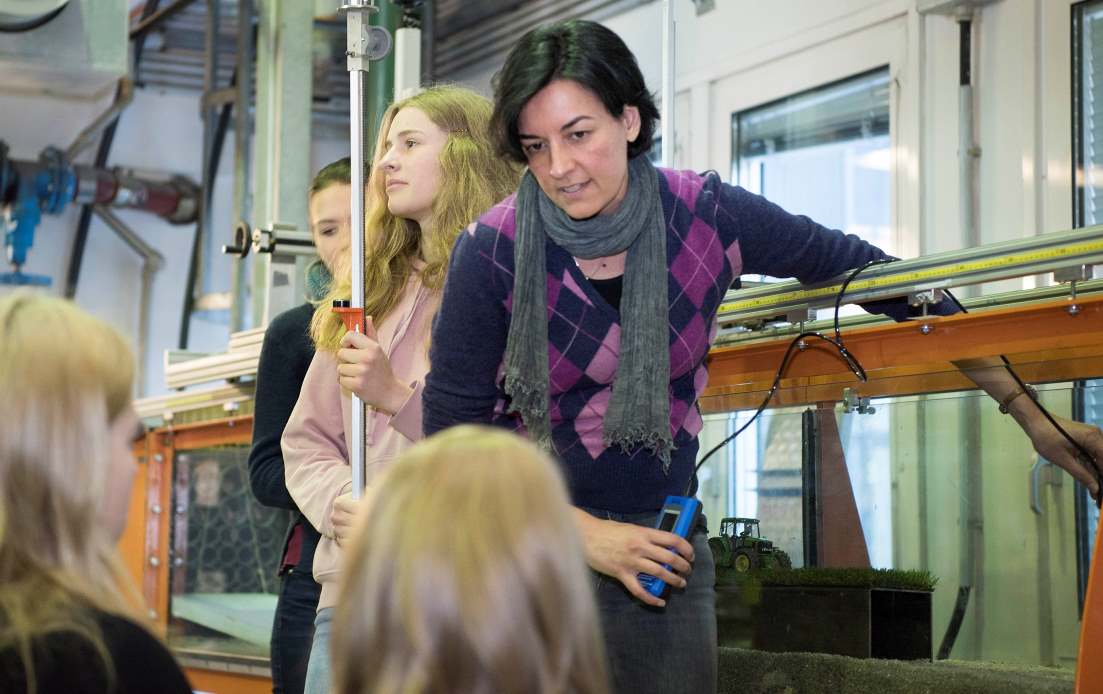
Xiaobo Li is a Professor in the Department of Bio-Medical Engineering at New Jersey Institute of Technology. Holding a Ph.D. in Computer Aided Geometric Design from the University of Birmingham and a B.S. in Automation from Nanjing University of Aeronautics, their research bridges computational methods with neuroimaging and psychiatric disorder analysis. Ph.D., University of Birmingham (Computer Aided Geometric Design, 2004) B.S., Nanjing University of Aeronautics (Automation, 1999) Dr. Li’s work focuses on applying machine learning and graph theory to understand brain network abnormalities in conditions like ADHD , schizophrenia , and traumatic brain injury . Their studies analyze structural-functional connectivity , reward processing , and gut-brain axis interactions using fMRI , fNIRS , and diffusion tensor imaging . Recent publications highlight their development of tools like the GAT-FD MATLAB toolbox for brain network analysis and their exploration of multimodal MRI in schizophrenia diagnosis. They also investigate the neurobiological effects of photobiomodulation and vision therapy interventions.
Jonathan Portes serves as Professor of Economics and Public Policy in the Department of Political Economy at King's College London. His distinguished career includes prior roles as principal research fellow at the National Institute of Economic & Social Research, chief economist at the Cabinet Office, and chief economist at the Department of Work and Pensions. His research centers on the economic and social impacts of EU free movement policies and broader Brexit consequences for the UK. Professor Portes' work spans immigration policy analysis, labor market dynamics, Brexit economic modeling, and UK fiscal policy evaluation. He investigates migration's effects on productivity, public finances, and social cohesion, with particular focus on post-Brexit regulatory frameworks and EU-UK relations. His research consistently emphasizes evidence-based policy formulation using official statistics and economic modeling. Analysis of his 2023-2025 publications reveals three dominant themes: evolving migration patterns following Brexit implementation, economic trade-offs in reduced immigration scenarios, and methodological critiques of government migration statistics. His work demonstrates increasing emphasis on longitudinal migration impact studies and policy evaluations of the post-Brexit immigration system, frequently challenging political narratives with empirical evidence. No scientific awards or honors were documented in the provided source material. The available information contains no details regarding academic advising activities, doctoral students, or research grant funding. His collaborative work with scholars like Professor Anand Menon suggests interdisciplinary engagement, but specific team structures or laboratory affiliations were not referenced.
Isabel M. Santos is an Associate Professor of Psychology at the University of Aveiro and serves as coordinator of the NeuroLab, an integrated research unit within the university's Health Team. Her work bridges clinical psychology, oncology, and cognitive neuroscience through interdisciplinary collaboration. Her research program centers on Cancer-Related Cognitive Impairment (CRCI) in cancer survivors, focusing on developing the CanCOG web-based cognitive rehabilitation program. Additional investigations include neuropsychological assessment tools for CRCI, biomarker identification, work-related impact analysis, and attentional biases. The NeuroLab also employs psychophysiological methods and eye tracking to examine social cognition—particularly facial signal processing (emotions, identity, gaze)—and how individual differences, clinical conditions, and adverse childhood experiences modulate these processes. Recent publications (2021-2023) reveal strong thematic continuity in CRCI research, with emphasis on Portuguese population adaptations, breast cancer-specific cognitive challenges, and intersections between cancer history and reproductive concerns. Methodologically, her work combines experimental psychology, clinical assessment, and digital intervention development. Scientific Awards: No scientific awards mentioned in source materials While specific student advising details are absent from source materials, her NeuroLab leadership implies active mentorship of graduate researchers. No grant information appears in the provided text, though her program development (CanCOG) suggests external funding involvement. The NeuroLab operates as a specialized research hub within the Health Team, utilizing eye-tracking technology and psychophysiological measures to investigate cognitive-emotional processing in clinical populations—particularly cancer survivors—and normative social cognition mechanisms. Current projects integrate rehabilitation science with fundamental cognitive research to address real-world patient challenges.
Dana Schmalz is a Senior Research Fellow at the Max Planck Institute for Comparative Public Law and International Law in Heidelberg, Germany, and currently serves as a visiting scholar at Columbia Law School and a fellow at the Columbia Center for Contemporary Critical Thought in New York. Funded by an Alexander von Humboldt Foundation fellowship, she pursues a two-year research project examining critical dimensions of international refugee law and migration governance. Her academic profile combines rigorous legal scholarship with theoretical engagement across international law, political philosophy, and migration studies. Dr. Schmalz earned her doctorate from the University of Frankfurt in 2017 with a dissertation on democratic theoretical issues in refugee law, followed by an LL.M. in Comparative Legal Thought from Cardozo Law School, New York, in the same year. She serves as an editor for the journal Kritische Justiz (KJ), contributing to critical legal scholarship in German-speaking academic circles. Her research centers on the intersection of refugee law and democratic theory, examining how political rights are secured for those without voice in democratic processes. She critically investigates population discourse and its relationship to migration governance, exploring how demographic projections shape perceptions of 'too many' migrants. Her scholarship analyzes the language and power structures of international law, examining how legal frameworks construct hierarchies and influence global governance. She has published extensively on European border policies, refugee protection mechanisms, and the theoretical foundations of international legal order. Dr. Schmalz's recent publications reveal a sophisticated analysis of migration governance that connects historical developments with contemporary challenges. She examines how legal concepts like responsibility-sharing function in practice, investigating the role of geopolitical proximity in determining state obligations toward refugees. Her work consistently combines rigorous legal analysis with critical theoretical perspectives, often challenging conventional understandings of migration governance. She explores the internalization of borders in demographic thinking and the ways legal frameworks contribute to perceptions of migration as 'excess.' Alexander von Humboldt Foundation fellowship supporting current research As an active contributor to Völkerrechtsblog, Dr. Schmalz helps shape digital infrastructure for global legal scholarship. Her work connects with broader academic communities through collaborations with scholars across international law and refugee studies. While specific grant details beyond the Humboldt fellowship aren't provided in the source material, her extensive publication record indicates sustained research activity across multiple funding cycles. She engages with practical policy challenges through her analysis of European migration governance and refugee protection mechanisms. Dr. Schmalz's research connects with multiple academic networks through her work at the Max Planck Institute, Columbia University, and her editorial role at Kritische Justiz. Her scholarship bridges German and Anglo-American academic traditions, contributing to transnational legal discourse on migration and refugee protection. She participates in interdisciplinary conversations that connect legal scholarship with political theory, philosophy, and migration studies.
Professor Phil King leads a research group within the School of Physics and Astronomy at the University of St Andrews, where he is part of the Centre for Designer Quantum Materials. His research focuses on the electronic structure and many-body interactions of quantum materials using electron spectroscopy, particularly angle-resolved photoemission (ARPES), and creating new designer quantum materials through atomic layer-by-layer growth. King's research interests center on quantum materials, with particular emphasis on topological matter, transition-metal oxides, and 2D quantum materials. His group investigates strain and pressure tuning of quantum materials, photoemission spectroscopy of correlated systems, and engineering band structures in 2D conductors. They develop methods to exploit strong electronic interactions in 2D systems to create new functional materials with tunable properties. Their approach combines experimental screening of candidate materials, bottom-up atomic assembly of custom heterostructures, and advanced spectroscopic feedback. Analysis of King's recent publications reveals a strong focus on the electronic structure of quantum materials, particularly transition metal dichalcogenides, delafossite metals, and topological systems. His work frequently examines charge density waves, spin-orbit coupling effects, Van Hove singularities, and quantum phase transitions. A notable trend is the integration of materials synthesis with advanced spectroscopic characterization, enabling precise control over electronic properties through strain engineering, doping, and heterostructure formation. King actively supervises PhD students on projects related to quantum materials, including probing elastic coupling in exotic magnets, angle-resolved photoemission from tailored mesostructures, thermodynamics and spectroscopy, oxide metals, and gate tuning of 2D quantum materials. His research is supported by major funding sources that enable access to cutting-edge equipment and international facilities. The King Group operates advanced experimental facilities including a high-resolution lab-based ARPES system with multiple light sources, and two DCA R450 molecular-beam epitaxy systems optimized for transition-metal oxides and chalcogenides. They are developing the UK's first spin-resolved ARPES capability. The group regularly utilizes major international facilities including Diamond Light Source, Elettra, SOLEIL, and HiSOR synchrotrons, as well as the ARTEMIS facility for time-resolved studies.
Brandon Shuck is an Assistant Professor in the Department of Geology & Geophysics at Louisiana State University (LSU), part of the College of Science. His research focuses on solid-earth geophysics, particularly tectonic processes within plate boundaries and mature tectonic settings. He uses active-source seismic reflection and wide-angle ocean-bottom seismometer data to image subsurface lithospheric architecture and integrate interdisciplinary datasets including bathymetry, borehole logs, and geodynamic models. Education: Ph.D. in Geological Sciences (2021) from the University of Texas at Austin; B.S. in Geology (Petroleum Emphasis) and Mathematics (2015) from Western Colorado University. Previously served as a Postdoctoral Fellow at Lamont-Doherty Earth Observatory, Columbia University (2021–2024). Research Interests: Tectonic evolution of the lithosphere at plate boundaries, feedbacks between lithospheric stress and fluid-rock interactions, geologic hazards related to subduction zones, and mantle dynamics during continental breakup. Active projects include studies of subduction initiation in the Tyrrhenian Sea, megathrust fault segmentation in Cascadia, and water content in the Cocos Plate offshore Mexico. Current opportunities include an NSF-funded PhD position (starting Fall 2025) investigating mantle dynamics during early Atlantic seafloor spreading, involving seismic data acquisition on the R/V Langseth. His group emphasizes collaborative, interdisciplinary approaches combining seismic imaging, field geology, and modeling. Awards: None explicitly listed, though his work has been supported through NSF funding and institutional grants. Lab/Team: Directs the LSU Solid-Earth Geophysics Research Group, which integrates geophysical data analysis with field observations to address tectonic questions at multiple scales.
Matthew R. Edwards is an Assistant Professor of Mechanical Engineering at Stanford University, affiliated with the School of Engineering. His research focuses on high-power lasers and plasma physics, developing optical diagnostics for fluids and plasmas, and exploring light-matter interactions. He holds a PhD and prior degrees from Princeton University in Mechanical and Aerospace Engineering, followed by a Lawrence Fellowship at Lawrence Livermore National Laboratory. Education : PhD in Mechanical and Aerospace Engineering, Princeton University (2019) MA in Mechanical and Aerospace Engineering, Princeton University (2015) BSE in Mechanical and Aerospace Engineering, Princeton University (2012) Research Interests : Edwards' work bridges mechanical engineering and plasma physics, emphasizing ultrafast laser-plasma interactions, plasma-based optical components, and applications in energy science. His lab, the SAPPHIRE Laser Laboratory, explores femtosecond laser technologies for creating novel optical elements (e.g., plasma gratings, holographic lenses) and advancing laser-driven particle acceleration, fusion research, and diagnostic tools. Key areas include: Design of plasma-based optical components for high-power laser control Simulation of laser-matter interactions at relativistic intensities Development of compact light and particle sources Research Trends : His recent articles (2024–2025) highlight advancements in plasma gratings, relativistic birefringence, and laser wakefield acceleration. Notable contributions include ionization-based compression of ultrafast laser pulses and polarization control in underdense plasmas. Awards/Grants : No awards explicitly listed, but his Lawrence Fellowship indicates prior recognition. His work aligns with grants in plasma physics and laser technology. Labs/Teams : He leads the SAPPHIRE Laser Laboratory , collaborating with the PULSE Institute and National Ignition Facility (NIF) on plasma optics and high-energy laser applications.
Hakan Karateke is the Kanuni Süleyman Professor for Ottoman and Modern Turkish Studies at the University of Chicago, affiliated with the Department of Near Eastern Languages and Civilizations. He has taught at UChicago since 2009 and serves as Admissions Chair. His research focuses on Ottoman cultural history, philology, and the evolution of Turkish language and historiography. Ph.D., University of Bamberg (1998) His methodological expertise bridges philology and historical analysis, emphasizing textual interpretation and contextual reconstruction. He is currently working on a monograph about 19th-century Ottoman historiography and a multi-year project tracing the cultural history of the Ottoman Turkish language. Recent publications include analyses of Evliya Çelebi’s travel account construction, Ottoman anti-Judaism discourse, and protocol evolution. He co-edits two major academic series: 'Ottoman and Turkish Studies' (Academic Studies Press) and 'The Ottoman Empire and its Heritage' (Brill). His courses cover Ottoman cultural history, language studies, and Near Eastern empires. Research themes span: Ottoman historiography transformation Language perception shifts Inter-ethnic relations Manuscript analysis Political rhetoric Ceremonial studies
Jos J.L. Gommans serves as Professor of Colonial and Global History at Leiden University, a position he has held since 2011. Previously, he was Associate Professor of South Asian History at the same institution since 1993. His academic career includes a visiting professorship at The College of William and Mary in Virginia (2008) and doctoral research funded by the Netherlands Organisation for Scientific Research (NWO) from 1989-1993. Professor Gommans' research spans multiple historical domains with particular expertise in South Asian history, Central Asian history, military history, and colonial history. His scholarly approach emphasizes global connections and comparative frameworks, especially through his examination of Eurasian empires and their interactions. His work has significantly contributed to understanding Mughal military organization, frontier dynamics in South Asia, and the broader patterns of Eurasian cosmopolitanism during the early modern period. Gommans' extensive publication record reveals consistent thematic development across decades, with early work focusing on Indo-Afghan relations and Mughal military systems evolving toward broader comparative studies of Eurasian empires. His research demonstrates remarkable continuity in examining cross-cultural interactions, military organization, and imperial structures across different geographical contexts. The scholarly impact of his work is evident in its reproduction in Indian academic publications and citations by prominent historians like Sanjay Subrahmanyam and Jeremy Black. Notable honors: Horizon Project (NWO) on Eurasian Empires: Integration Processes and Identity Formations (€2 million grant) Gommans has maintained significant editorial leadership, serving as editor/editor-in-chief of the Journal of the Economic and Social History of the Orient from 2000-2010 and currently sitting on the editorial boards of Itinerario and the Rijksmuseum Bulletin. His current research direction, as co-director of both the NWO-Horizon project on Eurasian Empires and the Cosmopolis-programme, reflects his continued commitment to global and connective historical approaches that bridge regional specializations.
Dr. Chen Wang is an Assistant Professor in the Department of Computer Science and Engineering at the University at Buffalo. He holds a PhD from Nanyang Technological University and a B.Eng from the Beijing Institute of Technology. His research focuses on robotic perception, vision, and learning, emphasizing algorithm development for autonomous systems. He is affiliated with the Spatial AI and Robotics Lab (SAIR Lab) and serves as an Associate Editor for The International Journal of Robotics Research (IJRR) and IEEE Robotics and Automation Letters (RA-L) . His work spans neuro-symbolic AI, SLAM systems, and reinforcement learning for robotics. Dr. Wang's research interests include creating efficient algorithms with theoretical guarantees, open-source distribution, and real-world validation. He has contributed to areas like visual navigation, few-shot detection, and robot autonomy frameworks. His educational background in electrical engineering and robotics underscores his expertise in bridging theory and practical applications. Notable contributions include the iWalker framework for humanoid robots, AirSLAM for visual SLAM, and SuperPC for 3D point cloud processing. His editorial roles and conference service (e.g., CVPR Area Chair) reflect his leadership in the field. The SAIR Lab under his direction advances spatial AI, robotics, and autonomous systems through interdisciplinary collaboration.
Dr. Deirdre Collins is an NHMRC Early Career Fellow at Edith Cowan University (ECU), affiliated with the School of Medical and Health Sciences. She collaborates with Professor Thomas Riley's research group at PathWest Laboratory Medicine, QEII Medical Centre. Her primary focus is Clostridium difficile infection epidemiology, molecular diagnostics, and antimicrobial resistance. Dr. Collins holds a PhD from the University of Western Australia (2017) and a Master of Infectious Diseases (2011). Research Interests: Clostridium difficile infection, infectious disease epidemiology, molecular epidemiology, One Health, antimicrobial resistance. Key Projects: Includes a One Health/System Dynamics approach to reducing C. difficile infections (NHMRC Ideas Grant 2022–2025) and studies on environmental sources of C. difficile in hospitals. Her research spans Asia-Pacific regions, emphasizing community and hospital-acquired infections. Notable achievements include: Published over 50 peer-reviewed articles on C. difficile genomics, transmission dynamics, and environmental contamination. Received awards such as the Australasian Epidemiological Association Travel Award (2018) and Vice-Chancellor's Excellence in Research Award (2018). Active in grants totaling over $2M, including NHMRC Early Career Fellowship (2019–2023). Dr. Collins' work bridges laboratory research and public health policy, addressing global health challenges through interdisciplinary collaboration.
Univ.-Prof. Martin Pinzger is a Professor at the Department of Informatics Systems, Alpen-Adria-Universität Klagenfurt. He serves as Head of Department and Member of the Senate, actively contributing to academic governance. Research Focus: Automating Software Engineering Tasks, Mining Software Repositories, Program Analysis, Software Evolution and Visualization Recent Work: Developing tools for API evolution analysis, cybersecurity AI (CAI), robotics benchmarking (RobotPerf), and dependency validation His research combines empirical studies with tool development for software maintenance and security. Current projects address challenges in REST API breaking changes, cloud security certifications, and robotic system performance evaluation. Publications since 2023 demonstrate continued engagement with topics spanning AI-driven code segmentation, microservice API evolution, and cybersecurity tool development. Key trends include cross-disciplinary applications of NLP to software engineering and security-focused tool creation. Contact: martin.pinzger@aau.at
Rafiuddin Ahmed is a Professor at James Cook University , specializing in Accounting . With over two decades of academic contributions, his work focuses on management accounting, financial governance, and educational pedagogy, particularly in the Australian service sector and South Asian contexts. Key research areas: Accounting Education, Management Accounting, Sustainability, Educational Technology His publications span topics like cost allocation systems, capital structure dynamics, and innovative teaching methods such as LEGO® Serious Play. Recent work explores intersections between eco-control systems, sustainable development goals (SDGs), and digital entrepreneurship in Bangladesh. Google Scholar highlights 35+ works, including 2024 studies on Halal cloud kitchens and eco-control systems, showing evolving interests in digital transformation and climate-responsive accounting practices. Earlier works (2003-2015) analyze public sector accounting reforms, group learning, and cost shifting strategies. Collaborations include scholars in accounting, finance, and management across Australia, Bangladesh, and Singapore. No explicit awards or student advisement information is documented in available sources.
Bano Mehdi-Schulz is an Assistant Professor at the University of Natural Resources and Life Sciences, Vienna (BOKU), leading the 'Eco-hydrological and Land Use Modelling' group at the Institute of Hydrology and Water Management. She is a Substitute Member of the Ethics Committee. Her research focuses on ecohydrology, integrating hydrological and agricultural sciences to address water quality impacts from anthropogenic changes and future climate scenarios. Education: B.Sc. in Soil Science, M.Sc. in Agricultural Engineering, and Ph.D. from McGill University's Department of Geography. Awards include the Alexander Graham Bell Canada Graduate Scholarship (2009) and FWF Elise Richter Fellowship (2019). Her work bridges natural and social sciences, employing models to assess land use change and water resource management. Research Interests: Quantifying impacts of land use and climate change on water quality, ecohydrological modeling uncertainty, sustainable intensification strategies, and nitrate transport dynamics. Her team explores how farming practices and climate interact to influence water systems, with projects like ALUCSI (FWF-funded) and NitroClimAT (ACRP). Grants & Projects: Recent projects include ALUCSI (2019-2023), NitroClimAT (2018-2022), and UnLoadC3 (2014-2017). Current student advisees include researchers studying SWAT model uncertainty, sustainable intensification pathways, and water quality in East African basins. Labs/Teams: Leads the Eco-hydrological and Land Use Modelling group, collaborating with institutions like IIASA and SEC. Research emphasizes model coupling (e.g., SECLAND-SWAT) and satellite data integration for data-scarce regions.
Jürgen Groeneveld is a researcher at the Department of Ecological Modelling at the Helmholtz Centre for Environmental Research (UFZ) in Leipzig, Germany. His work focuses on agent-based modelling of ecological and socio-environmental systems, with a particular emphasis on pollinator conservation, climate change impacts, and biodiversity digital twins. He contributes to the BioDT Project and collaborates on initiatives like the BEEHAVE and BEE-STEWARD models for honeybee and bumblebee dynamics. His research integrates computational methods with ecological theory to address challenges in sustainable land use and environmental policy. Key projects include modeling land use transformations, analyzing the effects of pesticides on pollinators, and exploring risk-sharing mechanisms for smallholder farmers. Groeneveld has published extensively on topics such as metapopulation dynamics, forest fragmentation, and the application of standardized protocols (e.g., ODD) for simulation models. His work bridges theoretical ecology with practical applications, aiming to inform conservation strategies and climate adaptation policies. He participates in interdisciplinary collaborations across the UFZ’s research units, including the 'Smart Models / Monitoring' group. His contributions span publications in journals like Ecological Modelling, Ecosphere, and Nature, reflecting his expertise in both ecological and computational methodologies.