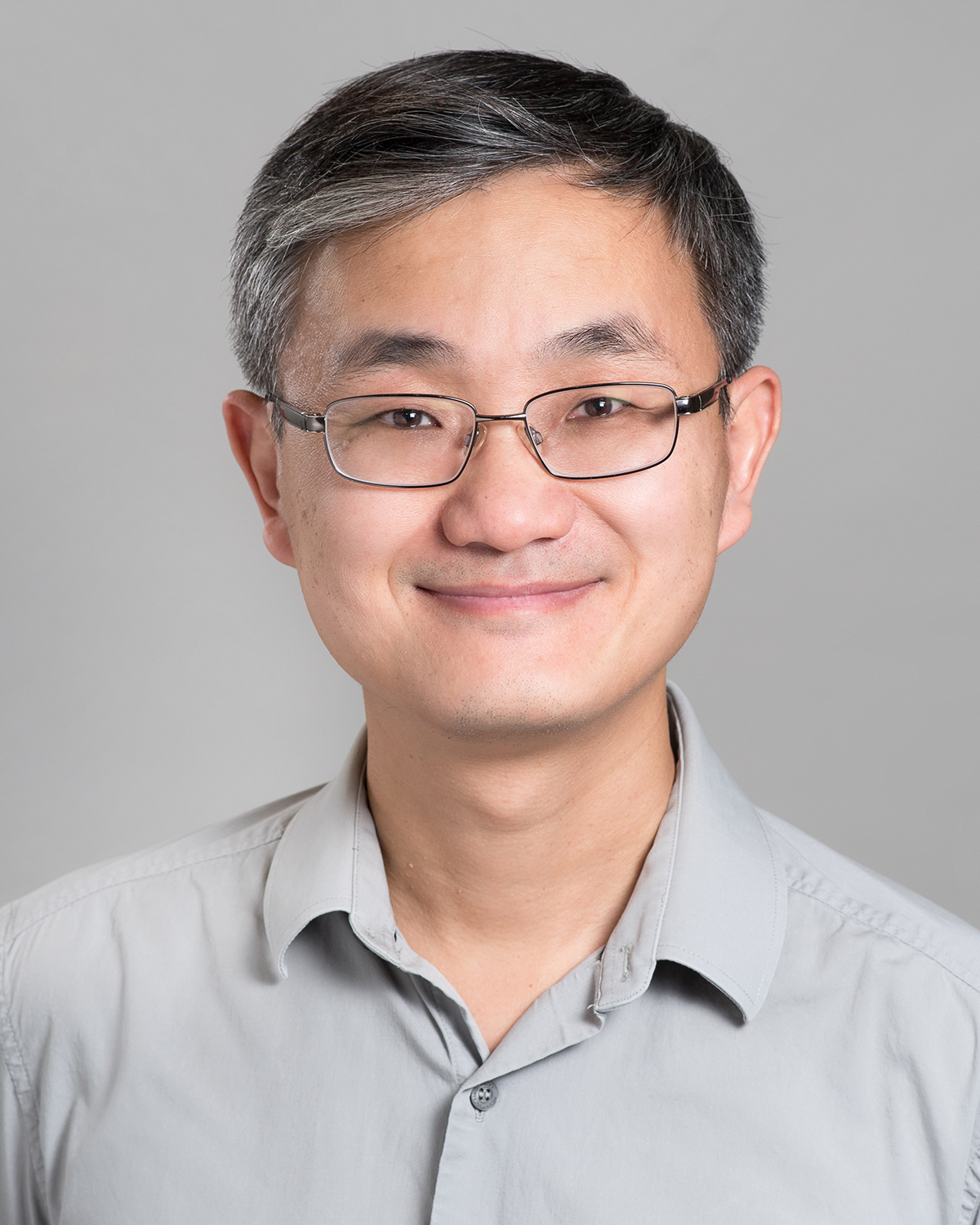
Michael Mior is an Assistant Professor in the Department of Computer Science at the Rochester Institute of Technology (RIT), where he leads the Data Unity Lab. He holds a PhD from the David R. Cheriton School of Computer Science at the University of Waterloo. His research focuses on database systems, query optimization, NoSQL databases, and performance improvements through code migration to server-side execution. He is particularly interested in automating the translation of application code to run directly on database servers, reducing latency and improving efficiency. His work on Locomotor, published at DBPL '17, explores transparent migration of Python code accessing Redis into Lua scripts for server-side execution. Additional projects include NoSE (automated schema design for NoSQL), NetStore (SDN for key-value stores), and FlurryDB (dynamically scalable relational database using VM cloning). He is also the PMC chair for Apache Calcite, a modular framework for query processing. His research trends emphasize automation, performance, and integration between application logic and database systems, particularly in distributed and heterogeneous environments. Affiliation: Rochester Institute of Technology, Golisano College of Computing and Information Sciences Research Lab: Data Unity Lab Open Source Leadership: Project Management Committee Chair, Apache Calcite
Professor Wei Yu is a Canada Research Chair (Tier 1) in Information Theory and Wireless Communications at the University of Toronto , Department of Electrical and Computer Engineering. He received his Ph.D. in Electrical Engineering from Stanford University (2002) and B.A.Sc. in Computer Engineering and Mathematics from University of Waterloo (1997). Key roles: IEEE Fellow, Fellow of Canadian Academy of Engineering, Member of Royal Society of Canada Editorial leadership: IEEE Transactions on Wireless Communications, IEEE Transactions on Information Theory Research Interests span network information theory, convex optimization, wireless communications, and broadband access networks. His work focuses on multiuser information theory, MIMO systems, and 5G/6G network optimization. Publications reflect expertise in reconfigurable intelligent surfaces (RIS), covariance-based activity detection, and fractional programming for signal processing. Scientific Recognition includes multiple IEEE Best Paper Awards (2008, 2017, 2021), NSERC Steacie Fellowship (2015), and the 2024 IEEE Joint Communications/Information Theory Society Paper Award. He is a Clarivate Highly Cited Researcher. Teaching Contributions include ECE1502 (Information Theory), ECE431 (Digital Signal Processing), and ECE1505 (Convex Optimization), with a focus on mathematical foundations and practical applications in communications.
Victor C Chan is a researcher in the Department of Astronomy & Astrophysics at the University of Toronto, Faculty of Arts & Science. His work focuses on developing computational tools for Cosmic Microwave Background analysis, particularly in the area of pixel-space methods for gravitational lensing estimation. Dr. Chan's research interests span cosmology, astrophysics, and computational physics, with specific expertise in Cosmic Microwave Background analysis, gravitational lensing, and high-performance computing for cosmological applications. His work bridges theoretical cosmology with practical computational methods, developing tools that enable more efficient and accurate analysis of cosmological data. The research output shows a consistent progression in developing sophisticated tools for CMB analysis, moving from foundational algorithm development to more advanced implementations incorporating parallel computing and specialized filtering techniques. The work demonstrates strong technical expertise in both cosmological theory and computational implementation. Dr. Chan has developed the cmbpix software package, which has become an important tool in the cosmology community for pixel-space CMB analysis. The package provides researchers with methods for lensing estimation, spherical harmonic transforms, and other critical operations needed for modern CMB data analysis. As a supervisor, Dr. Chan offers opportunities to work at the intersection of cosmology and computational science, with projects involving algorithm development, statistical analysis, and application to real cosmological data. The research program provides valuable experience with both theoretical concepts and practical implementation skills that are highly relevant in modern cosmological research.
Daniel McCafferty is an Associate Professor at the School of Art , University of Manitoba, where he bridges critical theory, design, and technology. His role involves teaching, advising graduate students, and leading initiatives like the Indigenous Designer In Residence program (2017–2018). Education : M.F.A. from North Carolina State University, BFA in Communication Design (Honours) from Nova Scotia College of Art and Design University, and non-credit studies in Indigenous Studies, BIPOC Design History, and Modernity + Coloniality. McCafferty’s creative research interrogates systems of authority through analog/digital mediums like print, programming, and projection. Central to his practice are collaborations via collectives such as Public Design Unit and Different Data , which challenge capitalist labor models and marginalized data narratives. His work has been exhibited at Nuit Blanche Festival, Museum of Contemporary Art Detroit, and institutions in Europe. He has received recognition for his scholarship, including the Falconer Emerging Researcher Award (2019) and a Design Educator Award nomination (2022). McCafferty’s pedagogy emphasizes DIY methods, open-source tools (FLOSS), and critical intersections of anarchism, mutual aid, and interface design. Creative Achievements : Media Artist in Residence at VideoPool (generative Processing projects), Gornisht Zine Residency (Python data scraping for bottled water analysis). Teaching : Courses in code, typography, design theory, and senior honors studios.
Dr. Richard Richardson is a Researcher at Carleton University’s Radiation Biology and Health Physics Branch under the Ontario Medical Physics Institute (OMPI) . His work bridges Radiation Dosimetry , Medical Physics , and Environmental Health . Developed GENMOD-PC , a 100,000-line code for internal dose assessment of radionuclides Studied radon-induced non-cancer diseases (e.g., cardiovascular disease) Investigated tritium and 14C dosimetry using gender-informed physiological models Research Trends Richardson’s publications from 2003–2025 reveal interdisciplinary focus on: Environmental Hydrology : Water table dynamics, permafrost thaw, mercury cycling in subarctic lakes Remote Sensing : LiDAR and SAR applications for wetland mapping and snow monitoring Biogeochemical Hotspots : Arsenic and mercury cycling in legacy-polluted landscapes Affiliation Linked to Carleton University as a potential supervisor and Canadian Nuclear Laboratories (CNL) (formerly AECL) in Ottawa.
Jean-Benoit Charron serves as Associate Professor in the Department of Plant Science at McGill University's Macdonald Campus , where he also holds the administrative position of Associate Dean for Graduate Education . His role encompasses promoting graduate student recruitment, supporting Graduate Program Directors, and overseeing scholarship allocations for M.Sc. and Ph.D. candidates within the Faculty. His research centers on sustainable crop production systems with emphasis on abiotic and biotic stress tolerance mechanisms . Key specializations include: Chromatin regulatory networks in cereal stress responses Epigenetic and genomic approaches to plant adaptation Molecular interactions between crops and beneficial microbes Brachypodium distachyon as a model system for temperate cereals Development of sustainable strategies for onion and cereal disease management Analysis of his 15 most recent publications reveals strong thematic continuity in molecular stress biology and plant-microbe interactions . His work bridges fundamental epigenetics (histone modifications, transcriptional memory) with applied agricultural challenges (Fusarium head blight, onion downy mildew). The consistent use of Brachypodium as a model system demonstrates strategic focus on translating basic discoveries to cereal crops like barley and wheat. As Associate Dean for Graduate Education, he actively shapes graduate training programs while maintaining an active research laboratory investigating chromatin dynamics in stress adaptation. His administrative role directly supports the recruitment and development of next-generation agricultural scientists. His work on Peronospora destructor monitoring systems and Bacillus -mediated growth promotion represents significant contributions to sustainable disease management frameworks. Current projects include field validation of inoculum quantification methods for onion pathogens and mechanistic studies of epigenetic memory in cold acclimation.
Reshma Anna Thomas is a postdoctoral researcher at ASTRON, the Netherlands Institute for Radio Astronomy , affiliated with the University of Amsterdam . She works with Prof. Dr. Jason Hessels as part of the ASTROFLASH collaboration, focusing on detecting and localizing fast radio transients with sub-arcsecond precision using the LOFAR Telescope. Education: PhD from West Virginia University (2024), supervised by Prof. Sarah Burke-Spolaor Collaborations: ASTROFLASH (Netherlands), realfast (VLA, WVU) Research Interests include unraveling the origins of fast radio bursts (FRBs) and leveraging them as probes for cosmic structure. Her work bridges observational techniques in radio astronomy with high-energy astrophysical phenomena. Scientific Recognition includes the 2024 IAU PhD Prize for High Energy and Fundamental Physics Division, highlighting her contributions to FRB research. She has developed open-source software tools for FRB detection pipelines, including modifications to the ThornyFlat_DollySods repository, which streamlines GPU-based transient signal analysis using Heimdall and FETCH algorithms.
Dr. Faraz Hach is an Associate Professor in the Faculty of Medicine at the University of British Columbia, with a primary appointment in the Department of Urologic Sciences. He is also a Senior Research Scientist at the Vancouver Prostate Centre located at Vancouver General Hospital. His research bridges computational algorithm design with biological problems in precision medicine, with a special focus on cancer genomics. Dr. Hach received his B.Sc. in Computer Engineering from Sharif University of Technology in Iran, followed by M.Sc. and Ph.D. degrees in Computing Science from Simon Fraser University, Canada. His doctoral work was recognized with the Governor General's Gold Medal for the best doctoral thesis at Simon Fraser University in 2014. Dr. Hach's research focuses on computational genomics and biomolecular sequence analysis, particularly in the context of cancer. His lab develops novel high-performance algorithms for analyzing large, high-dimensional omics data produced by next-generation sequencing technologies. Current research directions include: Designing combinatorial algorithms for analyzing genomic structural variations and segmental duplications Developing computational methods for detecting aberrations in tissue and liquid biopsies to understand clonal evolution in cancer genomes Creating data structures and algorithms for compressing large quantities of sequencing data Working on standardization of genomic data formats through involvement with the MPEG-ISO sub-committee Dr. Hach's publications demonstrate a strong trend toward developing computational tools that address specific challenges in cancer genomics and precision medicine. His work spans from fundamental algorithm development to clinical applications, with a particular emphasis on creating tools that improve sensitivity and accuracy while maintaining computational efficiency. Many of his recent publications focus on single-cell analysis, transcriptomic long-read sequencing, and structural variant detection in cancer genomes. Dr. Hach has received several prestigious awards for his work, including: The Ian Lawson Van Toch Memorial Award for an outstanding paper at the 20th Annual International Conference on Intelligent Systems for Molecular Biology The Governor General's Gold Medal for the best doctoral thesis award from Simon Fraser University in 2014 Dr. Hach is actively involved in several major research consortia including the International Cancer Genome Consortium (ICGC) and the ICGC-TCGA Pan Cancer Analysis of Whole Genomes (PCAWG). His earlier work on NGS mappings has been extensively used in the detection of copy number and structural variations in the 1000 Genome Project. He maintains an active research lab that develops numerous open-source software tools for genomic analysis, including Freddie, TKSM, scTagger, Genion, CircMiner, and HASLR. Dr. Hach is available for graduate student supervision, with opportunities for M.Sc., PhD, PostDoc, and intern positions in his lab. His research has significant interdisciplinary components, bridging computer science, genomics, and clinical medicine.
Academic Profile Jin Guo is an Associate Professor at McGill University's School of Computer Science and an Associate Member of Mila (Quebec AI Institute). She holds a PhD from the University of Notre Dame and previously worked at Fuji Xerox in image processing and computer vision research. Research Focus Her interdisciplinary research bridges software engineering , human-computer interaction , and applied machine learning , with emphasis on: Collaborative knowledge sharing for diverse stakeholders Software documentation design and analysis Open source software sustainability AI/ML applications in development workflows Publications Overview Her recent work (2024-2025) demonstrates strong focus on AI transparency , OSS ecosystems , and developer tools , with methodologies spanning empirical studies, NLP techniques, and HCI design. Recurring themes include documentation effectiveness, community dynamics, and human factors in software. Awards and Honors CSCW 2023 Best Paper & Methods Recognition Awards NSERC Discovery Accelerator Supplements Award (2019) ACM SIGSOFT Distinguished Paper Award (ICSE 2018) ASE 2017 Best Tool Paper Award Funding and Academic Activities Her research is supported by NSERC, FRQNT, Alfred P. Sloan Foundation, Google, and McGill. She currently supervises PhD candidates including Deeksha Arya (successfully defended 2025), and co-organizes the Human-Centered AI Reading Group at Mila.
Nedialko Nedialkov is a Professor in the Department of Computing and Software at McMaster University, Faculty of Engineering. His research centers on differential-algebraic equations (DAEs) , interval methods , and computational science , with a focus on rigorous numerical solutions and structural analysis. Contact: nedialk@mcmaster.ca Teaching: Courses include Scientific Computing, Advanced Topics in Computing and Software, and Principles of Programming. Research Highlights: Nedialkov has developed symbolic-numeric methods for DAEs, improved verified ODE integration, and created tools like DAETS for structural analysis. His work spans applications in hybrid systems , control theory , and biomedical computing . Publications Trends: Over the past 15 years, his scholarship emphasizes DAEs, validated numerical methods, and computational modeling. Key subfields include Port-Hamiltonian systems , block triangularization , interval constraints , and automatic differentiation . Labs & Teams: Collaborates with McMaster Experts and contributes to open-source projects for validated numerical computing.
Safwat Hassan is an Assistant Professor at the University of Toronto's Faculty of Information . He holds a PhD from Queen’s University and has over a decade of industry experience in software engineering roles at companies like the Egyptian Space Agency, Hewlett Packard, Vodafone, and Etisalat. His research focuses on analyzing mobile apps, user-developer interactions, and improving app store quality through techniques like review analysis and release engineering. Education: PhD (Software Analysis and Intelligence Lab, Queen’s University), MSc & BSc (Helwan University). Certifications include Sun Certified Java Programmer and OMG-Certified UML Professional. Research interests span Artificial Intelligence , Mobile Computing , Software Engineering , and User-Centric Design . Recent work explores Large Language Model (LLM) applications in mobile apps, performance bug prediction, and competitive analysis of app features. Current teaching includes INF1341H: System Analysis and Process Innovation. Supervises graduate students Sara Ibrahim Al Hajj Ibrahim and Buthayna AlMulla. Active in open-source Android analysis and CI/CD configuration studies.
Hanno Rein is an Associate Professor at the University of Toronto Scarborough (UTSC), where he holds a faculty position in the Department of Physical and Environmental Sciences. He is also affiliated with the University of Toronto's Department of Astronomy and Astrophysics and Department of Physics. His primary research involves developing numerical methods and N-body codes, most notably the REBOUND package, which enables precise simulations of planetary systems and astrophysical phenomena. Rein's work focuses on topics such as stochastic processes in planetary migration, celestial mechanics, and the dynamics of Saturn's rings. Education: PhD in Astrophysics from the University of Cambridge (2010), Master of Advanced Study (MASt) in Mathematics from the University of Cambridge (2007), and undergraduate studies in Mathematics and Physics at the University of Tübingen (2006). Research Interests: Numerical methods (including symplectic integrators), planetary system formation, stochastic migration, high-performance computing applications in astrophysics, and collisional dynamics. He is particularly known for advancing computational tools like REBOUND and its integrators (e.g., WHFast, IAS15), and for studying resonant systems and their stability. Grants & Awards: Major funding includes NSERC Discovery Grants (2020–2026, 2014–2020), the Connaught New Researcher Award (2014), and grants supporting his REBOUND development and UTSC Observatory initiatives. His work on the Exoplanet app earned recognition from the Royal Astronomical Society. Advising & Grants: Supervises graduate and undergraduate students in astrophysical simulations and computational projects. Past students have contributed to REBOUND development and studies of planetary systems. Collaborates widely with institutions like CITA, Princeton University, and international research groups. Labs/Teams: Former director of UTSC Observatory (currently non-operational due to construction). Leads the REBOUND development community, fostering open-source tools for the astrophysics community.
Danyang Su is a Researcher at the University of British Columbia (UBC), affiliated with the Department of Earth, Ocean and Atmospheric Sciences within the Faculty of Science. He holds a Ph.D. in Hydraulic Structure Engineering (Zhejiang University, 2012) and a B.E. in Hydrology and Water Resources Engineering (Zhejiang University, 2006). His primary roles include Research Associate (2017–present) and Postdoctoral Fellow (2012–2017) at UBC. Research Focus: Dr. Su specializes in computational modeling of subsurface hydrological processes, reactive transport in porous media/fractured networks, and geochemical repository stability. His work emphasizes large-scale reactive transport modeling via the MIN3P code, including parallelization and unstructured grid implementations. Key contributions include enhancing MIN3P’s capabilities for complex domain simulations and long-term geochemical process understanding. Publications Overview: His recent work (2018–2024) spans topics like CO2 mineral trapping via root systems, ice sheet impact on sedimentary basins, and multibarrier system geochemistry. Articles frequently address environmental challenges such as GHG cycling in agricultural soils and permafrost waste rock management. Technical Contributions: He maintains MIN3P’s codebase, participates in reactive transport benchmarking, and mentors graduate students. His research integrates numerical methods with field applications, addressing climate change impacts and engineered system stability.
Martin Robillard is a Professor at McGill University's School of Computer Science, where he leads the McGill Software Technology Lab. He holds a Ph.D. from the University of British Columbia. His research focuses on software engineering, emphasizing human aspects of development, including documentation design, test suite quality, and information privacy. He has authored the textbook Introduction to Software Design with Java and developed the JetUML tool, recognized with the 2024 ACM SIGSOFT Influential Educator Award. He has co-chaired major conferences (FSE 2012, ICSE 2017) and is a Distinguished Member of the ACM. Research Interests: His work bridges software engineering, AI, and HCI, addressing challenges in API usability, automated documentation generation, and privacy-preserving software design. Recent projects include dynamic documentation tools like Casdoc and studies on developer documentation formats. Professional Activities: He serves on editorial boards for IEEE TSE and Empirical Software Engineering, and chairs workshops like DySDoc. His contributions include over 100 publications, six SIGSOFT Distinguished Paper Awards, and leadership in software engineering education. Teaching: Teaches courses on software design (COMP 303), information privacy (COMP 555), and software architecture. His courses emphasize practical skills and ethical considerations in software development. Labs & Collaborations: The McGill Software Technology Lab investigates knowledge discovery in software systems, with projects on API documentation, test quality, and privacy in health contexts. Collaborators include industry partners like ActiveEon and General Motors.
Sheldon Andrews is a Professor of Software & IT Engineering at the École de technologie supérieure in Montreal, Canada. His research focuses on real-time physics simulation, character animation, and interactive systems. He specializes in integrating computational methods with visual and haptic feedback, particularly in dynamic environments. Research interests include developing algorithms for realistic simulations, such as friction modeling, texture synthesis, and inverse kinematics. His work bridges computer graphics, robotics, and software engineering, with applications in interactive hand simulation and motion gaming. Notable contributions include papers on fingertip appearance modeling (MIG 2013), Hessian matrix-based kinematics (MIG 2017), and friction-visual coupling (SCA 2021). His open-source projects, such as hessianIK and slrbs , provide tools for academic and industrial use. He maintains an active GitHub repository for research code and collaborates on projects like real-time physics engines and data-driven animation techniques. No academic awards are explicitly listed in the provided texts.