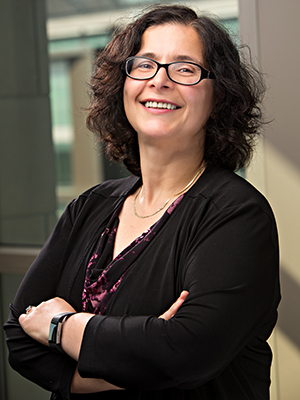
Dilma Da Silva is a Professor in the Department of Computer Science & Engineering at Texas A&M University, holding the titles of Ford Motor Company Design Professor II and Regents Professor. She leads research in cloud computing, operating systems, and distributed computing with a focus on scalability and resource optimization. Her work extends to computer science education initiatives addressing diversity and equity in STEM, particularly for underrepresented groups in Brazil and the U.S. Education: PhD in Computer Science from Georgia Tech (1997), M.S. and B.S. from Universidade de São Paulo (1990, 1986). Her research has been recognized through awards including ACM Distinguished Scientist (2011) and an IBM Research Division Award (2011). She maintains an active Google Scholar profile and collaborates internationally on educational technology and cybersecurity pipeline development. Research emphasizes cloud infrastructure automation (e.g., Cloudbench toolchain) and pedagogical innovations like automated plagiarism detection systems and formative feedback mechanisms for introductory programming courses. Her recent work explores gender diversity in Brazilian STEM graduate programs and strategies to retain Latinx students in computing disciplines.
Wissam Antoun is a PhD Researcher at ALMAnaCH, a research team within INRIA (Institut National de Recherche en Informatique et en Automatique) in Paris. Specializing in Natural Language Processing with a focus on Arabic and French language models, he has developed several influential models including AraBERT (the first Arabic BERT), AraGPT2 (the first Arabic LLM), and CamemBERTa (a French language model based on DeBERTa V3). Prior to his current position, he served as a Research Engineer at ALMAnaCH, a Senior Machine Learning Engineer at Siren Analytics in Beirut, and co-founded the Machine INtelligence Development (MIND) Lab at the American University of Beirut. Wissam's research focuses on developing state-of-the-art NLP technologies for languages displaying high variability, particularly Arabic dialects used on social media. His work spans multilingual language modeling, tokenization techniques for morphologically rich languages, and the development of comprehensive language model suites. Recent projects include Gaperon (a French LLM suite with 1.5B, 8B, and 24B parameters), ModernCamemBERT (the first non-English ModernBERT model), and pioneering work on detecting French AI-generated text. His research demonstrates expertise in model training, evaluation, and practical implementation for real-world NLP applications. His publication record shows consistent high-impact contributions, with AraBERT becoming the most cited Arabic AI paper and most starred Arabic GitHub repository, with over 10 million downloads on Hugging Face. His work has been published at major venues including Findings of ACL 2023 and preprints on arXiv. The trends in his recent articles show a progression from foundational Arabic language models to more sophisticated French language modeling and analysis of AI-generated content. Wissam has received multiple prestigious awards including First Place in the Arabic Sentiment Analysis competition at KAUST (2021) and Second Place in the OSACT4 Shared task on Offensive Language Detection (2020). His technical capabilities span the full AI stack from research to deployment, with expertise in major frameworks, software tools, and programming languages. As an educator, Wissam has served as a Graduate Teaching Assistant at the American University of Beirut, teaching courses in Software Tools, Parallel Programming, and Data Structures and Algorithms. He has also provided NLP instruction through workshop series and supported contestants in the Stars of Science program. His lab work centers around the ALMAnaCH research team at INRIA, where he contributes to advancing French language modeling capabilities through active development on GitHub repositories.
Professor Tihomir Orehovački is a faculty member at the Faculty of Informatics in Pula, University of Pula, Croatia. He has been employed since 2015 and holds the academic rank of Professor. His teaching responsibilities include both undergraduate and graduate courses such as Basics of Programming, Data Structures and Algorithms, Design and Programming of Computer Games, Programming, Advanced Algorithms and Data Structures, Development of IT Solutions, and Human-Computer Interaction. Professor Orehovački's research interests focus on Human-Computer Interaction, Game Development, Software Engineering, and Algorithms. His work spans both theoretical and applied aspects of computer science with a strong emphasis on practical implementations. His publications demonstrate expertise in mobile application development, game design, user experience, and educational technology. His recent publications (2024-2025) reveal a strong focus on practical applications of computer science, particularly in game development using Unity and Godot engines, mobile applications using React Native, and web applications for various business and educational purposes. These works span multiple domains including tourism, sports management, vehicle monitoring, and inclusive game design with attention to LGBTQIA+ representation. Professor Orehovački has been actively involved in supervising numerous student theses across various topics in computer science, reflecting his engagement with the next generation of computer scientists and software engineers. His work demonstrates a consistent commitment to both theoretical computer science and practical applications, with particular strength in bridging academic research with real-world implementation challenges.
Yang Shi is an Assistant Professor of Computer Science at Utah State University, specializing in educational data mining, learning analytics, and AI-driven approaches to enhance computing education. He focuses on developing data-driven methods to improve intelligent tutoring systems and student modeling in programming education. His research spans programming language processing, software analysis, and deep learning applications in education. Shi actively contributes to interdisciplinary conferences and workshops, including EDM, LAK, and SIGCSE, and has organized the CSEDM workshop. His work addresses challenges in scaling educational tools, detecting academic integrity issues in code submissions, and leveraging large language models for programming instruction. He explores novel pedagogical strategies, such as comic-based learning toolkits and the impact of on-demand code examples on novice programmers. Shi's research integrates machine learning and human-AI collaboration to address barriers in computing education, such as anomaly detection in programming datasets and improving code tracing question generation. He investigates how AI feedback systems and generative models can enhance student engagement and learning outcomes. His multi-disciplinary approach bridges computer science and educational theory, emphasizing practical applications to improve STEM education accessibility and effectiveness.
Sang Won Lee is an Associate Professor of Computer Science at Virginia Tech and a Visiting Researcher at NAVER AI Lab. His work focuses on Human-Computer Interaction (HCI), computer-mediated empathy, and creative computing. He explores technologies like VR, conversational agents, and live coding to foster empathy, support self-reflection, and enable inclusive collaboration. His research has been recognized with best paper awards at ACM CHI and Creativity & Cognition. He holds a Ph.D. in Computer Science from the University of Michigan, alongside degrees in Music Technology (Georgia Tech), Management Science (Stanford), and Industrial Engineering (Seoul National University). His teaching spans courses like Creative Computing Studio, Computer-Supported Cooperative Work, and Game Design. Research interests include: Empathy through interactive systems Music technology and live coding performances Collaborative tools for education and work VR/AR applications in learning Notable awards include the 2016 International Computer Music Association Award for his composition Live Writing: Gloomy Streets . Recent work explores AI ethics in education, voice agents in parent-child interactions, and cross-device mixed reality experiences. Active in both academic conferences (CHI, NIME) and artistic venues (ICMC performances), he bridges technical innovation with creative expression. His lab develops tools like TaskScape for holistic task management and Octave for spatiotemporal data analysis in construction education.
Craig Zilles is a Professor and Severns Faculty Scholar in the Department of Computer Science at the University of Illinois at Urbana-Champaign. His primary affiliation is within the College of Engineering. He holds a Ph.D. from the University of Wisconsin-Madison (2002), where his research focused on compiler-architecture interactions and speculation techniques. Research Interests: Zilles' work spans computing education (e.g., computer-based testing, learning analytics, concept inventories) and computer architecture (e.g., compilers, dynamic optimization, managed languages). He pioneered the Computer-based Testing Facility (CBTF), a platform revolutionizing assessment practices in STEM education. Awards & Recognition: Recipient of the NSF CAREER Award, IEEE Micro Top Picks, ASPLOS Best Paper Awards (2010, 2013), and numerous teaching accolades including the Excellence in Undergraduate Teaching Award (2018) and the IEEE Education Society's Mac Van Valkenburg Early Career Teaching Award (2010). Teaching: Instructs courses such as CS 105 (Intro Computing for Non-Tech), CS 233 (Computer Architecture), and advanced topics in computer science education. Known for innovative pedagogical approaches, including mastery-based grading and automated assessment systems. Labs & Projects: Leads the CBTF initiative and contributes to PrairieLearn, an open-source platform enabling adaptive, randomized problem generation. His research also explores AI-driven autograding and anti-plagiarism strategies in the age of generative AI.
Geoffrey Werner Challen is a Teaching Professor in the Department of Computer Science at the University of Illinois, where he has held the rank since August 2017. He leads the transformation of introductory computer science education through innovative pedagogy and scalable infrastructure. His work emphasizes equitable access, effective assessment, and leveraging technology to enhance learning outcomes. Challen holds a Ph.D. and A.B. in Physics from Harvard University. Educational Background Ph.D. Computer Science, Harvard University, June 2010 A.B. Physics, Harvard University, June 2003 Research & Pedagogy Focus Challen's research centers on improving computer science education through adaptive technologies and course design. Key areas include: Development of interactive learning platforms (e.g., learncs.online) Automated assessment systems and grading infrastructure Curriculum innovations for introductory programming courses Educational equity in large-scale course environments Recent Contributions His recent work critiques traditional teaching faculty hiring practices, advocates for evidence-based pedagogy, and explores adaptive quizzing systems. He has been awarded a National Science Foundation CAREER Award (2017) for his transformative educational initiatives. Grants & Leadership Challen oversees the Illinois CS 124 course, which enrolls 2,000+ students annually. He has secured SIIP grants to enhance engineering pedagogy and led the redesign of hiring processes for teaching faculty to prioritize holistic evaluation over performative teaching demonstrations. Labs & Projects Maintains a robust infrastructure for course delivery, including: Interactive walkthroughs with live coding environments Automated homework grading systems Plagiarism analysis frameworks Adaptive quiz development initiatives His open-source materials are freely available at learncs.online .
Adam Robson is a Lecturer in Computer Science at the University of Sunderland, affiliated with the Faculty of Technology. Specializing in cybersecurity, software development, and programming, he previously worked as a software developer across sectors such as architecture, construction, engineering, and education, leveraging technologies like cloud services, VR/AR, and AI. He teaches on the MSc Cybersecurity, BSc Computer Science, and BSc Cybersecurity and Digital Forensics programs. His research focuses on optimization algorithms, machine learning, artificial intelligence, and plagiarism detection in source code. Robson’s recent publications explore nature-inspired optimization frameworks and facial expression recognition using particle swarm optimization. He is based at the David Goldman Technology Centre and reachable via adam.robson@sunderland.ac.uk .
Alexandra BĂICOIANU serves as a Lecturer in the Department of Mathematics and Informatics within the Faculty of Mathematics and Informatics at Transilvania University of Brasov, Romania, with office location at Building P, Room PI8 (Iuliu Maniu 50, Braşov). Her research spans core computational disciplines including Algorithms, Formal languages, Machine Learning, Applied Computational Intelligence, Discrete optimization, and High Performance Computing. These interconnected fields drive her work in developing efficient computational solutions for complex real-world problems. Analysis of her 2013-2020 publications reveals a dominant focus on Machine Learning applications, particularly Big Data processing via Apache Spark, industrial condition monitoring systems, and convolutional neural network-based image classification. Her methodological contributions include comparative studies of classification algorithms (WEKA/LAD) and plagiarism detection in source code, demonstrating consistent innovation in computational intelligence. Contact details: a.baicoianu@unitbv.ro | +40 268 414.016
Sebastian Baltes is a Professor of Software Engineering at the University of Bayreuth, Germany, and an Adjunct Professor at the University of Adelaide, Australia. His research focuses on empirical studies of software developers' work habits, tool/process improvements, and bridging empirical research with industrial practice. He holds a PhD from the University of Trier and has industry experience at SAP and QAware. He teaches courses on Software Engineering, Advanced SE, and related topics across multiple universities, including University of Bayreuth, Trier, and Adelaide. His research emphasizes data-driven decision-making and has led to influential work on test flakiness, Stack Overflow code reuse, and developer demographics. His academic contributions span over 50 publications in venues like ICSE, FSE, and Empirical Software Engineering. He leads the Software Engineering Group at Bayreuth and actively contributes to the SE community through editorial roles and industry collaborations.
Pedro Manuel Moreno Marcos serves as an Associate Professor in the Department of Telematics Engineering at Charles III University of Madrid, where he maintains an active research profile in educational technology. His academic work bridges telecommunications engineering with data-driven educational innovation, focusing on the practical implementation of analytics in real-world learning environments across Spanish and European higher education institutions. His research centers on learning analytics and artificial intelligence applications in education, with particular expertise in student behavior modeling, dropout prediction, and AI-enhanced learning environments. Key contributions include developing predictive models using multi-source data, creating tools like Statoodle for cheating prevention in LMS platforms, and pioneering human-centered generative AI applications through projects like GENIE Learn. His methodological approach combines machine learning algorithm evaluation with institutional ethnography to address adoption challenges in learning analytics. Analysis of his 15 most recent publications reveals an accelerating focus on generative AI's educational potential since 2023, with increasing attention to ethical implementation frameworks and micro-credentialing systems. His work consistently addresses practical barriers in learning analytics adoption while maintaining strong connections to Spanish higher education contexts through projects like PALABRIA-CM-UC3M. No scientific awards were documented in the provided materials. While specific student supervision details aren't disclosed, his research methodology frequently involves multi-institutional collaborations across European higher education settings. Current projects indicate active grant funding for initiatives including SHEILA (Support Higher Education to Integrate Learning Analytics) and PALABRIA-CM-UC3M, though specific grant amounts and durations aren't specified in the source text. Dr. Moreno Marcos leads research within the university's learning analytics ecosystem, contributing to frameworks like SHEILA that inform institutional policy. His work with telepresence classrooms and IoT-enabled educational scenarios demonstrates engagement with emerging technology infrastructure, while his focus on multi-source data integration suggests leadership in developing comprehensive analytics platforms for complex educational environments.
Dejan Gjorgjevikj is a Full Professor at the Faculty of Computer Science and Engineering, Ss. Cyril and Methodius University in Skopje. He joined the Department of Computer Science and Engineering in 1992, progressing from Assistant Professor (2004) to Associate Professor (2009) before attaining full professorship in 2014. His international academic engagements include research visits to institutions in Austria, Bulgaria, the Czech Republic, and the UK. Education: Bachelor's and Master's degrees from the Faculty of Electrical Engineering, Skopje (1992, 1997); PhD from the same institution (2004). Research Focus: His primary research explores pattern recognition, machine learning, and software engineering. Recent work emphasizes applications in industrial diagnostics (fault detection in machinery), blockchain security (Ponzi scheme detection), environmental monitoring (air pollution prediction), and human-computer interaction (sensor-based activity recognition). Methodologies frequently involve deep learning architectures like autoencoders, LSTMs, and adversarial networks. Publication Trends: Gjorgjevikj has authored over 90 publications, with recent works demonstrating increased focus on neural network applications in cross-domain problems (mechanical engineering, finance, IoT) and NLP tasks like sarcasm detection. His articles frequently appear in IEEE, Springer, and Elsevier journals. Awards: AAIA’15 Data Mining Competition Award (2015) Projects & Service: Involved in 10+ international/domestic research projects IEEE member since 1991, ACM member since 1997 Program committee member for multiple international conferences