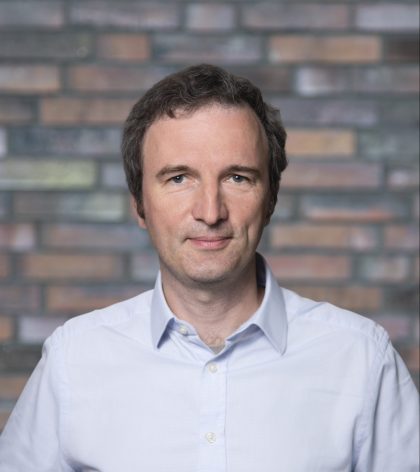
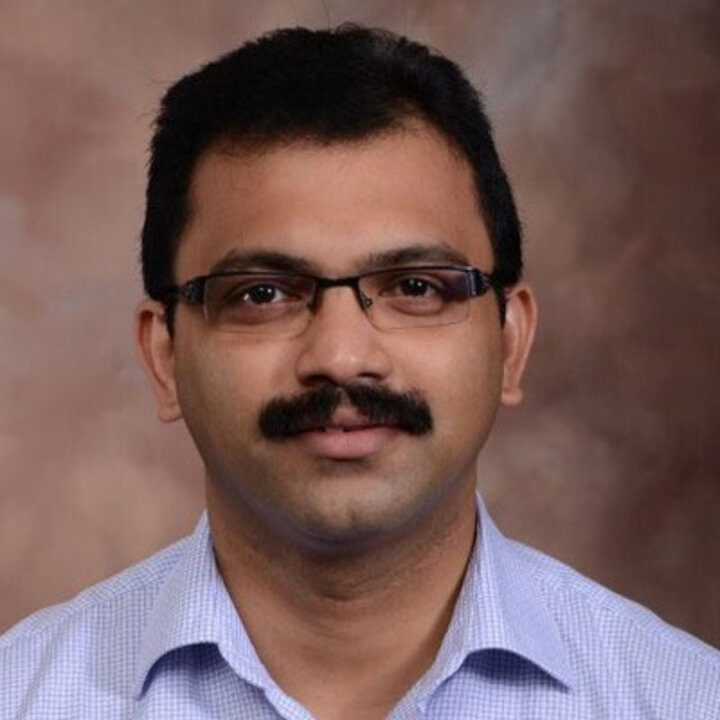
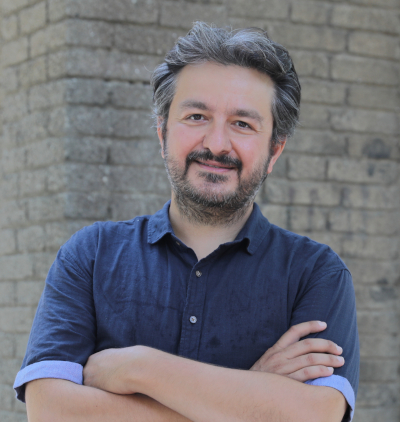
Coen De Roover is a Professor at the Software Languages Lab of the Vrije Universiteit Brussel , actively leading research in program analysis, software quality, and security. He chairs the Bachelor in Computer Science program and supervises a dynamic research group. Research Focus: Static/dynamic analysis, automated testing, software maintenance, AI for SE, infrastructure as code security. Projects: Bugatti (2025-2028), Cracy (2024-2027), CRPF (2024-2028), BaseCamp Zero (2022-2026), EcoPipe (2023-2025), APAX (2022-2024). Scientific Awards: MSR 2025 Distinguished Dataset Award IEEE TCSE Distinguished Paper Award (SANER 2022) ICSE 2022 Best Artifact Award SCAM 2022 Best Artifact Award Conference Leadership: General Chair of SCAM 2024, Program Co-Chair for GPCE 2024, and active in organizing summer schools on security testing.
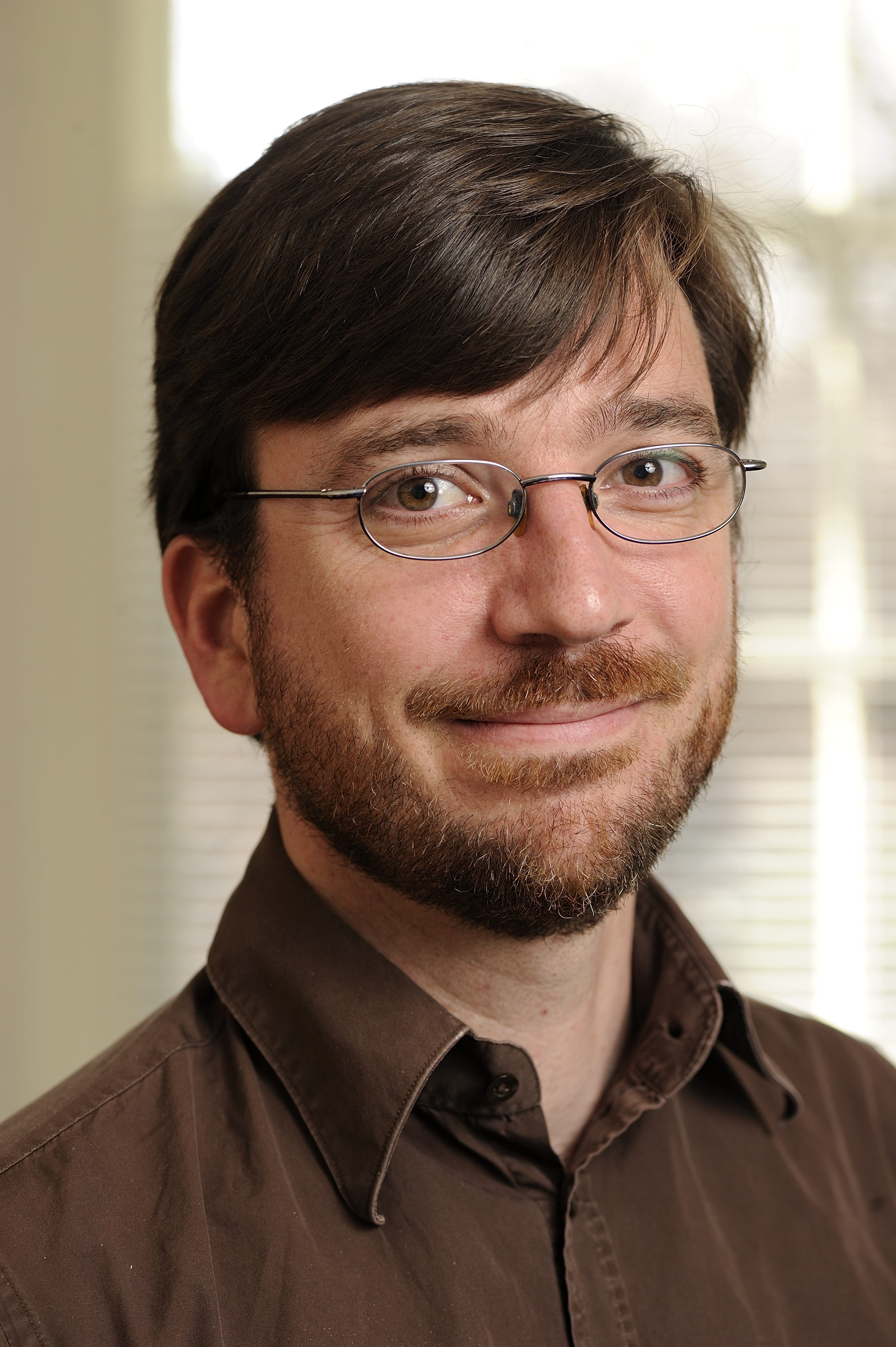
John Gaspar serves as Director of Human Factors Research at the University of Iowa's Driving Safety Research Institute within the College of Engineering. His work bridges the Department of Industrial and Systems Engineering and the National Advanced Driving Simulator (NADS), where he leads critical research on driver-vehicle interactions. With a PhD in Psychology from the University of Illinois Urbana-Champaign, his academic foundation supports interdisciplinary work spanning engineering, cognitive science, and transportation safety. Gaspar's research focuses on human factors in vehicle automation systems, drowsy driving countermeasures, and driver monitoring technologies. He employs multimodal methodologies including high-fidelity simulation, naturalistic driving studies, and physiological monitoring to examine driver behavior in automated vehicles. His work specifically investigates mental model development around ADAS technologies, transition of control in conditional automation, and fatigue management strategies during long-haul driving. Analysis of his recent publications reveals dominant research themes in drowsy driving countermeasures (25% of recent work), ADAS mental model development (20%), driver monitoring system validation (15%), and rural automated vehicle deployment challenges (10%). His methodological approach consistently integrates simulation with real-world validation, particularly through NHTSA-funded projects examining human-automation interaction. As principal investigator on three active NHTSA projects, Gaspar leads research on automated vehicle HMIs, drowsiness countermeasures, and driver state detection systems. His work directly informs transportation safety policy through collaborations with the Transportation Research Board, Human Factors and Ergonomics Society, and Society of Automotive Engineers. The Driving Safety Research Institute under his direction operates multiple high-fidelity simulators including NADS-1 and NADS-2, supporting both fundamental human factors research and applied vehicle safety development. Gaspar's laboratory infrastructure includes the National Advanced Driving Simulator complex with motion-base platforms, instrumented on-road vehicles, and rural driving scenario capabilities. His team specializes in multimodal data collection combining eye-tracking, physiological monitoring, vehicle dynamics, and behavioral coding to create comprehensive driver state models. Current projects emphasize real-world applicability of laboratory findings, particularly for vulnerable populations including older drivers and those operating in rural environments.
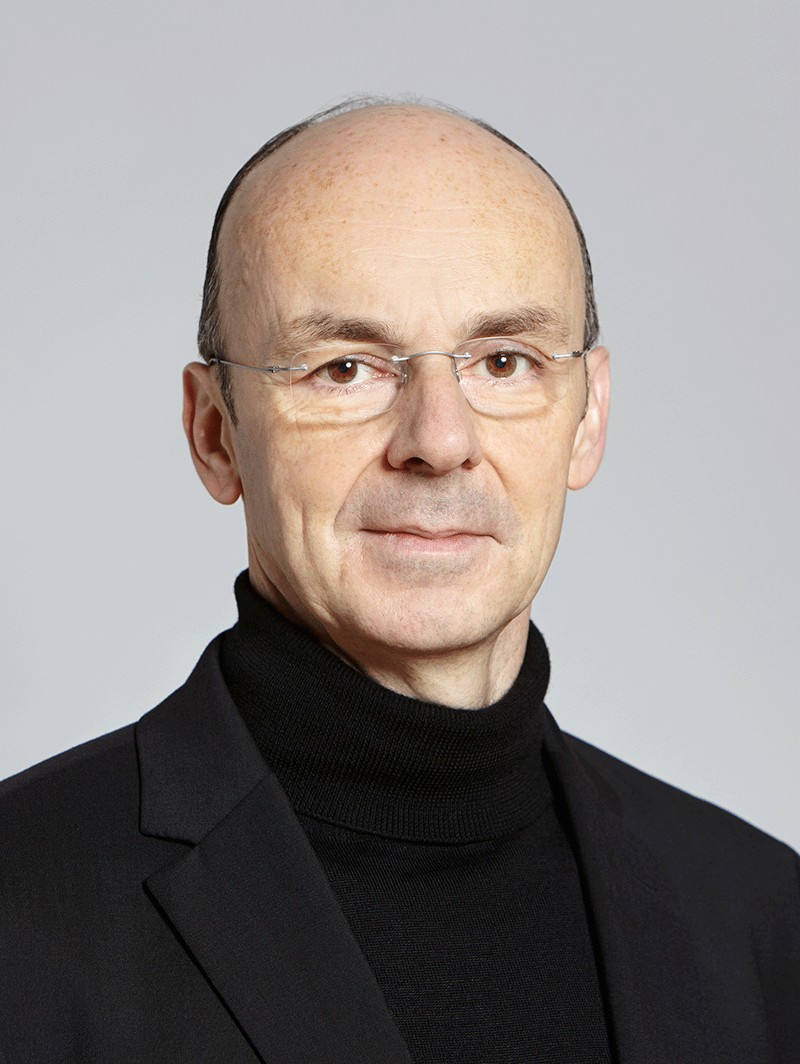
Friedrich Röpke is a Professor and group leader in Physics of Stellar Objects , with a focus on astrophysical fluid dynamics and supernova modeling. His research spans Type Ia supernovae , white dwarf mergers , and common-envelope evolution , utilizing advanced 3D hydrodynamic simulations and radiative transfer techniques . Publications in journals like Astronomy & Astrophysics and Monthly Notices of the Royal Astronomical Society highlight his contributions to understanding thermonuclear explosions and magnetic field generation in stellar systems. His work emphasizes multidimensional modeling of supernova mechanisms, including double detonations , deflagration-detonation transitions , and polarization signatures . Collaborations with researchers like Rüdiger Pakmor and Ivo Seitenzahl reflect interdisciplinary efforts in computational astrophysics and cosmochemistry . Articles demonstrate expertise in low-Mach number flows , convective boundary dynamics , and gamma-ray nucleosynthesis .
Anne Helmond is an Associate Professor of Media, Data and Society at Utrecht University , specializing in the platformization , algorithmization , and datafication of the web. She is a key contributor to the focus area Governing the Digital Society , where she develops digital methods for analyzing mobile data flows and app store infrastructures . Her work combines empirical and historical perspectives, emphasizing the material and programmable data infrastructures of platforms.
Chris Callison-Burch is a Professor of Computer and Information Science at the University of Pennsylvania , where he leads research in Natural Language Processing , Large Language Models , and Multimodal Learning . Previously, he worked at Johns Hopkins University’s Center for Language and Speech Processing for six years. Research Areas Automated paraphrasing and natural language understanding Machine translation without bilingual parallel corpora Crowdsourcing for NLP and social justice applications Generative AI and vision-language models Recent work focuses on LLM soundness guarantees, multimodal reasoning, AI-generated text detection, and ethical applications of language models. His research has been cited over 25,000 times, and he testified before Congress in 2023 on generative AI and copyright law. Awards & Funding Sloan Research Fellow Faculty awards from Google, Microsoft, Amazon, Facebook, and Roblox Grants from DARPA, IARPA, and NSF He chairs major NLP conferences (ACL 2017, EMNLP 2015) and contributes to editorial boards of TACL and Computational Linguistics .
Philip Brighten Godfrey is a Professor in the Department of Computer Science at the University of Illinois at Urbana-Champaign (UIUC) and Technical Director at VMware (formerly Broadcom). He co-founded network verification startup Veriflow, which was acquired in 2019. His research focuses on networked systems, blending theoretical and practical approaches to low-latency networking, software-defined architectures, microservices communication, and machine learning for network optimization. Education: Ph.D. in Computer Science (UC Berkeley, 2009), B.S. in Computer Science (Carnegie Mellon, 2002) His work spans data center design, network verification (e.g., VeriFlow), congestion control (PCC Vivace), and innovative projects like cISP (Speed-of-Light Internet). Recent publications address microservice tracing (TraceWeaver), fault localization (Flock), and XR device offloading (XRgo). Notable awards include the ACM SIGCOMM Rising Star Award, NSF CAREER Award, Sloan Research Fellowship, and multiple best paper recognitions. He has chaired SIGCOMM and HotNets, and his teaching excellence in courses like CS 538 Advanced Computer Networks has been repeatedly recognized. Scientific Honors ACM SIGCOMM Rising Star Award NSF CAREER Award (2012) Sloan Research Fellowship (2014) Best Paper Awards (SIGCOMM, HotSDN, CoNEXT) IEEE ComSoc Data Storage Best Paper Engineering Council Outstanding Advisor Award (2015) Godfrey leads research in the Coordinated Science Laboratory (CSL) and contributes to the LDOS NSF Expeditions project. His group advises Ph.D. students on topics ranging from network verification to XR systems optimization, with alumni now at Meta, Google, and academic institutions like ETH Zurich.
Christos Liaskos is an Assistant Professor at the Department of Computer Science and Engineering, University of Ioannina (UoI), Greece. He is also a researcher at the Foundation for Research and Technology-Hellas (FORTH). His expertise spans computer networks, wireless communication systems, and nanotechnology, with a focus on reconfigurable intelligent surfaces (RIS), metasurfaces, and their applications in 6G, IoT, and autonomous systems. He holds a PhD in Computer Networking from Aristotle University of Thessaloniki (AUTH) and has published extensively in IEEE venues. Education: Diploma in Electrical and Computer Engineering (AUTH, 2004) MSc in Medical Informatics (AUTH Medical School, 2008) PhD in Computer Networking (AUTH Informatics Department, 2014) Research Interests: Programmable wireless environments using software-defined metasurfaces RIS-assisted architectures for 5G/6G networks IoT and UAV communication systems Energy-efficient trajectory design for drones Beam steering and wavefront control in mmWave systems His recent work explores applications like RIS-based autonomous driving, optical wireless positioning, and fault-tolerant routing in metasurface networks. He contributes to open-source simulation frameworks (e.g., Cooperis) and collaborates on EU projects like VISORSURF, advancing the Internet-of-Materials concept.
Prof. Dr. Helmut Bölcskei is a Full Professor of Mathematical Information Science at ETH Zurich's Department of Information Technology and Electrical Engineering. He holds a joint affiliation with the Department of Mathematics. His academic journey includes a Dipl.-Ing. and Dr. techn. from Vienna University of Technology, followed by postdoctoral research at Stanford University and industry roles at Iospan Wireless and Celestrius AG. He has been at ETH Zurich since 2002, contributing to applied mathematics, machine learning theory, signal processing, and statistics. Education : 1994: Dipl.-Ing., Vienna University of Technology 1997: Dr. techn., Vienna University of Technology Industry Experience : Co-founder of Iospan Wireless (acquired by Intel) and Celestrius AG His research focuses on applied mathematics , machine learning theory , and data science , with emphasis on neural network approximation, metric entropy, and signal processing. Recent work explores theoretical limits of deep learning and nonlinear system identification. His publications highlight advancements in quantization, compression, and system complexity analysis. Prof. Bölcskei has received numerous accolades, including IEEE Fellow status, the 2010 Vodafone Innovations Award, and the ETH 'Golden Owl' Teaching Award. He served as Editor-in-Chief of the IEEE Transactions on Information Theory (2010–2013) and has held editorial roles in multiple journals. His leadership includes roles on the Board of Governors of the IEEE Information Theory Society and as a delegate for faculty appointments at ETH Zurich. Labs/Teams : Mathematical Information Science Group at ETH Zurich's Department of Information Technology and Electrical Engineering
Naghmeh Karimi is an Associate Professor in the Department of Computer Science and Electrical Engineering at the University of Maryland Baltimore County (UMBC), where she has held this position since 2023, after serving as an Assistant Professor from 2017 to 2023. She is a recipient of the NSF CAREER Award (2020) and the Best Paper Award (2019). Her research focuses on hardware security, trustworthiness, and reliability of integrated circuits, with a particular emphasis on cryptographic devices, PUF-based authentication, and aging-related vulnerabilities. She directs the SECure, REliable and Trusted Systems (SECRETS) Lab at UMBC, which explores topics including hardware security countermeasures, fault tolerance, and AI-driven security solutions. Prior to UMBC, she was affiliated with Rutgers University, New York University, Duke University, and Yale University. Her research interests span hardware security, design-for-trust, fault tolerance, AI for security, and VLSI design. Recent work emphasizes aging effects on cryptographic circuits, PUF resilience, and digital sensor-based failure detection. Her publications address challenges in side-channel attacks, fault injection, and secure IoT frameworks. Dr. Karimi’s work is supported by sponsors, and she actively mentors Ph.D. students in hardware security and reliability. Her lab offers openings for self-motivated researchers in these areas.
Amit Goldenberg is an Assistant Professor of Business Administration at Harvard Business School, where he is a member of the Negotiation, Organizations & Markets unit. He is also an affiliate with Harvard's Department of Psychology and a member of the Digital Data and Design Institute (D^3). His academic work bridges the fields of psychology, business, and technology, focusing on how emotions operate in social and group contexts. Education and Background While specific educational details are not provided in the text, Professor Goldenberg has established himself as a leading researcher in the field of collective emotions and their implications for organizational behavior and social dynamics. Research Interests Professor Goldenberg's research focuses on understanding what makes people emotional in social and group contexts, and how such emotions can be changed when they are unhelpful or undesired. He is particularly interested in how technology is used for both emotion detection and regulation. His work integrates experimental psychology examining behavior at both individual and collective levels using a multi-method approach that combines behavioral experiments, analysis of data from digital media, computational modeling, and AI. His specific research areas include collective emotions, emotion regulation in groups, the impact of social media on emotional experiences, human-AI emotional interactions, and the application of psychological principles to organizational contexts. Scientific Awards and Recognition Winner of the 2024 Janet Taylor Spence Award for Transformative Early Career Contributions, given by the Association for Psychological Science Selected as a 2023 Rising Star by the Association for Psychological Science Advising and Professional Contributions Professor Goldenberg leads the Goldenberg Lab, a research group focused on studying questions related to the behavior of individuals and collectives through the lens of affective processes such as emotions and well-being. His lab takes a macro approach to understanding what measures can be taken to predict and change emotions when they are unhealthy or unhelpful, with particular attention to how technologies like Large Language Models and digital media play roles in both eliciting and managing emotions. His work integrates theories from psychology, complex systems, cognitive science, and philosophy, employing methods that include experimental work, big data analysis, computational modeling, and machine learning. He has developed numerous teaching cases at Harvard Business School covering topics like AI companions for older adults, online insurance platforms, and ransomware attacks. Research Teams and Labs Professor Goldenberg directs the Goldenberg Lab, which brings together social scientists to study individual and collective behavior through affective processes. The lab maintains active GitHub repositories with templates and code for research projects, indicating a strong emphasis on computational methods and reproducible research. His lab collaborates across disciplines, working with computer scientists, psychologists, and organizational behavior researchers to advance understanding of emotion in social contexts.
Professor Christian Ritz serves as Director of SMART and Professor in the School of Electrical, Computer and Telecommunications Engineering within the Faculty of Engineering and Information Sciences at the University of Wollongong. He has held his professorship since 2017 and served as Associate Dean (Research) in 2022 and Associate Dean (International) from 2016-2021. Professor Ritz's research focuses on signal processing for speech, audio, acoustics and visual information. His current projects include microphone array signal processing for enhancing sound recorded in classrooms, sound scene classification for dementia care environments, spatial audio for Virtual and Augmented Reality, and undersea surveillance. His work spans multiple technical domains including signal processing, audio engineering, computer vision, and communications engineering. His recent publication trends show a strong focus on neural network applications for audio processing, particularly for classroom monitoring and spatial audio reproduction. His work integrates deep learning with traditional signal processing techniques to address challenges in spatial audio synthesis, room impulse response generation, and directional audio reproduction. He has also contributed to applications in mining automation, public safety surveillance, and positioning systems. Professor Ritz is a member of the Centre for Signal and Information Processing (CSIP), part of the Signals, Information and Communications Research Institute (SICOM) at the University of Wollongong. His research is funded by the ARC, overseas research institutes, and defense organizations. His grant portfolio is extensive, including projects such as AI/IoT-powered Airborne System for Monitoring Water Level and Tidal Floods, Multi-Modal Satellite-based Vessel Surveillance, Net Zero Industry and Innovation Program, Smart Eye: Airborne and AI-Driven Assessment Solution of Sugarcane, and numerous projects related to spatial audio and underwater surveillance. He has secured funding from diverse sources including the Australian Research Council, defense organizations, and international collaborations. Professor Ritz maintains an active research laboratory environment focused on signal and information processing. His work spans multiple application domains from classroom monitoring to underwater mine detection, with strong connections to both academic and industry partners. His research group appears to focus on practical applications of signal processing techniques to solve real-world problems across various domains.
Joe Louis is the Eberhard Professor of Entomology in the Department of Entomology at the University of Nebraska-Lincoln, where he leads groundbreaking research on plant-insect interactions and crop resistance mechanisms. His work bridges molecular biology, chemical ecology, and agricultural science to address critical pest challenges in sorghum and related crops. Dr. Louis specializes in aphid resistance mechanisms, particularly in sorghum against pests like the sugarcane aphid ( Melanaphis sacchari ) and fall armyworm ( Spodoptera frugiperda ). His research explores phenylpropanoid pathways, cuticular wax composition, phytohormone signaling (jasmonic acid, abscisic acid), and genetic modifications that enhance plant defense. Key methodologies include transcriptomics, metabolomics, and high-throughput phenotyping to identify resistance traits. Analysis of his 15 most recent publications (2024-2025) reveals a dominant focus on sorghum-aphid interactions, with emerging work on fall armyworm defenses. Critical themes include the role of Brown midrib (BMR) mutants in resistance, the impact of epicuticular waxes on insect feeding behavior, and the function of specific genes (e.g., CCoAOMT, Zm4CL5) in defense pathways. His research demonstrates how plant age, phenology, and environmental factors modulate resistance efficacy. Scientific recognition includes: NSF CAREER Award (2019) for "Deciphering sorghum resistance mechanisms to phloem-feeding aphids" Dr. Louis's research program is supported by significant competitive grants, including the NSF CAREER award, which funds his work on molecular mechanisms of sorghum resistance. While specific advising details are not documented in available sources, his prolific publication output indicates active mentorship of graduate students in entomology and plant sciences. His work directly informs breeding programs for aphid-resistant sorghum varieties. Research is conducted within the Department of Entomology at the University of Nebraska-Lincoln, contributing to the university's agricultural research mission through collaborations with plant breeders, pathologists, and field entomologists. His laboratory integrates molecular techniques with field-based validation to ensure practical applications for sustainable pest management.
Emre Ugur is an Associate Professor in the Department of Computer Engineering at Bogazici University, where he serves as the head of the Cognition, Learning and Robotics (CoLoRs) laboratory. His research focuses on bridging the gap between continuous sensorimotor experiences and discrete symbolic representations in robotics. Funded by major international sources including the European Commission's Horizon 2020 program and TUBITAK, his work has significant implications for cognitive robotics and autonomous systems. Education: PhD in Computer Engineering from Middle East Technical University (METU, Turkey) Ugur's research interests center on cognitive and developmental approaches to robotics, with particular emphasis on neuro-symbolic integration, affordance learning, and symbol emergence. His work explores how robots can autonomously develop high-level cognitive capabilities through continuous interaction with their environment, similar to human cognitive development. His approach combines machine learning, cognitive science, and robotics to create systems that can learn, predict, and reason about their actions. His recent publications reveal a strong trajectory toward neuro-symbolic robotics, where he develops methods for extracting discrete symbolic representations from continuous sensorimotor experiences. This work enables robots to perform complex planning and reasoning tasks while maintaining connection to physical reality. There is also significant focus on social robotics, particularly in human-robot interaction, social navigation, and embodied cognition. Scientific Awards: The Young Scientist Award by the Science Academy (BAGEP) The Excellence in Teaching Award by the Faculty of Engineering (2023) As Principal Investigator of major projects including INVERSE (EU Horizon 2025), DEEPPLAN (TUBITAK), and previously DEEPSYM and IMAGINE, Ugur has established a robust research program that bridges theoretical advances with practical applications. He has supervised numerous PhD and Master's students who have made significant contributions to the field. His leadership extends to organizing major workshops at top robotics conferences including IROS, RSS, and ICRA. At the Cognition, Learning and Robotics (CoLoRs) lab, Ugur leads research on cognitive robotics, developmental robotics, and neuro-symbolic AI. The lab explores fundamental questions about how robots can develop understanding of their actions, learn from interaction, and form abstract representations necessary for high-level cognition. Current projects focus on symbolic reasoning, prediction, and planning in robotic systems.
Chao Peng is a Principal Research Scientist at ByteDance where he leads the Software Engineering Lab, focusing on AI agents for software engineering. He holds a part-time position as a Postgraduate Student Mentor at Fudan University's School of Computer Science. His research bridges industry and academia, with significant contributions to software testing, program repair, and LLM applications in software development. Education: PhD in Informatics, 2021, University of Edinburgh, UK MSc in High Performance Computing and Data Science, 2017, University of Edinburgh, UK BEng in Computer Science and Technology, 2016, Xuzhou University of Technology, China Dr. Peng's research interests center on the intersection of artificial intelligence and software engineering. He explores how large language models can transform traditional software development practices, particularly in code generation, testing, and bug fixing. His work on LLM4Code has led to innovative frameworks like CodeVisionary for evaluating code generation capabilities and Trae Agent for software engineering tasks with test-time scaling. He investigates the synergy between machine learning techniques and compiler optimizations to enhance software reliability and developer productivity. His recent publications reveal a strong focus on practical evaluation frameworks for LLMs in real-world software engineering contexts. Rather than theoretical benchmarks, his work emphasizes real-world applicability, as seen in RepoMasterEval which evaluates code completion in actual repository settings. He examines multi-faceted challenges including code generation, bug reproduction, issue resolution, and repository-level question answering, consistently addressing the gap between laboratory evaluations and practical development environments. Scientific Awards: Distinguished Reviewer for FSE'25 Invited to program committees for FSE'26, SANER 2026, ASE 2025, and others School of Informatics Scholarship (fully-funded PhD) Multiple national scholarships during undergraduate studies Honours Spot Bonus at ByteDance Dr. Peng actively mentors postgraduate students at Fudan University while leading research initiatives at ByteDance that foster university collaborations. His laboratory work translates academic research into practical tools for software development, with several frameworks deployed in industrial settings. He serves on multiple conference program committees, contributing to the advancement of software engineering research through rigorous peer review and community building. His Software Engineering Lab at ByteDance operates at the forefront of AI-assisted development, exploring how agent-based systems can automate complex software engineering tasks. The team's work on frameworks like AEGIS for bug reproduction and DialogAgent for code question answering demonstrates their commitment to solving practical challenges faced by developers in real-world settings.
Juan Carlos Farah serves as both a Scientific Collaborator and Lecturer at the Fribourg School of Engineering and Architecture, part of the University of Applied Sciences and Arts of Western Switzerland (HES-SO). His academic appointments indicate an active role in both research and teaching within the institution's engineering and technology programs. Dr. Farah holds a PhD in Robotics, Control, and Intelligent Systems from the École Polytechnique Fédérale de Lausanne (EPFL), a Master of Science in Computing from Imperial College London, and a Bachelor of Arts in Economics from Harvard University. This interdisciplinary background spans computer science, engineering, and economics, providing a strong foundation for his current research endeavors. His research focuses on the intersection of human-computer interaction, social neuroscience, and information theory, with particular emphasis on how artificial intelligence with anthropomorphic traits affects human behavior and learning. Farah has made significant contributions to educational technology, especially in the development and evaluation of conversational agents for learning environments. His work examines how chatbots and large language models can be effectively integrated into educational contexts to support students while maintaining pedagogical integrity. An analysis of his recent publications reveals a strong trajectory in human-AI interaction within educational settings, with increasing focus on large language models since their emergence. His research spans multiple dimensions of educational technology including code review systems, computational thinking development, and the psychological impacts of technology on learners. The interdisciplinary nature of his work connects computer science, cognitive science, and educational theory. While no specific scientific awards are mentioned in the provided documentation, Dr. Farah's research has been published in reputable journals and presented at significant international conferences in educational technology and human-computer interaction. His research methodology combines both qualitative and quantitative approaches, often conducting controlled experiments with student populations to evaluate the effectiveness of educational technologies. Farah frequently collaborates with colleagues from multiple institutions, suggesting strong interdisciplinary research networks. His work appears to focus on practical applications of technology in real educational settings rather than purely theoretical investigations. Dr. Farah's research program appears centered around developing frameworks and tools for educational technology, with particular attention to how conversational agents can be designed to support specific learning objectives. His TRACE model for educational chatbot design and work on code review notebooks represent structured approaches to integrating AI technologies into pedagogical practices while addressing the unique challenges of educational contexts.