John L. Drever is a Professor in the Department of Music at Goldsmiths, University of London, affiliated with the Unit for Sound Practice Research. His work bridges acoustic ecology, sound art, and interdisciplinary studies, emphasizing aural diversity and the intersection of sound with environment, culture, and human perception. His research explores urban soundscapes, field recording methodologies, and the ethical implications of sound design for vulnerable populations. Education: Ph.D. in Sound Practice Research (Phonographies: Practical and Theoretical Explorations into Composing with Disembodied Sound, 2001) from University of Plymouth. Research Interests: Drever’s work focuses on acoustic ecology, soundscape composition, noise pollution’s impact on health, and aural diversity—advocating for inclusive soundscapes that account for varied hearing experiences. He has pioneered studies on hand dryer noise effects and urban soundscape design. His articles and books, such as Aural Diversity (2022, co-edited) and contributions to The Oxford Handbook of Sound Art , reflect his interdisciplinary approach. Key projects include London Street Noises (2021) and Sounding Dartmoor (2002). He actively participates in international conferences and soundwalk initiatives, emphasizing sound’s role in environmental and cultural preservation.
Donald Crockett is a Professor and Chair of the Composition Department at the University of Southern California (USC) Thornton School of Music, and Senior Composer-in-Residence with the Bennington Chamber Music Conference. He has held significant roles in contemporary music composition and conducting, including Assistant Dean for Faculty Affairs at USC. His research and creative work spans orchestral and chamber music, opera, and instrumental compositions. Notable projects include conducting and composing for ensembles like SAKURA, HOCKET, and Xtet, with a focus on ecological themes and interdisciplinary collaboration. Major compositions include Carving an Alphabet (2020) for cello quintet, And the River (2018) for piano duo and chamber orchestra, and Night Scenes (2017) for piano trio, alongside a diverse portfolio of chamber operas and concertos. Arts and Letters Award in Music (2013), American Academy of Arts and Letters Guggenheim Fellowship (2006) Grants: Barlow Endowment, Bogliasco Foundation, Copland Fund, National Endowment for the Arts Active as a conductor, Crockett has premiered over a hundred orchestral works by student composers and collaborated with renowned ensembles like the Los Angeles Chamber Orchestra and Hilliard Ensemble. His music is published by Keiser Classical and recorded on labels including Albany, ECM, and New World Records.
Aaron Cassidy is an American composer and conductor based in Berlin and Hannover. He serves as Professor of Composition and Director of Incontri – Institut für neue Musik at the Hochschule für Musik, Theater und Medien Hannover. His work emphasizes innovative graphical notations prioritizing physical sound production and non-geometrical rhythm theory. Cassidy’s compositions have been performed globally across 29 countries, with 12 commercial recordings on major labels like Kairos and NEOS. As a conductor, he specializes in contemporary and historical repertoire, leading over 100 world premieres with ensembles such as Ensemble Musikfabrik and ELISION. Notable engagements include the Munich Biennale and Melbourne Recital Centre. His recent research includes a 2025 reflection on non-geometrical rhythm and collaborative Erasmus+ residencies in Klagenfurt. Current projects include works for bassoon, violin-piano duet, and ANAM residency with ELISION in Melbourne (2025). Cassidy’s academic focus bridges compositional theory and performance practice. His research explores notation’s role in shaping musical interpretation, with particular attention to rhythm’s non-metric frameworks. Recent works like Reassessing Non-Geometrical Rhythm (2025) synthesize a decade of theoretical development. His teaching integrates experimental techniques and historical context, fostering innovation in Hannover’s new music institute.
Assoc Prof Ho Chee Kong is an Associate Professor and founding Head of Composition at the Yong Siew Toh Conservatory of Music, National University of Singapore. He currently serves as Vice Dean (Academic Programmes & Quality Enhancement). A Singaporean composer renowned for fusing Western and Chinese musical traditions, his works have been performed globally at venues like the Singapore Arts Festival, International Bela Bartok Choral Competition, and Asia-Pacific Improvisers Symposium. His research explores music's role in modern society, multimedia productions, and organizational contexts. Notable compositions include There and Back (2019 Best New Classical Work), Empyrean Lights (Singapore's 50th Anniversary commission), and Passage-Fantasy . He has presented at international conferences such as the Reflective Conservatoire Conference and the Performer’s Voice Symposium. HO holds leadership roles in arts organizations including Vice-President of the International Computer Music Association, founding President of the Composers Society of Singapore, and board member of the Ding Yi Music Company. His works are celebrated for their 'exotic instrumental colors' and narrative power, bridging cultural divides through music. HO's professional engagements include advisory roles with the Singapore Chinese Orchestra, Singapore School of the Arts, and international festivals. He has organized major events like the 29th International Computer Music Conference (2003) and the Asian Composers League Festival (2013).
Alexander Refsum Jensenius is a Professor of Music Technology and Director of the RITMO Centre for Interdisciplinary Studies in Rhythm, Time and Motion at the University of Oslo. He also leads the fourMs Lab and co-founded the MishMash Centre for AI and Creativity. His work bridges musicology, psychology, and technology, focusing on embodied music cognition, human motion analysis, and creative applications of AI. Notably, he pioneered research on air guitar motion and human micromotion through projects like the Oslo Standstill Database . Educated at the University of Oslo (BA in Music and Mathematics, MA in Musicology) and Chalmers University of Technology (MSc in Applied IT), Jensenius holds a PhD in Music Technology from UiO. He has held visiting researcher roles at UC Berkeley, McGill University, and KTH. Leadership roles include Department of Musicology Head (2013–2016) and Steering Committee Chair for the International Conference on New Interfaces for Musical Expression (NIME, 2011–2022). Research interests span music-related body motion, AI in creative contexts, and open research practices. Key contributions include the Music Moves and Motion Capture MOOCs, the Musical Gestures Toolbox software, and monographs like Sound Actions and Sonic Design . His work emphasizes interdisciplinary collaboration, with projects addressing ventilation systems' acoustic properties and cell culture vibrational effects. Awards include the European Open Data Champion recognition. He advocates for open science and maintains extensive digital archives of research materials, emphasizing institutional web pages as critical research infrastructure.
Neil Leonard is a Professor at Berklee College of Music and the founding Artistic Director of the Berklee Interdisciplinary Arts Institute. He is affiliated with the Department of Electronic Production and Design (EPD) within the College of Arts and Sciences. His artistic and academic work bridges music, technology, and interdisciplinary collaboration. Ph.D. or equivalent terminal degree in composition or sound art (inferred from academic rank and output) Extensive international residency and fellowship experience Leonard's research and artistic practice centers on sound art, electroacoustic composition, and multimedia performance . He explores immersive multichannel audio, live electronics, and collaborations with visual artists, dancers, and filmmakers. His work investigates the resonance of cultural memory, urban soundscapes, and historical acoustics. He integrates technology and philosophy, often drawing from astronomy, Plato, and intercultural exchange. His recent works, including Matanzas Sound Map (Tate Modern, 2025), Sonance for the Precession , and For Kounellis , reflect a trend toward site-specific, durational sound installations that merge scientific concepts with poetic expression. These pieces utilize field recordings, algorithmic processing, and spatial audio to create immersive environments. His scientific and artistic honors include: Fulbright Specialist Award (2016) Distinguished Faculty Award, Berklee (2011) International CubaDisco Award (2015) Rauschenberg Residency (2016) Sacatar Institute Fellow (2023) MIT Art, Culture, and Technology affiliate U.S. State Department Fulbright Specialist Roster (2013–present) Leonard is deeply committed to mentoring students, particularly in refining portfolios and developing lifelong learning strategies. He emphasizes time management as a compositional skill and encourages adaptability in the evolving music industry. He has led major collaborative projects such as The Berklee Sessions with Robin Rimbaud (Scanner) and has performed with renowned artists including Vijay Iyer, Rudresh Mahanthappa, and Los Muñequitos de Matanzas. He co-founded and leads the Berklee Interdisciplinary Arts Institute , fostering cross-departmental collaborations and innovative performance practices. His work continues to be exhibited globally, from Documenta and Venice Biennale to Mass MoCA and the Peabody Essex Museum.
Steph Ceraso is an Associate Professor of Digital Writing & Rhetoric at the University of Virginia in the Department of English within the College of Arts and Sciences. She maintains an active research agenda at the intersection of sound studies, digital rhetoric, and composition pedagogy, with a particular focus on sensory and multimodal approaches to writing instruction. Ph.D. in English from University of Pittsburgh (2013) M.A. in English from University of Vermont (2006) B.A. in English from Washington and Jefferson College (2004) Her research interests span Composition Pedagogy and Theory, Digital Rhetoric, Sound Studies, Multimodality, and Sensory Studies. Ceraso's work explores how embodied listening practices can transform writing instruction and composition theory, arguing for more sensory-rich approaches to multimodal composition. Her scholarship demonstrates how sound and sensory experiences can enhance rhetorical awareness and writing development. Her publications reveal a consistent trajectory exploring the relationship between sound, writing, and embodied experience. Recent work examines the rhetoric of academic labor ('Ticking Clocks: Rhetorics of Tenure and (In)Fertility', 2023) while earlier scholarship established foundational work in sensory composition pedagogy, including her award-winning article '(Re)Educating the Senses' (2014) and her book 'Sounding Composition' (2018). NEH Mayo Distinguished Teaching Professorship (2022-2025) Richard Ohmann Award for Outstanding Article in College English (2015) Andrew Mellon Dissertation Fellowship (2012-2013) English Department's Distinguished Teaching Award (2012) Elizabeth Baranger Excellence in Teaching Award (2011) Ceraso maintains an active presence in the scholarly community through conference presentations at venues like the Conference on College Composition and Communication. Her work bridges theoretical scholarship with practical pedagogy, developing innovative approaches to writing instruction that incorporate sensory and multimodal elements. She has secured significant funding for her teaching through the NEH Mayo Professorship and has demonstrated excellence in both research and teaching throughout her career.
Katherine R. Larson is a Professor at the University of Toronto Scarborough (UTSC) and Vice-Dean of Teaching, Learning, and Undergraduate Programs. Her academic work bridges Early Modern Literature, Gender Studies, and Musicology through groundbreaking research on 16th-17th century women’s writing, embodiment, and song culture. Current projects: Special issue of Sidney Journal , The Post-Pandemic University (Routledge), and Cambridge Companion to Mary Wroth Collaborative initiatives: Co-developer of Early Modern Songscapes digital platform with Sarah Williams and Scott Trudell Research Focus: Integrates feminist theory with textual analysis of early modern poetry, drama, and musical practices. Key themes include gendered soundscapes, spatial production of songs, and critical pedagogy innovations. Awards: John Charles Polanyi Prize for Literature Rhodes Scholarship 2014 Co-Editor Recognition from Society for the Study of Early Modern Women Grant Support: Funded by SSHRC, Connaught Foundation, Folger Shakespeare Library, and Jackman Humanities Institute.
Lorenzo DiTommaso serves as Professor in the Department of Religions and Cultures at Concordia University, Montreal, where he has progressed from Assistant Professor (2004) to full Professor (2013), including service as Department Chair. His academic home encompasses Jewish Studies and Christianity programs, with biennial teaching of the graduate religion and popular culture seminar. Ph.D. in Religious Studies, McMaster University (2002) Postdoctoral Fellow, Yale University Divinity School (2001-03) NEH Postdoctoral Fellow, Center for Medieval and Renaissance Studies, Saint Louis University (2003-04) DiTommaso's research constitutes a comprehensive exploration of apocalyptic speculation across temporal and cultural boundaries, from ancient Near Eastern traditions to contemporary digital media. His work uniquely bridges textual scholarship on biblical apocrypha and medieval manuscripts with cutting-edge analysis of apocalyptic expression in video games, anime, and popular music. The intellectual scope spans apocalyptic historiography , manuscript studies , apocalyptic and millenarian movements , and religion in contemporary media , with distinctive expertise in Japanese cultural intersections. His methodological approach combines rigorous textual analysis with interdisciplinary cultural theory, particularly examining how apocalyptic frameworks shape human responses to crisis across historical periods. Analysis of his recent publications reveals a pronounced shift toward contemporary apocalyptic manifestations, with nearly half of his 2021-2024 output focusing on digital media, video games, and modern cultural phenomena. Simultaneously, he maintains deep engagement with medieval manuscript traditions and early Jewish-Christian apocalyptic literature, demonstrating remarkable versatility across historical periods. The thematic through-line remains apocalyptic determinism versus human agency , examined through diverse lenses from ancient prophecy to interactive gaming environments. Bibliographical Society of America - Pine Tree Foundation Fellowship in Hispanic Bibliography (2019) Nicky Carpenter Fellow in Manuscript Studies Marilyn Hollinshead Visiting Scholar (2023) Research Fellow at Herzog August Bibliothek (2024) DiTommaso has supervised over 20 graduate students since 2019 across diverse apocalyptic topics including disability studies in biblical interpretation, Satanism in virtual communities, and environmental apocalypse in radical movements. His research has been continuously supported by four major SSHRC grants (2004-07, 2007-11, 2011-16, 2018-24), supplemented by specialized fellowships at premier manuscript repositories including the Vatican Film Library, Herzog August Bibliothek, and special collections at Michigan State and Minnesota universities. He co-organizes the biennial 'Through a Glass Darkly' Symposium on Apocalyptic with Colin McAllister, now in its eighth year, rotating between Colorado Springs and Montreal. The 'Through a Glass Darkly' symposium serves as his primary collaborative platform, fostering international scholarly exchange on apocalyptic themes. He maintains active research partnerships with institutions including the Enoch Seminar and Azrieli Institute for Israel Studies, while leveraging special collections access at major libraries for manuscript-based projects. Current work on apocalyptic comic art involves collaboration with special collections at Michigan State and Minnesota universities, demonstrating his commitment to bridging traditional textual scholarship with contemporary cultural analysis.
Brad Osborn is an Associate Professor of Music Theory at the University of Kansas, specializing in the analysis of popular music, particularly within the realms of music video aesthetics, electronic dance music (EDM), and rock genre studies. His research interrogates the intersections of sound, visual narrative, and cultural meaning in post-MTV era media. Research Focus: Music Video Analysis, Rock Harmonic Systems, EDM Structural Functions, Film/TV Music Theory Notable Themes: Through-composed Forms in Post-Rock, Timbre in Icelandic Music, Cognitive Salience in Audiovisual Media Recent publications examine terminally climactic forms in modern rock, transmedia analysis of music videos, and the subdominant tritone in visual media scoring. Osborn advocates for innovative pedagogical approaches integrating music video analysis and digital resources.
Lív Maria Róadóttir Jæger serves as a Lecturer in Creative Writing at the Faculty of Faroese Language and Literature, University of the Faroe Islands. Holding a Master of Arts in Philosophy from the University of Copenhagen, she is an influential contemporary poet whose experimental works bridge academic philosophy and artistic practice through innovative multimedia formats and public interventions. Her academic background includes: Master of Arts (mag.art.) in Philosophy, University of Copenhagen (awarded March 5, 2012) Jæger's creative practice centers on poetry and phenomenology, manifested through radical experimentation with form and medium. She pioneers techniques including xerographic poetry, pergament manuscripts, lithographic texts, and multimedia installations that transform philosophical concepts into tangible artistic experiences. Her work consistently engages with urgent contemporary issues—from Gaza conflict commentary to social media critique—while celebrating the expressive potential of the Faroese language through fragmented syntax, multilingual elements, and material innovation. Analysis of her 2022-2025 publications reveals a cohesive trajectory toward interdisciplinary collaboration and expanded poetic forms. Through the SUPERVISJÓN collective, she has systematically dismantled poetry's traditional boundaries, producing street interventions, textile art, sound installations, and digital works that challenge conventional distinctions between literature, visual art, and public space. This body of work demonstrates remarkable thematic consistency in addressing political power structures, psychological states, and environmental concerns while maintaining deep roots in Faroese linguistic and cultural identity. No scientific awards or fellowships were documented in the available information. In her academic capacity, Jæger teaches creative writing within the Bachelor of Arts in Creative Arts program and has co-edited student anthologies like RITLIST II: Antologi (2023). She has contributed to institutional development through consultancy work on sustainability recommendations for the University of the Faroe Islands (2021), demonstrating engagement beyond traditional academic boundaries. While formal graduate students aren't listed, her editorial work indicates active mentorship of emerging Faroese writers. Jæger's primary creative ecosystem is the SUPERVISJÓN collaboration, which functions as both artistic laboratory and cultural platform. This collective enables her poetry to transcend the page through annual Ólavsøkuframsýningin exhibitions, transforming public spaces with wall poems, textile installations, and multimedia performances that engage the Faroese community in contemporary artistic discourse.
Juha Torvinen is a University Lecturer at the Department of Philosophy, History and Arts Studies , Faculty of Humanities , University of Helsinki , and a Docent at the University of Turku since 2012. His work bridges musicology , ecological activism , and historical analysis of composers under Nazi regimes. Research Focus : Ecomusicology Environmental and Social Justice Nordic Music and Cultural Identity Modernism and Esotericism Historical Musicology Music and Politics His recent publications explore themes like environmental slow activism , self-denazification in composer correspondence , and esoteric elements in Nordic music . He leads projects including "Finnish Musicians in Nazi Germany" and "Activist Music Research for Social Justice" , funded by the Kone Foundation . Scientific Awards : 2017: Nominated for Vuoden Tiedekynä (The Scientific Article of the Year) In his role as a doctoral program supervisor , Torvinen mentors students in Philosophy, Arts, and Society . He actively participates in academic events, including conferences , seminars , and peer review . His media engagement spans radio programs , documentaries , and public commentary on music and society.
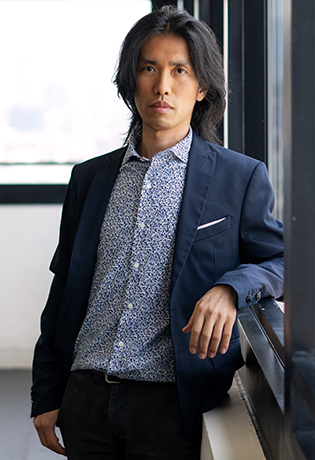
Ryo Ikeshiro is an Assistant Professor at the School of Creative Media, City University of Hong Kong, and co-director of the spatial audio art/research unit SoundLab. His work bridges sound art, computational creativity, and cultural studies through immersive installations, algorithmic audio-visual systems, and sonification techniques. PhD in Creative Practice (Goldsmiths, University of London) MPhil in Music (University of Cambridge) BMus (King's College London) Ikeshiro's research interrogates the materiality of sound through: Multichannel Ambisonics and directional audio Neural network-driven temporal dislocation Sonification of climate data and historical soundscapes Machine learning for artistic interpretation Interplay of identity and technology East Asian ideophonic traditions His 2010-2024 publications and installations reveal cross-disciplinary engagement with: Fractal mathematics in audiovisual art Algorithmic composition systems Interactive installation technologies Sonic cartography Historical memory in sound Collaborative research frameworks SoundLab, which he co-directs, develops spatial audio research at the intersection of: Technical innovation Cultural representation Experimental pedagogy Public engagement International artistic exchange Practice-based research
Professor Nye Parry holds dual professorial roles at the Guildhall School of Music & Drama and Trinity Laban Conservatoire. A sound artist and composer, his work bridges composition, installation, and interactive media. He explores navigable sound structures through immersive environments like The Exploded Sound (2012) and Significant Birds , reaching over 700,000 global visitors. His research, supported by a CRiSAP fellowship, focuses on spatial sound and audience interaction. Parry’s career includes leading the MA in Sonic Arts at Middlesex University (2003–2011) and collaborations with artists like Madi Boyd and Cathy Lane. His publications, such as Navigating Sound (2014), address locative audio and interactive design. He lectures internationally and contributes to journals like Organised Sound . Key achievements include his 2017 Playing the Bridge installation and the 2016 critique on musical notation. His art emphasizes audience agency, blending technology with acoustic exploration.
Arnold Jacobshagen is a Professor and Chair of Musicology at the Cologne University of Music and Dance since 2006. He holds a Ph.D. from Freie Universität Berlin (1996) and habilitation on 19th-century Italian opera semiseria (2003). His expertise spans opera studies, 19th/20th-century music history, music historiography, and performance practice. He has authored five books and edited/co-edited 18 volumes, with significant contributions to journals like Die Musikforschung , Cambridge Opera Journal , and Acta Musicologica . Awards include membership in Academia Europaea (2015) and fellowships from the Deutsches Historisches Institut Rome and Deutsches Studienzentrum Venice. He currently leads editorial roles at Die Musikforschung and advisory boards for institutions like the Joseph Haydn Institute. Educations: Musicology, Modern History, and Philosophy studies in Berlin, Vienna, and Paris Research focuses on opera historiography, performance practices, and cultural transfer. Key works include Gioachino Rossini und seine Zeit (2015) and Opera semiseria (2005). Publications analyze composers like Handel, Berlioz, and Mahler, with attention to national genres, stage practices, and historical reception. His recent work explores 19th-century French grand opéra and counter-tenor vocal traditions.