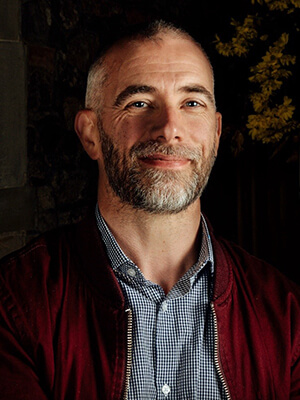
Dr. Michiel Kamp is Assistant Professor of Musicology at Utrecht University's Department of Media and Culture Studies within the Faculty of Humanities. He holds a PhD from the University of Cambridge (2015) and co-founded the Ludomusicology research group. His research employs hermeneutic and semiotic approaches to analyze video game music and related audiovisual media. Key interests include musical transmediality, ubiquitous music, phenomenologies of listening, participatory culture, sound synchronization, ecological psychology, musical affordances, ludomusicality, and the aesthetics of background music. Publications focus on phenomenological approaches to game music, hermeneutic analyses of interactive soundtracks, and theoretical frameworks for understanding musical meaning across media platforms. Recent work explores VR audio experiences and historical perspectives on musical interfaces. Dr. Kamp has organized numerous international conferences on video game music and edited foundational publications in ludomusicology. His monograph Four Ways of Hearing Video Game Music presents a comprehensive theoretical framework for game music analysis.
Morten Søndergaard is an Associate Professor at Aalborg University’s Department of Communication and Psychology, affiliated with the Faculty of Social Sciences and Humanities. He is part of the Art, Aesthetics & Health Research Laboratory and the MASSHINE initiative. His research focuses on sound art, media art curation, and transdisciplinary practices, emphasizing the exclusion mechanisms in 20th-century art systems and unarchived avant-garde movements. Søndergaard has curated exhibitions globally, including at Kiasma and ZKM, and co-founded the POM conference series and ISACS symposia. He leads the Erasmus Master of Excellence in Media Arts Cultures, collaborating with institutions in Austria, Poland, and Hong Kong. His work bridges art, science, and technology, with recent projects exploring sonic archives and participatory curatorial frameworks. Key collaborations include roles with the European NeMe network, SUNY College New York, and the Momentum Biennial. He has organized over 20 projects since 2008, including the 2025 Momentum Biennial as head curator. His teaching spans media art theory, sound art practices, and curatorial methodologies at both bachelor and master levels. Søndergaard’s research outputs include over 145 publications, with a focus on sound art’s theoretical and practical dimensions. His current projects emphasize ‘uncurating’ methodologies and the reactivation of marginalized avant-garde practices. Notable activities include editorial roles, international conference organization, and advisory roles in art and science networks. His work has been featured in media outlets like Artdaily and the Biennial Foundation, highlighting his contributions to contemporary art discourse and curatorial innovation.
Serge CARDINAL is a Full Professor at the Department of Art History, Cinema, and Audiovisual Media at Université de Montréal. His research focuses on the intersections of sound, music, and cinema, blending philosophical inquiry with creative practice. He leads projects exploring musicality in film, interdisciplinary analysis methods, and the legacy of cinema through installations and exhibitions. Education: The text does not explicitly detail his formal education, but his extensive academic output and professorial role suggest advanced degrees in cinema studies and related fields. Research Interests : Musicality in film, research-creation, Deleuzean philosophy applied to cinema, actor studies, and interdisciplinary audiovisual practices. His work bridges theory and practice, using soundscapes, installations, and performances to analyze cinematic material. Recent Projects : Includes installations like Tombeau de Gilles Groulx (2019) and The Political Glenn Gould (2024), as well as collaborative research networks like the OICRM. He has explored digital tools for cinematic analysis (Numalyse, 2025) and sound transcription in intermedia contexts (Studio Glenn Gould, 2021). Grants & Funding : Recipient of grants from FRQSC and SSHRC for projects on sound in Quebec cinema, research-creation methodologies, and interdisciplinary music-cinema studies. Leads teams in strategic research programs and individual creation grants. Labs/Teams : Member of the Observatoire interdisciplinaire de création et de recherche en musique (OICRM) and the research-creation lab La création sonore: cinéma, arts médiatiques, arts du son .
Professor Andrew Kirkman holds the Peyton and Barber Chair of Music at the University of Birmingham's Department of Music. He leads the Centre for Early Music Performance and Research, directing the University Chamber Orchestra and professional ensemble The Binchois Consort. His roles include teaching Renaissance music, 1960s music studies, and supervising PhD topics ranging from post-communist Poland to late medieval music historiography. Research focuses on fifteenth-century sacred music’s cultural context, particularly the Mass Ordinary in late medieval Europe. His 2010 book The Cultural Life of the Early Polyphonic Mass and 2020 monograph on Saint-Omer’s music culture exemplify this. Recent work explores music-alabaster intersections and late-medieval liturgical practices. His recordings with The Binchois Consort earned Gramophone awards, including the 2017 'Early Music Recording of the Year.' Notable performances include Music for the Hundred Years' War (2017) and collaborations with pianist Clipper Erickson. Awards reflect both scholarly and performative excellence. Advising emphasizes late medieval/renaissance music, while grants supported research on Saint-Omer’s musical legacy. He co-founded The Binchois Consort in 1995, producing Hyperion recordings that revive rarely performed repertoires. His work bridges performance, scholarship, and interdisciplinary cultural studies.
Keith Obadike is a Professor in the Department of Art at Cornell University's College of Architecture, Art, and Planning (AAP), where he also serves as Director of Undergraduate Studies. He is an acclaimed interdisciplinary artist and composer, known for his collaborative work with Mendi Obadike, which spans sound art, digital media, public installations, performance, and internet-based projects. His artistic and academic work critically engages with technology, race, history, and identity. Obadike earned a B.A. in Visual Art from North Carolina Central University and an M.F.A. in Sound Design from Yale University. Prior to joining Cornell, he taught at William Paterson University and held visiting positions at Princeton University, Columbia University, Northwestern University, and the Art Institute of Chicago. His research and creative practice focus on sound art, digital media, public art, performance, and collaborative practice , with strong interdisciplinary connections to Afrofuturism, data sonification, and social justice. He explores how sound and technology mediate racial identity, memory, and liberation, notably through the concept of acousmatic blackness , which he and Mendi developed to describe the racial perception of sound when its source is unseen. Obadike’s selected works include large-scale public sound installations such as Blues Speaker (for James Baldwin) , Free/Phase , Compass Song (Times Square Arts), and GuideStar (Space Needle, Seattle). His projects often use data sonification, archival research, and mythic storytelling, blending historical inquiry with futuristic vision. Notable series include the Opera-Masquerades , Americana Suites , and Numbers Station works, which transform databases of violence into sonic experiences. His honors include: Rockefeller New Media Arts Fellowship (2004) Louis Comfort Tiffany Biennial Award (2015) New York Foundation for the Arts Fellowship in Fiction New Music USA Creator Development Fund (2022) Obadike has received commissions and support from institutions such as the Vera List Center, Harlem Stage, Times Square Arts, the American Composers Orchestra, and the Cornell Mui Ho Center for Cities. He has exhibited and performed at The New Museum, The Whitney Museum of American Art, MoMA, and The Studio Museum in Harlem. His writings and publications include contributions to Studies into Darkness (2022), and artist books such as Four Electric Ghosts and Big House / Disclosure (both 2014). He has also released albums like Crosstalk (2008) and created internet artworks such as Blackness for Sale (2001) and The Interaction of Coloreds (2002), which are foundational in new media and critical race art. While specific advisees are not listed, his role as Director of Undergraduate Studies and Professor indicates active mentorship. His work is deeply collaborative, often co-created with Mendi Obadike, and supported by interdisciplinary teams and institutions.
Daniel Schwartz is an Associate Professor at McGill University , specializing in Russian and German Cinemas. His work bridges sound studies, urban studies, and documentary film, with a focus on early 20th-century cinematic experiments and their intersections with music, mass spectacle, and radio. He has published extensively in journals like Cinema Journal , Slavic Review , and Studies in Russian and Soviet Cinema . Research Focus: Sonic dimensions of silent cinema, urban modernity, Soviet/Russian film Contact: daniel.schwartz2@mcgill.ca | 680 Sherbrooke St. West, Montreal, QC His 2024 book City Symphonies: Sound and the Composition of Urban Modernity, 1913-1931 challenges assumptions about silent films through archival and interdisciplinary analysis. Recent articles explore topics like Dinara Asanova's documentaries, Sergei Loznitsa's archival practices, and the geopolitics of post-Soviet cinematic borders.
Henrik von Coler is an Assistant Professor at Georgia Institute of Technology's School of Music within the College of Design. His work bridges engineering, electronic music, and empirical research, focusing on spatial audio systems, live electronics, and human-computer interaction in musical contexts. He joined Georgia Tech in 2023 after serving as director of the TU Studio for Electronic Music at Technische Universität Berlin from 2015 to 2023, where he founded the Electronic Orchestra Charlottenburg (EOC) to explore live electronic ensembles in multichannel environments. His research emphasizes the integration of sound, space, and HCI to enhance compositional and performative expressiveness. Notable projects include immersive audio installations, virtual instrument design, and AI-assisted composition. Coler has performed globally on immersive audio systems and curated international concerts. His technical contributions span spatial sound synthesis algorithms, networked music systems, and real-time signal processing tools. Key areas of exploration include volumetric music performances in metaverse environments, hybrid spatial interaction via ARCube, and statistical models for spectral synthesis. He has developed open-source systems like Orchestra (for metaverse performances) and SPRAWL (for ensemble interaction). Coler’s work often combines empirical research with artistic practice, aiming to redefine the boundaries of live electronic music through technological innovation. His academic output spans over 30 peer-reviewed articles since 2011, with recent focus on metaverse applications, AI-human collaboration, and immersive audio design. While no formal awards are listed, his leadership roles and project outcomes highlight significant contributions to music technology and spatial audio engineering.
R. Luke DuBois is an Associate Professor and Co-Chair of the Technology, Culture and Society Department at the NYU Tandon School of Engineering, where he also directs the Integrated Design & Media program and the Brooklyn Experimental Media Center. He holds a DMA in music composition from Columbia University and is a renowned artist, composer, and performer whose work explores intersections between technology, sound, and visual media. His research focuses on digital media, human-computer interaction, and emerging technologies applied to artistic expression and accessibility. Key roles include directing the SONYC initiative (addressing urban noise pollution via AI) and leading the NYU Ability Project (advancing disability studies through technology). He has collaborated with institutions like the Smithsonian and artists such as Maya Lin, and his work has been exhibited globally, including at the Sundance Film Festival and the Aspen Institute. DuBois co-developed the Jitter software suite for real-time data manipulation and performs in avant-garde groups like Bioluminescence and Fair Use. His artistic practice combines time-lapse phonography, interactive installations, and interdisciplinary projects that critique cultural ephemera while advancing accessibility in STEM and the arts. Recent contributions include browser-based tools for accessible music notation (SoundCells) and sonification techniques for calculus education. He serves on the Board of the ISSUE Project Room and has been featured in major publications like the New York Times and TED Conference talks.
Koray Tahiroglu is a University Lecturer at Aalto University's School of Arts, Design and Architecture, specializing in Sound and Music Computing. His work bridges artificial intelligence, digital musical instruments, and embodied interaction, with a focus on deep learning applications in audio synthesis and human-AI creative collaboration. His research explores New Interfaces for Musical Expression (NIME), sonic interaction, and physical computing. He collaborates with SOPI Research Group and Google Brain Team (Magenta) on AI-driven artistic innovation. Recent Publications : 2024 studies on dance-sound cross-correlation and intra-action frameworks; 2023 work on AI-terity and deep learning syllabi; 2022 explorations of GAN synthesis, musical expectations, and lifeworld sonification. Scientific Awards : Co-Creative Artificial Intelligence of Music (2022) 2010 grant for scientific publications and artistic activities 2017 Honorable Mention for mobile cultural heritage research Tahiroglu contributes to digital art education and leads projects at Media Lab Helsinki, advancing sonic interaction and generative audio systems.
Marcelo M. Wanderley is a Professor and Director of the Centre for Interdisciplinary Research in Music Media and Technology (CIRMMT) at McGill University's Schulich School of Music. His academic roles include Area Coordinator for Music Technology and membership on the Executive Committee. He holds a PhD in acoustics, signal processing, and computer science from Université Pierre et Marie Curie (Paris VI). Wanderley's research focuses on novel interfaces for music performance, digital musical instruments (DMIs), and human-computer interaction. He has authored influential works such as New Digital Musical Instruments: Control and Interaction Beyond the Keyboard (2006) and pioneered research in gestural control of music. His work integrates engineering, computer science, and musicology to create innovative performance tools, including the T-Stick and Karlax instruments. He has held visiting professorships at Université de Bretagne Sud, Universidade Federal de Minas Gerais (Brazil), and the University of Mons (Belgium), where he was awarded prestigious chairs. Wanderley's awards include the Inria International Chair (2016–2020) and the Distinguished Visitor Award from the University of Auckland. His research has been widely cited in the International Conference on New Interfaces for Musical Expression (NIME), and he actively contributes to editorial boards (e.g., Computer Music Journal ) and academic leadership roles. Wanderley's lab, the Input Devices and Music Interaction Lab (IDMIL), develops open-source frameworks like Puara and Probatio for DMI design and mapping. Key research areas include haptic feedback systems, motion capture of musical performances, and accessibility in music technology. He emphasizes interdisciplinary collaboration, bridging engineering, art, and cognitive science to advance musical expression and performance practices.
Rachel Devorah Wood Rome is an Assistant Professor in the Electronic Production and Design (EPD) department at Berklee College of Music, where she teaches creative coding, live coding, and music technology. Her work bridges electronic music, improvisation, and critical theory, with a focus on sonic cyberfeminism, archival practices, and the social meanings of sound and space. Ph.D. in Music Composition and Computer Technologies, University of Virginia (2018) M.L.I.S., San José State University (2017) M.A. in Music Composition, Mills College (2013) B.Mus. in Horn Performance, CUNY Queens College (2007) Her research explores superhuman prolongation, opaque complexity, and the re-signification of archaic tools in sonic media. She values machines for their patience and memory, and her creative practice emphasizes critical agency in technology design and use. She performs under the name 'mehetabel' when using archival materials in improvised electronic music. The most recent publications and performances reflect a deep engagement with AI and music, live coding, feminist media theory, and spatialized sound. Her works often involve real-time data processing, generative systems, and collaborative improvisation, situating sound within broader social, political, and technological contexts. Ruth Anderson Installation Prize (IAWM) New Music USA Grant Fellowships from MIT OpenDocLab, Adrian Piper Foundation, Ina GRM, New Museum, and Jefferson Scholars Foundation Residencies at EMS Stockholm, STEIM Amsterdam, MassMoCA, and Cove Park Rome advises emerging artists in electronic music and creative coding, many of whom have gone on to establish their own practices. She is also active in academic service, including curriculum development, faculty governance, and labor organizing as a Councilor for the Berklee Faculty Union. She leads initiatives in DEI, sound design, and coding pedagogy within the EPD department. She has been involved in interdisciplinary collaborations with artists, technologists, and institutions worldwide, presenting work in galleries, festivals, and academic conferences across North America, Europe, and Asia. Her leadership extends to nonprofit arts organizations, where she has served as Executive Director and grantwriter.
Daniel Kidane is a British composer and Visiting Tutor in Composition at the Royal Northern College of Music and University of Cambridge. His works blend multicultural influences with contemporary classical techniques, exploring themes of identity, conflict, and social justice. Key roles include commissions from major orchestras like the BBC Symphony and London Symphony Orchestra, alongside awards such as the Paul Hamlyn Award (2016) and an honorary doctorate from Coventry University (2022). Education: Began violin at age 8, composition studies at Royal College of Music Junior Department Private study in St. Petersburg with Sergey Slonimsky BMus and postgraduate studies at Royal Northern College of Music under Gary Carpenter and David Horne Research Interests: Kidane’s music merges traditional orchestration with modernist innovation. Key themes include multiculturalism (evident in works like Aloud reflecting his Russian-Ukrainian heritage), pandemic reflections ( Be Still ), and socio-political commentary ( Dream Song setting MLK’s texts). His compositional style draws from Russian chant, Messiaen, and Janáček, creating vivid soundscapes that balance tension and resolution. Awards: Royal Philharmonic Society Prize (2013) Paul Hamlyn Award for Artists (2016) Jerwood Composer+ (2018) Coventry University Honorary Doctorate (2022) Current Projects: 2024 violin concerto Aloud with Julia Fischer and London Philharmonic Orchestra. Upcoming works include a cello piece Sarabande and continued exploration of pandemic-era compositions. Labs/Teams: Collaborates with ensembles like Chineke! Orchestra (pioneering BAME representation) and mentors through Music Masters charity.
Dr. Alexander Hunter is a Lecturer and Composition Convenor at the School of Music, Australian National University (ANU). He holds a PhD in composition from Edinburgh Napier University (2014) and has taught composition, theory, and music history since relocating to Canberra in 2014. Hunter founded ANU's Experimental Music Studio, focusing on open-form compositions that engage performers in fluid interpretive roles. His research spans open musical forms, spectralism, acoustic ecology, and intersectional feminism, with a commitment to disability and autistic advocacy in the arts. Education includes studies at Northern Illinois University (BA 2006) and HNC from Colaisde Bheinn na Faoghla (2007). His work integrates multimedia collaborations with artists like Mike Parr and Martyn Jolly, exploring themes of dis/ability, environmental health, and Métis cultural heritage. Key projects include Helping the River Sing (2018–2021), linking river health with artistic expression, and AI-driven music composition research with Charles Martin. Hunter’s performance-led projects often involve magic lantern technology, reimagining 19th-century projection as a medium for contemporary ecological and historical narratives. Research interests also encompass New York School music, reductionist improvisation, and anarchist philosophies in composition. His collaborations with ensembles like Ensemble Dal Niente and the Edinburgh Quartet highlight his commitment to experimental performance practices. Recent publications (2023–2025) explore AI applications in music creation and interdisciplinary performance frameworks.
Dr Peter Batchelor is a Senior Lecturer in Music and Music Technology at De Montfort University, affiliated with the Leicester Media School and the Music, Technology and Innovation – Institute of Sonic Creativity (MTI²). He serves as Programme Leader for the BA Music Technology programme and is actively involved in research, teaching, and creative practice. Education: BMus, University of Wales, Bangor (1996) MPhil, University of Wales, Bangor (1997) PhD, University of Birmingham (2004) FHEA (2024) His research and creative work focuses on electroacoustic composition, multichannel sound installations, public art, and aural landscape construction. He explores sound spatialisation, immersion, theories of space and place, and audience engagement through large-scale sonic artworks. His practice integrates technical innovation with artistic inquiry, often using custom Max/MSP tools for spatial audio and generative systems. The 15 most recent publications reflect a consistent trajectory in immersive sound art, emphasizing environmental sonification, spatial perception, and public engagement. Key themes include multichannel deployment (up to 288 channels), interactive and solar-powered installations, and blending natural and synthetic soundscapes. Projects like Dendrophone and Contraption highlight his focus on accessibility, sustainability, and audience interaction in sonic environments. Scientific Awards and Recognitions: Finalist, Sounds Electric ’07 Competition Mention, Concours de Musique Electroacoustique de Bourges (2007, 1998, 1997) 2nd Prize, CIMESP'99, São Paulo Honourable Mention, CIMESP'97, São Paulo Prize, 'Residences' category, Bourges 1997 Peter Batchelor supervises several PhD students including Stefano Catena, Cristiana Palandri, and Michael Uwins. He has secured external funding as Co-Investigator on projects such as Interfaces (EU Culture Project, 2016–2019) and Sensing the Forest (AHRC Early Career Research Grant, 2023–2025). He has delivered keynote and invited talks internationally and serves as a reviewer for Organised Sound and for REF panels. His creative installations have been exhibited globally, from Helsinki to São Paulo, and he develops open-source Max/MSP tools like N-CHAN and CLATTER to support multichannel sound design. He leads the Dendrophone project, a solar-powered, DIY sound installation in Alice Holt Forest that sonifies environmental data (humidity, sunlight, CO2), offering both on-site and live-streamed access. This project exemplifies his commitment to public engagement, ecological awareness, and accessible sonic art.
John L. Drever is a Professor in the Department of Music at Goldsmiths, University of London, affiliated with the Unit for Sound Practice Research. His work bridges acoustic ecology, sound art, and interdisciplinary studies, emphasizing aural diversity and the intersection of sound with environment, culture, and human perception. His research explores urban soundscapes, field recording methodologies, and the ethical implications of sound design for vulnerable populations. Education: Ph.D. in Sound Practice Research (Phonographies: Practical and Theoretical Explorations into Composing with Disembodied Sound, 2001) from University of Plymouth. Research Interests: Drever’s work focuses on acoustic ecology, soundscape composition, noise pollution’s impact on health, and aural diversity—advocating for inclusive soundscapes that account for varied hearing experiences. He has pioneered studies on hand dryer noise effects and urban soundscape design. His articles and books, such as Aural Diversity (2022, co-edited) and contributions to The Oxford Handbook of Sound Art , reflect his interdisciplinary approach. Key projects include London Street Noises (2021) and Sounding Dartmoor (2002). He actively participates in international conferences and soundwalk initiatives, emphasizing sound’s role in environmental and cultural preservation.