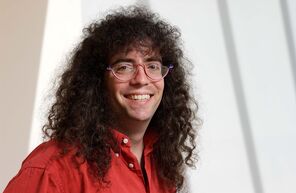
Andrew King is a Professor of Neurophysiology at the University of Oxford , affiliated with the Department of Physiology, Anatomy and Genetics and the Centre for Integrative Neuroscience . He leads the Oxford Auditory Neuroscience Group and contributes to graduate education as Director of the 4-year Doctoral Training Programme in Neuroscience and Course Director of the MSc in Neuroscience. BSc in Physiology, King’s College London PhD, National Institute for Medical Research, London His research focuses on auditory neuroscience, exploring how the brain adapts to dynamic soundscapes, integrates sensory and motor signals, and compensates for hearing impairments. Methodologies include behavioral studies, electrophysiology, imaging, and optogenetics. Recent work highlights nonlinear sound encoding, midbrain function, and predictive modeling in sensory systems. Andrew holds a Wellcome Principal Research Fellowship and has received grants from the Oxford NIHR Biomedical Research Centre , Wellcome Trust , and Action on Hearing Loss . He serves on editorial boards for eLife , the Journal of Physiology , and the Journal of Neuroscience , and chairs the Royal Society Research Grants Board: Biological Sciences. Wellcome Prize in Physiology (1990) Fellow, The Royal Society (2018) Fellow, Academy of Medical Sciences (2011) Sir Henry Savile Fellow, Merton College The Oxford Auditory Neuroscience Group, under his leadership, investigates cortical and subcortical mechanisms in auditory processing and plasticity.
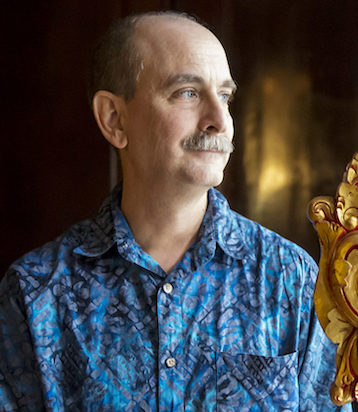
Professor David Eager is a leading academic at the University of Technology Sydney in the School of Mechanical and Mechatronic Engineering . With a dual appointment as Professor of Risk Management and Injury Prevention, his work bridges mechanical engineering, biomechanics, and public health policy. PhD in Engineering (UNSW) 1st Class Honours Degree (NSWIT) Graduate Certificate in Dispute Resolution (UTS) His research focuses on risk engineering for injury prevention in recreational environments, with specific expertise in trampoline safety , playground surfacing , and greyhound racing biomechanics . Current projects examine impact attenuating materials and characterize trampoline dynamics through acceleration analysis. Recent publications include studies on: Dynamic behavior of sports sands (2025) Greyhound galloping mechanics (2024) ISO 4980:2023 benefit-risk assessment standard (2024) Scientific recognition includes: Life Member of Play Australia (2021) Standards Australia Centenary Hero (2022) AGM Michell Medal (2024) Kidsafe Research of the Year Award (2024) He maintains active roles in international standards development as: Australian representative on ISO/TC 83 Sports Equipment Australian representative on ISO/TC 254 Amusement Rides Chair of multiple Australian Standards committees
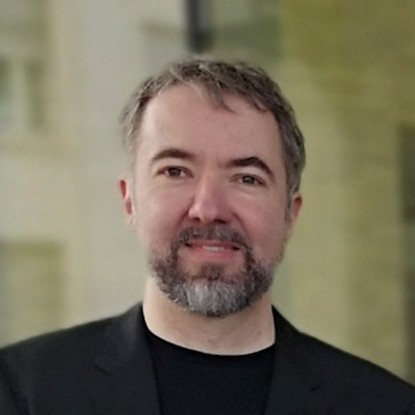
Douglas Gillespie is a Principal Research Fellow at the University of St Andrews, affiliated with the School of Biology, Sea Mammal Research Unit, and Scottish Oceans Institute. He is also part of the Sound Tags Group, Bioacoustics group, and Marine Alliance for Science & Technology Scotland. His work focuses on marine mammal bioacoustics and passive acoustic monitoring, particularly in relation to offshore renewable energy development. Dr. Gillespie's research interests center around passive acoustic monitoring (PAM) as an effective method for detecting cetaceans and assessing their behavior in proximity to human activities such as seismic surveys, military sonar exercises, offshore energy extraction, and shipping. He specializes in studying how small cetaceans like harbour porpoises and dolphins behave near tidal energy devices, investigating whether animals approach operational turbines, exhibit habitat exclusion, or demonstrate fine-scale avoidance behavior near turbine blades. His recent publications reveal a strong focus on the intersection of marine mammal conservation and renewable energy development, with particular emphasis on tidal turbine impacts. His work combines advanced acoustic monitoring techniques with innovative software development, especially through the PAMGuard project which he manages and contributes to significantly. The research shows increasing integration of machine learning approaches for bioacoustic analysis and detection. Dr. Gillespie has been actively involved in multiple research projects funded by organizations including EPSRC, NERC, and the Scottish Government. His work contributes to UN Sustainable Development Goals related to environmental protection and sustainable energy. As the manager of the PAMGuard project, he has developed open-source software for the detection and localization of marine mammal vocalizations, optimized for real-time use in the field with applications in abundance surveys and mitigation monitoring. His current research involves collecting data from operational turbines on Scotland's North Coast using 12 hydrophones sampling at 500kHz.
Sophia Terazawa is a Visiting Assistant Professor at Virginia Tech's Department of English. A Vietnamese-Japanese poet and performer, she has authored the novel Tetra Nova (2025) and poetry collections Winter Phoenix (2021), Anon (2023), with Oracular Maladies forthcoming (2026). Her work explores ghosts, cultural hybridity, and linguistic experimentation. MFA, University of Arizona BA, Ithaca College Her research focuses on multilingual poetry , hybrid forms , and performance art , blending Vietnamese-Japanese heritage with contemporary poetics. Creative works include cross-disciplinary collaborations like the poetry-ballet crossover Deixis (2025) and editorship of the Wilding Our Damage project. Recent publications span poetry journals ( Mantis , DREGINALD ), critical essays on mistranslation, and her novel Tetra Nova which interrogates border ethics through operatic structure. Themes of trauma, identity, and cultural synthesis recur across her work. Eric Hoffer Book Award Finalist (2024) Sturm Award for Creative Arts (2023) Tomaž Šalamun Prize (2018) She teaches courses in poetry , hybrid forms , and creative writing , and has led community workshops on tarot-poetry and Halloween-themed writing. Professional activities include co-organizing the Mahmoud Darwish marathon reading and judging the MAYDAY Micro-Chapbook Prize.
André Siegel is a Lecturer for special tasks at the Electronic Media Technology Group, Department of Electrical Engineering and Information Technology, Technical University of Ilmenau. He is actively involved in research and teaching related to audio engineering and acoustics, with a focus on spatial sound reproduction and simulation. His research interests span Audio Engineering , Room Acoustics , Binaural Sound Reproduction , Spatial Audio , Acoustic Simulation , and Audio Signal Processing . His work emphasizes practical implementations in real environments, including crosstalk cancellation, head-related transfer function measurement, and sound field analysis. The publications reflect a consistent research trajectory from 2005 to 2013, with a concentration on spatial audio technologies, room simulation methods, and perceptual aspects of sound reproduction. Key themes include the optimization of stereo and binaural systems, low-frequency acoustic behavior, and advanced measurement techniques using vector sensors and spherical arrays. André Siegel has not been awarded any scientific prizes or fellowships mentioned in the available data. He collaborates with researchers such as Hans-Peter Schade, Stephan Werner, and Julius T. Fricke. His work contributes to both academic knowledge and practical applications in room acoustical consultancy and immersive audio systems. He is based in Helmholtz Building, Room H 3529, and can be contacted at andre.siegel@tu-ilmenau.de.
Ben Houge is a Professor in the Electronic Production and Design (EPD) department at Berklee College of Music, where he has been teaching music technology since 2011. He also serves as a Senior Audio Lead at Bungie and previously held key audio roles at Sierra and Ubisoft. His work spans academia, game audio, digital art, and immersive multisensory experiences. Bachelor of Arts in Music, St. Olaf College (1996) Houge’s research and artistic practice focus on the intersection of music, technology, and sensory experience. He is best known for his food operas —multisensory dining events that use real-time, interactive soundtracks delivered via mobile devices. These projects apply video game audio techniques to everyday experiences, exploring cross-modal correspondences between taste and sound. His work often involves algorithmic composition, audience participation, and interdisciplinary collaboration with chefs, scientists, and musicians. His recent creative output includes large-scale installations and performances such as Night Rain , On the Sensations of Beer , and Mugaritz XX , which blend real-time audio, mobile technology, and cultural narratives. His publications and performances reflect a strong trend in interactive music systems , site-specific sound design , and audience-engaged art , often drawing from historical, poetic, and scientific sources. Selected awards and recognitions include: Faculty-Led Innovations in Education (FLY) Grant (2019) Berklee Newbury Comics Faculty Fellowship (2017) Knight Foundation Grant (2015) Artist Residency at MIT (2011) Shortlist, Guggenheim YouTube Play Biennial (2010) Stranger Genius Award (2004) Houge lectures widely at institutions such as MIT, Harvard, and the Shanghai Conservatory, and at major conferences including GDC, ICMC, and TEDx. He has advised and mentored students through academic and project-based learning, particularly in the areas of audio programming and interactive media. His work has been supported by grants from the Knight Foundation and Berklee, enabling large-scale public and collaborative art projects. He is actively involved in the global digital art and game audio communities, with exhibitions and performances across North America, Europe, and Asia. He has led initiatives such as the Vox Festival and the launch of Berklee’s master’s program in Valencia, Spain. His labs and creative teams often involve collaborations with ensembles like Zeitgeist, institutions like the Boston Symphony Orchestra, and research groups such as Oxford’s Crossmodal Research Laboratory.
Mark Applebaum, the Leland and Edith Smith Professor at Stanford University, is a composer, performer, and educator renowned for his work in electroacoustic music, sound sculpture design, and experimental notation. He has received prestigious awards including the 2025 American Academy of Arts and Letters Award in Music and Stanford’s Gores Award for Teaching Excellence. Applebaum directs the Stanford Improvisation Collective and has held administrative roles including Associate Professor and Faculty Scholar. Ph.D. in Music Composition (1996), University of California, San Diego M.A. in Music Composition (1992), University of California, San Diego B.A. in Music (1989), Carleton College His research spans electroacoustic composition, sound sculpture design, and interdisciplinary collaborations with neural artists and architects. He explores the metaphysics of musical notation and pedagogical frameworks for contemporary composition. Applebaum’s publication history from 2000–2012 reveals a focus on sound-art intersections, improvisation, and innovative educational practices. Key venues for his work include the Kennedy Center, Darmstadt New Music Courses, and ICMC. Recipient of the 2025 American Academy of Arts and Letters Award in Music 2005 EMS Prize (Electronic Music Stockholm) for 8-channel tape work 2003 Stanford Walter J. Gores Award for Teaching Excellence 2004 SEAMUS Award for Best Use of Technology 1997 Stephen Albert Award from American Music Center As an advisor (2000–Present), he mentors undergraduate and graduate composers. His leadership roles include chairing Stanford’s Committee on Undergraduate Admissions and Financial Aid and serving on faculty senates. He has produced recordings with institutions like Sonic Circuits and Music from Stanford series. Applebaum directs the Stanford Improvisation Collective, a laboratory for experimental performance practices, and has designed kinetic sound sculptures exhibited at venues including the Essl Museum and NIME at IRCAM.
William Alves is an Associate Professor of Music in the Department of Humanities, Social Sciences, and the Arts (HSA) at Harvey Mudd College in Claremont, California. He is a composer, video artist, and scholar with deep expertise in ethnomusicology, particularly Indonesian gamelan, computer music, visual music, and alternate tuning systems. Alves co-directs MicroFest, Southern California’s annual festival of microtonal music, and directs the American Gamelan and Electronic Music ensembles at the Claremont Colleges. Associate Professor of Music, Harvey Mudd College Department of Humanities, Social Sciences, and the Arts (HSA) Director, American Gamelan Ensemble Director, Electronic Music Ensemble Co-Director, MicroFest Festival of Microtonal Music His research and creative work explore the intersections of music, technology, and global cultural traditions. He is particularly known for his work in world music pedagogy, having authored the widely adopted textbook Music of the Peoples of the World , now in its third edition, and for his biography of composer Lou Harrison. His compositions span gamelan, electronic music, and multimedia works, often blending Western and non-Western traditions. Alves’s publications and creative output reflect a strong interdisciplinary focus, with articles in journals such as Perspectives of New Music , Computer Music Journal , and SEAMUS Journal . His recent works explore microtonality, electroacoustic composition, visual music, and cross-cultural musical synthesis. The themes across his articles and compositions include global musical traditions, technological innovation in sound, and the blending of visual and auditory art forms. His scholarly and artistic contributions have been recognized through a Senior Fulbright Scholarship in Indonesia (1993–1994), where he studied and taught traditional music. He has also been active in performance, participating in Javanese and Balinese gamelan ensembles and West African drumming groups. Senior Fulbright Scholar, Indonesia (1993–1994) Co-author, Biography of Lou Harrison Author, Music of the Peoples of the World (3rd ed.) Published recordings: The Terrain of Possibilities , Imbal-Imbalan , Mystic Canyon , Guitars and Gamelan Video works: Celestial Dance (published by Kinetica Video Library) Alves has advised and mentored students through ensemble direction and coursework, though specific names of advisees are not listed. He has taught a wide range of courses including Music of the Peoples of the World , Electronic Music , Film Music , and Music Since 1900 . He has also contributed to academic discourse through publications and festival leadership. There is no mention of formal research grants, but his Fulbright award indicates significant recognition and funding support in the past. He is affiliated with the Society for Ethnomusicology and has led or participated in various musical ensembles and festivals, contributing to a vibrant interdisciplinary arts community at the Claremont Colleges. His work continues to bridge academic scholarship with artistic practice, fostering innovative approaches to music and culture.
Prof. Mario Kupnik is a Full Professor at the Technische Universität Darmstadt , leading the Measurement and Sensor Technology Group within the Department of Electrical Engineering and Information Technology. His academic career includes roles at Stanford University (2005–2011) and Brandenburgische Technische Universität Cottbus (2011–2014). He holds a doctorate from Montanuniversität Leoben (2000–2004) and a master's in Telematics from Graz University of Technology. His research focuses on micromachined sensors and actuators , ultrasonic and electroacoustic systems , and non-destructive testing . He pioneers innovations in wearable sensors, biomedical applications, and additive manufacturing for sensor integration. Notable contributions include air-coupled ultrasonic transducers, 3D-printed ferroelectret sensors, and robotics for STEM education. Recent work emphasizes biodegradable sensors , acousto-optic modulation , and multi-parameter medical measurement systems . His projects span from fundamental material science to applied engineering solutions, often leveraging open-source hardware. Kupnik’s labs integrate interdisciplinary approaches, combining electrical engineering, materials science, and biomedical engineering.
Mark Thursby is a Senior Lecturer in Popular Music at the University of Northampton, Faculty of Arts, Science and Technology, within the Department of Journalism, Media & Performance. He serves as Programme Leader for the BA (Hons) Music Production and manages Higher Education Partnerships for his faculty. He also contributes as a Researcher and Visiting Lecturer at dBs Music. Education: Master of Philosophy, University of Nottingham (2004–2006) Certificate in Education, University of Northampton (2000–2002) BA (Hons) Music and Recording, University of Salford (1996–1999) Mark's research spans analytic philosophy and philosophy of mind , focusing on consciousness and naturalistic approaches to self and qualia; psychology and evolutionary psychology , particularly cognitive bias and group behavior; critical theory in music , including postmodernism and Marxism; and electronic music composition , with interests in acousmatic, drum and bass, synthesis, and just intonation. His teaching emphasizes music production, sound design, and music theory in the digital age. His recent research outputs include five compositions and one peer-reviewed article. The works reflect a strong interdisciplinary trend, combining technical music innovation with philosophical and psychological inquiry. Themes such as emotional barriers in learning, just intonation, and experimental sound design recur across his portfolio, indicating a cohesive exploration of perception, cognition, and sonic expression. Scientific Awards: No awards listed. Mark supervises students and contributes to curriculum design and external verification in higher education. He has over 20 years of experience in teaching and educational leadership. His grants and funding are not explicitly detailed, but his involvement in research activities, such as the 2024 public installation of sound mind , suggests ongoing project-based engagement. He is associated with creative and research labs focused on sound, visuals, and conductive materials, as evidenced by his 2024 workshop on sound and visuals. His work bridges academic scholarship with artistic practice, particularly in sound design for theatre and electronic music composition.
Professor Javier Martin-Torres is a Personal Chair in the School of Geosciences at the University of Aberdeen, where he leads research in planetary science, atmospheric physics, and astrobiology. His work focuses on the study of planetary atmospheres, particularly Mars and the Moon, using remote sensing data, modeling, and space instrumentation. University: University of Aberdeen School: School of Geosciences Rank: Professor Email: javier.martin-torres@abdn.ac.uk His research interests include planetary atmospheres, non-LTE modeling, Mars exploration, lunar subsurface studies, astrobiology, and planetary protection. He has made significant contributions to understanding atmospheric chemistry and energy balance in planetary environments, especially through data from missions such as MIPAS, SABER, Chang’E-4, and Mars Science Laboratory. The most recent publications reflect a strong trend in interdisciplinary planetary science, combining remote sensing, geochemistry, machine learning, and mission design. Key themes include Mars surface and atmospheric processes, lunar subsurface structure, life detection technologies, and the development of cleanroom and sampling systems for space missions. His work bridges observational data with theoretical modeling to advance our understanding of planetary environments. Scientific Awards: Fellow of the Royal Society of Edinburgh Fellow of the Royal Astronomical Society Professor Martin-Torres has been involved in advising and leading research projects related to planetary exploration and instrumentation. He has contributed to major collaborative grants, particularly in the areas of Mars rover missions, lunar science, and planetary protection. His work often involves international consortia and space agencies, indicating significant grant funding and project leadership. He is actively involved in laboratory and team-based research, including the development of planetary instrumentation, cleanroom facilities, and data analysis pipelines for radar and atmospheric sensors. His team works on integrating machine learning with planetary data interpretation and advancing technologies for future space missions.
Corrado Morgana is a Senior Lecturer in Games at the University of South Wales, Faculty of Business and Creative Industries, and a member of the Creative Industries Research and Innovation Group. He serves as Academic Manager for Games and previously led the BA Computer Games Design program. With over 18 years of teaching experience, he integrates practical and theoretical approaches in digital arts and game design. Education: PGCertHE, University of the Arts London (Awarded: 10 Oct 2005) MA Fine Art (Media), University of the Arts London (Awarded: 20 Oct 1995) BA (Hons) Fine Art (Sound and Image), Bath College of Higher Education (Awarded: 21 Oct 1993) His research and creative practice focus on the intersection of art and video games, particularly transgressive and experimental game design, digital curation, and immersive technologies. He has co-curated major exhibitions such as Zero Gamer and Game-Play with Furtherfield.org, exploring independent game production and spectatorship. His work extends into live electronica, video art, online collaborations, and virtual reality. He has contributed to large-scale projects like Node.London and Open Congress at Tate, emphasizing open-source and collaborative digital culture. The recent body of work from 2006 to 2011 reflects a strong emphasis on non-textual, exhibition-based research at the nexus of games, art, and technology. These outputs demonstrate a consistent exploration of digital subversion, interactive media, and curatorial innovation, often blending academic inquiry with artistic expression. Academic Service: External Examiner, Abertay University (2010–2015) External Examiner, Teesside University (2017–2021) He has supervised student work and led academic initiatives including the Immersive Technology Group and the Creating Comics symposium. He has also served as Academic Misconduct Officer and Principal Investigator on projects such as Audiences of Future . His activities include public lectures, editorial work, peer review, and event organization, reflecting deep engagement with both academic and public audiences. He is actively involved in research groups and collaborative projects that bridge creative practice and academic innovation, particularly in immersive and interactive digital media.
Mats Küssner is a Researcher at Humboldt University of Berlin's Department of Musicology, specializing in Transcultural Musicology and Historical Anthropology of Music. Previously, he held a Peter Sowerby Research Associate position at the Royal College of Music in London. He earned his doctorate from King's College London, focusing on cross-modal mappings between sound and visual forms. His work bridges music psychology, cognitive science, and cultural studies, emphasizing how music shapes human thought and emotion through multi-method approaches. Research interests include multimodal perception, music-induced mental imagery, 4E cognition (embodied/embedded/enactive/extended), and performance science. Notable awards include the Aubrey Hickman Award for music psychology research and a teaching excellence award. He teaches courses like 'Diversity in Berlin's Sound Scene' and 'Emotions in Music' at both BA and MA levels. His publications span over 40 peer-reviewed articles across journals like Music & Science , Psychomusicology , and Frontiers in Psychology , with a focus on visual-aural interplay, music cognition disorders (e.g., aphantasia), and cross-cultural performance dynamics. He co-edited the landmark volume Music and Mental Imagery (Routledge, 2022). Recent work explores environmental ecomusicology education and music's role in mitigating social isolation. Küssner leads projects on music-induced emotion prediction using cross-modal correspondences and is part of Berlin's interdisciplinary music psychology scene, collaborating with neuroscientists and cultural anthropologists. His lab employs eye-tracking, EEG, and behavioral experiments to study embodied music cognition processes.
Erik Brunvand is a Professor at the School of Computing , University of Utah, and holds an Adjunct Professor position in the Department of Electrical and Computer Engineering. He was a University Professor from 2014–2016 and is currently on leave at the National Science Foundation (CISE/CNS division) (Fall 2019–2021). His research focuses on computer architecture, VLSI systems, asynchronous circuits, and graphics processing, particularly GPU architectures for ray tracing. Teaching includes courses like Digital VLSI Design , Embedded Systems and Kinetic Art , and interdisciplinary classes like Making Noise: Sound Art and Digital Media . He has organized the ASYNC international symposium series and contributed to projects such as TRaX (ray tracing architecture) and ACK (asynchronous design framework). Grants include NSF awards for GPU architectures, ray tracing applications, and microengine-based control systems. His work spans hardware design, sustainable computing, and arts/technology collaborations, including kinetic art installations and educational initiatives like circuit bending.
Sara Sejin Chang (also known as Sara van der Heide) is a Korean-Dutch artist born in 1977 in Busan, South Korea, who currently serves as Interim Professor administering the Chair of Spatial Concepts at the University of Braunschweig (HBK) for the 2024-2025 academic year, replacing Candice Breitz. Based in Berlin, Chang creates shamanic film installations that combine film, historical research, rituals, drawings, texts, and sound compositions to challenge Eurocentric thinking, racialization, and persistent colonial narratives. Her work has been exhibited internationally at major venues including Moderna Museet Stockholm, Kunstinstituut Melly Rotterdam, Centraal Museum Utrecht, and ARGOS Brussels, and she has participated in significant biennials such as the Berlin Biennale, Dhaka Art Summit, and Busan Biennale. Chang's research interests focus on the intersection of Korean shamanism and contemporary art practice as a means of healing colonial trauma, particularly examining transnational adoption narratives between Korea and the Netherlands. Her work critically engages with the historical relationship between these two countries, including the participation of 3,418 Dutch soldiers in the Korean War (1950-1953) and the subsequent adoption industry that saw approximately 40,000 people adopted from the Global South to the Netherlands. She interrogates Eurocentric systems of categorization, racialization, and their penetration into all levels of contemporary Western society, proposing what she terms 'meta-cosmic and inclusive approaches to modernity' that transform conventional understandings of value and time. Through her practice, Chang seeks to repair historical ruptures, particularly those affecting diasporic communities, and create spaces for ancestral reconnection. Chang's artistic output demonstrates a consistent trajectory toward using shamanic practices as frameworks for decolonial critique and healing. Her recent major work Dismemberment (2024) employs the Korean Ssitgimgut ritual tradition to symbolically heal 'sick Europe' through a dismemberment and cleansing process, while Four Months, Four Million Light Years (2020) addresses colonial narratives behind transnational adoption through a shamanic healing journey across time and space. These works, along with her long-term project The Mother Mountain Institute , form a cohesive body of work that challenges the normalization of racialization within European society while proposing alternative knowledge systems rooted in Korean shamanic traditions. Scientific Awards: Theodora Niemeijer Prize (2023) - the largest Dutch Art Prize Berlin Artistic Research Grant Fellowship (2022-2023) Jeanne Oostingprize for 'Claim to Universality; Colour Theory Exercise 1-12' Chang's practice extends beyond traditional academic advising, functioning instead through collaborative research frameworks and institutional critique. Her work has been supported by significant grants including the Mondriaan Fund and the Berliner Programm Künstlerische Forschung. She operates through what she terms 'the Mother Mountain Institute,' a conceptual framework that connects her artistic practice with shamanic knowledge systems and decolonial theory. This institute serves as both a research platform and a metaphorical space for healing colonial ruptures, particularly those affecting transnationally adopted individuals. Chang's work consistently challenges the 'whiteness of contemporary art spaces' in European cities, using these spaces themselves as metaphors for the colonial structures they inhabit while simultaneously transforming them into sites of ritual and healing.