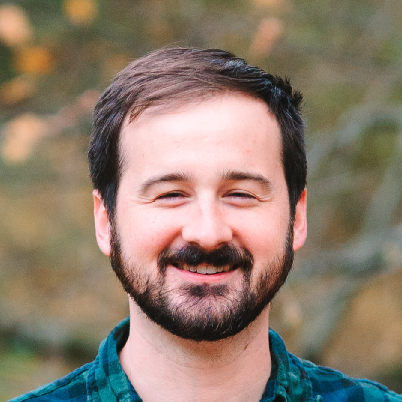
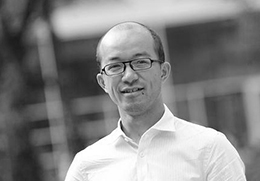
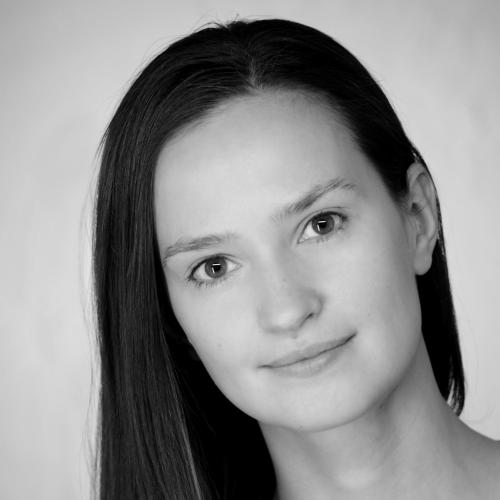
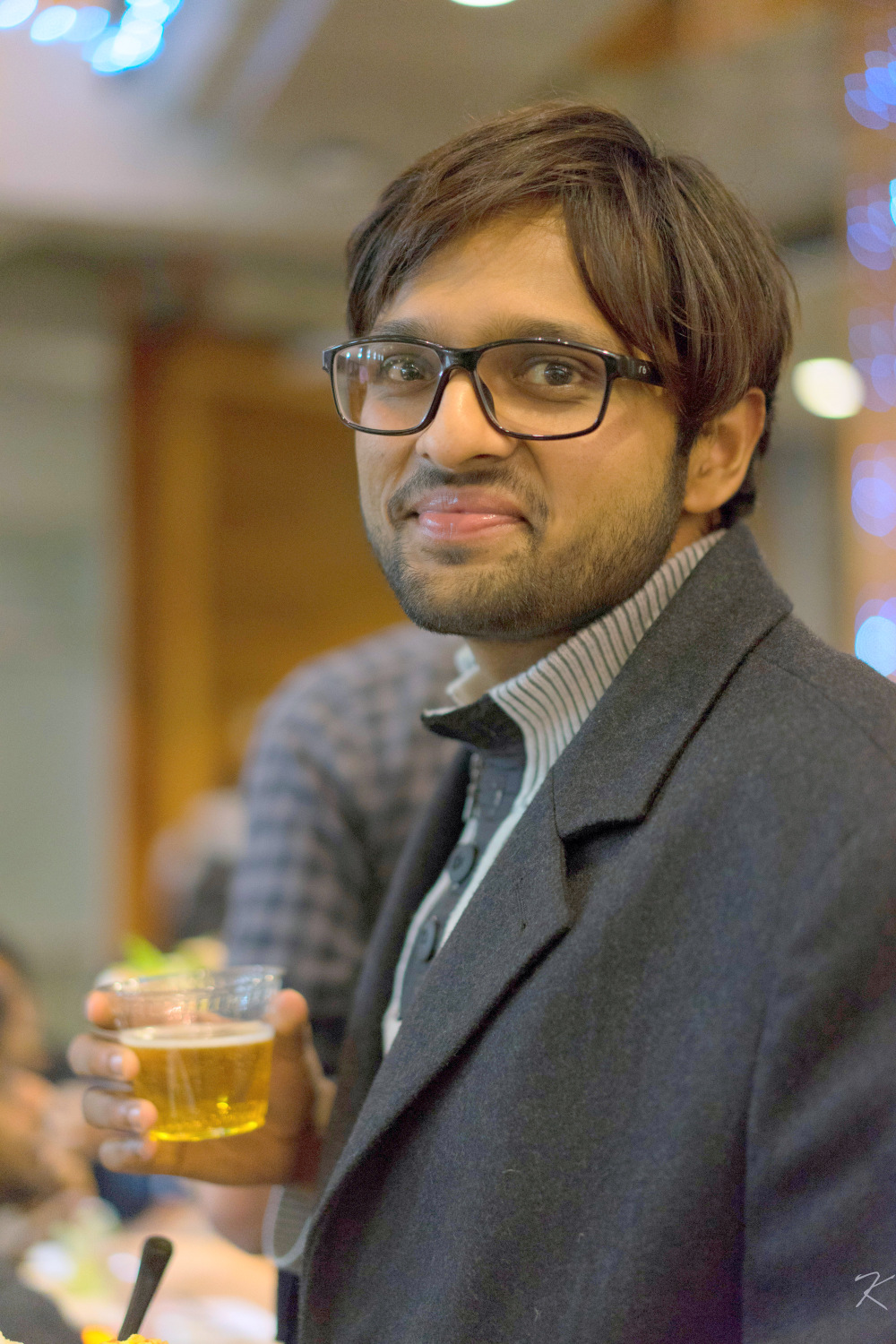
Chris Donahue is an Assistant Professor in the Computer Science Department at Carnegie Mellon University . He also serves as a part-time Research Scientist at Google DeepMind on the Magenta team. His work focuses on leveraging generative AI to enhance human creativity, particularly in music. Education: PhD in Computer Science (UC San Diego), Postdoctoral Scholar (Stanford University) His research spans controllable generative modeling of music and audio , with a focus on real-time interactive systems. Projects like Piano Genie , Beat Sage , and Copilot Arena demonstrate his commitment to real-world deployment. His Generative Creativity Lab (G-CLef) explores AI applications beyond music, including programming and natural language. Recent publications highlight advancements in multimodal music evaluation , real-time adaptation , and AI-driven sound morphing . He co-developed Magenta RealTime , an open-weight real-time music generation model, and MusicFX DJ Mode . Scientific Awards: Best Paper Award (top 1) at NAACL Student Research Workshop 2025 Best Paper Award (top 1% of submissions) at CHI 2025 Best Paper Runner-up at ISMIR 2021 He co-advises PhD students like Wayne Chi (NDSEG Fellow) and mentors Irmak Bukey . His lab receives support from the AIxArts incubator fund at CMU .
Prof. Srdjan Capkun is a Full Professor in the Department of Computer Science at ETH Zurich and Director of the Zurich Information Security and Privacy Center (ZISC). He holds a Dipl.Ing. from the University of Split (1998) and a Ph.D. from EPFL (2004). His research focuses on system and network security, including wireless security (e.g., secure positioning), trusted computing, blockchain technologies, and privacy-preserving systems. He co-founded 3db Access (acquired by Infineon) and Sound-Proof, addressing secure distance measurement and authentication. Notable achievements include an ERC Consolidator Grant (2016), ACM Fellowship, and IEEE Fellowship. Education: Dipl.Ing., Electrical Engineering / Computer Science, University of Split, 1998 Ph.D., Communication Systems, EPFL, 2004 Research Interests: Wireless security (e.g., UWB, GNSS, cellular) Trusted execution environments (TEEs) Blockchain and cryptocurrency systems Privacy-preserving technologies Awards & Grants: ERC Consolidator Grant (2016) ACM Fellow and IEEE Fellow Leadership of ZISC Advising & Labs: Leads the System Security Group at ETH Zurich Guided postdoctoral researchers and graduate students in security and privacy Companies: 3db Access (secure distance measurement) Futurae (online authentication)
Xavier Serra is a Full Professor at the Department of Engineering at Universitat Pompeu Fabra (UPF), Barcelona. He is the founder and director of the Music Technology Group (MTG), and leads the UPF-BMAT Chair on AI and Music. He also coordinates the Master in Sound and Music Computing and serves as President of the Phonos Foundation. His research focuses on audio signal processing, sound and music computing, and computational musicology, emphasizing open science and open innovation. Education: BSc in Biology, University of Barcelona (1981) Master in Music, Florida State University (1983) PhD in Computer Music, Stanford University (1989) Research Interests: Audio Signal Processing Data-Driven and Knowledge-Driven Methodologies Music Information Retrieval Cultural Music Analysis (e.g., Carnatic/Turkish/Andalusian Music) Music Education Technology Notable Projects: CompMusic (ERC Advanced Grant, 2010-2017): Multicultural computational music analysis Open datasets: Freesound, Saraga, FSD50K Technologies: Reactable, Vocaloid, Essentia API Recent Trends in Articles: Focus on AI-driven audio processing (neural fingerprints, generative models), cross-cultural music analysis, and explainable music difficulty estimation. Awards: ERC Advanced Grant (2010) for CompMusic Project. Labs/Teams: Director of MTG, Phonos Foundation, and UPF-BMAT Chair. Active in open-source projects and international collaborations.
Changxi Zheng is an Associate Professor in the Department of Computer Science at Columbia University's School of Engineering and Applied Science (SEAS). He directs Columbia's Computer Graphics Group (C2G2) within the Columbia Vision and Graphics Center (CVGC). After receiving his PhD from Cornell University, he joined the faculty of Computer Science Department at Columbia, where he has established himself as a leading researcher in computer graphics and scientific computing. Dr. Zheng's research spans multiple areas of applied computer science with a particular focus on computer graphics and scientific computing. His work centers around developing numerical models for simulating physical phenomena involving complex motions such as fluids, bubbles, and thin rods, along with their resulting acoustic waves. Leveraging computational insights from these models, he devises methods for improving tangible object creation, enabling novel human-computer interactions, and developing software tools for acoustic and photonic devices. His research has attracted significant public interest and media coverage, including projects like FontCode, AirCode, and Computational Metallophone Design. His recent publications reveal a strong interdisciplinary approach, bridging computer graphics, physics simulation, machine learning, and hardware design. His work demonstrates consistent innovation in computational methods for simulating physical phenomena and applying these techniques to practical problems in 3D printing, acoustic modeling, and interactive systems. The breadth of his research spans from fundamental physics-based simulations to practical applications in industry. Columbia SEAS Dean's Fellow (for advised students) NSF Graduate Research Fellow (for Ruilin Xu) Snap Research Fellow (for Rundi Wu) CKGSB Fellow (for Yun Fei) Adobe Research Fellow (for Gabriel Cirio) Marie Sklodowska-Curie Individual Fellow (for Rundi Wu) Best Paper Award at ACM International Conference on Multimedia (ACMMM), 2019 Dr. Zheng actively mentors a diverse group of students, including current PhD candidates and postdoctoral researchers. His research group has received support from various sources that enable their innovative work in computational graphics and physics-based simulation. He has supervised numerous successful students who have gone on to positions at leading technology companies including Adobe, Tencent, Facebook, and academic institutions. As director of Columbia's Computer Graphics Group (C2G2) within the Columbia Vision and Graphics Center (CVGC), Dr. Zheng leads a vibrant research team focused on advancing the state of the art in computer graphics, physics-based simulation, and their applications. The group maintains strong collaborations with industry partners and academic institutions worldwide, fostering an environment of innovation and practical application of theoretical concepts.
Dr Olga Petri is an Assistant Professor in Human Geography at the Department of Geography, University of Cambridge. She is a Bye-Fellow and Director of Studies in Geography (Part II) at Jesus College, and a Leverhulme/Newton Trust Early Career Research Fellow. Her research bridges cultural and historical geography, queer studies, and more-than-human geographies, with a focus on urban modernity in non-Western contexts. Born in St Petersburg, Olga holds a BA and MA in Geography from Saint-Petersburg State University, an MSc in Urban Studies from University College London (merit), and a PhD in Geography from the University of Cambridge. Olga's research explores four key areas: Queer Geographies in authoritarian urban spaces, More-than-Human Geographies analyzing human-animal relationships, Russian Arctic Studies examining environmental and geopolitical transformations, and Migration Urbanism studying cities as hubs for political refugees. Her work on Beastly St Petersburg and Winged Worlds reconfigures urban history through animal and queer lenses. Scientific awards include the Leverhulme/Newton Trust Early Career Research Fellowship and a 2020 shortlisting for Student-Led Teaching Award . She is a Junior Research Fellow at Wolfson College since 2018. Olga leads postdoctoral research on human-animal dynamics in imperial Russia. She supervises graduate students in cultural/historical geography and urban studies. Her work features in Vital Geographies research group at Cambridge.
Dr. Muhammad Gulzari is an Assistant Professor at the School of Civil Engineering, University College Dublin (UCD). Previously, he held positions as Lecturer/Assistant Professor at the University of Galway (2023–2024), Adjunct Assistant Professor at Trinity College Dublin (2022–2023), and a Research Fellow at Trinity College Dublin (2021–2023). He earned his Ph.D. in Civil Structural Engineering from City University of Hong Kong (2021) and a B.Sc. in Civil Engineering from the University of Engineering and Technology Lahore (2017). Education: Bachelor of Engineering, Civil Engineering, University of Engineering and Technology Lahore Ph.D., Civil Structural Engineering, City University of Hong Kong Research Interests: His work focuses on structured materials and dynamics, including finite element modeling, phononic crystals, acoustic and mechanical metamaterials, vibration and noise control, and applications in structural health monitoring. He leads the Structured Materials and Dynamics Lab at UCD, exploring nonlinear and nonreciprocal metamaterials. Teaching and Awards: He has taught courses in Fluid Mechanics, Thermodynamics, and Combustion Engineering. Notable recognitions include the Seal of Excellence Award from the EU-Horizon MSCA Postdoctoral Fellowship (2021) and nominations for teaching excellence awards at Trinity College Dublin and University of Galway. Grants: TimberFlow: Enhancing Efficiency in Mass Timber Construction (Enterprise Ireland, 2025) Indoor Acoustic Quality via Acoustic Metamaterials (Enterprise Ireland, 2025) RUBBERPAVE: ELT Integration in Pavement Construction (Enterprise Ireland, 2024–2026) Deep Learning for Metamaterial Design (Irish Research Council, 2021–2023) Labs and Collaborations: His research group collaborates with industry partners like Amplitude Acoustics and G-frame Structures Ltd. Key projects include developing metamaterials for noise/vibration control and sustainable construction materials.
Lisa Walcott is an Associate Professor of Art at Hope College, where she has been a faculty member since 2018. She teaches sculpture courses, the capstone course for art majors, and a First-Year Seminar on artistic processes. Her studio practice focuses on kinetic sculptures and installations that explore themes of home, the everyday, and the feminine experience. MFA in Sculpture from Cranbrook Academy of Art (2010) B.A. from Trinity Christian College (2005) Walcott’s research intersects sculpture, installation art, and kinetic design, often recontextualizing domestic objects to investigate themes of interdependence, repair, and the unseen forces in everyday life. Her work frequently involves mechanical components and materials like wax, motors, and household items to create immersive, motion-driven installations. Her recent artworks, such as Making a Mountain (2024) and A Soft Punch to the Gut (2024), exemplify her focus on transforming utilitarian structures into emotive, kinetic pieces. These works, alongside digital collages like The Way I Figure It (2023), reveal a trajectory toward blending physical materials with conceptual frameworks to explore domestic ingenuity and tension. Walcott actively mentors students through faculty research collaborations and founded the Hope College Art Club. She exhibits nationally at institutions like the Eli and Edythe Broad Art Museum and The Sculpture Center, with solo exhibitions at venues including Manifest Gallery (Cincinnati) and the Urban Institute for Contemporary Art. Her studio practice integrates material investigations and workshops to refine techniques, which she translates into both pedagogy and art. Notable solo exhibitions include Swarm (2013) at the Broad Art Museum and Tight Spots (2021) at Saugatuck Center for the Arts.
Dhruv Jain is an Assistant Professor in the Computer Science and Engineering Department at the University of Michigan , with affiliations in the School of Information and Michigan Medicine . He leads the Soundability Lab , focusing on transforming hearing into a programmable interface through human-centered AI systems. PhD from University of Washington MS from MIT Media Lab Formerly worked at Microsoft Research, Google, and Apple Research Interests intersect Human-Computer Interaction (HCI) , Audio AI , Accessibility , and Hearing Health . His work develops systems like SoundWatch (smartwatch-based sound awareness) and HomeSound (IoT sound visualization) to expand auditory access for DHH individuals and other domains. Recent Publications (2023–2025) span top venues like CHI , ASSETS , and ICMI , with trends including generative AI for real-time captioning , adaptive soundscapes , and clinical communication tools . SIGCHI Outstanding Dissertation Award (2023) William Chan Memorial Dissertation Award (2023) Best Poster Award at ASSETS 2024 Google Academic Research Award (2024) NIH Grant ($450k, 2023) William Demant Foundation Grant ($740k, 2025) Teaching includes Accessible Computing (undergraduate) and Advanced Accessibility (graduate), alongside global DIY workshops in five countries. The Soundability Lab collaborates with neuroscientists, clinicians, and Deaf scholars to create deployable systems like clinical communication tools now at Michigan Medicine and features integrated into Apple devices.
Kyle Bellucci Johanson serves as a Visiting Critic in Cornell University's College of Architecture, Art, and Planning, Department of Art. Holding an MFA from California Institute of the Arts and a BA in Art and Reconciliation Studies from Bethel University, he merges artistic practice with critical theory through performance architecture and collaborative media. Whitney Independent Study Program (2022–23) Founding fellow at land's edge free school (Los Angeles) Teaching experience at SAIC, UIC, CUNY, and Cooper Union His research investigates: Power structures through spatial interventions Critical theory applications in art practice Post-capitalist imaginaries Hauntology and historical materialism Transdisciplinary approaches to social critique Project trends reveal: Reinterpretation of Soviet design principles Investigation of worker identity in post-industrial contexts Temporal and spatial dislocation in artistic practice Monument critique through performative methods Quantum theory-inspired architectural concepts Reimagining of common spaces as political sites Scientific awards include: Creative Research Grant (2025) Whitney ISP participation (2022–23) Automata Studio Residency (2022) Artists Run Chicago Grant (2021) BOLT Residency (2020–21) Through projects like KLUB WRKR —a nomadic workers' club reimagined for the gig economy—and table (2018–2022), a Chicago-based experimental space for artistic practice, he interrogates institutional frameworks while fostering community through discursive meals and collaborative exhibitions.
Jiajun Wu is an Assistant Professor of Computer Science and, by courtesy, of Psychology at Stanford University. He holds multiple affiliations including membership in Bio-X, Faculty Affiliate status at the Institute for Human-Centered Artificial Intelligence (HAI), and membership in both the Wu Tsai Human Performance Alliance and Wu Tsai Neurosciences Institute. Dr. Wu earned his Ph.D. and S.M. in Electrical Engineering and Computer Science from the Massachusetts Institute of Technology before joining Stanford. Dr. Wu's research program focuses on creating AI systems that understand and interact with the physical world through the integration of computer vision, machine learning, robotics, and cognitive science. His work emphasizes physics-based modeling combined with deep learning to develop systems capable of perceiving, reasoning about, and predicting physical interactions. Key research areas include 3D scene understanding, neurosymbolic AI approaches, multimodal perception (combining vision, sound, and language), and embodied intelligence for robotics applications. His lab develops novel frameworks that bridge the gap between neural networks and symbolic reasoning to create more interpretable and robust AI systems. Analysis of Dr. Wu's recent publications reveals a strong trajectory toward integrated multimodal understanding for embodied AI. His work increasingly combines vision, sound, and language processing with physical reasoning to create systems that can interact meaningfully with the physical world. There's a clear progression from foundational computer vision research toward practical robotics applications, with significant emphasis on foundation models for robotics, sim2real transfer techniques, and creating comprehensive datasets for embodied AI research. Dr. Wu's exceptional contributions have been recognized with numerous prestigious awards including the NSF CAREER award (2024), Young Investigator Programs from ONR (2024) and AFOSR (2023), the Okawa research grant (2024), and being named to IEEE Intelligent Systems' 'AI's 10 to Watch' (2024). He has received multiple best paper awards at leading conferences including ICRA (2024), SIGGRAPH Asia (2023), and CoRL (2023). Dr. Wu actively mentors a large cohort of students across multiple levels, serving as primary advisor for doctoral candidates, master's students, and numerous independent researchers. His research is supported by substantial funding from major technology companies including Google, Meta, Amazon, Samsung, and J.P. Morgan, as well as government agencies like NSF, ONR, and AFOSR, reflecting the significance and impact of his work in physical AI and multimodal perception systems. Dr. Wu leads a dynamic research group at Stanford that collaborates extensively with the Wu Tsai Neurosciences Institute and Institute for Human-Centered AI. Current projects include developing neurosymbolic models for computer graphics, creating multisensory datasets like OBJECTFOLDER 2.0 for sim2real transfer in robotics, and building foundation models for embodied intelligence that can understand and manipulate objects with human-like physical intuition.
Adam Finkelstein is a Professor in the Department of Computer Science at Princeton University, where he has been a faculty member since 1997. He holds a PhD and Master's in Computer Science from the University of Washington and a dual degree in Physics and Computer Science from Swarthmore College. Finkelstein is renowned for his interdisciplinary work at the intersection of computer graphics, audio processing, and machine learning, and he co-organized the Art of Science exhibition at Princeton. Education: PhD, Computer Science, University of Washington MS, Computer Science, University of Washington BA, Physics and Computer Science, Swarthmore College His research spans audio processing (e.g., speech enhancement, voice conversion, audio metrics), computer graphics (e.g., line drawing algorithms, stylized rendering, image manipulation), and machine learning (e.g., self-supervised learning, differentiable programming). His work often bridges technical and creative domains, exemplified by collaborations at Pixar and Adobe Creative Technologies Lab. Recent publications highlight advancements in audio super-resolution and voice conversion using deep learning frameworks, as well as stylized line rendering for animated 3D models. His contributions to perceptual audio metrics and shader optimization further underscore his impact on human-centric computational systems. Scientific Awards: NSF CAREER Award Alfred P. Sloan Fellowship Fellow of the Association for Computing Machinery (ACM) Finkelstein has secured foundational grants for his research and actively mentors students, though no specific advisees are listed. He also explores collaborative tools for internet music performance, reflecting his broader interest in distributed systems and user interfaces.
Junfei Li is an Assistant Professor in the School of Mechanical Engineering at Purdue University. His research focuses on advanced acoustic technologies, including acoustic tweezers, acoustofluidics, metamaterials, and underwater communication systems. He specializes in multiphysics wave propagation, noise control, and energy harvesting. Li's work bridges fundamental science and engineering applications in biomedical devices, sustainable energy, and advanced materials. Research Interests: Acoustic tweezers for microscale manipulation Design of metamaterials for acoustic control Ultrasound and underwater communication systems Energy-efficient noise mitigation strategies His recent publications emphasize innovations in acoustic metasurfaces, nonreciprocal sound propagation, and biomedical acoustic applications. Li’s research has implications for improving medical imaging, energy sustainability, and next-generation acoustic devices. Awards & Recognition: None explicitly listed in the provided materials. Advising & Grants: No student advisees or grant information specified in the text.
Golan Levin is Professor of Electronic Art at Carnegie Mellon University's School of Art, with courtesy appointments in the School of Design, School of Architecture, School of Computer Science, and Entertainment Technology Center. From 2009 to 2022, he served as Director and Co-Director of CMU's Frank-Ratchye STUDIO for Creative Inquiry, a laboratory dedicated to supporting atypical, anti-disciplinary research at the intersection of arts, science, technology, and culture. Levin's research spans interactive art, digital fabrication, information visualization, and generative design. He explores the critical potential of visualization, generative computation for expressive form, and how abstraction connects to realities beyond language. His practice engages interactive gestural robotics, nonverbal interaction aesthetics, and tactical applications of personal digital fabrication through responsive artifacts and media provocations that highlight human-machine relationships. His publications reveal consistent innovation in real-time audiovisual systems, interactive fabrication interfaces, and pedagogic tools for artists. Key trends include slit-scan video techniques, tangible augmented-reality performance, and noise-based visualizations, demonstrating his commitment to expanding human action vocabulary through digital media while bridging artistic expression with computational systems. Levin's work has received significant recognition: Permanent collection inclusion at Museum of Modern Art (MoMA) Whitney Biennial exhibition "50 Designers Shaping the Future" by Fast Company (2012) Competitive grants from National Endowment for the Arts, National Endowment for the Humanities, Creative Capital, and Rockefeller MAP Fund As an educator, Levin teaches "studio courses in computer science" on interactive art, experimental capture, and generative design, emphasizing computation as a medium for critical inquiry. His research funding from major cultural institutions supports interdisciplinary exploration at the arts-technology nexus. The Frank-Ratchye STUDIO for Creative Inquiry, which he directed for 13 years, remains a vital hub for anti-disciplinary collaboration, continuing his legacy of fostering creative agency through technology-infused artistic practice.
Romain Fleury is an Associate Professor at the Laboratory of Wave Engineering (LWE) , part of the École Polytechnique Fédérale de Lausanne (EPFL) School of Engineering and Institute of Electrical and Micro Engineering (IEL) . He earned a Ph.D. in Electrical and Computer Engineering from the University of Texas at Austin in 2015 under Andrea Alù, followed by a Marie-Curie Postdoctoral Fellowship at ESPCI Paris-Tech and CNRS Langevin Institute (2016). His research explores wave physics and engineering , focusing on topological insulators , nonreciprocal wave propagation , and time-modulated metamaterials . He has co-authored over 70 peer-reviewed articles in journals like Science , Nature , and Physical Review series, with recent work on topological acoustics , active metamaterials , and wave-based analog computing . Dr. Fleury received the Eccellenza Grant (2021) from the Swiss National Science Foundation and an ERC Starting Grant (2022) . He co-founded Minwave , a startup selling miniaturized microwave devices patented by his lab, which has garnered awards such as ESA-BIC CH , FIT , and Venture Kick . He has served as Technical Program Committee Chair for Eucap 2019 and on the Editorial Board of the New Journal of Physics . Recognized for teaching excellence with the STI Polysphere Award (2019) and IEL Best Teacher Award , he teaches courses including Electromagnetics , Antennas , and Advanced Photonics . His work bridges fundamental wave physics with applied technologies , emphasizing topological effects , nonlinear systems , and metamaterials . Collaborations span institutions such as ESPCI Paris , University of Texas at Austin , and University of Vienna , with applications in acoustic imaging , 5G antennas , and optical signal processing . His recent publications highlight ultrafast anti-lasing , reconfigurable metasurfaces , and disorder-assisted photonic crystals , reflecting a career dedicated to advancing wave engineering through topological and nonreciprocal designs .
Daniel Razansky is a Full Professor at the Department of Information Technology and Electrical Engineering, ETH Zurich, leading the Professorship for Biomedical Imaging. His research spans engineering, physics, biology, and medicine, focusing on developing advanced in vivo imaging tools like optoacoustic tomography and ultrasound neuromodulation. His recent work emphasizes multi-scale functional and molecular imaging , with applications in neuroscience , Alzheimer’s disease , and stroke diagnostics . Collaborations include National Tsing Hua University and the EU Horizon consortium SWEEPICS. Current projects target hybrid imaging systems (e.g., MRI-MSOT) and image-guided neuromodulation. Scientific awards include the IPPA James Smith Prize for his contributions. His lab has secured significant grants, including a $2.5M NIH award and SNSF funding. He mentors PhD students like Quanyu Zhou and Eva Remlova, who have received accolades for their research. The Razansky Lab at ETH Zurich’s Preclinical Imaging Center explores medical microrobotics , dynamic fluid flow imaging , and neuroimaging techniques , aiming to bridge engineering with clinical applications.