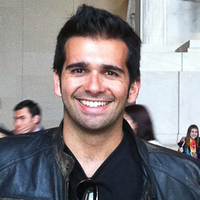
Dr. Michiel Kamp is Assistant Professor of Musicology at Utrecht University's Department of Media and Culture Studies within the Faculty of Humanities. He holds a PhD from the University of Cambridge (2015) and co-founded the Ludomusicology research group. His research employs hermeneutic and semiotic approaches to analyze video game music and related audiovisual media. Key interests include musical transmediality, ubiquitous music, phenomenologies of listening, participatory culture, sound synchronization, ecological psychology, musical affordances, ludomusicality, and the aesthetics of background music. Publications focus on phenomenological approaches to game music, hermeneutic analyses of interactive soundtracks, and theoretical frameworks for understanding musical meaning across media platforms. Recent work explores VR audio experiences and historical perspectives on musical interfaces. Dr. Kamp has organized numerous international conferences on video game music and edited foundational publications in ludomusicology. His monograph Four Ways of Hearing Video Game Music presents a comprehensive theoretical framework for game music analysis.
Carita Paradis is a Professor Emerita at Lund University's Centre for Languages and Literature, specializing in English Linguistics. She holds a PhD from Lund University (1997) and has held leadership roles including Chair of the Swedish Research Council's Linguistics panel (2010–2015). She coordinates the Language, Cognition and Discourse@Lund (LCD@L) research group, focusing on discourse meaning, language acquisition, and sociocultural variation. Her research spans cognitive linguistics, discourse analysis, semantics, and sensory language. She has authored/co-authored over 100 refereed publications, 5 books, and edited 10 journal volumes. Awards include membership in Academia Europaea (2016) and leadership roles in Scandinavian linguistic associations. She has supervised 14 PhD students and 8 postdocs, taught at all academic levels, and participated in numerous national/international research projects. Her editorial roles include serving on Cognitive Semantics, Languages, and Human Cognitive Processing series.
Serge CARDINAL is a Full Professor at the Department of Art History, Cinema, and Audiovisual Media at Université de Montréal. His research focuses on the intersections of sound, music, and cinema, blending philosophical inquiry with creative practice. He leads projects exploring musicality in film, interdisciplinary analysis methods, and the legacy of cinema through installations and exhibitions. Education: The text does not explicitly detail his formal education, but his extensive academic output and professorial role suggest advanced degrees in cinema studies and related fields. Research Interests : Musicality in film, research-creation, Deleuzean philosophy applied to cinema, actor studies, and interdisciplinary audiovisual practices. His work bridges theory and practice, using soundscapes, installations, and performances to analyze cinematic material. Recent Projects : Includes installations like Tombeau de Gilles Groulx (2019) and The Political Glenn Gould (2024), as well as collaborative research networks like the OICRM. He has explored digital tools for cinematic analysis (Numalyse, 2025) and sound transcription in intermedia contexts (Studio Glenn Gould, 2021). Grants & Funding : Recipient of grants from FRQSC and SSHRC for projects on sound in Quebec cinema, research-creation methodologies, and interdisciplinary music-cinema studies. Leads teams in strategic research programs and individual creation grants. Labs/Teams : Member of the Observatoire interdisciplinaire de création et de recherche en musique (OICRM) and the research-creation lab La création sonore: cinéma, arts médiatiques, arts du son .
Dr. Philippa Lovatt is a Lecturer in Film Studies at the University of St Andrews, specializing in artists’ moving image, sound studies, eco-criticism, and Southeast Asian independent film cultures. She leads a monograph project on sound politics in artists’ film and co-directs the oral history project Parallel Practices: Oral Histories of Southeast Asian Film and Video Cultures with Prof. Jasmine Nadua Trice (UCLA). Her research bridges ecological crises, audiovisual practices, and regional art histories. Her key awards include a 2020 Carnegie Research Incentive Grant for studying environmental responses in Hanoi and Chiang Mai. Research outputs include edited dossiers for Journal of Cinema and Media Studies and Screen , alongside publications in Southeast of Now and Antennae . Collaborative projects emphasize transnational Southeast Asian film networks and decolonial art methodologies. Her work interrogates intersections of ecology, sound, and regional identity through case studies like Nguyen Trinh Thi’s mycological film practices and Apichatpong Weerasethakul’s therapeutic narratives. Current projects explore material histories of extractivism and anthropocentric critiques in moving image art.
Richard Boulanger is a Professor in the Electronic Production and Design (EPD) department at Berklee College of Music, where he contributes significantly to music technology education and innovation. His work bridges performance, composition, and technological exploration. His research and expertise focus on music technology , electronic music , and music synthesis , particularly through tools like Csound. He advocates for technology as a means to uncover and express a musician’s inner voice, integrating historical traditions with contemporary and future-facing practices. Richard Boulanger is internationally recognized as a lecturer, author, performer, and consultant. He edited The Csound Book (MIT Press, 1999), a seminal work in computer music. His career includes performances with prestigious ensembles such as the La Jolla Symphony Orchestra, San Diego Opera Orchestra, and Boston Symphony Orchestra. Scientific Awards: Fulbright Scholar Recipient of numerous awards, honors, and grants As an educator, he teaches courses in music technology and supports students in exploring their musical identities through technological tools. He is affiliated with the Professional Writing and Music Technology programs at Berklee.
Doug L. James is a Full Professor of Computer Science at Stanford University since 2015, following roles as Associate Professor at Cornell University (2006-2015) and Assistant Professor at Carnegie Mellon University (2002-2006). He holds a PhD in Applied Mathematics from the University of British Columbia (2001), alongside earlier degrees from the same institution and the University of Western Ontario. His research focuses on computer graphics, sound synthesis, and physically-based modeling, with notable contributions to fluid simulation, cloth animation, and medical modeling. Key achievements include the 2012 Technical Achievement Award from the Academy of Motion Picture Arts and Sciences for 'Wavelet Turbulence,' and the 2013 Katayanagi Prize. He serves as a consulting Senior Research Scientist at Pixar Animation Studios and has led roles like Technical Papers Chair at SIGGRAPH 2015. His work integrates physics-based principles with interactive systems, emphasizing real-time applications and data-driven methods. Research interests span sound synthesis for animations (e.g., cloth, water, impact sounds), deformable models for medical simulation, and tools like 'svMorph' for virtual surgery planning. His publications reflect a blend of algorithmic innovation and practical applications in film, gaming, and healthcare.
Abigail C. Cohn is a Professor of Linguistics at Cornell University, affiliated with the College of Arts and Sciences and the Southeast Asia Program. Her research bridges phonetics, phonology, and sociolinguistics, with a focus on Austronesian languages of Indonesia and language shift dynamics. She investigates the interplay between abstract sound patterns (phonology) and their physical realization (phonetics), emphasizing laboratory phonology methods. Her work on Indonesian sociolinguistics examines how young Indonesians' shift to using Indonesian as a first language impacts local languages' structural integrity. Dr. Cohn's Fulbright Senior Research Scholarship (2012-2013) supported her project at Unika Atma Jaya on language contact in Indonesia, analyzing Sundanese-Indonesian interactions. She co-edited The Oxford Handbook of Laboratory Phonology and serves as co-editor-in-chief of Linguistics Vanguard . Her teaching spans foundational and advanced courses like Phonology I and II, guiding students in independent research and honors theses. Her research methodologies include experimental phonetics, sociolinguistic surveys, and corpus analysis. Current projects address language endangerment in majority-spoken languages and the role of multilingualism in structural language change. Awards: Fulbright Senior Research Scholar (2012-2013) Key Projects: Language Contact in Indonesia, Indonesian Language Shift Dynamics Editorial Roles: Co-Editor-in-Chief, Linguistics Vanguard ; Co-Editor, Oxford Handbook of Laboratory Phonology
Dr. Yen-Ting (Allen) Yeh is an Assistant Professor in the Department of Computer Science at the University of Saskatchewan, where he leads research in Human-Computer Interaction focusing on mobile interaction techniques, collaborative tools, and creative technologies. PhD, Cheriton School of Computer Science, University of Waterloo MS, Graduate Institute of Networking and Multimedia, National Taiwan University His research explores physical and cognitive human capabilities through: Innovative phone interaction methods (folding, dexterous gestures, side-touch expansion) Collaborative writing environments with privacy controls Creativity augmentation systems for 3D modeling Augmented reality and interactive fabrication tools Recent publications demonstrate strong focus on: Acoustic input techniques using finger snapping Motion-based creative reflection tools Dynamic gesture recognition systems Collaborative editing comfort optimization Scientific recognition includes: ACM Creativity and Cognition 2021 Honorable Mention The research group at the University of Saskatchewan's HCI Lab actively seeks students interested in phone interactions, human factors, AR/VR, collaborative tools, and creative arts applications.
Juan Medina Contreras is a faculty member at the Faculty of Communication, University of Salamanca . He holds a Doctorate in Communication , a Degree in Journalism , an Expert in Gender and Communication , and a Master in Screenwriting and Political Image Consulting . His career spans academic research, teaching, and professional training in communication. His research focuses on film studies , political communication , gender representation , and visual rhetoric . Notable contributions include analyzing female archetypes in the [REC] saga, the portrayal of defense organizations in the Marvel Cinematic Universe, and the role of cinematic editing in shaping political and cultural narratives. His 15 most recent publications span 2014–2021 , with recurring themes in Spanish cinema , gender dynamics , political advertising , and historical memory . He has also explored digital photography ethics and citizen journalism challenges. While no scientific awards are explicitly mentioned, his work includes a research study on quality of life for disabled women in Palencia (2014). He has supervised theses and contributed to books like Género negro sin límites (2019) and La estética televisiva en las series contemporáneas (2018).
Prof Martin Spinelli is the UK's first named Professor of Podcasting and Creative Media at the University of Sussex's School of Media, Arts and Humanities. He leads podcast studies research, including the Bloomsbury Podcast Studies series and the award-winning The Rez children's podcast. His work emphasizes pro-social media for social change, such as the Agricultural Voices Syria project addressing UN Sustainable Development Goals. Education: PhD from State University of New York at Buffalo, plus degrees from University of Sussex and Virginia Tech. Former roles include founding the Academic Radio Program at CUNY Brooklyn College. Research focuses on podcasting's cultural impact, including youth engagement, audio editing poetics, empathetic media, and platform algorithms. Key grants include Arts Council England funding for The Rez and Sussex projects promoting sustainable agriculture via podcasts. Awards include the 2021 Emerald Interdisciplinary Research Award for AVS Syria project and Prose Award shortlist for Podcasting: The Audio Media Revolution . Supervises PhD students in podcasting, sound art, and media production cultures.
Stephen Brooks is a Professor in the Faculty of Computer Science at Dalhousie University, actively contributing to research and education in computer graphics, visualization, and human-computer interaction. He is affiliated with the Human-Computer Interaction, Visualization & Graphics research cluster and currently supervises multiple graduate students on diverse projects. PhD in Computer Science, University of Cambridge (2004) MSc in Computer Science, University of British Columbia (2000) BSc, Brock University (1998) His research focuses on computer graphics and visualization, particularly non-photorealistic rendering, image editing, 3D geospatial systems, ocean visualization, and real-time rendering of natural phenomena. He has also worked in sound synthesis and motion editing. His recent publications show a strong emphasis on visual analytics, network flow visualization, and ocean science applications. His work spans interdisciplinary domains including environmental science, genomics, cybersecurity, and digital art. He has developed visualization tools for ocean science under a major CFREF-funded initiative and created novel methods for rendering stained glass, mixed media art, rivers, and ocean surfaces. His research integrates perception, automation, and user interaction to enhance visual analysis. Notable scientific contributions include work on tone mapping optimization, uncertainty visualization using chromatic aberration, semantic object clouds, and hybrid 2D/3D GIS. His publications appear in top venues such as IEEE TVCG, ACM Transactions, and SIGGRAPH. NSERC Discovery Grants Canada First Research Excellence Fund (CFREF) NSERC CREATE Mitacs Accelerate and Globalink CFI New Opportunities Grant Cyber Security Research and Development Grant He has supervised numerous PhD, Master’s, and undergraduate students in areas including ocean visualization, tone mapping, network security, VR, and geospatial analytics. He teaches courses in Game Design, Visualization, Computer Animation, and Network Computing, emphasizing project-based and interdisciplinary learning. He leads research in visual analytics for network data (FloVis), ocean science, and mixed reality collaboration. His lab develops interactive systems for data exploration in domains ranging from marine biology to cybersecurity. Future work includes expanding ocean-first climate visualization and enhancing mixed presence collaboration in immersive environments.
Maarten Coëgnarts is an Assistant Professor in Film Studies at the University of Antwerp and a Fellow of the Society of the Cognitive Studies of the Moving Image (SCSMI) . His research focuses on embodied cognition , conceptual metaphor theory , and non-verbal meaning-making in cinema , with a particular emphasis on Stanley Kubrick’s work. University of Antwerp, Film Studies, Faculty Member Research Interests Coëgnarts explores how embodied mental schemas shape cinematic perception and creation. His work bridges cognitive linguistics, neuroscience, and film theory to analyze abstract concepts in films through visual, auditory, and editing techniques . Key areas include sensory-motor grounding of emotions , spatio-temporal dynamics in art cinema , and subjectivity in narrative . Recent Publications His 2023–2022 articles examine sound analysis via container schemas , motion vectors , and temporal logic in films , while 2016–2020 works address emotional causality and metaphorical perception . He co-edited the 2023 Baltic Screen Media Review special issue on "Cinematic Minds in the Making" . Scientific Recognition Fellow, SCSMI Books He authored Film as Embodied Art: Bodily Meaning in the Cinema of Stanley Kubrick (2019) and co-edited Embodied Cognition and Cinema (2015). His work highlights filmmakers as "conceptual artists" who leverage non-verbal cinematic tools to convey abstract ideas.
Kristine Jørgensen is a Professor at the Department of Information and Media Studies, University of Bergen. She is affiliated with the Center for Digital Narrative and the Research Group for Emerging Media. Her primary email address is kristine.jorgensen@uib.no. Research Focus: Game Studies, Player Experience, Transgressive Content, Game Audio, Interface Design Projects: Understanding Masculinity and Gaming (2023-2028), Center for Digital Narrative (2023-2033) Key Publications: The Paradox of Transgression in Games (2020), Gameworld Interfaces (2013), Transgression in Games and Play (2018, co-edited with Faltin Karlsen) Her research explores user-oriented perspectives in games, including player interactions with transgressive content, audio design, and hybrid gamer masculinity. She has led multiple projects such as Games and Transgressive Aesthetics (2015-2019) and contributed to 78 publications since 2003. Her recent work examines cultural heritage integration in games and VR embodiment mechanics. Key collaborations include studies on Norwegian game industry evolution and Nordic funding policies. Her 2025 VR embodiment study with de Villiers Bosman et al. demonstrates ongoing research into sensory design impacts. The Center for Digital Narrative (2023-2033) reflects her leadership in long-term digital narrative research.
Robert Stock is an Associate Professor for Cultures of Knowledge at the Department of Cultural History and Theory at Humboldt University Berlin. He is also the Principal Investigator (PI) in the cluster of excellence "Matters of Activity. Image Space Material" . His research focuses on cultures of knowledge, digital media and disability, museum accessibility, Luso-African cultural decolonization processes, and environmental humanities. He completed his PhD in 2017 at Justus Liebig University Giessen, exploring cultural decolonization and documentaries between Mozambique and Portugal. As a postdoc, he worked at the University of Konstanz in the project "Media and Participation" . Robert Stock collaborates extensively with international institutions, including Jagiellonian University (Krakow) and the University of São Paulo, on projects like "Multi-species homemaking in toxic coastal zones" . He co-edited Techniques of Hearing (2022) and has published widely on disability activism, urban mobility, and material agency. He organizes interdisciplinary events such as the STS HUB 2025 conference and the Symbiotic Futures symposium, emphasizing collaborative and critical approaches to contemporary challenges. Education: PhD in Cultural Studies, Justus Liebig University Giessen, 2017 Postdoctoral Research at University of Konstanz Research Interests: His work bridges cultural theory, disability studies, and environmental humanities. Notable themes include: Accessibility in digital and physical spaces More-than-human material agency (e.g., symbiotic wood, paraffin pollution) Critical approaches to technology and decolonial methodologies Grants & Projects: Leads the "Matters of Activity" cluster and collaborates on EU-funded initiatives. Recent projects include: COIL (Collaborative Online International Learning) programs on mangroves and toxic zones Exhibitions like Symbiotic Wood and Vegetal Companions Public engagement through workshops and film screenings Labs/Teams: Coordinates the Network Dis/Ability and Digital Media and mentors researchers like Rahel Kesselring. His team includes collaborators such as Karola Dierichs and Claudia Mareis in interdisciplinary material studies.
John L. Drever is a Professor in the Department of Music at Goldsmiths, University of London, affiliated with the Unit for Sound Practice Research. His work bridges acoustic ecology, sound art, and interdisciplinary studies, emphasizing aural diversity and the intersection of sound with environment, culture, and human perception. His research explores urban soundscapes, field recording methodologies, and the ethical implications of sound design for vulnerable populations. Education: Ph.D. in Sound Practice Research (Phonographies: Practical and Theoretical Explorations into Composing with Disembodied Sound, 2001) from University of Plymouth. Research Interests: Drever’s work focuses on acoustic ecology, soundscape composition, noise pollution’s impact on health, and aural diversity—advocating for inclusive soundscapes that account for varied hearing experiences. He has pioneered studies on hand dryer noise effects and urban soundscape design. His articles and books, such as Aural Diversity (2022, co-edited) and contributions to The Oxford Handbook of Sound Art , reflect his interdisciplinary approach. Key projects include London Street Noises (2021) and Sounding Dartmoor (2002). He actively participates in international conferences and soundwalk initiatives, emphasizing sound’s role in environmental and cultural preservation.