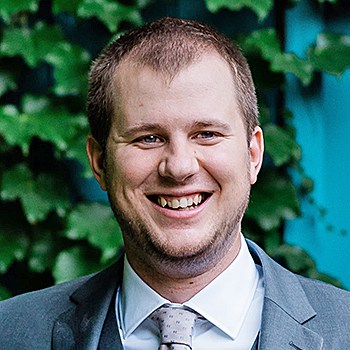
Andrew Allman serves as an Assistant Professor in the Department of Chemical Engineering at the University of Michigan, based at the North Campus Research Complex (NCRC) in Ann Arbor, Michigan. His office is located in building B28, room 2006E, with contact phone (734) 647-1744. His research specializes in Process Systems Engineering, developing optimization theory and algorithms for economic, safe, and sustainable design, operation, and control of next-generation chemical, energy, and biochemical production systems. This highly interdisciplinary work emphasizes novel applications of decision-making tools across industrial domains. Professor Allman directs the Process Systems Research Team, which actively pursues collaborative projects to advance process systems engineering through innovative algorithmic development and sustainable production solutions.
Jinsong Huang serves as Adjunct Professor in the Materials Science and Engineering department at the University of North Carolina at Chapel Hill, where he leads an interdisciplinary research group focused on perovskite-based electronic materials and devices. His laboratory, housed in Murray Hall 1115, maintains active collaborations with academia, industry, and national laboratories while training next-generation scientists and engineers for competitive job markets. Dr. Huang earned his educational credentials through a rigorous academic path: Ph.D. in Materials Science & Engineering from UCLA (2007), M.S. in Semiconductor Physics from Chinese Academy of Sciences (2003), and B.E. in Materials and Photoelectronic Physics from Xiangtan University (2000). His research program spans Perovskite Solar Cells , Photodetectors , and X-ray Imagers , with particular emphasis on fundamental material physics, device design, stability enhancement, and scalable manufacturing. The group's work bridges applied research with deep scientific understanding, focusing on high-performance, low-cost electronic materials that address critical energy and medical imaging challenges. Current projects include self-powered photon-counting detectors, bifacial perovskite modules, and all-perovskite tandem solar cells. Analysis of recent publications reveals a strategic research trajectory toward commercialization of perovskite technologies, with increasing focus on stability, scalability, and real-world performance metrics. The work spans fundamental science (defect engineering, crystal growth) to applied technologies (medical imaging detectors, flexible solar cells), demonstrating remarkable breadth while maintaining technical depth in perovskite material systems. Highly Cited Researcher 2021 in Material Science and Chemistry Principal Investigator for $1.5 million UNC System Research Opportunities Initiative (2025) Multiple student/postdoc awards including Postdoctoral Awards for Research Excellence Consistent high-impact publications in Nature, Science, and Advanced Materials Huang actively mentors students and postdocs, with notable alumni including four of the 41 Tar Heels ranked as 'highly cited researchers' in December 2023. His research group has secured significant funding including the recent $1.5 million UNC System grant for 'Ultra-High Efficiency Perovskite Tandem Solar Cells' focusing on North Carolina's energy production and reduced fossil fuel dependence. The laboratory maintains strong industry partnerships that facilitate technology transfer and real-world implementation of research findings. The Huang Research Group operates as a dynamic interdisciplinary team with scientists from chemistry, materials science, physics, and electrical engineering backgrounds. Their collaborative culture has produced numerous breakthroughs including record-efficiency perovskite modules certified by NREL, self-powered photon-counting detectors published in Nature, and lead-recycling technologies highlighted in Nature Communications. Current facilities support crystal growth, device fabrication, and advanced characterization of perovskite materials for both energy and radiation detection applications.
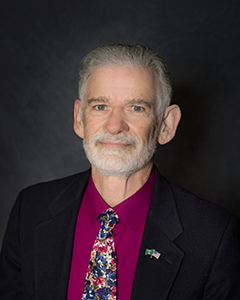
David Gilkey is an Associate Professor in the Department of Occupational Safety, Health and Industrial Hygiene at Montana Technological University in Butte, MT. He holds a Doctor of Chiropractic degree from Southern California Health Sciences University and a Ph.D. in occupational and environmental health from Colorado State University. Dr. Gilkey is a Certified Professional Ergonomist (CPE), Certified Safety Professional (CSP), and Registered Environmental Health Specialist (REHS/RS), with additional certifications in walkway safety assessment. His research encompasses: Slip/trip/fall prevention through surface friction evaluation Safety climate in construction and mining industries Ergonomic risk assessment in healthcare and manufacturing Agricultural safety focused on ATV/UTV operation Environmental health and biological site safety Occupational stress and burnout biomarkers His recent publications demonstrate strong focus on practical safety solutions in healthcare ergonomics (patient transfers, burnout), industrial settings (noise exposure, material handling), and foundational slip/fall research. Earlier work established his expertise in agricultural ATV safety through injury epidemiology and prevention strategies. Dr. Gilkey teaches courses including OSH 391 (Slips, Trips and Falls), OSH 454 (Ergonomics), IH 542 (Principles of Epidemiology), and advanced industrial hygiene topics. He actively advises undergraduate and graduate students on academics, internships, and career development. As Montana's Health Links Ambassador, he promotes Total Worker Health® programs through the Colorado School of Public Health, helping employers develop Certified Healthy Workplace initiatives that integrate safety and wellness.
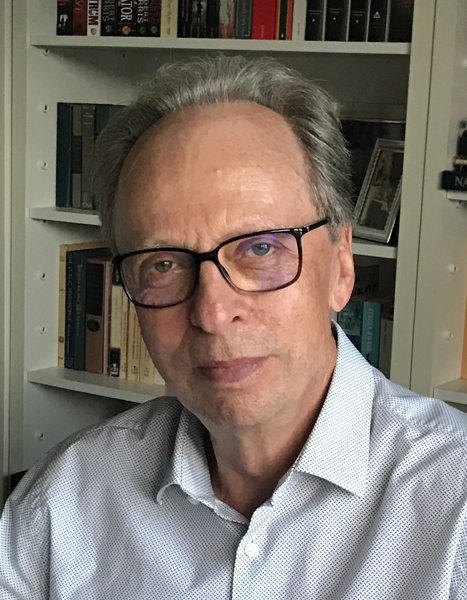
Prof. Dr. Ioachim Pupeza serves as Group Leader in the Department of Spectroscopy/Imaging at the Leibniz Institute of Photonic Technology (Leibniz-IPHT) in Jena, Germany. His research focuses on advanced optical measurement techniques, particularly in the field of field-resolved spectroscopy and precision optical measurements. Dr. Pupeza's research interests center around optical spectroscopy with a particular emphasis on field-resolved techniques that capture the complete electric field waveform of light-matter interactions. His work spans infrared spectroscopy , molecular fingerprinting , ultrafast laser technology , and precision optical measurements . He has made significant contributions to electro-optic sampling techniques, which enable characterization of electric-field waveforms across the terahertz to visible spectral range. His research also extends to mid-infrared light generation , terahertz spintronic emitters , and cavity-enhanced spectroscopy , with applications ranging from fundamental physics to medical diagnostics. Analysis of Dr. Pupeza's recent publications reveals a strong trend toward increasingly sophisticated field-resolved spectroscopy techniques with applications in both fundamental science and practical diagnostics. His work has evolved from basic measurement techniques to applications in cancer detection through molecular fingerprinting of biofluids. A consistent theme across his publications is the pursuit of higher precision, broader bandwidth, and improved sensitivity in optical measurements, often achieving attosecond-level precision. His research bridges physics, engineering, and medical applications, demonstrating how fundamental optical advances can translate to real-world diagnostic tools. Dr. Pupeza leads the research group "Field-Resolved Optical Precision Measurement Methods" at Leibniz-IPHT, which appears to collaborate extensively with other research institutions and groups. His work involves sophisticated laser systems including high-power Yb:YAG thin-disk oscillators, femtosecond enhancement cavities, and dual-oscillator systems for precision measurements. The group's research has implications for molecular spectroscopy, medical diagnostics, and fundamental studies of light-matter interactions at the most fundamental time scales.
Can ÖZCAN is an Assistant Professor and Head of the Industrial Design Department at İzmir University of Economics (IUE) since 2006. He holds a PhD in Semiotics from Dokuz Eylül University and is the Director of EKOTAM Design Research and Application Center. His academic career includes roles at Izmir Institute of Technology and Yeditepe University, where he contributed to department establishment and curriculum development. Education: B.ID (Middle East Technical University), MSc/PhD (Dokuz Eylül University, Semiotics) Research focuses on Design Project Management, History of Industrial Design, Design Education, and Semiotics. He explores design's role in crime prevention, cultural industries, and food packaging through projects like 'Secure Urban Environments by Design' and 'Menemen Pottery Development Model'. Administratively, he led EKOTAM (2011–present) and managed industry collaborations in product/service design, brand development, and franchising. His courses include advanced topics in design management, semiotics, and design history. Notable projects include EU-funded urban security frameworks and brand identity studies for Turkish agricultural products. He has advised over a dozen graduate theses on topics ranging from yacht design to sustainability in cities.
Dr Xiaolin Wang is an Associate Professor at the Australian National University's School of Engineering. She leads a research group focused on carbon capture, hydrogen storage, thermal energy storage using phase change materials, gas hydrate sciences, and green building technologies. Her work emphasizes sustainable energy solutions and environmental engineering. She has secured over $2M in research funding, including an ARENA-funded hydrogen storage project. Education: PhD from ANU (2013), joined ANU as an education-focused lecturer in 2018. Awards: ANU Vice Chancellor’s Award for Early Career Academics, AIRAH Excellence in HVAC&R Research, and CECC Remote Teaching Award. She serves as Sub-Dean of Student Experience in her college. Research Interests: Innovations in low-capital-cost hydrogen storage via nano-scaffolding, heat/mass transfer enhancement in hydrate-based CCS, novel PCM recipes for thermal management, and strategies for green building design. Her lab explores biomimetic encapsulation for CO₂ capture and eco-friendly hydrogels for methane hydrate formation. Publications focus on hydrate-based carbon capture mechanisms, thermal energy storage systems, and advanced materials. Key projects include mass transfer enhancement for hydrate CCS and a Global Research Partnership on building physics and acoustics. Grants & Funding: ARENA hydrogen storage project, ARC DECRA Fellowship, and ANU Global Research Partnerships Scheme. Supervises research on carbon capture, thermal systems, and sustainable materials.
Giuseppe Santucci is an Associate Professor at the Department of Computer, Control and Management Engineering Antonio Ruberti at Sapienza University of Rome. He teaches courses on Fundamentals of Computer Science, Software Engineering, and Visual Analytics. His office is located in Room B218 at Via Ariosto 25, Rome, and his contact email is santucci@diag.uniroma1.it. Dr. Santucci's research focuses on Visual Analytics, Information Visualization, Human-Computer Interaction, and Information Retrieval. His work spans theoretical aspects of visual query languages for semantic models to practical applications in visual analytics for cybersecurity, cryptocurrencies, and deep learning explainability. He has published over 130 articles in international journals and conferences, demonstrating his significant contributions to these fields. His recent publications show a strong trend toward applying visual analytics to increasingly complex domains including cybersecurity, cryptocurrencies, and explainable AI. The work demonstrates an evolution from theoretical foundations of visual query systems to practical applications that help users understand complex data and systems. His research bridges the gap between theoretical computer science and practical user-centered solutions. Dr. Santucci has received notable recognition including: IEEE VizSec 2018 Best Paper Award Human-Computer Interaction Cybersecurity Awards 2018 He actively mentors students through thesis projects focused on information visualization and visual analytics. His PROMISE project provides a framework for students to engage in cutting-edge research in information retrieval and visual analytics. He has supervised work on topics including visual evaluation techniques, visual mappings optimization, and user studies for Infovis systems. Dr. Santucci leads the A.WA.RE (Advanced Visualization & Visual Analytics REsearch) group at Sapienza University. This group conducts research on visual analytics tools for information retrieval evaluation, cybersecurity analysis, and deep learning explainability. Their work includes developing frameworks like CryptoComparator for cryptocurrency analysis and BUCEPHALUS for cybersecurity platform analysis.
Turkka Keinonen is a Professor of Industrial Design at Aalto University School of Arts, Design and Architecture, serving as Vice Dean of Research and Head of Doctoral Education. His career spans academic leadership, industry roles in Finnish technology sectors (shipbuilding, medical equipment), and a visiting associate professorship at National University of Singapore. He specializes in human-centered design, product concept design, and ethical considerations in design. Keinonen’s research emphasizes public sector innovation, digital service development, and the intersection of technology with societal needs. His work bridges theory and practice, focusing on how design can foster equity, civic engagement, and sustainability. Recent projects explore libraries as digital innovation hubs, smart home technologies’ ethical implications, and volunteer-based IT services. He has authored influential books including Mobile Usability (2003), Product Concept Design (2006), and Designers, Users and Justice (2017), alongside over 100 publications. Keinonen’s research trends reflect a shift toward relational design in public sectors, emphasizing stakeholder collaboration and systemic change. His articles analyze digital literacy initiatives, quasi-public service models, and design’s role in mediating technological control. He advocates for ethical frameworks that prioritize user autonomy and societal justice in design processes. Labs/Teams: Active in Aalto’s design innovation networks, particularly in public service design and human-centered design methodologies. Collaborates with industry partners (e.g., Nokia Research Center) and Nordic institutions on applied design research.
Sebastian Heilpern serves as Acting Assistant Professor in Stanford University's Department of Earth System Science, transitioning to Assistant Professor in January 2026. An ecologist and sustainability scientist, he investigates biodiversity change in aquatic ecosystems—particularly the Amazon basin—and its implications for human well-being through food systems, renewable energy, and public health lenses. His research integrates fieldwork, data science, and synthesis across local to global scales. His educational background includes: PhD in Ecology, Evolution & Environmental Biology from Columbia University (2020) MS in Ecology & Evolution from the University of Chicago (2015) BS in Biological Sciences from Cornell University (2011) Heilpern's research centers on identifying synergies between biodiversity conservation and societal objectives. His work examines how aquatic biodiversity sustains nutritional security through fisheries, assesses hydropower's socio-ecological tradeoffs, and develops climate-smart planning frameworks. By connecting ecological processes to human outcomes, he advances sustainability science through interdisciplinary approaches that bridge environmental and social domains. His 2023-2025 publications reveal dominant themes in Amazonian freshwater systems, fisheries nutrition, and renewable energy planning. Key trends include quantifying biodiversity's role in dietary resilience, optimizing hydropower development to minimize ecological harm, and establishing mercury-nutrition linkages in fish consumption. His work consistently emphasizes win-win solutions that align conservation with food/energy security. Award highlights: Eric & Wendy Schmidt AI in Science Postdoctoral Fellowship at Cornell University As principal investigator of Stanford's Biodiversity Lab, Heilpern leads research reconciling conservation with food, energy, and water security. His team prioritizes equity in science practice while addressing historical inequities. Current projects focus on Amazonian freshwater systems, sustainable aquaculture siting, and climate-resilient energy planning, supported by interdisciplinary collaborations across ecology, data science, and policy domains. The Biodiversity Lab actively recruits researchers through structured opportunities emphasizing diversity and justice in sustainability science. Laboratory values explicitly center on correcting science's inequitable legacy while advancing stronger ecological understanding through inclusive practices.
Professor Celso Grebogi, Sixth Century Chair in Nonlinear & Complex Systems at the University of Aberdeen, is a globally recognized leader in nonlinear dynamics , chaos theory , and systems biology . He founded the Institute for Complex Systems and Mathematical Biology and co-founded the Aberdeen-Lanzhou-Tempe Research Centre. His career spans institutions including University of Maryland, University of São Paulo, and Max-Planck-Society (External Scientific Member since 1998).
Dr. Sheng Yang is an Assistant Professor in the School of Engineering at the University of Guelph. He leads the Design Innovation and Intelligent Manufacturing (DIIM) lab, focusing on advancing additive manufacturing, generative design, and smart manufacturing technologies. His research integrates IoT, big data analytics, and bio-inspired design to address challenges in aerospace, green energy, and healthcare. Key areas include computational design for additive manufacturing, data-driven mass customization, and digital twin-based optimization. Education: Ph.D. in Mechanical Engineering from McGill University (2019), followed by a Postdoctoral Fellowship at McGill (2019–2020). Joined University of Guelph in 2020. Research interests span energy efficiency, complex system optimization, and personalized healthcare products. Recent work emphasizes digital twin synchronization in robotics, machine learning for quality prediction, and sustainable additive manufacturing processes. Notable awards include the 2019 Association of Commonwealth Universities Blue Charter Fellowship and 2018 ASME Best Paper Award. His lab actively seeks partnerships in personalized healthcare, product design, and smart manufacturing. Grants and collaborations focus on advancing manufacturing technologies and sustainability. No formal advisees listed, but active in graduate training through lab projects. The DIIM lab explores cutting-edge solutions for industrial and societal challenges through interdisciplinary approaches.
Ulrich Tallarek serves as Professor of Analytical Chemistry in the Faculty of Chemistry at Philipps University of Marburg, where he has held a W3 professorship since 2011. He also serves on the Board of Directors for the Materials Science Center at the university, a position he has held since 2007. His research group focuses on the fundamental understanding of transport phenomena in porous media with applications spanning chromatography, battery technology, and microfluidic systems. The group maintains strong collaborations with institutions worldwide and secures substantial research funding for advanced computational and experimental work. Professor Tallarek's research interests center on functional porous solids, with specific focus on morphology-transport-performance relationships. His work bridges multiple scales from molecular dynamics simulations of solute behavior in nanopores to macroscopic transport in chromatographic columns and battery electrodes. Key research areas include diffusion in hierarchical porous media, electrokinetic phenomena in microfluidic systems, molecular simulation of chromatographic processes, and advanced characterization of porous materials using tomography and other techniques. His group has pioneered multiscale simulation approaches that connect molecular-level surface chemistry to macroscopic transport properties. The research output demonstrates consistent focus on understanding fundamental transport mechanisms in porous systems, with recent publications emphasizing multiscale simulation techniques, molecular dynamics studies of solvent effects in chromatography, advanced characterization of mesoporous structures, and applications to separation science and energy storage. The work shows strong integration of computational modeling with experimental validation across multiple length scales. 2003: Desty Memorial Prize for Innovation in Separation Science, The Royal Institution of Great Britain, London 2006: Young Scientist Award from DECHEMA e.V. 2011: Named Discussion Leader at the 2011 Gordon Research Conference on Physics & Chemistry of Microfluidics 2011–2012: Chairman of the German Chemical Society (GDCh), Marburg 2013: Finalist, World Technology Awards, for category Environment 2013: Named as one of the 100 most influential analytical scientists in the world (The Analytical Scientist Power List) 2017: Recipient of the Silver Jubilee Medal 2017, The Chromatographic Society, UK Professor Tallarek's research has been supported by numerous grants enabling high-performance computing resources, advanced instrumentation, and international collaborations. His group maintains strong ties with industry partners in separation science and analytical instrumentation. The Tallarek Research Group includes postdoctoral researchers, PhD students, and technical staff working across experimental and computational domains. Current projects focus on molecular simulation of chromatographic processes, advanced characterization of porous battery electrodes, and development of novel separation methodologies. The Tallarek Research Group operates state-of-the-art facilities for computational modeling, including access to high-performance computing resources at Forschungszentrum Jülich. The group also maintains experimental capabilities for chromatographic analysis, materials characterization, and microfluidic device development. Their work on physically reconstructed porous media has established new standards for connecting microstructure to transport properties in complex materials systems.
Federico Toschi is a Full Professor at Eindhoven University of Technology (TU/e), holding joint appointments in Applied Physics and Mathematics and Computer Science departments. His research focuses on multi-scale transport phenomena, combining statistical physics, fluid dynamics, and computational methods. He leads projects in the 4TU Centre for Multiscale Phenomena and EAISI. Education: PhD in Physics (University of Pisa, 1998) and academic background at Scuola Normale Superiore di Pisa. Interdisciplinary expertise in fluid dynamics turbulence, Lagrangian turbulence, crowd dynamics, and Lattice Boltzmann methods. Recipient of APS Fellow (2015), Euromech Fluid Mechanics Fellow (2012), and Ig Nobel Prize for Physics (2021). Research emphasizes turbulence modeling, pedestrian dynamics, and active matter, with applications in environmental flows and crowd management. His work bridges computational innovations with experimental validations. Recent articles explore kinetic data-driven turbulence modeling, pedestrian flow optimization, and turbulence effects in biological systems. Projects include digital twins for seismicity modeling and rarefied gas dynamics. Teaches fluid mechanics, computational physics, and chaos theory courses. Founded Flow Matters Holding BV, applying research to practical solutions.
Dr. Mohamed Khalifa is a Visiting Fellow at the Centre for Health Informatics, Australian Institute of Health Innovation, Macquarie University, Sydney. He holds a PhD in Health Innovation from Macquarie University (2020) and an MSc in Health Informatics from the University of Edinburgh (2012). His expertise spans health informatics, AI-driven healthcare solutions, and strategic healthcare management. He has led multidisciplinary teams in developing evidence-based frameworks like GRASP for clinical predictive tools. Affiliations: Visiting Fellow, Macquarie University Director of Studies, College of Health Sciences (Education Centre of Australia) Former Digital Health Officer, Australian Digital Health Agency (2020–2021) His research focuses on AI applications in healthcare, clinical decision support systems, and health analytics. Over 20 years, he has published 60+ peer-reviewed papers and holds an innovation patent (2018). He has received awards including the IMIA Best Paper (2020) and ICIMTH Best Paper (2015). Dr. Khalifa’s work emphasizes improving healthcare efficiency through technology, including projects on predictive tools, emergency room performance, and diabetes management. He is a Fellow of the Australasian Institute of Digital Health and certified in healthcare information systems (CPHIMS).
Professor John Zeleznikow is an Honorary Associate at La Trobe University's Law School, with a distinguished career spanning 49 years across multiple institutions including the University of Edinburgh and Victoria Business School. His research focuses on AI applications in legal decision-making, dispute resolution, and autonomous vehicle technology. He has secured over $8M in research grants and supervised 20 PhD graduates. Key projects include the Split-Up system (used in high-profile divorce cases like Prince Charles and Lady Di) and Family-Winner software, which won an ABC TV innovation award. His work bridges law, technology, and ethics, with publications in leading journals like the Harvard Negotiation Law Review and Artificial Intelligence and Law . Recent research explores AI-driven online dispute resolution (ODR), autonomous vehicle regulation, and the ethical implications of technology in legal systems. He advocates for transparent, user-centric legal tech solutions to enhance access to justice and improve decision-making processes.