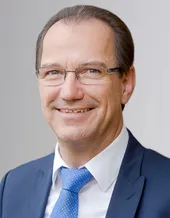
Peter Lamp is a Rudolf Diesel Industry Fellow at the Technical University of Munich (TUM) and Head of the Battery Technology department at BMW Group. He holds a MSc in Physics from TUM (1989) and a PhD in Physics from the Max Planck Institute for Physics, Munich (1993). His research focuses on electrochemical energy storage, Li-ion/SOFC technologies, and charge transport in materials. He leads advanced battery R&D at BMW, collaborating with TUM’s Electrochemical Systems department under Prof. Hubert Gasteiger. His work bridges academic innovation and industrial application in sustainable energy systems. Education: MSc Physics, Technical University of Munich (1989) PhD in Physics, Max Planck Institute for Physics, Munich (1993) Research Highlights: His work spans battery materials development, fuel cell systems, and energy conversion. Key areas include optimizing lithium-ion conductors, understanding electron transport in gases, and advancing sorption cooling technologies. His recent TUM-IAS fellowship publications address solid-state electrolytes and energy material dynamics. Grants & Collaborations: Leverages industry-academia partnerships through BMW and TUM’s Institute for Advanced Study. Focuses on scalable battery solutions for electric mobility and sustainable energy systems. Labs & Teams: Leads BMW’s Battery Technology department and collaborates with TUM’s Electrochemical Interfaces in Batteries focus group. Engages in interdisciplinary projects on electrochemical interfaces and materials characterization.
Don Seo is a Professor at Arizona State University's School of Molecular Sciences and an affiliate of the Biodesign Center for Molecular Design and Biomimetics. He holds a B.S. and M.S. in Chemistry from Seoul National University and a Ph.D. in Theoretical Solid State Chemistry from North Carolina State University. His postdoctoral research included work with Roald Hoffman at Cornell University and John Corbett at Iowa State University. Seo's research focuses on designing novel synthetic strategies for inorganic porous materials, hybrid materials, and composites addressing energy and sustainability challenges. His work emphasizes green chemistry principles and applications in renewable energy, water purification, and environmental remediation. Notable achievements include developing nanoporous transparent conducting oxides and geopolymer materials for catalysis and environmental solutions. He has received prestigious awards, including the NSF CAREER Award and the Camille Dreyfus Teacher-Scholar Award. His publications span topics like photoelectrochemical systems, catalytic materials, and geopolymer-based environmental solutions. Seo's research also involves interdisciplinary collaborations, such as integrating photosynthetic systems with synthetic materials for energy applications. Grants: NSF MURI, DOE-funded Bio-Inspired Solar Fuel projects, and industry partnerships like NanoVoltaix. Labs/Teams: Active in the ASU Chemistry Department, leading projects in geopolymer synthesis and energy materials. Seo teaches advanced inorganic chemistry and oversees a research group exploring material innovations for global sustainability challenges.
Dr. Doudou Zhang is a Macquarie University Research Fellow (MQRF) in the School of Engineering, leading research in (photo)electrochemical energy conversion and sustainable catalysts. She transitioned to Macquarie in July 2024 after a Research Fellowship at ANU (2019–2024). Her expertise spans solar-driven water splitting, earth-abundant catalysts, and scalable electrolyser technologies. She holds a PhD from Shaanxi Normal University (2018) and completed an exchange at UNSW (2018–2019). Research interests: Solar energy conversion, renewable catalysts, thin-film coatings, and electrochemical systems. Leadership: ECR Representative for School of Engineering, organizer of the 2nd International Conference on Materials for Green Future (2024–2025). Teaching: Convenes units like ENGG8405 and co-teaches MECH3005. Her research focuses on advancing low-cost, scalable catalysts for clean energy applications. Recent work includes developing NiMoC electrocatalysts and perovskite/Si tandem photoanodes achieving 14% solar water splitting efficiency. She has supervised 5 PhD students at ANU and currently mentors 3 PhD candidates. Awards include the prestigious MQRF (2023) and Best Oral Presentation (2024). Active in global initiatives like the Xi'an University of Technology Masters Visit Program (2024).
Richard Brutchey is a Professor in the Department of Chemistry at the University of Southern California, leading the Brutchey Group since its establishment in 2007. His research focuses on chimie douce materials synthesis to address challenges in catalysis, energy storage/conversion, and sustainability. He was recently named a Fellow of the Royal Society of Chemistry (FRSC) for his contributions to chemistry. Department of Chemistry, University of Southern California Brutchey Group (2007–present) Research interests include: Catalytic materials for CO 2 conversion Band gap engineering of semiconductor nanocrystals Thermoelectric material optimization Thiol-amine solvent systems for solution processing Machine learning-aided synthesis optimization Microwave-assisted colloidal chemistry Scientific awards: Fellow of the Royal Society of Chemistry (FRSC) Publications demonstrate expertise in nanoparticle catalysis (CO 2 hydrogenation), perovskite nanocrystal engineering (CsPbBr 3 ), high-throughput synthesis methods, and phase control in semiconductor materials. His work bridges materials chemistry with applied sustainability through scalable manufacturing techniques.
Professor Anthony O'Mullane is a distinguished academic at Queensland University of Technology (QUT), where he serves in the Faculty of Science, School of Chemistry & Physics. With a career spanning multiple prestigious institutions including RMIT University, CSIRO, Monash University, and international research centers in the UK and Germany, Professor O'Mullane has established himself as a leading researcher in electrochemistry and nanomaterials science. His work bridges fundamental electrochemical principles with practical applications in energy conversion and environmental remediation. Professor O'Mullane's research interests focus on electrodeposition of metallic and bimetallic nanostructured materials , electrocatalytic studies on nanostructured materials , and electrocatalytic reactions including oxygen evolution, hydrogen evolution, CO2 reduction, and nitrogen conversion to ammonia. His laboratory utilizes advanced techniques such as scanning electrochemical microscopy (SECM) and Fourier Transform ac voltammetry to study electron transfer processes at solid-solution interfaces. Additional research areas include electrochemical sensing, development of substrates for Surface Enhanced Raman Spectroscopy, and investigation of solid electrolyte interphase layers on lithium electrodes for battery technology. Analysis of Professor O'Mullane's recent publications reveals a strong focus on sustainable energy solutions and environmental remediation. His research group is particularly active in nitrogen cycle electrochemistry (nitrate/nitrite reduction to ammonia), CO2 conversion technologies, and advanced electrocatalyst development. There's a clear trend toward integrating computational modeling with experimental electrochemistry, and increasing use of liquid metal systems and plasma-assisted synthesis techniques in recent work. RACI Citation for contribution to the chemistry profession (2014) John A. Brodie medal for best paper at Chemeca (2010) Emerging researcher award from School of Applied Sciences, RMIT University (2009) Fellow of the Royal Australian Chemical Institute (2016) Fellow of the Royal Society of Chemistry (2015) ARC Principal Research Fellowship (2011-2015) Professor O'Mullane has successfully supervised numerous doctoral students through projects focused on liquid metal catalysts, electroactive organic species, nanomaterials synthesis, and energy storage technologies. His research has been supported by significant competitive grants including an ARC Future Fellowship and multiple Discovery Projects focusing on nanoscale electrochemical imaging, liquid metal applications, and nano-engineered materials for catalysis. As Immediate Past Vice-chair of the Physical Electrochemistry Division of the International Society of Electrochemistry and Immediate Past-Chair of the Electrochemistry Division of the Royal Australian Chemical Institute, he maintains strong leadership roles in the international electrochemistry community. His laboratory combines experimental electrochemistry with advanced materials characterization to address critical challenges in sustainable energy and environmental chemistry.
Professor Troy Farrell is the Executive Dean of the Faculty of Science at Queensland University of Technology (QUT). He holds a PhD (QUT) and B.Sc (Hons) from the University of Newcastle. His expertise lies in applied mathematics and physical chemistry, focusing on industrial systems like batteries, solar cells, and biomass processing. He leads major research projects in electrochemical nano-diodes, metal-air batteries, and coal seam gas modeling. Professor Farrell has secured over $2.8M in external funding and led national initiatives such as the Mathematics in Industry Study Group (MISG) and the ATN Industry Doctoral Training Centre. He is a Fellow of the Queensland Academy of Arts and Sciences and has received prestigious awards for his research and teaching. His teaching focuses on mathematical modeling, partial differential equations, and calculus, emphasizing student-centered pedagogy and innovation. Key achievements include developing multiphase models for food drying, phase-field models for lithium-ion batteries, and population balance models for biomass pretreatment. Research Projects: Mathematical modeling of biofuel production from cellulosic materials Electrochemical nano-diodes using Poisson-Nernst-Planck models Optimization of lithium-air batteries for secondary power Multiscale modeling of porous materials with hybrid continuum/particle methods Agrochemical uptake in plant cuticles Awards: ANZIAM Mid-Career Research Award (2015) QUT Vice-Chancellor's Award for Partnerships (2013) Australian Government Citation for Teaching Excellence (2006) Teaching & Leadership: Professor Farrell pioneered innovative teaching methods recognized by the Carrick Institute, coordinating undergraduate and postgraduate programs in Mathematical Sciences. He has mentored over 13 doctoral students and actively bridges academia-industry collaboration through leadership roles in MISG and the ATN IDTC. His work emphasizes translating mathematical models into real-world solutions for energy, agriculture, and environmental sectors. Labs & Teams: He oversees interdisciplinary teams at QUT specializing in electrochemical systems, porous media modeling, and industrial mathematics. Current collaborations include projects with sugar cane industries, battery manufacturers, and coal seam gas operators to address challenges like biomass storage safety and energy storage optimization.
İSMAİL TOPCU is an Associate Professor in the Department of Metallurgy and Materials Engineering at Alanya Alaeddin Keykubat University's Faculty of Engineering. He previously held roles including Researcher at Marmara University's Faculty of Engineering and has been affiliated with the Rafet Kayış Engineering Faculty since 2003. His academic career spans multiple institutions and roles, including Farabi Coordinator, Erasmus Coordinator, and Department Deputy Chair at Alanya Alaeddin Keykubat University. He earned his PhD in Metallurgy and Materials Engineering (2016) from Marmara University's Institute of Science and Technology, following a Master's degree (2007) and Bachelor's degree (1995) in Metallurgical Engineering from the same and Istanbul Technical University, respectively. His research focuses on advanced materials science topics such as powder metallurgy, composite materials, tribology, and additive manufacturing. He has explored the mechanical behavior of titanium matrix composites, friction stir welding techniques for polymers, and material characterization under dynamic loads. His work emphasizes practical applications in industries like aerospace, biomedical implants, and geothermal energy systems. Recent studies include optimizing PLA/ABS polymer properties for pandemic-related medical devices and investigating wear resistance in Ti6Al4V/CNT composites. He has also contributed to projects on magnesium production from seawater and solar energy systems. Key Research Areas: Advanced composites (metal matrix, polymer-based) Material processing techniques (powder metallurgy, additive manufacturing) Creep/fatigue behavior analysis Non-destructive testing (NDT) methodologies Biomedical and aerospace material development Awards: Teknofast Rocket Competition 2020 Grants & Projects: Completed TÜBİTAK projects on polymer pipe modeling and 3D printed composites Research on hydrogen storage tanks via powder metallurgy Development of solar tracking systems for photovoltaic cells Labs/Teams: Material Production and Recycling Laboratory Development Project
Hakan USTA is a Professor of Materials Science and Chemistry in the Department of Materials Science and Nanotechnology Engineering at Abdullah Gül University (AGU) in Kayseri, Turkey. He leads the USTALAB research group, which focuses on the theoretical design and synthetic development of new organic molecular, macromolecular, and polymeric π-conjugated materials for new-generation (opto)electronics and nanotechnology applications. Dr. USTA received his B.S. in Chemistry in 2004 from Bilkent University (Ankara, Turkey) with a Cumulative-GPA of 3.7/4.0 (Ranked 1st, Honors in Chemistry). He then obtained his Ph.D. in Chemistry from Northwestern University (Evanston, IL) under the supervision of Prof. Tobin J. Marks in 2008, with a Cumulative-GPA of 3.9/4.0. His doctoral research focused on 'Solution-Processable Molecular and Polymeric Semiconductors for Ambient-Stable Organic Field-Effect Transistors.' Dr. USTA's research spans multiple areas of materials science and nanotechnology, with particular focus on developing high-performance functional organic materials for optoelectronic applications. His work encompasses p-/n-/ambipolar semiconductors, low band gap donor-acceptor polymers, low-LUMO π-systems, hot-exciton fluorescent molecules, green-solvents soluble high-performance semiconductors, semiconductors with scalable synthesis, and thermally responsive molecules. These materials form nano-/micro-structures in thin-films that lead to applications in organic surface enhanced Raman spectroscopy (o-SERS), thin-film transistors (OTFTs), photovoltaics (OPVs), light-emitting diodes/transistors (OLEDs and OLETs), and multiplex encoded surfaces (physically unclonable functions-PUFs). Analysis of Dr. USTA's recent publications reveals a strong trend toward developing novel organic semiconductor materials with specific molecular designs for targeted applications. His research has particularly focused on BTBT derivatives, BODIPY-based materials, and indenofluorene systems, with applications spanning from high-performance transistors to advanced sensing platforms and security technologies. The interdisciplinary nature of his work bridges chemistry, materials science, and electrical engineering to address challenges in organic electronics. 2020 Tubitak Science Incentive Award in Materials Science and Nanotechnology 2015 The Young Scientists Award (TÜBA-GEBİP) 2015 The Young Scientist of the Year (Science Heroes Association) 2014 BAGEP Distinguished Young Scientist Award Dr. USTA has received significant research funding, with his group reporting >1.1 million USD in grants received. His research group has produced over 70 journal articles and 14 international patents, with his work accumulating over 5000 citations. He actively collaborates with researchers both nationally and internationally, including with Prof. Myung-Gil Kim's group at Sungkyunkwan University in South Korea on NRF-TUBITAK joint projects. Dr. USTA leads the USTALAB research group, which has established itself as a leading center for the development of novel organic semiconductor materials. The lab's work on organic SERS platforms has received notable recognition, including coverage in C&EN News. The group maintains active research directions in multiple areas of organic electronics, with ongoing projects focused on n-type BTBT development, organic encoded surfaces, and new materials for optoelectronic applications.
Kaan Kalkan is an Associate Professor in the Department of Mechanical and Aerospace Engineering at Oklahoma State University, affiliated with the College of Engineering, Architecture and Technology. His research focuses on nanostructured materials, nanodevices, and advanced fabrication techniques. He holds a Ph.D. in Engineering Science and Mechanics from Pennsylvania State University (2001), an M.S. in Mechanical Engineering (1993), and a B.S. in Physics/Mechanical Engineering from Boğaziçi University (1991). Dr. Kalkan’s work spans nanofabrication via plasma/solution chemistry, single molecule detection, and biomedical monitoring applications. He has pioneered methods for creating photo-printable nanowire/polymer blends and has contributed to advancements in cuprous oxide nanoantennas and dielectric resonance-enhanced photocatalysis. His research has been featured in high-impact journals like ACS Applied Nano Materials and Carbon Trends , with several works highlighted as journal cover articles. Key Research Themes: Nanomaterial synthesis, optoelectronics, forensic material analysis, and energy-related nanocatalysts Notable Achievements: Over 15 patents, 90+ peer-reviewed publications, and awards including the President’s Fellows Faculty Research Award (2016) and NSF feature recognition (2011) Teaching: Courses include Thermodynamics, Materials Science, and Corrosion Engineering His lab explores cutting-edge applications in nanotechnology, with recent emphasis on Mie resonance effects in dielectric nanoparticles and environmental sensing technologies. Collaborative projects include developing moldable plant biomass composites and novel plasmonic sensors for biomedical diagnostics.
Ricardo Guerrero Lemus is a Professor in the Department of Physics at the University of La Laguna, with affiliations at Academia Europaea-Barcelona Knowledge Hub, Autonomous University of Barcelona, and University of Barcelona. His research spans theoretical physics, microbial ecology, renewable energies, and materials science, with significant publications in microbiology and environmental science. Research interests focus on: Microbial ecology and environmental interactions Renewable energy technologies and sustainability Theoretical physics applications in biological systems Science communication and history of microbiology His recent articles explore microbial communication, environmental microbiology, and science policy. Publications show consistent focus on microbial ecology, microbiology history, and interdisciplinary approaches. Supervision includes 6 doctoral students working on: Energy-water nexus in island regions Solar forecasting systems Nanostructured photovoltaic materials Silicon texturization processes Research involves collaborations across physics, microbiology, and environmental science, with current projects examining microbial ecosystems and sustainable energy solutions.
Dr. Kevin Rietwyk is a Researcher in Quantum Microscopy at the School of Science, RMIT University, Australia. His work focuses on quantum sensors and their applications in solar cell technology and magnetic imaging. He supervises research projects such as Quantum Sensors for Solar Cell Applications and collaborates on portable quantum sensor devices. Contact: kevin.rietwyk@rmit.edu.au. Research Interests: Quantum sensors, diamond-based materials, perovskite photovoltaics, magnetic microscopy, and machine learning in materials science. His studies explore device miniaturization, material stability, and optimization techniques for next-generation solar cells. Recent work includes advancements in quantum diamond microscopes, dynamic passivation for perovskites, and high-throughput fabrication using machine learning. He is open to supervising PhD/Masters students in these areas.
Professor Bahman Shabani is a leading academic in renewable hydrogen systems and energy storage at RMIT University's School of Engineering. He holds the position of Professor since 2022 and leads the Sustainable Hydrogen Energy Laboratory (SHEL). His career spans over two decades in academia and industry, including roles as Discipline Leader for Mechanical Engineering and Program Manager for the Master of Engineering (Sustainable Energy). Education: PhD candidate at RMIT (2006–2010), preceded by industry roles as an engine expert at SAIPA Automobile Company and research at the Automotive Industries Research and Innovation Centre in Iran. Research focuses on hydrogen energy, sustainable systems, and thermal management. Notable innovations include solar-hydrogen combined systems, carbon foam applications, and nanofluids in fuel cells. Leadership roles: Editorial board member of International Journal of Hydrogen Energy , member of the Australian Hydrogen Research Network Strategy Group, and chair of major international conferences (e.g., World Hydrogen Technology Convention). Awards include Top 2% global Energy scientists (Stanford, 2020–2023), Australia-Singapore Hydrogen Research Partnership Award (2023), and RMIT’s Dean’s Research Excellence Award (2021). Supervision: Active in guiding PhD/Master’s students on topics like fuel cell degradation, hydrogen storage, and renewable energy systems. Labs/Teams: Leads the SHEL group, collaborating on projects totaling $9M. Engages in national initiatives like Standard Australia’s Hydrogen Technologies working group.
Professor Yasuhiro Tachibana is affiliated with the School of Engineering at RMIT University (Melbourne, Australia) and serves as Guest Professor at Osaka University (Japan). His research and teaching focus on perovskite solar cells , photocatalysis , and nanostructured materials . He is available for Masters Research or PhD student supervision and media inquiries via yasuhiro.tachibana@rmit.edu.au . Research Interests: Physical Chemistry, Materials Chemistry, Nanotechnology, Photocatalysis, Artificial Photosynthesis, Quantum Dot Sensitized Solar Cells Teaching: Program Manager for Master of Engineering (Sustainable Energy), Course Coordinator for PV Systems (MIET2130) and Renewable & Solar Fuels (MIET2372) Scientific Awards: Centre of Excellence (COE) Postdoctoral Fellowship Engineering and Physical Sciences Research Council (EPSRC) Postdoctoral Fellow Service & Engagement: Editorial Board Member, Scientific Reports (2014–present) Editor, Proceedings of SPIE (2011–2011) Organized conferences: ICACC 2015, PacRim10, MRS Spring Meetings Member of American Ceramic Society, Japan Applied Physics Society, Japan Chemical Society
Dr. Yunlong Zhao is an Associate Professor at the Dyson School of Design Engineering, Imperial College London, and holds a joint appointment as Senior Scientist at the UK National Physical Laboratory (NPL). He leads the Electrochemical and Bioelectronic Interface Group, focusing on advanced energy storage, bioelectronics, and 3D soft systems. PhD from Harvard University (Chemistry and Chemical Biology) Undergraduate and postgraduate training at Wuhan University of Technology His research addresses key challenges in electrochemical and biomedical systems through device engineering. Key interests include: On-chip and implantable devices for electrophysiological interrogation Advanced electrochemical energy storage for sustainability Wearable and implantable bioelectronics for healthcare 3D soft systems integrating micro-power sources Recent publications highlight innovations in potassium-ion capacitors, Li-CO 2 batteries, and bioelectronic sensors. His work appears in top journals including Nature, Nature Nanotechnology, and Energy & Environmental Science. Scientific awards include: Second-Class Prize of the State Natural Science Award Wiley-VCH Rising Stars Top 5 Finalist for the USERN Prize He advises PhD students and postdoctoral researchers across multidisciplinary projects involving materials science, electrochemistry, and biomedical engineering. His group collaborates with the Centre for Processable Electronics and NPL’s Electronic and Magnetic Materials Group.
Uday Pal is a Professor in the Department of Mechanical Engineering at Boston University’s College of Engineering and an Affiliated Faculty member of the Institute for Global Sustainability (IGS). With 32 years of academic research and six years of industrial experience, his expertise spans high-temperature chemical and electrochemical processes, energy conversion, storage, and clean metals production. He holds a PhD in Materials Science and Engineering from Pennsylvania State University and a BTech in Metallurgy from the Indian Institute of Technology. His research focuses on solid oxide membranes, fuel cells, molten salt electrolysis, and sustainable metallurgy. He has authored over 300 publications and 28 patents, including pioneering work in green metallurgy and energy-efficient metal production. Recent articles emphasize advancements in solid oxide membrane-based technologies, chromium poisoning mitigation in fuel cells, and oxygen extraction from regolith. His work bridges materials science, electrochemistry, and environmental engineering, with a strong emphasis on sustainable solutions. Awards: AAAS Fellow (2020), AIME James Douglas Gold Medal (2015), TMS Distinguished Lecturer Award (2015), Richard E. Tressler Award (2014), and Distinguished Foreign Scientist Award (2012). Professional Roles: Editor-in-Chief of Journal of Sustainable Metallurgy and Editorial Board member of Advances in Manufacturing . His research group develops scalable processes like the ROXY system for oxygen and metal extraction, addressing challenges in both terrestrial and space resource utilization. Collaborative projects include molten salt electrolysis for solar-grade silicon and low-carbon aluminum production.