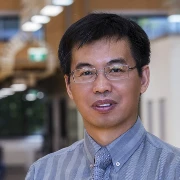
Dr. Dong Qiu is a Senior Lecturer in the School of Engineering at RMIT University, specializing in materials and manufacturing engineering since 2015. His primary role is as a VC’s Senior Research Fellow, focusing on cutting-edge research aligned with RMIT’s strategic plan for innovative manufacturing. His expertise includes grain refinement of cast alloys, crystallography in solid–solid phase transformations, and surface modification of biomedical implants. Dr. Qiu has published over 50 peer-reviewed journal articles, including 16 in Acta Materialia , with over 600 citations and an H-index of 15. He secured 10 competitive grants, including ARC DP and LEAF schemes. His research interests span additive manufacturing, high-entropy alloys, and tuneable microstructure design. His teaching and supervision focus on topics like additive manufacturing, advanced light metals, and phase transformations. Current projects include developing high-entropy alloys and improving titanium alloy performance via additive methods. He is open to supervising Masters and PhD students in materials and manufacturing engineering.
Ma Qian is a Distinguished Professor in the School of Engineering at RMIT University, specializing in Additive Manufacturing and Materials Science. He joined RMIT in 2013 and has held academic positions at institutions including The University of Queensland, National University of Singapore, and Tsinghua University. His research focuses on metallic alloys, metamaterials, and biomedical applications. He is open to supervising Masters and PhD students in these areas. Research Interests : Additive Manufacturing, Powder Metallurgy, Solidification Processing, Metallic Lattice Metamaterials, Metallic Biomaterials, Thermodynamics of Materials, Light Alloys (Titanium, Aluminum, Magnesium), Solid-State Phase Transformations. Awards : FAPMI (2025) – Fellow of American Powder Metallurgy Institute ARC College of Experts (2023) Materials Australia Lifetime Achievement Award (2022) RMIT Distinguished Professor Award (2019) Teaching & Supervision : Supervises projects on topics like AI-aided metamaterial design, titanium alloys, and high-entropy alloys. Teaches Advanced Manufacturing courses (MANU2455/MANU2532). Labs/Teams : Active in RMIT’s Centre for Additive Manufacturing, focusing on lattice materials and biomedical applications.
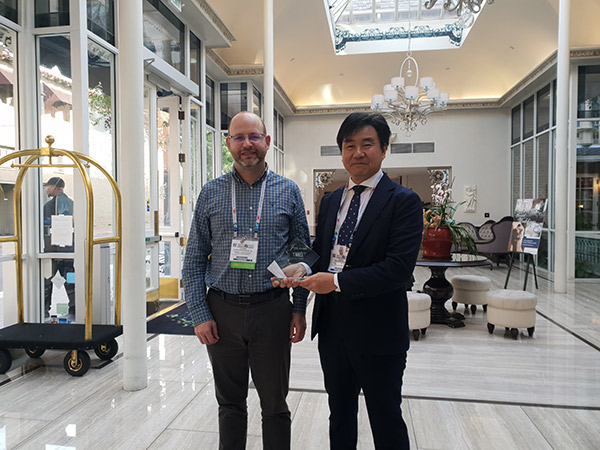
Professor Kazuhiro Nogita is a Professor and Director of the Nihon Superior Centre for the Manufacture of Electronic Materials (NS CMEM) within the School of Mechanical and Mining Engineering at the University of Queensland. He holds additional roles as an invited Professor at Kyushu University and the University of Malaysia Perlis. His research focuses on environmentally sustainable materials, including lead-free solders, hydrogen storage alloys, Li-ion battery anodes, and structural alloys. Nogita has authored over 200 peer-reviewed papers and holds 15 international patents. His work has led to the establishment of Hydrexia Pty. Ltd. and the NS CMEM, which emphasize commercially relevant and sustainable research. Education: Bachelor of Engineering (Japan, 1990), PhD from Kyushu University (1997). Prior to academia, he worked in nuclear power at Hitachi Ltd. His research has been recognized with awards such as the Queensland Government Smart Futures Fellowship and contributed to significant industry collaborations, including with Nihon Superior Co. Ltd. Research Interests: Lead-free solder alloys, hydrogen storage materials, Li-ion battery anodes, Mg-based alloys, and corrosion-resistant coatings. His work aims to advance sustainable materials for electronics, energy, and transport sectors. Recent projects include developing solid-state hydrogen storage alloys and high-reliability electronic interconnects. Selected Awards: Queensland Government Smart Futures Fellowship, National Report recognition for ATN Go8 EIA Trial. His research impacts include over $20M in investments for Hydrexia and contributions to industry IP protection through patent litigation victories. Grants and Collaborations: Extensive funding from ARC Linkage Projects, industry partners like Nihon Superior, and facilities through ANSTO and synchrotron programs. Current projects include hydrogen storage alloys and Sn-Bi solder alloy development. Labs and Teams: Director of NS CMEM, leading the UQ-Kyushu University Oceania Project, and advising on solar car racing teams like Team Arrow.
Trevor Abbott serves as an Adjunct Professor in the School of Mechanical and Mining Engineering at the University of Queensland, specializing in advanced materials research for energy and manufacturing applications. His research focuses on: Development of magnesium-based alloys for hydrogen storage systems Microstructural analysis of cast magnesium alloys Effects of alloying elements (sodium, aluminum, lanthanum) on hydrogen absorption kinetics Casting process optimization and creep resistance evaluation Recent publications demonstrate consistent investigation into how compositional modifications and thermal processing influence the performance of magnesium alloys, particularly for sustainable energy storage. His work bridges fundamental metallurgy with practical industrial applications in die-casting. Abbott maintains active collaborations with materials science researchers across multiple institutions, primarily contributing to experimental design and data interpretation in alloy development projects.
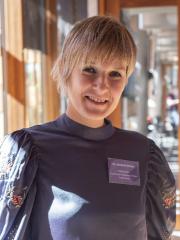
Dr. Svetlana Sineva is a Research Fellow at the School of Chemical Engineering , University of Queensland. With expertise in thermodynamic modeling and high-temperature metallurgical processes, her research focuses on phase equilibria in complex systems relevant to copper and nickel processing, e-scrap recycling, and sustainable metallurgy. Doctoral research at Nuclear Energy Institute, Saint Petersburg State Polytechnic University Research Interests: Her work spans thermodynamic analysis of multicomponent systems (Cu-Fe-O-S-Si-Al-Ca-Mg), phase equilibria studies, and optimization of metal recovery processes. She specializes in experimental determination of slag/matte/metal distributions and thermodynamic database development for industrial applications. Publication Trends: Recent articles analyze high-temperature processing of Ni-Cu sulfides , Fe-Sb-As systems , and oxide/sulfide equilibria with applications in copper smelters and e-waste recycling. Key subfields include spinel phase formation, flux additive effects, and oxygen quantification in slags. Supervision: Currently supervises PhD projects on Nickel Flash Smelting (Principal Advisor) and Ni-Fe-Cu-As-S thermodynamics (Associate Advisor), collaborating with Prof. Evgueni Jak and other experts.
Brendan Graham is a Lecturer in Chemical Engineering at the University of Western Australia's School of Engineering. His research focuses on flow assurance, natural gas processing, and emulsion science for energy applications. Research areas include: Crude oil emulsion stabilization/destabilization Cryogenic fluid behavior in LNG systems Asphaltene deposition mechanisms His experimental and modeling work addresses operational challenges in oil/gas production, particularly in separation processes and cryogenic impurity management. Recent publications analyze emulsion chemistry and solidification phenomena relevant to energy infrastructure.
Mark Barwood serves as a Research Associate in the Department of Chemical Engineering at the School of Engineering, The University of Western Australia. His research integrates experimental phase behavior measurements with thermodynamic and kinetic theory to address solid phase formation challenges in the energy industry, directly supporting UN Sustainable Development Goals for clean energy. His educational qualifications include: Master of Professional Engineering (with Distinction) in Chemical Engineering Bachelor of Science in Engineering Science / Synthetic Chemistry Barwood's research centers on nucleation, phase transitions, and cryogenics with specific applications in hydrogen liquefaction, LNG plant operations, and gas hydrate management. His work reduces production costs through precise impurity solubility measurements in cryogenic hydrogen systems, investigates catalyst deactivation mechanisms in ortho-para hydrogen conversion, and develops alternative hydrate inhibition strategies to minimize CO 2 emissions. This holistic approach bridges experimental data with theoretical frameworks for predicting complex industrial processes. His 2023-2025 publications reveal strong thematic continuity in energy thermodynamics, particularly focusing on gas hydrate kinetics in constrained systems, methane-water interactions at trace concentrations, and cryogenic hydrogen impurity behavior. These works consistently target emission reduction through optimized process design and novel measurement techniques. Scientific recognition includes: Best Poster Award (July 2023) Barwood actively supervises HDR students through UWA's research degree programs and participates in the CRC FEnEX project Heavy Hydrocarbon and Contaminant Solidification from Natural Gas (2024-2027) as Investigator 06. His research receives industry-aligned funding focused on preventing unplanned shutdowns in LNG facilities and optimizing hydrogen production infrastructure. His laboratory work emphasizes optical measurement techniques for cryogenic systems and high-pressure reactor studies of solid formation kinetics, operating within UWA's energy research ecosystem with strong industry partnerships.
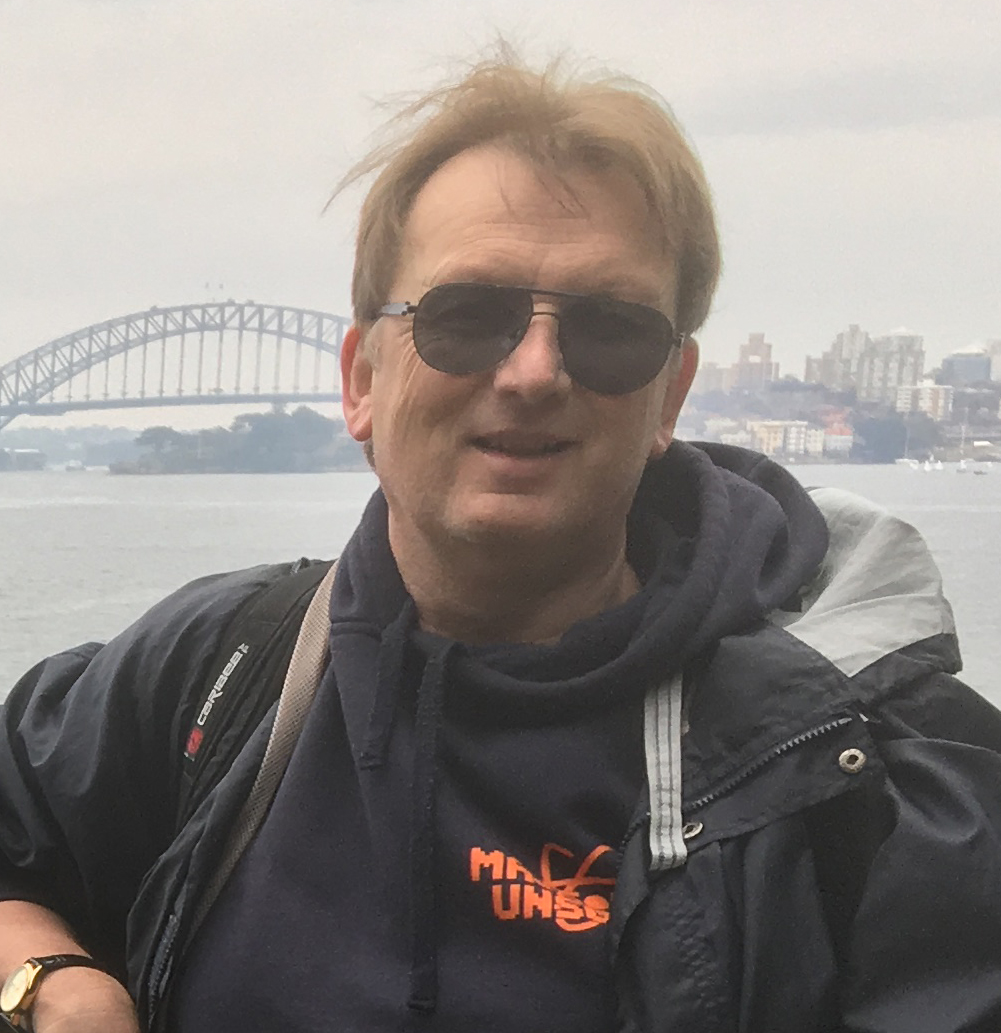
Professor Rian Dippenaar is an Emeritus Professor at the University of Wollongong (UOW), affiliated with the School of Mechanical, Materials, Mechatronic and Biomedical Engineering. His research focuses on materials science and metallurgy, particularly phase transformations, solidification processes, and steel processing. He has extensive experience in collaborative projects with industry partners like POSCO, NUCOR, and Baosteel, addressing challenges in advanced steel grades and continuous casting. Key research areas include microstructure analysis of titanium alloys, peritectic phase transitions, and in-situ characterization techniques using high-temperature microscopy. He has supervised numerous higher-degree research projects, contributing to advancements in materials engineering. His work spans over 180+ publications and 35+ funded grants, emphasizing innovation in materials processing and sustainable manufacturing. Professor Dippenaar's expertise also extends to equipment development, such as high-temperature laser scanning confocal microscopes and in-situ deformation systems. His contributions bridge academic research and industrial applications, driving progress in metallurgical science and engineering.
Sukchun Moon is a Research Fellow at the School of Mechanical, Materials, Mechatronic and Biomedical Engineering , University of Wollongong. He holds a PhD (2015) and Master of Research from the University of Wollongong, and a BSE from Hanyang University . His career includes collaboration with industries like POSCO and NUCOR . Research Focus : Casting and hot-rolling technologies, solidification and peritectic phase transitions, high-temperature materials characterization, and novel experimental technique development (e.g., HT-LSCM, DTA/DSC). Awards : Journal of Alloys and Compounds Best Paper Awards (2024) Best Manuscript Award, Advanced Real Time Imaging Symposium (2020, 2019) Hunt-Kelly Outstanding Paper Award (2017) Richard J. Fruehan Award (2016) Examiners’ Commendation for Outstanding PhD Thesis (2015) Publications : 15 most recent works span topics like peritectic phase transitions , high-temperature characterization , ultrafine-grained materials , semisolid processing of alloys , and thermal energy storage systems , appearing in journals such as Materials and Design , Journal of Alloys and Compounds , and Materials Characterization . Techniques : Expertise in high-temperature laser-scanning confocal microscopy (HT-LSCM) , neutron diffraction , and synchrotron X-ray analysis .
Dr. Shenglu Lu is a Researcher in the School of Engineering at RMIT University, Australia. Their research focuses on advanced materials and additive manufacturing processes, particularly in titanium alloys. They specialize in microstructural analysis, phase transformations, and material properties optimization. Dr. Lu is actively involved in supervising research projects related to novel titanium alloys and additive manufacturing techniques, with a particular interest in biomedical and engineering applications. Research interests include the development of strong and ductile titanium alloys through additive manufacturing, microstructure characterization, and defect mitigation strategies. Their work spans topics such as solidification modeling, grain boundary migration, and material performance under various loading conditions. Dr. Lu has published extensively on additive manufacturing processes, including laser metal deposition, binder jetting, and electron beam melting. Their articles highlight innovations in alloy design, microstructure control, and material properties enhancement. They are open to supervising Master's and PhD students in areas like additive manufacturing of titanium alloys and their mechanical behavior. Based at RMIT's City Campus, Dr. Lu contributes to interdisciplinary teams focused on advancing materials science for industrial and biomedical applications. Their research bridges fundamental materials science with practical manufacturing challenges, aiming to develop high-performance materials through cutting-edge additive techniques.
Dr. Soonho Lee is an Honorary Lecturer at the School of Engineering, University of Newcastle, specializing in sustainable energy technologies. His research focuses on sustainable cokemaking, hydrogen/ammonia production, and advanced carbon materials. He holds a Ph.D. in Chemical Engineering from the University of Newcastle (2019) and a B.Sc. and M.Sc. in Mechanical Engineering from Pusan National University, South Korea. Affiliations: University of Newcastle (Research Associate), International Collaborative Centre for Carbon Futures (ICCFC). Grants: Secured AUD $3.92M for Australia-Korea collaborative research hub, leading roles in over 30 grants from ACARP, ARC, and industry. Dr. Lee's research integrates advanced techniques like synchrotron-based micro-CT and ATR-FTIR to study coking behaviors and biomass/plastic utilization. His work on high-pressure pyrolysis for hydrogen production and 3D carbon foam anodes for Li-ion batteries highlights his interdisciplinary approach. He collaborates internationally, co-establishing the ICCFC with Pusan National University and Korean industry partners. Key research themes include: coking microstructure evolution, catalytic hydrogen combustion, HELE coal power plants, and low-carbon ironmaking . His articles analyze plastic layer permeability, coke quality, and carbon structure dynamics. As a co-supervisor, he guides PhD students on topics like polymer addition in coking and carbon structure mechanisms. His contributions span over 20 journal articles and 7 conference papers, emphasizing energy sustainability and materials innovation.
Professor Paul Richard Munroe is a distinguished academic at the University of New South Wales (UNSW). He currently holds the position of Professor in the School of Materials Science & Engineering and previously served as Deputy Dean - Research (2018–2022), Head of School (2013–2018), and Director of the Electron Microscope Unit (2003–2013). His career spans roles at Monash University and Dartmouth College, reflecting his expertise in advanced materials and microscopy. Education: PhD in Metallurgy and Materials (1987) – University of Birmingham B.Sc (Hons.) in Metallurgy and Materials (1984) – University of Birmingham Grad. Dip. H. Ed (1998) – UNSW Research Interests: Munroe's work focuses on microstructure-property relationships in advanced engineering materials, including functional thin films, intermetallic alloys, thermal spray materials, surface modification, and biochars. He explores applications ranging from wear-resistant coatings to environmental solutions like methane reduction. His studies often integrate experimental techniques with computational modeling to elucidate material behavior at atomic and macroscopic scales. Publications: With over 500 papers and 24,000+ citations, his research trends emphasize high-entropy alloys, nanocomposite coatings, and material sustainability. Recent work highlights innovations in coatings for biomedical and industrial uses, biochar-based environmental mitigation, and semiconductor-catalyst hybrids for energy applications. Awards: UNSW Vice-Chancellor's Award for Teaching Excellence (2003) Carrick Citation (2007) Philips Cowley-Moodie Award for Physical Sciences Electron Microscopy (1996) Advising & Grants: Munroe has supervised 10 HDR students in the past five years, focusing on functional thin films, thermal spray coatings, and biochar research. He has secured over $15M in research funding since 2008, reflecting his leadership in interdisciplinary projects. His grants support innovation in corrosion-resistant coatings, energy materials, and advanced microscopy techniques. Labs & Affiliations: As Director of the Electron Microscope Unit and Technical Director of the Australian Microscopy and Microanalysis Research Facility (2007–2013), he leads cutting-edge microscopy facilities. His collaborations extend to industry, ensuring students gain practical experience in metallurgy, microelectronics, and biomedical fields.
Dr. Victoria Timchenko is a Senior Lecturer in the School of Mechanical and Manufacturing Engineering at UNSW Sydney. Her research focuses on computational fluid dynamics, natural convection, heat transfer, and biomedical engineering applications such as nanoparticle transport for cancer treatment. Her work integrates numerical simulations and experimental studies to address challenges in energy efficiency, renewable energy systems, and medical technologies. Key research interests include solidification/melting processes under varying gravity conditions, microchannel heat sink optimization, and laser hyperthermia using gold nanoshells. She has authored over 131 journal articles, 115 conference papers, and contributed to 6 book chapters. Her interdisciplinary approach bridges mechanical engineering with biomedical and renewable energy applications. No scientific awards or advisee students are explicitly listed. Dr. Timchenko collaborates on projects involving solar chimney integration, vortex generators for photovoltaic cooling, and advanced composite materials. Her research often addresses practical engineering solutions for energy efficiency, thermal management, and sustainable technologies.