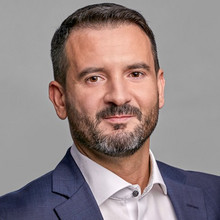
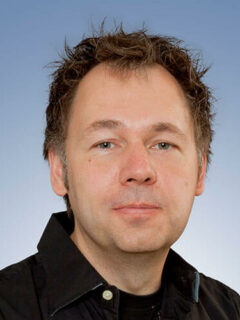
Professor David C. Dunand is a faculty member in the Department of Materials Science and Engineering at Northwestern University , where he leads the Dunand Research Group . His work focuses on mechanical metallurgy of advanced metallic materials, including alloys, composites, and foams, with applications in energy-efficient transportation and biomaterials. He also investigates additive manufacturing techniques like laser powder-bed fusion and 3D ink extrusion. Research Interests: Physical and mechanical metallurgy of multiphase metals Additive manufacturing (ink extrusion, selective laser melting) Green/sustainable metal production In situ X-ray tomography for microstructure analysis Metallic foams and scaffolds Thermoelectric materials Recent Publications show expertise in redox cycling stability, precipitation strengthening, and hierarchical microstructures, with applications in batteries, shape-memory alloys, and high-entropy systems. Awards: TMS Fellow (2012) Structural Materials Division Distinguished Scientist/Engineering Award (2008) Fellow, ASM International (2007) Department Teacher of the Year (1998) He has held leadership roles including Co-Director of the Initiative for Sustainability and Energy at Northwestern (2008-2015) and Visiting Professor at École Polytechnique Fédérale de Lausanne (2000). The group operates a SISMA MYSINT 100 laser powder bed fusion machine and collaborates extensively.
Prof. Dr.-Ing. Johannes Henrich Schleifenbaum is a Professor and Chair of Digital Additive Production at RWTH Aachen University, where he leads research in the Profile area Production Engineering (ProdE). His work advances additive manufacturing (AM) through interdisciplinary approaches combining materials science, process engineering, and digital technologies. His research encompasses: Laser powder bed fusion (LPBF) process optimization and defect mitigation Development of novel alloys/composites for AM applications Sustainable manufacturing practices including material recycling Integration of AI/ML for accelerated material and process design Digital tools for automated design and distributed manufacturing Recent publications (2023-2025) demonstrate a strong focus on: Multi-material processing and microstructure control Machine learning-driven alloy development Standardization and scalability of AM processes Advanced simulations for meltpool dynamics and thermal behavior Applications in aerospace, construction, and biochemical engineering He leads the Chair of Digital Additive Production, collaborating with industry partners to translate research into industrial solutions for next-generation manufacturing.
Benjamin Klusemann is Professor of Materials Mechanics at the Institute for Production Engineering and Systems, Leuphana University of Lüneburg. He holds leadership positions including Chairman of the School of Management and Technology (2024), Chairman of the Masterprogramme, and Chairman of the Graduate School (since 2017), demonstrating his significant academic standing and administrative responsibilities within the university. His research spans multiple engineering disciplines with a strong focus on mechanics, process simulation, and material modeling. Professor Klusemann specializes in continuum mechanics and the finite element method, applying computational approaches to solve complex problems in materials science and manufacturing engineering. His work bridges theoretical modeling with practical applications in advanced manufacturing processes, particularly in friction-based joining techniques and material behavior analysis. Professor Klusemann's extensive publication record (224 publications) reveals a consistent research trajectory focused on advanced manufacturing techniques, particularly friction-based joining processes, material modeling, and simulation. His recent work emphasizes laser shock peening applications, intermetallic compound evolution in solid-state joining, and the mechanical behavior of nanocrystalline materials. His research demonstrates a strong interdisciplinary approach combining materials science, mechanical engineering, and computational modeling to address industrial challenges in lightweight materials processing. His notable scientific achievements include: Professor O.C.Zienkiewicz Award NUMIFORM 2023 Auszeichnung für herausragende Leistungen in der Forschung (Recognition for outstanding research achievements) ESAFORM Scientific Prize Professor Klusemann actively contributes to academic governance and the international research community. He has organized and participated in numerous conferences including ESAFORM, GAMM meetings, and specialized workshops on computational mechanics. His leadership extends to research projects focused on aluminum processing, material flow analysis, and data-driven design of recycled materials, demonstrating his commitment to both fundamental research and practical applications in manufacturing technology.
Prof. Dr. Maik Schmeling is a Professor of Finance at the Department of Finance, Goethe University Frankfurt, and a Research Fellow at the Centre for Economic Policy Research (CEPR) in London. His research focuses on empirical asset pricing, machine learning applications in finance, international finance, FX markets, monetary policy impacts on financial markets, and textual analysis in finance. He supervises BSc and MSc theses through a centralized allocation process, emphasizing empirical analysis and collaboration with institutions like the SAFE Data Room. Research Areas: Empirical Asset Pricing, Machine Learning in Asset Pricing, International Finance and FX, Monetary Policy and Financial Markets, Analysis of Option-Implied Information, Banks and Global Dollar Funding, Non-bank Financial Intermediation, Textual Analysis in Finance, Money Markets. His recent publications span geophysics topics like melt migration, mantle convection, and subduction zone dynamics, though these appear unrelated to his current finance role. All articles are classified under geophysics and geodynamics keywords. No scientific awards or student names are mentioned in the provided texts.
Prof. Wolfgang Rheinheimer is a Professor and Institute Director at the Institute for Ceramic Materials and Technologies , University of Stuttgart, since 2023. Previously, he held academic positions at RWTH Aachen (2022-2023), Forschungszentrum Jülich (Emmy Noether Group Leader, 2020-2022), TU Darmstadt (2020), and Karlsruhe Institute of Technology (2010-2017). Academic Rank: Full Professor Research Focus: Advanced sintering technologies, grain boundary engineering, defect chemistry, conductivity in ceramics, and microstructure evolution His research spans experimental and computational approaches to ceramic materials, with emphasis on field-assisted processing (electric/magnetic), grain boundary properties , and solid-state electrolytes . He has pioneered studies on flash sintering , cold sintering , and blacklight sintering mechanisms. Scientific Awards : Emmy Noether Fellowship (2020-2022) for establishing his independent research group His work integrates phase-field modeling with experimental characterization to optimize ceramic properties for energy applications (solid-state batteries, fuel cells) and structural uses. Collaborations include Robert Bosch GmbH and Purdue University (2018-2019 Visiting Professorship).
Sebastian Thiery serves as a Professor in Manufacturing Engineering at Leuphana University of Lüneburg, specifically holding a Ph.D. Professorship for Manufacturing – Innovative Manufacturing. His research focuses on advanced manufacturing processes with particular emphasis on sheet metal forming technologies. Thiery's primary research interests include Incremental Sheet Forming with Active Medium (IFAM) , Deep Drawing Processes , Process Control and Optimization , and the application of Artificial Neural Networks in manufacturing systems. His work bridges theoretical modeling with practical industrial applications, particularly in metal forming operations where geometrical accuracy and process robustness are critical concerns. Analysis of his publication record reveals a clear research trajectory focused on improving manufacturing processes through innovative control strategies. His recent work emphasizes the integration of machine learning techniques with traditional manufacturing processes, particularly using neural networks for friction compensation and draw-in prediction. The publications demonstrate increasing sophistication in process control methodologies, moving from basic IFAM process development to sophisticated closed-loop control systems that incorporate real-time monitoring and adaptive adjustments. Thiery actively collaborates with researchers including Mazhar Zein El Abdine, Jens Heger, and Noomane Ben Khalifa, suggesting participation in a dedicated research group or laboratory focused on advanced manufacturing processes. His work appears to be supported by research grants, including funding from the German Research Foundation (DFG) as indicated in one of his publications.
Prof. Eli Jerby is a faculty member at the School of Electrical Engineering , Tel Aviv University. His research focuses on microwave-matter interactions , particularly localized microwave heating (LMH) for industrial applications, fireball and plasmoid generation, and microwave-based technologies in additive manufacturing. University: Tel Aviv University School: School of Electrical Engineering Jerby’s research interests span: Microwave Drilling: Silent, dust-free drilling in concrete, ceramics, and bones. Fireball Dynamics: Laboratory-scale simulation of ball lightning. Additive Manufacturing: Microwave-assisted 3D printing of metal powders. Plasma Generation: Ejection of plasmoids from molten materials. His publications highlight trends in microwave heating for material processing, including concrete cutting, basalt melting, and thermite ignition. Articles emphasize LMH mechanisms, thermal instabilities, and nanoparticle formation. Key subfields include microwave safety , dielectric absorption , and solid-state applicators . Jerby’s scientific work has been featured globally, including in Science , Nature Physics , and Physical Review Letters . He holds patents for microwave drills and heating systems, with applications in construction and materials science. He mentors research students like Yoav Shoshani and collaborates on projects involving microwave-driven plasmas and thermite ignition . His lab explores microwave-DC synergy and the bubble-marble effect for underwater applications.
Prof. Wangzhong Mu is a Senior Lecturer (Docent) in the Department of Materials Science and Engineering at KTH Royal Institute of Technology, Stockholm. His research focuses on sustainable metallurgy, microstructure physics, and alloy design. He leads the thermo-physical property analysis section in the Hultgren Lab and is affiliated with Digital Futures at KTH. Educations: PhD in Materials Science, KTH Royal Institute of Technology (2015) MSc/Bachelor's in Materials Science, Northeastern University, China Research Interests: Inclusion engineering and microstructure-property correlations in steels High-entropy alloy design using digital tools (AI/thermodynamic modeling) In-situ characterization via confocal microscopy and multiscale analysis Recycling-oriented steel production and CO2 reduction strategies Grants/Projects (selected): SSF Strategic Mobility Grant (2023-2024): Clean steel for sustainable future VINNOVA Mobility Grant (2022-2024): Hydrogen-based metallurgy STINT Project (2022-2023): Inclusion engineering for green steel EIT RawMaterials (ENDUREIT, 2019-2021): Durable steels at intermediate temperatures Labs/Teams: Hultgren Lab (materials characterization), Digital Futures (AI-driven metallurgy), and international collaborations with Hanyang University (South Korea), IIT Bombay (India), and Tohoku University (Japan).
Stefanie Elgeti is Associate Professor and Private Lecturer at the Chair for Computational Analysis of Technical Systems (CATS), Faculty of Mechanical Engineering, RWTH Aachen University. She previously held a professorship in lightweight design at TU Vienna starting in 2019. Her research integrates computational mechanics with manufacturing process optimization, focusing on plastics extrusion, injection molding, and high-pressure die casting. Diploma in Mechanical Engineering, majoring in 'Manufacturing Techniques for Microsystems' PhD (2011): 'Free-Surface Flows in Shape Optimization of Extrusion Dies' Habilitation (2016): 'CAD-Conforming Finite Element Methods in Engineering Design' Her research centers on solving inverse problems in manufacturing through numerical simulation. She employs advanced techniques such as free-surface flow modeling, non-Newtonian material models, spline-based finite elements, and PDE-constrained shape optimization. Her group simulates entire process chains from filling to solidification and warpage prediction, enabling design optimization of cavities and cooling systems. The recent publications (2022–2024) reveal a strong trend toward integrating artificial intelligence—particularly physics-informed neural networks and Bayesian optimization—into traditional simulation workflows. There is increasing emphasis on warpage compensation, shape optimization of extrusion dies, and modeling of biomedical and environmental systems, showcasing a broadening scope from industrial manufacturing to interdisciplinary applications. She is actively involved in academic service, having served as vice-spokesperson of GAMM-Juniors (2013–2014) and currently co-chairing the ECCOMAS Young Investigator Group. While no formal awards are listed, her leadership roles and editorial contributions reflect significant recognition in the computational mechanics community. Prof. Elgeti advises students and leads multiple research initiatives at CATS, including work groups focused on production engineering, fluid-structure interaction, and INTERESST. Her team develops model hierarchies and digital twins for industrial processes, aiming to bridge simulation and real-world manufacturing through intelligent, adaptive systems.
Prof. Rüdiger Deike is the Chair holder of the Chair of Metallurgy and Forming Technology at the University of Duisburg-Essen. His research focuses on metallurgical processes, raw material markets, recycling technologies, and sustainability in the foundry and steel industries. He leads the Institute for Metal Technologies (ITM), emphasizing innovation in material flow analysis, energy efficiency, and circular economy applications. Key research areas include analyzing global raw material market dynamics, optimizing waste-to-resource systems for foundries, and advancing metallurgical processes for non-ferrous and ferrous alloys. His work integrates numerical modeling of solidification behaviors and process optimization for industrial applications. Publications highlight trends in commodity markets, recycling strategies for valuable materials, and material recovery from industrial byproducts. His interdisciplinary approach bridges technical challenges with economic and environmental sustainability, influencing policy and industry practices. Laboratory and team activities center around the ITM, where research spans experimental and computational methods to address global metallurgical challenges. No specific grants or awards are listed, but his contributions are evident through extensive publication output and institutional leadership.
Barbara Kirchner is a Professor of Theoretical Chemistry at the University of Bonn. Her research focuses on the structural and dynamic properties of ionic liquids, employing advanced computational techniques such as ab initio molecular dynamics and cluster analysis. She explores applications in energy storage, electrochemistry, and environmental science, including drug interactions with nanoplastics and solvation phenomena in novel solvents. Her work also addresses methodological challenges in simulations and data reliability, contributing to tools like TRAVIS and CONAN for analyzing molecular trajectories in confined spaces. Her research interests span the theoretical and computational study of ionic liquids, with emphasis on their behavior in confined environments, interfacial effects, and interactions with other molecules. She investigates topics like proton transfer mechanisms (Grotthuss diffusion), catalytic processes, and the environmental implications of nanoplastics. Methodological contributions include refining cluster weighting algorithms and quantum equilibrium theories to predict thermodynamic and spectroscopic properties accurately. Barbara Kirchner has not explicitly mentioned scientific awards in the provided texts. Her recent articles highlight trends in understanding ionic liquid electrolytes, drug-nanoplastic interactions, and the development of simulation tools. She collaborates on interdisciplinary projects, such as solvent design for organic reactions and the study of magnesium battery systems, reflecting her commitment to bridging theory and practical applications in chemistry and materials science.
Prof. Dr.-Ing. Noomane Ben Khalifa is a Professor of Manufacturing – Innovative Manufacturing and Head of the Institute for Production Technology and Systems (IPTS) at Leuphana University. He concurrently leads the Institute for Material and Process Design at Helmholtz Center Hereon. His work focuses on sustainable manufacturing processes, particularly extrusion, sheet metal forming, and additive manufacturing, emphasizing eco-friendly production across material value chains. Education: Awarded a Doctorate in Engineering from TU Dortmund University (2012) with distinction for research on helical profile extrusion. Holds a Mechanical Engineering degree from TU Dortmund (2005), specializing in production engineering and forming technology. Research Interests: Sustainable manufacturing processes; material recycling (e.g., aluminum chips); lightweight material development; composite extrusion; die design optimization; and process simulation. His work bridges advanced manufacturing with environmental impact reduction, leveraging AI and machine learning for material-property modeling. Key Article Trends: Recent studies emphasize machine learning applications in materials science, die design for magnesium alloys, and sustainable recycling processes. His work spans from fundamental material behavior analysis to industrial process optimization. 2025: Focus on AI-driven texture-property modeling in Mg alloys and dieless wire drawing improvements 2024: LCA of aluminum recycling and deep-drawing process reliability Awards: 2009 ISPF Award for extrusion research; 2014 ZukunftErfindenNRW for innovative extrusion press design; invited keynote speaker at ICIT & MPT 2014. Advising & Grants: Oversees OPTUM-MAGNA (magnesium nanocomposites), FERNAPRO (sustainable manufacturing tech), and projects like TrICo (innovation cooperation). Collaborates with industry on tool design and eco-processes. Labs & Teams: Leads IPTS and co-leads Helmholtz material design institute. Supervises interdisciplinary teams focusing on compound casting, incremental forming, and smart manufacturing systems.
Professor Michael Schmidt serves as the head of the Institute of Photonic Technologies (LPT) within the Department of Mechanical Engineering at Friedrich-Alexander-Universität Erlangen-Nürnberg (FAU). His research focuses on advanced laser-based manufacturing technologies with particular emphasis on additive manufacturing processes and laser materials processing. The institute maintains state-of-the-art facilities for laser processing research and collaborates extensively with industrial partners in the automotive, medical device, and manufacturing sectors. Professor Schmidt's research interests span laser-based additive manufacturing of metals and polymers, with particular expertise in powder bed fusion (PBF-LB/M), directed energy deposition (DED-LB/M), laser beam shaping, and laser welding technologies. His work addresses fundamental challenges in process optimization, material-property relationships, and quality assurance in additive manufacturing. Recent research has focused on improving process stability for challenging materials like copper, developing novel beam shaping techniques, and advancing in-situ monitoring capabilities for industrial applications. His group maintains strong expertise in both experimental and computational approaches to laser materials processing. Analysis of Professor Schmidt's recent publications reveals a strong focus on advancing the scientific understanding of laser powder bed fusion processes, particularly regarding melt pool dynamics, scan strategy optimization, and material-property relationships. His work spans both metallic and polymer materials systems, with significant contributions to understanding the effects of laser wavelength, beam shaping, and process parameters on final part quality. The research demonstrates strong interdisciplinary connections between mechanical engineering, materials science, and photonics. Professor Schmidt leads a substantial research group comprising numerous doctoral students and postdoctoral researchers who contribute to his extensive publication record. His team collaborates with multiple industrial partners on applied research projects focused on implementing advanced laser processing technologies in industrial manufacturing environments. The research group benefits from state-of-the-art laser processing equipment and characterization facilities at FAU. The Institute of Photonic Technologies under Professor Schmidt's leadership maintains specialized laboratories for laser materials processing, including facilities for metal and polymer additive manufacturing, laser welding, and advanced optical diagnostics. The institute houses multiple laser systems with varying wavelengths and power capabilities, enabling comprehensive research across different material systems and process conditions. The research environment emphasizes both fundamental scientific investigation and practical industrial implementation of laser processing technologies.
Dr. Liuliu Han is a Researcher and Project Group Leader at the Max Planck Institute for Sustainable Materials, leading the Department of Microstructure Physics and Alloy Design. His work focuses on designing multifunctional high-entropy materials, advancing sustainable material design through artificial intelligence, and studying microstructure-mechanical property relationships in advanced alloys. He spearheads the 'De magnete - Designing Magnetism on the atomic scale' initiative, exploring novel magnetic materials with exceptional mechanical performance. His research integrates experimental techniques like atom probe tomography with computational methods for predictive material design. Key research areas include high-entropy alloy development, magnetism optimization, and thermodynamics-guided alloy discovery. Dr. Han’s team employs machine learning to enhance material sustainability, optimize microstructural features, and balance mechanical properties such as strength and ductility. His group also investigates nanostructured magnets, Widmanstätten precipitates, and thermal stability in high-performance materials. Dr. Han’s address is at the Max Planck Institute for Sustainable Materials in Düsseldorf, Germany. He actively publishes in top-tier journals and collaborates internationally. Contact details include liuliu.han@... and professional links to Google Scholar and LinkedIn.
Dr. Haipeng Li is a Research Fellow at the Institute of Materials Science , Faculty of Engineering , Christian-Albrechts-Universität zu Kiel . He holds a PhD from the University of Bremen (2021) and completed postdoctoral work at the Karolinska Institutet (2020–2024) before joining Kiel University. His research focuses on applying Surface-Enhanced Raman Scattering (SERS) biosensors for food safety diagnostics , aiming to prevent foodborne illnesses through rapid pathogen detection. His expertise spans nanomaterial synthesis , plasmonic sensor technology , and optical diagnostics . Recent work emphasizes commercializing SERS biosensors via aerosol self-assembly techniques and flame-based nanoparticle fabrication. His projects integrate food safety , healthcare technology , and advanced materials engineering . Scientific awards include the KiTE Fellowship at Kiel University, supporting his postdoctoral research. His publications highlight innovations in nanoparticle synthesis , combustion dynamics , and light-based diagnostic tools , with applications in energy storage and environmental monitoring .