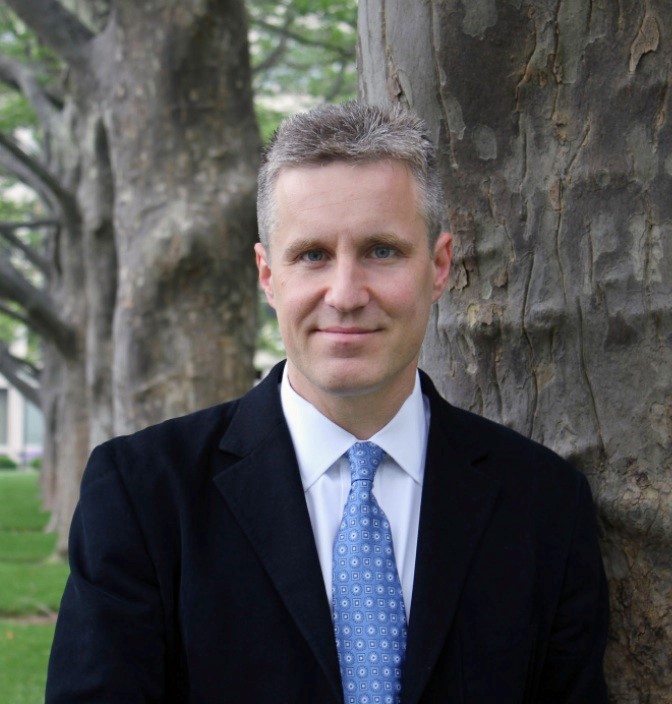
Martin Z. Bazant is the E. G. Roos (1944) Professor of Chemical Engineering and Professor of Mathematics at the Massachusetts Institute of Technology (MIT), holding the Digital Learning Officer role in the Department of Chemical Engineering. His research focuses on mathematical modeling of electrochemical systems, transport phenomena, and applied mathematics, with significant contributions to battery technology and electrochemical energy storage. He is affiliated with MIT’s Department of Mathematics and the MIT Energy Initiative (MITEI), leading initiatives like the Center for Battery Sustainability and D3BATT. Education: Ph.D. from Harvard University (1997), M.S. and B.S. from the University of Arizona (1993, 1992). His work bridges theory and application, addressing challenges in lithium-ion batteries, solid-state systems, and electrolyte dynamics. Notable achievements include pioneering studies on coupled ion-electron transfer mechanisms and phase separation in battery materials. He is an elected member of the National Academy of Engineering (2025) and a Fellow of the Electrochemical Society (2023). As an educator, he develops MOOCs on transport phenomena and contributes to digital learning initiatives. His research group explores advanced battery diagnostics, machine learning for materials science, and environmental applications of electrochemical processes. Key collaborations include startups like Lithios, Inc., and leadership roles in professional societies such as the International Electrokinetics Society.
Jun Liu is a distinguished scientist and academic, serving as a Battelle Fellow at Pacific Northwest National Laboratory (PNNL) and holding the position of Campbell Chair Professor at the University of Washington. His career spans over three decades in materials science and energy storage research, with significant leadership roles including Director of the Battery500 Consortium, a major DOE initiative focused on developing next-generation battery technologies. Dr. Liu earned his Bachelor's degree in Chemical Engineering from Hunan University, followed by a Master's degree in Ceramic Engineering and a Ph.D. in Materials Science and Engineering, both from the University of Washington. His educational background provided the foundation for his extensive career in advanced materials development. Dr. Liu's research focuses on the development, synthesis, and characterization of new materials for energy applications, with particular emphasis on battery technologies. His work spans lithium-ion batteries, lithium-sulfur systems, redox flow batteries, and magnesium-based energy storage solutions. He has pioneered approaches to improve energy density, cycle life, and safety of battery systems through innovative materials design and interface engineering. Analysis of Dr. Liu's recent publications reveals a strong focus on practical battery applications, with particular attention to lithium metal anodes, solid electrolyte interphases, and high-energy battery systems. His research increasingly addresses the challenges of translating laboratory discoveries into commercially viable battery technologies, with growing emphasis on pouch cell development and real-world performance metrics. Distinguished Inventor of Battelle (2007) PNNL's Inventor of the Year (2012, 2016) Electrochemical Society Battery Division Technology Award DOE EERE Exceptional Achievement Award PNNL Lifetime Achievement Award Fellow of the American Association for the Advancement of Science Fellow of the Materials Research Society Member of the Washington State Academy of Science Dr. Liu has secured substantial research funding through his leadership of the Battery500 Consortium and other DOE initiatives. He has mentored numerous researchers and students throughout his career, contributing to the development of the next generation of energy storage scientists. His research group at PNNL collaborates extensively with academic institutions, national laboratories, and industry partners to advance battery technology. Dr. Liu leads the Battery500 Consortium, a major collaborative effort involving multiple national laboratories, universities, and industry partners focused on developing lithium-metal batteries with significantly higher energy density than current technologies. His research group at PNNL maintains state-of-the-art facilities for materials synthesis, characterization, and battery testing, enabling comprehensive investigation of next-generation energy storage systems.
Lars Eriksson is a researcher at the Department of Chemistry, Stockholm University, affiliated with the Faculty of Science. He is part of Gunnar Svensson's group, which focuses on solid-state inorganic chemistry, including the synthesis of energy-related compounds and their crystal structure analysis. Research interests span inorganic chemistry, solid-state chemistry, crystallography, energy applications, organic synthesis, catalysis, and chemical education. His work bridges experimental and computational approaches, with recent publications exploring molecular design for energy storage, asymmetric synthesis, triplet-to-singlet energy transfer, and pedagogical strategies in chemistry education. Trends in his research highlight applications in materials science, environmental chemistry, and educational methodologies. While no formal scientific awards are mentioned in the provided texts, his contributions include collaborative studies on catalysis, molecular structure, and student learning processes. He has no listed grants or students, but his publications emphasize tutor-student interactions and practical epistemology analysis. The research group he belongs to investigates fundamental properties of synthesized compounds, often with energy-related applications, and maintains strong ties to the broader chemistry community through peer-reviewed publications and educational studies.
Alfredo Pasquarello is a Full Professor at the Chair of Atomic Scale Simulation within the Condensed Matter Theory Laboratory (CSEA) at the Ecole Polytechnique Fédérale de Lausanne (EPFL) . He teaches courses such as Computer Simulation of Physical Systems I and General Physics: Quanta . Education: Physics at Scuola Normale Superiore of Pisa (1986), University of Pisa (1986), PhD at EPFL (1991). Research: Focuses on atomic-scale simulations using density functional theory (DFT) and many-body perturbation to study defects in oxides , oxide-semiconductor interfaces , and energy materials like perovskites and photocatalysts. Recent Publications: 15 most recent articles (2022–2024) address band gaps, polarons, water splitting, and defect engineering in materials for photovoltaics and electrochemistry. Awards: Recipient of the EPFL Latsis Prize (1998) . Students: Supervised PhD/Master's students including Stefano Falletta, Thomas Bischoff, Patrick Gono, and Zhendong Guo. Labs: Leads the Chair of Atomic Scale Simulation at EPFL SB IPHYS CSEA.
Professor Kenneth Ruud is a leading expert in theoretical and computational chemistry at UiT The Arctic University of Norway. He serves as Director General of the Norwegian Defence Research Establishment and leads the Hylleraas Centre for Quantum Molecular Sciences. His research focuses on relativistic quantum chemistry, developing advanced ab initio methods for molecular property calculations, and integrating QM/MM and continuum solvent models. Education: PhD from University of Oslo (1998, supervised by Trygve Helgaker) Postdoc: University of San Diego with Peter Taylor (1998-2000) His work spans relativistic effects in molecular properties, vibronic coupling, and X-ray spectroscopy. He contributes to software development through programs like Dalton, Dirac, ReSpect, and OpenRSP. Recent publications highlight applications in spin-vibronic dynamics, heavy metal L/M-edge XAS, and topological materials. Key scientific contributions include relativistic DFT for nuclear spin-rotation constants, polarizable embedding models for vibrational spectra, and quantum dynamics frameworks. Awards recognize his impact through the Dirac Medal (2008) and multiple academy memberships. Elected to Norwegian Academy of Science and Letters Fellow of American Association for the Advancement of Science (AAAS) Foreign member of Finnish Academy of Science and Letters He actively participates in open science initiatives and serves on boards including Norges Forskningsråd and CAROS center for subsea robotics. Current projects involve quantum molecular science in extreme environments and computational protocol development.
Ulrich Tallarek serves as Professor of Analytical Chemistry in the Faculty of Chemistry at Philipps University of Marburg, where he has held a W3 professorship since 2011. He also serves on the Board of Directors for the Materials Science Center at the university, a position he has held since 2007. His research group focuses on the fundamental understanding of transport phenomena in porous media with applications spanning chromatography, battery technology, and microfluidic systems. The group maintains strong collaborations with institutions worldwide and secures substantial research funding for advanced computational and experimental work. Professor Tallarek's research interests center on functional porous solids, with specific focus on morphology-transport-performance relationships. His work bridges multiple scales from molecular dynamics simulations of solute behavior in nanopores to macroscopic transport in chromatographic columns and battery electrodes. Key research areas include diffusion in hierarchical porous media, electrokinetic phenomena in microfluidic systems, molecular simulation of chromatographic processes, and advanced characterization of porous materials using tomography and other techniques. His group has pioneered multiscale simulation approaches that connect molecular-level surface chemistry to macroscopic transport properties. The research output demonstrates consistent focus on understanding fundamental transport mechanisms in porous systems, with recent publications emphasizing multiscale simulation techniques, molecular dynamics studies of solvent effects in chromatography, advanced characterization of mesoporous structures, and applications to separation science and energy storage. The work shows strong integration of computational modeling with experimental validation across multiple length scales. 2003: Desty Memorial Prize for Innovation in Separation Science, The Royal Institution of Great Britain, London 2006: Young Scientist Award from DECHEMA e.V. 2011: Named Discussion Leader at the 2011 Gordon Research Conference on Physics & Chemistry of Microfluidics 2011–2012: Chairman of the German Chemical Society (GDCh), Marburg 2013: Finalist, World Technology Awards, for category Environment 2013: Named as one of the 100 most influential analytical scientists in the world (The Analytical Scientist Power List) 2017: Recipient of the Silver Jubilee Medal 2017, The Chromatographic Society, UK Professor Tallarek's research has been supported by numerous grants enabling high-performance computing resources, advanced instrumentation, and international collaborations. His group maintains strong ties with industry partners in separation science and analytical instrumentation. The Tallarek Research Group includes postdoctoral researchers, PhD students, and technical staff working across experimental and computational domains. Current projects focus on molecular simulation of chromatographic processes, advanced characterization of porous battery electrodes, and development of novel separation methodologies. The Tallarek Research Group operates state-of-the-art facilities for computational modeling, including access to high-performance computing resources at Forschungszentrum Jülich. The group also maintains experimental capabilities for chromatographic analysis, materials characterization, and microfluidic device development. Their work on physically reconstructed porous media has established new standards for connecting microstructure to transport properties in complex materials systems.
Christopher J. Stein is an Associate Professor of Theoretical Chemistry at the Technical University of Munich (TUM), part of the TUM School of Natural Sciences. His research focuses on theoretical (electro-)catalysis, developing electronic-structure models and solvation/embedding methods to understand and optimize catalytic processes. He leads the Stein Group, which integrates computational chemistry with high-throughput simulations to advance energy materials and battery technologies. His work emphasizes realistic modeling of catalyst behavior under operational conditions and has contributed to advancements in quantum embedding and automated reaction mechanism exploration. Education and Career: Earned his PhD in Theoretical Chemistry, with postdoctoral research at Caltech (2017-2020). Became an Associate Professor at TU Munich in 2023. He previously held roles at Karlsruhe Institute of Technology and contributed to projects like the BIG-MAP Materials Acceleration Platform. Research Interests: Theoretical chemistry, electrochemical interfaces, battery materials, high-throughput computational methods, and machine learning integration. His group explores topics like solid electrolyte interphases, charge transfer mechanisms, and automated workflows for materials discovery. Awards: While no explicit awards are listed, his contributions to materials acceleration platforms and theoretical catalysis have been widely recognized in the field. His work has been featured in journals like Journal of Chemical Physics , Chemical Science , and Angewandte Chemie . Labs/Teams: Leads the Stein Group at TUM, collaborating with institutions like the Munich Data Science Institute and MIRMI. His lab focuses on computational tools for accelerating energy material development, including quantum embedding and cloud-based simulations.
Prof. Dr. Stefan Huber is a Full Professor (W3) at the Faculty of Chemistry and Biochemistry , Ruhr-Universität Bochum , Germany. His research focuses on non-covalent interactions in organocatalysis , particularly halogen bonding , chalcogen bonding , and cyclopropenium derivatives for applications in molecular recognition , crystal engineering , and radical stabilization . Full Professor since 01/2022 Associate Professor (W2) 2014-2021 Independent Researcher at TU Munich 2009-2013 Research Interests include: Design of halogen/chalcogen bond donors for catalysis Supramolecular chemistry in solution and solid phases Quantum chemical modeling of transition states and binding strengths His work bridges experimental synthesis (NMR, X-ray, ITC) with computational methods , supported by the ERC Starting Grant (2015-2020) and collaborations within the RESOLV Cluster . Scientific Awards : Hoechst Dozentenpreis (2016) Robert-Sauer-Preis (2014) Hans-Fischer-Gedächtnispreis (2013) Ernst-Otto-Fischer-Lehrpreis (2012) Thieme Chemistry Journals Award (2010) Students : Over 20 Ph.D. and Master’s students, including Dominik Reinhard, Tim Steinke, Raffaella Papagna, and Julian Stoesser. The group maintains modern synthesis labs and collaborates with institutions like the University of Geneva and TU Munich .
Li Yiju is an Assistant Professor and doctoral supervisor in the Department of Mechanical and Energy Engineering at the Southern University of Science and Technology (SUSTech) . He earned his Ph.D. in Materials Science and Engineering from Harbin Engineering University in 2018 and was a joint Ph.D. student at the University of Maryland, College Park from 2015 to 2017. He conducted postdoctoral research at Peking University (2018-2021) and Hong Kong University of Science and Technology (2021-2022). Education: Ph.D. in Materials Science and Engineering, Harbin Engineering University (2013-2018) Joint Ph.D. student, University of Maryland, College Park (2015-2017) B.S. in Applied Chemistry (Energy Electrochemistry), Harbin Engineering University (2009-2013) Research Interests: Dr. Li's research lies at the intersection of energy storage , materials science , and micro/nano-manufacturing . His work focuses on high-energy-density lithium metal batteries , solid-state batteries , and advanced electrolyte design . He also pioneers interfacial photothermal steam conversion and leverages cutting-edge techniques like 3D printing , electrospinning , and Joule heat pulse for energy applications. Scientific Impact: With over 100 publications in journals like Nature Energy , Joule , Advanced Materials , and PNAS , his work has garnered 17,000+ citations and an H-index of 60 . His research has been highlighted by Nature and international media like ScienceDaily and VOA News . Awards & Recognition: Clarivate Global Highly Cited Researcher (2020-2022) Stanford University’s Top 2% Scientists (2022) National Postdoctoral Program for Innovative Talent (2018) Peking University Boya Postdoctoral Fellowship (2018) Editorial & Leadership Roles: He serves as an editorial board member for journals like Journal of Energy Chemistry and The Innovation and as a reviewer for Nature Communications , Advanced Materials , and others. Grants & Projects: National Natural Science Foundation of China China Postdoctoral Innovative Talent Support Program Beijing Natural Science Foundation Analog Devices Project
Stephen Bradforth is a Professor of Chemistry at the University of Southern California and Senior Advisor to the Dean for Research Strategy and Development in the Dornsife College of Letters, Arts and Sciences . He earned his PhD in Physical Chemistry from the University of California, Berkeley (1992) and conducted postdoctoral research at the University of Chicago . B.A., Natural Sciences, Cambridge University (1987) Ph.D., Physical Chemistry, UC Berkeley (1992) Postdoctoral Associate, University of Chicago (1993–1996) His research focuses on ultrafast laser spectroscopy to study chemical reactions in complex environments like aqueous systems and molecular materials . Key projects include: Solar Energy Conversion : Investigating photosensitizers based on earth-abundant elements (Cu, Zn, Zr) and organic photovoltaics with BODIPY cores. DNA Photodamage : Mechanisms of cyclobutane pyrimidine dimer (CPD) formation under UV exposure, emphasizing base-stacking effects. Electronic Structure in Ethereal Solvents : Studying solvated electrons in liquid ammonia and their role in carbanion stabilization. His 15 most recent articles (2004–2024) highlight advancements in photoelectron spectroscopy , singlet fission for solar cells, and DNA damage pathways . Collaborations span medicine, physics, and engineering . Scientific Awards include the ACS Physical Chemistry Division Senior Experimental Award (2023) , STAR Awardee (2019) , Cottrell Scholar , and Fellow of APS and AAAS . He has received both Junior (2001) and Senior Raubenheimer Awards (2022) at USC. Advising has been a cornerstone, with 23 PhD students graduated and 4 current candidates. His 15 most recent publications (2012–2024) emphasize ultrafast dynamics , charge transfer mechanisms , and environmental photochemistry . Labs & Teams : The Bradforth Group operates advanced time-resolved photoelectron spectrometers , liquid microjet systems , and high-repetition-rate laser facilities . Current projects include metallic water solutions (Nature 2021), DNA photophysics (FASEB J 2011), and carbanion electronic structure in ammonia.
Dr. Axel Lubk is a Group Leader at the Institute for Solid State Research (IFW Dresden) , specializing in advanced electron microscopy techniques for materials science. His research spans four key areas: (1) TEM method development (high-resolution imaging, tomography, holography, and in-situ techniques), (2) charge particle optics and scattering theory , (3) magnetic nanotextures (domain walls, skyrmions), and (4) plasmonics (mode hybridization in heterogeneous structures and semiconductor heterostructures). Dr. Lubk’s work focuses on three-dimensional magnetic texture analysis using electron holography and tomography, particularly in systems like skyrmion tubes , FeGe , and Cr2O3 thin films . He has pioneered techniques for vector-field electron tomography and phase retrieval under varying boundary conditions, advancing nanoscale magnetic imaging. His recent studies include plasmonic properties in AgAu nanosphere chains , thermoelectric multilayer systems , and topological insulators like NiRh2Sb and TaTMTe4 . Dr. Lubk has published extensively in high-impact journals such as Nature Communications and Advanced Materials , with a focus on TEM instrumentation and quantitative analysis . He frequently presents at international conferences like the International Microscopy Congress and European School of Magnetism , emphasizing applications in spintronics , quantum materials , and nanostructured systems . His contributions to holographic vector-field electron tomography and machine learning for spectrum-image data have set new standards in electron microscopy.
Chibueze Amanchukwu is the Neubauer Family Assistant Professor in the Pritzker School of Molecular Engineering at the University of Chicago, with a joint appointment at Argonne National Laboratory. His research focuses on energy storage systems, particularly batteries and electrochemical processes, leveraging electrolyte design, data science, and advanced characterization. He holds a PhD from MIT (NDSEG Fellow) and was a postdoctoral scholar at Stanford University under the TomKat Center. His work addresses challenges in long-duration energy storage, including ion solvation control for efficient electrochemical reactions. Education: PhD in Chemical Engineering (MIT), Postdoctoral Fellow (Stanford). Research interests span electrolyte engineering, sustainable energy, and CO₂ electrocatalysis. Awards include NSF CAREER, DOE Early Career, and MIT Technology Review Innovator Under 35. Key grants include the DOE Early Career Award and NSF CAREER funding. The Amanchukwu Lab actively recruits graduate students and postdocs, emphasizing experimental and computational approaches. Outreach programs like RENEU support Nigerian undergraduates in STEM PhD preparation. Lab Focus: Electrolyte design for batteries, CO₂ conversion, and solid-state systems Awards: 10+ honors including global recognitions and industry fellowships Collaborations: Argonne National Lab, CIFAR, and international academic partnerships
Dr. Hao Lou is an Assistant Professor in the Department of Pharmaceutical Chemistry at the University of Kansas School of Pharmacy. His research integrates computational modeling and experimental approaches to advance drug formulation design, with emphasis on subcutaneous delivery systems for biologics and oral formulations. Research focuses on: Computational pharmaceutics using machine learning and molecular dynamics Subcutaneous delivery of monoclonal antibodies and protein therapeutics In vitro emulation of subcutaneous absorption (ESCAR system) Formulation optimization for cyclic peptides and biologics Protein stabilization and drying techniques Recent publications demonstrate novel applications of molecular dynamics simulations in predicting peptide properties, optimizing high-concentration protein formulations, and developing biorelevant dissolution methods. Work appears in pharmaceutical sciences journals covering formulation design and computational modeling. Developed innovative platforms including an Emulator of Subcutaneous Absorption and Release (ESCAR) and protein-hyaluronic acid precipitation techniques. Contributes to advancing dry powder processing for inhaled formulations.
Robert Pollice is a Lecturer at the Faculty of Science and Engineering , University of Groningen , specializing in Homogeneous Catalysis . His research integrates computational chemistry , machine learning , and automated experimentation to accelerate molecular design and catalyst development . Research Interests focus on homogeneous catalysis , quantum chemistry , and machine learning applications. His work addresses challenges in reaction mechanism modeling , noncovalent interactions , and inverse molecular design , leveraging closed-loop optimization and large language models for chemical data analysis . Publications span quantum chemical simulations , solvation energy calculations , excited state engineering , and automated catalyst discovery . His recent studies explore inverted singlet-triplet gaps , machine learning for reaction modeling , and SELFIES for molecular string representations . Peer-review Contributions include evaluations for journals like Organic Process Research & Development , Materials Advances , and Chem , reflecting his expertise in catalysis , quantum chemistry , and AI-driven chemical discovery .
Michael Herbst is an Assistant Professor (tenure-track) at EPFL, holding a joint appointment in the School of Basic Sciences (SB) and the School of Engineering (STI). He leads the Mathematics for Materials Modelling (MatMat) research group, focusing on error control in atomistic simulations, density-functional theory (DFT), and interdisciplinary computational methods. His work bridges mathematics, materials science, and computer science, emphasizing robust algorithms and Julia-based software development. Herbst holds a PhD from Heidelberg University and has held postdoctoral positions at RWTH Aachen and Inria Paris. He is a core member of the MARVEL and CESMIX research centers. Education: 2018: Dr. rer. nat. (magna cum laude), Heidelberg University 2009–2013: BA and MSci (1st class) in Natural Sciences, University of Cambridge 2008–2009: Studies in Mathematics/Physics, TU Kaiserslautern Research Interests : Herbst's research centers on developing reliable computational methods for materials modeling, including error estimation in DFT, black-box SCF algorithms, and Julia-based tools like the Density-Functional Toolkit (DFTK). His work addresses challenges in high-throughput simulations, numerical stability, and interdisciplinary collaboration across mathematics, physics, and computer science. Grants & Projects : MARVEL Center for Computational Design (EPFL) CESMIX Center for Extreme-Scale Simulations (MIT) EMC² Project (Sorbonne/Inria/École des Ponts) Awards : HGS MathComp PostDoc Fellowship (2018–2021) DAAD Travel Funding (2018) Exploratory Research Space Fund (RWTH Aachen, 2022) Labs & Teams : Head of the MatMat group at EPFL, focusing on error-controlled simulations and open-source software development.