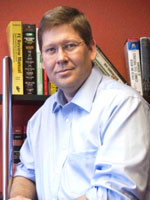
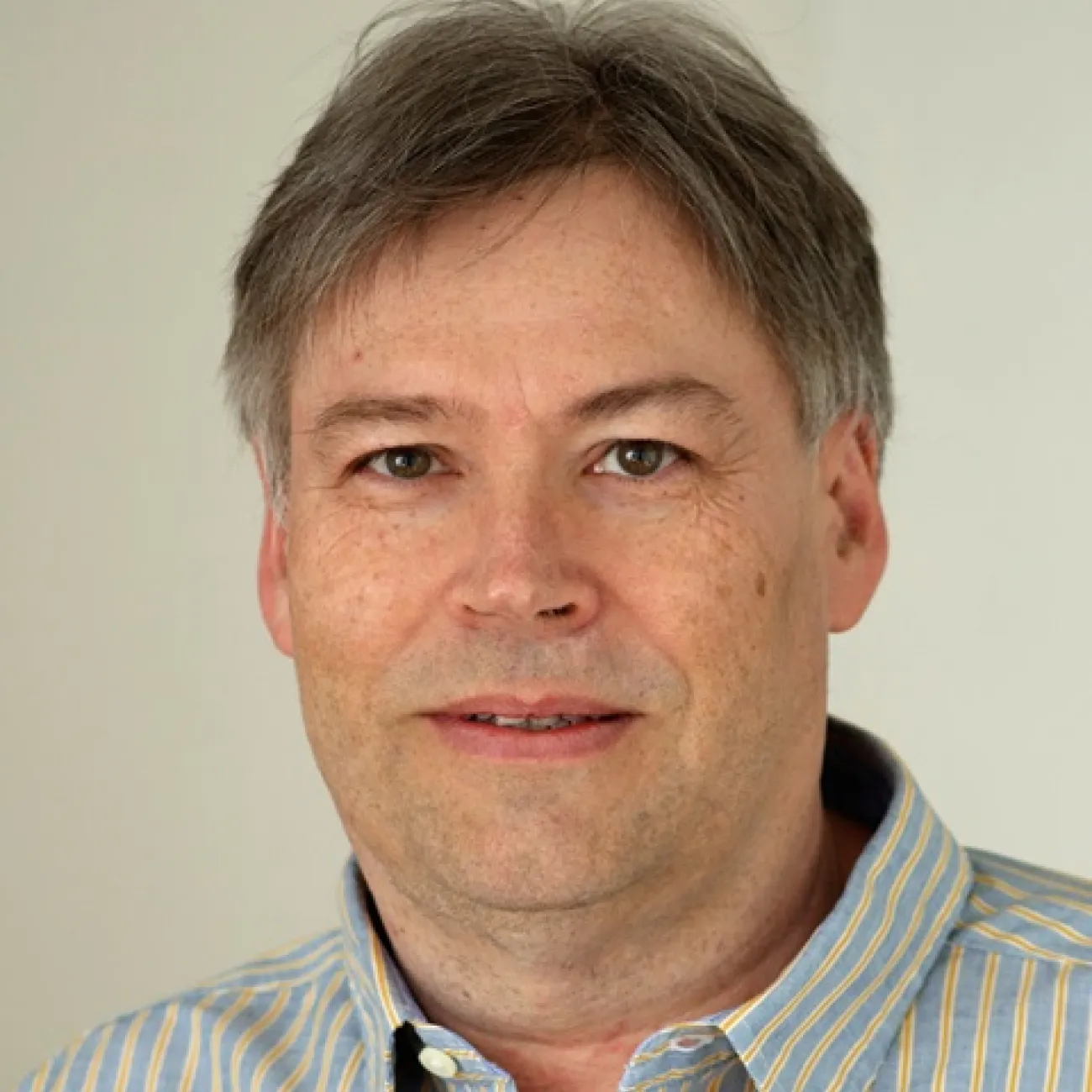
Nader Mirabolfathi is a Research Associate Professor at the Department of Physics and Astronomy, Texas A&M University. His research focuses on high-energy detector R&D, particularly in dark matter and neutrino interaction searches. He collaborates with the Mitchell Institute for Fundamental Physics & Astronomy, advancing experimental techniques in particle physics. Key Research Areas: Dark Matter Detection, Neutrino Physics, Detector Design. His recent publications explore novel detector technologies, such as phonon-mediated systems and crystal defect analysis, aiming to enhance sensitivity in low-mass dark matter and neutrino experiments. These works address critical challenges in background rejection and material science for next-generation particle detectors. No scientific awards or grants are explicitly listed in the provided text. His advising record is currently unspecified.
Dr. Shaoyu Zhao is a Research Fellow (Level A) at RMIT University's School of Engineering. His research focuses on advanced composite structures, mechanical metamaterials, graphene nanocomposites, and molecular dynamics simulations. He holds an ARC DECRA Fellowship and has over 40 journal publications with 2000+ citations (h-index 26). Awards include the ICES2024 Best Paper Award and 2025 DECRA. He supervises Masters/PhD students in areas like metaconcrete and functionally graded structures. Editorial roles include Early Career Board Member for Engineering Structures (Q1), International Journal of Structural Integrity (Q1), and others. Teaching includes the course MIET1076 - Mechanical Vibrations. His work bridges nanoscale simulations (e.g., graphene interfaces) with macro-scale engineering applications (e.g., 3D-printed composites and metamaterial energy absorption). Research spans multi-physics phenomena in perovskite materials and machine learning-driven material analysis. Key Projects: Metaconcrete composites, origami metamaterials, graphene-reinforced nanocomposites Lab Focus: Multiscale modeling for aerospace composites and smart materials
Morris Russell is a renowned Professor of Chemistry holding dual roles as Professor at Charles University (Prague, Czech Republic) and Bishop Wardlaw Professor at the University of St Andrews (UK). He leads the Charles University Centre for Advanced Materials (CUCAM) and the School of Chemistry at St Andrews. His research focuses on porous materials, including zeolites, metal-organic frameworks (MOFs), and their medical applications. He has pioneered innovative synthesis methods like the ADOR principle and ionothermal chemistry, revolutionizing materials science. Education: D.Phil. and B.A. in Chemistry from the University of Oxford. Research Interests: Morris’s work spans materials synthesis (e.g., ADOR principle for zeolites, ionothermal methods), medical applications (gas storage for therapeutics), and advanced characterization (X-ray diffraction, NMR). His contributions include developing MOFs for drug delivery and antibacterial technologies, commercialized through spin-off companies like MOFgen Ltd. Awards: Fellowships from the Royal Society (FRS), Royal Society of Edinburgh (FRSE), and Learned Society of Wales (FLSW). Recipient of the Royal Society Brian Mercer Award, Royal Society of Chemistry Peter Day Award, and GEMI Award. Advising & Grants: PI of a €7M EU grant for CUCAM. Strategic leadership roles in the International Zeolite Association, including Council Member and Commission Chair. Organized over 15 conferences and reviewed for major journals and agencies worldwide. Labs/Teams: Leads the Advanced Materials group at Charles University and EaSTCHEM at St Andrews, focusing on cutting-edge research in materials science and medical applications.
Willy Zwaenepoel is a Professor and Dean of the Faculty of Engineering at the University of Sydney. He holds a B.S. from the University of Gent and M.S./Ph.D. from Stanford University. Previously, he served as Dean of the School of Computer and Communication Sciences at EPFL and was a faculty member at Rice University. His expertise spans operating systems, distributed systems, and high-performance computing. Education: B.S., University of Ghent, Belgium (1979) M.S., Stanford University (1980) Ph.D., Stanford University (1984) Research Interests: Dr. Zwaenepoel focuses on distributed systems, operating systems, and their applications in database replication, virtual machine performance, and software update mechanisms. His work includes foundational contributions to distributed shared memory (e.g., Treadmarks) and startups like iMimic Networking. Awards: ACM Fellow (2000) IEEE Fellow (1998) Fellow of the Australian Academy of Technical Sciences and Engineering (2020) Recipient of the IEEE Tsutomu Kanai Award (2007) Key Contributions: His research addresses challenges in distributed systems performance, such as latency reduction in key-value stores and efficient graph processing. Current projects explore I/O optimization in virtualized environments and causal consistency for geo-replicated systems. Students/Advising: Advises Ph.D. students and postdocs, including William in database replication. His mentorship led to the Rice University Teaching Award (2000).
Börge Göbel is a postdoctoral researcher at the Institute of Physics, Martin Luther University Halle-Wittenberg, within the Quantum Theory of the Solid State group led by Prof. Ingrid Mertig. He is affiliated with the Faculty of Natural Sciences II - Chemistry, Physics and Mathematics and conducts theoretical research in condensed matter physics, focusing on topological spin textures and their applications in spintronics and orbitronics. PhD in Physics (summa cum laude, 2020), Max Planck Institute Halle MSc in Physics (1.1, 2016), Martin Luther University Halle-Wittenberg BSc in Physics (1.2, 2014), Martin Luther University Halle-Wittenberg Abitur (1.0, 2011) His research centers on the interplay between topology and transport in magnetic systems, particularly skyrmions, antiskyrmions, bimerons, and hopfions. He investigates their stability, emergent electrodynamics (e.g., topological Hall effect), and dynamics under current drive, with applications in racetrack memory, neuromorphic computing, and quantum devices. A major focus is on two-dimensional materials and electron gases, where he studies spin- and orbital-to-charge interconversion. He has pioneered work in orbitronics, demonstrating the orbital Hall effect accompanying the quantum Hall effect and topological orbital Hall effects in skyrmion systems. The most recent publications show a strong trend toward the exploration of orbital angular momentum in quantum transport, the stabilization of skyrmions in van der Waals materials, and the development of neuromorphic computing concepts using biskyrmions. His work bridges fundamental theoretical insights with potential technological applications in next-generation electronics. Börge Göbel is funded by the EIC Pathfinder OPEN Grant "Orbital engineering for innovative electronics" and is a co-supervisor in the EU Horizon 2020 project "SPEAR". He has co-supervised 2 PhD, 2 master's, and 4 bachelor's students and teaches quantum mechanics, including online courses with over 30,000 participants. Co-PI, EIC Pathfinder OPEN Grant: "Orbital engineering for innovative electronics" Co-Supervisor, EU Horizon 2020 project "SPEAR" Network Postdoc, EU project "OBELIX" He collaborates extensively with experimental groups worldwide, including those of Prof. Stuart Parkin, Prof. Claudia Felser, Dr. Manuel Bibes, and Prof. Albert Fert, and has presented at major conferences such as MMM, JEMS, Gordon, DPG, and SPICE.
Henrik Jeldtoft Jensen is a Professor of Mathematical Physics and leads the Centre for Complexity Science at Imperial College London. His work spans multiple disciplines, focusing on the statistical mechanics of complex systems, with applications in physics, biology, neuroscience, and finance. Professor, Mathematical Physics Leader, Centre for Complexity Science Institution: Imperial College London His research interests lie at the intersection of theoretical physics and complex systems. He is best known for developing the Tangled Nature Model of evolving ecosystems, which has been extended into financial modeling through the Tangled Finance approach. His work in brain dynamics involves analyzing fMRI and EEG data using tools from statistical physics. He has made significant contributions to self-organized criticality and stochastic dynamics of complex systems, particularly in condensed matter and evolutionary contexts. The recent publications reflect a strong trend toward interdisciplinary complexity science, integrating concepts from physics, biology, economics, and neuroscience. Keywords across these works include complexity, statistical mechanics, dynamical systems, and network theory, with subfields ranging from neural avalanches to financial instability and biodiversity modeling. Henrik Jensen is the author of two influential books: Self-Organized Criticality and Stochastic Dynamics of Complex Systems (with Paolo Sibani), which have been widely cited across disciplines. He has supervised numerous PhD and postdoctoral researchers through the Centre for Complexity Science, though specific names are not listed. His research has been supported by grants from UK research councils and international collaborations, particularly in interdisciplinary complexity projects. He is affiliated with the Centre for Complexity Science, a multidisciplinary research hub at Imperial College London that brings together physicists, mathematicians, biologists, and social scientists to study complex adaptive systems.
James Dickens is a Professor at the Whitacre College of Engineering , Texas Tech University , where he also serves as the Charles Bates Thornton Professor and Co-Director of the Center for Pulsed Power and Power Electronics (P3E) . He holds a PhD (1995), MS (1993), and BS (1991) in Electrical Engineering from Texas Tech University, and is a registered Professional Engineer in Texas. Research Interests: Grounding & Shielding, Explosive Pulsed Power, High-Power Microwaves, Electric Space Propulsion, Aerospace Electronics Key Contributions: Development of semiconductor opening switches, investigation of gas insulation performance, optimization of nonlinear transmission lines, and analysis of multipactor phenomena in waveguides Awards: Fellow of the Japanese Society for the Promotion of Science (1996) His recent publications focus on solid-state switching technologies , high-voltage gas insulation , and multipactor suppression in microwave systems. His work bridges theoretical modeling (LTspice, ANSYS Maxwell) with experimental validation in extreme environments, including studies on explosive emission cathodes, nanocrystalline transformer cores, and vacuum insulator flashover physics.
Jiahui Zhang is a Postdoctoral Researcher in the field of Materials Science and Environmental Engineering, focusing on computational and molecular dynamics studies of amorphous materials. Her work primarily explores plasticity mechanisms in oxide glasses under varying conditions. Research Areas: Amorphous Materials, Plasticity, Computational Materials Science, Molecular Dynamics, Structural Analysis Key Topics: Glass Transition, Room-Temperature Plasticity, Cooling Rate Effects, Amorphous Aluminum Oxide, Amorphous Gallium Oxide The recent publications highlight trends in computational modeling of microscale mechanical behavior in non-crystalline oxides. Collaborative efforts include co-authors like Frankberg, Kuronen, and Zhao, indicating interdisciplinary approaches to understanding material deformation. No awards or grants are explicitly mentioned in the provided data.
Stephen Kelty, Ph.D., is a Professor in the Department of Chemistry and Biochemistry at Seton Hall University, where he leads the Kelty Research Group. His work focuses on computational and physical chemistry, particularly in modeling solid-state and molecular systems using advanced methods like DFT and molecular dynamics. He is affiliated with the Center for Computational Research, leveraging its resources for interdisciplinary projects. Dr. Kelty’s research spans heterogeneous catalysis, defect analysis in oxides (e.g., YSZ, HfO₂), and photoactive materials for energy applications. Education: Ph.D., Chemistry, Harvard University (1993) M.Phil., Chemistry, Columbia University (1991) B.S., Chemistry, University of Cincinnati (1979) Research Interests: Dr. Kelty’s group investigates electronic and structural properties of materials at atomic and molecular scales. Key areas include: Computational modeling of catalytic mechanisms Defect engineering in oxides (e.g., YSZ thin films) Design of photoactive materials for solar energy conversion Ab initio and DFT studies of functionalized molecules Recent Trends in Publications: Recent work emphasizes computational analysis of ferroelectric hafnia, phase transitions in niobium germanate thin films, and enhanced performance in La/SrCoO₃ electrodes. Collaborations include studies at Los Alamos National Lab and presentations at the Organic Reactions Catalysis Society. Advising & Labs: Guided students like Sara Lamcaj (Los Alamos intern) and Frank Hung (APS presenter) Leverages the Center for Computational Research for high-performance simulations
Liang Niestemski is an Associate Professor of Physics at Western New England University's College of Physical & Biological Sciences. He previously held academic positions at Rice University (Weiss Instructor) and Colgate University (Visiting Assistant Professor). Education: Ph.D., Boston College Research Focus: Dr. Niestemski develops theoretical and computational frameworks to analyze complex systems across physics and biology. His work spans: Electronic disorder in high-temperature superconductors (pseudogap state, valence bond theory). Physics-based modeling of biological networks, including bacterial-phage co-evolution and CRISPR-Cas immunity. Statistical theory applications in personalized critical care (heart rate prediction) and social network dynamics. Computational simulations of time series and modularity evolution in natural systems. Courses Taught: Physics of the Life Sciences, Mechanics, Electricity and Magnetism, Solid State Physics, Electronics, Sound and Music, Physics of the Human Body, Physical Geology.
Dr. Shideh Kabiri Ameri serves as Associate Professor in the Department of Electrical and Computer Engineering at Queen's University, where she joined in September 2018 after completing postdoctoral research at the University of Texas at Austin. Her interdisciplinary expertise bridges nanomaterials engineering and biomedical applications, with particular focus on developing imperceptible wearable sensors for continuous health monitoring. Her educational foundation includes: PhD in Electrical Engineering (2015) from Tufts University Master's and Bachelor's degrees in Physics (solid state) AS degree in Medical Laboratory Sciences Dr. Ameri's research program centers on 2D material-based electronic devices for wearable bioelectronics, human-machine interfaces (HMI), and mobile healthcare systems . Her lab pioneered graphene electronic tattoos (GETs) that achieve unprecedented skin conformity while recording high-fidelity physiological signals. Current work emphasizes ultrasoft hydrogel-based sensors that eliminate motion artifacts and enable months-long wear without skin irritation, representing a paradigm shift from conventional rigid medical devices toward truly imperceptible health monitors. Analysis of her 40+ publications reveals a strategic evolution from fundamental nanomaterial characterization toward clinically viable systems. Recent work (2021-2025) demonstrates increasing sophistication in multimodal sensing (simultaneous ECG/EEG/temperature), reusable sensor architectures , and wireless power integration . The trajectory shows clear progression from lab prototypes to FDA-pipeline devices, particularly in cardiac and neurological monitoring applications. Her scientific recognition includes: Rising Star in EECE 2017 award Dr. Ameri leads the Ameri Nano Research Group which operates advanced nanofabrication facilities for developing next-generation bioelectronic interfaces. Her research has attracted significant media attention from BBC, IEEE Spectrum, and Phys.Org, highlighting real-world impact in remote patient monitoring. The group actively collaborates with medical institutions to translate innovations into point-of-care diagnostics, with current projects focusing on in-ear physiological monitors and strain-neutralized neural recording systems. The research team maintains strong industry partnerships for commercializing soft bioelectronics, with particular emphasis on creating accessible health monitoring solutions for underserved communities through low-cost manufacturing approaches.
Dr. Enrico Da Como is a Reader (equivalent to Associate Professor) in the Department of Physics at the University of Bath, UK, where he has been since 2012. He serves as Head of the Condensed Matter and Quantum Materials Group and is affiliated with the Centre for Photonics and Photonic Materials. His research focuses on the interaction of light with condensed matter systems, particularly using advanced spectroscopic techniques to study fundamental excitations in quantum materials. His academic journey includes: University Assistant (W1) at the Department of Physics, LMU Munich (Germany), 2008-2012 Visiting Scientist at the Department of Physics, University of Utah (USA), 2008 Post-Doc at the Photonics and Optoelectronics Group, LMU Munich (Germany), 2006-2007 PhD from C.N.R. and University of Bologna (Italy), 2003-2006 MSc from University of Modena (Italy), 2002 Da Como's research primarily investigates the interaction of light with condensed matter, with a focus on fundamental excitations such as excitons, plasmons, polarons and phonons in molecular solids and nanostructures. His work employs a range of experimental techniques from single molecule spectroscopy to femtosecond nonlinear optical methods. This fundamental research is complemented by collaborations with industry partners exploring applications in solar energy conversion, sensing technologies, and information systems. His current research emphasizes charge density wave materials, quantum phase transitions, and the development of novel spectroscopic approaches to probe non-equilibrium states in quantum materials. Analysis of his most recent publications reveals a strong focus on charge density wave systems, particularly 1T-TaSe 2 and related materials. His work combines ultrafast spectroscopy with theoretical modeling to understand the interplay between electronic, lattice, and magnetic degrees of freedom in quantum materials. A significant portion of his research investigates non-equilibrium phenomena, using light to induce and probe metastable states in quantum materials, with potential applications in next-generation electronic and optoelectronic devices. Da Como has secured significant research funding from prestigious organizations: Principal Investigator for "New quantum platforms for nanomagnetic sensing in 2D" (UK Research & Innovation, 2025-2027) Principal Investigator for "Light induced metastable phases in quantum materials" (The Royal Society, 2022-2025) Principal Investigator for "Controlling Charge Density Waves with Light and 2D Self Assembly" (The Royal Society, 2017-2019) Co-Investigator for "Pyroelectric water splitting and water treatment using ferroelectric materials" (The Leverhulme Trust, 2019-2021) As an active supervisor, Da Como is accepting doctoral students and has supervised 10 research projects. His laboratory combines advanced optical techniques with low-temperature and high-pressure methodologies to probe quantum materials under extreme conditions. His group collaborates extensively with researchers across Europe and the United States, contributing to the international effort to understand and harness quantum phenomena for future technologies.
Brian J. Jaques is an Assistant Professor in the Micron School of Materials Science and Engineering at Boise State University, where he joined in 2009. He also serves as the director of the Boise State Advanced Materials Laboratory (AML) and holds a joint appointment with the Idaho National Laboratory (INL). His extensive institutional affiliations include being the Nuclear Energy Focus lead at the Center for Advanced Energy Studies (CAES) in Idaho Falls and serving as the Boise State program director for the Advanced Sensors and Instrumentation (ASI) with the INL. Boise State University - Micron School of Materials Science and Engineering Idaho National Laboratory (Joint Appointment) Center for Advanced Energy Studies (CAES) - Nuclear Energy Focus Lead (2019-2022) Boise State Advanced Materials Laboratory (Director) Dr. Jaques' research focuses on materials for extreme environments, energy materials, and nuclear enabling technologies. His primary interests include nuclear fuel synthesis, sensor design for nuclear applications, sintering processes, corrosion science, gas-solid reaction kinetics, mechanochemistry, particle science/powder synthesis, and mechanical behavior of materials. His work often intersects with additive manufacturing techniques for nuclear applications and advanced sensor development for in-pile (reactor core) environments. His research output shows a clear trend toward developing materials and sensors for nuclear applications, with increasing emphasis on additive manufacturing techniques since 2018. His recent publications demonstrate expertise in uranium dioxide and carbide fuels, zirconium-based materials for nuclear thermal propulsion, boron nitride coatings, and advanced strain sensing technologies for extreme environments. Dr. Jaques has received numerous scientific awards including: NSF S-STEM Scholar (2004) Advanced Fuel Cycle Initiative/Generation IV Fellow (2006) Outstanding Mechanical Engineering Student Award (2006) Professional Engineer license in Metallurgy and Materials Science (2011) Materials Science and Engineering Scholar Award (2015) He has been actively involved in significant research funding, serving as Co-PI on multiple Nuclear Energy University Program grants and National Science Foundation projects. His current work includes international collaborations to advance high uranium density fuels for Small Modular Reactors and developing additively manufactured sensors for nuclear applications. Dr. Jaques also contributes to educational initiatives including the REU Site on Advanced Manufacturing for a Sustainable Energy Future. His laboratory work centers around the Boise State Advanced Materials Laboratory (AML) and collaborations with the Idaho National Laboratory, focusing on developing novel sensors for in-pile applications that provide real-time, accurate, and spatially resolved information regarding test conditions and the performance of fuels and materials during irradiation.
Hui (Claire) Xiong is a Professor at the Micron School of Materials Science and Engineering, Boise State University , specializing in advanced functional nanomaterials for sustainable energy systems . Prior to Boise, she held postdoctoral positions at Argonne National Laboratory and Harvard University , focusing on energy storage electrodes and micro-solid oxide fuel cells. Education : Ph.D. in Analytical Chemistry and Electrochemistry (University of Pittsburgh), B.E./M.S. in Applied and Inorganic Chemistry (East China University of Science and Technology) Her research interests revolve around sustainable energy materials , particularly lithium/sodium-ion batteries , solid electrolytes , and defect-driven metal oxides . Her work has produced over 134 research outputs, including key contributions to TiO 2 nanotubes , FeSe/FeS heterostructures , and ion irradiation effects on electroceramics. Notable scientific awards include the Andrew Mellon Predoctoral Fellowship (2006) Royal Society of Chemistry Fellowship (2023) She has led multiple NSF-funded projects on topics like mixed ionic/electronic conductivity and defect-engineered metal oxides , while her publications highlight trends in solid-state battery interfaces , heterostructure engineering , and electrochemical characterization .
Johan Nilsson is a Professor of Optoelectronics at the University of Southampton's Optoelectronics Research Centre (ORC), specializing in high-power fibre laser systems and photonics innovation. His work bridges fundamental laser physics with industrial applications in manufacturing and sensing. His research spans: Fibre laser design and optimization High-power amplification techniques Raman laser development Mid-infrared wavelength generation Laser material processing Optical sensing systems Recent publications (2022-2025) reveal a strategic focus on efficiency breakthroughs in cladding-pumped amplifiers, novel gain media like thulium-doped fibres, and industrial applications including silicon wafer dicing and aero-engine emissions monitoring. His work consistently addresses power-scaling challenges while expanding fibre lasers into new spectral regions and application domains. Professor Nilsson actively supervises four PhD candidates and leads major research initiatives funded by EPSRC, US Air Force Office of Scientific Research, and industry partners including Lockheed Martin and Northrop Grumman. His grant portfolio demonstrates exceptional translational impact, with projects ranging from fundamental beam-combination science to commercial 6kW laser systems for metal 3D printing. As a core member of the ORC's High Power Fibre Lasers and Smart Lasers research groups, he contributes to Southampton's global leadership in photonics through collaborative projects like the EPSRC Centre for Innovative Manufacturing in Photonics and the Smart Fibre-Optic High Power Photonics (HiPPo) initiative.