Dr. András Pályi is an Associate Professor at the Department of Theoretical Physics, Budapest University of Technology and Economics, and Head of the HUN-REN-BME-BCE Quantum Technology Research Group. His work bridges quantum computing, spintronics, and condensed matter physics, focusing on spin-phonon interactions, topological quantum systems, and semiconductor nanostructures. Quantum Computing Spintronics Topological Insulators Quantum Materials Recent publications highlight his research on quantum error correction , spin qubit control , non-Abelian Berry phases , and Weyl point stability , with applications in nanomechanical resonators and Majorana qubit architectures. His group explores spin-orbit coupling, acoustic phonons, and lattice reorientation mechanisms in quantum systems. Contact: Office F III. mfszt 6, palyi.andras@ttk.bme.hu , +36 1 463 4109
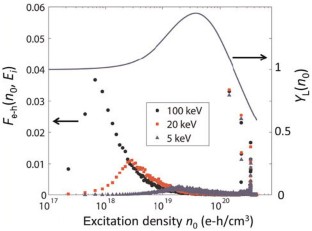
Dr. Gregory Bizarri is a Reader (equivalent to Associate Professor) in Material Science at Cranfield University, UK, where he serves as Head of the Surface Engineering and Precision Centre (SEPC), one of six centers within the Manufacturing theme of the School of Aerospace, Transport and Manufacturing and Materials (SATM). Prior to joining Cranfield in 2017, he was a Staff Scientist at the Lawrence Berkeley National Laboratory (USA) from 2009-2017, where he conducted research on scintillator materials and radiation detection technologies. Dr. Bizarri's research sits at the confluence of multiple disciplines: material science, detector physics, and instrumentation. His work promotes a multidisciplinary approach combining synthesis, characterization, instrumentation design, and modeling to investigate energy transport and conversion processes in materials for applications ranging from medical imaging to energy sectors. His expertise spans scintillator physics, radiation detection, optical materials, and sensor technology, with emphasis on developing novel detector materials through crystal growth and material engineering. His recent publications demonstrate a strong trajectory toward improving radiation detection systems, particularly for time-of-flight positron emission tomography (ToF-PET). His work on heterostructured scintillators, 3D-printed plastic scintillators, photonic crystal integration, and nanocomposite development represents cutting-edge approaches to enhance detection efficiency, resolution, and speed. This research bridges fundamental materials science with practical applications in medical imaging and radiation detection. As Head of the Surface Engineering and Precision Centre, Dr. Bizarri leads a research team dedicated to developing materials for sustainable and fair societal applications. His leadership involves managing large national and international collaborations focused on the design, development, and engineering of detector materials. The center's work integrates advanced materials development with precision engineering techniques to address challenges in aerospace, healthcare, and energy sectors.
Glenn Daehn is the Mars G. Fontana Professor of Metallurgical Engineering at The Ohio State University , where he has served as faculty since 1988. His work bridges materials science , advanced manufacturing , and STEM education , with leadership roles in initiatives like the Ohio Manufacturing Institute and NSF's HAMMER Center. Ph.D. & M.S., Materials Science & Engineering, Stanford University B.S., Materials Science & Engineering (departmental honors), Northwestern University Professor Daehn specializes in impulse-based manufacturing , focusing on plastic deformation , impact welding , and solid-state joining of dissimilar materials. His research drives innovations in lightweight materials, aerospace manufacturing, and biomedical device fabrication. His publications reveal a strong emphasis on dynamic material processing , robotic manufacturing , and sustainable materials systems . Recent work explores orbital cold welding and AI-enhanced surgical plate bending systems. ASM Marcus A. Grossman Young Author Award (1990) Army Research Office Young Investigator Award (1992) 2022 ASM Gold Medal Award Ranked top 2% of scientists worldwide (2021) Daehn has received multiple Lumley Research Awards and led groundbreaking projects including Metamorphic Manufacturing and Hybrid Autonomous Manufacturing . He maintains active collaborations with industry through initiatives like the Center for Design and Manufacturing Excellence .
Dr. Richard Švejkar is a Research Fellow at the Optoelectronics Research Centre (ORC) at the University of Southampton since 2023. His work focuses on advanced laser technologies, particularly high-power thulium fibre lasers and near/mid-infrared solid-state lasers. Previously, he researched erbium- and iron-based gain media emitting 3–5 µm wavelengths. Education : Master’s in Laser Technique and Electronics (2016), PhD in Physical Engineering (2021) from Czech Technical University in Prague. Research Groups : Advanced Solid-State Sources, Smart Lasers and Special Fibres. His recent publications address challenges in temperature-dependent emission spectra measurement, quantum efficiency optimization, and tunable Tm-doped nested-ring fibre lasers. He has authored/co-authored over 40 papers and is affiliated with Optica and SPIE. Current Research : High-power thulium fibre lasers (2 µm), power scaling of Tm-doped silica fibre lasers, and tunable laser systems.
Professor Marcus T Cicerone is a faculty member at the Georgia Institute of Technology in the School of Chemistry & Biochemistry . His career spans positions at the National Institute of Standards and Technology (2001-2019) and a visiting teaching professorship at Brigham Young University . He received his Ph.D. in 1994 from the University of Wisconsin–Madison under Mark Ediger. Research Interests : Development and application of broadband coherent Raman scattering (BCARS) microscopy for biological imaging, understanding dynamic heterogeneity in liquids and glasses , and creating nanometer-sized sugar-glass encapsulation methods for protein stabilization in drug delivery. His work bridges physics, chemistry, and biotechnology through innovative spectroscopic techniques. Scientific Awards : Fellow of American Physical Society Johnson & Johnson Director’s Research Award Two Department of Commerce Bronze Medals 2015 Washington Academy of Sciences Physical & Biological Sciences Award 2017 Arthur S. Flemming Award 2022 Moderna Grant for ambient-stable RNA vaccines 2025 Quadrant-i Grant for nucleic acid delivery Recent Publications demonstrate his leadership in coherent Raman imaging, glassy material dynamics, and protein stabilization. His 2025 Nature Photonics paper on dynamic percolation in liquids and 2024 Advanced Materials work on lipid nanocapsules highlight cross-disciplinary impact.
Kristina Edström is a Professor at Uppsala University, specifically affiliated with the Department of Chemistry, Structural Chemistry unit at Ångström Laboratory. She is a leading expert in battery technology and electrochemistry, with extensive research on lithium-ion and sodium-ion batteries, solid-state electrolytes, and surface chemistry of battery components. Current research focuses on battery interfaces (SEI/CEI), polymer-ceramic composite electrolytes, and sustainable battery materials Key methodologies include X-ray photoelectron spectroscopy (XPS), neutron diffraction, and molecular dynamics modeling Recent publications (2024-2025) investigate: boron-modified solid electrolytes, self-healing polymer electrolytes, aqueous Li-ion systems, and manufacturing sustainability for batteries. Her work shows strong emphasis on improving battery safety, efficiency, and environmental impact. Leadership roles include participation in Battery 2030+ research initiatives and NordBatt conferences. She has contributed to developing standardized experimental workflows combining neutron/synchrotron techniques with AI-driven battery research.
Bjorn Baumeier is an Associate Professor in the Department of Mathematics and Computer Science at Eindhoven University of Technology (TU/e). His research group is part of the Centre for Analysis, Scientific Computing and Applications (CASA) and the Institute for Complex Molecular Systems (ICMS). He also participates in several research groups including Scientific Computing, ICMS Core, Eindhoven Hendrik Casimir institute, and Computational Quantum & Molecular Dynamics. His educational background includes: Diploma in Theoretical Solid State Science from the University of Münster PhD in Theoretical Solid State Science from the University of Münster Baumeier's research focuses on the development and application of multiscale simulation techniques for studying electronic transport processes in soft matter. His work combines approaches from computational chemistry, statistical physics, and mathematics to analyze the interplay between molecular electronic structure and material morphology. Additional research lines include studies of disordered biomolecular assemblies and super-coarse-grained modeling of soft granular materials. His group employs large-scale computer simulations linking quantum chemistry, classical Molecular Dynamics at various levels, and rate-based models. Recent publications (2024-2025) demonstrate a strong focus on charge transport phenomena in complex materials, with particular emphasis on interface effects in polymer composites, trap identification in molecular networks, and embedded many-body Green's function methods. His work bridges fundamental physics with practical applications in energy materials and opto-electronic devices. Scientific awards include: Vidi grant from NWO (The Netherlands Organisation for Scientific Research) in 2017 (€800,000) Baumeier has received significant research funding, most notably the Vidi grant focusing on understanding mechanisms underlying long-distance and spin-selective electronic transport in complex molecular systems. His research is often conducted in collaboration with multiple institutions and research groups within TU/e, indicating a strong interdisciplinary approach. His work has practical applications in opto-electronic devices and bio-molecular processes. His research group operates within the Computational Quantum & Molecular Dynamics group, which is part of several larger research initiatives at TU/e including ICMS and the Eindhoven Hendrik Casimir institute. This positioning allows for strong collaboration across physics, chemistry, and engineering disciplines.
Aleksandr Zinoviev is a Senior Research Associate at the School of Engineering and Information Technology (SEIT) at UNSW Canberra, where he has been working since 2022. His research spans multiple institutions across the globe, including previous positions at Siemens Digital Industries Software in Belgium, University of Bremen and AMSIS GmbH in Germany, and Institute of Strength Physics and Materials Science of the Russian Academy of Sciences and Tomsk Polytechnic University in Russia. He has also conducted research stays at the University of Bremen (Germany) and São Paulo State University (Brazil). Dr. Zinoviev's research interests are highly interdisciplinary, focusing on metal additive manufacturing, thermodynamics of materials, computational materials science, solid mechanics, software engineering, and machine learning. He specializes in developing and applying novel knowledge-based approaches to address engineering challenges, particularly in improving materials and parts produced by advanced manufacturing, optimizing production processes, and enhancing data processing. His work bridges the gap between fundamental materials science and practical engineering applications, with a strong emphasis on computational modeling and simulation. Analysis of his recent publications (2021-2025) reveals a consistent focus on additive manufacturing process modeling, microstructure-property relationships in additively manufactured metals, and computational approaches to materials science. His research particularly emphasizes cellular automata modeling, multiscale simulation techniques, and the application of machine learning to materials processing. The publications demonstrate expertise in both experimental characterization and advanced computational methods for predicting mechanical behavior of additively manufactured components. Dr. Zinoviev actively mentors prospective PhD and Research Master's candidates, offering guidance on topics related to thermal modeling of additive manufacturing and process optimization. He has indicated that scholarships of up to $35,000 (AUD) are available for qualified candidates who achieved High Distinction in their undergraduate program and/or have completed a Masters by Research.
Jens Dittmer is a Professor at Le Mans University, affiliated with the Institute of Molecules and Materials of Le Mans (IMMM). His research focuses on advanced solid-state NMR techniques for studying paramagnetic systems, ion conductors, hybrid perovskites, and polymer degradation. Key projects include developing NMR methods for paramagnetic materials, analyzing lithium garnets for battery applications, and collaborating with Pratt Institute on art conservation using NMR. Primary Affiliation: Institute of Molecules and Materials of Le Mans (IMMM), Le Mans University Research Highlights: Paramagnetic Solid-State NMR, Ion Mobility in Garnets, Hybrid Perovskite Photovoltaics, Polymer Degradation in Art Conservation His work bridges fundamental NMR physics with applied material science, particularly in energy and cultural heritage sectors. Collaborations span international institutions including University of Rennes, ParisTech, and Pratt Institute. Current projects emphasize sustainable material design and non-invasive analytical techniques.
Prof. Deniz ULUTAŞ is a Professor in the Department of Physics at the Faculty of Science, Istanbul University, where he has served since 2014. His academic career at Istanbul University spans over three decades, progressing from Research Assistant (1988-1999) to Assistant Professor (2000-2009), Associate Professor (2009-2014), and finally Professor (2014-present). He has held significant administrative positions including Head of Department (2014-2017, 2009-2013) and Vice Dean of the Faculty of Science (2009-2011). Dr. ULUTAŞ received his Doctorate from Istanbul University in 1999 with a dissertation on 'Electronic behavior of semiconductor and semi-insulator solid materials in thin film form,' following his Postgraduate studies (1987-1989) and Undergraduate education (1981-1987) at the same institution. His academic journey began with research on 'Optical Properties of Bismuth Thin Films' for his Master's degree. Prof. ULUTAŞ's research primarily focuses on dielectric properties, electronic structure, and electrical, magnetic, and optical characteristics of materials, particularly thin films and low-dimensional structures. His work spans condensed matter physics, materials science, and semiconductor physics, with significant contributions to understanding chalcogenide semiconductors, polymer composites, and nanostructured materials. His publication record includes 142 papers in Web of Science with an impressive h-index of 399, demonstrating substantial impact in his field. His recent work shows a strong trend toward interdisciplinary applications, including potential biomedical diagnostics using dielectric spectroscopy. His research demonstrates consistent focus on thickness-dependent properties, dielectric relaxation mechanisms, and the relationship between material structure and electrical behavior across various material systems including Tl-based chalcogenides, polymer electrolytes, and nanocomposites. The evolution of his work shows increasing sophistication in both experimental techniques and theoretical interpretations. 142 Publications in Web of Science 30 Publications in Scopus 399 h-index (Web of Science) 385 h-index (Scopus) Prof. ULUTAŞ has supervised numerous graduate students, with 8 doctoral and master's theses completed under his guidance and several more in progress. His laboratory appears focused on thin film deposition, dielectric characterization, and analysis of electronic properties across diverse materials systems. He has also contributed to educational materials with lecture notes on Thermodynamics, Statistical Physics, and Modern Research Topics in Physics.
Hanna Boström is an Assistant Professor at the Department of Chemistry, Stockholm University , leading a research group focused on crystal engineering and structure-property relationships in coordination polymers, particularly Prussian blue analogues and Hofmann complexes . Her work bridges fundamental crystallography with application-driven materials science, emphasizing switchable properties under variable conditions like temperature and pressure. She employs techniques such as X-ray crystallography and magnetic measurements to explore materials for environmental and sustainable chemistry applications. Research Focus : Spin crossover, polar materials, synthesis-structure correlations, Jahn-Teller distortions Group Members : PhD students Lara Janus and Elina Elvelo Key Projects : "Tilt engineering of Prussian blue analogues towards multiferroic materials" Publications highlight her contributions to understanding negative thermal expansion, X-ray/radiation effects, and defect-driven properties in molecular frameworks. While no specific awards are listed, her work has attracted attention in sustainable material synthesis and environmental applications.
Jianxiong Li serves as an Assistant Professor in the Department of Mechanical Engineering at Texas A&M University's College of Engineering, where he leads research in advanced manufacturing and materials mechanics. His work bridges fundamental materials science with practical engineering applications in aerospace, biomedical devices, and energy systems. Educational Background: Ph.D. in Welding Engineering, Ohio State University (2022) M.Eng. in Materials Processing Engineering, Tianjin University (2017) B.E. in Materials Shaping and Controlling Engineering, Tianjin University (2014) Research Focus: Dr. Li's investigations span Cold Spray Additive Manufacturing , Extreme Mechanics , and Dynamic Mechanical Testing of nanocrystalline alloys and metal matrix composites. His lab develops novel solid-state joining techniques like impact welding for dissimilar materials, with emphasis on microstructural evolution under high strain rates (up to $10^9$ s$^{-1}$) and interfacial phenomena in biomedical-grade joints. Current projects explore chemical strengthening of glass powders, refractory high-entropy alloy coatings, and synchrotron-based load transfer analysis in composites. Publication Trends: Analysis of his 15 most recent publications (2020-2025) reveals three dominant themes: (1) Biomedical applications of microwelded NiTi-stainless steel joints with interfacial liquid control, (2) Fundamental studies of dislocation dynamics in nanocrystalline alloys at extreme strain rates, and (3) Process development for vaporizing foil actuator and laser-augmented impact welding of challenging material combinations. His work increasingly integrates advanced imaging techniques with mechanical testing. Scientific Recognition: Ohio State University Presidential Fellowship (2021) Research Infrastructure: Dr. Li directs the IM3D Lab (Imaging and Mechanics for Multi-scale Manufacturing), which specializes in high-speed imaging, synchrotron characterization, and mechanical testing of materials under extreme conditions. His group collaborates with national laboratories on vaporizing foil actuator technology and develops manufacturing solutions for next-generation biomedical devices and structural components.
Sarbajit Banerjee is a Senior Professor in the Department of Materials Science & Engineering at Texas A&M University. His research spans solid-state and materials chemistry, focusing on nanoscale materials, electronic structure, x-ray spectroscopy, thin films, light metals, and nanocomposites. 2022: Distinguished Achievement Award in Graduate Mentoring 2021: Edith and Peter O’Donnell Award in Science 2017: Fellow, Institute of Physics His recent work explores neuromorphic computing , Li-ion diffusion , and redox photocatalysis , with over 15 publications (2022–2025) addressing battery cathode design, corrosion protection, and advanced material synthesis. Awards highlight his contributions to graduate mentoring and early-career research excellence. 2010: Cottrell Scholar Award 2009: NSF CAREER Award
Maurits Haverkort is a Professor at the Institute for Theoretical Physics, Heidelberg University (Germany). His research focuses on quantum many-body systems , strongly correlated electrons , and X-ray spectroscopy of complex materials under strong fields. University of Cologne (PhD in Physics, 2005) University of Groningen (M.Sc. in Physics, 2002) Research Interests : He investigates orbital and magnetic properties in heavy fermion systems , actinide materials , and correlated oxides using resonant inelastic X-ray scattering (RIXS) , ARPES , and computational tools like Quanty . His work spans crystal field theory , spin-orbit coupling , and ultrafast electron dynamics . Scientific Awards & Activities : 2018 – Editorial Board Member, Physical Review Letters 2017 – Beam Time Allocation Panel, ESRF Grenoble 2016–2018 – Swedish Research Council Panel NT-4 2012–2016 – Scientific Selection Panel, Helmholtz-Zentrum Berlin Recent Publications highlight 5f electron counting , photon-modulated bonding , and precision neutrino mass experiments , reflecting his expertise in quantum materials and advanced spectroscopy .
Manuela Reben serves as a Professor at AGH University of Science and Technology in Kraków, Poland, within the Faculty of Materials Science and Ceramics. Her primary appointment is in the Department of Glass Technology and Amorphous Coatings, with office space in building A-3, room 222. She holds the significant administrative role of Vice-Dean of the Faculty of Cooperation and participates in multiple governance bodies including the Chemical Engineering Discipline Council, Faculty College, University Senate, and Senate Committee on Science. Her research centers on advanced glass systems with specialization in optical materials , radiation shielding composites , and waste glass valorization . Key investigations include structural characterization of rare earth-doped tellurite and phosphate glasses, development of novel compositions for photonic applications, and utilization of industrial glass wastes in sustainable construction materials. Her work bridges fundamental materials science with practical engineering solutions for laser technology, nuclear shielding, and eco-friendly building products. Analysis of her recent publications (2022-2025) reveals dominant research trajectories in three interconnected domains: (1) Engineering phosphate/tellurite glass matrices doped with rare earth ions for broadband optical amplifiers and laser gain media; (2) Developing radiation-shielding glasses with optimized attenuation properties for medical and nuclear applications; (3) Transforming industrial glass wastes into functional construction materials through sintering process optimization. These efforts demonstrate consistent innovation in glass composition design and property tailoring. Scientific awards: No awards documented in available sources. Advising activities and research grants are not specified in current documentation, though her leadership roles suggest significant mentorship responsibilities. Her departmental affiliation indicates active participation in collaborative research teams focused on glass technology and amorphous materials development.