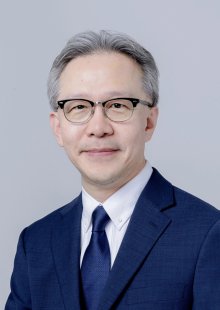
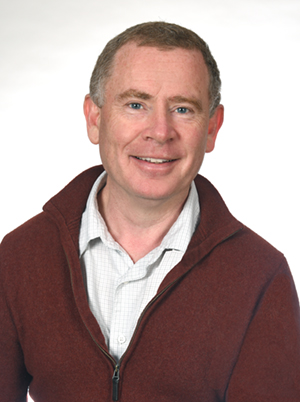
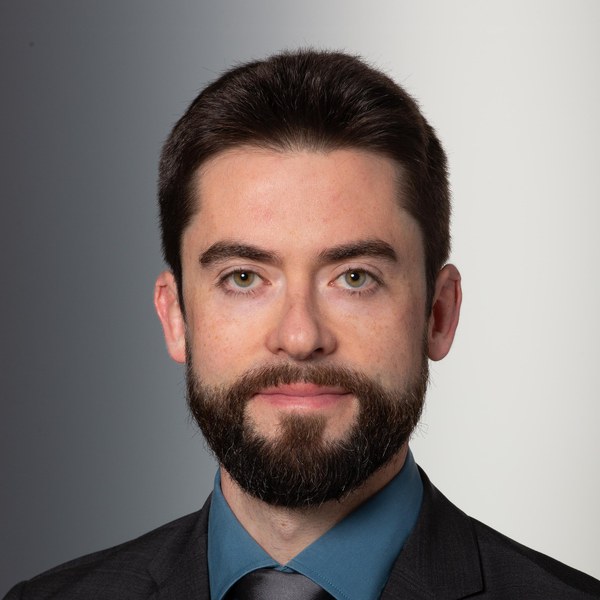
Dr. Seung Soon Jang is a Professor in the School of Materials Science and Engineering at Georgia Institute of Technology, joining in 2007. His research focuses on computational and theoretical approaches to design nanoscale systems, particularly in molecular electronics, fuel cells, and biotechnology. He holds fellowships from the American Chemical Society (ACS), American Physical Society (APS), American Society for Metals International (ASM Inter.), and Electrochemical Society (ECS). His research spans energy storage, environmental materials, and nanotechnology, with a strong emphasis on molecular simulations and DFT modeling. Education & Awards: Fellowships in ACS, APS, ASM Inter., and ECS. Research Interests: Biomolecular-solids, ceramics, nanomaterials, polymers, and energy/environmental applications. Dr. Jang advises three students and leads the CNBT Lab, exploring advanced materials for energy conversion and wearable technologies. His work integrates computational methods with experimental validation, addressing challenges in fuel cells, solar cells, and CO₂ reduction. Key achievements include developing durable electrocatalysts and novel membrane technologies.
Prof. Dr. Michael Horn-von Hoegen is a full professor in the Faculty of Physics at the University of Duisburg-Essen , Germany. His research focuses on ultrafast structural dynamics , surface physics , and 2D materials , particularly using electron diffraction and plasmonic imaging techniques. He leads the Horn-von Hoegen Group , which plays a central role in the Collaborative Research Center CRC 1242 Non-Equilibrium Dynamics of Condensed Matter in the Time Domain , where his team investigates driven phase transitions and phonon systems with sub-femtosecond temporal resolution. Location: Office Window MF260, Faculty of Physics, Lotharstr. 1-21, 47057 Duisburg Contact: Tel. +49 (203) 379 1439 | Fax +49 (203) 379 1555 His research spans ultrafast electron diffraction of photo-induced phase transitions in atomic wires and topological materials , with recent breakthroughs on Kibble-Zurek dynamics in the Si(001) surface and chiral plasmon polaritons . The group’s 15 most recent publications (2025-2022) address phenomena such as negative thermal expansion in 2D materials , electron-phonon coupling in Pb/Si heterostructures , and quantum pathway analysis in Bismuth films . These works are categorized under disciplines like Condensed Matter Physics , Nanooptics , and Ultrafast Dynamics , with subfields including Ising Model Transitions , Plasmon Focusing , and Time-Resolved Diffraction . Prof. Horn-von Hoegen serves as DFG Liaison Officer for the University of Duisburg-Essen, providing guidance on Deutsche Forschungsgemeinschaft (DFG) proposals . His group has mentored notable researchers including Dr. Simon Sindermann (postdoc at IBM), Dr. Anja Hanisch-Blicharski (Leopoldina Fellow), Dr. Hichem Hattab (Leopoldina Fellowship), and Dr. Marin Petrovic (Humboldt Fellow). The group’s laboratory facilities include advanced ultrafast electron diffraction and photoemission microscopy systems, enabling studies of atomic-scale processes such as molecular dynamics simulations of laser-excited surfaces and domain wall motion in Si(553)-Au systems .
Ana Predojevic is a University Lecturer at the Department of Physics, Stockholm University, focusing on quantum photonics and quantum technologies. Her research explores quantum optics, quantum information, and the generation and characterization of entangled light states using semiconductor devices and nonlinear processes. She completed her Habilitation at the University of Innsbruck (2016) and earned a PhD in Quantum Optics from the Institute of Photonic Sciences (ICFO) in Barcelona (2009). Her research career includes prestigious fellowships such as the Elise Richter and Lise Meitner awards from the Austrian Science Fund. Her recent work emphasizes two-photon interference, phonon-induced dephasing, photon indistinguishability, and multipartite entanglement engineering, leveraging cavity quantum electrodynamics and deep learning techniques for quantum state analysis. She has contributed to advancements in micropillar cavity devices for efficient photon pair generation and polarization entanglement studies in quantum dot systems. Scientific Awards: Elise Richter Fellowship (2014) Kanada Prize, University of Innsbruck (2014) Nachwuchsförderung Young Researcher Award (2013) Lise Meitner Fellowship (2010) Generalitat de Catalunya PhD Fellowship (2005) Her current role involves developing quantum light sources for real-world applications in communication, sensing, and simulation, working with the Quantum Photonics group at Stockholm University.
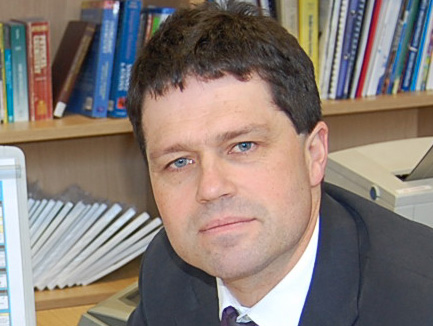
Professor Matthew Jonathan Rosseinsky holds the Chair of Inorganic Chemistry at the University of Liverpool, a position he has occupied since October 1999. His career includes significant appointments at the University of Oxford (1992-1999) and Bell Laboratories in New Jersey (1990-1992), following his DPhil at Merton College, Oxford. As a Fellow of the Royal Society and recipient of numerous prestigious awards, Professor Rosseinsky maintains an active research program and leadership roles in the international chemistry community. Professor Rosseinsky's educational background includes a First Class Honours degree in Chemistry with Quantum Chemistry from the University of Oxford (1987) and a DPhil in "Physical Properties of Superconducting Oxides and Radical Cation Salts" completed in 1990 under Professor P. Day FRS. His research focuses on the synthesis of new materials with applications in energy storage and generation, communications, separation, and catalysis. The Rosseinsky Group employs a broad range of synthesis and characterization techniques, including neutron and synchrotron X-ray diffraction, combined with computational methods in collaboration with Dr. George Darling. Current research areas include Dynapore, CO2 fuels, SOLBAT, and CATMAT projects that target specific material challenges. Professor Rosseinsky's publication record is exceptional, with 304 papers including 11 in Nature, 6 in Science, and 3 in Nature Materials, accumulating over 15,000 citations and an h-index of 56 as of 2012. His work demonstrates consistent excellence across materials chemistry, with particular emphasis on porous frameworks, electronic materials, and solid-state chemistry. Among his numerous accolades are the Harrison Memorial Prize (1991), Corday-Morgan Medal (2000), Royal Society Wolfson Research Merit Award (2002), De Gennes Prize (2009), and the prestigious Hughes Medal from the Royal Society (2011). He also holds an ERC Advanced Investigator Grant and has delivered distinguished lectures worldwide. Professor Rosseinsky has served in numerous editorial and advisory capacities, including as Associate Editor for Chemical Sciences, membership on the Royal Society Conference and Travel Grant Committee since 2007, and as a member of the International Advisory Board for the Max Planck Institut for Solid State Research since 2011. His professional activities extend to international review committees for research institutions in France, South Korea, and Saudi Arabia. The Rosseinsky Group operates within the Department of Chemistry at the University of Liverpool, collaborating extensively with researchers including Dr. John Claridge, Professor Andrew Cooper, and Professor Paul Chalker. The group maintains strong international partnerships and utilizes advanced facilities for materials synthesis and characterization to drive innovation in functional materials development.
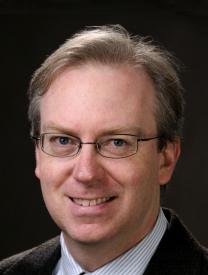
Jay D. Sau is a Professor of Physics at the University of Maryland, College Park, and Co-Director of the Joint Quantum Institute (JQI). His research focuses on theoretical condensed matter physics, particularly topological quantum computing, quantum many-body systems, and Majorana fermions. He holds affiliations with the Condensed Matter Theory Center (CMTC) and JQI. Sau received his Ph.D. from UC Berkeley in 2008. His work bridges theoretical concepts in topological materials, superconductivity, and quantum information processing. Research Interests: Sau's primary interests include applying topological principles to solid-state and cold-atomic systems for quantum computation. Key areas include topological superconductivity, Majorana fermions, quantum Hall effects, and spin-orbit coupled systems. His group explores phenomena like topological degeneracy, Weyl semimetals, and cold atomic gases. Awards: He has been recognized with the National Science Foundation CAREER Award (2016) and the Sloan Research Fellowship (2016). His work has been published extensively in high-impact journals and covers topics ranging from Majorana physics to quantum phase transitions. Advising & Labs: Sau mentors graduate students including Tamoghna Barik, Stuart Thomas, Huan-Kuang Wu, and Shuyang Wang. His research group collaborates on projects at JQI and CMTC, focusing on experimental realizations of topological qubits and quantum devices.
Nicola Marzari is a Professor of Theory and Simulation of Materials at EPFL, where he also serves as Director of the National Centre for Computational Design and Discovery of Novel Materials (NCCD). He is Chairman of Psi-k, an international network for advanced materials' computational design. Previously, he held the Toyota Chair of Materials Engineering at MIT and leadership roles at the University of Oxford, including Director of the Materials Modeling Laboratory and a Statutory Chair in Materials Modeling. His education includes a Laurea in Physics (summa cum laude) from the University of Trieste, a PhD in Physics from the University of Cambridge under Prof. Michael C. Payne, and postdoctoral work at Rutgers University with Prof. David Vanderbilt. Marzari's research focuses on computational materials science, electronic structure theory, and high-throughput simulations. He develops methods for predicting material properties using first-principles approaches, machine learning, and quantum espresso software. Key areas include energy materials (batteries, thermoelectrics), magnetic materials, and optoelectronic systems. His work bridges fundamental physics and practical material design, emphasizing reproducible workflows and open-source tools like koopmans and AiiDA . His recent articles highlight advancements in machine learning for materials interfaces, dynamical Hubbard functionals, and thermal conductivity modeling. He actively contributes to EuroHPC initiatives for exascale materials design and OPTIMADE standards for materials data exchange. Marzari leads interdisciplinary teams at EPFL and collaborates globally on projects ranging from defect engineering in semiconductors to AI-driven materials discovery. His research aims to accelerate the development of sustainable energy and electronic technologies through computational innovation.
Masatoshi Takano is a Professor at the Faculty of Science and Engineering, Waseda University, specializing in theoretical studies of nuclear physics, particle physics, and astrophysics. His work focuses on nuclear equations of state (EOS) for neutron stars and core-collapse supernovae, incorporating realistic nuclear forces like the Argonne v18 and Urbana IX potentials. He has developed variational methods with explicit energy functionals to model hyperonic nuclear matter, spin-orbit forces, and finite-temperature effects. Education : PhD in Science, Waseda University Professional Memberships : American Physical Society, Japan Physical Society Research spans neutron star structure, supernova simulations, and nuclear matter phase transitions. His recent presentations address neutrino emission rates, braking radiation in nuclear matter, and cluster variational methods. Key collaborations include H. Togashi, K. Nakazato, and K. Sumiyoshi. Scientific contributions involve refining variational energy expressions for asymmetric nuclear matter, incorporating three-body forces, and studying pion condensation effects on neutron star cooling. He has applied his EOS models to multidimensional supernova simulations and cosmic ray detector design.
Alejandro Strachan is an Assistant Professor of Materials Engineering at Purdue University's College of Engineering. His research focuses on molecular modeling of advanced materials, with specific emphasis on atomistic and mesoscale simulations of condensed-phase chemistry, active materials, nanotechnology, and mechanical properties of structural materials. Ph.D. in Physics, University of Buenos Aires (1998) Postdoctoral Research, Caltech's Materials Process Simulation Center (1999-2002) Strachan's work integrates computational methods with machine learning to study material behavior under extreme conditions, including shock waves and high-pressure environments. His research spans energetic materials, phase transitions, and multiscale modeling frameworks. Recent publications highlight trends in combining quantum-accurate simulations with deep learning for non-equilibrium systems, FAIR data infrastructure for materials discovery, and multiscale reactive models for energetic composites. He also explores mechanochemistry, defect dynamics, and microstructure-property relationships. His computational simulations often address practical challenges in material stabilization, polymer interactions, and hotspot formation mechanisms. Strachan actively contributes to open science initiatives through platforms like nanoHUB and HUBzero.
Charles Kane is the Christopher H. Browne Distinguished Professor of Physics at the University of Pennsylvania's School of Arts & Sciences, Department of Physics and Astronomy. His research focuses on quantum electronic phenomena in solids, particularly topological insulators, quantum spin Hall effects, graphene, and carbon nanotubes. He holds numerous academic chairs and fellowships, including the Class of 1965 Endowed Term Chair and IBM Predoctoral Fellowship. His honors include the Benjamin Franklin Medal, National Academy of Sciences membership, and the Oliver Buckley Condensed Matter Prize. Education: Ph.D. in Physics from MIT (1989) and B.S. in Physics from the University of Chicago (1985). Research Interests: His work integrates quantum field theory and numerical simulations to explore topological phases of matter. Key areas include the theory of topological insulators, quantum spin Hall effects, and nanoscale electronic systems. He emphasizes experimental collaboration to bridge theoretical and applied physics, with a focus on materials like graphene and carbon nanotubes. Articles Trends: Recent publications highlight advancements in topological density correlations, Fermi sea topology, and topological superconductivity. His work often addresses symmetry-enriched phases, quantum transport, and novel electronic states in low-dimensional systems. Awards: Benjamin Franklin Medal (2015) Elected to National Academy of Sciences (2014) Lindback Award for Distinguished Teaching (2014) Physics Frontiers Prize (2013) Grants & Advising: Recipient of Simons Investigator grant (2012) and Oliver Buckley Prize (2012). His research group advises on topological materials and quantum phenomena, though specific student names are not listed in the text. Labs & Teams: Leads research in Penn's Department of Physics, contributing to advancements in condensed matter theory and topological quantum computing.
Dr. Robert Green is an Associate Professor in the Department of Physics & Engineering Physics at the University of Saskatchewan. His research specializes in condensed matter physics with focus on quantum materials, strongly correlated electron systems, and synchrotron spectroscopy techniques. The Green group investigates electronic properties of novel materials including oxide superlattices, magnetic van der Waals materials, and correlated transition metal compounds. Current research examines charge transfer mechanisms in oxide heterostructures, spin crossover phenomena in Mott insulators, and layer-dependent magnetic properties in 2D materials. Dr. Green utilizes advanced synchrotron spectroscopy and scattering techniques to probe electronic and magnetic structures. Recent publications focus on interfacial charge transfer, computational tools for quantum many-body systems, and global optimization of X-ray reflectometry. Research outputs appear in condensed matter physics and materials science journals, with emphasis on quantum materials design, electronic structure characterization, and novel magnetic phenomena. The group maintains active collaborations with synchrotron facilities for materials characterization.
Kieron Burke is a Distinguished Professor in the Department of Chemistry and Department of Physics at the University of California, Irvine (UCI), where he also leads the Burke research group. His academic contributions focus on advancing density functional theory (DFT), a cornerstone of computational quantum mechanics. He collaborates with institutions like Google Accelerated Science and DeepMind to integrate machine learning into DFT, enhancing its predictive power for materials and chemical systems. His research spans theoretical and computational physical chemistry, materials science, and quantum mechanics. Notable achievements include pioneering density-corrected DFT and exploring DFT applications in extreme conditions like planetary interiors and fusion reactors. Prof. Burke's work is internationally recognized, with over 25,000 annual citations, and he holds prestigious fellowships from the American Physical Society and British Royal Society of Chemistry. Prof. Burke's educational initiatives include teaching a popular graduate course on machine learning for scientists and advocating for interdisciplinary training. His research group includes students from chemistry, physics, math, computer science, and engineering, reflecting his belief in cross-disciplinary approaches to scientific challenges. Awards: Fellow of the American Physical Society, British Royal Society of Chemistry, AAAS; Member of International Academy of Quantum Molecular Sciences Labs/Teams: Burke Research Group, focusing on DFT development and machine learning applications
Prof. Jelena Klinovaja is a Professor in the Department of Physics at the University of Basel, affiliated with the Philosophisch-Naturwissenschaftliche Fakultät. She holds leadership roles in research groups focusing on quantum theory of condensed matter, topological systems, and spin phenomena. Her career includes a PhD from the University of Basel (2012), a Harvard Fellowship (2013), and tenure as an assistant (2014) and associate professor (2019) before her current rank. She leads research on topological insulators, graphene, and Majorana fermions, with applications to topological quantum computing. Notable awards include the Swiss Physical Society Prize (2013) and an ERC Starting Grant (2017). Her work combines theoretical physics with experimental collaborations, particularly in nanowires and superconducting systems. She mentors students in the Honors Track program and contributes to interdisciplinary initiatives like NCCR SPIN. Education: Bachelor/Master from Moscow Institute of Physics and Technology (2007-2009); PhD in Theoretical Physics from University of Basel (2012). Research Interests: Topological effects in condensed matter, spintronics, quantum transport, Majorana fermions, and cavity quantum electrodynamics. Publications span over 50 peer-reviewed articles since 2012, focusing on topics like Josephson junctions, topological superconductivity, and hybrid systems. Her work bridges theoretical models with experimental realizations, emphasizing practical applications in quantum technologies. Awards: Swiss Physical Society Prize (2013), ERC Starting Grant (2017). Active in the scientific community, she collaborates with institutions worldwide and advises PhD students in quantum physics and nanoscience. Her research group also explores magnonic systems and topological materials engineering.
Dr. Tobias Binninger is a researcher at the Institute of Energy Technologies (IET) within Forschungszentrum Jülich GmbH, Germany. His work focuses on theoretical and computational modeling of materials for electrochemical energy systems , particularly in the context of catalysts and solid-state electrolytes. His research spans topics such as electrochemical interfaces , redox reactions , quantum capacitance , and nanoparticle stability , as reflected in his publications in high-impact journals. He has contributed significantly to understanding the Oxygen Evolution Reaction (OER) mechanisms and solid-state electrolyte materials through advanced computational methods like quantum annealing and density functional theory. Recent studies highlight his focus on electrolyte correlation effects , metal-support interactions , and co-electrolysis cell design for CO 2 reduction. Despite lacking explicit details on awards or mentoring, his work addresses critical challenges in energy storage , catalyst degradation , and quantum modeling of electrochemical systems .
William Newman is a Professor in the Department of Earth, Planetary, and Space Sciences at the University of California, Los Angeles (UCLA), currently on sabbatical at the Institute for Advanced Study in Princeton. His primary academic home resides within UCLA's geoscience and planetary science division. His educational credentials include: B.Sc. (Hon.) in Physics from the University of Alberta, Canada (1971) M.Sc. in Physics from the University of Alberta, Canada (1972) M.S. in Astronomy and Space Science from Cornell University (1975) Ph.D. in Astronomy and Space Science from Cornell University (1979) Professor Newman applies theoretical physics and applied mathematics to solve critical real-world problems across multiple disciplines. His research spans statistical techniques for climate change assessment, earthquake hazard modeling, solar system evolution (including collision risks from trans-Jovian bodies), astrophysical jet dynamics, and pattern emergence in complex systems. This interdisciplinary work bridges geophysics, planetary science, and astrophysics through rigorous mathematical frameworks. His publication record (2024-2016) reveals three dominant research thrusts: (1) Semiconductor electron emission physics (GaAs nanotips, photoemission sources), (2) Solar system dynamics and celestial mechanics (N-body simulations, impact hazards), and (3) Complex systems analysis (earthquake patterns, statistical record-breaking events). These intersect physics, earth sciences, and computational mathematics through shared methodologies in statistical modeling and nonlinear dynamics. At UCLA, Newman developed innovative courses including a natural disasters undergraduate GE course (satisfying diversity requirements) and graduate-level planetary atmospheres and continuum mechanics curricula. His academic contributions include over 100 refereed papers and graduate textbooks published by Princeton and Cambridge University Presses, focusing on mathematical methods for geophysics and space physics.
Daniel Braun is a Professor at the University of Tübingen, affiliated with the Faculty of Mathematics and Natural Sciences and the Department of Physics. He holds the Theoretical Physics (Braun Chair) and has been active in academia since October 1, 2013. Email: daniel.braun@uni-tuebingen.de Research Interests: His work bridges quantum optics, metrology, and gravitational physics. He explores quantum-enhanced measurement techniques, nonlinear optical phenomena in curved spacetime, and mechanical systems for fundamental tests of physics. Institutional Affiliation: Institute for Theoretical Physics (ITP) Recent Publications (2025-2024): Focus on quantum-limited interferometry, machine learning applications in quantum channels, gravitational effects in particle accelerators, and nonlinear soliton dynamics in relativistic settings. Scientific Awards: No specific awards mentioned in the provided data.