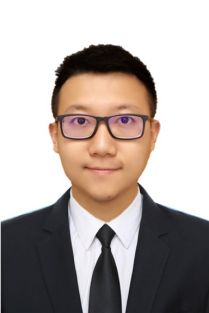
Shunxiang Cao is an Assistant Professor at Tsinghua Shenzhen International Graduate School in China, where he has worked since July 2022. He earned his Ph.D. in Aerospace Engineering from Virginia Tech (United States) between August 2014 and August 2020 and completed his B.S. in Aerospace Engineering at Beihang University (China) from September 2010 to May 2014. Prior to his current role, he served as a Postdoctoral Scholar at the California Institute of Technology (United States) from November 2019 to May 2022. Teaches courses such as Advanced Numerical Analysis, Numerical Methods for PDEs, and Fluid-Structure Interaction simulations. Research Interests include fluid-structure interaction, computational fluid dynamics, shock/bubble dynamics, material failure analysis, embedded-boundary methods, resolvent-based optimization, Kalman inversion, high-intensity focused ultrasound, and digital twin technology. His work focuses on numerical modeling, optimization, and fluid-solid coupling mechanisms in diverse applications like underwater propulsion, energy storage membranes, and medical acoustics. Scientific Awards include the USNCCM16 Conference Award (2021), Graduate Fellowship at Virginia Tech (2014-2015), Merit Undergraduate Student in Beijing (2014), and Singapore Technology Engineering Fellowship (2010-2013).
Southern University of Science and Technology (SUSTech)China
Xiuhao Deng is an Associate Research Fellow and PhD Supervisor at the Institute of Quantum Science and Engineering, Southern University of Science and Technology (SUSTech), with adjunct positions at Pengcheng Lab and Hefei Lab. He obtained his B.S. in Modern Physics from University of Science and Technology of China (USTC) in 2005, followed by an M.S. in Atomic and Molecular Physics from USTC (2009) and a Ph.D. in Physics from University of California, Merced (2015). Research Interests: Driven quantum systems Quantum control theory and open quantum systems Superconducting and spin qubits Quantum error correction Quantum simulation Quantum computing His work focuses on robust quantum gate engineering, scalable quantum control, and error mitigation in multi-qubit systems. Recent publications emphasize geometric correspondence methods, noise resilience, and hardware optimization. Academic Activities: Organized QIP 2020 (international quantum conference) Reviewer for Phys. Rev. X , Phys. Rev. Lett. , and other journals Transferred to Shenzhen International Quantum Academy in 2025 after tenure at SUSTech
Southern University of Science and Technology (SUSTech)China
Professor Chen Lang is a faculty member in the Department of Physics at Southern University of Science and Technology (SUSTech), where he serves as Vice-chair of the Department. He has made significant contributions to the field of complex functional oxides and multiferroic materials. Professor Chen received his Ph.D. in Materials Science from the University of Maryland in 2005, following an M.S. in Condensed Matter Physics from the Institute of Physics, Beijing (2000) and a B.S. in Physical Electronics from Fudan University (1997). Prior to joining SUSTech in 2013, he served as an Assistant Professor at Nanyang Technological University, Singapore (2006-2013) and completed a postdoctoral fellowship at CNRS, France (2005-2006). Professor Chen's research primarily focuses on multiferroic complex oxides , strain and domain engineering , and emergent materials and metamaterials . He has made groundbreaking contributions to understanding the nonlinear piezoresponse of ferroelectric thin films and elucidating ferroelastic domain dynamics. His work on low symmetry phases, domain structures, and in-plane polarization rotation in epitaxial BiFeO3 thin film systems has been particularly influential. Analysis of Professor Chen's recent publications reveals a strong focus on multiferroic materials, complex oxides, and strain engineering. His work spans from fundamental studies of domain structures and phase transitions to applied research on novel materials with exceptional electromagnetic and mechanical properties. A notable trend in his recent work is the exploration of high-entropy oxides and their unique magnetic and mechanical properties. Pengcheng Scholar, Shenzhen Municipality Shenzhen Municipal Government's Peacock Program B category Shenzhen local-level leading talent Navigation Talent B category Nanyue Excellent Teacher Shenzhen Excellent Teacher SUSTech Outstanding Young Scholar SUSTech Excellent Service Award Professor Chen has published over 140 journal papers in prestigious journals including Nature Materials, Physical Review Letters, Advanced Materials, and Nature Communications. His work has been cited over 4,500 times with an h-index of 36. He has secured more than 30 million yuan in research funding, including 7 national-level projects and 7 provincial/municipal-level projects. He serves as a reviewer for numerous prestigious journals such as Advanced Materials and Applied Physics Letters. Professor Chen leads an active research group at SUSTech focusing on complex functional oxides and multiferroic materials. His team employs advanced techniques for materials synthesis and characterization to explore novel electromagnetic and mechanical properties in thin film systems. The group has made significant contributions to understanding domain dynamics, strain effects, and phase transitions in functional oxide materials.
Southern University of Science and Technology (SUSTech)China
Peng Chen is an Associate Professor at the Shenzhen-Hong Kong Institute of Microelectronics, Southern University of Science and Technology, Shenzhen, China. He has served in this position since December 2022, following his role as an Assistant Professor from September 2021 to December 2022 at the same institution. Educational Background: Ph.D. (2010-2016), Institute of Physics, Chinese Academy of Sciences, China Bachelor (2006-2010), Department of Physics, Northwestern University, China Dr. Chen's research focuses on developing high-performance two-dimensional semiconductor information devices and integration technologies for the post-Moore era. His work spans the development of new materials, novel device principles, and high-performance integrated circuits based on 2D electronic devices. By exploring the fundamental physics of 2D materials and their heterostructures, his research aims to overcome the performance limitations of conventional micro- and nanoelectronic devices and circuits. His publication record demonstrates expertise across multiple domains of 2D materials research, with particular emphasis on transition metal dichalcogenides like WS2 and WSe2. His work spans from fundamental material synthesis to device physics and practical applications in electronics and optoelectronics, reflected in publications in high-impact journals including Nature, Science, and Nature Materials. Scientific Awards: National High-level Young Talent Program (2022) Shenzhen High-level Talent Program (2021) First Prize of Science and Technology Award of China Materials Research Society (2020) Director Scholarship of Institute of Physics, Chinese Academy of Sciences (2015, 2013) Three Good Students of Chinese Academy of Sciences (2014, 2013) Dr. Chen serves as a Doctoral Supervisor with an impressive publication record of over 40 papers in top international journals, including 2 Nature, 1 Science, and 1 Nature Materials papers. His work has been cited over 4,000 times with an H-index of 29. He has secured funding through the National Natural Science Foundation of China's High-level Young Talent Program, a general program, and projects from the Shenzhen Municipal Science and Technology Innovation Commission. He actively serves as a reviewer for multiple journals and as a fund reviewer. Dr. Chen leads a research group focused on high-performance and new principle logic and sensing devices, exploring applications in next-generation information and life health technologies. The group maintains a strong academic atmosphere and welcomes postdoctoral fellows and graduate students with backgrounds in microelectronics, physics, materials science, and biology.
Southern University of Science and Technology (SUSTech)China
HUANG Li is an Associate Professor in the Department of Physics at Southern University of Science and Technology (SUSTech) , where she has been since September 2019. She joined SUSTech in February 2013 as an Assistant Professor, advancing to her current rank. Her research focuses on quantum materials , novel energy materials , nonequilibrium phase selectivity , and surface/interfacial phenomena using first-principles computational methods and theoretical models . Educational Background: Ph.D. in Physics, Fudan University (2006) M.Sc. in Physics, Xiangtan University (2002) B.A. in Physics, Xiangtan University (1999) Research Interests span quantum materials (e.g., Moire superconductors , topological insulators ), novel energy materials (e.g., thermoelectrics , supercapacitors ), and surface/interfacial dynamics. Her recent work emphasizes two-dimensional systems , spin-valley-layer coupling , and nonequilibrium phase transitions in van der Waals heterostructures and metal-organic frameworks . Publications highlight her expertise in ab initio molecular dynamics , density functional theory , and quantum transport . Key trends include Moiré engineering in twisted bilayers, strain-tunable magnetism , and ferroelectricity in layered materials. Scientific Awards and Grants include leadership roles in projects funded by the National Natural Science Foundation of China and Shenzhen Science & Technology Commission . Notable grants address quantum state control in Moiré superlattices , nonlinear Hall effects , and thermoelectric performance enhancement . Professional Experience: Postdoctoral Research Associate at Ames Laboratory (2008–2012) Joint Postdoc at Georgia Institute of Technology & Ames Laboratory (2006–2008) Visiting Scholar at Harvard University & Oak Ridge National Laboratory (2004–2006)
Southern University of Science and Technology (SUSTech)China
Dr. Shuping Liu is a Research Assistant Professor at the Institute for Quantum Science and Engineering , Southern University of Science and Technology (SUSTech), China, since August 2019. Her research focuses on solid-state quantum memory, rare earth crystals, and their applications in quantum storage, communication, and computation. Ph.D. in Materials Sciences (2016), Shanghai Institute of Ceramics, Chinese Academy of Sciences Joint Ph.D. (2015), Institute of Physics, Czech Academy of Sciences Master's (2012), University of Science and Technology of China Bachelor's (2011), Wuhan University of Technology Dr. Liu's expertise spans design, synthesis, and high-resolution spectroscopy of rare earth ion-doped materials, with applications in optical quantum technologies and scintillation ceramics. Her work addresses defect engineering, size reduction of nanoparticles, and optimization of luminescence properties for quantum memory systems. Her publications emphasize quantum-grade nanomaterials (2020–2021), coherent spectroscopy (2019), and scintillator optimization (2014–2017). Key methodologies include defect control, codoping strategies, and nanoscale fabrication, aligning with quantum storage and radiation detection technologies. Dr. Liu has no explicitly listed scientific awards or advisees in the provided text. Her collaborative work spans institutions including CNRS (France), Academy of Sciences of Czech Republic, and Shanghai Institute of Ceramics.
Southern University of Science and Technology (SUSTech)China
Jiaqing He is a Chair Professor and Vice Dean at the College of Science , Southern University of Science and Technology (SUSTech) , and serves as Head of the Department of Physics. He obtained his PhD in Physics from Wuhan University and Germany Juelich Research Center in 2004, followed by postdoctoral and faculty roles at Brookhaven National Laboratory (2004–2008), Northwestern University (2008–2012), and Xi'an Jiaotong University (2012–2013) before joining SUSTech in 2013. Education PhD in Physics (2004), Wuhan University & Juelich Research Center BS in Physics (1998), Wuhan University Research Focus : His lab specializes in Transmission Electron Microscopy (TEM) for atomic-scale characterization of materials, particularly thermoelectric materials for energy conversion. Key areas include defect analysis, phase transformations, and structure–property correlations in chalcogenides, skutterudites, and 2D systems. Techniques span HRTEM, STEM, EELS, and in-situ TEM. Recent Publications highlight advancements in high-entropy materials, nanostructure engineering, and resonant phonon scattering mechanisms. His work bridges fundamental physics and scalable device applications. Awards & Honors : Pengcheng Scholar Distinguished Professor (2014) Ministry of Education Natural Science Second Prize (2017) Shenzhen Natural Science Second Prize (2017) & First Prize (2022) Shenzhen May 1st Labor Medal (2018) Laboratory Overview : The JQHe Research Lab integrates TEM with thermoelectric material development, emphasizing atomic-level insights into defects and interfaces. It also explores flexible Bi2Te3 films and high-entropy GeTe-based systems for power generation.
Southern University of Science and Technology (SUSTech)China
Hong Wei is a Professor at the Department of Mechanics and Aerospace Engineering , Southern University of Science and Technology (SUSTech) . He also serves as Director of SUSTech Global and Associate Dean of Academic Affairs at Shuli College . Previously, he held tenured positions at Iowa State University and dual appointments at Hokkaido University . Hong Wei earned his B.S. and M.S. in Solid Mechanics from Tsinghua University , followed by a Ph.D. in Engineering Science from Harvard University (2006) . His research spans solid mechanics , soft matter mechanics , dielectric breakdown , smart materials , electrochemical reactions , and surface instability . Current work focuses on phase-field modeling and coupled deformation-transport phenomena in soft materials. His representative publications cover cutting-edge topics in Science Advances , J. Mech. Phys. Solids , and Soft Matter , with trends in hydrogel mechanics , electromechanical coupling , and material failure analysis . Scientific recognition includes being named a Fellow of the American Society of Mechanical Engineers (ASME) , alongside editorial roles in journals like Meccanica and International Journal of Applied Mechanics . Hong Wei has mentored students such as Sun Xingjian (doctoral student), Wang Sicong , Pan Lei , Feng Xianke , and Shen Zhiyuan , who received the Lixue Scholarship . He has led international projects and secured grants from the National Science Foundation (USA) and National Natural Science Foundation of China .
Southern University of Science and Technology (SUSTech)China
Dr. Yanan Dai is an Associate Professor in the Department of Physics at Southern University of Science and Technology (SUSTech), where he joined in August 2022. His research focuses on probing exotic excited state dynamics in quantum materials using ultrafast optical and photoelectron spectromicroscopy techniques. Previously, he worked as a postdoctoral research scientist at Columbia University's Department of Chemistry from 2019 to 2022. B.S., Space Science & Technology, Shandong University (2013) Ph.D., Physics, University of Pittsburgh (2019) His research integrates Quantum Excited State Dynamics , Strong-field Nano-optics , and Ultrafast Spectroscopy & Microscopy to explore topological structures in condensed matter systems. Notable achievements include the first imaging of Meron (half-skyrmion)-like plasmonic spin textures using ITR-PEEM and full-Brillouin zone detection of Hot Electron Dynamics via TR-ARPES in 2D thermoelectric materials. His recent articles focus on Topological Optics , Plasmonics , and Floquet Engineering of quantum materials at nanofemto scales. Key methodologies include Structured Light Design , Extreme-UV Spectroscopy , and Spin-momentum-locking in surface plasmon polaritons. Scientific Awards: Outstanding Dissertation Award, International Organization of Chinese Physicists and Astronomers (2020) Outstanding Thesis Award, Springer (2020) At SUSTech, he teaches University Physics , Modern Optics , and Principles of Nonlinear Optics . For lab recruitment and collaborations, contact him at daiyn@sustech.edu.cn or dai.yanan@outlook.com .
Southern University of Science and Technology (SUSTech)China
Yu He is a Researcher at the Institute of Quantum Science and Engineering, Southern University of Science and Technology (SUSTech) in Shenzhen, China, where he leads research on silicon-based quantum computing and quantum simulation. He joined SUSTech in March 2020 after international postdoctoral training. Education: Ph.D. in Physics, University of Science and Technology of China (2009-2015) B.S. in Atomic, Molecular and Optical Physics, University of Science and Technology of China (2005-2009) Research Focus: Dr. He specializes in semiconductor quantum technologies with emphasis on silicon-based atomic-scale devices, quantum simulation, and quantum networks. His work bridges experimental quantum optics, solid-state physics, and quantum information processing, particularly through quantum dot systems and dopant atoms in silicon for developing scalable quantum computing architectures. Publication Trends: His 27 publications demonstrate consistent focus on experimental quantum information science. Early work centered on high-purity single-photon sources using quantum dots. Recent breakthroughs include pioneering silicon-based quantum gates and quantum simulation platforms. Publications in Nature and Physical Review Letters frequently explore quantum measurement techniques, photonic quantum walks, and semiconductor qubit control. Awards and Honors: MIT Technology Review's 35 Under 35 Innovators (China) - 2020 Top Ten Quantum Computing Experiments in the World - 2019 Top Ten Scientific and Technological Advances in China - 2017 Laboratory Development: He directs a specialized quantum device laboratory at SUSTech developing STM-based nanofabrication and millikelvin measurement systems for silicon quantum processors. His team actively recruits postdoctoral researchers and engineers for projects in quantum dot manipulation, cryogenic electronics, and quantum chip design.
Southern University of Science and Technology (SUSTech)China
Weipeng Chen serves as an Assistant Professor in the Department of Biomedical Engineering at SUSTech's College of Engineering since July 2024, pioneering research in soft matter for smart ion transport systems targeting bioinspired energy conversion and neural signal transduction applications. His academic credentials include: Ph.D. from University of Chinese Academy of Sciences/Technical Institute of Physics and Chemistry, Chinese Academy of Sciences (2018-2021) Master's degree from Hainan University (2015-2018) Bachelor's degree from Hainan University (2011-2015) Chen's core research investigates dynamic micro-nano channels in soft matter to achieve ion gating through synergistic structural changes and interfacial energy barriers. This work enables breakthroughs in bioinspired salinity gradient energy harvesting and multi-stage neural signal transduction , establishing him at the materials science-biomedical engineering nexus with strong theoretical and applied dimensions. His publication trajectory reveals consistent innovation in hydrogel-based iontronic devices, with recent high-impact papers demonstrating sophisticated control over ion transport for osmotic energy conversion (2023-2024) and neural signal transmission (2023 Science paper). These works collectively advance nanofluidic principles toward practical bioelectronic and renewable energy applications. Research funding includes: Principal Investigator of a postdoctoral project Key technical contributor to two national key R&D projects in China While specific laboratory infrastructure isn't detailed, his work operates within SUSTech's Department of Biomedical Engineering ecosystem, likely involving interdisciplinary teams developing next-generation soft matter nanofluidic systems.
Southern University of Science and Technology (SUSTech)China
Prof. Ke Wang is a faculty member at the Southern University of Science and Technology (SUSTech) since 2019, holding the title of Professor in the School of System Design and Intelligent Manufacturing. With a Ph.D. in Polymer Chemistry and Physics from Sun Yat-Sen University (2000), he also holds graduate degrees in Polymer Chemistry (M.Sc., USTC 1990) and Chemistry (B.Sc., Zhengzhou University 1984). Education: Ph.D., Polymer Chemistry and Physics, Sun Yat-Sen University (2000) M.Sc., Polymer Chemistry, University of Science and Technology of China (1990) B.Sc., Chemistry, Zhengzhou University (1984) His research focuses on polymer composites for advanced applications, including: Multiphase polymer systems Fiber reinforced composites Advanced functional composites Energy materials Electronic ceramics Recent publications highlight his work on: Polymer electrolytes for lithium batteries Thermoset composites with ultra-low dielectric loss Thermal conductivity enhancement in polymer matrices Flame-retardant materials for energy storage Composite materials for microelectronics Nanoporous functional materials in battery applications Contact Information: Email: wangk7@sustech.edu.cn Office: Room 305, Block 1, Innovation Valley, SUSTech, Shenzhen Phone: 0755-88015547
Southern University of Science and Technology (SUSTech)China
Dehu Cui is a Teaching Associate Professor at the Shenzhen-Hong Kong Institute of Microelectronics of Southern University of Science and Technology (SUSTech), Shenzhen, China. He previously served as an Assistant Professor at SUSTech's Department of Electronic and Electrical Engineering (2012–2020.03), following postdoctoral and research roles at Texas A&M University and Pennsylvania State University. Ph.D. in Electrical Engineering, Texas A&M University (2011) M.A. in Engineering Science and Mechanics, Pennsylvania State University (2007) B.A. in Engineering, Southwest Jiaotong University (1998) His research focuses on nanoimprint technology for applications in polymer quantum dot synthesis , light-emitting diodes , solar cells , biomedical functional tests via microfluidic devices, and energy resource utilization through photocatalysis/electrocatalysis. His work integrates microfluidic platforms with matrix chips and explores pattern replication on metal electrodes. Dehu Cui has published 20 papers in journals like Applied Physics Letters , Nanotechnology , and Journal of Applied Physics , accumulating over 200 SCI citations. He has secured research funding from the National Youth Natural Science Foundation, Shenzhen Technical Research Program, and the Shenzhen Peacock Program (Category C award). Shenzhen Peacock Program Category C Award Shenzhen Peacock Plan Talent At SUSTech, he teaches semiconductor devices, solid-state electronics, integrated circuit fabrication, and optoelectronic measurement techniques. His lab specializes in nanofabrication, quantum dot synthesis, and thin-film deposition methods (PLD, PECVD, ALD).
Southern University of Science and Technology (SUSTech)China
Dr. Ke Gao is an Associate Professor in the Department of Earth and Space Sciences at Southern University of Science and Technology (SUSTech) in Shenzhen, China. He joined SUSTech in 2019 after completing postdoctoral research at Los Alamos National Laboratory in the United States. Dr. Gao holds a Ph.D. in Rock Mechanics from the University of Toronto, which he obtained in 2017. His educational background includes: 2021–present: Associate Professor, Department of Earth and Space Sciences, Southern University of Science and Technology 2019–2020: Assistant Professor, Department of Earth and Space Sciences, Southern University of Science and Technology 2017–2019: Post Doc, Solid Earth Geophysics, Los Alamos National Laboratory, USA 2012–2017: Ph.D., Rock Mechanics and Rock Engineering, University of Toronto, Canada Dr. Gao's research primarily focuses on rock mechanics and fault mechanics, with particular emphasis on the development of multiphysics coupling models based on the combined finite-discrete element method (FDEM). His work investigates rock fracturing mechanisms, hydraulic fracturing, and the stick-slip characteristics in sheared granular faults. He has made significant contributions to tensor-based statistical methods for characterizing stress variability and heterogeneity in fractured rock masses. His research bridges computational mechanics with earthquake physics, creating innovative approaches to understanding fundamental geological processes. Analysis of Dr. Gao's recent publications reveals a strong focus on computational geomechanics and earthquake physics. His work consistently applies and advances the combined finite-discrete element method (FDEM) to solve complex rock mechanics problems. There's a clear progression from fundamental method development to applications in earthquake source mechanics and hydraulic fracturing. The integration of machine learning techniques with traditional computational methods represents an emerging trend in his recent work, particularly for predicting slip behavior in granular fault systems. Dr. Gao has received several notable recognitions: Best Paper Award at the 7th International Symposium on In Situ Rock Stress (2016) National Overseas High-level Talent Program (Youth) (2020) Shenzhen 'Peacock Plan' B Talents (2021) Dr. Gao serves as principal investigator for multiple research projects funded by prestigious organizations including the National Natural Science Foundation of China, Ministry of Science and Technology key research and development projects, Guangdong Province general projects, and Shenzhen City general projects. He actively mentors graduate students and postdoctoral researchers, recruiting candidates with backgrounds in solid geophysics, rock mechanics, geological engineering, computational mechanics, and related disciplines. His research group provides comprehensive training in both theoretical and experimental aspects of rock mechanics and earthquake physics. Dr. Gao is affiliated with several professional organizations including the American Rock Mechanics Association, American Geophysical Union, International Society for Rock Mechanics, Canadian Geotechnical Society, Society of American Seismology, and ASCE Engineering Mechanics Institute, reflecting the interdisciplinary nature of his work spanning rock mechanics, geophysics, and computational engineering.
Southern University of Science and Technology (SUSTech)China
Sebastian Garcia-Saenz is an Assistant Professor at Southern University of Science and Technology (SUSTech) in China, affiliated with the School of Science and Department of Physics. His research spans theoretical cosmology, gravitation, high-energy physics, and theoretical astrophysics, with a focus on early-universe physics, dark energy, and cosmic inflation paradigms. Ph.D. in Physics (2016), Columbia University, USA His work explores fundamental aspects of gravitational theories, including partially massless spin-2 fields and their implications for cosmological models. He has published extensively on non-Gaussianities in multifield inflation, modified gravity theories, and holographic applications to condensed matter systems. Key publication trends show expertise in: Cosmic inflation dynamics Dark energy and modified gravity Higher-spin field theories Non-Gaussian cosmological perturbations Holographic duality applications Scientific honors include: Young Scientist Fellowship (2021) - declined JSPS International Fellowship (2019) - declined Allan M. Sachs Teaching Award (2016) Joseph C. Pfister fellowship (2014)