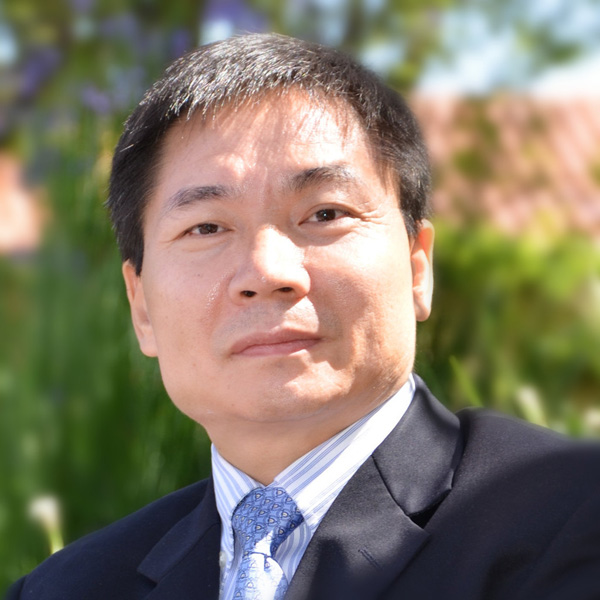
Dr. Li Baowen is Chair Professor at Southern University of Science and Technology (SUSTech) with joint appointments in the Department of Physics and Department of Materials Science and Engineering. A pioneer in phononics and thermal metamaterials, he previously held endowed professorships at University of Colorado Boulder and UC Berkeley. His research focuses on controlling heat transfer at nano scales, developing thermal metamaterials like thermal cloaks, and applying complex networks to physical systems. Dr. Li has published over 400 papers including 3 in Reviews of Modern Physics and 30 in Physical Review Letters, with more than 34,800 citations (H-index 98). He is recognized with the Brillouin Medal from the International Phononics Society and is a Fellow of the American Physical Society. He founded research centers including the China-EU Joint Lab for Nanophononics at Tongji University. His current research explores quantum phononics, machine learning applications in thermal materials, phonon lasers, and quantum sensing technologies.
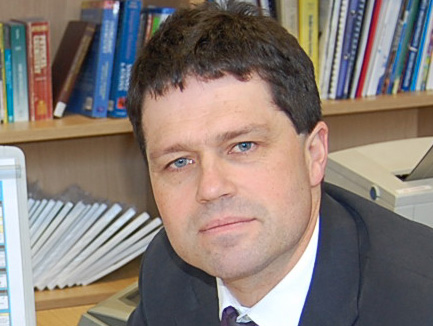
Professor Matthew Jonathan Rosseinsky holds the Chair of Inorganic Chemistry at the University of Liverpool, a position he has occupied since October 1999. His career includes significant appointments at the University of Oxford (1992-1999) and Bell Laboratories in New Jersey (1990-1992), following his DPhil at Merton College, Oxford. As a Fellow of the Royal Society and recipient of numerous prestigious awards, Professor Rosseinsky maintains an active research program and leadership roles in the international chemistry community. Professor Rosseinsky's educational background includes a First Class Honours degree in Chemistry with Quantum Chemistry from the University of Oxford (1987) and a DPhil in "Physical Properties of Superconducting Oxides and Radical Cation Salts" completed in 1990 under Professor P. Day FRS. His research focuses on the synthesis of new materials with applications in energy storage and generation, communications, separation, and catalysis. The Rosseinsky Group employs a broad range of synthesis and characterization techniques, including neutron and synchrotron X-ray diffraction, combined with computational methods in collaboration with Dr. George Darling. Current research areas include Dynapore, CO2 fuels, SOLBAT, and CATMAT projects that target specific material challenges. Professor Rosseinsky's publication record is exceptional, with 304 papers including 11 in Nature, 6 in Science, and 3 in Nature Materials, accumulating over 15,000 citations and an h-index of 56 as of 2012. His work demonstrates consistent excellence across materials chemistry, with particular emphasis on porous frameworks, electronic materials, and solid-state chemistry. Among his numerous accolades are the Harrison Memorial Prize (1991), Corday-Morgan Medal (2000), Royal Society Wolfson Research Merit Award (2002), De Gennes Prize (2009), and the prestigious Hughes Medal from the Royal Society (2011). He also holds an ERC Advanced Investigator Grant and has delivered distinguished lectures worldwide. Professor Rosseinsky has served in numerous editorial and advisory capacities, including as Associate Editor for Chemical Sciences, membership on the Royal Society Conference and Travel Grant Committee since 2007, and as a member of the International Advisory Board for the Max Planck Institut for Solid State Research since 2011. His professional activities extend to international review committees for research institutions in France, South Korea, and Saudi Arabia. The Rosseinsky Group operates within the Department of Chemistry at the University of Liverpool, collaborating extensively with researchers including Dr. John Claridge, Professor Andrew Cooper, and Professor Paul Chalker. The group maintains strong international partnerships and utilizes advanced facilities for materials synthesis and characterization to drive innovation in functional materials development.
Stefanie Dehnen is a Professor at Karlsruhe Institute of Technology (KIT), focusing on multinary, non-oxidic cluster and network compounds with applications in inorganic and materials chemistry. Her group specializes in synthesizing precursor compounds with binary main group element units to develop materials with unique electronic and structural properties. Corresponding Member, Division of Mathematics and Natural Sciences (since 2024) Her research bridges fundamental studies of cluster architectures and practical applications in solid-state chemistry, including lithium superionic conductors and photonic materials. Key themes include aromaticity in heavy-metal clusters, structural expansion, and strain-induced rearrangements. Recent publications highlight her work on bismuth-based clusters, thorium-doped systems, and lithium-ion conductive materials, reflecting expertise in synthesizing complex inorganic structures. Gottfried Wilhelm Leibniz-Preis (DFG) ERC Advanced Grant Alfred-Stock-Gedächtnispreis (GDCh) Fellow of Chemistry Europe Alexander Todd-Hans Krebs Lectureship (RSC/GDCh)
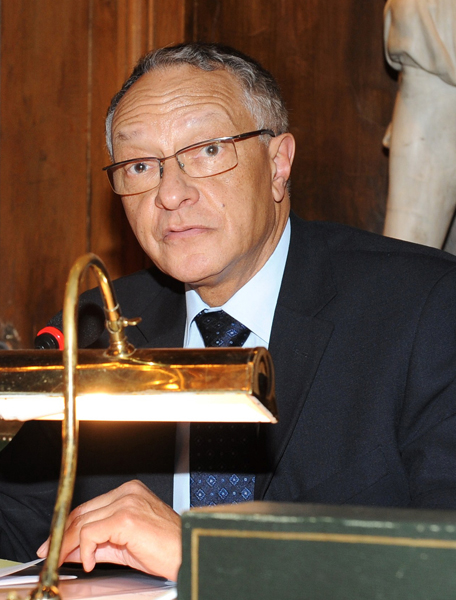
Jean Salençon is a prominent academic and researcher in mechanics and civil engineering. He currently holds the position of Senior Fellow at the Institute for Advanced Study, City University of Hong Kong since 2016. Previously, he served as Visiting Distinguished Professor (2014–2016), Chair Professor-at-large (2011–2014), and President of the Académie des sciences (2009–2010). His academic career includes roles as a Professor of Mechanics at the École polytechnique (1982–2005) and Head of the Department of Mechanical and Material Sciences at the École nationale des ponts et chaussées (1980–1985). Salençon’s research focuses on continuum mechanics , soil mechanics , yield design theory , and composite materials . His work bridges theoretical advancements with practical applications in geotechnical engineering and structural analysis. Notable contributions include probabilistic approaches to yield design, stability analysis of earthworks, and macroelement modeling of foundations under seismic loads. Key Awards: Trevithick Prize (1990), Montyon Prize (1978), Member of the Académie des sciences (1988), and multiple honorary memberships in international academies. Leadership Roles: Rector of the CISM (2004–2012), Member of the Bureau IUTAM (2000–2004), and President of the Académie des sciences (2009–2010). Salençon has authored seminal textbooks such as Handbook of Continuum Mechanics (2001) and Yield Design (2013), contributing significantly to global engineering education and research.
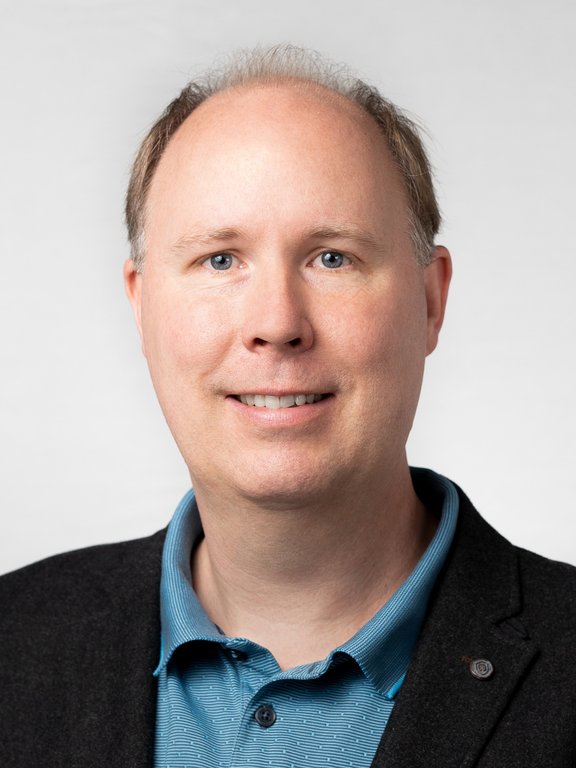
Assoc. Prof. Gunter Heymann is an Associate Professor at the Department of General, Inorganic and Theoretical Chemistry, University of Innsbruck, Austria. He leads the Heymann Lab and specializes in high-pressure synthesis, crystallography, and the design of novel inorganic materials. His research focuses on borates, chalcogenides, and luminescent materials, with contributions to understanding structural properties under extreme conditions. Heymann holds a PhD from Ludwig-Maximilians-Universität München (2007) and a Habilitation in Inorganic Chemistry from the University of Innsbruck (2018). He has received notable awards, including the Lupe Award (2009) and Römer Award (2007). His work integrates experimental and theoretical methods to explore materials for optical and electronic applications. Education: PhD in Chemistry (2007), Habilitation in Inorganic Chemistry (2018) Affiliations: Heymann Lab, Institute of General, Inorganic and Theoretical Chemistry Key Research Areas: High-pressure synthesis, crystal engineering, borate chemistry, luminescent materials Recent studies include investigations into new borate polymorphs, red-emitting phosphors, and UV-transparent materials. His publications emphasize structural characterization and functional material design, often leveraging advanced techniques like single-crystal X-ray diffraction and computational modeling.
Rudolf Petra is a distinguished Professor and Chair of Experimental Solid State Physics at the Zernike Institute for Advanced Materials, University of Groningen. She holds a Laurea in Physics from Università di Roma 'La Sapienza' (1987) and a PhD in Physics from Facultés Universitaires Notre-Dame de la Paix de Namur (1995). As Dean of Graduate Studies (2020–present) and former Director of the Groningen Graduate School of Science (2014–2018), she has significantly enhanced academic programs, boosting applications by 28% and achieving top national rankings for 7 programs. Her research focuses on materials science, surface science, and molecular rotors/switches, with over 8,820 citations and an h-index of 49. She has received prestigious awards including membership in the German National Academy of Science and Engineering and the DESCARTES Prize. Leadership Roles : Managed the Zernike Institute for nine years, elevating its THE materials science ranking to 4th globally and 1st in Europe. Education : Supervised 19 Bachelor's, 34 Master's, and 27 PhD students, notably fostering female representation in STEM. Research Impact : Her work spans 2D materials (e.g., germanane synthesis), molecular electronics, and superconductivity. Notable contributions include nonvolatile memory devices using molecular tunneling junctions and defect analysis in MoS₂. Awards : Elected to multiple academies, including the European Physical Society presidency. Collaborations : Visiting professorships at São Paulo, Santiago, Cagliari, and Modena universities. Labs/Teams : Leads experimental solid-state physics research at Zernike Institute, focusing on advanced materials characterization and device applications.
Mikhail Katsnelson is a Professor of Theoretical Physics and head of the Theory of Condensed Matter Group at Radboud University Nijmegen, Netherlands. He has held academic positions at Ural State University, Russia (1992-2001), Institute of Metal Physics (1977-2003), and Uppsala University, Sweden (2002-2004). His research spans multiple domains of condensed matter physics and quantum theory. Education: M.Sc. in Theoretical Physics (1977), Ph.D. (1980), D.Sc. (1985) Research Interests include the theory of magnetism, electronic structure of solids, lattice properties of metals, quantum many-body theory, strongly correlated systems, nanophysics, and graphene. His work bridges fundamental quantum mechanics and applied materials science. Publication Trends highlight graphene physics, quantum transport, Dirac fermions, and strongly correlated systems. His research often appears in high-impact journals like Nature, Science, and Physical Review Letters. Scientific Awards : 2013 ERC Advanced Grant 2013 Spinoza Prize 2012 Honorary Doctor of Uppsala University 2011 Knight of the Order of the Netherlands Lion 2010 Radboud Science Award 1988 Lenin Komsomol Prize As head of the Theory of Condensed Matter Group, he leads cutting-edge research in graphene and two-dimensional materials. He has refereed for top journals and served on editorial boards, including the Journal of Physics: Condensed Matter.
Morris Russell is a renowned Professor of Chemistry holding dual roles as Professor at Charles University (Prague, Czech Republic) and Bishop Wardlaw Professor at the University of St Andrews (UK). He leads the Charles University Centre for Advanced Materials (CUCAM) and the School of Chemistry at St Andrews. His research focuses on porous materials, including zeolites, metal-organic frameworks (MOFs), and their medical applications. He has pioneered innovative synthesis methods like the ADOR principle and ionothermal chemistry, revolutionizing materials science. Education: D.Phil. and B.A. in Chemistry from the University of Oxford. Research Interests: Morris’s work spans materials synthesis (e.g., ADOR principle for zeolites, ionothermal methods), medical applications (gas storage for therapeutics), and advanced characterization (X-ray diffraction, NMR). His contributions include developing MOFs for drug delivery and antibacterial technologies, commercialized through spin-off companies like MOFgen Ltd. Awards: Fellowships from the Royal Society (FRS), Royal Society of Edinburgh (FRSE), and Learned Society of Wales (FLSW). Recipient of the Royal Society Brian Mercer Award, Royal Society of Chemistry Peter Day Award, and GEMI Award. Advising & Grants: PI of a €7M EU grant for CUCAM. Strategic leadership roles in the International Zeolite Association, including Council Member and Commission Chair. Organized over 15 conferences and reviewed for major journals and agencies worldwide. Labs/Teams: Leads the Advanced Materials group at Charles University and EaSTCHEM at St Andrews, focusing on cutting-edge research in materials science and medical applications.
Willy Zwaenepoel is a Professor and Dean of the Faculty of Engineering at the University of Sydney. He holds a B.S. from the University of Gent and M.S./Ph.D. from Stanford University. Previously, he served as Dean of the School of Computer and Communication Sciences at EPFL and was a faculty member at Rice University. His expertise spans operating systems, distributed systems, and high-performance computing. Education: B.S., University of Ghent, Belgium (1979) M.S., Stanford University (1980) Ph.D., Stanford University (1984) Research Interests: Dr. Zwaenepoel focuses on distributed systems, operating systems, and their applications in database replication, virtual machine performance, and software update mechanisms. His work includes foundational contributions to distributed shared memory (e.g., Treadmarks) and startups like iMimic Networking. Awards: ACM Fellow (2000) IEEE Fellow (1998) Fellow of the Australian Academy of Technical Sciences and Engineering (2020) Recipient of the IEEE Tsutomu Kanai Award (2007) Key Contributions: His research addresses challenges in distributed systems performance, such as latency reduction in key-value stores and efficient graph processing. Current projects explore I/O optimization in virtualized environments and causal consistency for geo-replicated systems. Students/Advising: Advises Ph.D. students and postdocs, including William in database replication. His mentorship led to the Rice University Teaching Award (2000).
Sabine Andergassen is an Associate Professor at TU Wien, affiliated with the Machine Learning Research Group (E194-06). Her work bridges quantum physics and computational methods, focusing on strongly correlated electron systems and functional renormalization group (fRG) techniques. She collaborates across disciplines, integrating machine learning with quantum system analysis. Her research emphasizes the Hubbard model, exploring pseudogap phenomena, Mott transitions, and computational tools for lattice systems. She develops efficient fRG methods and modular code frameworks for lattice fermion simulations. Her interdisciplinary projects combine solid-state physics with information systems engineering. Key topics include quantum many-body systems, renormalization techniques, and computational physics applications. She actively contributes to conferences and publishes on topics ranging from single-boson-exchange fRG to cluster extensions in DMF²RG.
Clare P. Grey is the Geoffrey Moorhouse Gibson Professor in Materials Chemistry at the University of Cambridge and a Fellow of Pembroke College Cambridge. She holds an adjunct Professor position at the Department of Chemistry, State University of New York at Stony Brook, and her career spans leadership roles in academic research centers, including Director of the Northeastern Chemical Energy Storage Center (2009-2010) and Associate Director positions at Stony Brook and NSF Center for Environmental Molecular Sciences (2002-2009). Education: BA and D.Phil. (1991) in Chemistry from the University of Oxford, followed by post-doctoral fellowships at the University of the Netherlands and DuPont CR&D. Her research focuses on applying solid-state NMR and diffraction-based methods to uncover structure-function relationships in materials for energy storage (batteries, supercapacitors), energy conversion (fuel cells), and carbon capture technologies. She has pioneered advanced analytical techniques to study these systems, contributing to fundamental insights in sustainable energy solutions. Notable scientific accolades include the Royal Society Davy Medal (2014), the Arfvedson-Schlenk-Preis (2015), Honorary PhDs from the Universities of Orleans (2012) and Lancaster (2013), and multiple fellowships such as the Alfred P. Sloan Foundation and Royal Society Fellowships. Her career has been supported by prestigious awards like the NSF POWRE Award (2000) and the Camille and Henry Dreyfus Teacher-Scholar Award (1998).
Andreas Nunnenkamp is an Associate Professor at the University of Vienna, affiliated with the Department of Quantum Optics, Quantum Nanophysics, and Quantum Information. His research spans quantum optomechanics, topological materials, and non-Hermitian systems, with a focus on driven-dissipative dynamics and synthetic quantum states. Research Interests: Quantum information processing in engineered systems Topological phases and nonreciprocal transport Optomechanical quantum state stabilization Prethermal phases and time crystals Disorder effects in quantum many-body systems Publication Trends: Recent work explores non-Hermitian topology (2021-2023), quantum synchronization (2014-2017), and foundational optomechanics (2010-2013). Key themes include directional amplification, Majorana modes, and Floquet dynamics. Teaching Activities: Lab-Course: Theoretical Physics Specialization Lectures Bachelor's Seminar Quantum many-body systems courses
Leeor Kronik is a Chaired Full Professor at the Weizmann Institute of Science in Israel, where he serves as Director of the Tom and Mary Beck Center for Advanced and Intelligent Materials (since 2019). He has been a faculty member at the Weizmann Institute since 2012 and previously served as Chair of the Department of Materials and Interfaces from 2012 to 2021. Professor Kronik received his B.Sc. in Electrical Engineering, Summa Cum Laude, from Tel Aviv University in 1991 and his Ph.D. in Physical Electronics, with distinction, from the same institution in 1996. Following mandatory military service, he completed postdoctoral research as a Rothschild and Fulbright Fellow at the University of Minnesota (1999-2002). Dr. Kronik's research focuses on understanding the unique properties and behavior of materials and interfaces through first-principles quantum mechanical calculations. His work spans several key areas including halide perovskites , molecular crystals , 2D materials , and electronic structure theory . A significant portion of his research involves developing and applying density functional theory and many-body perturbation theory to predict and interpret novel experimental findings. His group has made notable contributions to optimally-tuned functionals , ensemble methods , and real-space calculations , with applications ranging from spintronic materials to biogenic structures. Analysis of Professor Kronik's recent publications reveals a strong focus on advanced materials with applications in electronics and energy. His work spans theoretical developments in computational methods, particularly in density functional theory, and their application to cutting-edge materials like halide perovskites and 2D systems. A notable trend is the integration of computational predictions with experimental validation across diverse material systems, from inorganic crystals to biological structures. His research demonstrates increasing interdisciplinary reach, connecting physics, chemistry, materials science, and biology. Professor Kronik has received numerous prestigious awards for his scientific contributions: 2021: Outstanding Scientist Award of the Israel Chemical Society 2021: Helen and Martin Kimmel award for innovative investigation 2018: Israel Vacuum Society Excellence Award for Research 2015: Inaugural UK-Israel Science Lectureship 2013: Fellow of the American Physical Society 2012: Member of the Young Israel Academy 2011: ERC Consolidator Grant 2010: Outstanding Young Scientist Award of the Israel Chemical Society 2006: Krill Prize of the Wolf Foundation Professor Kronik currently advises a research group of approximately 10 graduate students and post-doctoral researchers at the Weizmann Institute. His research has been supported by significant funding including an ERC Consolidator Grant. With over 250 peer-reviewed publications cited more than 28,000 times and an h-index of 86, his work has had substantial impact across multiple disciplines. He has presented more than 290 invited lectures worldwide, demonstrating the international recognition of his research. As Director of the Tom and Mary Beck Center for Advanced and Intelligent Materials, Professor Kronik leads a multidisciplinary team focused on developing and understanding novel materials with advanced functionalities. His research group works at the intersection of theoretical physics, materials science, and chemistry, employing computational approaches to address fundamental questions about material properties while maintaining strong connections to experimental work.
Professor Martin Schroder is a leading materials chemist currently serving as Vice President and Dean of the Faculty of Science and Engineering at the University of Manchester. He previously held executive and academic roles at the University of Nottingham (1995-2015) and the University of Edinburgh (1982-1995), culminating in his appointment as Professor of Chemistry at Manchester (2015-present). His career spans over four decades with significant contributions to porous metal-organic frameworks (MOFs) for energy and environmental applications. PhD in Chemistry from Imperial College London (1978) BSc in Chemistry from the University of Sheffield (1975) Professor Schroder's research focuses on materials chemistry , particularly metal-organic frameworks (MOFs) for gas separation and capture. His work addresses CO2 reduction , toxic gas removal , and proton conductivity through innovative framework design and functionalization. Recent publications highlight MOF applications for hydrogen storage , SO2 capture , and NO2 conversion . His 15 most recent publications (2016-2020) demonstrate sustained expertise in porous materials engineering , showing consistent focus on gas adsorption mechanisms , supramolecular interactions , and environmental remediation through MOF technology. Key trends include CO2 selectivity , dynamic framework behavior , and electrochemical sensor development . Awarded numerous honors including: Royal Society of Chemistry Nyholm Prize (2020) Tilden Lectureship & Medal (2001/02) Multiple RSC awards (2003, 2008) Honorary Doctorates (2005, 2017) Fellowships (FRSE, FRSC) He has organized major international conferences like the 1st International Conference on Metal-Organic Frameworks (2008) and led the Royal Society Discussion Meeting on 'The New Chemistry of the Elements' (2014). His work bridges fundamental inorganic chemistry with practical solutions for clean air technologies and carbon capture .
Malgorzata Witko is a full Professor and Director of the Institute of Catalysis and Surface Chemistry at the Polish Academy of Sciences (PAS) in Kraków, Poland. She has held continuous positions at this institute since 1973, progressing from assistant to professor in 1997 through presidential nomination. Her institutional affiliations include membership on Scientific Councils of the Institute of Nuclear Physics and Institute of Physical Chemistry in Poland, and active roles in the European Federation of Catalysis Societies (EFCATS) and European Research Council evaluation panels. Professor Witko's research focuses on quantum chemical approaches to catalytic processes, with expertise spanning heterogeneous, homogeneous, and enzymatic catalysis. Her work particularly examines electronic structures of transition metal oxide catalysts, oxygen activation mechanisms, and nanospace constraints in catalytic systems. She employs advanced computational methods including density functional theory (DFT) to model reaction mechanisms and surface phenomena. Her publication record includes over 130 papers with 1,740 citations and an h-index of 24. Recent research demonstrates consistent focus on computational catalysis, with publications covering vanadium/titanium oxide systems, porphyrin-based oxygen activation, enzyme reaction mechanisms, and nanospace effects in supported catalysts. Member of Polish Academy of Sciences (elected 2012) Knight's Cross of the Order of Polonia Restituta (2011) Vice President of EFCATS (2005-2009) Member of European Research Council Evaluation Panels (2006-2012) 1978 President's Award and 1st Prize from Polish Academy of Sciences Professor Witko has delivered over 110 international conference lectures including keynote addresses at NATO Advanced Institutes and major catalysis conferences. She has organized numerous international symposia on quantum chemical approaches to catalysis and serves on editorial boards of Catalysis Letters and Topics in Catalysis. Her extensive international collaborations include research groups at Fritz-Haber-Institut (Berlin), University of Vienna, and Université Pierre et Marie Curie (Paris).