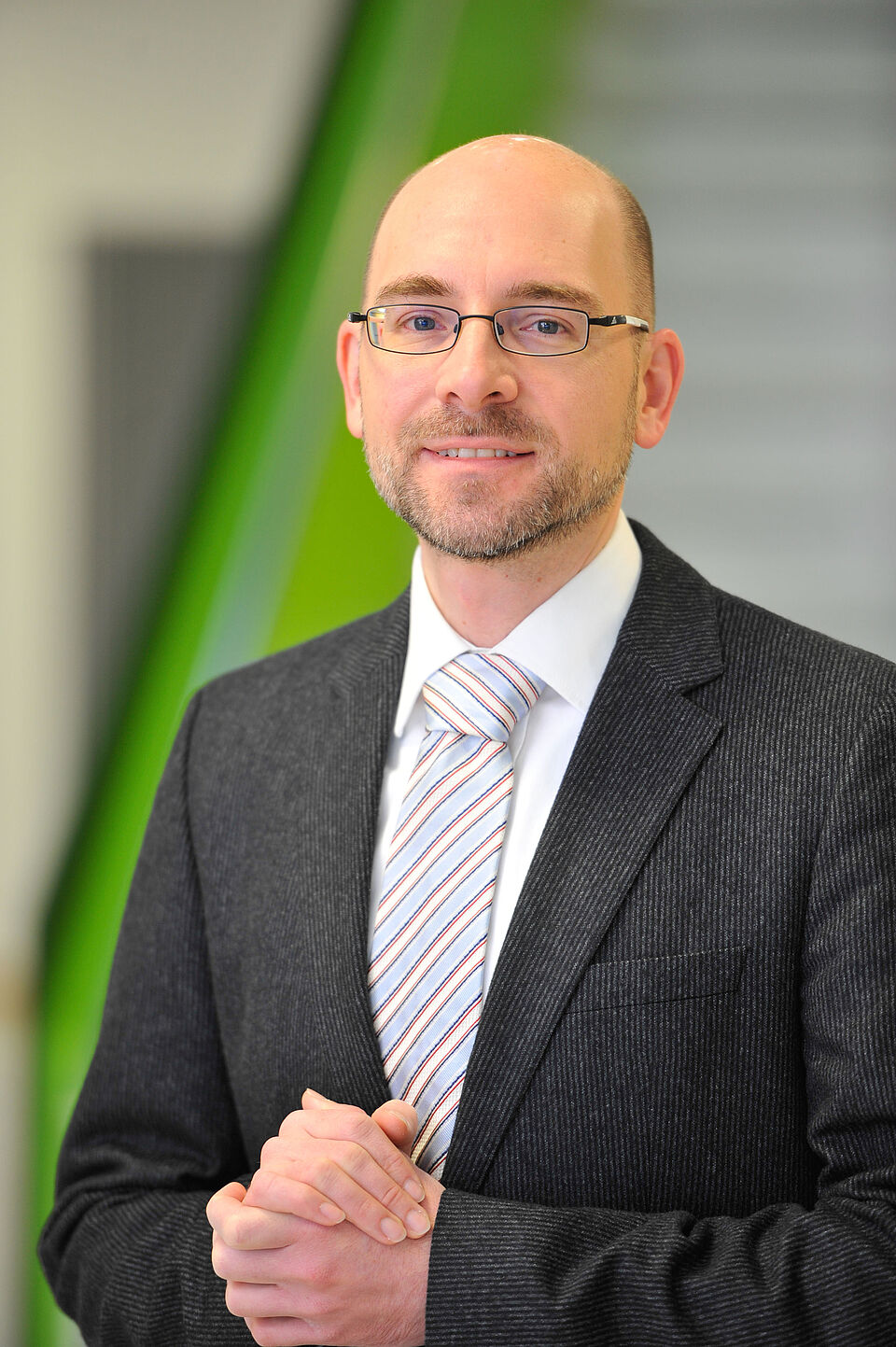
Professor Thomas Bein is affiliated with the Department of Chemistry at Ludwig-Maximilians-Universität München (LMU) , where he leads the Functional Nanosystems research group. His work focuses on synthesizing and characterizing nanostructured materials with applications in energy, catalysis, and biomedical delivery. Mesoporous nanoparticles for drug delivery Semiconductor nano-morphologies for photovoltaics Photoelectrochemical water splitting Metal-organic frameworks (MOFs) Electroactive networks His research emphasizes atomic-scale control of material architectures using self-assembly, hydrogen bonding, and covalent interactions, enabling precise tuning of electronic, optical, and catalytic properties. A review of his recent publications reveals cutting-edge investigations into covalent organic frameworks (COFs), perovskite-inspired solar materials, and functional nanoparticle systems. Key trends include optimizing energy conversion efficiency, enhancing stability in optoelectronic devices, and exploring bio-compatible nanocarriers for targeted therapies. Professor Bein’s group actively contributes to interdisciplinary projects at the intersection of chemistry, physics, and biomedical engineering, with ongoing collaborations in solar energy, sustainable materials, and nanomedicine.
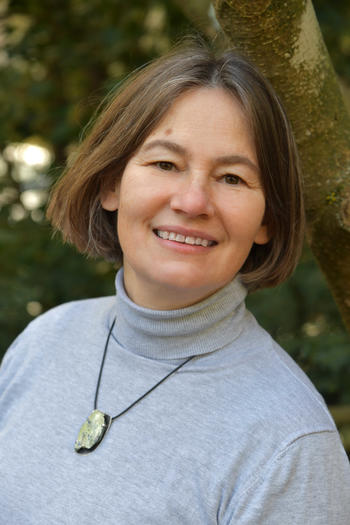
Dr. Adriana Bocchini is a Researcher at the University of Paderborn , affiliated with the Theoretical Materials Physics department and the Quantum Materials Modelling group. Her work focuses on computational modeling of materials, particularly crystal defects, surface adsorption, and electrochemical properties using advanced theoretical methods. Research Interests: Adriana's research spans Theoretical Materials Physics and Quantum Materials Modelling , with a focus on Defect modeling in ferroelectric materials Surface adsorption mechanisms Electronic structure calculations First-principles simulations Recent Publications: She has contributed to studies on radiation-induced defects in KTiOPO 4 , Mg doping effects in lithium niobate, phosphonic acid interactions with bismuth oxide, and electrochemical properties of doped RTP crystals, all leveraging computational approaches like Density Functional Theory (DFT). Labs & Teams: Adriana is actively involved in the Theoretical Materials Physics and Quantum Materials Modelling groups at the University of Paderborn, advancing computational studies in materials science.
Paul Drude Institute for Solid State ElectronicsGermany
Jun Liu is a distinguished scientist and academic, serving as a Battelle Fellow at Pacific Northwest National Laboratory (PNNL) and holding the position of Campbell Chair Professor at the University of Washington. His career spans over three decades in materials science and energy storage research, with significant leadership roles including Director of the Battery500 Consortium, a major DOE initiative focused on developing next-generation battery technologies. Dr. Liu earned his Bachelor's degree in Chemical Engineering from Hunan University, followed by a Master's degree in Ceramic Engineering and a Ph.D. in Materials Science and Engineering, both from the University of Washington. His educational background provided the foundation for his extensive career in advanced materials development. Dr. Liu's research focuses on the development, synthesis, and characterization of new materials for energy applications, with particular emphasis on battery technologies. His work spans lithium-ion batteries, lithium-sulfur systems, redox flow batteries, and magnesium-based energy storage solutions. He has pioneered approaches to improve energy density, cycle life, and safety of battery systems through innovative materials design and interface engineering. Analysis of Dr. Liu's recent publications reveals a strong focus on practical battery applications, with particular attention to lithium metal anodes, solid electrolyte interphases, and high-energy battery systems. His research increasingly addresses the challenges of translating laboratory discoveries into commercially viable battery technologies, with growing emphasis on pouch cell development and real-world performance metrics. Distinguished Inventor of Battelle (2007) PNNL's Inventor of the Year (2012, 2016) Electrochemical Society Battery Division Technology Award DOE EERE Exceptional Achievement Award PNNL Lifetime Achievement Award Fellow of the American Association for the Advancement of Science Fellow of the Materials Research Society Member of the Washington State Academy of Science Dr. Liu has secured substantial research funding through his leadership of the Battery500 Consortium and other DOE initiatives. He has mentored numerous researchers and students throughout his career, contributing to the development of the next generation of energy storage scientists. His research group at PNNL collaborates extensively with academic institutions, national laboratories, and industry partners to advance battery technology. Dr. Liu leads the Battery500 Consortium, a major collaborative effort involving multiple national laboratories, universities, and industry partners focused on developing lithium-metal batteries with significantly higher energy density than current technologies. His research group at PNNL maintains state-of-the-art facilities for materials synthesis, characterization, and battery testing, enabling comprehensive investigation of next-generation energy storage systems.
Prof. Dr. Jürgen Janek is a leading researcher in solid-state electrochemistry, affiliated with the Institute of Physical Chemistry at Justus Liebig University Giessen and serving as Scientific Director of the KIT/BASF Joint Laboratory BELLA . He manages the Giessen Center for Materials Research and leads the FestBatt competence cluster. Expertise in atomic mobility in solids Focus on electrochemical energy storage Key participant in the POLIS Cluster of Excellence His recent research explores solid-state batteries , post-lithium systems (sodium/magnesium), and bioanalytics using TOF-SIMS. Collaborations with BASF AG and Degussa AG drive application-oriented projects on material stability and degradation. Scientific accolades include: Four-time Highly Cited Researcher (Clarivate) 2022 Leopoldina Greve Prize (with Kerstin Volz) Election to the German National Academy of Sciences Leopoldina (2022) Prof. Janek's work involves interdisciplinary collaborations across KIT, Ulm University, and industry partners. His group investigates mixed-ion conductors , electrode kinetics , and plasma-electrochemistry interfaces , supported by grants from BMBF and industry.
Prof. Peter Müller-Buschbaum is a Full Professor and Head of the Chair of Functional Materials at the Physics Department of the Technical University of Munich (TUM). He has held this position since April 2018 and also served as Scientific Director of the Research Neutron Source Heinz Maier-Leibnitz (FRM-II) and the Heinz Maier-Leibnitz Center (MLZ) from 2018 to 2023. His leadership extends to multiple roles including Core Member of the Integrated Research Institute Munich Institute of Integrated Materials, Energy and Process Engineering (MEP) since 2021, and Head of the Renewable Energies Network (NRG) at MEP. Full Professor (W3), Head of the Chair of Functional Materials at TUM School of Natural Sciences (since 04/2018) Deputy Editor of "ACS Applied Materials & Interfaces" (since 01/2024) Supervising Professor "Electronics Laboratory" at TUM School of Natural Sciences (since 11/2023) Member of TUM Sustainability Board (since 05/2023) Core Member of MEP Institute (since 10/2021) Head of Renewable Energies Network at MEP (since 10/2021) Prof. Müller-Buschbaum's research spans energy materials for photovoltaics and battery technologies, smart responsive materials that adapt to environmental stimuli, and nanocomposite materials with tailored properties. His group employs advanced scattering techniques to characterize materials at the nanoscale, providing insights into structure-property relationships critical for developing next-generation energy technologies. His extensive publication record demonstrates particular expertise in perovskite solar cells, lithium-ion battery technologies, and polymer-based functional materials, with recent work focusing on improving device stability and efficiency while understanding fundamental degradation mechanisms. His publications reveal a strong emphasis on energy conversion and storage technologies, with particular attention to interfacial engineering in both photovoltaic and battery systems. The research shows sophisticated integration of materials synthesis, advanced characterization, and device engineering to address critical challenges in renewable energy technologies. His work bridges fundamental science with practical applications through collaborations with major international research facilities. Scientific Service and Recognition Member of the Council of the Cluster of Excellence "ORIGINS" (since 01/2019) Spokesperson of the Chemical Physics and Polymer Physics Association of DPG (03/2021-10/2022) Member of the European Spallation Source Scientific Advisory Panel (since 03/2011) German representative at the European Polymer Federation for polymer physics (since 03/2011) Chairman of the Keylab "TUM.solar" in the Bavarian research project "Solar Technologies Go Hybrid" (since 03/2012) Prof. Müller-Buschbaum actively contributes to academic community through editorial work, having served as Associate Editor (2012-2022), Executive Editor (2023), and currently Deputy Editor (2024-present) of "ACS Applied Materials & Interfaces". He maintains strong international collaborations with synchrotron and neutron facilities worldwide, reflecting his expertise in advanced materials characterization techniques essential for cutting-edge materials research.
Professor Bjoern Braunschweig is a W2 Professor for Physical Chemistry at the Institute of Physical Chemistry within the Faculty of Chemistry and Pharmacy at the University of Muenster. His research group focuses on fluid interfaces, hierarchical materials, and responsive systems, utilizing advanced nonlinear optical spectroscopy techniques such as sum-frequency generation (SFG) and second-harmonic scattering (SHS) to investigate molecular structures at interfaces. He leads the ERC-funded SUPERFOAM project, which aims to establish molecular-level understanding of foam formation and stability. His research interests span across interface science, soft matter physics, electrocatalysis, and responsive materials. Braunschweig's work particularly emphasizes molecular self-assembly at fluid interfaces, electrode/electrolyte interfaces in ionic liquids, and the development of light- and temperature-responsive materials. His group investigates how molecular building blocks like surfactants, polymers, and proteins determine macroscopic properties of soft materials such as foams and emulsions. The research group has published extensively on photoswitchable arylazopyrazole surfactants, thermoresponsive polymer systems, CO 2 electrocatalysis in ionic liquids, and ion-specific effects at interfaces. Their recent publications demonstrate a strong focus on molecular-level understanding of interface phenomena with applications in energy conversion, smart materials, and environmental processes. ERC Starting Grant (2014) BASF fellowship (2014) Max Buchner research fellowship (2012) DAAD Travel Grant (2012) Feodor Lynen fellowship (2009) Dissertation award (2009) Professor Braunschweig supervises multiple PhD students and postdoctoral researchers, including Billura Shakhayeva, Tim Blinzer, Tan Phat Pham, and Zugang Cong. His former students include notable researchers such as Natalia García Rey, Marco Schnurbus, and Eric Weißenborn. The group maintains strong collaborations with researchers across Europe, particularly with Michael Ryan Hansen, Andreas Heuer, and Monika Schönhoff at the University of Muenster, as well as international partners in Poland and the United States. Their research combines experimental approaches with theoretical modeling to develop fundamental understanding of interface phenomena with practical applications in materials science and energy technologies.
Prof. Dr. Aliaksandr Bandarenka is a Professor at the Technical University of Munich (TUM) in the TUM School of Natural Sciences , leading the Assistant Professorship of Physics of Energy Conversion and Storage . His research focuses on electrochemical surface science and energy materials development. Education: PhD in Chemistry from Belarusian State University (2005) Key Collaborations: Ruhr University Bochum, University of Twente, Technical University of Denmark Prof. Bandarenka's research explores: Design of electrocatalytic materials via bottom-up approaches Characterization of electrified interfaces Development of sustainable energy conversion/storage systems Surface structure-activity relationships in catalysis Recent article trends (2024) include: ORR electrocatalyst optimization using ZIF-8 templating Advanced impedance spectroscopy for battery/electrolyzer diagnostics Mesoporous oxide materials for energy applications Surface structure effects on double layer capacitance Scientific Recognition: Ernst Haage-Prize (2016) Hans-Jürgen Engell Award (2013) He teaches graduate courses on: Electrified interfaces Energy materials science Electrocatalysis fundamentals Hands-on experiments in battery technology
Christopher J. Stein is an Associate Professor of Theoretical Chemistry at the Technical University of Munich (TUM), part of the TUM School of Natural Sciences. His research focuses on theoretical (electro-)catalysis, developing electronic-structure models and solvation/embedding methods to understand and optimize catalytic processes. He leads the Stein Group, which integrates computational chemistry with high-throughput simulations to advance energy materials and battery technologies. His work emphasizes realistic modeling of catalyst behavior under operational conditions and has contributed to advancements in quantum embedding and automated reaction mechanism exploration. Education and Career: Earned his PhD in Theoretical Chemistry, with postdoctoral research at Caltech (2017-2020). Became an Associate Professor at TU Munich in 2023. He previously held roles at Karlsruhe Institute of Technology and contributed to projects like the BIG-MAP Materials Acceleration Platform. Research Interests: Theoretical chemistry, electrochemical interfaces, battery materials, high-throughput computational methods, and machine learning integration. His group explores topics like solid electrolyte interphases, charge transfer mechanisms, and automated workflows for materials discovery. Awards: While no explicit awards are listed, his contributions to materials acceleration platforms and theoretical catalysis have been widely recognized in the field. His work has been featured in journals like Journal of Chemical Physics , Chemical Science , and Angewandte Chemie . Labs/Teams: Leads the Stein Group at TUM, collaborating with institutions like the Munich Data Science Institute and MIRMI. His lab focuses on computational tools for accelerating energy material development, including quantum embedding and cloud-based simulations.
Dr. Tobias Binninger is a researcher at the Institute of Energy Technologies (IET) within Forschungszentrum Jülich GmbH, Germany. His work focuses on theoretical and computational modeling of materials for electrochemical energy systems , particularly in the context of catalysts and solid-state electrolytes. His research spans topics such as electrochemical interfaces , redox reactions , quantum capacitance , and nanoparticle stability , as reflected in his publications in high-impact journals. He has contributed significantly to understanding the Oxygen Evolution Reaction (OER) mechanisms and solid-state electrolyte materials through advanced computational methods like quantum annealing and density functional theory. Recent studies highlight his focus on electrolyte correlation effects , metal-support interactions , and co-electrolysis cell design for CO 2 reduction. Despite lacking explicit details on awards or mentoring, his work addresses critical challenges in energy storage , catalyst degradation , and quantum modeling of electrochemical systems .
Gregor Kieslich is a Research Professor at the Technical University of Munich's School of Natural Sciences, Department of Chemistry. His laboratory explores molecular and solid-state chemistry at the Catalysis Research Centre. Research focuses on structure-property relationships in functional materials including metal-organic frameworks, molecular perovskites, and hybrid systems. The group develops design principles for advanced materials with tailored electronic, mechanical, and ionic transport properties through crystal engineering approaches. Recent publications emphasize materials for energy applications, with consistent focus on structural dynamics under external stimuli. Articles frequently investigate ion transport mechanisms, framework flexibility, and defect engineering using computational and experimental methods. No specific awards or laboratory details are documented in the provided information.
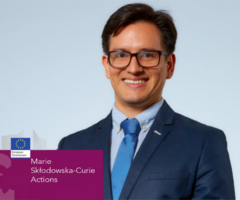
Pablo Jiménez-Calvo is a Marie Skłodowska-Curie Post-doctoral Fellow and Research Fellow in the Department of Chemistry and Pharmacy, leading the 'Carbon-Inorganic Interface Materials' project since 2023. His research focuses on energy materials for solar fuel production, particularly photoelectrocatalysis, artificial photosynthesis, and carbon nitride-based systems. He has held postdocs at the Max Planck Institute, University of Paris Saclay, and previously earned his Dr.-Ing. from the University of Strasbourg (2019). Research interests include carbon nitride heterojunctions, metal nanoparticle integration, and sustainable hydrogen production. His 2025 work highlights advancements in photocatalytic stability and organic synthesis, while 2023/2024 studies emphasize strategic hydrogen value chains and device engineering for carbon neutrality. Awards include the 2024 Materials Today Catalysis Rising Stars Award and Marie Curie Fellowship (2023). His articles span 15+ peer-reviewed publications since 2020, focusing on photocatalytic efficiency, nanomaterial design, and energy systems innovation. Collaborations include the Bachmann Group and institutions like the Solid-State Physics Laboratory (University of Paris Saclay).
Prof. Ian D. Sharp is a Professor and Head of the Functional Semiconductors and Catalysts Group at the Walter Schottky Institute, Technical University of Munich (TUM). His research focuses on synthesizing and characterizing semiconductors and catalysts for renewable energy applications, particularly solar fuel production and photocatalytic systems. He leads a multidisciplinary team investigating material interfaces, charge carrier dynamics, and advanced deposition techniques like atomic layer deposition (ALD) and molecular beam epitaxy (MBE). Research Interests: His work centers on developing materials for efficient photochemical conversion, including nitride/oxynitride thin films, nanostructured catalysts, and heterostructured materials. Key areas include optimizing semiconductor interfaces for water splitting, enhancing charge collection efficiency, and studying defect properties using advanced spectroscopic and microscopic tools. Publications: Recent work emphasizes stable photoelectrodes, chiral perovskite heterostructures, and functional nanoarchitectures. His group's contributions span energy materials, nanotechnology, and sustainable chemistry, with a focus on bridging fundamental science and practical applications. Awards: ERC Consolidator Grant (2019) Grants: Active funding for solar fuels research and materials engineering. Advising: Mentors ~20 PhD and Master's students in experimental and theoretical projects. Labs/Teams: Oversees state-of-the-art facilities for thin film deposition, characterization (e.g., in situ spectroscopy), and nanofabrication. Collaborates with institutions like EPFL, National Taiwan University, and Lawrence Berkeley National Lab.
Prof. Christian Liebscher is a Professor of Advanced Transmission Electron Microscopy at the Ruhr University Bochum , affiliated with the Faculty of Physics and Astronomy and the Research Center Future Energy Materials and Systems (RC FEMS). His work focuses on developing cutting-edge TEM techniques to understand energy-related materials' atomic-scale structure-functionality relationships. He combines aberration-corrected scanning TEM (STEM), 4D-STEM, and in-situ microscopy with machine learning to analyze complex material datasets. Education and Career: 2000–2006: Study of Materials Science at the University of Bayreuth. 2006–2010: PhD at the University of Bayreuth (summa cum laude) with a thesis on phase and dislocation analysis in superalloys. 2011–2014: Postdoc at the University of California, Berkeley, and the National Center for Electron Microscopy (Lawrence Berkeley National Laboratory). 2014–2015: Staff scientist at the University of Duisburg-Essen. 2015–2024: Group leader at the Max Planck Institute for Sustainable Materials in Düsseldorf. Research Interests: Prof. Liebscher’s research bridges microscopy innovation and materials understanding. He emphasizes atomic-scale characterization of interfaces, defects, and grain boundaries in metals and alloys using advanced STEM and 4D-STEM. His work addresses how structural features—like segregation, strain, and phase transitions—impact material properties. He also pioneers machine learning tools to automate data analysis from microscopy and tomography, advancing materials dataspaces. Key topics include energy materials (e.g., PEM fuel cells), high-entropy alloys, and nanomaterials for applications like semiconductors and electromagnetic absorption. Scientific Contributions: His publications highlight trends in grain boundary phase transitions, microstructure-property correlations, and integration of AI into microscopy. For example, recent work explores how grain boundary complexions affect mechanical strength in alloys and how in-situ TEM reveals deformation mechanisms under realistic conditions. He has contributed significantly to methodologies like scanning precession electron diffraction tomography and unsupervised machine learning for atomic-resolution datasets. Labs and Collaborations: Prof. Liebscher leads the Advanced Transmission Electron Microscopy group at RUB, building on his previous leadership at the Max Planck Institute. His lab collaborates with institutions like the Lawrence Berkeley National Laboratory and integrates interdisciplinary approaches combining experimental microscopy with computational modeling.
Prof. Dr. Georg Garnweitner is a full Professor of Nanomaterials at the Institute for Particle Technology , Faculty of Mechanical Engineering, Technische Universität Braunschweig. He has served as Dean of Studies since 2023, DFG Liaison Lecturer since 2021, and head of the Laboratory for Emerging Nanometrology (LENA) board since 2013. University Professorship in Nanomaterials (2013–present) Junior Professorship in Nanoparticles/Nanocomposites (2007–2013) Research at Max Planck Institute (2005–2006) His research focuses on nanomaterial synthesis , non-aqueous nanoparticle formation , and energy storage materials , particularly for lithium-sulfur batteries. He also explores drug delivery systems using silica aerogels and optofluidic particle analysis . His work combines materials science , surface chemistry , and advanced characterization techniques . Recent publications highlight breakthroughs in solid-state electrolyte design (2023), solvent-free drug loading (2022), and nanoparticle migration dynamics (2020). He contributes to crystal engineering (2021) and population balance modeling (2017) for nanoparticle formation.
Beate Paulus is a Professor for Theoretical Chemistry at the Freie Universität Berlin , affiliated with the Chemistry and Biochemistry college and the Chemistry department. Her research focuses on advanced quantum chemical methodologies and applications to 2D materials, spintronics, and catalysis. Current affiliation: Freie Universität Berlin Key research areas: Quantum Chemistry, Density Functional Theory, 2D Materials, Spintronics, Electrocatalysis Her work spans computational modeling of electronic structures, magnetic properties, and chemical reactions using Density Functional Theory (DFT) with specialized corrections. She investigates systems like MoS2 , graphene heterostructures , and transition metal complexes , aiming to understand and optimize properties for energy applications, biosensors, and nanoelectronics. Recent publications highlight her contributions to quantum mechanical fluorine tunnelling , spin-selective transport in doped nanoribbons , and surface functionalization strategies for 2D materials. Her group also explores mechanically interlocked molecules and redox-responsive polymers with potential biomedical applications. Beate Paulus leads the Paulus Group , which actively publishes in high-impact journals and collaborates on interdisciplinary projects involving experimental and theoretical approaches.