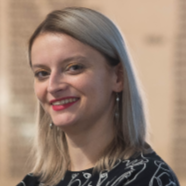
Katarzyna Walczak serves as an Assistant Professor in the Department of Mineralogy, Petrography and Geochemistry at AGH University of Science and Technology's Faculty of Geology, Geophysics and Environmental Protection. Her office is located in room 28 (building A-0, high ground floor) with contact details: +48 12 617 23 76 and kwalczak@agh.edu.pl. Her research specializes in advanced cathode materials for rechargeable batteries, with particular emphasis on structural characterization and electrochemical behavior of sodium-ion battery compounds. Key focus areas include alluaudite-type phosphates, NASICON frameworks, and layered oxide systems where she investigates phase transitions, cation arrangements, and substitution effects. This work bridges mineralogical principles with energy storage applications through rigorous materials synthesis and analysis. Analysis of her 2016-2020 publications reveals consistent investigation into structure-property relationships in battery materials, particularly examining how atomic-scale arrangements (e.g., Na/Mn ordering in NaxMnO2) and phase coexistence (O3-P3 transitions in layered oxides) govern electrochemical performance. Her methodology integrates experimental techniques with theoretical modeling to address challenges in cycling stability and ion transport.
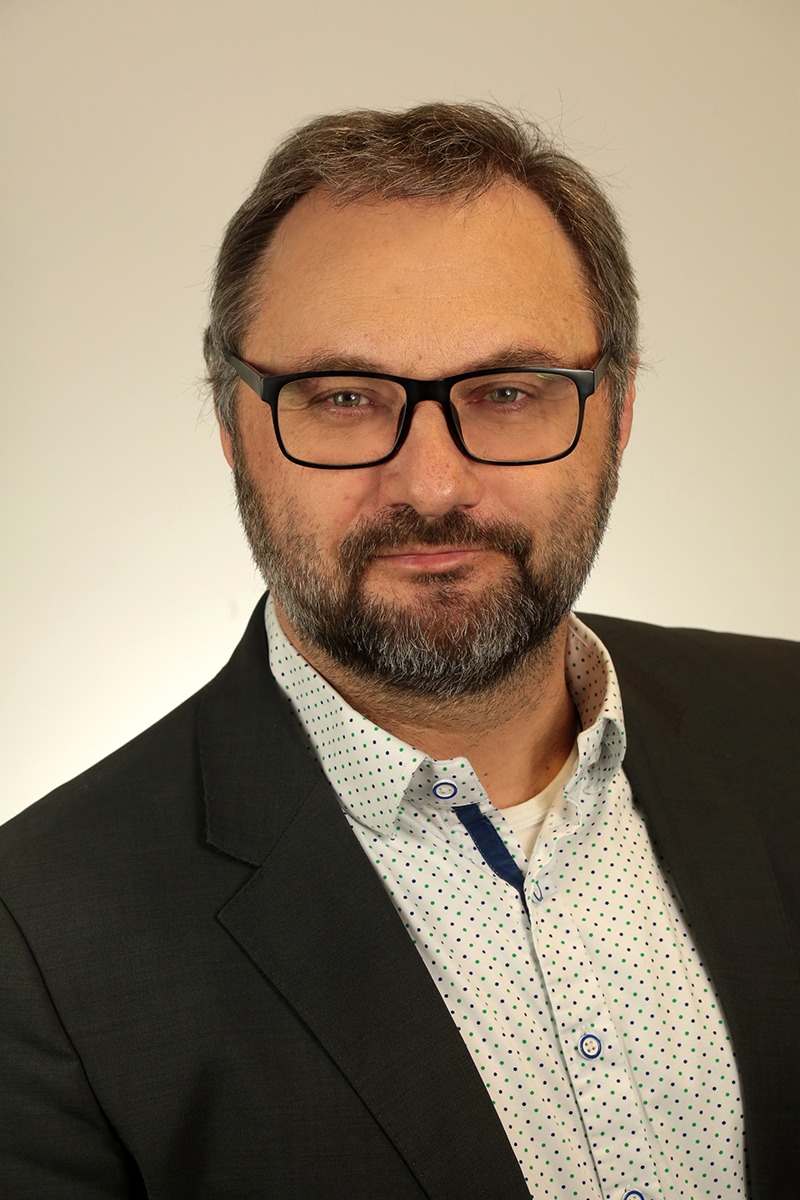
Dr. Tadeusz Miruszewski serves as an Assistant Professor at the Institute of Nanotechnology and Materials Engineering within the Faculty of Applied Physics and Mathematics at Gdańsk University of Technology. His research focuses on advanced ceramic materials for energy applications, with particular emphasis on electrical, thermoelectric, and protonic properties of complex oxide systems. His primary research interests include: Perovskite-based materials and derivatives Triple and mixed conducting oxides High entropy oxides for energy conversion Proton conduction mechanisms in ceramic electrolytes Thermoelectric properties of multicomponent systems Electrochemical characterization methodologies Dr. Miruszewski's recent publications reveal a strong research trajectory in thermoelectric and electrical properties of novel multicomponent oxide systems, particularly those based on barium cerate-zirconate frameworks. His work frequently involves development of specialized electrochemical measurement techniques, including modifications of the Hebb-Wagner polarization method. His research has significant implications for solid oxide fuel cells, electrolyzers, and other electrochemical energy conversion devices, with applications spanning from protonic conductors to thermoelectric energy harvesting. He currently manages several significant research projects: ONTHERM: Optimization of novel thermoelectric materials based on Mg-Ag-Sb-Cu-Bi high-entropy alloys (2025-07-29) POPCECT: Positrode Optimization for Protonic Ceramic Electrochemical Cells Technology (2022-06-14) Thermoelectrical properties of perovskite-structure high entropy oxides (2021-09-16) Dr. Miruszewski actively supervises student research projects and teaches numerous courses across materials physics, nanotechnology, and electroceramics at multiple academic levels at Gdańsk University of Technology, demonstrating strong commitment to academic mentoring and education in advanced materials science.
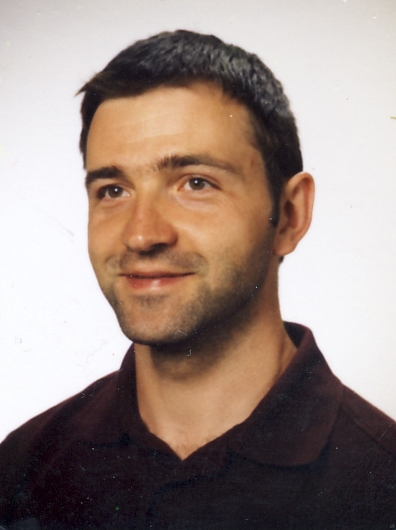
Anna Zdziennicka is a Professor at the Department of Interfacial Phenomena, Institute of Chemical Sciences, Faculty of Chemistry, Maria Curie-Skłodowska University in Lublin, Poland. She serves as Head of Department and Doctoral Program Director since 2016. Her academic career spans over three decades with specialization in physical chemistry of interfaces. Her educational background includes: Master of Chemistry (1988) from UMCS Faculty of Mathematics-Physics-Chemistry PhD (1996) on surface free energy of solids via contact angle measurements Habilitation (2011) on surface properties of surfactant-alcohol mixtures Full Professor title (2017) in chemical sciences Professor Zdziennicka's research focuses on interfacial phenomena , particularly: Surface and interfacial tension thermodynamics Adsorption and aggregation behavior of surfactants Wetting and adhesion mechanisms on solid surfaces Physical chemistry of biosurfactants and mixed systems Short-chain alcohol effects on interfacial properties Her experimental work combines contact angle analysis, surface tension measurements, and thermodynamic modeling to understand molecular interactions at interfaces. Analysis of her publication record (130+ papers) reveals consistent focus on surfactant systems, with recent emphasis on binary/ternary surfactant mixtures , alcohol-modified interfaces , and biodegradable surfactant applications . Key methodological approaches include Gibbs adsorption equation applications, surface excess concentration calculations, and wetting transition analysis. Her scientific contributions include: Guest Editor for Special Issue "Research Progress of Surfactants" Significant citation metrics: h-index 22 (WoS), 14 (Google Scholar) Publication in top journals including Advances in Colloid and Interface Science and Journal of Colloid and Interface Science Professor Zdziennicka leads research on surfactant systems at UMCS with extensive international collaboration, including work with Spanish researchers at University of Extremadura (2003-2004). Her current work focuses on mixed surfactant systems for industrial applications while maintaining strong fundamental research in interfacial thermodynamics.
Dr. Eng. Beata Kurc is an Assistant Professor at the Department of Physical Chemistry, Faculty of Chemical Technology, Poznań University of Technology. She holds a PhD in Chemical Technology and Research Equipment, supervised by Prof. Teofil Jesionowski, and completed her M.Sc. in Organic Chemical Technology. Her research focuses on innovative electrode materials and non-flammable electrolytes , particularly using ionic liquids and natural materials like starch . Her work emphasizes energy storage mechanisms in lithium and sodium-ion systems, with 15 recent publications covering topics like ionic liquid-based electrolytes biomass-derived electrodes metal oxide hybrids thermal degradation kinetics hydrogen storage materials solid-state battery components She contributes to projects like the European University EUNICE and has supervised research reports on functional materials and electrochemical systems. No scientific awards are explicitly mentioned in the provided texts.
Piotr Oramus, PhD, is an Assistant Professor in the Department of Information Technologies at Jagiellonian University in Kraków, Poland. His research focuses on parallel and distributed computing, glowworm swarm optimization algorithms, and computational materials science. He holds a PhD in Physics from Jagiellonian University (2001) and an MSc in Physics (1995) from the same institution. Education: MSc (1995), PhD (2001) in Physics from Jagiellonian University Affiliations: Department of Information Technologies, Jagiellonian University; Juna Network Academy (Juniper Networks Academic Alliance) His research interests include optimization algorithms, Monte Carlo simulations for material systems, and distributed computing architectures. Recent work has advanced glowworm swarm optimization techniques and explored atomic ordering dynamics in intermetallic alloys. Key contributions span computational modeling of phase transitions, defect chemistry, and superstructure stability. Teaching responsibilities include courses on computer networks and object-oriented design. He has published extensively on topics ranging from parallel computing frameworks to atomic migration mechanisms in materials science. Grants include BASTION, MASTER, and VENTURES (2011/8 KBN Grant) projects. He leads the Students Computer Laboratory and collaborates with the Juna Network Academy for academic-industrial partnerships.
Bydgoszcz University of Science and TechnologyPoland
Konrad Kwatek, Ph.D., is an Assistant Professor at the Faculty of Physics, Warsaw University of Technology. His research focuses on materials science, particularly in solid-state electrochemistry and ionic conductivity of ceramic systems. Specializes in lithium-ion conducting ceramics Expertise in glass-ceramic composites and doping effects Active in computational modeling of material properties Recent research trends show strong emphasis on optimizing LATP-based electrolytes through Zr-doping, additive incorporation, and synthesis techniques like spark plasma sintering. His work spans fundamental studies of ion transport mechanisms and practical applications in energy storage devices. No scientific awards or student advisement details were explicitly mentioned in the provided materials.
Dr. Katarzyna Adamska is a researcher at the Faculty of Chemical Technology , Poznań University of Technology , specializing in chemical sciences with a focus on biomaterials and surface characterization . She has contributed extensively to the application of inverse chromatography in analyzing material properties. Education: Master of Science in Engineering (Biotechnology) from Wrocław University of Science and Technology (2002-2007) PhD in Chemical Sciences from Poznań University of Technology (2007) Postgraduate Studies in Biomaterials from AGH University of Science and Technology (2011) Research Interests: Her work centers on surface modification of implant materials , inverse chromatographic techniques , and biomaterials for medical applications . Key areas include dental composites, solubility parameters, and controlled drug delivery systems. Publications: Her research spans mesoporous materials , ceramic biomaterials , and chromatographic analysis , with a focus on biomedical and pharmaceutical applications. Scientific Collaboration: She collaborates with institutions such as University of Pécs , Bayer Technology Services GmbH , and Adscientis . Teaching: Conducts lectures and laboratory classes on Biomaterials and process control methods .
Daniel Pelczarski is an Assistant Professor at the Institute of Physics and Applied Informatics, Gdańsk University of Technology. His research focuses on the photovoltaic properties of ruthenium-based dyes, electroabsorption spectroscopy of metal complexes, and optimization of electron transfer processes in dye-sensitized solar cells. He has published extensively in high-impact journals such as Scientific Reports and Molecules . Recent publications highlight his work on: Electronic excited states of Ru(II) complexes via electroabsorption spectroscopy Adsorption mechanisms of ruthenium dyes on TiO2 surfaces Design of lightweight photovoltaic modules for grid-connected systems His studies employ computational modeling (Monte Carlo simulations) and experimental techniques to improve solar cell efficiency by analyzing molecular parameters, anchoring ligand effects, and surface interactions. Pelczarski's work bridges fundamental materials science with applied renewable energy technologies.
Dr hab. inż. Beata Bochentyn is an Associate Professor at the Institute of Nanotechnology and Materials Engineering , Faculty of Applied Physics and Mathematics , Gdańsk University of Technology . She serves as Vice-Dean for Education and leads research in oxide-based energy materials. Research Interests include: Stabilization of perovskite phases for SOFC applications Development of catalytic materials for biogas reforming Thermoelectric properties of doped semiconductors Nanocrystalline oxide synthesis via microemulsion methods High-temperature transport in pyrochlore oxides Recent Publications (2022-2025) demonstrate expertise in: Topotactic alloy formation on ceramic anodes Microplastics isolation from food matrices Bimetallic catalysts for CO2/H2O co-electrolysis Phase transition control in doped oxides Organizational Involvement : Member of Gdańskie Towarzystwo Naukowe Active in Polskie Stowarzyszenie Wodoru i Ogniw Paliwowych Contributes to Zespół Fizyki Ciała Stałego (Solid State Physics Team) Methodological Expertise spans Pechini synthesis, FTIR gas analysis, and oxide reduction techniques for material fabrication.
Dr. hab. inż. Aleksandra Mielewczyk-Gryń serves as an Associate Professor at the Institute of Nanotechnology and Materials Engineering within the Faculty of Applied Physics and Mathematics at Gdańsk University of Technology. She also holds the position of Deputy Dean for Organization in the same faculty, demonstrating significant academic leadership. Her research spans several critical areas in advanced materials science: Development of chitosan-based coatings with nanoparticles for biomedical applications Surface modification techniques for titanium implants High entropy oxides for energy applications Proton conducting ceramic electrochemical cells Perovskite materials for advanced electrochemical applications Analysis of her recent publications reveals a strong focus on biomedical materials engineering, particularly in developing antibacterial coatings for implants and advancing proton-conducting materials for energy applications. Her work combines fundamental materials science with practical biomedical and energy applications. Dr. Mielewczyk-Gryń actively leads multiple research projects including NightMission (Pomeranian Researchers Night), PG_UiO (collaboration with University of Oslo), and GoPHy MiCO (Governing Principles in Hydration of Mixed Conducting Oxides), securing funding from European and international programs.
Maciej Maśka is a Professor of Theoretical Physics at the University of Silesia (since 2007), affiliated with the Faculty of Mathematics, Physics and Chemistry. His research focuses on strongly correlated electron systems, high-temperature superconductivity, and ultracold atoms in optical lattices. He leads the Condensed Matter Theory Group (CMTG) and has held leadership roles in numerous international conferences, including chairing the XXXIVth, XXXVIth, and XXXVIIIth International Conferences on Theoretical Physics. Education: M.S. (1988), Ph.D. (1995, with distinction), and Habilitation (2004) from the University of Silesia. His doctoral work addressed antiferromagnetism and superconductivity in the t-J model under Prof. J. Zielinski’s supervision. Research Interests: Superconductivity in magnetic fields and inhomogeneous systems Nanoscopic physics (quantum dots/rings, transport properties) Ultracold atoms in optical lattices (Mott transitions, phase coherence) Electronic structure of molecular and solid-state systems Recent Work Trends: Experimental collaboration with institutions like NIST and Georgetown University focuses on simulating correlated electron phenomena using cold atoms. Key contributions include theoretical models for magnetic phase transitions, superconductivity in novel materials, and molecular formation in quantum gases. Awards include multiple Rector’s Awards (University of Silesia) and distinction in both his M.S. and Ph.D. He serves on the Polish Physical Society’s Election Commission and organizes major international conferences in theoretical physics. Academic Service: Coordinator of Distance Learning initiatives (2004–present), member of the Faculty Council (1995–present), and advisor to the Department of Computer Sciences. Active in promoting computational infrastructure and library resources at the university. Labs/Teams: Leads the Condensed Matter Theory Group (CMTG) and collaborates internationally on projects like the TEAM-funded 'Correlations and Coherence in Quantum Materials' (2011–2014).
Dr Joanna Dobrzyńska is an Assistant Professor at the Department of Analytical Chemistry, Faculty of Chemistry, University of Maria Curie-Skłodowska. She holds a PhD in Chemical Sciences (2017) and a Master's degree in Chemistry from UMCS (2009). Specializes in trace element enrichment on microporous adsorbents Focuses on synthesis of organosilicon/carbon materials for noble metal adsorption Develops ion-imprinted sorbents and solid-state atomic spectrometry analysis Her recent work (2018-2023) focuses on adsorption materials for environmental applications, including water treatment for heavy metals (arsenic, chromium, selenium, platinum, gold), xylene removal using biochar derivatives, and analytical method development. Publications highlight functionalized mesoporous silicas, biochar modification, and ion-imprinted technologies. Key collaborations include researchers from environmental engineering (e.g., P. Godlewska, P. Oleszczuk) and interdisciplinary teams working on chemical remediation technologies.
Professor Maciej Galiński is a distinguished academic at Poznań University of Technology, serving as a Professor in the Faculty of Chemical Technology, specifically within the Institute of Technical Chemistry and Electrochemistry and the Department of Physical Chemistry. He also holds the position of Director of the Institute of Technical Chemistry and Electrochemistry. His extensive academic career includes being a Member of the Senate Committee on Budget and Finance of the Polish Parliament, the WTCH Competition Commission, the International Society of Electrochemistry, and the Electrochemical Society. Educational Background: 2020 – Professor at the Poznań University of Technology 1999 – PhD, Faculty of Chemical Technology, Poznań University of Technology 1993 – M.Sc. in Chemistry, Faculty of Chemistry, Adam Mickiewicz University in Poznań, specialization in Environmental Chemistry 1988 – Chemical technician, Chemical Technical School in Koło, Technology of Inorganic Chemical Processes Professor Galiński's research primarily focuses on electrochemical power sources, with particular emphasis on supercapacitors and Li-ion cells. His work explores the application of ionic liquids as electrolytes in chemical power sources and the processing of biopolymers for electrochemical purposes. His recent publications demonstrate a strong focus on sustainable energy solutions using biopolymers like chitosan and chitin, developing novel electrolytes and electrode materials for electrochemical capacitors and batteries. His extensive publication record shows a consistent research trajectory spanning over two decades, with significant contributions to the fields of electrochemistry and materials science. Recent work (2021-2025) has increasingly focused on sustainable materials for energy storage, particularly exploring biopolymers like chitosan and chitin as alternatives to conventional materials. Scientific Awards and Recognitions: Member of the International Society of Electrochemistry Member of the Electrochemical Society Member of the Senate Committee on Budget and Finance of the Polish Parliament Member of the WTCH Competition Commission Professor Galiński has supervised three doctoral dissertations, mentoring researchers including Krzysztof Karol Nowacki (2023), Monika Figiela (2021), and Dawid Kasprzak (2019). His research group appears to focus on developing sustainable electrochemical energy storage solutions, with particular expertise in biopolymer-based materials and ionic liquid electrolytes. The team has secured research funding for projects related to materials and electrolytes in energy storage devices, as evidenced by recent synthetic data reports from 2023 and 2025. His laboratory work centers on the Institute of Technical Chemistry and Electrochemistry, where they investigate novel materials for electrochemical applications, particularly focusing on sustainable alternatives using biopolymers. The research team has developed expertise in chitosan and chitin processing for electrochemical capacitors, creating innovative hydrogel electrolytes and electrode binders that offer environmentally friendly alternatives to conventional materials.
Prof. Dr. hab. inż. Marek Ochowiak is a Professor at the Poznań University of Technology, Faculty of Chemical Technology, where he works at the Institute of Chemical Technology and Engineering. He serves as Head of the Department of Chemical Engineering and Equipment and is an active researcher with numerous publications in chemical engineering fields. His academic career spans over two decades with significant contributions to fluid dynamics and separation processes. Prof. Ochowiak completed his academic journey with a Master of Science in Engineering in 1998 from the Faculty of Chemical Technology at Poznań University of Technology, specializing in Chemical Power Sources. He earned his Doctor of Technical Sciences in chemical technology in 2002 from the same institution, followed by his habilitation in technical sciences in Chemical Engineering in 2014 from the Faculty of Chemistry at the Silesian University of Technology. His primary research interests focus on three key areas: liquid atomization processes using various nebulizers, solid-liquid separation in vortex settling tanks, and air/gas cleaning processes. His work on atomization involves designing nebulizers with consideration of multiple dimensions and operating parameters to achieve desired spray characteristics. In separation processes, he investigates vortex settling tanks that utilize vortex motion for efficient water purification, developing modifications that demonstrate higher purification efficiency compared to standard designs. His third research area examines dust removal processes and methods for eliminating pollutants from air and flue gases using physical mechanisms, with particular attention to modifying conventional chamber filters through the application of vortex motion phenomena. Prof. Ochowiak's publication record shows a strong focus on fluid dynamics, separation processes, and chemical engineering applications. His recent work increasingly incorporates computational methods like CFD analysis and artificial neural networks for process optimization. The trend shows consistent contributions to atomization technology, vortex-based separation systems, and process engineering applications, with publications appearing in reputable journals such as Energies, Polish Journal of Chemical Technology, and International Journal of Pharmaceutics. As an academic leader, Prof. Ochowiak serves as Head of the Department of Chemical Engineering and Equipment, and is a Member of the University Disciplinary Committee for Academic Teachers. He is also an Expert of the Polish Accreditation Committee for chemical engineering and environmental engineering disciplines, and a Member of the Polish Society of Technical Rheology. Prof. Ochowiak supervises doctoral students and has guided several PhD candidates to completion, including Małgorzata Markowska, Andżelika Krupińska, and Anna Kasperkowiak. His teaching responsibilities include Elements of Automation and Measurements in Chemical Technology, Industrial Automation and Measurement, Environmental Protection Process Engineering, Cleaning Processes, Engineering Graphics, and AutoCad. His research involves extensive collaboration with numerous institutions including Sumy State University (Ukraine), Technical University of Kosice (Slovakia), Warsaw University of Technology, Opole University of Technology, Adam Mickiewicz University in Poznań, and several industry partners including ADOB S.A., Haba RL, Poltech Trading, Terravita, and Volkswagen Poznań.
Institute of Dendrology, Polish Academy of SciencesPoland
Dr. Ahmed M. A. is a distinguished researcher and academic affiliated with Cairo University and the Faculty of Science in Egypt. His career spans several decades, with significant contributions to materials science and nanotechnology at institutions like the Egyptian Atomic Energy Authority and the Nuclear Research Center . Research Focus : Synthesis and characterization of nanostructured materials, emphasizing magnetic and electronic properties. Institutional Affiliations : Cairo University, Faculty of Science, Material Science Laboratory 1, Arish University, and Al-Azhar University. His recent work explores novel nanoparticles such as Ni ferrite and CuWO 4 , targeting technological applications. Publications in high-impact journals like the Journal of Materials Science and Journal of Superconductivity and Novel Magnetism highlight his scholarly influence. Top Journals : Journal of Magnetism and Magnetic Materials Thermochimica Acta Journal of Materials Science Research Themes : Nanoparticle synthesis Structural and spectroscopic analysis Functional materials for environmental and electronic applications Dr. Ahmed has secured funding from prestigious organizations including the Medical Research Council and the National Science Foundation , reflecting his global impact in materials research.