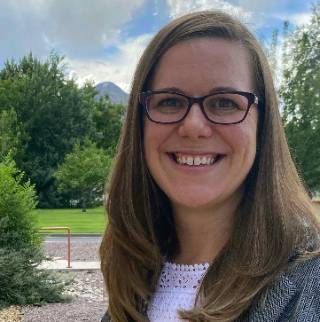
Dr. Chelsey Hargather is an Adjunct Professor in the Department of Materials and Metallurgical Engineering at New Mexico Tech. She leads the Advanced Computational Metallurgy Lab (ACML) and Additive Composite Manufacturing Lab (ACML²), focusing on developing metallic alloys through computational tools like first-principles calculations and CALPHAD modeling. Her research emphasizes High Entropy Alloys (HEAs), diffusion coefficients, and additive manufacturing of energetic materials. Education: Ph.D. in Materials Science and Engineering from Penn State (2012), B.S. from Virginia Tech (2008) with a French minor. Awards include the ASM International Bronze Medal (2021) and NSF CAREER Award (2021). Research spans computational metallurgy, solid composite rocket propellant manufacturing, and material defect analysis. ACML has produced over 20 graduate and undergraduate students, many recognized with NASA Space Grant Fellowships and national awards. Labs collaborate with industry partners like X-Bow Launch Systems and Sandia National Laboratories. Current projects include Army energetic ink development and Department of Energy/NNSA initiatives.
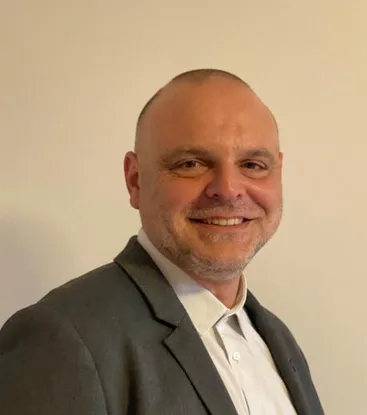
Laurent Blanc is a Lecturer in the Department of Solid Mechanics, Mechanical Engineering, and Civil Engineering (MSGMGC) at École Centrale de Lyon, affiliated with the Laboratory of Tribology and System Dynamics (LTDS, UMR CNRS 5513). He has been active in dynamics of rotating machines and structural mechanics from 2018–2022 as an ECL manager for the FP7 ARIAS project and 2008–2012 for the H2020 FUTURE project. Supervised 9 doctoral theses (defended) and 3 ongoing Developed English-language training programs for aeronautics/space masters Lead innovation initiatives (Centrale Lyon Innovation Camp, CLIC) for 400 students Created/transformed 3 training actions on rotating machines Coordinated student projects (1st year General Engineering cycle) Head of Vibration Teaching Team (2011–2014) Research interests span structural mechanics, fluid-structure interaction, vibration analysis, and nonlinear dynamics in turbomachinery. His 15 most recent publications (2021–2025) focus on: Whirl flutter stability in propellers and wings Labyrinth seal modeling and stability analysis Mistuned blisk vibrations and damping UHBR turbofan experimental/computational validation Fretting-wear effects on friction interfaces
José Serna Serrano is a Professor with extensive research contributions in aerospace engineering, fluid dynamics, aeronautics, and engineering education. His work frequently intersects computational methods, experimental validation, and practical applications in aviation and defense. While his institutional affiliation is not explicitly stated, contextual clues suggest associations with the San Javier University Defense Center (General Air Academy). Research Interests: Serrano's research spans multiple high-impact areas: Aerodynamics & Fluid Dynamics : Aerodynamic probe measurements, shock-boundary layer interactions, and projectile drag reduction. Aeronautics & Aviation : Air navigation systems, aircraft design, and bird-strike risk modeling. Ballistics & Propulsion : Base-bleed technology and solid propellant combustion. Renewable Energy : Offshore floating wind turbine platforms. Engineering Education : Curriculum development and project-based learning methodologies. Publication Trends (2016-2023): His recent articles emphasize computational fluid dynamics (47% of publications), aeronautical systems (27%), and interdisciplinary topics like materials engineering and software design. A notable shift toward aviation safety and renewable energy applications is observed post-2018.
Yet-Ming Chiang is a Professor of Materials Science and Engineering at the Massachusetts Institute of Technology (MIT) and Co-Director of the Center for Electrification and Decarbonization of Industry (CEDI). He holds over 110 patents and has authored more than 300 scientific articles, focusing on energy storage, battery technology, and decarbonization solutions. Chiang’s research has led to the creation of eight climate-focused startups, including Form Energy (iron-air batteries) and Sublime Systems (low-carbon cement), collectively raising over $2.5 billion in funding. His work spans batteries, electric aviation, and industrial decarbonization, aiming to address global climate challenges through scalable technologies. Education: Ph.D. in Ceramics from MIT (1985), joined MIT faculty and achieved tenure at 32. Research Group: ~25 members including graduate students and postdocs. Key Projects: Electrochemical materials for energy storage, novel battery architectures, and sustainable industrial processes. Notable Contributions: Pioneered high-capacity battery systems, developed low-cost decarbonization technologies, and advanced materials science for renewable energy integration. His startups include Form Energy (long-duration energy storage), Sublime Systems (green cement), and Propel Aero (electric aircraft engines). Chiang serves as Chief Science Officer in several ventures and actively pursues innovations in critical minerals extraction and geologic hydrogen. His research emphasizes electrifying industrial processes to reduce greenhouse gas emissions, leveraging materials science for sustainable solutions.
Dr. Abdullah Ulaş is a Professor in the Department of Mechanical Engineering at Middle East Technical University (METU), Ankara, Turkey. He holds a Ph.D. from Pennsylvania State University (USA) and has been at METU since 1994, progressing from Research Assistant to Professor. His research focuses on combustion, rocket propulsion, thermodynamics, and energetic materials. He has led projects for institutions like TÜBİTAK-SAGE and ROKETSAN, contributing to Turkey’s aerospace and defense sector. Education: B.S. (METU, 1994), M.S. (Penn State, 1996), Ph.D. (Penn State, 2000) Experience: Over 30 years in academia and industry, including roles as Principal Investigator on cooling techniques for gas turbine combustors and consultant for rocket motor development. Research Interests: Combustion of solid and hybrid propellants, ignition dynamics, detonation phenomena, and thermal management in propulsion systems. His work bridges theoretical modeling and experimental validation, with applications in aerospace and defense technologies. Publications: Over 60 peer-reviewed articles, focusing on combustion analysis, rocket propulsion systems, and energetic materials. Recent work includes heat exchanger optimization for supersonic aircraft and CFD studies on spray atomization in rocket engines. Awards: Arthur D. Rhea Award (2013), METU Academic Performance Award (2009), and multiple honors for academic excellence and research innovation. Advising & Grants: Supervised 24+ theses (M.S./Ph.D.), including projects on hybrid rocket motors and detonation simulation. Active in TÜBİTAK advisory roles and international collaborations. Labs/Teams: Leader of METU’s rocket propulsion research group, developing Turkey’s first domestically produced liquid rocket engines and high-pressure combustion test facilities.
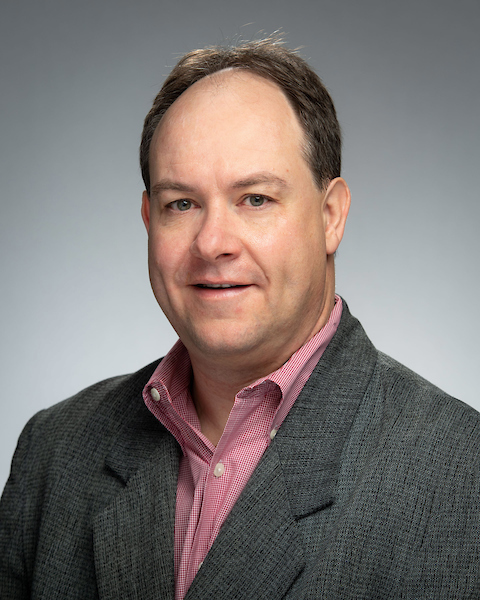
Dr. Karel Matous is a Professor of Aerospace and Mechanical Engineering at the University of Notre Dame and Director of the Center for Shock-Wave Processing of Advanced Reactive Materials (C-SWARM). He holds a Ph.D. in Theoretical and Applied Mechanics from the Czech Technical University in Prague. His research focuses on predictive computational science and engineering, multiscale modeling, and high-performance computing, with applications in materials science and energetic systems. Education: Ph.D. in Theoretical and Applied Mechanics (Czech Technical University, 2000), M.S. in Theoretical and Applied Mechanics (Czech Technical University, 1998). His work bridges applied mathematics, computational science, and materials science, emphasizing data-driven modeling and experimental-computational synergy. Key contributions include multiscale models for heterogeneous materials, adaptive wavelet algorithms, and computational homogenization at extreme scales. His research has been funded by agencies like the DOE, NSF, and industry partners, with over $12M in grants for the C-SWARM center. Publications span topics such as solid propellant modeling, particle debonding in elastomers, and microstructure-property relations. Awards include ASME Fellow, Melosh Medal (student award), and Rector's Award. He collaborates with institutions globally and teaches advanced mechanics courses at Notre Dame. Labs/Teams: Directs C-SWARM, leading teams in multiscale simulations and shock-wave processing of materials. Active in computational physics and materials research groups.
Daniel M. Harris is an Associate Professor of Engineering at Brown University's School of Engineering, promoted to this rank in July 2024. His research focuses on fluid mechanics, microfluidics, interfacial flows, nonlinear systems, and vibration through experimental and theoretical approaches in the Harris Lab. Harris holds the following educational qualifications: PhD in Applied Mathematics, Massachusetts Institute of Technology (2015) BS, Cornell University (2010) Postdoctoral Research Associate and Lecturer, University of North Carolina at Chapel Hill, Mathematics (2015-2017) His research spans biomedical engineering applications, fluid-structure interactions, capillary phenomena, and nonlinear dynamics. He is renowned for pioneering work on walking droplets, microfluidic device development, and vibration dynamics, with strong emphasis on connecting art, craft, and science through experimental fluid mechanics and soft matter physics. Recent publications (2018-2022) reveal dominant themes in microfluidics (Taylor dispersion, device fabrication), interfacial phenomena (capillary attraction, droplet impact), and nonlinear systems (bouncing dynamics, wave-propelled robotics). His work bridges fundamental fluid mechanics with biomedical engineering applications, particularly in micro-robotics for biological propulsion studies and surface property control. Harris has received significant recognition including: Dedicated Faculty Award (2023) American Physical Society Gallery of Soft Matter Winner (2023) Excellence in Research Mentoring Award (2022) Dean's Award for Teaching Excellence (2021) Multiple APS Gallery of Fluid Motion awards (2009, 2012, 2015) NSF Graduate Research Fellowship (2011-2013) He mentors students through research projects as evidenced by his mentoring award, and teaches core engineering courses including Fluid Mechanics and Vibration of Mechanical Systems. His educational innovations include course-based undergraduate research experiences in engineering electives. The Harris Lab actively engages in scientific communication, winning NSF/Popular Science Visualization awards for fluid dynamics demonstrations. The Harris Lab conducts custom experiments in fluid mechanics and soft matter with strong integration of mathematical modeling. The lab emphasizes artistic connections to science and maintains active public outreach through visualizations and demonstrations that have won multiple APS Gallery awards.
M Quinn Brewster is a distinguished academic and researcher in combustion and heat transfer. He holds the Hermia G. Soo Professorship and serves as Director of the M.Eng.ME Program at the University of Illinois at Urbana-Champaign (UIUC). His academic journey includes a Ph.D. from UC Berkeley (1981) and various faculty roles at UIUC since 1986. Research Interests: Brewster specializes in combustion (solid propellants), radiation heat transfer, thermophysical properties of materials, and energy-related phenomena. His lab pioneered the laser-recoil technique for studying energetic materials and developed the WSB theory for combustion dynamics. Recent work addresses atmospheric heat transfer, cloud droplet growth, and radiative flux puzzles. Publications: Over 150 peer-reviewed articles, including seminal work on transitional boundary layers, radiation-augmented evaporation, and composite propellant combustion. Notable contributions include modeling cloud droplet dynamics and radiation effects in spent-fuel pools. Awards: Fellow of ASME, University Scholar at UIUC, and multiple grants. Recognized for contributions to combustion science and engineering education. Labs/Teams: Director of the Propellant Combustion Lab. Active in collaborative projects on energetic materials and climate-related heat transfer.
Ilona Kretzschmar is a Professor in the Department of Chemical Engineering at The City College of New York (CCNY), part of the City University of New York (CUNY) system. Her research focuses on colloidal assembly, self-organization of active particles, and nanotechnology applications for light harvesting and biomedical systems. Key methodologies include computational modeling and experimental studies on Janus/patchy particles Investigates interfacial dynamics at liquid-liquid and solid-liquid boundaries Develops metamaterials for cancer detection and photonic applications Her work combines materials science, fluid dynamics, and quantum phenomena to engineer novel colloidal systems. Scientific awards and student advising details were not found in the provided texts.
Dr. Christopher Dreyer is a Professor of Practice in Mechanical Engineering and Director of Engineering at the Center for Space Resources at Colorado School of Mines. He holds a BS from Drexel University and MS/PhD from the University of Colorado Boulder. His work focuses on space resource technology development, including lunar/asteroid/Mars resource utilization, in situ resource utilization (ISRU), and instrumentation for extraterrestrial exploration. He co-founded Mines’ groundbreaking Space Resources Graduate Program, the first of its kind globally. Research interests include regolith mechanics, resource extraction, and space manufacturing. He leads experimental facilities for prospecting instruments and resource processing, contributing to NASA missions and commercial lunar propellant architectures. His engineering expertise bridges academic research and practical applications for advancing space exploration infrastructure. Dr. Dreyer’s publications emphasize lunar regolith characterization, optical mining techniques, and solid oxide electrolysis systems for propellant production. His work frequently explores cryogenic environments and subsurface ice extraction methods in permanently shadowed regions. Collaborations include NIAC-funded projects and international asteroid science initiatives.
Mohan Ganesan is a Professor in the PT Programs Campus at the University of St. Augustine for Health Sciences, affiliated with the College of Rehabilitative Sciences. He specializes in Neurological Rehabilitation with a focus on mobility, geriatrics, gait, and balance disorders. Dr. Ganesan holds advanced degrees from premier institutions including the National Institute of Mental Health and Neurosciences (India), and completed a postdoctoral fellowship at the University of Illinois, Chicago, followed by a Multiple Sclerosis Rehabilitation specialty fellowship at the Cleveland Clinic. His academic credentials include a Doctor of Neurophysiology, Master of Physical Therapy, and multiple post-graduate diplomas. His research spans over 40 peer-reviewed publications addressing neurological rehabilitation challenges, particularly in aging populations and individuals with MS. He has also contributed to interprofessional education models in rehabilitative sciences. Research interests emphasize balance control, fatigue management in neurological disorders, and the application of yoga-based interventions for cardiovascular health. His work frequently explores adaptations in para sports for athletes with spinal cord injuries and lower-limb amputations, focusing on performance measurement and classification systems. Dr. Ganesan has pioneered studies on the long-term benefits of hatha yoga and developed innovative training protocols for gait recovery using evidence-based locomotor guidelines. His contributions include analyzing the mental health impacts of pandemics on healthcare workers and MS patients, as well as investigating material science advancements in solid rocket propulsion systems. These diverse research threads reflect his expertise in translating clinical practice to real-world applications across rehabilitation, sports science, and aerospace engineering domains.
Martin Kroon is a Professor in Material Mechanics at the Department of Mechanical Engineering, Faculty of Technology, Linnaeus University. His research focuses on fracture mechanics, material mechanics, and constitutive modeling of materials, with particular expertise in polymer mechanics and computational methods. His primary research interests include: Fracture mechanics and failure analysis Constitutive modeling of polymers and other materials Finite element method and computational mechanics Solid mechanics and material behavior Welding mechanics and residual stress analysis Professor Kroon leads research in several key areas, with a strong focus on developing advanced constitutive models for semi-crystalline polymers using Eulerian frameworks. His work bridges theoretical mechanics with practical engineering applications, particularly in the analysis of injection-molded polymer structures, welding mechanics, and material failure prediction. Recent research has increasingly incorporated machine learning techniques to enhance traditional constitutive models. His research group actively investigates the mechanical behavior of high-density polyethylene (HDPE) and low-density polyethylene (LDPE), with applications ranging from marine structures to industrial components. The group's work combines experimental testing with sophisticated numerical modeling to understand complex material behaviors under various loading conditions. Professor Kroon has received significant research funding for projects including: Seaworthiness assessment of WAAM manufactured marine propellers FEA of residual stresses in welded structures Fitness For Service assessment of metallic structures In-line visual inspection using unsupervised learning Smart Industry educational initiatives He is affiliated with multiple research groups at Linnaeus University: Mechanical Engineering research group Smart Industry Group (SIG) Welding Mechanics Laboratory (WML) Scientific Computing and Partial Differential Equations
Dr. Kibaek Lee is an Assistant Professor in the Department of Aerospace, Physics and Space Sciences at the Florida Institute of Technology . He leads the Modeling Advanced Energetic Materials Laboratory , where his team develops high-fidelity computational frameworks to predict the thermo-mechanical-chemical behavior of energetic materials used in propellants and explosives. Educational Background: No explicit degrees are listed in the provided text. Research Focus: Dr. Lee's work integrates computational fluid dynamics , machine learning , and reduced-order modeling to advance our understanding of energetic-material ignition, detonation, and thermal-runaway phenomena. Key application areas include: Physics-informed machine-learning models for shock initiation criteria Data-driven reduced chemical kinetics for propellants and explosives Reduced-order modeling of lithium-ion battery thermal runaway under extreme conditions Multi-component modeling of solid–fluid interfacial interactions under shock or frictional heating Scientific Awards: No awards are mentioned in the supplied material. Advising & Team: Dr. Lee currently mentors: Ph.D. Students: Jeff McShane, Kalindu Salith Tennakoon M.S. Students: Ratish Patil Research is supported by the laboratory’s high-performance computing resources: two servers with 192 cores, 1 TB RAM, Nvidia RTX A4000 GPU, and 12 TB storage. Laboratory & Facilities: The Modeling Advanced Energetic Materials Laboratory provides a flexible modeling environment aimed at fundamental tool development for advanced propellant and explosive systems, leveraging state-of-the-art computational facilities.
Karl O. Christe is a Research Professor of Chemistry at the University of Southern California's Department of Chemistry. His research focuses on high energy density materials (HEDM), inorganic main group chemistry, and fluorine-based compounds. He earned his B.S., M.S., and Ph.D. from the Technical University of Stuttgart, Germany, in 1957, 1960, and 1961, respectively. Christe’s breakthroughs include synthesizing novel cations like NF 4 + and ClF 6 + , first chemical synthesis of elemental fluorine, and pioneering polynitrogen chemistry with the discovery of N 5 + . His work combines theoretical insights with experimental synthesis, often collaborating with computational groups. Notable achievements include energetic ionic liquids, polyazides, and CF 3 – anion synthesis. His research spans over five decades, with key contributions to fluorine chemistry, oxidation limits, and energetic material development. Collaborations with theoreticians enhance his work’s impact, aiming for transformative advancements rather than incremental progress.
Francesco Nasuti is a Professor at Sapienza University of Rome, specializing in advanced propulsion systems, thermofluid dynamics, and combustion engineering. His research focuses on liquid and hybrid rocket propulsion, combustion instability, CFD modeling of rocket components, and thermal management in high-performance systems. Key research areas include aerospike nozzles, hybrid rocket fuels (paraffin-based), and computational tools for rocket engine design. He leads the T (H) RUST research team, contributing to projects like the PHAEDRA initiative. His work integrates experimental testing with numerical simulations to improve rocket engine efficiency and thermal performance. Recent publications emphasize combustion instability modeling, cooling channel heat transfer, and nozzle erosion analysis. His studies span from fundamental CFD simulations to applied engineering solutions for aerospace propulsion systems, addressing challenges in both academic and industrial contexts.