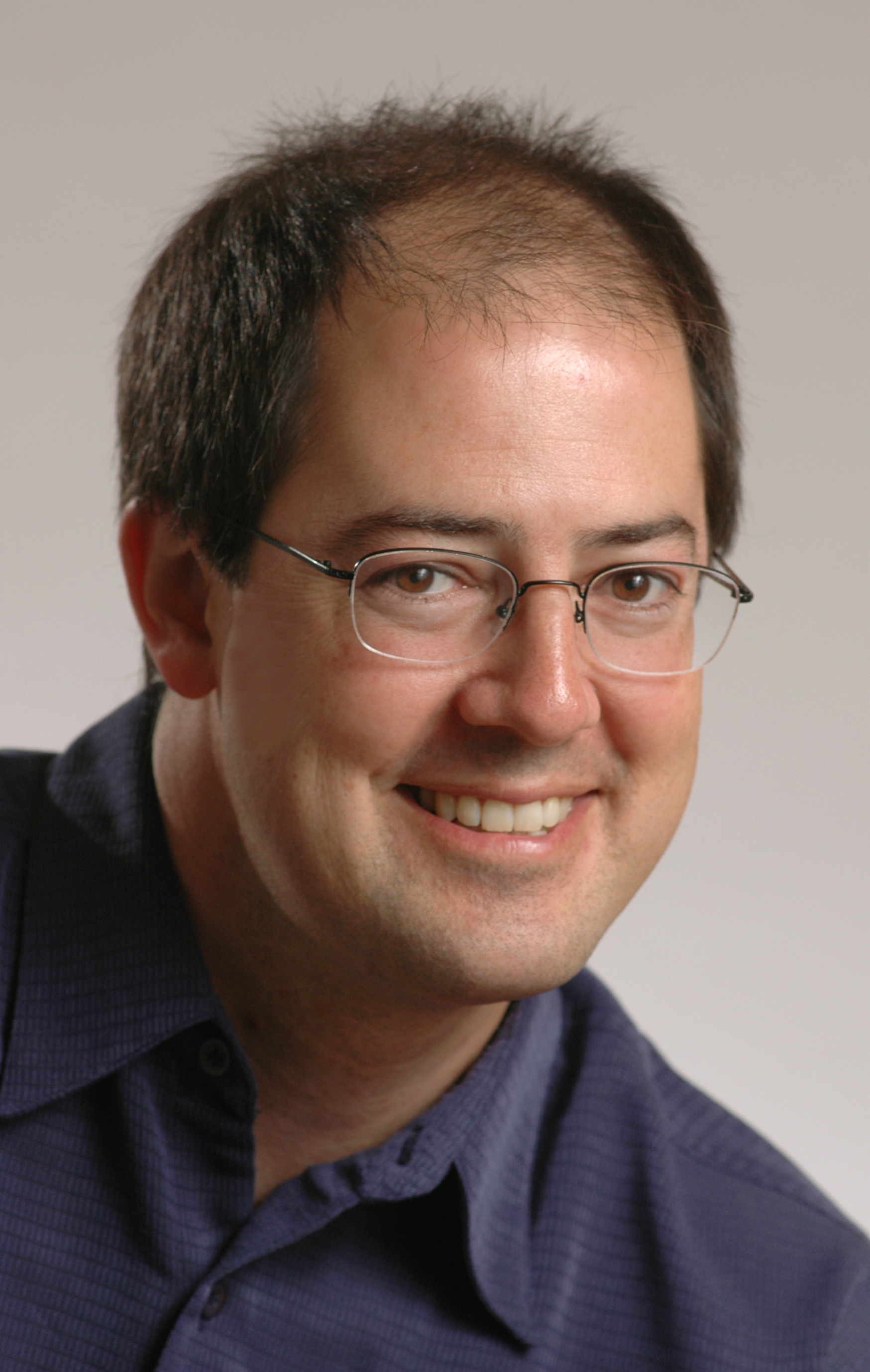
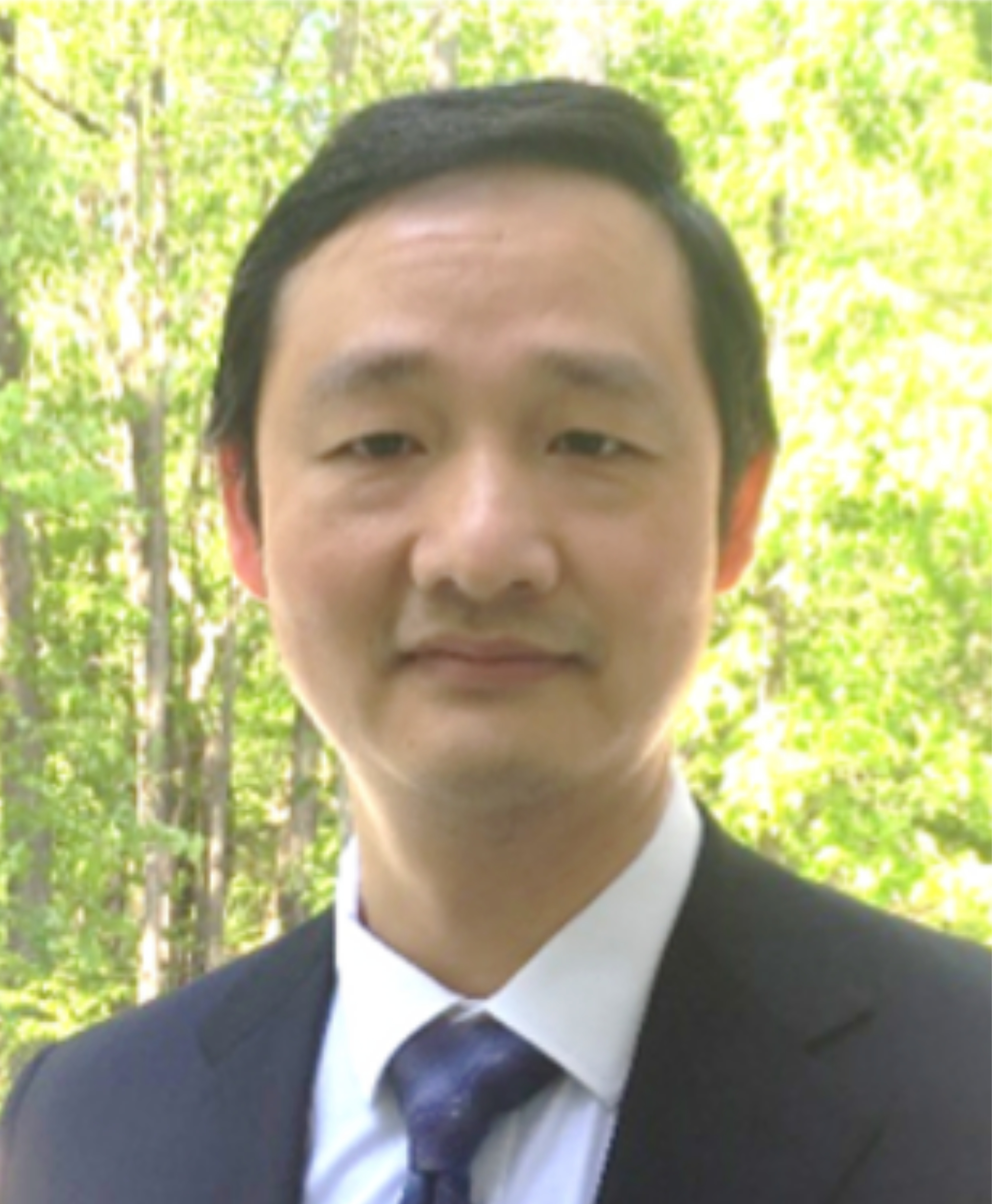
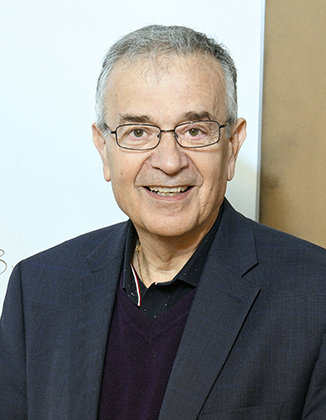
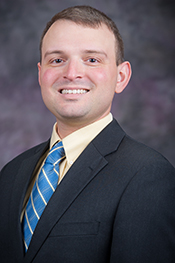
Kristofer Pister is a Professor in the Department of Electrical Engineering and Computer Sciences at the University of California, Berkeley. He co-directs the Berkeley Sensor and Actuator Center (BSAC) and the Ubiquitous Swarm Lab. His career spans groundbreaking innovations in Micro/Nano Electro Mechanical Systems (MEMS), Control Systems, and Low-Power Circuits, with a focus on Smart Dust and synthetic insects. Education: Ph.D. and M.S. in EECS from UC Berkeley (1992, 1989); B.A. in Applied Physics from UC San Diego (1986). His research areas include MEMS , Control Systems , Robotics , and Integrated Circuits , with recent work on self-powered micro-sensors, crystal-free radios, and interplanetary swarm networks. Key awards include the ISA Albert F. Sperry Founder Award (2009) , Alexander Schwarzkopf Prize (2006) , and the NSF CAREER Award (1996) . He has authored numerous influential publications in wireless sensor networks and microrobotics. His lab, Ubiquitous Swarm Lab , explores distributed robotics and swarm intelligence. Pister emphasizes open collaboration in research, ethical conduct in academia, and efficient resource utilization for graduate students.
Jaehong Kim is the Henry P. Becton Sr. Professor of Engineering at Yale University, where he serves as Professor and Chair of Chemical and Environmental Engineering in the School of Engineering and Applied Science. Prior to joining Yale in 2013, he held the Georgia Power Distinguished Professor position at the Georgia Institute of Technology. His research bridges environmental science, chemical engineering, and nanotechnology, focusing on photocatalytic materials, water quality engineering, and sustainable solutions for global health contexts. Ph.D., Environmental Engineering, University of Illinois at Urbana-Champaign (2002) M.S., Chemical and Biological Engineering, Seoul National University (1997) B.S., Chemical and Biological Engineering, Seoul National University (1995) Kim’s work addresses water treatment through advanced oxidation processes , electrochemical systems , and single-atom catalysts , with applications in nitrate removal, fluoride transport, and solar disinfection. His research emphasizes nanotechnology for environmental remediation and public health engineering in developing regions. Recent publications highlight electrified membranes for nitrate conversion, photothermal water disinfection , and single-atom catalysts for pollutant degradation. His team explores atomic-scale engineering and green chemistry approaches to enhance reaction efficiency and material durability. Georgia Power Distinguished Professor Yale Superfund Research Center investigator Kim leads interdisciplinary efforts in environmental health through collaborations with Yale School of Public Health and the School of the Environment. His lab develops monolithic catalytic membranes and nanobiochars for sustainable water treatment, balancing technical innovation with global accessibility.
Dane Morgan is a Professor in the Department of Materials Science & Engineering at the University of Wisconsin-Madison, College of Engineering. His research focuses on computational materials science for materials design, including ab initio electronic structure modeling, multiscale methods, and machine learning applications in materials discovery. His work spans nuclear materials, battery and fuel cell electrodes, and electronic materials. Education : PhD, 1998, University of California, Berkeley MS, 1994, University of California, Berkeley BA, 1992, Swarthmore College Research Interests : Computational materials science, ab initio methods for electronic structure and thermokinetics, machine learning for materials discovery, electrochemical systems modeling, and applications in nuclear materials, batteries, and electronic materials. His work integrates advanced computational techniques with experimental validation. Scientific Awards : 2024 APL Materials, Editors Pick 2023 Microscopy and Microanalysis Best Paper Award (Instrumentation and Software category) 2023 IEEE Transactions on Plasma Science Best Paper Award 2023 Kellet Mid-Career Award 2015 TMS Materials Genome Initiative Ambassador 2006 3M Technical Nontenured Faculty Grant
Susanna Thon is an Associate Professor in the Department of Electrical and Computer Engineering at Johns Hopkins University (JHU), affiliated with the Whiting School of Engineering. She serves as Associate Director of the Ralph O’Connor Sustainable Energy Institute (ROSEI) and a member of the Data Science and AI Institute. Her research focuses on nanomaterials engineering for optoelectronic devices, emphasizing solar energy conversion and sensing. Notable areas include plasmonic-photocatalytic systems using aluminum nanoparticles and nanostructured materials like colloidal quantum dots for next-generation devices. Thon holds a BSc from MIT (2005) and MSc/PhD in Physics from UC Santa Barbara (2008/2010). She joined JHU in 2013 after postdoctoral work at the University of Toronto. Her work is funded by agencies such as the NSF, U.S. Army, and Maryland Energy Innovation Institute. She has published over 50 peer-reviewed papers and received JHU’s Catalyst and Discovery awards. Key research projects include developing plasmonic systems to enhance light absorption in titanium dioxide and creating scalable fabrication techniques for optoelectronic materials. Thon’s team also advances quantum dot solar cells and novel characterization methods for energy materials. She actively participates in professional societies, including the Optical Society of America and IEEE. Her grants and collaborations aim to train the next generation in sustainable energy research, with recent initiatives funded through NSF and Space@Hopkins seed grants. Thon’s lab integrates nanophotonics, materials science, and machine learning to address global energy challenges.
Dustin Tingley is a Professor of Government at Harvard University and holds a joint appointment at the Harvard Kennedy School of Public Policy . He serves as Interim Vice Provost for Advances in Learning and directs the Data Science and Technology Group and the Harvard Initiative on Learning and Teaching . He earned a PhD in Politics from Princeton and a BA in political science and math from the University of Rochester. Key Roles : Deputy Vice Provost (past), Chair of Harvard's Standing Committee on Climate Education Research Focus : Climate change politics, data science, causal inference, and international political economy His recent work explores the political economy of climate transitions , public opinion on carbon policies , and machine learning applications in social sciences . He co-founded ABLConnect , a repository for active learning pedagogy, and organized conferences on causal mechanisms , teaching with AI , and equitable classrooms . Awards : Gladys M. Kammerer Award (2015) for co-authored book Sailing the Water’s Edge Notable Publications : Uncertain Futures: How to Unlock the Climate Impasse (2023, with Alex Gazmararian) The Political Economy of the Clean Energy Transition (2025)
Peter Huybers is a Professor of Earth and Planetary Sciences and Environmental Science and Engineering at Harvard University , where he investigates the climate system and its societal implications, including interactions between volcanism and glaciation , extreme temperature predictability , and climate change impacts on food production . Research interests span climate change attribution , paleoclimate reconstruction , drought dynamics , crop yield modeling , and earth system feedbacks . His work often integrates art-historical analysis with climate science, as seen in studies of 19th-century air pollution through Turner and Monet paintings . Scientific awards include funding from Harvard Data Science Initiative (2023) for projects on climate change and food supply volatility Amazon Web Services (2023) grant His 20+ peer-reviewed articles since 2020 focus on climate proxies , hydrological modeling , solar forcing , and agricultural-climate interactions , with recent work in Nature , PNAS , and Science Advances . Advising : Mentored 10+ PhD students including Parker Liautaud , Duo Chan , and Marena Lin , while leading research teams with current members like Greta Berendes and Caro Park . Former staff include Jon Proctor and Lucas Vargas Zeppetello , the latter now at UC Berkeley (2024).
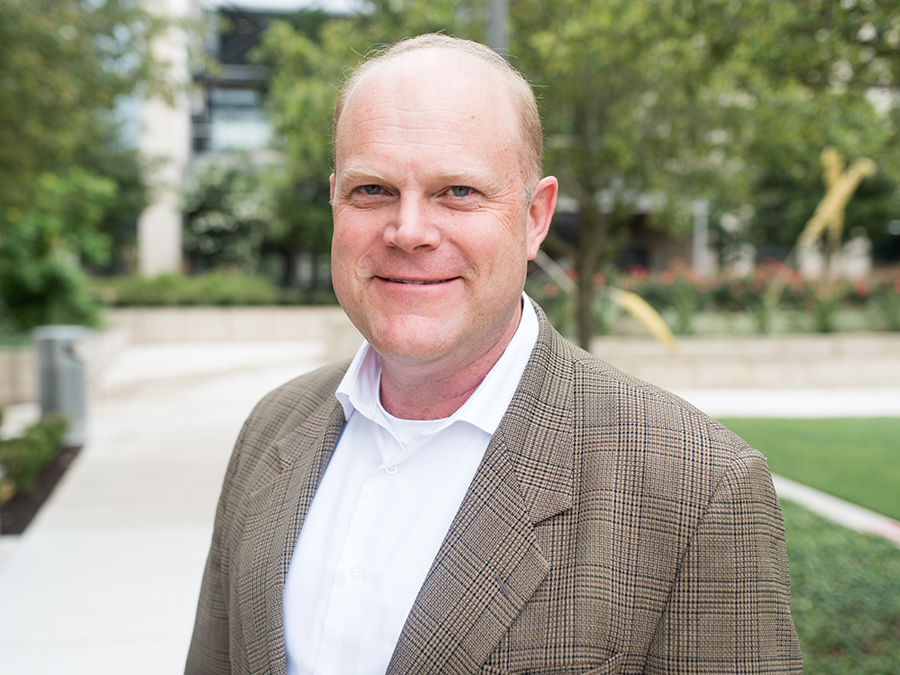
J. Eric Bickel is a Professor at The University of Texas at Austin, serving as Director of the Operations Research & Industrial Engineering (ORIE) and Engineering Management programs. He holds a courtesy appointment in the Department of Petroleum and Geosystems Engineering and directs the Center for Engineering & Decision Analytics (CEDA). His academic background includes a PhD and MS in Engineering-Economic Systems from Stanford University and a BS in Mechanical Engineering from New Mexico State University. His research focuses on decision analysis under uncertainty, addressing topics like probabilistic modeling, climate engineering, risk management, and applications in sports and energy sectors. His work has been featured in major media including The New York Times and Wall Street Journal , and his climate engineering research was endorsed by Nobel Laureates as a top climate change response strategy. Professor Bickel has extensive industry experience, having previously served as Senior Engagement Manager and Co-Director of Client Education at Strategic Decisions Group (SDG), where he remains on the Board of Directors. His consulting spans oil/gas, energy trading, and financial services sectors. He has received recognition as a Fellow of the Society of Decision Professionals and contributed to the Copenhagen Consensus on Climate Project. His teaching extends to executive education through Texas Executive Education and McCombs School of Business. Research highlights include novel methods for probabilistic dependence modeling, value-of-information analysis in shale reservoirs, and critiques of risk assessment tools like heat maps. His climate engineering work emphasizes economically viable solar radiation management strategies.
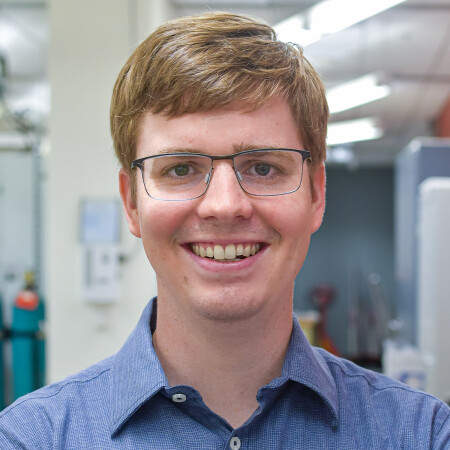
Kyle McCall is an Assistant Professor in the Department of Materials Science and Engineering at the University of Texas at Dallas, within the Erik Jonsson School of Engineering and Computer Science. He holds a PhD in Applied Physics from Northwestern University (2019) and a B.S. in Physics and Mathematics from the University of Notre Dame (2014). He served as a Postdoctoral Research Fellow at ETH Zurich, Switzerland, from 2019 to 2021. Research Interests: Dr. McCall's research lies at the intersection of materials science, chemistry, and physics, focusing on the synthesis and characterization of complex semiconductors for energy and radiation detection applications. His group employs a materials-by-design approach to develop novel functional optoelectronic materials, particularly halide perovskites and related compounds. Key areas include crystal growth (via Bridgman method), X-ray crystallography, and the development of materials for solar cells, light-emitting devices, X-ray photodetectors, and neutron/gamma-ray scintillators. Publication Trends: His recent publications (all from 2021) highlight a strong focus on halide perovskite materials for radiation detection and optoelectronics. Themes include room-temperature gamma-ray detection, neutron imaging using luminescent materials, structural instabilities in perovskites, and optical behavior tuning via cation engineering. The work combines fundamental structure-property studies with device-relevant performance metrics. Scientific Awards and Memberships: Member, American Chemical Society (ACS) Member, Materials Research Society (MRS) Advising and Grants: As a tenure-track faculty member, Dr. McCall leads the McCall Research Group at UT Dallas, mentoring students in interdisciplinary materials research. He was part of the 2021 cohort of new tenured/tenure-track faculty at UT Dallas. While specific grants are not listed, his research program is clearly supported by institutional funding and infrastructure, including crystal growth and characterization facilities. Laboratories and Teams: He founded the crystal growth component of the ETH+ SynMatLab facility during his postdoc at ETH Zurich. At UT Dallas, he leads his own research group focused on materials chemistry and functional device integration, continuing his work on single crystal growth and optoelectronic characterization.
Kathleen C. Howell is the Hsu Lo Distinguished Professor of Aeronautics and Astronautics at Purdue University's School of Aeronautics and Astronautics. Her expertise spans orbit mechanics, spacecraft trajectory optimization, and mission design in multi-body systems. She holds degrees from Iowa State University (B.S., 1973), Stanford University (M.S., 1977; Ph.D., 1983). B.S. in Aerospace Engineering, Iowa State University, 1973 M.S. in Aeronautical & Astronautical Engineering, Stanford University, 1977 Ph.D. in Aeronautical & Astronautical Sciences, Stanford University, 1983 Her research focuses on libration point orbits, solar sail trajectories, and trajectory optimization in Earth-Moon and interplanetary systems. She has pioneered methods for analyzing Lissajous trajectories, invariant manifolds, and low-thrust mission design. Recent work includes solar sail applications for lunar coverage and ARTEMIS mission trajectory analysis. Publications highlight innovations in multi-body dynamics, with contributions to journals like Acta Astronautica , Journal of Guidance, Control, and Dynamics , and AIAA/AAS Conference Proceedings . Her work emphasizes practical mission design tools and visualization techniques. Awards: Fellow, AIAA (2013) W.A. Gustafson Teaching Award (2012) Dirk Brouwer Award (2004) Presidential Young Investigator Award (1984) Multiple Elmer F. Bruhn Teaching Awards Her advising and grants include leadership in space mission design, formation flight, and solar sail technology. She has collaborated on projects like the TRIANA mission and contributed to the Cassini end-of-mission analysis. Active in professional societies, she has edited conference proceedings and delivered invited lectures globally.
California Institute of Technology (Caltech)United States
Harry Atwater is the Howard Hughes Professor of Applied Physics and Materials Science at the California Institute of Technology (Caltech). He serves as Director of the Joint Center for Artificial Photosynthesis (JCAP) and previously led the Light-Materials Interactions in Energy Conversion (LMI-EFRC) from 2009–2014. His research bridges photovoltaics, solar energy systems, plasmonics, and nanophotonics. Atwater pioneered the field of plasmonics and co-founded Alta Devices, a leader in GaAs photovoltaic technology. He holds over 200 publications and has been recognized with prestigious awards, including induction into the National Academy of Engineering (2015) and the ENI Prize (2012). His work spans cutting-edge innovations such as silicon wire array solar cells, metasurface technologies for optical manipulation, and space solar power systems. Current projects include developing lightsail propulsion for interstellar exploration and photothermocatalytic reactors for sustainable fuels. Atwater’s lab focuses on the intersection of nanophotonics and energy, exploring quantum emitters, carbon capture, and optomechanical systems. Research Highlights: Plasmonic light absorbers, metasurface-based imaging, and solar energy harvesting systems. Key Projects: Lightsail experiments, space-based solar power missions, and CO₂ reduction via electrochemical methods. Awards: Julius Springer Prize (2014), ISI Highly Cited Researcher (2014), and MRS Kavli Lecturer (2010).
University of North Carolina at Chapel HillUnited States
Jinsong Huang serves as Adjunct Professor in the Materials Science and Engineering department at the University of North Carolina at Chapel Hill, where he leads an interdisciplinary research group focused on perovskite-based electronic materials and devices. His laboratory, housed in Murray Hall 1115, maintains active collaborations with academia, industry, and national laboratories while training next-generation scientists and engineers for competitive job markets. Dr. Huang earned his educational credentials through a rigorous academic path: Ph.D. in Materials Science & Engineering from UCLA (2007), M.S. in Semiconductor Physics from Chinese Academy of Sciences (2003), and B.E. in Materials and Photoelectronic Physics from Xiangtan University (2000). His research program spans Perovskite Solar Cells , Photodetectors , and X-ray Imagers , with particular emphasis on fundamental material physics, device design, stability enhancement, and scalable manufacturing. The group's work bridges applied research with deep scientific understanding, focusing on high-performance, low-cost electronic materials that address critical energy and medical imaging challenges. Current projects include self-powered photon-counting detectors, bifacial perovskite modules, and all-perovskite tandem solar cells. Analysis of recent publications reveals a strategic research trajectory toward commercialization of perovskite technologies, with increasing focus on stability, scalability, and real-world performance metrics. The work spans fundamental science (defect engineering, crystal growth) to applied technologies (medical imaging detectors, flexible solar cells), demonstrating remarkable breadth while maintaining technical depth in perovskite material systems. Highly Cited Researcher 2021 in Material Science and Chemistry Principal Investigator for $1.5 million UNC System Research Opportunities Initiative (2025) Multiple student/postdoc awards including Postdoctoral Awards for Research Excellence Consistent high-impact publications in Nature, Science, and Advanced Materials Huang actively mentors students and postdocs, with notable alumni including four of the 41 Tar Heels ranked as 'highly cited researchers' in December 2023. His research group has secured significant funding including the recent $1.5 million UNC System grant for 'Ultra-High Efficiency Perovskite Tandem Solar Cells' focusing on North Carolina's energy production and reduced fossil fuel dependence. The laboratory maintains strong industry partnerships that facilitate technology transfer and real-world implementation of research findings. The Huang Research Group operates as a dynamic interdisciplinary team with scientists from chemistry, materials science, physics, and electrical engineering backgrounds. Their collaborative culture has produced numerous breakthroughs including record-efficiency perovskite modules certified by NREL, self-powered photon-counting detectors published in Nature, and lead-recycling technologies highlighted in Nature Communications. Current facilities support crystal growth, device fabrication, and advanced characterization of perovskite materials for both energy and radiation detection applications.
Paul M Thibado is a Professor in the Department of Physics within the College of Arts & Sciences at the University of Arkansas. With over 100 refereed publications and 51 patents worldwide, his work focuses on cutting-edge research in graphene physics and energy harvesting technology. He has secured over $12 million in external research funding from sources including NSF, DoD, and the Walton Foundation, with current support from the WoodNext Foundation. Education: Ph.D. in Physics, 1994, University of Pennsylvania, Philadelphia, PA B.S. in Physics, 1990, San Diego State University, San Diego, CA B.S. in Mathematics, 1990, San Diego State University, San Diego, CA Professor Thibado's primary research focuses on the physical properties of novel two-dimensional systems, particularly pristine freestanding graphene and chemically-functionalized graphene. His work investigates electronic, mechanical, electromechanical, spin-dependent tunneling, and transport properties. A significant portion of his recent research centers on developing multimodal energy harvesting technology using graphene, with power sources including kinetic, solar, thermal, ambient radiation, acoustic, and nonlinear thermal energy. His groundbreaking discovery that thermal fluctuations in graphene can be harnessed to generate usable electrical power represents a paradigm shift in nanoscale energy generation. Analysis of his recent publications (2023-2025) reveals a clear progression from fundamental studies of graphene properties to the development of functional energy harvesting devices. Key research themes include spectrum analysis of thermally driven curvature inversion in graphene ripples, transient thermal energy harvesting at single temperatures using nonlinearity, and creating arrays of graphene solar cells on silicon wafers. His work demonstrates how Brownian motion in two-dimensional materials can be converted into electrical energy through innovative device architectures. Scientific Awards: Senior Member of the National Academy of Inventors NSF CAREER Awardee ONR award recipient NSF MRSEC funding NSF FRG funding NSF MRI funding NSF REU funding NSF-EM funding NRC Post-doctoral Fellow, Naval Research Laboratory (1994-96) Master Researcher Award, Fulbright College (2014) Professor Thibado has successfully mentored numerous students and postdocs, including Dr. Vince LaBella who was elected APS Fellow for clicker development work. His research has been supported by over $12 million in external funding from diverse sources. His laboratory combines advanced scanning tunneling microscopy techniques with electrical measurements to study and harness the unique properties of two-dimensional materials. Future work appears directed toward scaling up graphene energy harvesting technology for practical applications and commercialization, with several patents recently granted for energy harvesting devices and sensors.
Mercouri Kanatzidis is the Charles E. and Emma H. Morrison Professor of Chemistry at Northwestern University's Weinberg College of Arts and Sciences, with a joint appointment at Argonne National Laboratory. His research spans multiple cutting-edge areas of materials science and solid-state chemistry. His research interests focus on inorganic chemistry, solid state and coordination chemistry of chalcogenide and halide compounds, with emphasis on the design of new materials through exploratory synthesis. His work particularly targets thermoelectric materials, nanostructured materials, intermetallics, and applications for solar energy conversion, radiation detection, heat-to-electrical conversion, and nuclear and environmental remediation. Kanatzidis's recent publications reveal a strong focus on perovskite materials for radiation detection and solar cells, thermoelectric materials, and chalcogenide chemistry. His group has made significant advances in understanding the fundamental properties of these materials while developing practical applications. His work on CsPbBr3 perovskite detectors has demonstrated exceptional performance for X-ray and gamma-ray detection, while his thermoelectric research has led to materials with record-high efficiency. Centenary Prize, 2023, the Royal Chemical Society Elected to the American Academy of Arts and Sciences, 2023 Global Energy Prize, 2022 Clarivate Highly Cited Researcher since 2015 National Academy of Sciences election, 2024 DOE Ten at Ten Award for perovskite solar cell work, 2019 ACS Award in Inorganic Chemistry, 2016 MRS Medal, 2014 Professor Kanatzidis has mentored over 95 Ph.D. students and nearly 130 postdoctoral fellows throughout his career. His group maintains active collaborations with multiple research centers including Argonne National Laboratory, the Trienens Institute, and research groups led by Dravid, Seidman, Wessels, Wolverton, Mohite, and Chabinyc. His laboratory is equipped with extensive facilities for materials synthesis and characterization, including multiple gloveboxes, X-ray diffractometers, thermal analysis equipment, and specialized furnaces for crystal growth.
Jason Ostanek is an Assistant Professor at Purdue University's School of Engineering Technology and Environmental and Ecological Engineering. He directs the Applied Thermofluids Laboratory and Powertrain Technology Laboratory, focusing on battery safety and thermal management systems. Ph.D. in Mechanical Engineering from Penn State M.S. in Mechanical Engineering from Penn State B.S. in Mechanical Engineering from Virginia Tech His research explores energy storage systems, thermal runaway phenomena, heat transfer mechanisms in Li-ion batteries, fluid dynamics, and internal combustion engine thermal management. He has developed analytical models for battery degradation, thermal abuse simulations, and innovative cooling strategies for large-scale energy systems. Key publication trends show expertise in: Li-ion battery thermal runaway modeling Heat transfer in confined geometries Thermal management for energy storage systems Renewable energy forecasting Computational fluid dynamics applications Scientific awards include: 2020 Purdue Teaching Academy's Award for Exceptional Teaching and Instructional Support during the COVID-19 Pandemic 2020 SOET Outstanding Faculty in Engagement 2019 SOET Outstanding Faculty in Discovery 2015 NAVSEA Commander’s Award for Innovation 2013 ASME IGTI Young Engineer Travel Award 2007 DOD SMART Fellowship Recipient As director of Purdue's Applied Thermofluids Laboratory, he leads research on battery safety mechanisms, combustion dynamics, and thermal systems optimization. His work spans fundamental and applied research with industrial collaborators.
Amir Bahadori serves as Professor and Nuclear Engineering Program Director in the Department of Mechanical and Nuclear Engineering at Kansas State University's Carl R. Ice College of Engineering, holding the Hal and Mary Siegele Professorship in Engineering. He directs the Radiological Engineering Analysis Laboratory (REAL) and established the Institute for Radiation Health Studies (IRHS) in 2024, focusing on radiation protection, space radiation environments, and radiation health effects. His educational background includes: Ph.D. in Biomedical Engineering, University of Florida (2012) M.S. in Nuclear Engineering Sciences, University of Florida (2010) B.S. in Mechanical Engineering and Mathematics, Kansas State University (2008) Bahadori's research spans radiation transport modeling, dosimetry, and risk assessment with applications in space exploration, medical physics, and radiation epidemiology. He develops computational frameworks for radiation exposure scenarios and biological response prediction, emphasizing space radiation protection for Artemis missions and chronic exposure studies through the Million Person Study collaboration. Analysis of his recent publications reveals dominant themes in space radiation measurement (Artemis missions), radiation epidemiology (Million Person Study innovations), and advanced detection systems (miniaturized neutron spectrometers). His work increasingly integrates big data approaches for radiation risk assessment and electrostatic shielding concepts for deep-space exploration. His scientific recognition includes: NASA Graduate Student Research Fellowship (2009) Certified Health Physicist designation Big 12 faculty fellowship (2022-2023) NCRP council election (2024) Two USPTO patents Bahadori secures substantial research funding from NASA for space radiation instrumentation, Department of Energy projects via the Kansas City National Security Campus, and collaborative epidemiological studies. He mentors nuclear engineering graduate students while leading interdisciplinary teams developing radiation protection solutions for aerospace and medical applications. His laboratory infrastructure includes the REAL with Beocat high-performance computing resources, radiation detectors, and a 3D printer, plus the IRHS with a Precision X-ray XRad320 irradiator and radon chamber. These facilities support collaborations across K-State colleges and external organizations for radiation health effect studies.