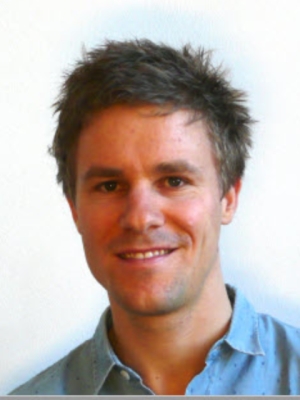
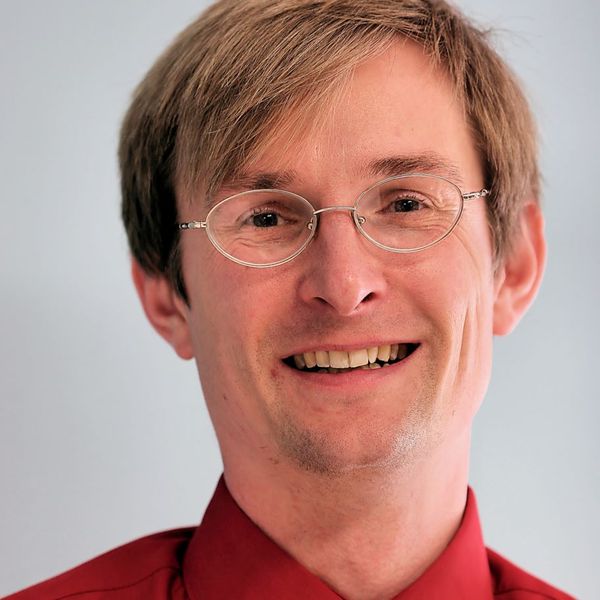
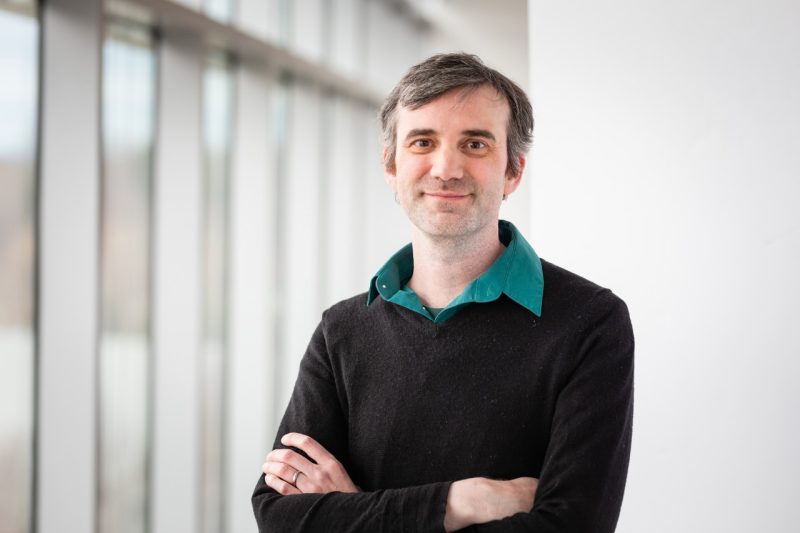
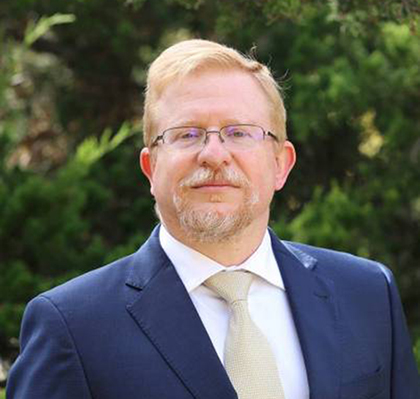
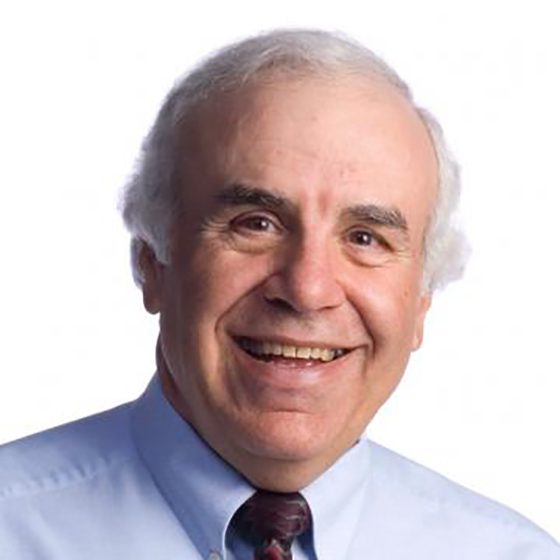
Bri-Mathias Hodge is an Associate Professor at the University of Colorado Boulder's Department of Electrical, Computer, and Energy Engineering, while also serving as Chief Scientist at NREL's Grid Planning and Analysis Center and Associate Director of the Renewable and Sustainable Energy Institute. His career spans academic and industry roles in power systems analysis and renewables integration. Bachelor's, Master's, and PhD in Chemical Engineering from Carnegie Mellon, Åbo Akademi, and Purdue respectively His research focuses on Renewables integration , Net-zero energy systems , and Wind and solar power forecasting . Recent publications explore energy storage dispatch modeling, electric vehicle wireless charging impacts, and AI-driven grid foundation models. His 299+ research outputs (2011-2025) emphasize Renewable energy grid integration Power system forecasting AI applications in energy systems EV infrastructure impacts Carbon capture technologies Scientific recognition includes Fulbright Fellowship (2016) Five IEEE Power and Energy Society Best Paper Awards (2015-2018) Active in professional networks as Member of IEEE Transactions on Sustainable Energy Member of multiple IEEE working groups Contributor to Journal of Renewable and Sustainable Energy
Professor Gregor Verbic is a faculty member at the University of Sydney in the School of Electrical and Computer Engineering , where he serves as Director of the Centre for Future Energy Networks . Previously, he held an assistant professor position at the University of Ljubljana and was a NATO-NSERC Postdoctoral Fellow at the University of Waterloo. His career spans academic research, industry leadership as Head of Interenergo's Investment Department, and extensive collaboration with IEEE. PhD in Electrical Engineering (University of Ljubljana) Senior IEEE Member Research Interests focus on transforming power systems to zero-carbon grids through: Aggregation and control of distributed energy resources (DERs) Frequency control with wind generation and electric vehicles Stochastic optimization for multi-energy systems Smart home energy management with phase change materials Notable Contributions include: 2006 IEEE prize paper for voltage instability prediction 2010-2024: 15 recent publications on DER coordination, network tariffs, and low-inertia grid stability Teaching includes courses on: ELEC3203/ELEC9203: Electricity Networks ELEC5213: Engineering Optimisation ELEC5206: Sustainable Energy Systems Labs & Initiatives Centre for Future Energy Networks The Net Zero Institute
Dr. Dominik Büeler is a Researcher at ETH Zurich's Institute for Atmospheric and Climate Science and staff member of the Center for Climate Systems Modeling (C2SM). His work bridges atmospheric dynamics with practical climate services, focusing on subseasonal prediction systems and their societal applications in Europe. Research Focus: Büeler's work centers on subseasonal-to-seasonal prediction, with emphasis on weather regime dynamics, extratropical cyclone behavior, and stratosphere-troposphere interactions. His research integrates large ensemble modeling, forecast verification, and climate impact assessment, particularly for European weather extremes. Recent projects examine heatwave mortality prediction, energy meteorology applications, and the role of moist processes in atmospheric blocking. Analysis of his publication record since 2021 reveals consistent advancement in subseasonal forecasting methodology, with growing emphasis on societal applications including public health (heat-related mortality) and energy sectors. His work increasingly connects fundamental atmospheric processes with operational forecasting systems, leveraging collaborations through the Subseasonal-to-Seasonal Prediction Project. Affiliations: Center for Climate Systems Modeling (C2SM) - Core Research Staff ETH Zurich Institute for Atmospheric and Climate Science MeteoSwiss Collaborator (Energy Meteorology) Büeler contributes to multidisciplinary teams developing climate services, with recent work supporting Swiss operational forecasting systems. His research group within C2SM focuses on improving subseasonal predictability through advanced diagnostics of model biases and atmospheric processes.
Paul Withers is a Professor and Chair of the Department of Astronomy at Boston University. He leads research on planetary atmospheres and ionospheres, with a focus on Mars and Venus, and serves as Principal Investigator on multiple NASA-funded research projects. Education: B.A. in Physics, 1998, Queens' College, Cambridge University M.S. in Physics, 1998, Queens' College, Cambridge University M.A., 2001, Queens' College, Cambridge University Ph.D. in Planetary Science, 2003, University of Arizona Professor Withers' research focuses on the upper atmospheres and ionospheres of terrestrial planets, particularly Mars and Venus. His work involves analyzing spacecraft data and developing theoretical models to understand how solar flux, neutral atmospheres, magnetic fields, and ionospheres interact under unique planetary conditions. He has made significant contributions to understanding the response of the Martian ionosphere to solar flares, the structure of the Venus ionosphere, and meteoric plasma layers in planetary ionospheres. His research often involves multi-instrument campaigns and coordinated observations across different spacecraft missions including Mars Express, MAVEN, and Venus Express. Analysis of Professor Withers' recent publications reveals a strong emphasis on Martian ionospheric dynamics, particularly its response to solar activity and its variability under different conditions. His work frequently combines data from multiple missions to create comprehensive models of planetary upper atmospheres. He has developed important methods for analyzing radio occultation data and reconstructing atmospheric properties from entry, descent, and landing measurements. Major Funded Projects: "Characterizing the topside bulge in the ionosphere of Mars" (NASA Mars Data Analysis Program, 2014, $144K) "Integration of MAVEN neutral and plasma observations" (NASA MAVEN Participating Scientist Program, 2013, $284K) "Radio occultation studies at Mars" (NASA Early Career Fellowship Program, 2013, $99K) "EDL reconstruction for MSL" (NASA, JPL contract, 2012, $199K) "Meteoric plasma layers on Venus and Mars" (NASA Planetary Atmospheres Program, 2012, $232K) Professor Withers has been actively involved in mentoring students and collaborating with international researchers. He serves as a key member of the Mars Upper Atmosphere Network (MUAN) and has contributed to community white papers for planetary science decadal surveys. His work supports future Mars landers through atmospheric modeling and surface pressure prediction, with direct applications to mission planning and execution. He has presented his research at numerous international conferences including the American Geophysical Union meetings, Division for Planetary Sciences meetings, and European Planetary Science Congress. His work has important implications for understanding planetary climate evolution, space weather effects on technological systems, and the search for habitable environments beyond Earth.
Scott England is a Professor in the Department of Aerospace and Ocean Engineering at the College of Engineering, Virginia Polytechnic Institute and State University. He serves as the Project Scientist for NASA’s Ionospheric Connection Explorer (ICON), Co-Investigator for Global-scale Observations of the Limb and Disk (GOLD), and Participating Scientist for Mars Atmosphere and Volatile Evolution (MAVEN). Education PhD, University of Leicester (UK), 2005 MPhys First Class Honors, University of Leicester (UK), 2001 England’s research focuses on planetary atmosphere-space environment interactions, particularly gravity waves, atmospheric tides, and ionosphere-thermosphere coupling on Earth and Mars. His work integrates NASA mission data (ICON, GOLD, MAVEN) with numerical modeling to study thermal dynamics, wind systems, and solar flare impacts. Recent publications highlight his expertise in thermospheric gravity wave science, planetary wave-induced ionospheric variability, and Mars atmosphere studies using EMUS and IUVS instruments. Articles span topics like Seasonal variability of DE3/DE2 tides , Transient Martian hot oxygen corona , and Shock-induced plasma dynamics . Scientific Honors 2020 Dean's Award for Teaching Excellence 2016 RHG Exceptional Achievement for Mars Science As a professional leader, England served as Thermospheric Lead for the 2019 Planetary Mission Concept Studies Program and on the National Academy of Sciences Decadal Survey panel. He manages Virginia Tech’s participation in the Virginia Space Grant Consortium and has contributed to high-performance computing committees.
Seth Blumsack is a Professor at the Pennsylvania State University in the Department of Energy and Mineral Engineering and serves as Director of the Center for Energy Law and Policy . He holds an Adjunct Research Professor position at the Carnegie Mellon Electricity Industry Center and is affiliated with the Santa Fe Institute as an External Faculty member. His research spans energy economics , power grid reliability , and complex infrastructure networks . Key projects include: Interdependent natural gas and electricity systems analysis Governance of regional transmission organizations Smart grid consumer behavior studies Power grid reliability tools development He has secured funding from the U.S. National Science Foundation , Department of Energy , Environmental Protection Agency , and private industry. His Best paper award at Hawai’i International Conference on System Sciences (2011) and John T. Ryan, Jr. Fellowship (2011-17) highlight his scientific recognition. Publications emphasize electricity market deregulation , energy infrastructure resilience , and consumer response to smart grid technologies . His work has been cited in major media outlets like The New York Times and The Los Angeles Times , and he has consulted for National Renewable Energy Laboratory , U.S. Department of Energy , and other industry stakeholders.
Wayne Springer is a Professor in the Department of Physics & Astronomy at the University of Utah, with a career spanning over 25 years. He has been actively involved in experimental particle astrophysics, ultra-high-energy cosmic ray (UHECR) physics, and gamma-ray astronomy. Ph.D. in Physics from University of Maryland (1991) B.S. in Physics from University of Maryland (1985) Postdoctoral training at University of Maryland and University of Alberta His research focuses on particle astrophysics, cosmic ray detection, and gamma-ray astronomy. He has made significant contributions to the development of the HiRes and Telescope Array cosmic ray observatories, as well as the HAWC and SWGO gamma-ray observatories. His recent work includes deployment of the Trinity neutrino detector prototype and serving as SWGO project manager for Chile site infrastructure. Article trends show strong emphasis on TeV gamma-ray observations (HAWC, SWGO), cosmic ray diffusion mechanisms, dark matter searches, and high-energy astrophysical source characterization (pulsars, microquasars, supernova remnants). He has secured multiple NSF grants for particle astrophysics research and leads detector working groups in international collaborations. Professor Springer actively participates in astronomy outreach, co-developing observatories and implementing computational physics teaching tools with Gradescope auto-graders for enhanced pedagogy. His work bridges experimental high-energy physics, detector development, and multiwavelength astrophysical studies.
Tomas Karlsson is a Professor and Deputy Head of Department at the Royal Institute of Technology , specializing in Space and Plasma Physics . He teaches courses such as EF2240 Space Physics , EF2245 Space Physics II , and EI1240 Electromagnetic Theory , while serving as examiner or coordinator for advanced projects and thesis work in space-related fields. His research focuses on the interaction between the solar wind and planetary magnetospheres , with specific interests in bow shock physics , magnetosheath jets , solar wind magnetic holes , auroral physics , and comparative studies of magnetospheres across planets and comets. He employs spacecraft data (e.g., MMS , Cluster , BepiColombo ) and simulations to analyze plasma dynamics and space weather phenomena. The 15 most recent publications highlight trends in solar wind turbulence , magnetospheric boundary processes , and planetary plasma interactions , with recurring themes in SLAMS (Short Large-Amplitude Magnetic Structures) , magnetosheath jet formation , and magnetic hole propagation . These works span statistical surveys, hybrid simulations, and multi-mission data analysis.
Bing Yan is an Assistant Professor in the Department of Electrical and Microelectronic Engineering at Rochester Institute of Technology (RIT), affiliated with the Kate Gleason College of Engineering. She holds a B.S. in Information Management from Renmin University of China (2010), and M.S. and Ph.D. degrees in Electrical Engineering and Statistics from the University of Connecticut (2012–2017). Prior to RIT, she was an Assistant Research Professor at the University of Connecticut. Dr. Yan’s research focuses on power system optimization , including grid integration of renewables (wind/solar), microgrid operations, distributed energy systems, and manufacturing scheduling. She has published over 30 peer-reviewed articles and secured grants from the National Science Foundation (including a CAREER Award), Department of Energy, and industry partners like Brookhaven National Laboratory and ABB. Her work emphasizes mixed-integer linear programming and machine learning applications in energy systems. Notable contributions include stochastic unit commitment models for wind farms, voltage control via deep reinforcement learning, and multi-layer weather models for PV prediction. She advises on projects involving grid resilience, smart manufacturing, and data-driven optimization. Awards: National Science Foundation Faculty Early Career Development (CAREER) Award Multiple NSF grants, DOE grants, and industry contracts Teaching: Courses include Circuits I , Electric Power Transmission & Distribution , and Advanced Power Systems . She also mentors students through co-op programs and independent studies. Labs/Teams: Leads the Intelligent Lab of Power and Manufacturing (ILPM), focusing on multidisciplinary solutions for energy and manufacturing systems. The lab emphasizes hands-on training and innovation in smart grid technologies and sustainable energy systems.
Dr. Patrick S. Market is a Professor of Atmospheric Science and currently serves as the Director of the School of Natural Resources at the University of Missouri. He also acts as Interim Co-Director of the Missouri Water Center. His research focuses on synoptic and mesoscale dynamics, particularly winter weather, heavy rainfall, flash flooding, and severe local storms. He has contributed to advancements in precipitation efficiency studies and operational forecasting techniques. His work explores the role of artificial intelligence in weather prediction and communication, emphasizing the continued importance of human expertise in an automated forecast process. Dr. Market has secured grants for data stream maintenance and digital equity planning, and he has led educational initiatives integrating research into synoptic meteorology classrooms. Notable collaborations include projects with the National Weather Service and studies on the Ozark Plateau's topographical influence on weather systems.
Navid Bayati is an Associate Professor at the University of Southern Denmark, affiliated with the Institute of Mechanical and Electrical Engineering and the Centre for Industrial Electronics. He leads the Control and Protection of Smart Grids (CAP-SG) group and focuses on renewable/hybrid power systems, microgrid protection, and grid code compliance. Education: Ph.D. in Power Systems & Microgrid Protection (2020, Aalborg University); M.Sc. in Power Systems (2017, Amirkabir University of Technology) His research spans renewable energy integration , transient analysis , grid interconnection , and digital twin applications . Recent work includes machine learning for carbon emission prediction, fault localization in DC microgrids, and supercapacitor resilience in hybrid systems. Collaborations include projects like IEA Wind Task 50 and RePoSys , addressing grid renovation, life cycle assessment, and digital twin resilience. His teaching portfolio covers power electronics , energy management , and microgrid control .
Pooya Davari is a Professor and Head of the Section for Applied Power Electronic Systems at Aalborg University , Denmark. He leads the EMI/EMC in Power Electronics Research Group and serves as Vice Chair of the Energy Efficiency Mission. His research focuses on electromagnetic interference (EMI) and harmonic mitigation in power electronic systems, with over 200 publications and significant contributions to renewable energy integration. Education: B.Sc. and M.Sc. in Electronic Engineering (2004, 2008), Ph.D. in Power Electronics from Queensland University of Technology (2013) Prior Roles: Lecturer at QUT (2013–2014), Postdoc at AAU (2014) Research Interests: Harmonic and EMI analysis in grid-tied converters High power density converter design Signal processing for converter modeling Reliability of power electronic systems Article Trends: Recent work emphasizes EMI/EMC in renewable energy systems, wide bandgap semiconductors (SiC/GaN), and reliability modeling for EVs and hydrogen production via electrolysis. Sub-fields include converter topologies, grid integration challenges, and AI-driven diagnostics. Scientific Awards: Equinor 2022 Prize (Denmark’s oldest engineering award) IEEE EMC Society Young Professional Award (2020) World’s Top 2% Highly Cited Scientist (Stanford, 2021–2025) Multiple best paper awards (IEEE, Applied Sciences, etc.) Grants & Editorial Roles: Recipient of grants from Innovation Fund Denmark (Supra-EMC project), Horizon Europe (SOLARIS), and industry partnerships. Serves as Area Editor for IEEE Transactions on Transportation Electrification , Associate Editor for IEEE Transactions on Power Electronics , and Editor-in-Chief of Circuit World Journal (2020–2025). Labs & Standards: Coordinator of the EMC Laboratory at Aalborg University. Member of IEC standardization Working Groups 6 and 8 (TC77A), focusing on EMC strategies for power grids.
Pavlos S. Georgilakis is a Professor at the School of Electrical and Computer Engineering, National Technical University of Athens (NTUA), specializing in modern techniques for power system analysis, optimization, and renewable energy integration. He holds a Diploma (1990) and PhD (2000) in Electrical Engineering from NTUA. His career includes roles as Lecturer (2009) and Associate Professor (2018–2023) at NTUA, and Assistant Professor at the Technical University of Crete (2004–2009). Research focuses on power transmission/distribution systems, transformer design, and applying AI/optimization for grid efficiency. He led 10 research projects, including Horizon 2020 initiatives SHAR-Q, WiseGRID, and NobelGrid. He authored 3 books and over 230 publications (SCOPUS citations: >5,500). Editor of IET Smart Grid, Energies, and Electricity journals; senior IEEE member. He supervised 4 doctoral, 9 master’s, and 76 diploma theses. Awards include the 2013 Best Reviewer Award from Electric Power Systems Research. Active in energy storage, smart grids, and decentralized energy resource integration.
Anthony R. Ingraffea is a Professor in Cornell University's College of Engineering, Department of Civil and Environmental Engineering. He has taught structural mechanics, finite element methods, and fracture mechanics at Cornell since 1977. His research focuses on computational simulation systems for fracture control in engineered systems, combining experimental testing with numerical modeling. His groundbreaking work in computational mechanics includes pioneering interactive computer graphics applications and leading the $15M NSF-funded Synthesis National Engineering Education Coalition. He received significant recognition for addressing aging aircraft problems through NASA-sponsored research. Key research areas include: Fracture mechanics in aerospace and civil systems Finite element analysis for complex materials Environmental risk assessment of energy infrastructure Digital twin technology for predictive engineering Renewable energy systems modeling Scientific awards highlight his achievements: NASA Group Achievement Award (1996) ASTM Irwin Medal (2006) TIME Magazine 'People Who Mattered' (2011) Fellow of the International Congress on Fracture (2009) NSF Presidential Young Investigator (1984) He has secured over $35M in R&D grants from agencies like NSF, NASA, and industry partners including Boeing and IBM. His educational innovations in engineering teaching technology earned multiple university and national awards.
Jef Poortmans is a Visiting Professor at KU Leuven, Belgium, specializing in photovoltaic technologies and solar energy systems. His research spans multiple applications including conventional solar installations, agrivoltaics, vehicle-integrated photovoltaics, and tandem solar cell configurations. Affiliated with the Electa department at KU Leuven, he maintains an active research profile with numerous publications extending into 2025. His research interests focus on advancing photovoltaic technology across multiple dimensions. Poortmans investigates thermal modeling to improve energy yield predictions, develops lightweight PV modules for vehicle integration, explores agrivoltaic systems that combine agriculture with solar energy production, and works on next-generation perovskite and tandem solar cell technologies. His work often addresses practical implementation challenges including reliability under various environmental conditions, mechanical integration requirements, and performance optimization for specific applications. Analysis of his recent publications reveals a strong emphasis on practical implementation challenges of photovoltaic systems. His work spans fundamental materials science (particularly for perovskite and thin-film technologies), system integration challenges (especially for vehicle applications), and innovative approaches to land use optimization through agrivoltaics. A recurring theme is addressing reliability and performance issues under real-world operating conditions rather than ideal laboratory settings. Poortmans frequently collaborates with researchers across multiple institutions, indicating strong industry and academic connections within the photovoltaics community. His work appears in high-impact journals including Solar Energy Materials and Solar Cells, Scientific Reports, and Advanced Functional Materials, demonstrating recognition within the field. While specific grant information isn't detailed in the provided materials, his extensive publication record across diverse photovoltaic applications suggests successful funding acquisition for multiple research projects. His involvement in PhD theses supervision indicates active mentorship of next-generation researchers in the photovoltaics field. His research group appears to focus on bridging fundamental photovoltaic science with practical engineering applications, particularly addressing the reliability and integration challenges that prevent wider adoption of solar technologies in non-traditional applications like vehicles and agricultural settings.