Moira Jardine is Professor of Astronomy at the University of St Andrews School of Physics and Astronomy, where she became the first female physics professor in 2010. Education: Ph.D. Applied Mathematics, University of St Andrews B.Sc. Astronomy and Astrophysics, University of St Andrews Research investigates stellar magnetic activity to understand planetary habitability and solar system evolution. Uses magnetic field measurements to model stellar winds, coronal X-ray emissions, and their impact on planetary atmospheres. Work supports exoplanet detection initiatives including JWST, GAIA, and WFIRST. Publications focus on stellar coronae, magnetic confinement processes, star-planet interactions, and coronal rain dynamics. Current projects model magnetic interactions in systems like AB Dor and HD 189733. Collaborates with international consortia including MagIcS and Bcool for stellar magnetic field surveys. Awards: Fellow of the Royal Society of Edinburgh and Suffrage Science Award (2019).
Victor Becerra is a Professor of Power Systems Engineering at the University of Portsmouth, affiliated with the School of Electrical and Mechanical Engineering within the Faculty of Technology. He is also associated with the Centre for Environmental and Renewable Energy Solutions and the Agile Centre For Equitable Sustainability. His research focuses on advanced control systems, renewable energy integration, smart grids, battery management, and nuclear power plant control. He actively supervises PhD students in topics like optimal control of battery systems and microgrid optimization. His academic work spans over 193 publications, with recent contributions emphasizing techno-economic analysis of green hydrogen, modular energy storage solutions, and optimal control strategies for batteries and nuclear reactors. His research often addresses real-world applications such as grid flexibility at ports, peer-to-peer energy trading platforms, and drone-based inspection of offshore wind turbines. Becerra's expertise includes developing control algorithms for marine structures, sodium-cooled reactors, and unmanned aerial vehicles. He has contributed to books on solar energy engineering and applications, highlighting interdisciplinary approaches to sustainability challenges. His work integrates theoretical models with practical implementations, such as energy management systems for compressed air and advanced BMS for drones. Key themes in his research include renewable energy systems optimization, fault-tolerant control mechanisms, and adaptive control strategies for dynamic environments. He collaborates internationally, addressing global energy challenges through innovative control methodologies and sustainable technologies.
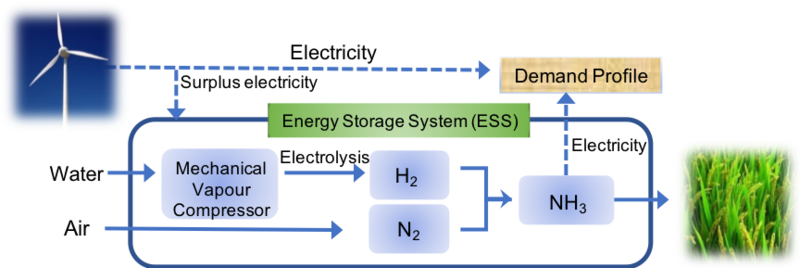
Professor Edman Tsang leads the Wolfson Catalysis Centre at the University of Oxford, focusing on catalysis and sustainable energy systems. His work includes developing novel catalysts for green ammonia production, renewable energy storage, and CO₂ conversion. He collaborates with Siemens on a £1.5M Innovate UK project for a wind-powered green ammonia plant at Rutherford Appleton Laboratory. Research spans photocatalytic solar cells, biofuel production from biomass, and hydrogen storage solutions. His team pioneered the e-Haber-Bosch process, reducing energy demands through renewable integration. Key innovations include patented catalysts for ammonia synthesis and advanced electrochemical systems. The group also explores plastic upcycling via mild heterogeneous catalysis and carbon capture technologies.
Dr. Biswajit Ojha is a Research Fellow in the Department of Mathematics, Physics and Electrical Engineering at Northumbria University. He holds a PhD in Physics from the Indian Institute of Geomagnetism, where his dissertation focused on solar wind control of wave activity in the magnetosphere. His research expertise centers on space plasma physics, particularly electromagnetic phenomena in Earth's magnetosphere, solar wind interactions, and radiation belt dynamics. Ojha's research investigates fundamental plasma processes including wave-particle interactions, pitch angle scattering of relativistic electrons, and electromagnetic ion cyclotron (EMIC) wave emissions. His work utilizes spacecraft data from missions like THEMIS and ARTEMIS to analyze space weather phenomena and magnetospheric responses to solar activity. His publications demonstrate consistent focus on wave dynamics during geomagnetic disturbances, radiation belt electron behavior, and multi-point analysis of magnetospheric phenomena. Recent work advances understanding of coexisting wave modes and their role in energetic particle precipitation.
Marina Galand is a Professor in Planetary Science at Imperial College London's Department of Physics within the Faculty of Natural Sciences. Her research focuses on energy deposition mechanisms in planetary atmospheres, auroral emissions, and plasma interactions with solar system bodies such as Earth, Jupiter's moon Ganymede, and comet 67P/Churyumov-Gerasimenko. She is deeply involved with international space missions including Cassini, Rosetta, and upcoming missions like JUICE (Jupiter Icy Moons Explorer) and Comet Interceptor. Her work analyzes plasma environments using data from instruments like the Rosetta Plasma Consortium and the upcoming JUICE RPWI. Key research areas include ionospheric modeling, diamagnetic cavity dynamics, and solar wind interactions with cometary atmospheres. She has pioneered studies of far-ultraviolet auroras on comets, demonstrating these phenomena occur beyond planetary bodies. Galand's contributions bridge observational data with theoretical models, advancing understanding of atmospheric evolution and energy transfer processes. She collaborates on mission designs for future exploration of icy moons and pristine comets, emphasizing instrumentation development for plasma and dust diagnostics.
Dr. Fan Zhang serves as Associate Professor in Engineering (Engineering and Design) at the School of Engineering and Informatics, University of Sussex, where he leads research in control systems and sustainable energy technologies. His work bridges theoretical control engineering with practical renewable energy applications, particularly in hydrogen storage and conversion systems. His academic foundation includes: PhD in Control Systems from the University of Sheffield MSc in Control Systems from the University of Sheffield PgCLT (Distinction) from the University of South Wales BEng in Automation from Tianjin University of Technology and Education Research centers on control systems for renewable energy integration, with emphasis on hydrogen storage, wind/solar-hydrogen systems, and automation. His work demonstrates strong interdisciplinary connections between power electronics, energy conversion, and sustainable transportation solutions, particularly through advanced control strategies for complex energy systems. Publication analysis reveals consistent focus on hydrogen energy systems (70% of recent work), with growing emphasis on aviation applications and tidal energy integration. His research trajectory shows evolution from foundational photovoltaic control (2013-2015) toward multi-source renewable systems (2021-2025), reflecting industry shifts toward hydrogen economy solutions. Academic recognition includes: Senior Fellow of the Higher Education Academy He supervises research projects including tidal lagoon power and hydrogen energy storage optimization, with teaching responsibilities spanning Robotics and Electrical Engineering programs delivered in China. His curriculum development for Automation & Mechatronics and Systems Analysis modules demonstrates practical application of his research expertise. Current research activities involve supervisory control systems for renewable hydrogen infrastructure, with emerging work in neurolinguistics-based control interfaces indicating expanding interdisciplinary reach.
James McLaughlin is a Professor of Physics at Northumbria University, specializing in solar physics and magnetohydrodynamics. He holds a PhD from the University of St Andrews and previously worked at NASA Goddard Space Flight Center and the University of St Andrews as a Research Fellow. His research focuses on magnetic reconnection, solar coronal dynamics, and MHD wave behavior. He leads the Solar and Space Physics Group and secured a £1.29M STFC grant (2023–2026). McLaughlin supervises PhD students exploring oscillatory reconnection dynamics and has authored over 50 peer-reviewed papers. He is a Fellow of the Royal Astronomical Society and a Member of the Institute of Physics. Education: MSci (Mathematics & Physics), Durham University, 2002 PhD (Applied Mathematics & Solar Physics), University of St Andrews, 2002–2006 Research Interests: Magnetic reconnection mechanisms, solar flare dynamics, coronal heating, MHD wave propagation, and plasma diagnostics in extreme astrophysical environments. His work bridges theoretical modeling, numerical simulations, and observational data from instruments like SDO/AIA and DKIST. Recent Projects: STFC Consolidated Grant: Solar and Space Physics Group (£1.29M, 2023–2026) Awards: Fellow of the Royal Astronomical Society (2002) Member of the Institute of Physics (1998) Advising & Grants: Supervises PhD students Ryan Smith and Jordan Talbot. His research explores oscillatory reconnection’s role in generating solar waves and energy release. He collaborates internationally on space physics missions and heliophysics studies.
Professor Emma Bunce serves as the Head of School for Physics and Astronomy at the University of Leicester and holds the title of Professor of Planetary Plasma Physics. Her research focuses on planetary magnetospheres, with significant contributions to NASA's Juno mission (Jupiter), the Cassini mission (Saturn), and ESA/JAXA's BepiColombo mission (Mercury). She leads the Mercury Imaging X-ray Spectrometer (MIXS) instrument on BepiColombo and co-leads the SIXS instrument. Her work explores plasma dynamics, magnetosphere-ionosphere coupling, and planetary exploration technologies. Research Interests: Planetary plasma physics, magnetospheric dynamics of gas giants and Mercury, mission instrumentation (e.g., X-ray spectrometers), and space weather effects in planetary environments. Key projects include Juno's polar magnetosphere studies, Cassini's Saturnian magnetosphere analysis, and BepiColombo's Mercury surface composition investigations. Labs/Teams: Principal Investigator of MIXS and Co-Investigator of SIXS (BepiColombo), Juno Magnetosphere Working Group member, and former Cassini magnetometer team Co-Investigator. Active in collaborative mission planning with NASA and ESA. Future Work: Leading BepiColombo's Mercury arrival (2025), advancing X-ray spectrometry techniques, and advocating for ice giant exploration missions (e.g., Uranus orbiter concepts).
Dr Stuart Sharp is a Senior Lecturer in Animal Ecology at the Lancaster Environment Centre , focusing on the intersection of animal behavior , population ecology , and conservation . His research spans wild birds (e.g., dippers, common sandpipers, African river martins) and mammals (e.g., meerkats, sun bears), with an emphasis on how environmental quality and change affect ecology and life history. Current projects include a long-term study of dippers in Yorkshire Dales National Park (since 2013), solar park impacts on ecosystems, and conservation of tropical mammals. He teaches BSc modules in biology, ecology, and zoology , including field courses in Spain and Kenya. In PhD supervision , he welcomes proposals on avian or mammalian ecology. Recent publications highlight environmental noise effects on bird song, solar park impacts on soil and ecosystems, and kin cooperation in social birds. His grants include funding from NERC, ENVISION, and the Birdfair/RSPB Endangered Bird Fund. Research collaborations involve institutions like the Jane Goodall Institute and Cambridge University’s Kalahari Meerkat Project. He has supervised PhD students Noelia Dominguez Alvarez , Catrin Eden , and Lucy Treasure at Lancaster.
Dr David M G Taborda serves as a Reader (equivalent to Associate Professor) in the Geotechnics section of Imperial College London's Department of Civil and Environmental Engineering within the Faculty of Engineering. His research focuses on energy geotechnics, numerical modeling of soil behavior, and offshore wind turbine foundation design, with significant contributions to thermo-active infrastructure systems. Civil Engineering, University of Coimbra, Portugal (2004) PhD in Numerical Modelling of Dynamic Soil Behaviour and Liquefaction, Imperial College London (2010) Dr Taborda's research program spans energy geotechnics , where he pioneered experimental techniques and numerical methods for thermo-active foundations including piles, retaining walls, and tunnels. His work integrates constitutive modeling of soils with applications in offshore wind turbine foundations through the PISA project, developing advanced design methodologies for monopiles in challenging soil conditions. Current investigations address soil liquefaction mechanisms, thermo-hydro-mechanical coupling in granular materials, and machine learning applications for foundation analysis. His research bridges experimental validation with computational innovation to solve complex geotechnical challenges in sustainable energy infrastructure. Analysis of Dr Taborda's 41 publications (2017-2025) reveals three dominant research trajectories: (1) thermo-active infrastructure optimization with increasing focus on thermal interference and machine learning applications; (2) cyclic behavior of offshore foundations using high-cycle accumulation frameworks; and (3) multi-physics modeling of liquefaction and soil-structure interaction. Recent work demonstrates a strong trend toward data-driven approaches and surrogate modeling for complex geotechnical systems, particularly in energy geostructures and offshore wind applications. Dr Taborda actively supports prospective PhD students through Imperial College's President's Scholarships and College funding schemes, and encourages applications for Imperial College Research Fellowships. His research has been advanced through significant industry-academic collaborations including the PISA project for offshore wind foundations, though specific grant details are not provided in the source material. He maintains strong connections with the Geotechnical Consulting Group where he previously worked, facilitating industry-relevant research translation. Affiliated with Imperial's Energy Futures Lab, Dr Taborda collaborates within the Geotechnics section on experimental and computational research. His team develops specialized equipment for thermo-hydro-mechanical testing and contributes to the department's leadership in energy geostructures research, with applications spanning urban infrastructure, renewable energy systems, and offshore engineering projects.
David Burgess is a Professor of Mathematics and Astronomy at Queen Mary University of London, affiliated with the School of Physical and Chemical Sciences and the Centre for Fundamental Physics. His research focuses on space and astrophysical plasma physics, particularly shocks in collisionless plasmas, turbulence, particle acceleration, and large-scale simulations. He collaborates internationally with ESA and NASA mission groups. Key Research Areas: Solar wind turbulence, bow shock dynamics, interplanetary shocks, and plasma simulations. Grants: £868k from STFC for heliospheric research (2023–2027), £626k for planetary studies (2020–2024). Collaborations: Involves groups in Europe and the USA, leveraging data from space missions like Solar Orbiter and MMS. His work uses particle-in-cell simulations and hybrid models to study plasma behavior, with recent emphasis on magnetic reconnection, electron heating, and shock-turbulence interactions.
Dr Yuting Zhang serves as a Research Fellow within the Department of Civil, Maritime, and Environmental Engineering at the University of Southampton's Faculty of Engineering and Physical Sciences. He is an integral member of the Royal Academy of Engineering Chair Centre of Excellence for Intelligent & Resilient Ocean Engineering (IROE), focusing on machine learning applications for geotechnical site characterization. His educational background includes a Bachelor's degree and MPhil in Geotechnical Engineering from Wuhan University, China, followed by a 2024 PhD from the University of Newcastle, Australia, specializing in probabilistic calibration of resistance factors for piling designs. Zhang's research centers on probabilistic geotechnics and reliability-based design methodologies, with particular emphasis on data-driven site characterization techniques. His work bridges machine learning algorithms with geotechnical and geophysical data analysis to enhance foundation engineering practices, especially in offshore and marine environments. Current projects investigate spatial soil variability effects on pile group reliability, optimization of resistance factors, and innovative data augmentation approaches for rock fracture prediction. His publication record demonstrates consistent output in high-impact journals since 2022, with recent 2025 publications indicating active research momentum. The articles reveal strong thematic focus on probabilistic methods for pile design, integration of diverse geotechnical data sources, and machine learning applications in subsurface characterization. As part of the Infrastructure Group and Southampton Marine and Maritime Institute, Zhang contributes to ocean energy research initiatives while maintaining active collaborations with international researchers including Jinsong Huang, Jiawei Xie, and Anna Giacomini. His work supports the development of more resilient offshore infrastructure through advanced geotechnical reliability frameworks.
Professor Yong Kang Chen is a Professor of Applied Mechanics at the University of Hertfordshire, where he leads the Energy and Sustainable Design research group and serves as Head of the Automotive, Mechanical and Mechatronic Division in the School of Physics, Engineering & Computer Science. He holds a PhD, MSc, and BEng, and is a Chartered Engineer (CEng) with fellowships from the Institution of Mechanical Engineers (FIMechE) and Higher Education Academy (FHEA). His research focuses on applied mechanics with specialized interests in renewable energy systems, computational fluid dynamics, nanomaterials, and structural integrity. Key research themes include: Energy storage systems and flywheel technology optimization Phase change materials for building efficiency Wind turbine design for urban environments Surface engineering of polymer nano-composites Nano-fluid applications in thermal systems His publication portfolio demonstrates strong emphasis on sustainable energy solutions, with recent work exploring wind turbine shroud systems, PCM-enhanced building materials, and flywheel energy storage optimization. Nanomaterial research constitutes a significant secondary focus, particularly carbon quantum dots for optoelectronic applications. Honors include: Fellow of The Institution of Mechanical Engineers (FIMechE) Fellow of the Higher Education Academy (FHEA) He has secured over £1.3 million in research funding from EPSRC, Innovate UK, EU FP7 programs, and industrial partnerships. Notable projects include leadership roles in EU MAAT and SHELL consortiums, thermal analysis for Global Invacom Ltd, and development of structural health monitoring for wind turbine blades. He leads multiple active laboratories focusing on energy systems and advanced materials characterization.
Dr. Istvan Ballai is a Senior Lecturer in Applied Mathematics at the School of Mathematical and Physical Sciences , University of Sheffield. His research focuses on MHD waves in solar and interplanetary plasmas , particularly their role in energy transport, plasma heating, and diagnostics. University : University of Sheffield Email : i.ballai@sheffield.ac.uk His work encompasses linear and nonlinear wave phenomena in partially ionized plasmas, with applications to solar corona heating and wave-based plasma diagnostics. Recent publications highlight advancements in modeling Alfvén waves , solar vortices , and photospheric flux tubes . Articles span 2025–2022 , emphasizing numerical simulations and observational analysis of wave propagation, energy concentration, and instability dynamics. Dr. Ballai has received grants from Leverhulme , Royal Society , Nuffield , and STFC , and contributes to teaching in Differential and Difference Equations , Complex Analysis , and Numerical Methods .
Dr. Luke Barnard is an Associate Professor in the Department of Meteorology at the University of Reading, specializing in solar physics and space weather. His research focuses on solar wind dynamics, coronal mass ejections (CMEs), and their interactions with planetary environments. He contributes to models like HUXt for solar wind prediction and collaborates on space missions such as STEREO, Parker Solar Probe, and Tianwen-1. His work involves data assimilation techniques, ensemble modeling, and reconstruction of historical solar activity. Dr. Barnard's studies bridge observational data with theoretical models to advance understanding of heliospheric phenomena and their geophysical impacts. Key Affiliations: Department of Meteorology, University of Reading. Research Themes: Solar wind modeling, CME propagation, space weather forecasting, geomagnetic effects, and long-term solar variability. Collaborations: Extensive international collaborations, including with NASA, ESA, and institutions such as BepiColombo and MAVEN missions. His recent work emphasizes probabilistic solar wind forecasting, CME interaction with comets and planets, and historical reconstructions of solar activity. He has published over 79 peer-reviewed articles, with a focus on solar-heliospheric dynamics and space weather mitigation strategies.