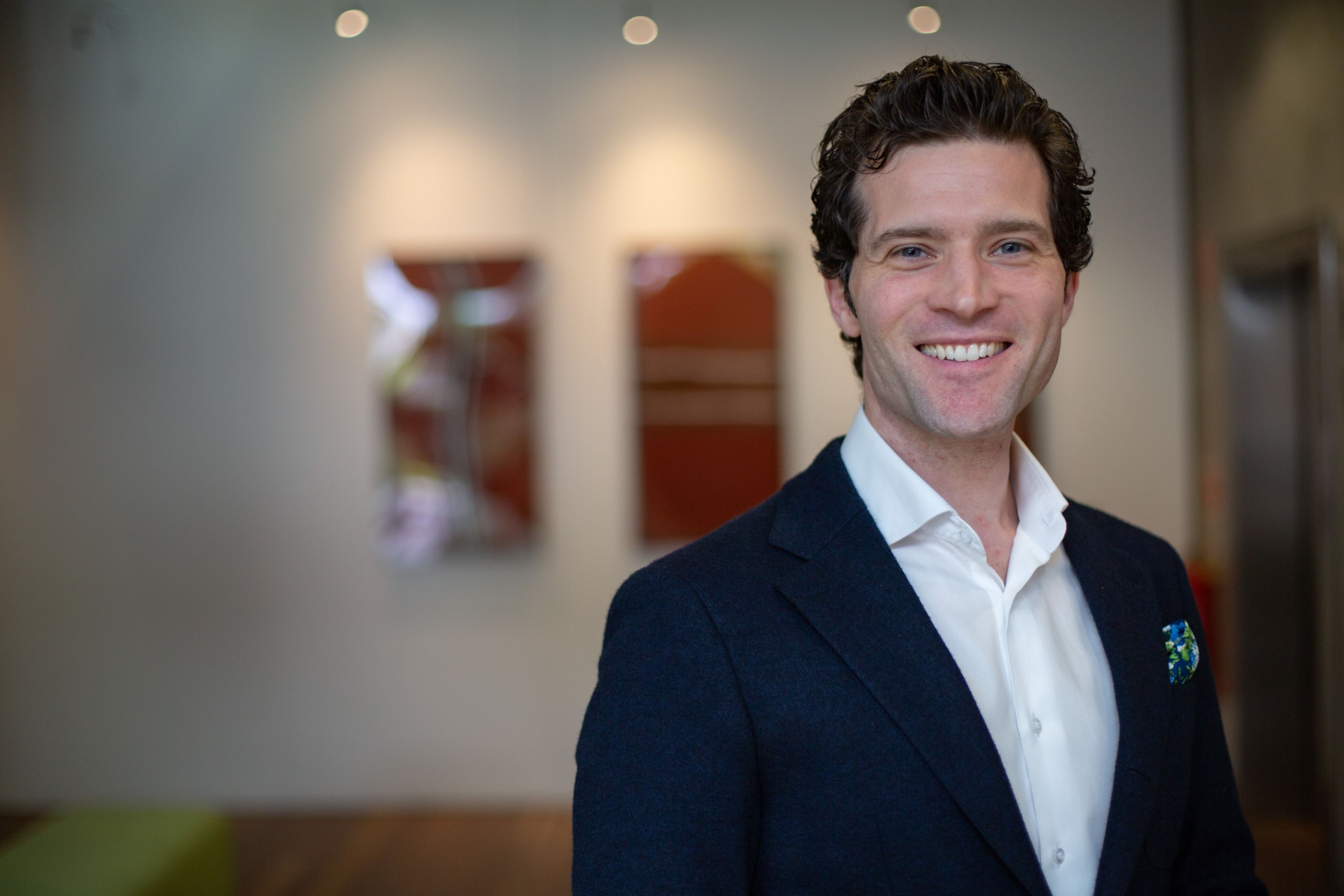
Bernhard Girsule serves as a Junior Researcher at the Department of Media and Digital Technologies within the Institute for Creative Media/Technologies at the University of Applied Sciences St. Pölten. His research spans critical technological domains including: Computer Vision for industrial quality control Human-Computer Interaction in emergency assistance systems Machine Learning applications in smart manufacturing Digital Health solutions for active assisted living Inclusive technology design Current projects demonstrate his applied focus: Eden (sustainable food systems), QUAKE-iP (sensor-based production quality control), TRAAK 4.0 (tracking knowledge systems), Smart Waste Management, and the Open Solar House App. His Smart Companion 2 project transforms everyday devices into emergency response systems through embedded AI. He operates within two key research ecosystems: the Digital Technologies Research Group focusing on computer vision and smart manufacturing, and the Center for Digital Health and Social Innovation where he bridges AI with social inclusion initiatives through collaboration with the Ilse Arlt Institute.
Alina Donea is a Senior Lecturer in Astrophysics and Applied Mathematics at Monash University's School of Mathematics, specializing in helioseismology and solar physics. She holds a PhD in Mathematics and Astronomy and has held academic and research positions globally, including postdoctoral roles at the Max Planck Institute and visiting appointments at institutions like the High Altitude Observatory (USA). She is a Partner-Investigator on major NASA projects and an Associate Editor for Frontiers Astronomy and Space Sciences . Her research focuses on seismic emissions from solar flares, magnetic field dynamics, and space weather forecasting using computational methods. Education: BSc and Diploma in Physics (University of Bucharest), PhD in Mathematics and Astronomy (Romanian Academy/Max Planck), Graduate Certificate in Higher Education (Monash). Research Interests: Solar quakes, acoustic haloes, magnetic solar flares, helioseismic holography, and machine learning applications in solar imaging. Her work includes over 60 refereed publications, with highly cited papers on seismic emission from solar flares and sunquakes. She actively collaborates with international teams and has secured research grants totaling over $250,000. Current projects involve forecasting active region emergence and developing algorithms for far-side solar region detection using seismic data. Leadership roles include Honours Astrophysics Coordinator at Monash and membership in the International Astronomical Union. Her lab focuses on advancing helioseismic techniques and understanding solar dynamics' impact on space weather.
Dr Malcolm Druett is a Lecturer in Space Weather and Space Systems at the University of Sheffield's School of Electrical and Electronic Engineering. He leads the Global Engineering Challenge and serves as the Admissions and Outreach Tutor (Outreach Lead). His research focuses on hybrid fluid-particle modeling of solar and stellar plasmas, with emphasis on solar flare dynamics, radiation transport, and flares' impacts on space weather and exoplanet habitability. Education: MPhys Physics (Oxford, 2003), MSc Applied Mathematics (Open University, 2013), PhD Solar Physics (Northumbria, 2018). Postdoctoral research included Stockholm University (2018-2021) and KU Leuven (2021-2024). Active in observational campaigns for DKIST, IRIS, and SST telescopes. Research interests span solar flare modeling, radiative transfer, plasma astrophysics, and exoplanetary environments. He develops tools like COCOPLOT for 3D data visualization and collaborates internationally with institutions like NASA Goddard and Glasgow University. Current projects include the SunbYte balloon mission (Sheffield Space Initiative) and P-Star, advancing astronomy in Pakistan. His publications (2018-2024) emphasize flare ribbon dynamics, chromospheric heating, and multi-dimensional simulations using MPI-AMRVAC. Notable work includes studies of X9.3 solar flares and sunquake mechanics. Advises PhD students in machine learning applications to flare simulations and flare ribbon substructures. Professional memberships: Royal Astronomical Society, International Astronomical Union. Teaching focuses on systems engineering mathematics and computational fluid dynamics.
Professor Alan Duffy is the Pro Vice-Chancellor of Flagship Initiatives at Swinburne University of Technology, where he drives large-scale, transdisciplinary research in areas including hydrogen, renewable technologies, AI, space and aerospace, MedTech, and health innovation. He is also a Professor in the Department of Physics and Astronomy within the Faculty of Science, Engineering and Technology. Previously, he served as the inaugural Director of the Space Technology and Industry Institute at Swinburne from 2021 to 2023. PhD in Astronomy and Astrophysics, University of Manchester, UK MPhys in Physics, University of Manchester, UK Alan Duffy's research focuses on dark matter, computational astrophysics, and space science. He uses supercomputers to simulate galaxy formation within dark matter halos and is a Chief Investigator in the ARC Centre of Excellence for Dark Matter Particle Physics and the SABRE dark matter detector project. His work extends into applied technologies through mDetect, a spin-off company using cosmic muons for mineral exploration and infrastructure monitoring. His recent publications cover topics such as lunar mining ethics, space debris, galaxy formation, and public science engagement. These works reflect a strong interdisciplinary trend combining astrophysics, engineering, policy, and science communication. Alan is a prominent science communicator with over 300 TV appearances and 440 radio interviews, including regular segments on ABC, Ten’s The Project, and TripleJ. He has delivered a TEDx talk, hosted AstroFest, and interviewed leading scientists like Neil deGrasse Tyson and Brian Greene. Chief Investigator, ARC Centre of Excellence for Dark Matter Particle Physics Chief Investigator, SABRE Dark Matter Detector Co-founder and CEO, mDetect Founding Director, Space Technology and Industry Institute (2021–2023) Host, Australian Space Summit (2023–2025) He has received research funding from the Australian Research Council (ARC), Commonwealth government, and CSIRO. He is available to supervise PhD students and actively collaborates with industry, government, and NGOs to advance large-scale research initiatives. He leads multidisciplinary teams across aerospace engineering, data science, AI, astrophysics, and materials science. Alan Duffy is also involved in educational outreach through initiatives like EduMODs, which bring muon detection technology into classrooms to inspire STEM learning.