Michael Fountoulakis is an Associate Professor at the School of Chemical and Environmental Engineering, Technical University of Crete, specializing in biochemical engineering applications for environmental sustainability. Education: Ph.D. in Chemical Engineering (2005), University of Patras MSc in Energy and Environment (2005), University of Patras Diploma in Chemical Engineering (2001), University of Patras Research Interests: Anaerobic digestion for biogas production Membrane bioreactors in wastewater treatment Microalgae and fungal waste treatment systems Composting technologies Protein and biofertilizer production from purple bacteria Recent Research Trends: His work focuses on integrating advanced materials (e.g., granular activated carbon, conductive additives) into anaerobic digestion systems and innovating constructed wetland designs for greywater treatment using ornamental and climbing plants. Publications span biochemical engineering, environmental technology, and urban sustainability. Projects: LIFE22-ENV-EL-HIPPOCRATES (Scientific Coordinator) OLEONAS (Scientific Coordinator) KOTINOS (Scientific Director) Green4Grey (Scientific Director)
Matti Juhani Koivisto is a Senior Researcher at the Department of Wind and Energy Systems at the Technical University of Denmark (DTU). His work focuses on renewable energy systems integration, particularly wind power modeling and analysis within large-scale energy systems. His research expertise spans several critical domains in renewable energy: Wind Energy Systems Engineering (100%) Wind Power Engineering (89%) Variable Renewable Energy Integration (80%) Power Engineering (56%) Time Series Analysis in Energy Systems (37%) Energy Engineering (35%) Dr. Koivisto's research addresses fundamental challenges in renewable energy integration, with particular emphasis on wind power forecasting, variability analysis, and the impacts of climate change on renewable resources. His work bridges theoretical modeling with practical energy system applications, contributing to more reliable and efficient integration of renewable energy sources into power grids. His recent publications demonstrate a strong focus on offshore wind energy, hybrid power plants, and advanced modeling techniques for wind farm generation. His work on increasing the resolution of solar and wind time series has been particularly influential in energy system modeling, addressing critical data requirements for high renewable penetration scenarios. Dr. Koivisto contributes significantly to UN Sustainable Development Goals related to affordable and clean energy (SDG 7) and climate action (SDG 13), with research directly addressing the technical challenges of transitioning to sustainable energy systems. He is actively involved in several major international research projects including AWETRAIN (Airborne Wind Energy Training), DTWO (Federated Digital Twins for Wind-Offshore), and GREAT (GRid Enhancement for Ancillaries in Tomorrow's power systems), where he serves as both project participant and PhD supervisor.
Pietro Bareschino is an Associate Professor in the Department of Engineering at University of Sannio. His research spans chemical looping combustion (CLC), CO2 capture and utilization, methanation, and fluidized bed reactor technology. He has contributed extensively to studies on sustainable energy systems, including bioenergy with carbon capture, solar PV lifecycle analysis, and coal fragmentation dynamics. His recent work includes a 2024 publication on bioenergy with carbon capture, where he analyzed integrated torrefaction–CLC–methanation using solar-dried biomasses. In 2023, he developed reduced-order models for methane reactors and evaluated solar PV systems in Pakistan, focusing on energy payback periods and environmental impacts. Earlier, he studied chemical looping combustion configurations (2020), tobacco stem biofuels (2020), and desiccant wheel performance (2013). His collaborations include researchers like Erasmo Mancusi, Francesco Pepe, and Claudio Tregambi. While no specific awards are mentioned, his work appears in journals like Applied Energy and Powder Technology , with conference contributions to Engineering Conferences International and AIDIC . He has explored innovative reactor designs, such as dual fluidized beds with internal/external solids circulation (2017), and techno-economic analyses of supercritical coal-fired power systems (2024).
Hamid Pouran is a Lecturer in Environmental Technology at the University of Wolverhampton's Faculty of Science and Engineering. He holds a PhD from the University of Sheffield, an MSc from Stockholm University, and dual MSc/BSc degrees from Ferdowsi University of Mashhad. His expertise spans environmental technology, nanomaterial behavior, climate change adaptation, and renewable energy systems. Education: PhD, University of Sheffield MSc, Stockholm University MSc/BSc, Ferdowsi University of Mashhad His research focuses on environmental sustainability, particularly the fate of engineered nanomaterials in ecosystems, floating photovoltaic solar farms, and science-policy interfaces. His work includes developing the Nano-DGT technique for measuring nanoparticle bioavailability, analyzing climate-energy linkages in China, and assessing FPV systems in Brazil, Vietnam, and Sub-Saharan Africa. Prior to his current role, Pouran served as a visiting scholar at Princeton University (2017) and guest editor for the Middle East in London Magazine (2015-2017). He chairs the IEEE UK Climate Change and Environmental Technology Special Interest Group and is a Senior Member of IEEE. Notable contributions include collaborations on floating solar farms, studies on metal speciation in crude oil-contaminated environments, and research on bacterial-mineral interfaces for bioremediation. He has received grants for floating solar farm research (2022-2023) and participated in the Cost Action Grant (2019).
Prof Tariq Muneer is a faculty member at Edinburgh Napier University , affiliated with the School of Computing Engineering and the Built Environment . His research focuses on renewable energy systems , particularly solar PV and wind turbines , with applications in climate change mitigation , energy economics , and sustainable transport . He has supervised numerous postgraduate students and led projects funded by organizations such as the Scottish Government and EPSRC . Research Interests Tariq's work spans renewable energy generation , energy storage , and data-driven performance assessment of wind and solar systems. Key areas include bifacial photovoltaics , urban heat island effects , and electric vehicle infrastructure , emphasizing technical and economic feasibility in real-world contexts like Scottish agriculture and island communities. Recent Publications His 2023 article on solar-wind hybrid systems in Scotland highlights cost-competitiveness with fossil fuels. Earlier works (2020-2022) cover diffuse radiation models , view-factor algorithms , and EV thermal management , reflecting a trend toward hybrid renewable systems and urban sustainability . Articles from 2019 and earlier explore island energy solutions and cement industry emissions . Projects He led projects such as the EPSRC-funded Enerwater (2014-2018) on energy recovery in food processing and the Scottish Government’s LED lighting feasibility study (2012). Other initiatives include renewable integration in Sark Island and decentralized energy solutions for South Asia and sub-Saharan Africa.
Dr. Jiajun Xu is a Professor of Mechanical Engineering and Director of the Center for Advanced Manufacturing in Space Technology and Applied Research (CAM-STAR) at the University of the District of Columbia (UDC). He holds a Ph.D. in Mechanical Engineering from the University of Maryland, College Park. His research focuses on additive manufacturing, thermal transport, space technology, and nanofabrication tools like atomic layer deposition and PVD. He leads multiple laboratories including CAM-STAR and the Multiscale Thermal Transport and Energy Conversion Lab. Dr. Xu has secured significant federal funding from NASA and the Department of Defense for projects in advanced manufacturing and thermal management systems. His expertise includes designing additively manufactured geothermal heat exchangers, nanoscale thermal transport studies, and phase change material integration. He actively collaborates with industry leaders and NASA, emphasizing experiential learning for students through capstone projects. Dr. Xu's leadership roles include serving as Program Director for UDC's Mechanical Engineering program and on editorial boards of journals like the ASME Journal of Heat Transfer. He has received notable awards, including the Black Engineer of the Year Award and multiple UDC Excellence Awards. Grants: NASA (2023, 2019), DoD (2020), NSF (2016) Labs: CAM-STAR, MT2EC, Additive Manufacturing Lab Professional Affiliations: ASME, ASTFE, NSPE Education: Ph.D./M.S. (University of Maryland), B.Sc. (Southeast University)
Meng Li is an ARC DECRA Fellow / Lecturer at the Faculty of Science, School of Chemistry & Physics of Queensland University of Technology (QUT) . His research focuses on thermoelectric materials and energy conversion systems , with expertise in materials engineering and nanotechnology . Recent publications highlight advancements in flexible thermoelectric devices , atomic layer deposition , and graphene quantum dot integration . His work spans topics like SnTe-based materials , Ag2Se thin films , and n-type PbSe thermoelectrics , emphasizing performance optimization and device fabrication . Meng Li is currently accepting research students for Honours, Masters, and PhD studies. His qualifications include a Doctor of Philosophy (University of Queensland) and a Master of Philosophy (University of Wollongong) .
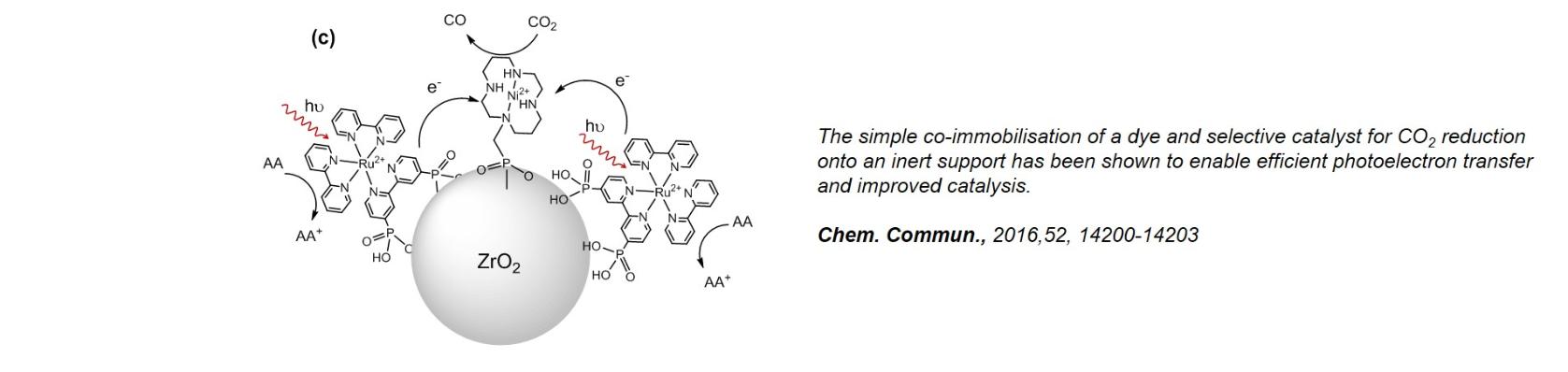
Professor Alexander Cowan is a faculty member in the Department of Chemistry and Stephenson Institute for Renewable Energy at the University of Liverpool. His research focuses on developing catalytic systems for sustainable fuel production using CO2, H2O, and solar energy. He obtained his PhD in Chemistry from the University of Nottingham (2007) and completed postdoctoral work at Imperial College London. PhD: University of Nottingham (2007) Postdoc: Imperial College London His research spans four key areas: electrocatalytic CO2 reduction (gold catalysts, surfactant effects), photochemical systems (polymer photocatalysts, dibenzo[b,d]thiophene sulfone materials), spectroscopic studies (SFG, time-resolved Raman), and water splitting catalysts (high-entropy alloys, nanoframes). His group emphasizes operando spectroscopy for mechanistic insights. Recent publications highlight breakthroughs in spin-polarized electrocatalysis , facet-controlled high-entropy alloy catalysts , and surfactant-mediated CO2 reduction . His work aligns with industrial applications, including gas diffusion electrodes and bipolar membrane electrolysers. Scientific awards include EPSRC fellowships (2012, 2017) and the IChemE Global Sustainability Award (2023). He directs the UK Solar Fuels Network (2019-2022) and UK Solar Chemicals Network (2023-). He leads multidisciplinary grants such as C-Circ (CO2 electrolysers), Zero-Chem (bipolar membrane electrolysis), and SEAFUEL (green hydrogen from seawater). His teaching includes modules on electrochemical energy systems and innovative chemistry for materials.
C. Brenhin Keller is an active Assistant Professor in the Department of Earth Sciences at Dartmouth College since 2019, previously serving as a Postdoctoral Fellow at the Berkeley Geochronology Center and UC Berkeley (2016-2019), and Visiting Scientist at Lawrence Livermore National Laboratory (2016-2019). His research integrates computational, field, and geochronological methods to investigate continental crust formation and its coevolution with Earth's biosphere and surface systems. Education: B.S. summa cum laude in Science of Earth Systems, Cornell University (2010) M.A. in Geosciences, Princeton University (2012) Ph.D. in Geosciences, Princeton University (2016) Dr. Keller's work centers on geochronology and statistical geochemistry , with expertise in zircon dating, crustal evolution modeling, and Bayesian inversion techniques. He develops open-source computational tools like Chron.jl for eruption age modeling and StatGeochem.jl for geochemical resampling, addressing fundamental questions about Earth's history through innovative data-driven approaches. Recent publications show strong emphasis on Bayesian methodologies , zircon trace element analysis , and interdisciplinary connections between solid Earth processes and paleoenvironments. His work spans volcanic-plutonic systems, Great Unconformity studies, and planetary science applications, frequently appearing in high-impact journals like Nature and PNAS. Scientific awards: James B. Macelwane Medal (AGU, 2024) Donath Medal (GSA, 2024) Hisashi Kuno Award (AGU, 2023) Class of 1962 Faculty Fellowship (Dartmouth, 2023) Computational Science Graduate Fellowship (DOE, 2012-2016) He mentors graduate students including Jannitta Yao, Reina Harding, and Alexander Cox, with alumni such as Gailin Pease (M.S. 2021). His research has been supported by DOE and Princeton fellowships, and he actively contributes to open science through software development and large collaborative projects like the Sedimentary Geochemistry and Paleoenvironments Project. Dr. Keller leads a computational geoscience research group developing Julia-based tools for geochronology and geochemistry. His team conducts fieldwork globally across glacial, volcanic, and tectonic settings, including Antarctica, the Himalayas, and North American Cretaceous-Paleogene boundary sites, while maintaining strong connections with Lawrence Livermore National Laboratory.
Dr. Fadi Kahwash serves as a Lecturer in Mechanical Engineering within the School of Computing, Engineering and the Built Environment at Edinburgh Napier University, where he teaches design and energy-related modules. He joined Napier University in 2021 after working as a research assistant and research fellow at Northumbria University, where he participated in EU-funded projects including Erasmus+ for renewable energy teaching and Horizon 2020 for research initiatives. Dr. Kahwash earned his PhD in Mechanical Engineering in 2018 from Northumbria University with research focused on novel numerical methods applied to modeling machining of composite materials. His educational background established the foundation for his expertise in physics-based modeling and simulation techniques that continue to drive his research agenda. His research spans renewable technologies, energy storage, aerodynamics, materials science, and manufacturing processes, unified by a common thread of physics-based modeling and numerical methods. Recent work demonstrates increasing focus on practical applications in healthcare energy systems, residential multi-energy integration, and biodegradable medical implants through additive manufacturing. His publications reveal a strategic evolution from fundamental machining simulations toward applied energy solutions addressing real-world sustainability challenges. Dr. Kahwash's recent publications show strong emphasis on energy system integration for healthcare facilities, residential applications, and industrial processes. His work combines theoretical modeling with practical implementation considerations, particularly in unreliable grid environments and specialized applications like medical facilities. The research demonstrates sophisticated understanding of both technical and economic aspects of energy systems. Fellowship of the Higher Education Academy (FHEA) Member of the Institution of Mechanical Engineers (MIMechE) Chartered Engineer (CEng) Dr. Kahwash actively supervises multiple PhD students on projects including energy management strategies for hybrid renewable systems, work and heat exchange networks for hydrogen industry, photovoltaic integration in buildings, and optimization of additively manufactured medical parts. His research portfolio includes significant funding from diverse sources including the British Council (£80,000 for Resilient & Green Healthcare in Egypt), EPSRC (£49,531 for Multi-Scale Energy Systems Modelling), and Scottish Funding Council (multiple £4,999-5,000 grants for energy storage projects). These projects demonstrate his ability to secure competitive funding for applied research addressing energy sustainability challenges. His work involves collaboration with multiple research teams including Energy Systems Catapult, Northumbria University researchers, and international partners in Egypt. Current projects focus on developing AI-aided energy management software, modular energy storage solutions, and innovative approaches to healthcare facility power resilience, reflecting a strategic research direction toward practical, implementable energy solutions for critical infrastructure.
Chunlin Xu is a Professor in the Faculty of Science and Engineering at Åbo Akademi University, leading the Laboratory of Natural Materials Technology. His research focuses on developing sustainable materials from biorefinery feedstocks, with significant contributions to lignin valorization, nanocellulose engineering, and bio-based coatings. Current affiliations include principal investigator roles in major EU and national projects advancing circular bioeconomy solutions. Xu's research spans Lignin chemistry and nanoparticle formation Nanocellulose-based hydrogels and composites Biomaterials for packaging and medical applications Photosynthetic biohybrid systems for chemical production Machine learning applications in biorefining His work demonstrates strong alignment with UN Sustainable Development Goals, particularly for sustainable materials and clean water technologies. Analysis of Xu's 2025 publications reveals dominant trends in Advanced lignin modification for additive manufacturing Multi-functional hemicellulose derivatives for emulsion stabilization Scalable production of bio-based barrier coatings Nanocellulose integration in environmental remediation These works emphasize practical applications in packaging, agriculture, and water treatment while maintaining strong fundamental science. Scientific recognition includes: Chancellor’s Prize (2023) for renewable materials innovation Election to Swedish Academy for Engineering Sciences in Finland (2023) Xu directs substantial research funding through projects like S2B (EU-funded solar butanol production) and CIMANET (doctoral network for circular materials). His laboratory hosts numerous academic visitors and collaborates internationally across Europe. The research group operates within Åbo Akademi's Natural Materials Engineering ecosystem, with facilities for advanced biopolymer characterization and processing. Current activities include organizing the European Workshop on Lignocellulosics and Pulp while developing next-generation biohybrid systems for sustainable chemical production.
Byron H. Farnum is the Lloyd and Sandra Nix Associate Professor in the Department of Chemistry and Biochemistry at Auburn University. His academic journey includes a B.S. from the University of South Carolina (2008) and an M.S./Ph.D. from Johns Hopkins University (2012). He held a postdoctoral position at the University of North Carolina Chapel Hill (2012–2016) before joining Auburn as an Assistant Professor (2016–2022) and advancing to his current role in 2022. His research focuses on photo/electrochemical reactions of inorganic nanomaterials and small molecules, with emphasis on solar energy conversion, electrochemical energy storage, and optoelectronics. Techniques used include electrochemistry (CV, RRDE), spectroscopy (UV-Vis, NMR, XPS), and microscopy (SEM, TEM). Key projects involve designing redox mediators for solar cells and exploring spinel oxides for catalysis. Farnum’s honors include the NSF CAREER Award (2020) and the UNC Postdoctoral Award for Research Excellence (2015). His team has produced over 50 publications, with recent work highlighted in ACS Catalysis , Inorganic Chemistry , and Journal of Materials Chemistry A . He advises Ph.D. students like Humaira Yeasmin and collaborates with groups at the University of Mississippi and UNC Chapel Hill. His lab hosts annual summer parties and has trained undergraduates such as Juan Contreras. Current projects include zinc-catalyzed redox couples for batteries and defect-engineered perovskites for water splitting.
Ean Hin Ooi is an Associate Professor in the School of Engineering at Monash University Malaysia, where he leads the Computational Modelling team. He holds a PhD in Mechanical Engineering from Nanyang Technological University, Singapore, and a Bachelor's degree in Mechanical Engineering from the University of Technology, Malaysia. His research spans biomedical engineering, computational modeling, and numerical methods, with applications in cancer therapy and medical diagnostics. Doctor of Philosophy, Mechanical Engineering, Nanyang Technological University (NTU), 2009 Bachelor's Degree, Mechanical Engineering, University of Technology, Malaysia Dr. Ooi’s research focuses on the application of mathematical and computational modeling to understand biophysical phenomena in healthcare. His work targets improving cancer treatments such as thermal ablation (radiofrequency, cryoablation, photothermal), developing diagnostic tools like shear wave elastography for kidney disease, and advancing numerical techniques including meshless and boundary element methods. He is a pioneer in the radial basis integral equation method, contributing significantly to computational mechanics. The recent publications reflect a strong trend in interdisciplinary research combining engineering, medicine, and materials science. Key themes include thermal therapy optimization, nanomedicine (gold nanorods, graphene), microfluidics, and machine learning integration in sensor systems. His modeling expertise extends from organ-level simulations (liver, kidney) to nanoscale heat transfer, demonstrating versatility across scales and applications. Dr. Ooi serves as an Associate Editor for Computer Methods and Programs in Biomedicine and Journal of Mechanics in Medicine and Biology , highlighting his scholarly impact. He has received research funding for projects such as photothermal therapy for liver cancer and thermochemical ablation, indicating sustained grant support. He mentors students and is currently accepting PhD candidates in areas related to wound healing mechanics and computational prediction tools for thermal therapy. He is actively involved in professional service, including participation in the Asia-Pacific Society for Artificial Organs and visiting researcher roles at institutions like the University of Nottingham Malaysia. His lab, the Computational Modelling team, focuses on developing predictive frameworks for medical interventions, aiming to bridge computational science with clinical applications.
Stephen J. Herbert is a Professor of Agronomy at the University of Massachusetts Amherst, affiliated with the Stockbridge School of Agriculture and the Department of Plant, Soil and Insect Sciences. He has held significant administrative roles including Associate Dean for Agricultural Research and Outreach (2009–2013), Director of the Center for Agriculture, the Massachusetts Agricultural Experiment Station, and UMass Extension. His career combines academic research, extension outreach, and leadership in sustainable agriculture. Her research focuses on crop physiology, nutrient and manure management, cover crops, water quality, and intercropping systems, with extensive collaborative work in Northeast China. He has taught undergraduate and graduate courses such as Crop Science, Tropical Agriculture, and Crop Physiology, and has chaired committees for 8 Ph.D. and 18 M.S. students. He is actively involved in extension programs related to crops, dairy, livestock, and sustainable agriculture in Massachusetts. The recent publications highlight a strong trend in sustainable agronomic practices, bioenergy crops (especially switchgrass), soybean physiology, nutrient cycling, and soil health. His work integrates field experimentation with environmental impact assessment, particularly in nitrogen and phosphorus management, carbon dynamics, and soil restoration. Topics such as cover cropping, manure application, and dual-use solar agriculture reflect a commitment to ecological and economic sustainability in farming systems. Farmers Award, Central Mass. Dairy Producers Assoc., 1988 Extension-Industry Award in Agronomy, NE Branch American Society of Agronomy, 1987 President, NE Branch American Society of Agronomy, 1992-1993 Board of Directors, NE Branch American Society of Agronomy, 1998-2001 Board of Directors, American Society of Agronomy, 1998-2001 A201 Organization Policy and Bylaws Committee, American Society of Agronomy, 1997-1999 Herbert has coordinated the Massachusetts Extension Crops, Dairy, Livestock Team and the UMass Agronomy Research Farm. He has secured numerous grants from USDA, EPA, and state agencies for projects on water quality, nutrient management, cover crops, and sustainable agriculture. He has authored over 150 peer-reviewed and extension publications and remains active in current initiatives on biochar, pollination, food security, and dual-use solar agriculture. He has also edited the Massachusetts Crop, Dairy, Livestock News and the Massachusetts Agronomy Research Report . His current activities include research and outreach on agricultural learning centers, pollination crops for bees, food security through home food production, and dual-use solar energy projects on farmland. These reflect a forward-looking agenda that integrates renewable energy, ecological resilience, and community engagement in agricultural systems.
Rachel A. Segalman is the Kramer Professor of Materials and Professor of Chemical Engineering at the University of California, Santa Barbara (UCSB). She holds dual affiliations in the Materials Department and Chemical Engineering Department within UCSB's College of Engineering. Her research focuses on structure-property relationships in soft matter systems, spanning energy materials, biomaterials, conjugated polymers, and polymeric ionic liquids. Segalman earned her B.S. from the University of Texas at Austin and her Ph.D. from UCSB. Her honors include AAAS Fellowship, American Physical Society Fellowship, and the John H. Dillon Medal. Current research emphasizes molecular-to-nanoscale control of materials for applications in solar energy, biomaterials, and electronic devices. Her group's recent work includes compatibilizing polymer blends through ionic interactions, optimizing conjugated polyelectrolyte properties, and advancing polymer blend electrolytes. She advises graduate students like Shawn Mengel, who recently defended his thesis. Segalman also serves as UCSB's Vice Chancellor for Research.