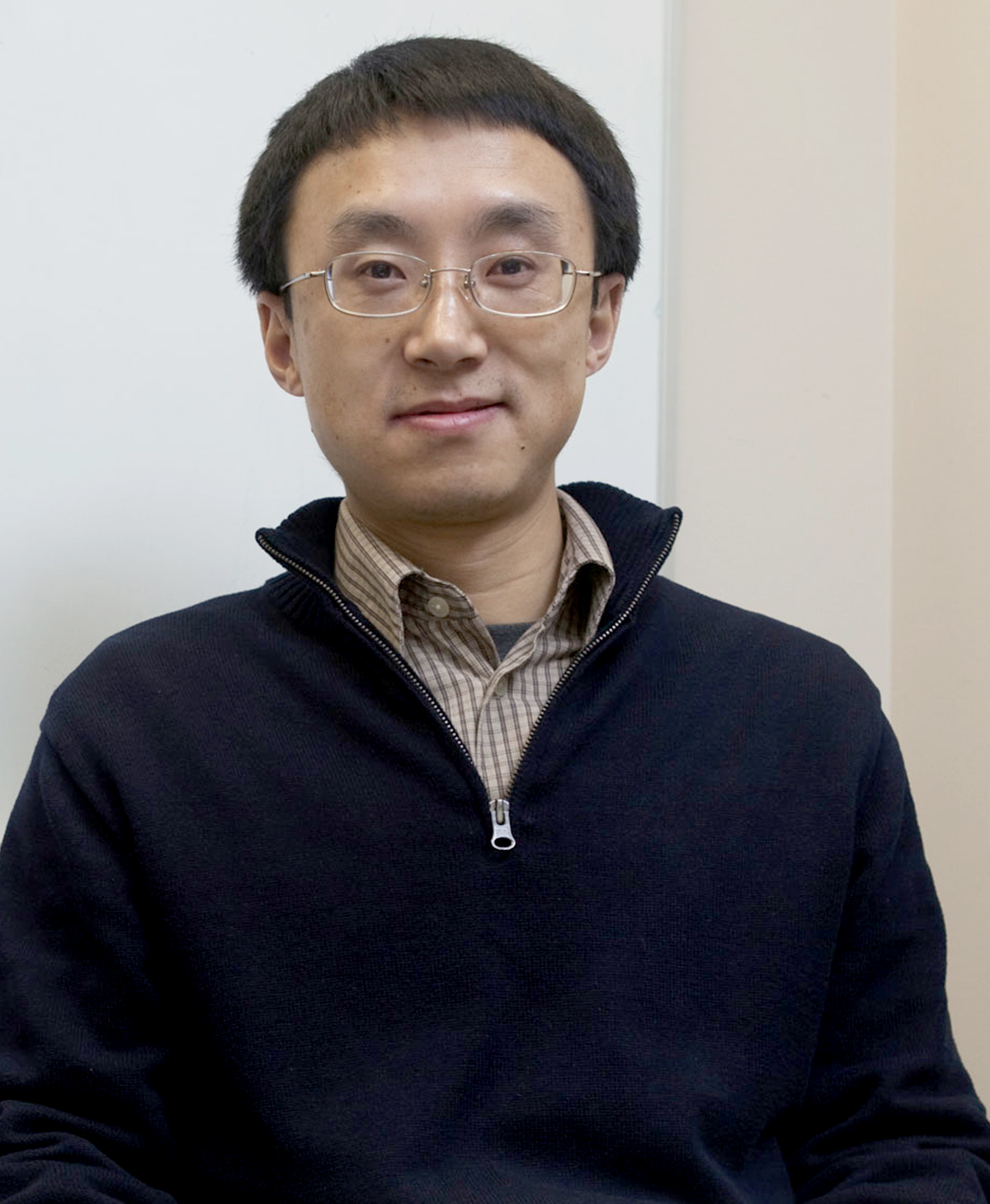
Professor Liang-shi Li is a Professor in the Department of Chemistry at Indiana University Bloomington. His research focuses on developing advanced materials for energy and life sciences, including organic solar cells and electrochemical catalysts for CO2 reduction. He holds a B.S. and M.S. in Chemical Physics and Theoretical Physics from the University of Science and Technology of China, and a Ph.D. in Physical Chemistry from the University of California, Berkeley. Prior to his current position, he conducted postdoctoral research at Northwestern University under Prof. Samuel Stupp. Education: B.S., Chemical Physics, University of Science and Technology of China M.S., Theoretical Physics, University of Science and Technology of China Ph.D., Physical Chemistry, University of California, Berkeley Postdoctoral Associate, Northwestern University Research Interests: Design of novel materials for energy conversion and storage Development of organic and inorganic nanomaterials for electrocatalysis Functionalization of graphene and related carbon-based nanomaterials Biomedical applications of nanomaterials His work integrates computational methods with experimental synthesis to address challenges in sustainable energy and materials science.
Professor Luca Lozzi is a Full Professor in the Department of Physical and Chemical Sciences at the University of L'Aquila. His research focuses on experimental physics and materials science, particularly in the areas of 2D materials, nanotechnology, and optoelectronic devices. He has contributed significantly to advancements in gas sensing technologies, photodetectors, and sustainable material synthesis. His work often involves interdisciplinary approaches, combining material synthesis with device engineering to address challenges in energy, environmental science, and biomedical applications. Recent projects include developing novel photodetectors using carbon nanotube-silicon hybrids and exploring environmentally benign methods for 2D material exfoliation.
Beatriz Julian-Lopez is an Associate Professor at Universitat Jaume I, Spain, and Principal Investigator of the Photoactive Materials for Energy group at the Institute of Advanced Materials (INAM). She graduated in Chemistry (1999) and earned her PhD (2003) with honors for work on hybrid siloxane materials. After postdoctoral research at University Pierre et Marie Curie (Paris), she joined UJI, where she has led multidisciplinary projects since 2011. Education : PhD in Chemistry (UJI, 2003), Postdoctoral Fellow (Paris, Bordeaux, Aveiro) Her research focuses on inorganic and hybrid organic-inorganic nanomaterials doped with lanthanides for optical, energy, biomedical, and catalytic applications. Recent work includes optical up-conversion nanoparticles, hybrid perovskites, and photoelectrocatalytic systems. She has published ~60 peer-reviewed papers with >4000 citations (h-index 26). Notable awards include the Ramon y Cajal contract (2007). Her group collaborates internationally on scalable synthesis methods and sustainable energy solutions. She contributes to training programs for undergraduate, master’s, and PhD students at UJI.
Enrique Comesaña Figueroa is a Professor at the University of Santiago de Compostela (USC), affiliated with the Department of Electronics and Computing within the Higher Polytechnic School of Engineering. He holds a PhD in Electronics from USC (2013), focusing on tools for simulating magnetic semiconductor devices. His research expertise spans spintronics, semiconductor device simulation, nanoelectronics, and variability in advanced transistor architectures like FinFETs and GAA MOSFETs. Key projects include developing ML-driven tools (e.g., MLFoMpy) for TCAD data analysis and exploring materials like GaN and SiC for high-efficiency photovoltaic systems. He collaborates extensively on optimizing semiconductor devices for space applications and energy conversion. His work emphasizes machine learning integration with solid-state physics for predictive modeling of device performance under statistical variability. Notable contributions include studies on metal grain granularity impacts and thermal management in nanoscale devices. Education: PhD in Electronics (2013), University of Santiago de Compostela Research Groups: ARQCOMP (Computer Architecture) Research Interests: Spin-polarized transport in magnetic devices, nanoelectronics variability, semiconductor materials (GaN/SiC), TCAD simulation tools, and machine learning applications in device optimization. His work bridges theoretical modeling with practical device design, particularly for space and energy systems. Recent Work Trends: Focus on high-efficiency laser power converters using SiC and GaN, statistical variability in advanced transistors (FinFET/NWFET), and AI-driven simulation tools for predictive device analysis. Ongoing projects include optimizing solar cell performance through textured interfaces and photonic designs. Grants & Labs: Involved in projects like RePowerSiC and MLFoMpy development, but specific grant details are not provided. Collaborates with industry on semiconductor toolchain innovations.
Dr. Akanksha Menon is an Assistant Professor in the Woodruff School of Mechanical Engineering at Georgia Tech, leading the Water-Energy Research Lab (WERL). Her research focuses on sustainable energy and water technologies at the water-energy nexus, including solar desalination, thermal energy storage, and functional materials. She holds a PhD (2018) and MS (2015) in Mechanical Engineering from Georgia Tech, and a BS from Texas A&M University at Qatar (2013). Her work addresses climate change mitigation through innovations like solar-driven desalination systems, thermal energy storage materials, and energy-efficient building technologies. Key research interests include lower critical solution temperature (LCST) mixtures, thermoresponsive ionic liquids, and salt hydrates for energy applications. Dr. Menon has received prestigious awards such as the NSF Career Award (2023), ACS Doctoral New Investigator Award (2023), and the U.S. Department of Energy Women @ Energy recognition (2021). Her lab collaborates with industry and national labs to bridge research with real-world applications, emphasizing decarbonization and sustainable resource management. Her contributions span publications on solar energy integration, functional materials for energy harvesting, and techno-economic frameworks for desalination. She actively mentors students and advocates for women in STEM through initiatives like the Energy Club @ Georgia Tech and Berkeley Lab’s Water Wednesday’s program.
Nieves Espinosa Martínez is a Ramón y Cajal Researcher at the Department of Physics, Faculty of Chemistry, University of Murcia. She holds a Ph.D. in Physics from the Universidad Politécnica de Cartagena (2012), specializing in life cycle assessment (LCA) of organic solar cells. Her research focuses on sustainability, renewable energy systems, and environmental policy, with a particular emphasis on photovoltaic technologies and their lifecycle impacts. She has contributed to over 45 peer-reviewed publications, analyzing topics such as carbon footprint mitigation, ecodesign directives, and geopolitical energy transitions. Her work integrates LCA with multi-criteria decision-making frameworks to evaluate renewable energy technologies' sustainability. Notable projects include developing recyclability scores for photovoltaic modules and assessing EU energy policy frameworks. She collaborates with institutions like the European Commission’s Joint Research Centre and Novo Nordisk, emphasizing circular economy principles. Her recent studies address challenges in photovoltaic module recycling, extended producer responsibility systems, and optimizing renewable energy deployment to reduce environmental and geopolitical risks. Espinosa Martínez also holds grants from the Spanish Ministry of Science and Innovation, focusing on energy transition pathways and socioeconomic impacts.
Silvia Bordiga is an Associate Professor in Physical Chemistry at the Department of Chemistry, University of Torino, a position she has held since 2001. She previously served as a Researcher in Physical Chemistry at the same institution from 1995 to 2001. Bordiga also held temporary Full Professor positions at Oslo University during 2012-2014 and 2015-2017. She is a member of the Chemical Sciences section of the Academy of Europe, elected in 2015, and maintains her primary residence in Italy. Professor Bordiga's research focuses on the characterization of physico-chemical properties of nanostructured materials with large surface area, particularly microporous materials, zeolites, and metallorganic frameworks (MOFs). Her work spans applications in heterogeneous catalysis, photo-catalysis, and materials for adsorption, separation and storage of gases. She employs a range of in situ spectroscopies (IR, Raman, XAS, UV-Vis-Nir) combined with molecular modeling to understand structural and functional behaviors of materials. Her most recent challenge involves identifying and monitoring active sites 'in action' through 'in operando' experiments where gases/liquids flow through cells operating at reaction temperatures. Analysis of her publication record reveals a strong focus on metal-organic frameworks, particularly their applications in gas storage and separation. Her work shows consistent progression from fundamental materials characterization to practical applications in carbon dioxide capture, hydrogen storage, and catalytic conversion processes. The interdisciplinary nature of her research is evident in collaborations spanning chemistry, materials science, and environmental engineering. Her scientific recognition includes: h-index of 78 with 348 publications and over 18,500 total citations Director of INSTM Reference Centre at Torino University (2012-present) Board member of the International Acid-Base Catalysis (ABC) group (2012-present) Member of EuroMOF 2015 International Scientific Committee Multiple leadership roles in the Italian Chemical Society Bordiga has established significant international collaborations with both academic institutions (Oslo University, Leuven University, Berkeley University, École Supérieure de Chimie Physique Électronique de Lyon, DTU) and industrial partners (BASF, Saes Getters, ENI, CRF-FIAT, Topsøe, Evonik). Her work has earned numerous invitations as plenary/invited speaker at international conferences and as panel member in international grant committees. She has also contributed as invited author to prestigious journals and thematic books, including the Wiley-VCH book on 'The Chemistry of Metal-Organic Frameworks'.
Stephen Carr is a Lecturer in Energy Physics at the **University of South Wales**, part of the **Faculty of Computing, Engineering and Science**. He holds an MPhys in Physics from the University of Oxford (2004) and a PhD from the University of Glamorgan (2005), focusing on integrating renewable technologies into electricity networks. His research emphasizes hydrogen energy storage, renewable energy systems, and optimizing wind power integration. He has contributed to projects like the **CymruH2Wales initiative**, advancing hydrogen storage modeling and control. His work bridges theoretical research and practical applications in energy transition. **Research Interests**: Hydrogen production and storage technologies Wind power integration and grid stability Electrochemical systems for energy conversion Carbon capture and utilization **Key Publications**: His recent work addresses hydrogen recovery from industrial gases, electrolysis optimization, and hydrogen’s role in decarbonization. Earlier studies include solar-hydrogen systems, optimal hydrogen storage for wind grids, and adaptive power management strategies. **Labs/Teams**: Active in the CymruH2Wales energy storage project and affiliated with the **Baglan Energy Park** research facilities.
Anastasia Markina is a Research Fellow at the Max Planck Institute for Polymer Research, specializing in the design of non-fullerene acceptors for organic solar cells. She joined the institute's theory group in 2018, focusing on advancing photovoltaic efficiency through material science and computational modeling. Her research integrates experimental and theoretical approaches to understand exciton dynamics, charge generation mechanisms, and interfacial properties in organic semiconductors. Markina holds a PhD in Physics from Moscow State University (2017), where she developed hybrid simulation schemes for molecular systems. Prior to her postdoc, she interned at Schlumberger Moscow Research Center, optimizing nanopore flow estimation methods. Her academic background includes a Diploma in Condensed Matter Physics (Polymer Physics) from Moscow State University (2014). Her research interests span organic electronics, energy conversion materials, and nanoscale mechanics. Key contributions include identifying chemical design rules for non-fullerene acceptors, elucidating exciton diffusion in organic materials, and reducing charge recombination losses in solar cells. Recent work explores semitransparent photovoltaics leveraging intrinsic charge generation and stochastic resonance in nanoscale systems. Publications highlight advancements in charge transport physics, molecular architecture optimization, and device performance limits. Collaborations with groups led by Denis Andrienko and others emphasize interdisciplinary approaches to renewable energy materials. Current projects aim to bridge fundamental photophysics with practical applications in next-generation solar technologies.
Vamsi Krishna Narra is a postdoctoral researcher at the University of Rennes, specializing in advanced materials chemistry and photovoltaic technologies. His work focuses on organic solar cells, photodynamic therapy, and functionalized porphyrin/phthalocyanine systems. Current affiliations include the University of Rennes, France. Research interests emphasize optimizing hole-transport layers, non-fullerene acceptors, and interfacial engineering in organic photovoltaics. His studies also explore biomedical applications of porphyrin-based systems for cancer therapy and nanoscale self-assembly mechanisms. Recent work includes high-efficiency solar cell designs and novel drug-delivery systems. Publications highlight advancements in: 1) 17% efficiency non-fullerene solar cells, 2) halogen-free processing techniques, 3) porphyrin-based photodynamic therapy for colon cancer, and 4) quantum dot solar cell innovations. His research bridges fundamental chemistry with applied energy/materials science. No formal teaching roles or awards explicitly stated. Advising activities not documented in current materials. Active in collaborative projects involving solution-processed materials and device fabrication methodologies.
Dr. David Sawtell is a Senior Lecturer at Manchester Metropolitan University , specializing in non-thermal plasmas for materials production and environmental applications. His work bridges chemical engineering, plasma diagnostics, and sustainable technologies. PhD in Chemical Engineering, University of Manchester Masters in Chemical Engineering with Industrial Experience, UMIST Research Interests: Non-thermal plasmas for water treatment and waste remediation Infrared spectroscopic probing of plasma-material interactions Development of microfluidic plasma reactors Surface engineering with titanium dioxide and graphene composites Sustainable nanomaterial synthesis and environmental impact assessment Plasma-enhanced chemical vapor deposition (PECVD) optimization Publication Trends: Recent work focuses on water treatment via plasma, 2D nanomaterials, and environmental impact of waste technologies. Earlier studies emphasize plasma diagnostics, thin film characterization, and industrial fabrication methods. Scientific Contributions: Associate Member of the Institution of Chemical Engineers Key research in plasma-based microbial inactivation and VOC decomposition Innovations in auxetic foam fabrication for sports and industrial uses
Anupama Kaul is the PACCAR Professor in the departments of Electrical Engineering and Materials Science and Engineering at the University of North Texas. Her research focuses on nanomaterials, optoelectronics, and energy-related applications, particularly in 2D materials like MoS₂, WSe₂, and perovskite-based systems. She leads the Discovery Park C136G laboratory, advancing innovations in photodetectors, solar cells, and flexible electronics. Her work emphasizes the synthesis, characterization, and application of novel materials for high-performance optoelectronic devices. Key areas include enhancing perovskite solar cell stability, developing strain-responsive semiconductor properties, and creating inkjet-printed biosensors. Her contributions bridge fundamental material science with practical technologies for energy harvesting and biomedical monitoring. Recent publications (2023–2025) highlight advancements in perovskite composites, 2D material defect engineering, and laser-induced material modifications. These studies underscore her team's focus on interdisciplinary material solutions for next-generation electronics and photonics.
Dr. Qingsu Cheng is an Assistant Professor of Biomedical Engineering at the University of Wisconsin-Milwaukee (UWM). Prior to UWM, he completed postdoctoral training at Lawrence Berkeley National Lab and served as a research scientist at the University of Nevada Reno. His research focuses on cancer therapeutics, microbiome analysis, and advanced imaging techniques. He leads the Cancer Therapeutics, Microbiome, and Imaging Lab, where he develops quantitative assays for organoid models and synthesizes C60-nucleic acid probes for live microorganism detection. Education: PhD in Biomedical Engineering, University of South Carolina MS in Biochemical Engineering, Sichuan University BS in Bioengineering, Nanjing University of Technology Research Interests: Dr. Cheng's work integrates bioimaging, nanotechnology, and cancer microenvironment studies. His lab investigates organoid-fibroblast interactions in breast cancer treatment, environmental effects on organoid formation, and microbiome applications in food safety. Key projects include developing quantum cascade laser microscopy for cancer differentiation and patent-pending C60 probes for microbial identification. Professional Activities: NASA HRP Review Panel (2023) National Institutes of Health Review Panel ZRG1 OTC1-M(80) (2022) Co-founder of RiboFlare, a company commercializing microbial probes for food industry applications Referee for journals including Journal of Biomedical Materials Engineering and Carbohydrate Polymers Labs & Teams: The Cancer Therapeutics, Microbiome, and Imaging Lab at UWM drives interdisciplinary research in biomedical engineering, combining experimental and computational approaches to address unmet clinical needs in oncology and diagnostics.
Benjamin Church is an Associate Professor in the Department of Materials Science & Engineering at the University of Wisconsin-Milwaukee (UWM), where he also serves as Director of the Advanced Analysis Facility. He holds a B.S. in Metallurgical Engineering from Michigan Technological University (1997), an M.S. (2002), and a Ph.D. (2004) in Materials Science and Engineering from Georgia Institute of Technology, followed by a postdoc at Georgia Tech and industry experience at Modine Manufacturing. His research focuses on high-temperature materials for energy systems, corrosion resistance, novel material processing, and battery technologies. Key interests include brazing, electron microscopy, and thermal analysis. He has advised numerous graduate and undergraduate students, with notable projects on alumina-forming alloys and lithium-ion battery materials. Education: B.S., Metallurgical Engineering, Michigan Tech (1997) M.S., Materials Science & Engineering, Georgia Tech (2002) Ph.D., Materials Science & Engineering, Georgia Tech (2004) Dr. Church has received the 2012 Excellence in Teaching Award and is actively involved in professional societies like ASM International and ASEE. He mentors the UWM Chapter of Material Advantage and serves on ASM Milwaukee’s executive board. His lab work emphasizes industrial collaboration, addressing challenges in petrochemical processing and energy storage. Recent studies include self-healing composites and corrosion-resistant alloys.
Nikolai Orlov is a Researcher at AMOLF, specializing in advanced materials science and nanotechnology. His work focuses on perovskite solar cells, in operando electron backscatter diffraction (EBSD) analysis, and developing novel materials processing techniques such as flash-sintering and spark plasma sintering. He holds a PhD in Materials Science from Lomonosov Moscow State University, where he studied bioceramics and 3D printing of bone graft materials. At AMOLF, he explores perovskite materials stability under optical bias and computer vision-based EBSD optimization for beam-sensitive materials. His research bridges materials synthesis, characterization, and application, with contributions to photovoltaics, biodegradable composites for bone regeneration, and additive manufacturing of ceramics. Key techniques include pulsed laser deposition, phase diagram determination, and stereolithography for high-strength porous ceramics. His work emphasizes sustainable energy materials and biomedical applications of advanced materials. Notable projects include template-assisted growth of perovskite solar cell materials, oxygen-mediated inorganic perovskite formation, and adaptable metamaterials for tissue engineering. His articles reflect expertise in epitaxial growth, light-induced material modifications, and phase equilibria in calcium phosphate systems. Nikolai’s research also involves collaborations with TU Clausthal and the Federal Institute of Materials Research and Testing (Berlin), focusing on bioceramic sintering and additive manufacturing. His current efforts at AMOLF aim to advance in operando EBSD methodologies and computational approaches for materials analysis.