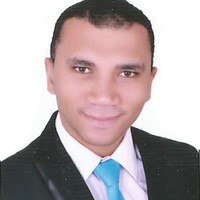
Haidar Hosamo is an Associate Professor at Oslo Metropolitan University's Faculty of Technology, Art and Design, affiliated with the Department of Built Environment. His work focuses on building sustainability, energy optimization, and digital twin technologies. Research areas: BIM, occupant modeling, predictive maintenance Key tools: Machine learning, AI-driven sensitivity analysis Recent publications address machine learning for floating solar arrays, dynamic LCA uncertainty, 5D BIM adoption, and knowledge graph integration in heritage conservation. His work combines data science with civil engineering to enhance building performance and occupant comfort.
Assistant Professor Amr Abdelbari is affiliated with the Data Analytics Engineering Department at Near East University. His research focuses on wireless communication systems, signal processing, and machine learning applications in telecommunications. Academic Rank: Assistant Professor University: Near East University Department: Data Analytics Engineering Research interests include: Massive MIMO and 5G network optimization Direction-of-Arrival (DOA) estimation techniques Machine learning for wireless communication IoT applications in civil engineering Probabilistic and fuzzy logic-based signal processing Recent publications (2020-2025) demonstrate expertise in wideband signal processing, NOMA systems, and error probability modeling. Key trends in his work include integrating fuzzy logic for network optimization, improving DOA estimation for 5G systems, and applying neural networks to renewable energy modeling. Contact: amr.abdelbari@neu.edu.tr
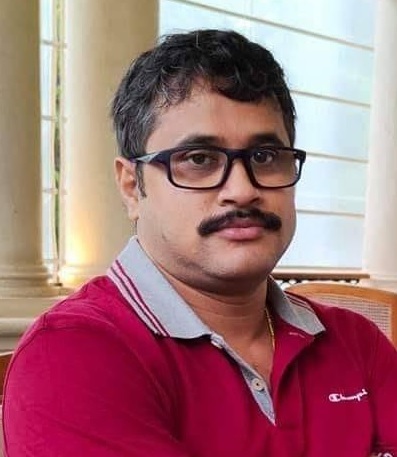
Vaskar Sarkar is a Professor in the Department of Electrical Engineering at the Indian Institute of Technology Hyderabad (IIT Hyderabad), where he has held academic positions since 2009, progressing from Visiting Assistant Professor to full Professor (since October 2023). His research focuses on power systems stability, renewable energy integration, photovoltaic systems optimization, and microgrid control. Education includes: B.E. from Bardhaman University (2002) M.E. from Bengal Engineering and Science University (2004) Ph.D. from IIT Bombay (2009) Research Interests: Dr. Sarkar's work spans flexible power point tracking in PV systems, grid integration of renewables, microgrid stability, power system optimization, and development of PV-based EV charging stations. His research emphasizes interdisciplinary solutions with theoretical development and experimental validation for real-world engineering problems. Publication Trends: His recent articles focus on renewable energy integration (especially photovoltaic systems), power market mechanisms, and advanced control strategies for grid stability. Emerging themes include AI-assisted PV optimization, wide-area monitoring systems, and HVDC grid integration. Awards: Excellence in Teaching Award from IIT Hyderabad (2021) Advising and Grants: Currently advises 4 PhD students and 1 M.Tech student. Secured research grants including: ₹33.79L from DST-SERB for PV power regulation under partial shading (2022-ongoing) Multiple projects from Hitachi India Limited (2012-2013, completed) Laboratory: Leads the SPARC Lab equipped with real-time simulators (eMEGASIM), solar PV emulators, power stacks (SEMIKRON), and control systems (CompactRIO, PXI) for power electronics and grid integration research.
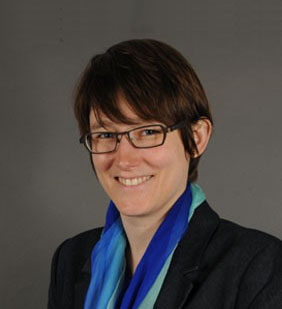
Kiersten Kerby-Patel is an Associate Professor in the Engineering department at UMass Boston. She holds a Ph.D., M.S., and B.S. from the University of Illinois at Urbana-Champaign. Specializes in applied electromagnetics and antenna systems Active in research areas including microstrip antennas, high-impedance surfaces, and wireless security Recent work explores 3D-printed optical components, ionospheric studies via crowdsourcing, and low-profile antenna designs Her publications demonstrate expertise in transmission line modeling, beam steering, and electromagnetic wave propagation.
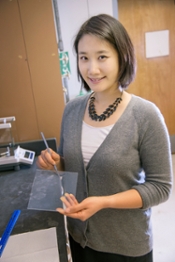
Monica So is an Associate Professor of Chemistry and Biochemistry and Lantis University Chair at California State University, Chico, within the College of Natural Sciences. Her research integrates chemical intuition with physics to address sustainability challenges through nanomaterials engineering. Education : B.S. in Organic Materials Chemistry from UCLA; Ph.D. in Inorganic Solid-State Chemistry from Northwestern University Her research focuses on three core areas: energy transfer pathways, charge transport mechanisms, and interfacial phenomena in metal-organic frameworks (MOFs). These programmable nanosponges enable applications in water decontamination, solar energy conversion, and petroleum separation. Her lab develops conductive MOFs for batteries, adsorbent materials for removing heavy metals from water, and semi-transparent agrivoltaic systems that co-locate solar panels with crop production. Analysis of her 15 most recent publications reveals dominant themes in sustainable materials design, with 73% focused on MOF applications for environmental remediation and energy systems. Key trends include the development of tunable nanosponges for water purification (27% of works), charge transport optimization in electronic materials (33%), and agrivoltaic integration for land productivity (13%). Lantis University Chair Gates Millennium Scholar National Defense Science & Engineering Graduate (NDSEG) Fellow CSU STEM-NET Faculty Fellow (3 terms) As a mentor, she has trained over 1,000 undergraduates since 2015, with 63% of research alumni entering Ph.D. or M.D. programs. Her $3.3 million in active funding includes major grants from NSF, DOE, and ACS Petroleum Research Fund supporting projects like Raman spectrometer acquisition ($225k), agrivoltaics crop studies ($250k), and the $2.25M BATTERIES energy storage initiative. She co-founded Women in STEM at Chico State, creating mentorship programs and coding workshops for Girl Scouts. The So Lab operates as a collaborative hub for chemists, physicists, and materials scientists developing nanostructured solutions for sustainability. Current projects include the DOE-funded BATTERIES initiative for emerging energy researchers and NSF-supported agrivoltaics research optimizing light transmission for crop growth beneath solar panels.
Paolo Gasbarri is a Full Professor in the Department of Aerospace and Astronautical Engineering at the University of Rome La Sapienza, School of Aerospace Engineering. With over 25 years of academic experience since becoming an Assistant Professor in 1996, he has established himself as a leading expert in aerospace structures and dynamics, with significant contributions to space robotics and control systems. Professor Gasbarri's research focuses on the complex interplay between structural dynamics and control in space systems. His work spans aeroelasticity, multidisciplinary optimization, active vibration control of flexible spacecraft, guidance and control of multi-body systems in space, and structural health monitoring. Recent publications demonstrate a strong emphasis on applying deep learning techniques to structural health monitoring of space structures and developing advanced control strategies for flexible spacecraft with spinning appendages. His research shows a clear trend toward integrating artificial intelligence with traditional aerospace engineering approaches to solve complex space system challenges. Corresponding Member of International Academy of Astronautics (IAA) since 2006 Full Member of International Academy of Astronautics (IAA) since 2009 President of Structures and Materials Committee of International Astronautical Federation since 2008 Editor-in-Chief of AIDAA journal 'Aerotecnica Missili e Spazio' Professor Gasbarri has secured significant research funding through multiple European Space Agency (ESA) contracts and international collaborations, including programs with Thales Alenia Space, ONERA, and ASTRIUM. His leadership extends to coordinating joint research activities between the University of Rome and the Brazilian Space Research Center (INPE). He has also served as a scientific referee for numerous international journals and as a member of prestigious organizations including the NATO Research Technology Agency working groups and the International Astronautical Federation.
Prof. Keith Goossen is a Professor at the University of Delaware, renowned for pioneering work in integrated optoelectronics, MEMS, and energy efficiency. He co-founded Aralight, Inc., and holds 84 patents, including foundational contributions to terabit optical switching and high-speed optoelectronic arrays. His research integrates optical, electrical, and mechanical systems, with a focus on holistic engineering across semiconductor physics, optoelectronics, and thermal design. Education: PhD from Princeton University. Professional Experience: Bell Laboratories, Aralight, Inc., and current academic appointments. Research Interests: Integrated photonics and optoelectronics MEMS-based optical modulators (e.g., 10 Mbit/s micromechanical modulator) Energy-efficient technologies including roofing systems for HVAC optimization Optical interconnects (e.g., bond-wire waveguides, 36-channel fiber modules) Infrared LED arrays and photovoltaic innovations Recent Work Trends: Focus on Optofluidic smart glass , Non-intrusive load monitoring , and High-efficiency solar modules , with applications in sustainable architecture and smart grids. Publications span optical engineering, energy systems, and semiconductor materials. Awards: DOE Excellence Awards (2015, 2012), IEEE Best Paper (2013), and Senior IEEE membership. Advising & Grants: Director of the Mid-Atlantic Industrial Assessment Center (federally funded), mentoring students like Dan Wolfe (modulated reflectance roofing) and Jon Dickason (optical interconnects, IR LED arrays). Grant activities include energy audits for industrial facilities. Labs/Teams: Active in developing optofluidic materials, MEMS devices, and composite optical fibers. Collaborates on interdisciplinary projects combining materials science with systems engineering.
David Marroquín Semper is an Associate Professor at the Miguel Hernández University of Elche , affiliated with the Department of Materials Science, Optics and Electronic Technology . His work focuses on power electronics and space power systems, with a specialization in high-voltage spacecraft architectures. Teaching Coordinator for courses like Digital Electronic Systems I and Power Electronics in the Bachelor's in Telecommunications Technology Engineering Member of the Space Power and Electronic Systems research group His research spans: Power conversion techniques for satellite solar arrays Wide bandgap semiconductor devices (SiC) High-voltage DC bus integration Digital twin implementations for spacecraft power systems Electromagnetic interference reduction Current and voltage limiting protection circuits Recent publications emphasize advancements in DC transformer applications, analog MPPT controllers, and reliability testing under extreme conditions. His work addresses critical challenges in deep space exploration power systems and CubeSat architectures.
Eftichios Koutroulis is a Professor at the Department of Electronic and Computer Engineering, Technical University of Crete, and Director of the Circuits, Sensors, and Renewable Energy Resources Laboratory. He earned his Diploma (1996), M.Sc. (1999), and Ph.D. (2002) in Electronic and Computer Engineering from the same university. His academic career includes a visiting researcher position at Aalborg University's Department of Energy Technology (Denmark). Since 2012, he has held a permanent position as Assistant Professor, advancing to his current role. He serves on the Renewable Energy journal’s editorial board and focuses on power electronics, renewable energy systems, and energy management. Research Interests: Microelectronic circuit design, renewable energy systems, photovoltaic optimization, energy harvesting, and smart grid integration. Publications: Over 50 journal articles in top-tier venues like IEEE Transactions on Power Electronics, Renewable Energy, and Applied Sciences. Recent work emphasizes transformerless inverters, MPPT algorithms, and grid integration challenges. Notable contributions include machine-learning-based MPPT under partial shading and wave energy converter designs. Awards: While no specific awards are listed, his editorial role and prolific publication record highlight his academic impact. He advises on desalination systems powered by RES through projects like DES2iRES. Labs/Teams: Leads the Circuits, Sensors & Renewable Energy Lab, focusing on hardware-software co-design for energy systems. Collaborates internationally on EU-funded initiatives for grid resilience and smart energy solutions.
Dr. Muhammed Akmal is a Senior Lecturer at Sheffield Hallam University since 2018, specializing in electrical and electronic engineering. He holds a PhD from Queen's University Belfast (2011) and has held prior academic positions at Abu Dhabi University (Associate Professor, 2017–2018; Assistant Professor, 2012–2017). His research focuses on renewable energy integration, microgrids, smart grids, and power system stability. He has secured £125,000+ in research grants and published over 30 peer-reviewed papers. Dr. Akmal is an active reviewer for IEEE and IET journals, and a Senior Member of IEEE. Education: BSc and MSc in Electrical Engineering, University of Engineering and Technology (UET), Lahore, Pakistan (2006, 2008) PhD in Electric Power Systems, Queen's University Belfast, UK (2011) Research Interests: Dr. Akmal’s work addresses critical challenges in modern power systems, including wind power integration, demand-side management, and grid resilience. He collaborates with institutions like Queen’s University Belfast and RMIT University on projects involving microgrids and smart grid technologies. His recent studies explore fault diagnosis in power systems and optimization of solar energy systems. Grants & Awards: Charles Parsons Energy Research Award (2011) University Teaching Award (Abu Dhabi University, 2015–16) 3 Excellence in Teaching Awards (Abu Dhabi University) Professional Activities: Dr. Akmal teaches courses such as Modern Electric Systems and Electrical Power and Machines. He actively reviews for IEEE and IET journals and serves on the IEEE Power and Energy Society.
Mark Golkowski serves as Chair and Professor of Electrical Engineering at the University of Colorado Denver's College of Engineering, Design, and Computing. His research focuses on electromagnetics, plasma physics, and ionospheric/magnetospheric interactions. He leads experiments at the HAARP facility in Alaska, investigating ionospheric probing and magnetosphere dynamics, as well as developing plasma-based medical sterilization technologies and thermo-acoustic imaging systems. His academic accolades include the 2019 CU Denver Excellence in Research Award, 2016 Outstanding Teaching Award, and NSF CAREER Award (2013). Golkowski has pioneered active experiments with VLF/ELF waves, plasma discharges for biomedical applications, and novel imaging techniques combining thermal and acoustic modalities. Key Research Areas: Ionospheric remote sensing Medical plasma applications Whistler mode wave dynamics HAARP experimental campaigns Awards: 2019 Excellence in Research Award 2013 NSF CAREER Award 2008 IAGA Young Scientist Award His work bridges theoretical plasma physics with applied engineering solutions, including medical disinfection systems and space weather research. Current projects include solar eclipse ionospheric studies and magnetospheric wave propagation modeling.
Dr. Radu Sporea is an Associate Professor in Semiconductor Devices at the Advanced Technology Institute (ATI), University of Surrey. He holds an EPSRC Early Career Fellowship (2021-2026) and previously served as a Royal Academy of Engineering Research Fellow (2011-2016). His research focuses on power-efficient, cost-effective large-area electronics, including source-gated transistors (SGTs), printed memristors, and flexible electronics. He has secured £3.1M+ in research funding and supervised over 50 student projects. Education: PhD in Electronic Engineering (2010), Politehnica University of Bucharest (Computer Systems Engineering). Professional affiliations include SMIEEE, MIET, and CEng certifications. His team emphasizes collaboration, innovation, and well-being in a relaxed environment. Research highlights include breakthroughs in SGT-based analog circuits, temperature-stable transistors, and augmented paper interfaces. Notable awards include the 2017 Early Career Teacher of the Year and Tony Jeans Inspirational Teaching Award.
Aksel Hallin, PhD, is a Professor of Physics at the University of Alberta's Faculty of Science. He leads experimental astroparticle physics research, focusing on dark matter detection (DEAP-3600/DarkSide-20k) and neutrino studies (SNO+, SNO). His work includes designing detectors like the acrylic cryostat for DEAP-3600 and the anode/cathode system for DarkSide-20k, emphasizing ultrapure materials and background reduction. He holds roles at SNOLAB and Gran Sasso, with expertise in detector construction, data analysis, and radioactive contamination control. His courses include PHYS 234: Introductory Computational Physics . Education: PhD (1983) Princeton University MA (1979) Princeton University BSc (1977) University of British Columbia Research Interests: Dark matter particle identification, neutrino oscillations, neutrinoless double-beta decay, liquid argon detectors, and precision radioactivity measurement. His labs include radon-free clean rooms and gamma-ray detection systems. Collaborates globally on projects like the Global Argon Dark Matter Collaboration. Grants/Contributions: CFI grants supported DEAP-3600 construction. Alberta team contributions include acrylic components, simulation algorithms, and radon measurement systems. Active in SNO+, analyzing solar neutrinos and reactor antineutrinos. Labs/Teams: Leads University of Alberta teams on DEAP-3600, DarkSide-20k, and SNO+. Collaborates with Queen’s University, Los Alamos National Lab, and European institutions.
Professor Sujeeva Setunge is an Associate Deputy Vice Chancellor (Research & Innovation) at RMIT University’s STEM College, overseeing a large interdisciplinary research portfolio. Her research focuses on sustainable construction materials, infrastructure asset management, and circular economy solutions. She leads high-impact projects such as the $21M ARC Industrial Transformation Hub (TREMS), integrating reclaimed resources into engineered materials. Roles: ADVC R&I (STEM College), former Deputy Dean (Engineering), Head of Civil & Environmental Engineering Expertise: Asset Management, Infrastructure Resilience, Waste-to-Resource Technologies Key Achievements: Developed CAMS (Council Asset Management System), recognized with multiple awards including the 2018 RMIT Research Impact Award and 2005 Teaching Innovation Award Her research interests span nano-technology for sustainable materials, predictive modeling using digital twins, and smart city integration. She actively collaborates with industry, leading over 20 industry-sponsored projects. Recent work emphasizes AI-driven structural health monitoring and circular economy frameworks. Professor Setunge holds a Chartered Professional Engineer (CPEng) certification and is a Fellow of Engineers Australia. Her teaching focuses on civil infrastructure engineering, with a strong emphasis on integrating sustainability and innovation into curricula.
Kevin Moeller is a Professor of Chemistry at Washington University in St. Louis, affiliated with the Department of Chemistry within the Arts & Sciences School. He holds a PhD and BA from the University of California, Santa Barbara. His research focuses on synthetic electrochemistry and microelectrode array technologies, emphasizing sustainable oxidation methods and real-time molecular interaction analysis. Education: PhD in Chemistry, University of California, Santa Barbara BA in Chemistry, University of California, Santa Barbara Research Interests: Development of novel electrochemical synthetic methods (e.g., solar-driven oxidations, radical cation chemistry) Site-selective chemistry on microelectrode arrays for addressable molecular libraries Electrochemical impedance-based real-time binding studies with biological receptors Green chemistry approaches to oxidation reactions Key Contributions: Pioneered site-selective Diels-Alder and base-catalyzed reactions on high-density microelectrode arrays Advanced electrochemical tools for monitoring ligand-receptor interactions (e.g., integrin binding studies) Developed solar-powered electrochemical synthesis to reduce environmental impact Awards: 2021 Jaroslav Heyrovsky Prize (International Society of Electrochemistry) 2014 Washington University Excellence in Research Award Multiple teaching awards including 2001 Student Union Professor of the Year Laboratory & Collaborations: Leads the Moeller Research Group, collaborating on projects spanning organic synthesis, analytical electrochemistry, and biomedical applications. His lab actively engages in developing combinatorial electrochemistry techniques and miniaturized analytical platforms.