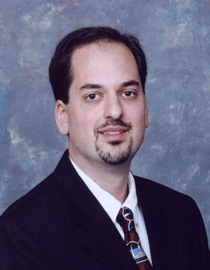
Diaa Gadelmavla is a Professor in the Department of Aerospace Engineering at Izmir University of Economics, Turkey. He earned his Ph.D. in Astrophysics from the University of Heidelberg, Germany, in 2001, focusing on solar and stellar atmospheric heating by Magnetohydrodynamic (MHD) waves. Research Focus: Solar/stellar oscillations, antenna engineering, RF energy harvesting, and mm-wave systems for 5G/6G applications. Industry Experience: 12 years as a researcher and senior network engineer at University of Heidelberg, Arcor AG, and DB-Telematic GMBH. Publications: 50+ international (SCI) papers, 350+ citations. Recent work includes machine learning applications in geothermal systems, THz antenna arrays, and solar activity cycle predictions. Key Collaborations: Research on chromospheric activity in stars like 55 Cancri and Epsilon Eridani with Prof. Manfred Cuntz. Interdisciplinary Work: Explores natural disaster reduction systems through real-time physical modeling.
Dr. Ahmet Tekin is an Assistant Professor at the Department of Electrical and Electronics Engineering, Boğaziçi University. His research focuses on analog/mixed-signal/RF/microwave VLSI design, with emphasis on biomedical electronics, wireless communication systems, and integrated circuit innovation. He specializes in developing advanced sensor technologies, antenna arrays, and energy-efficient RF systems for healthcare, IoT, and aerospace applications. Key research areas include continuous glucose monitoring devices, optoelectronic blood pressure sensors, phased array transmitters for satellite communication, and resonance-based wireless charging systems. His work integrates cutting-edge semiconductor technologies like 22nm FDSOI and SOI CMOS with innovative circuit architectures. Dr. Tekin's recent publications highlight advancements in ultra-wideband antennas, adaptive sampling techniques, and biomedical IoT communication protocols. His research bridges electronics engineering with practical applications in healthcare, robotics, and renewable energy systems. Though no awards are explicitly mentioned, his prolific output in high-impact journals underscores his contributions to the field. He advises on interdisciplinary projects at the intersection of electronics and biomedical engineering, with a focus on wearable technologies and smart medical devices. His lab collaborates on energy harvesting systems and low-power biomedical sensors, reflecting a commitment to both foundational research and real-world solutions.
Lan Fu is a Professor and Head of the Department of Electronic Materials Engineering at the Research School of Physics and Engineering, Australian National University (ANU). She leads the Semiconductor Optoelectronics and Nanotechnology Group, focusing on advanced III-V semiconductor nanostructures for next-generation optoelectronic devices. Her research interests span the design, fabrication, and integration of optoelectronic devices such as LEDs, lasers, photodetectors, and high-efficiency solar cells based on low-dimensional III-V compound semiconductors, including quantum wells, self-assembled quantum dots, and nanowires grown by metalorganic chemical vapor deposition (MOCVD). Her work integrates materials science, nanotechnology, and device physics to enable breakthroughs in integrated photonics, neuromorphic computing, and sensing. Recent publications (2021–2025) highlight her leadership in nanowire-based technologies, with emphasis on single-photon avalanche detectors, polarization-sensitive photodetection, neuromorphic optoelectronics, and deep learning for device modeling. Her research demonstrates a strong trend toward multifunctional, miniaturized, and intelligent optoelectronic systems with applications in communications, healthcare, and energy. IEEE Photonics Society Graduate Student Fellowship (2000) Australian Research Council (ARC) Postdoctoral Fellowship (2002) ARF/QEII Fellowship (2005) ARC Future Fellowship (2012) Lan Fu has secured competitive research funding through ARC fellowships and leads a vibrant research group at ANU. She advises postgraduate students and researchers in the development of novel semiconductor devices. Her group collaborates widely and contributes to advancing the frontiers of nanoscale optoelectronics. She is actively involved in mentoring and research leadership within the School. The Semiconductor Optoelectronics and Nanotechnology Group, led by Prof. Lan Fu, focuses on the synthesis, characterization, and integration of III-V semiconductor nanowires and quantum structures. The team leverages advanced epitaxial growth techniques, particularly selective-area MOCVD, to fabricate high-quality nanostructures for photonic and electronic applications. The lab is equipped for nanofabrication, optoelectronic characterization, and device integration, supporting a full-cycle research approach from materials to systems.
Dr. Nan Zhao serves as Senior Lecturer in Electrical Engineering at Lancaster University's School of Engineering, UK, since 2022. Previously, he held positions as Assistant Professor at University College Dublin (2018-2022) and Sessional Lecturer at McMaster University (2017-2018), where he earned his PhD in Electrical Engineering in 2017. His research spans electrical power engineering with core focus areas including energy storage systems , renewable integration (solar, wind, wave), electric machines , and EV powertrain systems . Current projects involve AI-driven ocean energy arrays and high-performance wave energy conversion systems. His publication record demonstrates deep engagement with power system stability challenges in renewable-dense grids, particularly through virtual synchronous generators and transportable storage solutions. Key editorial activities include contributions to Electronics Letters and IET Renewable Power Generation . His research group actively recruits PhD students and postdocs, with Renqi Guo currently listed as a PhD student. Primary research collaborations occur through the Energy TALOS group. Notable scientific contributions include: Hybrid synchronous condenser-virtual generator systems for microgrid stability (2025) Statistical deadband estimation for transportable energy storage (2025) Novel wave energy conversion grid integration techniques (2024) Dr. Zhao maintains active industry engagement through research on practical grid integration challenges, with recent work addressing frequency response services, curtailment reduction, and cyber-physical grid resilience. His lab focuses on translating theoretical power electronics advances into deployable renewable energy solutions.
Richard Messner is an Associate Professor in the Department of Electrical and Computer Engineering at the University of New Hampshire's College of Engineering and Physical Sciences. His research focuses on optical signal processing, real-time digital image processing, and smart visual sensors. He has held roles since 1985, including membership in the IEEE Executive Committee and affiliations with professional organizations like SPIE and Sigma Xi. Education includes a Ph.D. in Engineering Science from Clarkson University (1985), and earlier degrees from Clarkson College of Technology (M.S. 1981, B.S. 1979). His doctoral research at the Naval Research Laboratory explored image-processing architectures for invariant pattern recognition. Research interests span neutron detection technologies (e.g., SONTRAC and LOONS instruments), biologically inspired sensors, and space instrumentation. Over 40 publications reflect contributions to solar neutron tracking, lunar spectrometers, and signal processing systems. He consults with industry and teaches courses in digital systems, image processing, and senior design projects. No scientific awards explicitly listed, but his work impacts space science and sensor development. Advising includes doctoral research supervision and senior project mentorship. His lab collaborations involve advanced pipeline image processing and real-time systems.
Dr. Vittorio FRANZESE is a Research Scientist at the Interdisciplinary Centre for Security, Reliability and Trust (SnT) within the University of Luxembourg's SPASYS department. His work focuses on CubeSat technology, autonomous space systems, and deep-space exploration. He leads projects like the POQUITO PocketQube mission and the LUMIO lunar CubeSat, aiming to advance miniaturized satellite capabilities for interplanetary navigation and meteoroid impact monitoring. Key research areas include spacecraft autonomy, optical navigation algorithms, and mission design for CubeSats. He has contributed to initiatives such as the ERC-funded EXTREMA project, developing self-driving interplanetary CubeSats. His technical expertise spans satellite systems engineering, trajectory optimization, and sensor development for space applications. Publications highlight advancements in laser communication terminals, asteroid mission analysis, and swarm satellite technologies. Collaborative efforts include the Hera Milani CubeSat mission for asteroid exploration. His work bridges theoretical research with practical implementation, emphasizing innovation in low-cost space technologies.
Dr. Long Zhao is an Assistant Professor at the South Dakota School of Mines and Technology (SDSMT), specializing in power systems and renewable energy integration. His research focuses on smart grid technologies, IoT-based monitoring systems, wildfire impact mitigation, and electric vehicle (EV) infrastructure. He holds a B.S. from Eastern Washington University, an M.S. from Wichita State University, and a Ph.D. from the University of Texas at Arlington. Dr. Zhao’s work addresses critical challenges in energy systems, including optimizing power distribution grids during wildfires, analyzing EV charging station dynamics, and quantifying environmental impacts on solar systems. He develops data-driven models for demand forecasting, grid resilience, and disaster response strategies. His projects often involve collaboration with industry partners to deploy IoT-enabled monitoring systems in substations and renewable energy facilities. Key research themes include: Wildfire Impact Analysis: Evaluating smoke effects on PV systems, grid stability under wildfire conditions, and predictive wildfire modeling. EV Infrastructure: Designing sustainable DC-fast charging stations and integrating EVs into smart grids. IoT Applications: Deploying real-time monitoring systems for substations, wind turbines, and photovoltaic arrays. His publications emphasize practical solutions for grid resilience, energy sustainability, and disaster mitigation. Dr. Zhao’s work aligns with national initiatives to modernize energy infrastructure and enhance climate resilience in rural and high-risk regions.
Sergio Pellegrino is the Joyce and Kent Kresa Professor of Aerospace and Civil Engineering at California Institute of Technology and a Jet Propulsion Laboratory Senior Research Scientist. He co-directs the Space-Based Solar Power Project and directs the Graduate Aerospace Laboratories. His research spans structural mechanics, deployable space structures, and composite materials. Aerospace & Civil Engineering Professor JPL Senior Research Scientist Co-Director, Space-Based Solar Power Project Director, Graduate Aerospace Laboratories His work focuses on lightweight deployable structures for space applications, including ultra-thin composites, deployment kinematics, and stability analysis. Key projects involve the Space Solar Power Demonstrator and modular telescope assembly. Publications emphasize dynamics, failure modeling, and novel packaging concepts. Recent research trends include multi-configuration rigidity theory, vibration damping in coiled structures, and scalable mesh reflector antennas. His Google Scholar articles (2022-2025) cover topics like bistable structures, thin-shell deployment, and fiber Bragg grating sensors, reflecting expertise in aerospace structural innovation. AIAA Best Paper Award Torroja Medal Co-Director of Caltech's Space-Based Solar Power Project Professor Pellegrino has advised numerous graduate students and leads a research group focused on in-space assembly technologies, constitutive modeling, and experimental validation. The Space Structures Lab under his direction supports projects like AAReST (Autonomous Assembly of a Reconfigurable Space Telescope) and DOLCE (Deployable On-Orbit Ultra-Light Composite Experiment).
Hugh Wolgamot is a DECRA Fellow at The University of Western Australia's School of Earth and Oceans and UWA Oceans Institute, where he has conducted research since 2014. His work focuses on wave-structure and fluid-structure interaction problems applied to offshore renewable energy and offshore engineering, with specific expertise in wave energy, floating offshore wind, and floating solar technologies. His research interests include: Marine renewable energy Offshore engineering Wave-structure interaction Ocean wave energy devices and arrays Hydrodynamics Computational Fluid Dynamics Wave energy converters Harmonics and wave group dynamics Wolgamot's research portfolio demonstrates a strong focus on practical applications of marine renewable energy systems, with significant industry collaboration. His work spans fundamental hydrodynamics to applied engineering solutions for renewable energy conversion in marine environments. The research fingerprint shows particular strength in wave energy converters (100%), harmonics (78%), wave group dynamics (74%), and hydrodynamics (64%). His notable scientific achievement is the DECRA Fellowship from the Australian Research Council, supporting his research into offshore renewable energy hydrodynamics. Wolgamot actively contributes to education through teaching OCEN 4007 Ocean Renewable Energy since 2020 and is affiliated with Marine Energy Research Australia and the Coastal and Offshore Research Lab. He has supervised 9 research students and engaged in public outreach through seminars on wave energy converters and ocean renewable energy.
Manuela Vecchi is an Associate Professor and Rosalind Franklin Fellow at the University of Groningen's Faculty of Science and Engineering, affiliated with the Kapteyn Astronomical Institute. Her expertise spans astroparticle physics, focusing on high-energy phenomena observed via cosmic rays, gamma rays, and neutrinos. She contributes to major collaborations like the Alpha Magnetic Spectrometer (AMS-02) aboard the International Space Station and the Cherenkov Telescope Array (CTA). Her research includes studies on cosmic ray composition, solar modulation effects, and dark matter searches. She leads an NWO-funded project on antideuterons as probes for new physics and co-leads efforts in CTA camera development. Vecchi's work bridges observational astrophysics and fundamental physics, with publications on topics like gamma-ray transients, pulsar emissions, and cosmic ray antiprotons. Key projects involve analyzing AMS-02 data for antinuclei detection and advancing CTA's capabilities for gamma-ray astronomy. She has supervised PhD students in these areas and teaches advanced astrophysics courses. Her contributions to instrumentation and data analysis underscore her role at the forefront of multi-messenger astrophysics.
Darren Hartl is an Associate Professor of Aerospace Engineering at Texas A&M University, affiliated with the College of Engineering and the Department of Aerospace Engineering. He holds a B.S. (2004) and Ph.D. (2009) in Aerospace Engineering from Texas A&M University. His research focuses on constitutive behavior of active materials, computational solid mechanics, structural optimization, and multifunctional aerospace structures, with particular emphasis on shape memory alloys (SMAs) and their applications in adaptive aerospace systems. Key research highlights include collaborations with NASA on lunar exploration technologies, such as solar reflectors for lunar craters and temperature-regulating space radiators. He leads the MAESTRO Lab, emphasizing innovation in morphing structures, structural health monitoring, and mission-adaptive systems. Notable achievements include winning the 2024 NASA Space to Pitch Competition with an undergraduate team and receiving the 2024 University Professorship for Undergraduate Teaching Excellence. Education : B.S., Aerospace Engineering, Texas A&M University (2004) Ph.D., Aerospace Engineering, Texas A&M University (2009) Awards : Gary Anderson Early Achievement Award (2016) Outstanding Young Aerospace Engineer Award (2015) Best Paper Awards (2013, 2008) His lab’s activities include monthly writing retreats, team-building events, and partnerships with industry and government agencies. Current projects span SMAs in golf clubs, lunar radiators, and adaptive aircraft components, reflecting a blend of fundamental research and applied innovation.
Robert Balog is a Professor in the Department of Electrical & Computer Engineering at Texas A&M University. He serves as Director of the Renewable Energy and Advanced Power Electronics Laboratory (REAPER), Co-Director of the NSF I/UCRC on Next Generation Photovoltaics (NGPV), and Assistant Director for Grid-Edge Modernization at the Smart Grid Center. He holds affiliations with the National Academy of Inventors as a Fellow (2024). Education: Ph.D. (2006), M.S.E.E. (2002) from University of Illinois at Urbana-Champaign; B.S.E.E. (1996) from Rutgers University. He is a licensed Professional Engineer in Texas and Illinois, and an IEEE Senior Member since 2007. Research focuses on advanced power electronics systems, solar photovoltaics, energy storage, microgrids, and power quality. Key innovations include photovoltaic balance-of-systems optimization, non-planar PV integration, and arc fault detection technologies. Over 30 patents highlight his work in power conversion, smart grid security, and energy harvesting. Recent articles emphasize capacitor-less D-STATCOM systems, PV arc fault mitigation, and smart farming energy solutions. His work bridges academic research with industry applications through NSF collaborations and technology commercialization efforts. Awards include NAI Fellowship (2024), IEEE Distinguished Lecturer designation (2020-2021), and TAMEST Patent Innovation Award (2017). Active in standards development (UL 1741/1699B) and conference organization, including ECCE 2016 Technical Program Chair. Labs/Teams: REAPER Lab pioneers PV system optimization and grid-edge technologies. NGPV I/UCRC collaborates with industry partners on next-gen photovoltaic materials and configurations.
Manuel Prieto Mateo is a Professor at the Department of Automática, Universidad de Alcalá, Spain. He leads the Space Research Group (SRG-UAH), focusing on space instrumentation design, radiation effects in space electronics, and solar particle physics. His work integrates FPGA-based systems for space applications, including contributions to the Solar Orbiter mission’s Energetic Particle Detector (EPD). He holds a PhD from Universidad de Alcalá (2005) on satellite instrumentation control systems, advised by Dr. Daniel Meziat Luna. Research interests include spaceborne data management, thermal monitoring in Antarctic environments, and COTS component qualification for space. His projects involve collaborations with ESA/NASA and Antarctic observatories. Key contributions span radiation-hardened electronics, digital beamforming architectures, and space weather monitoring systems. Notable achievements include developing the SIDRA instrument for space radiation measurement, co-designing the EPD’s hardware/software systems, and pioneering thermal/permafrost studies at Livingston Island. He has published extensively on solar energetic particles, Antarctic geophysics, and FPGA implementations in space systems since 2001. Education: PhD in Physics/Space Instrumentation (Universidad de Alcalá, 2005). Research Labs/Groups: SRG-UAH Space Research Group, Antarctic PERMASNOW project, Solar Orbiter EPD team.
Alberto Regadío Carretero is a Lecturer in the Department of Automática at the University of Alcalá, affiliated with the Space Research Group (SRG-UAH). His research focuses on signal processing for particle detection, cosmic ray physics, and the integration of advanced computing techniques like neural networks and IoT technologies into experimental instrumentation. He holds a PhD in Digital Signal Processing applied to particle detection, awarded in 2014. Education: PhD in Digital Signal Processing, University of Alcalá (2014) Thesis: Procesamiento digital de señal aplicado a la detección de partículas energéticas , supervised by Dr. Sebastián Sánchez Prieto and Dr. Jesús Tabero Godino Research Interests: His work bridges particle physics, space technology, and computational methods. Key areas include: Design of radiation detectors and data acquisition systems using FPGAs and IoT Analysis of cosmic ray spectra and atmospheric effects Application of machine learning (e.g., GANs, reservoir computing) to pulse detection and unfolding Hardware optimization for precision signal processing in space and high-energy environments Key Contributions: Recent work includes: Quantum computing approaches for exoplanet discovery Development of neutron monitors and trajectory tracking systems (e.g., MITO) Unfolding techniques for particle spectra using deep learning Awards & Grants: No specific awards or grants are mentioned in the text, but his involvement in projects like ORCA and the Space Research Group suggests active grant-based research. Lab & Team: He is part of the SRG-UAH Space Research Group, collaborating on projects such as the Antarctic Cosmic Ray Observatory (ORCA) and FPGA-based instrument development.
Óscar Rodríguez Polo is an Associate Professor at the Department of Automática, Universidad de Alcalá (UAH), and a member of the Space Research Group (SRG-UAH). His research focuses on embedded systems, real-time control, FPGA applications, and space systems engineering. He holds a Ph.D. from Universidad Complutense de Madrid (2003), with a thesis on real-time control system code generation using the ROOM methodology. Key contributions include work on the Solar Orbiter mission’s Energetic Particle Detector (EPD), LEON processor virtualization, RISC-V space-oriented architectures, and model-driven engineering for satellite software. His research emphasizes hardware-software co-design, fault tolerance in on-board systems, and space instrumentation validation. He has pioneered educational initiatives integrating hands-on training in satellite formation flying and on-board data management through low-cost hardware-in-the-loop systems. His publications span over two decades, with notable contributions to processor architecture optimization, safety-critical embedded systems, and space mission software reliability.