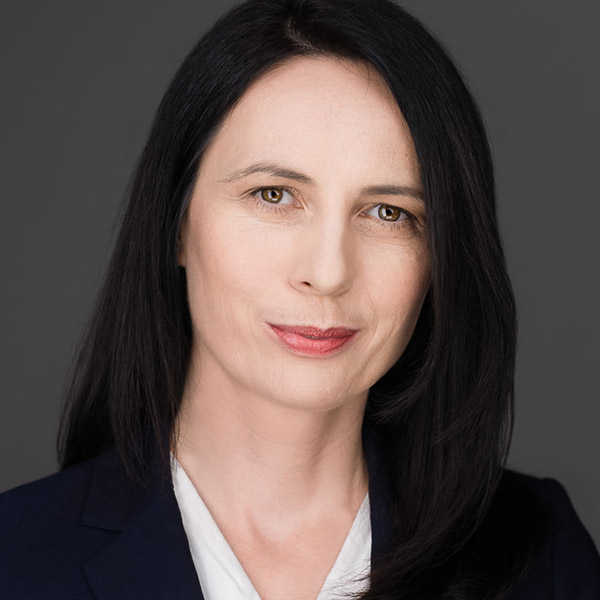
Dr. Leanne Archer is a Researcher in the School of Geographical Sciences at the University of Bristol, specializing in hydrology and climate change impacts. Her work focuses on flood risk assessment in Small Island Developing States, extreme rainfall events, and the application of convection-permitting climate models. She collaborates with experts like Prof. Paul Bates and Dr. Jonty Rougier on interdisciplinary projects addressing tropical cyclone hazards and climate adaptation strategies. Her research interests include analyzing flood exposure in vulnerable regions, soil moisture dynamics in urban flooding, and improving global flood forecasts for humanitarian operations. Archer’s publications emphasize the implications of climate change on rainfall-driven disasters, particularly in Puerto Rico and East Africa, using high-resolution climate projections to evaluate future risks under 1.5° C and 2° C warming scenarios. Recent work explores innovations like the Surface Water Ocean Topography Mission for flood modeling and evaluates the suitability of TanDEM-X data for inundation studies in island nations. Her contributions bridge environmental science with policy, aiming to enhance disaster preparedness and resilience in climate-sensitive regions.
California State University, Long BeachUnited States
Vesna Terzic is a Professor in the Department of Civil Engineering and Construction Engineering Management at California State University Long Beach's College of Engineering. Her research specializes in seismic performance assessment, infrastructure resilience, and probabilistic risk analysis of structures. Education includes a PhD in Structural Engineering from UC Berkeley, MS in Earthquake Engineering from Ss. Cyril and Methodius University, and BS in Structural Engineering from University of Belgrade. Research focuses on developing advanced computational frameworks for evaluating post-earthquake functionality of buildings and bridges. Her work integrates performance-based engineering with resilience quantification, emphasizing practical applications for seismic design and retrofitting. Recent publications demonstrate consistent focus on functional recovery modeling, structural health monitoring, and optimization of protective systems. Research trends show progression from component-level analysis to regional recovery simulation frameworks. Major awards: ACI Chester Paul Siess Award for Excellence in Structural Research (2017) Popert Fellowship, UC Berkeley (2009) Professional service includes membership on FEMA P-58 project committees and contributions to OpenSees development. Current projects investigate soil-structure interaction effects on tall buildings and recovery-based design methodologies.
Craig Davis is a Professor and holds the Bollenbach Chair in Wildlife Management at Oklahoma State University's Department of Natural Resource Ecology & Management. He has been a faculty member since 2001, advancing from Assistant Professor (2001-2007) to Associate Professor (2007-2012), and has served as Bollenbach Chair since 2014. Davis earned his PhD in Wildlife Science from Texas Tech University (1996), an MS from Iowa State University (1991), and a BS from Ohio State University (1988). He is also a Certified Wildlife Biologist through The Wildlife Society. His research focuses on avian ecology, wetland restoration, and gamebird management, with specific interests in fire-grazing interactions, invertebrate communities, and climate change impacts on ecosystems. Key areas include grassland bird survival, wetland classification systems, and the effects of anthropogenic development on wildlife habitats. Davis actively collaborates with conservation organizations and agencies, addressing challenges like invasive species management and water infrastructure resilience. Teaching responsibilities include undergraduate courses on Wildlife Management Techniques and Wetland Ecology, as well as graduate courses like Advanced Wetland Ecology. His grants emphasize wetland restoration outreach, climate adaptation strategies, and studies on northern bobwhite and wild turkey populations. Notable projects include evaluating cellular transmission technology in wildlife monitoring and assessing the impact of extreme weather on gamebird survival. Grants (Selected): Expansion of potential wetland restoration opportunities in Oklahoma (2024-2027) Linking Research and Stakeholder Engagement for Wetland Conservation (2024-2026) Effects of Extreme Weather and Hunting on Northern Bobwhite (2023-2025) Research Themes: Aligns with UN Sustainable Development Goals 15 (Life on Land), 13 (Climate Action), 6 (Clean Water), 11 (Sustainable Cities), 14 (Life Below Water), and 9 (Industry/Infrastructure).
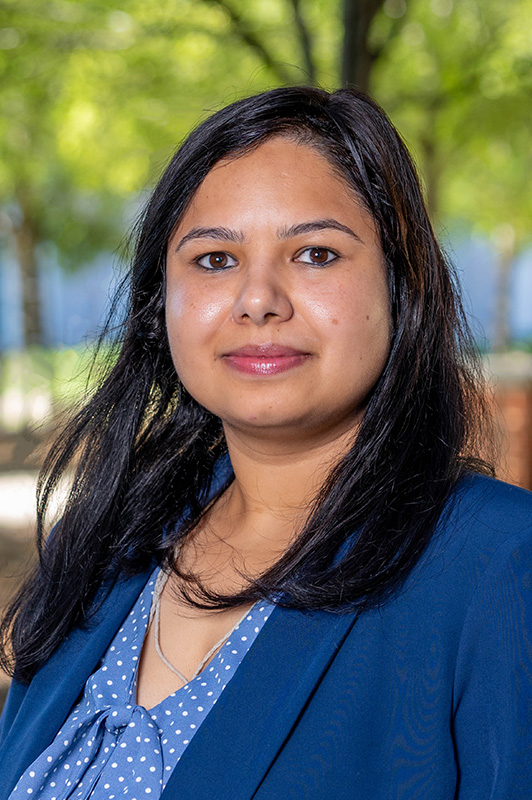
Neha Sharma is an Assistant Professor in the Department of Civil and Environmental Engineering at Auburn University. Her research focuses on nutrient recovery, electrochemical resource recovery, water reuse, trace metal cycling, and pollutant fate and removal.
Dr. Anna Hopkins is a Senior Lecturer in conservation biology and molecular ecology at Edith Cowan University's School of Science. She is the Course Coordinator for postgraduate Environmental Science programs and has held academic positions since 2016. Her research focuses on soil microbial ecology, forest pathogens, eDNA applications, and climate change impacts. She has taught courses including Plant Pathology, Genetics, and Soil Processes. Education: PhD (University of Tasmania, 2007), Diploma of Modern Languages (UWA, 2002), BSc (Hons) (UWA, 2002) Her research interests include mycorrhizal-plant interactions, soil fungal responses to disturbances, and regenerative agriculture. Notable awards include the 2010 New Zealand Zonta Women in Science Award and the 2017 ECU Athena Swan Award. Recent articles highlight her work on soil microbial dynamics, invasive species management, and eDNA applications in ecology. She has led projects funded by organizations like the Australian Coal Association and WWF Australia, focusing on biodiversity restoration and ecosystem health. Awards: Multiple international and teaching awards, including recognition for poster presentations and research excellence. Advising & Grants: Supervises 5 PhD/MSc students and leads grants totaling over $1M in projects like eDNA tracking and Gilbert’s Potoroo conservation. Professional roles include Deputy Coordinator of the IUFRO Working Party on Forest Nurseries and Vice President of the Australasian Mycological Society.
Carol Smith is an Associate Professor in the Department of Soil & Physical Sciences at Lincoln University, New Zealand, where she serves as Head of Department since 2017. She has been an elected academic staff member of the Lincoln University Council from 2018-2022. Dr. Smith holds a PhD from the University of Aberdeen, an MSc from the University of Reading, and a BSc(Hons) from the University of Portsmouth, forming the foundation of her expertise in soil science and physical geography. Her research spans both fundamental and applied aspects of pedology. On the fundamental side, she investigates Quaternary pedology and paleoenvironmental reconstruction using loess stratigraphy, geomorphology, and micromorphology, which provides critical data for verifying future climate change predictive models. Applied research focuses on sustainable use of recycled organic matter and rehabilitation of degraded soils. She collaborates internationally on multidisciplinary projects involving paleoclimate reconstruction, paleoliquefaction, Antarctic soils, and viticulture. Dr. Smith is passionate about teaching and science communication, employing experiential learning methods to develop practical field skills in soil science through 'soil judging competitions' in New Zealand and Australia. Her research addresses UN Sustainable Development Goals including Life on Land (15), Climate Action (13), and Quality Education (4). Among her notable recognitions are the Norman H Taylor Memorial award 2020 from the New Zealand Society of Soil Science for outstanding contributions to soil science in New Zealand and Fellowship in the Royal Geographical Society, London. She serves as Associate Editor of Natural Sciences Education and was previously editor of Quaternary Australasia. Dr. Smith has supervised numerous graduate students through research-based supervision, with completed projects covering diverse topics from soil patterns in Southland to Antarctic soil ecology. She teaches advanced courses in field research, soil science, and physical landscapes, and has developed innovative approaches to teaching during the pandemic, including virtual field trips.
Mary K. Firestone is Professor of the Graduate School in the Department of Environmental Science, Policy and Management at UC Berkeley. Her research revolutionized understanding of soil microbial processes, particularly oak regeneration techniques and microbial mediation of carbon/nitrogen cycling in terrestrial ecosystems. Firestone's work examines microbial responses to environmental change, including drought, rewetting, and warming scenarios. Her lab develops innovative methods like quantitative stable isotope probing (qSIP) to trace microbial activity in complex soil environments. Research spans grassland, rangeland, and agricultural ecosystems. Honors include election to the National Academy of Sciences (2017), Soil Ecology Society Career Achievement Award (2017), and American Geophysical Union Fellowship (2016). She holds the Betty and Isaac Barshad Chair in Soil Sciences. Current PhD candidates and postdoctoral researchers in the Firestone Lab investigate viral-bacterial interactions in soil, mycorrhizal carbon transfer, and drought impacts on soil carbon persistence. Field studies at California's Hopland Research Center examine grassland responses to climate variability.
James Tinjum is a Professor in the Department of Civil & Environmental Engineering at the University of Wisconsin-Madison, College of Engineering. His interdisciplinary expertise spans geotechnical, geological, environmental, transportation, and sustainable energy engineering. Education PhD 2006, University of Wisconsin-Madison MS 1995, University of Wisconsin-Madison BS 1993, University of Wisconsin-Madison Research Interests Professor Tinjum’s research integrates energy geotechnics with environmental sustainability. He investigates wind energy site design, district-scale geothermal heating/cooling systems, beneficial reuse of industrial byproducts (e.g., coal-combustion residuals, cement kiln dust), life-cycle environmental analysis, and remediation of contaminated sites. Additional focus areas include thermal conduction in unsaturated soils, landfill liner performance, and PFAS management in Wisconsin. Recent Research Directions His 2020–2024 publications reveal a strong emphasis on geothermal system performance , wind-turbine foundation–soil interaction , and emerging contaminant transport (PFAS, chromium). Fiber-optic distributed temperature sensing (FO-DTS) is a recurring enabling technology, applied to both geothermal borefields and landfill covers. Life-cycle assessment methodologies are consistently employed to quantify environmental benefits of renewable energy and waste-reuse strategies. Scientific Awards 2018 Fellow, American Society of Civil Engineers (ASCE) 2003 ASCE Zone III Practitioner Advisor of the Year 2002 ASCE Wisconsin Section Outstanding Young Engineer Teaching & Mentoring Professor Tinjum teaches core geotechnical courses (Soil Mechanics, Foundation Systems) alongside specialized offerings in wind-energy balance-of-plant design and sustainable systems engineering capstone. He supervises numerous master’s and doctoral students through GLE 790/890 research credits each semester. Labs & Teams He directs field-scale instrumentation campaigns at two wind-turbine sites and multiple campus/district geothermal installations, leveraging fiber-optic sensing networks and thermal response testing to advance energy geotechnics.
Karoline Faust is an Associate Professor at KU Leuven, affiliated with the Laboratory of Molecular Bacteriology (Rega Institute) and the Faculty of Medicine . She contributes to the iSi Health and Leuven One Health institutes, and serves on senior academic councils. Her research spans microbial systems biology, focusing on community dynamics and network analysis. Education: PhD in bioinformatics (2010, KU Leuven) Affiliations: KU Leuven, ISME Journal editorial board, Belgian Society for Microbiology Her research investigates microbial community dynamics , systems biology approaches to microbiomes, and bioinformatics tool development . She specializes in modeling human gut microbiota , synthetic microbial communities , and environmental microbiomes (e.g., microplastic impacts on Daphnia microbiomes). Her work integrates metabolic modeling , network analysis , and experimental systems to understand microbial interactions. Recent publications highlight her contributions to microbial network inference , 16S rRNA sequencing protocols , microfluidics , and ecological modeling of microbiomes. She develops tools like manta , miaSim , and CoNet to analyze community structures. Teaching: Karoline co-teaches courses in microbiology, bioinformatics, and network analysis at KU Leuven, and has contributed to international workshops on microbial network inference. Scientific Engagement: She serves as Senior Editor at ISME Journal and Secretary of the Belgian Society for Microbiology .
Jim Hall is a Professor of Climate and Environmental Risk at the University of Oxford's School of Geography and the Environment, and serves as Director of Research there. He is also a Visiting Fellow at Linacre College and holds leadership roles including Chair of the Science Advisory Committee at IIASA, and Expert Advisor to the UK's National Infrastructure Commission. His work focuses on systemic risk analysis, infrastructure resilience, and policy implications of climate change adaptation. Prof Hall has pioneered methodologies like the National Infrastructure Systems Model (NISMOD) and chairs the Data and Analytics Facility for National Infrastructure (DAFNI). His research spans flood risk management, energy systems decarbonization, and transboundary water resource conflicts in regions such as the Eastern Nile Basin and the Caribbean. Key research areas include robust decision making under uncertainty, info-gap theory applications, and integrated assessments of human-environmental systems. He has contributed to major international assessments, including the IPCC's Fourth Assessment Report, and developed frameworks for multi-hazard stress testing of infrastructure networks. Scientific Awards: George Stephenson Medal (2001), Prince Sultan Prize for Water (2018), Royal Academy of Engineering Fellowship (2010) His advising and grants work includes mentoring a DPhil student Erin Canning and leading projects like MARIUS and ENHANCE. He has also developed innovative modeling tools for coastal erosion prediction and probabilistic assessments of global shipping fuel transitions. Prof Hall’s research groups actively engage in interdisciplinary projects, including the Oxford Martin Programme on Resource Stewardship and the UK Infrastructure Transitions Research Consortium. His work emphasizes bridging scientific analysis with actionable policy solutions for climate adaptation.
Joel S. Hayworth is an Associate Professor in the Department of Civil Engineering at Auburn University's College of Engineering. His research focuses on environmental and ecosystem restoration, particularly in estuarine, terrestrial, and freshwater systems. He leads the Estuarine Environments Research Program (EERP), which investigates the fate of endocrine-disrupting chemicals (EDCs), PFAS, and oil spill residues in coastal environments. Dr. Hayworth's educational background includes a PhD in Civil Engineering (Hydrology/Hydraulics) from Auburn University, an MS in Hydrology from the University of Nevada, Las Vegas via the Desert Research Institute, and a BS in Geophysics from the University of California, Santa Barbara. He previously worked at the Tennessee Valley Authority Engineering Laboratory and the U.S. Air Force Research Laboratory, and founded Hayworth Engineering Science in 1999 before returning to academia in 2010. His research interests span environmental engineering, hydrology, hydraulics, estuarine science, pollutant fate and transport, and chemical fingerprinting. He has developed advanced analytical methods for detecting EDCs and PFAS in water, sediment, and biota. His work integrates field studies, laboratory experiments, and environmental modeling to understand complex hydrologic, geologic, chemical, and biological processes in human-impacted ecosystems. The 15 most recent articles highlight a strong trend in environmental contaminant analysis, particularly focusing on PFAS, oil spill residues, and endocrine disruptors. His research combines analytical chemistry with environmental modeling and field monitoring, often in collaboration with interdisciplinary teams. Key themes include the development of UHPLC-MS/MS and GC-MS/MS methods, fate and transport modeling of pollutants, and ecological risk assessment in estuarine systems. Dr. Hayworth's scientific contributions are supported by funding from agencies such as the Gulf Coast Ecosystem Restoration Council (RESTORE Council). His work has led to significant publications in journals like Science of the Total Environment , Marine Pollution Bulletin , and Water . He actively mentors students and collaborates with researchers like T.P. Clement, G.F. John, and V. Mulabagal. His projects, such as the restoration assessment of Cotton Bayou and Terry Cove, demonstrate applied science for environmental problem-solving. He has developed state-of-the-art analytical laboratories and partnered with coastal communities for long-term monitoring. His laboratory, the Estuarine Environments Research Program (EERP), conducts multi-year studies on endocrine disruptors in estuaries, develops innovative sampling and analysis methods, and trains the next generation of environmental engineers and scientists. The team works across disciplines to address complex environmental challenges in the Gulf Coast region.
Mari Moora is a distinguished Professor in Community Ecology at the University of Tartu's Faculty of Science and Technology, Institute of Ecology and Earth Sciences. Since August 2023, she has served as the Vice Rector for Research at the University of Tartu, a position she will hold until July 2028. With a career spanning over three decades at the University of Tartu, Professor Moora has established herself as a leading expert in plant ecology, particularly in the field of mycorrhizal symbiosis and its role in shaping plant communities. Education: Secondary education at Nõo Secondary School (1984) Bachelor's degree in Biology (Genetics) from University of Tartu (1989) PhD in Plant Ecology from University of Tartu (1998) with thesis supervised by Martin Zobel Professor Moora's research focuses on the processes behind the structure and diversity of plant communities, particularly examining the role of biotic interactions such as mycorrhizal symbiosis and pollination in shaping plant populations. Her work extends to studying global diversity patterns of arbuscular mycorrhizal fungi and soil metagenomics - investigating how soil molecular diversity influences visible ecological patterns across ecosystems. Her interdisciplinary approach combines field ecology, molecular techniques, and theoretical frameworks to address fundamental questions in community ecology and biodiversity science. Her recent publications demonstrate a clear trend toward understanding ecological processes at multiple scales, from molecular interactions to global biodiversity patterns. Professor Moora's work increasingly integrates cutting-edge molecular techniques like metabarcoding with traditional ecological approaches, creating a more comprehensive understanding of plant-microbial interactions. Her research has significant implications for biodiversity conservation, ecosystem restoration, and understanding how ecological communities respond to environmental change. Scientific Awards: Order of the White Star, 4th class (2025) Estonian Academy of Sciences Alma Tomingas Medal (2023) Science Award of the Estonian Republic (2016) Honorary member of the University of Rio Cuarto (Argentina) (1998) Professor Moora has served as a principal investigator for significant research projects including "Plant-microbial mutualisms in dynamic ecosystems" (2021-2025) and the University of Tartu component of "Agroecology and new crops in future climates" (2024-2030). She has been actively involved in research administration and evaluation, serving on panels for the European Research Council, German Research Foundation, and European Commission. Her editorial work includes being an Academic Editor for PLoS ONE (2011-2016) and serving as a referee for numerous high-impact ecology journals. As Head of the Chair of Plant Ecology (2021-2023) and currently as Vice Rector for Research, Professor Moora plays a significant role in shaping research strategy and academic leadership at the University of Tartu. Her work bridges fundamental ecological research with practical applications for biodiversity conservation and sustainable land management.
Andrew Friend is a Researcher at the University of Cambridge , affiliated with the Department of Geography . His work focuses on terrestrial ecosystem dynamics, particularly the interplay between vegetation, carbon fluxes, and climate systems. He develops process-based computer models to simulate vegetation growth, competition, and carbon cycle responses, while also conducting experimental and field studies in collaboration with institutions like the Sainsbury Laboratory, NIAB, and Forestry England. Friend’s research integrates plant physiological knowledge with global vegetation modeling . Key interests include source-sink carbon interactions, physiological diversity in ecosystems, and the impact of climate extremes on forest resilience. His models address challenges such as drought, temperature changes, and deforestation, with applications in predicting future carbon balances and informing climate mitigation strategies. The 15 most recent articles highlight his contributions to understanding Amazon deforestation tipping points , wood formation mechanisms , and fire/disturbance impacts on ecosystems . These works span climate science , forest ecology , and biogeochemical cycles , emphasizing multi-scale approaches from cellular processes to global systems. Friend collaborates with institutions like Forestry England (Thetford Forest studies), Sainsbury Laboratory , and the C-CLEAR Doctoral Training Partnership . His work bridges computational modeling, experimental validation, and field data to advance terrestrial carbon cycle science.
Dr. Matthew Brookhouse is a Senior Lecturer at the Fenner School of Environment & Society, part of the Australian National University's Institute for Climate, Energy & Disaster Solutions. With a PhD in Dendroclimatology from ANU, he specializes in using forest structural complexity and tree-ring analysis to understand climate interactions and ecological responses in Australian subalpine environments. Research Focus: Sub-alpine ecology, Dendrochronology, CO2 responsiveness in eucalypt species Teaching: First-year research methods with emphasis on statistical application, advanced modeling and field botany Projects: Leading collaborative snow-gum dieback research and dendrochronological monitoring initiatives His publications span 2006-2025 with recent emphasis on machine learning applications for forest monitoring, tropical tree-ring chronologies for climate change, and climate sensitivity in Australian alpine ecosystems. Key collaborations include institutions like Australian Nuclear Science and Technology Organisation and University of Canberra researchers. Current projects focus on snow-gum woodland dieback mechanisms, high-resolution dendrometric monitoring, and integrating dendrochronology with environmental policy frameworks. He maintains active supervision of research students and contributes to both undergraduate and postgraduate curriculum development.
Michael Lepech is a Professor of Civil and Environmental Engineering and Senior Fellow at the Woods Institute for the Environment at Stanford University. His research focuses on integrating sustainability into civil engineering through quantitative assessment and multi-scale modeling, particularly via the Sustainable Integrated Materials, Structures, Systems (SIMSS) framework. He also leads the Stanford Center at the Incheon Global Campus (SCIGC) in South Korea, exploring smart city technologies for urban sustainability. Education : PhD in Civil and Environmental Engineering (2006), MBA in Finance and Strategy (2008) from the University of Michigan. Research Areas : Sustainable infrastructure design, biopolymer composites, life cycle assessment, digital twinning, smart city technologies, and multi-physics deterioration modeling. Leadership : Director of SCIGC, advancing research on smart and sustainable urban environments in Songdo, South Korea. His recent publications focus on biopolymer-bound composites, traffic signal optimization, and life cycle sustainability analysis. He has received recognition as a Senior Fellow at Stanford’s Woods Institute for environmental research.