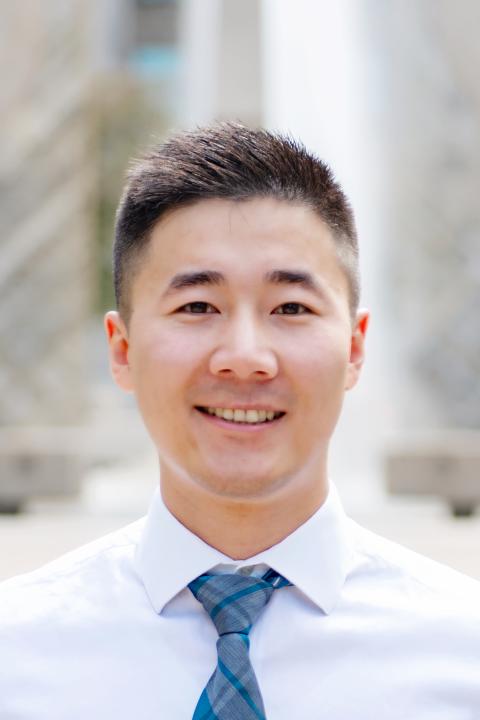
Christopher D.P. Baxter is a Professor and Department Chair of Civil and Environmental Engineering at the College of Engineering, University of Rhode Island , with expertise in geotechnical engineering, offshore wind energy, and coastal resilience. He holds a Ph.D. in Civil Engineering from Virginia Tech (1999), an M.S. from Purdue University (1994), and a B.S. from Tufts University (1990). Research Focus: Geotechnical characterization of marine sediments, liquefaction resistance analysis, fiber-optic sensing for infrastructure monitoring, and coastal protection systems. Recent Publications: 15+ articles (2011–2025) covering topics like shear wave velocity, offshore wind foundation dynamics, and tsunami hazard modeling. Grants: Led projects on offshore wind monitoring (2019–2024) and fiber-optic seismic sensing (2021–2023). Key Collaborations: Work with teams on submarine landslide analysis, coastal dune reinforcement, and Rhode Island infrastructure resilience. His work bridges experimental geomechanics with practical coastal engineering solutions.
Professor Behzad Fatahi is a distinguished academic in Civil and Environmental Engineering at the University of Technology Sydney (UTS), specializing in geotechnical engineering, railway infrastructure, and sustainable construction technologies. With a career spanning over 16 years at UTS, he has served as Deputy Head of School - Teaching and Learning (2024-present), Head of Discipline (2020-2024), and School Research Coordinator (2012-2017). His research focuses on unsaturated soil mechanics , dynamic soil-structure interaction , and green infrastructure solutions . Academic Appointments : Professor (2024-present), Associate Professor (2017-2024), Senior Lecturer (2011-2017), Lecturer (2008-2011) Research Leadership : Supervised 21 PhD students to completion, developed groundbreaking techniques for landfill waste reuse and tyre-derived aggregates in railway construction His work on seismic resilience of LNG tanks and bioengineered soil stabilization has received international recognition, including the 2023 Best Research Paper Award at the Australasian Association for Engineering Education conference. Professor Fatahi's industry experience includes geotechnical engineering roles at Coffey International and SES Engineering prior to academia. Key Research Contributions : Developed green corridor models for railway lines using coupled flow-deformation equations Pioneered AI-integrated teaching frameworks for civil engineering education Advanced machine learning techniques for intelligent compaction and structural buckling analysis As a Category 1 supervisor , he mentors graduate researchers in Civil Engineering , Geomechanics , and Earthquake Engineering . His peer-reviewed work (>240 publications) demonstrates technical excellence and innovation across multiple geotechnical domains.
Assoc. Prof. Dr. Esra Ece Bayat is an Associate Professor in the Civil Engineering Department at Istanbul Technical University (ITU), specializing in Earthquake Engineering, Soil Mechanics, and Geotechnics. She holds a PhD from Northeastern University (USA) and has been affiliated with ITU since 2010, progressing from Lecturer to her current rank. Her research focuses on liquefaction mitigation, soil-structure interaction, and dynamic soil behavior under seismic loads. She has led multiple projects funded by TUBITAK and BAP, including studies on induced partial saturation (IPS) techniques and p-y model development for earthquake-resistant designs. Her education includes a BSc from Middle East Technical University (1997–2002) and a PhD from Northeastern University (2004–2009). She has served in administrative roles such as Erasmus Coordinator and Education Coordinator, emphasizing international collaboration and academic development. Her work contributes to UN Sustainable Development Goals related to resilient infrastructure and disaster risk reduction. Dr. Bayat has published extensively on topics like dynamic soil behavior, liquefaction assessment, and foundation systems. Her research combines experimental methods (e.g., laminar soil containers, shaking table tests) with numerical modeling (e.g., FLAC 3D, SASSI). Recent work addresses the 2023 Kahramanmaraş earthquake’s impact on foundation systems in Iskenderun. She has advised over 20 graduate students and holds the ASCE Thomas Middlebrooks Award (2014).
Amin Barari is an Adjunct Professor at the School of Engineering, RMIT University, Australia. His research focuses on geotechnical and offshore engineering, particularly in foundation systems for offshore wind turbines, soil-structure interaction, and seismic liquefaction mitigation. He has extensive experience in experimental and numerical analysis of pile foundations, bucket foundations, and caisson structures. His work integrates advanced computational methods (e.g., machine learning, finite element modeling) to predict foundation behavior under extreme conditions. Research interests include: offshore wind energy foundations, soil liquefaction, cyclic stability diagrams, and probabilistic hazard assessment frameworks. He has supervised multiple PhD/Masters projects on topics like resilient foundations in calcareous deposits and pile foundation dynamics in expansive soils. His publications span over 147 research outputs, emphasizing geotechnical challenges in coastal and offshore environments. Dr. Barari collaborates with international institutions and has expertise in experimental testing (e.g., large-scale load testing, centrifuge modeling) and advanced AI-driven frameworks for geohazard prediction. His work contributes to sustainable infrastructure design and risk mitigation strategies for renewable energy systems.
Dr. Kenneth Gavin is a researcher at the TU Delft , affiliated with the School of Civil Engineering & Geosciences and the Geo-engineering Department. With over 188 research outputs and active involvement in offshore engineering projects, his work focuses on foundation behavior, pile installation mechanics, and soil-structure interaction. Research Interests: Geotechnical engineering, pile foundations, offshore installation methods, soil mechanics, and computational modeling (particularly Coupled Eulerian Lagrangian analysis). In recent work, he has led studies on: Hip hammer impact duration effects on driveability resistance Self-weight penetration modeling with rate effects Centrifuge testing of open-ended pile loading behavior Scientific Awards: TRA Senior Researcher Rail Award (2018) Academic Leadership: Gavin has served on editorial boards for the Canadian Geotechnical Journal (2018-2019) and chaired committees for the International Society for Soil Mechanics and Geotechnical Engineering (ISSMGE). He has also contributed to key conferences including ISFOG 2025 and ALERT Geomaterials Workshop 2018.
Prof. Ioannis Anastasopoulos is a Full Professor and Head of the Department of Civil, Environmental and Geomatic Engineering at ETH Zurich. He leads the Chair of Geotechnical Engineering, focusing on advanced geotechnical modeling, seismic resilience, and infrastructure systems. His research integrates experimental and numerical methods to address challenges in tunnel engineering, offshore foundations, and seismic protection. Key research areas include seismic response of geotechnical structures, soil-structure interaction, metamaterial-based vibration mitigation, and innovative foundation technologies. He directs the Geotechnical Centrifuge Center and Soil Testing Laboratories at ETH Zurich, advancing physical modeling and material characterization. Recent work emphasizes earthquake engineering applications, including fault rupture interactions with tunnels, pile group dynamics under combined loading, and hybrid modeling of scour effects on bridge foundations. His contributions span geotechnical design methodologies, nuclear facility safety, and additive manufacturing for masonry structures. Prof. Anastasopoulos collaborates internationally on projects like the GEOLAB initiative, advancing Europe's geotechnical physical modeling infrastructure. His teaching includes courses on geotechnical design and theoretical soil mechanics, bridging academic research with practical engineering solutions.
Mohd Ahmad Syed is a Senior Lecturer in Geotechnical Engineering at the University of Manchester's Department of Civil Engineering and Management. His research focuses on climate change impacts on geotechnical infrastructure, resilient and sustainable infrastructure design, and earthquake engineering. He holds a PhD from the Indian Institute of Technology Bombay and has industry experience with firms like Consulting Engineering Services (I) Pvt. Ltd and Dar Al-Handasah Consultants. Education: BTech (Hons) in Civil Engineering, Indian Institute of Technology Kanpur (2001) MTech in Geotechnical Engineering, Indian Institute of Technology Kanpur (2003) PhD in Seismic Analyses of Waterfront Structures, Indian Institute of Technology Bombay (2009) Research Interests: Climate change modelling for geotechnical infrastructure resilience Development of sustainable construction materials (e.g., bagasse ash) Seismic risk analysis for dams and tunnels in West Africa Artificial soil weathering techniques for laboratory testing Coupled numerical methods for embankment stability under climate scenarios Editorial Activities: Assistant Editor, International Journal of Geomechanics (ASCE) Assistant Editor, Indian Geotechnical Journal (Springer) Key Achievements: Developed first-of-its-kind displacement-based S-curve for seismic earth pressure analysis Co-developed methodologies for post-liquefaction pile behavior and blast-loaded tunnels Guided 10 PhD/MSc students in geotechnical resilience and sustainability topics
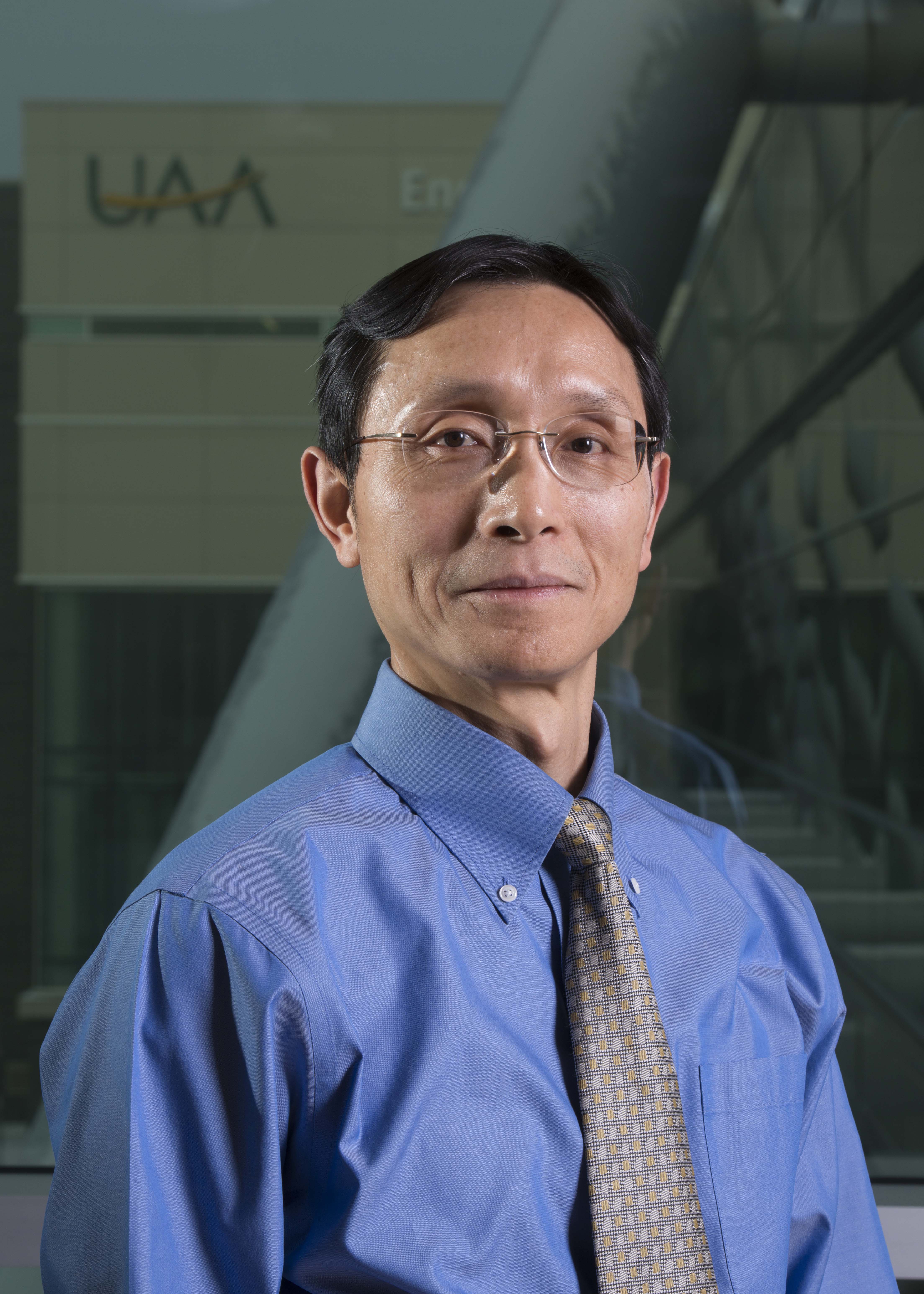
Joey Yang is a Professor of Civil Engineering at the University of Alaska Anchorage (UAA), serving as Associate Director of the Alaska University Transportation Center and Director of the Geotechnical and Frozen Ground Engineering Research Laboratory. His expertise spans geotechnical and earthquake engineering with a focus on cold regions, including permafrost dynamics, infrastructure resilience, and de-icing technologies. He holds a Ph.D. from the University of California, Davis, and a B.S. from Chengdu University of Science and Technology. Education: Ph.D., Civil and Environmental Engineering, University of California, Davis B.S., Hydraulic Engineering, Chengdu University of Science and Technology Research Interests: Dr. Yang's work addresses geotechnical challenges in cold regions, including permafrost thaw, seismic site response, frozen soil-pile interaction, and fungal mycelium-based biofoams for insulation. His research is funded by NSF EPSCoR, USGS, USDOT, and others. Professional Contributions: Chief Editor, ASCE Journal of Cold Regions Engineering Editorial Board Member, Cold Regions Science and Technology Keynote/Theme Session Speaker at International Permafrost and Earthquake Conferences Awards: Arctic Kicker Prize (2015) Outstanding Reviewer Awards (2010, 2014) ASTM Technical Editors Award (2014) Advising & Grants: Dr. Yang has advised over 20 visiting scholars and secured multi-million-dollar grants for cold regions infrastructure research. His lab focuses on advancing technologies for permafrost engineering, seismic resilience, and sustainable construction. Labs/Teams: Leads the Geotechnical and Frozen Ground Engineering Research Laboratory, collaborating with global partners on cold regions challenges.
Professor Atilla Ansal is a distinguished academic in Civil Engineering at Özyeğin University's School of Engineering, where he has served as a full-time professor since March 2012 and previously as the Founding Chair of the Civil Engineering Department from 2012-2019. With an extensive career spanning over five decades, Professor Ansal has held prominent positions at Istanbul Technical University, Bogaziçi University's Kandilli Observatory and Earthquake Research Institute, and has served as a visiting professor at numerous international institutions including Northwestern University, University of California, and Tokyo University. Northwestern University, 1978 (Doctorate) Civil Engineering, Istanbul Technical University, 1969 (Master's) Civil Engineering, Istanbul Technical University, 1969 (Bachelor's) Professor Ansal's research focuses on Earthquake Geotechnical Engineering, Soil Dynamics, Seismic Hazard Analysis, Landslide hazard analysis, Seismic Microzonation, and Laboratory and In-Situ Testing of Soil Properties. His work has significantly advanced our understanding of soil behavior under seismic loading, site response analysis, and seismic microzonation methodologies. His research has direct applications in urban planning, earthquake risk mitigation, and performance-based seismic design. Professor Ansal has pioneered approaches to site-specific earthquake characterization and developed methodologies for seismic microzonation that have been implemented in numerous Turkish cities and adopted internationally. His extensive publication record demonstrates consistent contributions to earthquake engineering, with recent work focusing on probabilistic seismic microzonation, 2D basin effects, site-specific response analysis, and performance-based design approaches. His research shows a clear evolution from fundamental soil behavior studies to practical applications in urban risk assessment and mitigation. 7th Prof.N.Ambraseys Lecturer (2024), European Association for Earthquake Engineering 15th Nonveiller Lecturer (2017), Croatian Geotechnical Society Third Prof.Dr. Rıfat Yarar Lecturer (2015), Turkish Civil Engineers Association Third Ord.Prof.Dr. Hamdi Peynircioglu Lecturer (1988) Professor Ansal has advised 15 PhD students and 27 Master's students, shaping the next generation of earthquake engineers. His leadership extends to editorial roles as Editor-in-Chief of the Springer journal 'Bulletin of Earthquake Engineering' since 2002 and Editor-in-Chief for the Springer book series on 'Geotechnical, Geological and Earthquake Engineering'. He served as Secretary General (1994-2014), President (2014-2018), and Vice President (2018-2022) of the European Association for Earthquake Engineering, significantly influencing the field internationally. His work has been supported by numerous grants from Turkish government agencies, international organizations including UNESCO, and collaborative research projects across Europe. Professor Ansal has been instrumental in establishing geotechnical monitoring systems in Istanbul, including vertical arrays for site response analysis. His leadership in the 'Earthquake Master Plan for Istanbul' and 'Seismic Microzonation for Municipalities' projects has created critical infrastructure for earthquake risk management in Turkey's most populous city. His work with GeoIst, Geotechnical Earthquake Engineering and Consultancy Inc. has translated academic research into practical engineering solutions for seismic risk mitigation.
Babak Moaveni is a Professor in the Department of Civil and Environmental Engineering at Tufts University, serving as the Associate Chair since September 2024. He also holds a joint appointment as a Professor in Electrical and Computer Engineering. His research focuses on structural health monitoring, Bayesian inference, earthquake engineering, and offshore wind energy systems. Moaveni earned his Ph.D. in Structural Engineering from the University of California San Diego (2007), following an M.S. (2001) and B.S. (1999) from Sharif University of Technology in Tehran, Iran. His research interests span probabilistic system identification, signal processing, uncertainty quantification, and verification/validation of computational models. Notable grants include leadership in the PIRE project on offshore wind energy digital twins and the Coastal Virginia Offshore Wind Pilot Project. He has supervised multiple Ph.D. and M.S. students, with current advisees including Mehdi Akhlaghi and Nasim Partovi-Mehr. Moaveni has received the Best Presentation Award at the 2022 EDGE Symposium and serves on editorial boards for journals like Structural Health Monitoring and Frontiers in Built Environment . His lab, the Structural Health Monitoring Lab, specializes in infrastructure management and offshore wind energy systems. Key professional activities include membership in the American Society of Civil Engineers (ASCE) and roles on Tufts' Tenure and Promotion Committee. His teaching includes courses on structural health monitoring, numerical methods, and structural reliability.
Prof. Dr.-Ing. Martin Achmus is a Professor at Leibniz University Hannover, affiliated with the Faculty of Civil Engineering and Geodetic Science and the Institute for Geotechnical Engineering. He holds multiple leadership roles, including Designated Dean of Civil Engineering and Executive Director of the Institute of Geotechnical Engineering. His research focuses on geotechnical engineering challenges in offshore wind energy, cyclic soil-pile interactions, and foundation design for renewable energy infrastructure. Positions: Designated Dean, Executive Director (Institute of Geotechnical Engineering), Board Member (Testzentrum Tragstrukturen), Exchange Coordinator (Civil Engineering/Computer-Assisted Engineering). Key Projects: Collaborative Research Center (SFB) 'Offshore-Megastructures', DFWind, ProBucket, Ho-Pile, and SEALENCE, focusing on offshore foundations, cyclic loading, and soil-structure interactions. Research Interests: Load-bearing behavior of offshore foundations, soil-pipeline interaction, cyclic loading effects on piles, and geotechnical design methodologies. His work bridges experimental testing (e.g., model tests, particle image velocimetry) and numerical simulations to address challenges in renewable energy infrastructure and geotechnical systems. Publications: Over 150 peer-reviewed articles, emphasizing cyclic soil responses, monopile foundations, suction bucket behavior, and district heating pipeline interactions. Recent work explores novel p-y curve models, capacity degradation under cyclic loading, and scaling approaches for sand behavior. Grants & Collaborations: Funded by DFG, BMWi, and EU initiatives. Collaborates with industry partners on offshore wind turbine foundations and geotechnical innovations. Labs/Teams: Leads research teams within the Institute of Geotechnical Engineering, focusing on experimental and computational geotechnics, with active participation in national and international research networks.
Dr. Haoran Zuo is a Research Fellow and ARC DECRA Fellow at Curtin University's School of Civil and Mechanical Engineering within the Faculty of Science and Engineering. He holds a PhD (2019) and has held postdoctoral and research roles at Curtin and The Hong Kong Polytechnic University. His research focuses on structural dynamics, vibration control of offshore wind turbines, and seismic response analysis. He has secured prestigious fellowships including ARC DECRA (2024) and Marie Curie (2025). Education: PhD in Civil Engineering, Curtin University (2019) Research Interests: Structural dynamics and vibration mitigation Offshore wind energy systems Seismic response analysis Energy-harvesting control technologies Key Research Trends (2022-2025): Focused on advanced vibration control solutions for offshore wind turbines, including novel damper technologies (e.g., TTMD, KDamper), metamaterial applications, and fatigue analysis under multi-hazard conditions. His work combines experimental validation, numerical modeling, and innovative control system design. Awards: ARC DECRA Fellowship (2024-2028) Marie Skłodowska-Curie Fellowship (2025) Highly Cited Paper in Engineering (2024) Best Paper Awards (2024) Grants & Advising: Sole CI on ARC DECRA grant for hybrid wind-wave energy systems. Advises on projects involving floating platforms and structural resilience. Active in collaborative research with industry and international institutions. Labs/Teams: Part of the Curtin Research Centre for Infrastructural Monitoring & Protection, focusing on structural health monitoring and resilient infrastructure design.
Dr. Mourad Zeghal is a Professor in the Department of Civil and Environmental Engineering at Rensselaer Polytechnic Institute (RPI). His research focuses on computational geomechanics, seismic response monitoring, and geotechnical system identification. He leads projects addressing liquefaction mitigation, multiscale modeling of geosystems, and development of advanced computational tools for geotechnical analysis. Dr. Zeghal collaborates with RPI's Center for Network for Earthquake Engineering Simulation (CEES), Scientific Computation Research Center (SCOREC), and Inverse Problems Center (IPRPI). His work emphasizes reducing risks from natural hazards through improved design tools and model validation. Key projects include the Liquefaction Experiments and Analysis Projects (LEAP), which use centrifuge testing and machine learning to analyze soil behavior under seismic loads. Dr. Zeghal's research integrates experimental data with numerical simulations to enhance understanding of soil-structure interaction and lateral spreading during earthquakes. Research Interests: Soil liquefaction, multiscale modeling, inverse problem methods, computational geomechanics Key Collaborations: CEES, SCOREC, IPRPI, and global research networks Focus Areas: Centrifuge testing, model validation, seismic hazard mitigation His recent publications (2023–2025) highlight advancements in quantifying uncertainty in soil response, analyzing LEAP centrifuge experiments, and developing machine learning approaches for model calibration. Dr. Zeghal actively engages with industry and government labs to translate research into practical engineering solutions.
Dr. Liang Cui is an Associate Professor at the University of Surrey , affiliated with the School of Sustainability, Civil and Environmental Engineering and Institute for Sustainability . With a PhD from University College Dublin (2006) and BE (1st honor) from Tsinghua University (2002) , his career spans geotechnical research and education since joining Surrey in 2009. Key roles: Undergraduate Programme Leader (2020-2022, 2023-on), MSc Programme Leader for Advanced Geotechnical/Civil/Structural Engineering (2022-2023) Professional memberships: Chartered Engineer (CEng), Member of Institution of Civil Engineers (MICE), Fellow of Higher Education Academy (FHEA) His primary research focuses on numerical modeling (DEM/FEM) for geotechnical applications including offshore wind foundations , geothermal energy systems , methane hydrate exploitation , and extra-terrestrial soil mechanics . Secondary interests involve material characterization of polymeric foams , porous media , and biological tissues . Recent 15 publications (2023-2025) demonstrate expertise in soil-structure interaction for renewable energy infrastructure, thermal feedback in groundwater heat pumps, and hypothesis-driven DEM simulations for lunar/martian environments. Collaborative projects span institutions including Tsinghua University , University of Bristol , and Indian Institute of Technology Bhubaneswar . Scientific Awards: Sustainability Fellow (University of Surrey, 2023) Chartered Engineer (CEng) and MICE FHEA for educational contributions Dr. Cui supervises 7 postgraduate researchers and contributes to teaching modules in soil mechanics and energy geotechnics. His work addresses challenges in hybrid marine energy systems , needleless drug delivery , and seismic resilience of critical infrastructure.
Fei Han is an Assistant Professor in the Department of Civil and Environmental Engineering at the University of New Hampshire, affiliated with the College of Engineering and Physical Sciences. His research focuses on advanced sensing technologies, artificial intelligence, computational mechanics, decision-making systems, deep learning, optimization, plasticity, and soil mechanics & foundations. He teaches courses including Soil Mechanics, Geo-Environmental Engineering, and Foundation Design. His work integrates machine learning with geotechnical engineering to address challenges in infrastructure resilience, sustainable development, and disaster mitigation. Education : Ph.D., Purdue University M.S.C.E., Purdue University B.S., Huazhong University of Science Key Research Trends : Recent publications emphasize data-driven modeling for infrastructure systems (e.g., transfer learning for monopile foundations, deep reinforcement learning for equitable bridge maintenance), optimization algorithms (multi-objective genetic algorithms), and marine geology advancements. His work bridges computational methods with practical geotechnical challenges, addressing scour management, soil-structure interaction, and sustainable engineering solutions. Grants & Advising : No specific grants or student advisees are listed, though his courses suggest involvement in mentoring senior theses (e.g., CEE 799H). His research collaborations involve institutions like INDOT and international co-authors. Labs & Teams : Active in UNH’s geotechnical and environmental engineering research groups, focusing on sensor fusion, deep learning applications, and sustainable infrastructure systems.