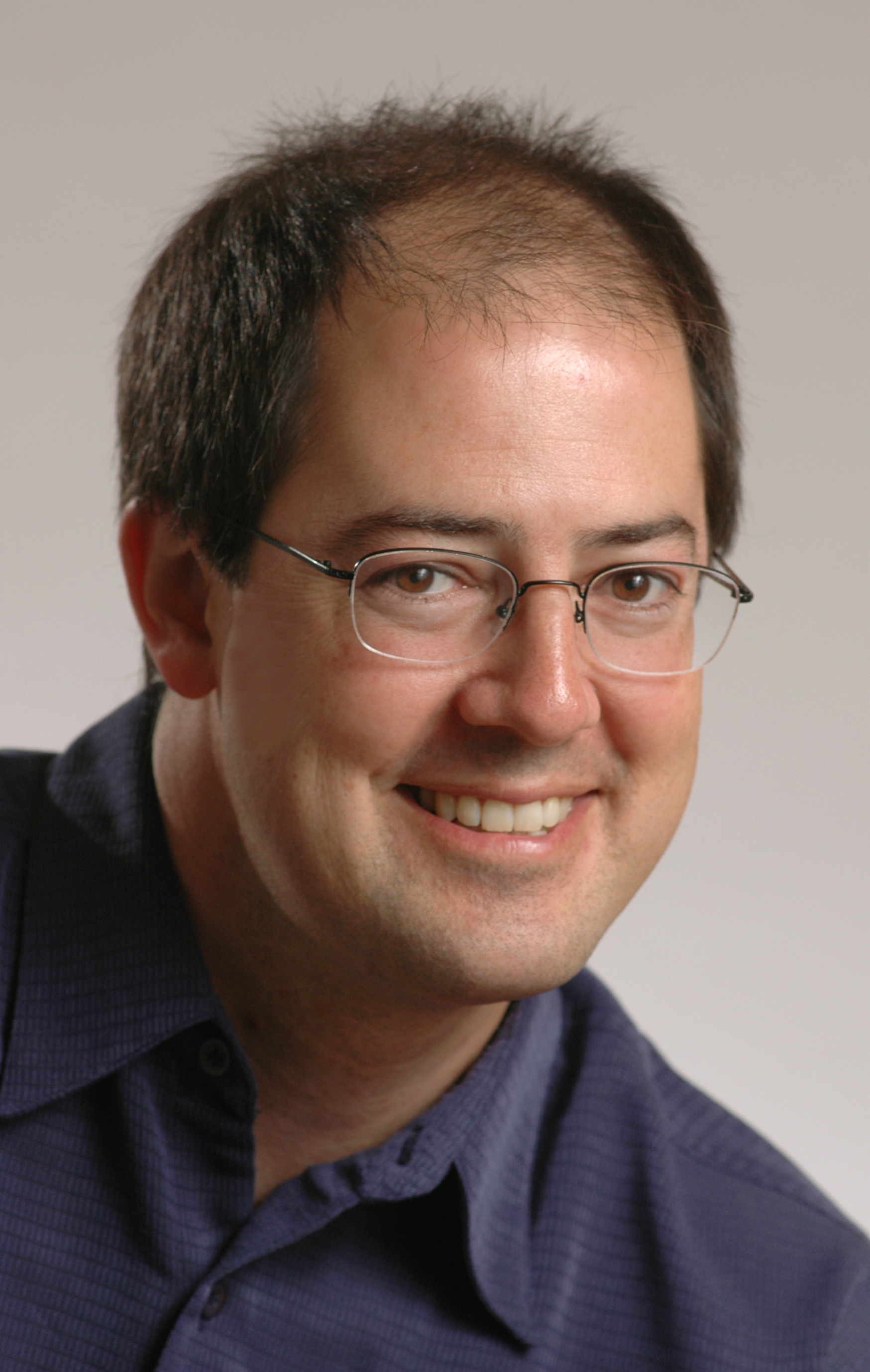
Kristofer Pister is a Professor in the Department of Electrical Engineering and Computer Sciences at the University of California, Berkeley. He co-directs the Berkeley Sensor and Actuator Center (BSAC) and the Ubiquitous Swarm Lab. His career spans groundbreaking innovations in Micro/Nano Electro Mechanical Systems (MEMS), Control Systems, and Low-Power Circuits, with a focus on Smart Dust and synthetic insects. Education: Ph.D. and M.S. in EECS from UC Berkeley (1992, 1989); B.A. in Applied Physics from UC San Diego (1986). His research areas include MEMS , Control Systems , Robotics , and Integrated Circuits , with recent work on self-powered micro-sensors, crystal-free radios, and interplanetary swarm networks. Key awards include the ISA Albert F. Sperry Founder Award (2009) , Alexander Schwarzkopf Prize (2006) , and the NSF CAREER Award (1996) . He has authored numerous influential publications in wireless sensor networks and microrobotics. His lab, Ubiquitous Swarm Lab , explores distributed robotics and swarm intelligence. Pister emphasizes open collaboration in research, ethical conduct in academia, and efficient resource utilization for graduate students.
Ronaldo I. Borja is a Professor in the Department of Civil and Environmental Engineering at Stanford University's School of Engineering. His academic career spans decades of research and teaching in theoretical and computational solid mechanics, geomechanics, and geosciences. He teaches undergraduate, graduate, and doctoral level courses including Geotechnical Engineering (CEE 101C), Mechanics and Finite Elements (CEE 281), Computational Poromechanics (CEE 314), and Plasticity Modeling and Computation (CEE 315). Professor Borja's research focuses on theoretical and computational solid mechanics, with particular emphasis on geomechanics and geosciences. His work includes the development of multi-scale discontinuity frameworks for crack and fracture propagation utilizing strong discontinuity and extended finite element methods; solution techniques for multi-physical processes such as coupled solid deformation-fluid diffusion in saturated and unsaturated porous media; stabilized finite element methods for solid/fluid interaction and nonlinear contact mechanics; and nanometer-scale characterization of the inelastic deformation and fracture properties of shales. His research spans multiple projects including shale characterization, poromechanics, and large deformation inelasticity. His recent publications demonstrate expertise across computational mechanics, geomechanics, and materials science, with a focus on finite element methods, constitutive modeling, and multi-scale analysis. His work bridges theoretical developments with practical applications in geotechnical engineering and earth sciences. 2016 ASCE Maurice A. Biot Medal for work in computational poromechanics Professor Borja serves as editor of two leading journals in his field: the International Journal for Numerical and Analytical Methods in Geomechanics and Acta Geotechnica. He has also authored the textbook 'Plasticity Modeling and Computation' published by Springer. His research is supported by multiple projects examining shale mechanics, poromechanics in unsaturated porous media, and large deformation inelasticity in crystalline materials.
Dr. Arghya Das is an Associate Professor in the Department of Civil Engineering at the Indian Institute of Technology Kanpur (IIT Kanpur), where he has been serving since 2014. He previously held the position of Assistant Professor at IIT Kanpur from July 2014 to November 2020 before being promoted to Associate Professor in December 2020. Prior to joining IIT Kanpur, he completed his Post-Doctoral Research Fellowship at Northwestern University, USA, and served as a Research Associate at the University of Sydney, Australia. Dr. Das earned his educational qualifications from prestigious institutions: PhD in Geotechnical Engineering from the University of Sydney, Australia (2013), M.Tech from IIT Bombay, India (2009), and B.E. from Jadavpur University, India (2006). His research focuses on advanced aspects of soil mechanics and geotechnical engineering, with particular emphasis on constitutive modeling of geomaterials, micromechanics of granular materials, and flow through porous media. His work integrates numerical and physical modeling approaches to address complex geotechnical challenges including bifurcation and instability analysis in geomaterials. Dr. Das teaches several advanced courses including Constitutive Modeling of Frictional Materials, Advanced Geotechnical Engineering, Rock Mechanics, Computational Methods in Engineering, and Soil Mechanics. Dr. Das's publication record demonstrates a consistent focus on discrete element modeling (DEM) applications in geomechanics, particle crushing behavior, and constitutive modeling of soils. His recent work (2020-2022) has particularly emphasized unsaturated soil mechanics, chemomechanical effects on granular materials, and advanced computational approaches to soil behavior. These publications appear in high-impact journals such as Acta Geotechnica, Geomechanics for Energy and the Environment, and International Journal of Geomechanics. PK Kelkar Fellowship - IIT Kanpur (2022-2025) FEIT University of Melbourne Visiting Researcher Fellowship (2022-2023) YGE Award for Best Paper on Computational Geomechanics, Indian Geotechnical Society (2018) SERB - Early Career Research Award (2016-2019) Dr. Das has successfully secured multiple research grants including projects funded by ONGC, CSIR, and SERB focusing on micro-poro-mechanical modeling, experimental assessment of Indian crushable sands, and permeability evolution in deep-reservoir rocks. He serves as a corresponding member of the International Technical Committee TC-105 on 'Geo-Mechanics from Micro to Macro' of the International Society for Soil Mechanics and Geotechnical Engineering (ISSMGE) and is a member of the Indian Geotechnical Society.
Edward Andò is a Principal Scientist and Lecturer at École Polytechnique Fédérale de Lausanne (EPFL) , with affiliations to the IMAGING group and the College of Engineering (ENAC) . His work bridges software development, experimental geomechanics, and educational initiatives in image analysis. Principal Scientist, IMAGING-GE (EPFL) Lecturer, Sciences et Génie Civil (SGC-ENS) Lecturer, Enseignement à la Défense (EDEE-ENS) Research Interests Andò specializes in 3D image analysis , with a focus on X-ray tomography , digital volume correlation (DVC) , and micromechanical modeling of granular materials. His work addresses geomechanical failure mechanisms, soil dynamics, and open-source software tools like SPAM for practical material analysis. Publication Trends His recent articles (2025–2023) emphasize X-ray tomography for studying granular deformation , rock failure , medical imaging , and soft particle compaction . Topics span geomechanics, computational modeling, and software development for experimental validation. Labs and Teams Andò contributes to the IMAGING group at EPFL, where he co-develops the SPAM (Software for Practical Analysis of Materials) . His teaching includes courses like Fundamentals of Image Analysis and Quantitative Imaging for Engineers , which integrate hands-on training with theoretical frameworks.
Kamal H. Khayat serves as the Jones Professor of Civil Engineering at Missouri University of Science and Technology and directs the Center for Infrastructure Engineering Studies (CIES), focusing on advancing concrete technology for sustainable infrastructure development. His research spans high-performance concrete (HPC), ultra-high-performance concrete (UHPC), self-consolidating concrete (SCC), and concrete rheology, with specialized expertise in 3D printing applications, fiber reinforcement systems, and shrinkage mitigation techniques. He investigates innovative materials like superabsorbent polymers and alternative binders to enhance durability and sustainability in concrete infrastructure. Analysis of his recent publications reveals dominant trends in digital fabrication of concrete, particularly 3D printing optimization and rheological modeling for structural build-up. His work increasingly integrates machine learning for material property prediction while emphasizing eco-friendly formulations using recycled aggregates and carbon-mineralization techniques. As Director of CIES, Khayat leads multidisciplinary research initiatives in infrastructure materials engineering, overseeing projects related to concrete rehabilitation, sustainable construction methods, and advanced material characterization techniques for civil infrastructure systems.
Eduardo Alonso Pérez de Agreda is a faculty member at the Universitat Politècnica de Catalunya in the Departament d'Enginyeria del Terreny, Cartogràfica i Geofísica . He leads research in geotechnical engineering and rock mechanics, particularly focusing on landslides, tunneling in expansive rocks, and multiphase soil interactions. Research Highlights Analyzing soil saturation dynamics using digital imaging Modeling tunnel lining in anhydritic claystones Studying mineral precipitation impacts on infrastructure Recent Article Trends Over 15 articles (2021–2025) on landslides, tunneling, soil liquefaction, and multiphase interactions Keywords span geotechnical engineering, computational methods, rock mechanics, and material science Subfields include stress-dilatancy, material heterogeneity, swelling rocks, and landslide triggering mechanisms Awards Baker Medal (2017) Telford Gold Medal (2019) Advising Advised PhD students: G. Di Carluccio (2020), C. Alvarado (2017), M. Alvarado (2021) Co-advised: L. Tapias, Y. Salami, R. Fuentes Labs & Collaborations Active in the MSR - Mecànica del Sòls i de les Roques and GGMM - Grup de Geotècnia i Mecànica de Materials research groups Collaborated with institutions in Spain, Italy, and China
Giuseppe Buscarnera is a Professor of Civil and Environmental Engineering at Northwestern University, serving as the Director of Graduate Studies. He holds affiliations with the Theoretical and Applied Mechanics Graduate Program . His research focuses on geomechanics , particularly the multi-physical processes in geomaterials that impact natural hazards and infrastructure design. Buscarnera earned his B.S. and M.S. in Civil Engineering from Politecnico di Milano and a Ph.D. in Geotechnical Engineering from Politecnico di Torino. Before joining Northwestern, he held postdoctoral positions at Politecnico di Milano and collaborated with MIT, the University of Sydney, and others. His key research interests include constitutive modeling of geomaterials, mechanics of unsaturated soils, chemo-mechanics of porous rocks, material stability theory, fracture mechanics in granular systems, and landslide forecasting. His work integrates theoretical mechanics, constitutive modeling, and computational methods to address societal challenges like natural hazard mitigation and sustainable energy technologies. Buscarnera has received significant recognition including the NSF CAREER Award (2013) and ALERT PhD Prize (2011) . He actively serves as a reviewer for International Journal of Numerical and Analytical Methods in Geomechanics and Géotechnique Letters , and is a member of the Italian Geotechnical Association (AGI) and ISSMGE. In advising, he has mentored over 10 graduate and undergraduate students in projects related to landslide modeling, granular mechanics, and material degradation. His lab employs multi-scale approaches combining continuum thermodynamics, particle-scale models, and DEM analyses. Current research emphasizes particle fragmentation, chemical interactions in porous media, and regional subsidence prediction through multi-scale frameworks. The Buscarnera Research Group collaborates internationally and uses advanced tools like X-ray tomography and computational simulations to study geoenvironmental processes. Former members now hold academic and industry roles, including Assistant Professor at IIT Kanpur and positions at GEI Consultants.
Dr. Maria Giuditta Fellin is a Lecturer at the Department of Earth and Planetary Sciences at ETH Zurich, affiliated with the Institute of Geochemistry and Petrology. She is part of the Earth Surface Dynamics Group and specializes in low-temperature thermochronology, using fission-track and (U-Th)/He dating techniques on zircon and apatite to study mountain belt exhumation and erosion processes. Her work focuses on linking tectonic activity, erosion patterns, and long-term landscape evolution. Her research spans global tectonic regions including the Pamir, Alps, Apennines, and Andes. She teaches courses on sedimentary petrography, microscopy, geochronology, and climate-soil-water interactions. No specific scientific awards are listed in the provided information. Her technical expertise includes advanced geochronological methods and quantitative modeling of tectonic-erosional systems.
Caglar Oskay is the Cornelius Vanderbilt Professor of Engineering and Chair of the Department of Civil and Environmental Engineering at Vanderbilt University. He is also a Professor of Mechanical Engineering. His research focuses on multiscale computational modeling of material and structural systems under extreme conditions, with expertise in composite materials, failure mechanisms, and computational mechanics. Dr. Oskay earned his Ph.D. in Civil Engineering from Rensselaer Polytechnic Institute (2003) and has held academic roles there before joining Vanderbilt in 2006. He was honored as an ASME Fellow in 2017 and as a Chancellor Faculty Fellow in 2016. Key research areas include multiscale failure modeling, life prediction of heterogeneous materials, and computational methods for composites and multiphysics systems. His work integrates advanced simulation techniques with experimental validation, addressing challenges in infrastructure resilience, additive manufacturing defects, and quantum computing applications in engineering. Education: Ph.D., Civil Engineering, Rensselaer Polytechnic Institute (2003) M.S., Civil Engineering, Rensselaer Polytechnic Institute M.S., Applied Mathematics, Rensselaer Polytechnic Institute B.S., Civil Engineering, Middle East Technical University Recent research highlights include stochastic modeling of geotechnical infrastructure failures, quantum-enhanced finite element methods, and predictive analytics for additive manufacturing defects. He leads interdisciplinary efforts on backward erosion piping in flood protection systems and has secured grants for multiscale modeling of titanium alloys and composites. Awards: ASME Fellow (2017) Chancellor Faculty Fellow (2016) Advising and grants: Dr. Oskay’s grants include NSF-funded studies on backward erosion piping and quantum computing applications. His research group collaborates with industry partners on materials for aerospace and energy sectors, emphasizing computational tools for failure prediction and material design. His work bridges computational mechanics with practical engineering challenges, advancing methods for infrastructure resilience, advanced materials, and sustainable design through multiscale modeling innovations.
Vanessa Magnanimo is a Full Professor at the MESA+ Institute, University of Twente, specializing in the micromechanics of granular materials and clays using advanced Discrete Element Method (DEM) simulations . Her research bridges micro- and macro-scale behavior of soils, focusing on computational modeling , small-strain stiffness , and material stabilization . She has led 107 research outputs and 2 datasets , including studies on wet granular systems , bio-cemented soils , and vegetated soil mechanics . Recent work includes 2025 publications on coarse-grained DEM and mixing indices in industrial processes. Notable activities include keynote talks at international events (2018–2020), visiting researcher appointments at institutions like 3SR Laboratory (2017) and Politecnico di Bari (2020), and editorial contributions. Her research spans geotechnical engineering , powder technology , and multi-scale modeling , with applications in soil stabilization , industrial powder handling , and eco-mechanical systems .
Lyesse Laloui is Full Professor and Director of the Soil Mechanics Laboratory at EPFL's School of Architecture, Civil and Environmental Engineering. A world-renowned expert in geomechanics and sustainability, his research develops nature-inspired solutions for climate change mitigation and renewable energy adoption. His distinguished career includes ERC Advanced and Proof of Concept Grants, two honoris causa doctorates, and leadership roles in Academia Europaea and International Society of Soil Mechanics. Research focuses on: Thermo-hydro-mechanical behavior of energy geostructures Bio-inspired geotechnical solutions for soil improvement Radioactive waste repository safety CO₂ sequestration caprock integrity Urban underground space utilization Recent publications demonstrate innovations in geothermal metro station design, shale behavior characterization for energy applications, and bio-mediated soil stabilization. His laboratory has supervised over 35 PhD graduates now advancing geotechnical engineering globally. Professor Laloui founded 5 EPFL spin-offs including Enerdrape (Swiss Top 100 startup) and serves as European Director of the International Associated Research Centers for Urban Underground Space. His awards include the ASCE Kersten Lecture and InterPore Kimberly-Clark Distinguished Lectureship.
Laura Dalton is an Assistant Professor in the Department of Civil and Environmental Engineering at Duke University. She joined the faculty in August 2022 after completing her Ph.D. at North Carolina State University. Her research focuses on reactive transport in porous media, CO2 sequestration, and advanced imaging techniques like X-ray CT and electrical capacitance tomography. Education: B.A., West Virginia Wesleyan College (2012) B.S. and M.Sc.Eng., West Virginia University (2015, 2016) Ph.D., North Carolina State University (2022) Dalton's work bridges experimental and computational methods, including: 4D imaging of geomaterials Machine learning for material inverse problems Thermal cycling in porous media CO2 mineralization strategies Her recent publications emphasize hybrid imaging modalities, deep learning applications, and reactive transport dynamics. While no specific awards are mentioned, her research aligns with Duke's climate solutions initiatives, including CO2 storage efficiency and sustainable material development.
Ragnvald Mathiesen serves as Professor in the Department of Physics at the Norwegian University of Science and Technology (NTNU), Trondheim. His research leverages advanced synchrotron-based X-ray and neutron imaging techniques to investigate dynamic solidification processes in metallic alloys and geomaterials, with significant contributions to understanding microstructure evolution under varied conditions including microgravity. His primary research interests focus on solidification physics , in-situ X-ray radiography/tomography , and microstructure characterization of metallic systems. Key specialties include dendrite growth kinetics, phase transformation dynamics, grain refinement mechanisms in aluminum alloys, and the application of 4D imaging to capture transient phenomena in materials processing. His work bridges fundamental physics with industrial metallurgy applications, particularly in aluminum and magnesium alloy systems. Analysis of his 15 most recent publications (2019-2025) reveals a consistent emphasis on time-resolved imaging methodologies applied to solidification phenomena. His research demonstrates increasing sophistication in multi-modal imaging (X-ray/neutron), with growing applications in geomaterials and electro-active systems. The publications show strong international collaboration patterns, particularly with European synchrotron facilities like ESRF, and address both fundamental questions in solidification physics and practical challenges in materials processing. Professor Mathiesen actively contributes to the development of advanced X-ray microscopy techniques, as evidenced by his 2017 doctoral dissertation on high-energy X-ray transmission microscopy and recent publications on dark-field imaging and diamond lens optimization. His laboratory work utilizes NTNU's materials characterization infrastructure alongside major international facilities including the European Synchrotron Radiation Facility.
Professor Ingrid Kögel-Knabner is a leading soil scientist at the Technical University of Munich (TUM) within the TUM School of Life Sciences. She holds the Chair of Soil Science and has been a Carl-von-Linde Senior Fellow at the TUM Institute of Advanced Study since 2011. Her career includes professorships at Ruhr University Bochum and the University of Bayreuth. Education: 1978–1983: Studies in Geoecology at the University of Bayreuth 1983: Diploma in Geoecology 1987: PhD in Soil Science under Prof. Dr. W. Zech 1992: Habilitation in Soil Science (Topic: Forest Soil Organic Matter) Research Interests: Her work focuses on soil organic matter dynamics, global carbon cycles, and sustainable land use. She employs advanced techniques like 13C NMR spectroscopy and nanoSIMS to study soil-mineral interactions. Key areas include soil carbon sequestration, rhizosphere functions, and biogeochemical processes in paddy soils. Grants & Projects: Coordinator of EU projects on pollutant transport and biodegradation (1994–2002) DFG Priority Programmes on soil carbon (SPP 1090) and biogeochemical interfaces (SPP 1315) BonaRes Centre for Soil Research (2016–2024) Awards: German Environment Award (2019) Bavarian Maximilian Order (2018) Highly Cited Researcher (Clarivate, 2015–2019) Labs/Teams: Leads interdisciplinary teams in soil science, collaborating with institutions like UFZ Halle, ZALF Müncheberg, and the European Geosciences Union.
Dr. Sen Wang is a Postdoctoral Fellow in the School of Chemistry and Physics at Queensland University of Technology (QUT), Faculty of Science. His research focuses on mineralogy and mineral processing, with applications in building materials development and mineral-based catalysts. Dr. Wang earned his PhD from QUT in 2023. Prior to that, he completed his Master's degree from China University of Mining and Technology (Beijing) in 2018, and his Bachelor's degree from the same institution in 2014. Dr. Wang's research specializes in the structures and properties of minerals, with a focus on designing mineral-based materials for practical applications including sustainable concrete, clay bricks, fire-resistant gypsum boards, and high-performance catalysts. He has actively collaborated with Queensland's building materials industry for five years, implementing quality control strategies and facilitating technology transfer. His research outputs have been disseminated to 22 brickmaking factories worldwide, demonstrating significant practical impact. Dr. Wang's publication record shows expertise across mineral processing, materials science, and environmental applications. His work demonstrates consistent focus on clay minerals and their applications in construction materials, with significant contributions to understanding thermal behaviors during brick firing. More recently, his research has expanded into catalysis and nanomaterials for environmental applications, showing increasing interdisciplinary reach. Dr. Wang has secured over AUD $120k in grants and awards, including: QUT Early Career Researcher Ideas Scheme (Australia, 2024) The Clay Minerals Society Student Research Grant (USA, 2023) The Clay Minerals Society Student Travel Award (USA, 2022) Chinese Government Award for Outstanding Self-financed Students Abroad (China, 2022) Dr. Wang has authored 19 research articles in top-tier peer-reviewed journals since 2016, with one first-author paper achieving ESI's top 1% highly cited paper in Engineering. His work has accumulated over 700 citations on Google Scholar, with both h-index and i10-index standing at 17. He is currently accepting research students for Honours, Masters, and PhD study, indicating his active role in mentoring the next generation of researchers. Dr. Wang is affiliated with the Centre for Materials Science at QUT and serves on the Editorial Boards of Green and Smart Mining Engineering (KeAi, China) and the International Journal of Materials Science and Applications (Science PG, USA). His membership in The Clay Minerals Society (USA) demonstrates his standing in the mineralogy research community.