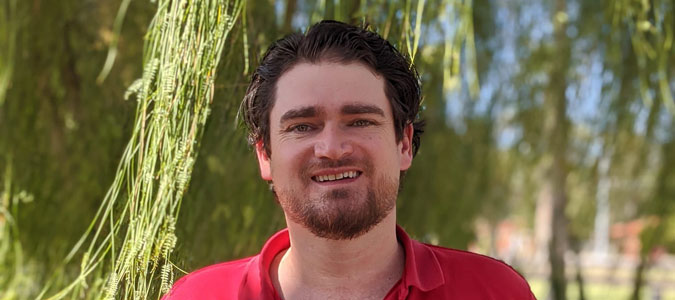
Jedidiah Crandall is an Associate Professor at Arizona State University's School of Computing and Augmented Intelligence, with an affiliation to the Biodesign Center for Biocomputing, Security and Society. His research focuses on Internet censorship, network security, and privacy-preserving technologies. Crandall collaborates with journalists and activists to expose surveillance mechanisms, particularly in politically sensitive regions like Russia and China. His work includes analyzing VPN vulnerabilities , decentralized censorship systems , and cross-border data flows . He teaches advanced courses in computer network security and advises graduate students on thesis/dissertation research. Research trends in his publications emphasize measuring state-level information control , attack vectors in modern networks , and secure communication technologies . Notable work includes TSPU: Russia's censorship infrastructure and Hidden Links: Analyzing Secret Families of VPN Apps . Crandall's teaching spans courses like Advanced Computer Network Security and Applied Cryptography , reflecting his commitment to preparing the next generation of security professionals. His Censored Planet project tracks global Internet censorship patterns through large-scale measurements.
Peter Karsmakers serves as Associate Professor at KU Leuven's Department of Computer Science within the Faculty of Engineering Technology, based at the Geel Campus. He coordinates the Declarative Languages and Artificial Intelligence (DTAI) research group and holds leadership roles including coordinator of Research and Education for Computer Science across Geel and Diepenbeek Campuses. Karsmakers earned his PhD in Engineering Science in May 2010, focusing on kernel-based learning algorithms for sparse modeling and efficient predictions from large datasets. His doctoral work established foundations for his current research trajectory in resource-constrained machine learning systems. His research integrates machine learning with signal processing for real-time sensor data interpretation, specializing in anomaly detection from acoustic, radar, and accelerometer signals on embedded devices. Current projects address industrial condition monitoring, elderly care systems, and livestock facility monitoring through three main tracks: acoustic monitoring (e.g., SINS, WATCHDOG), radar-based systems (e.g., FARADAY, NextPerception), and smart electronics for power converters. Recent publications demonstrate strong trends in constraint-guided deep learning architectures for industrial applications, cross-environment robustness in sensor systems, and domain-knowledge integration to reduce data requirements. His work consistently bridges theoretical machine learning with practical implementations in resource-constrained environments. No scientific awards or fellowships were mentioned in the provided materials. Karsmakers supervises over 10 master's theses annually and coordinates a research team of 10 PhD students and a post-doc within DTAI-ADVISE. He has secured approximately 2.3 million euros in funding through VLAIO, EU-ECSEL, and bilateral industry contracts, including 10 active projects such as AutoEdgeML (2024-2028) and Fault Tolerant Neural Networks for Space Applications (2024-2027). He leads the DTAI-ADVISE research group focused on developing software that attaches semantics to sensor data on resource-constrained devices. The team operates across multiple campuses with specialized labs for acoustic monitoring (Geel), radar-based systems (in collaboration with ESAT-TELEMIC), and smart electronics (with Electrical Engineering department), maintaining strong industry partnerships with companies in healthcare, manufacturing, and agriculture sectors.
Seongkyoon Jeong is an Assistant Professor of Supply Chain Management at the Haslam College of Business , University of Tennessee, Knoxville. His research addresses contemporary challenges in digital supply chains, cybersecurity risks, and sustainable operations. PhD (2022) - Supply Chain Management, Arizona State University MSc (2016) - Management, Georgia Institute of Technology MSc (2009) - Technology Management, Economics and Policy, Seoul National University BSc (2007) - Naval Architecture and Ocean Engineering, Seoul National University Jeong's work bridges supply chain security and sustainability , with recent publications examining cyberattack dynamics , epidemic-driven demand , and technology convergence . His 2018-2025 publications reveal a trajectory from R&D collaboration to digital transformation in supply chains. Scientific Awards Jack Meredith Best Paper Honorable Mention (JOM 2023) Arizona State University Outstanding Research Award (2022) Korea Management Association Consulting Excellence Award (2018) KIPO Director's Research Award (2016) Korea Institute for Industrial Economics and Trade Best Project (2013) Korea Inno-Skill Grand Prize (2010) Previously at Korea Institute of Machinery and Materials, Jeong contributed to interorganizational R&D before focusing on supply chain dynamics. His media contributions to Supply Chain Management Review and Supply Chain Dive highlight global cybersecurity risks and semiconductor production challenges .
Andreas Ekelhart is a Researcher at TU Wien's Department of Information and Software Engineering. His work focuses on cybersecurity, cyber-physical systems, and industrial control systems. He specializes in developing frameworks like SLOGERT for automated log analysis and Kyrstal for attack discovery using knowledge graphs. His research also explores digital twin technology for threat detection and semantic web applications in machine learning systems. Key contributions include the VloGraph framework for distributed security log analysis and the QualSec approach for automated security risk identification in production systems. He collaborates on standards like AutomationML and emphasizes privacy-preserving data analysis through semantic architectures.
Dr. Catherine Rychert is an Associate Professor in the Department of Geology and Geophysics at the University of Southampton, where she conducts cutting-edge research in seismology and marine geophysics. She is a member of both the Geology and Geophysics research group and the Southampton Marine and Maritime Institute, contributing significantly to our understanding of Earth's interior structure and dynamics through advanced seismic imaging techniques. Her research focuses on several key areas: Seismic imaging of lithosphere-asthenosphere boundary Subduction zone dynamics and slab structure Continental rifting processes Seafloor spreading mechanisms Mantle flow patterns and upwellings Development of novel seismic sensing technologies Dr. Rychert's recent publications (2023-2025) demonstrate a strong focus on applying advanced seismic techniques across diverse tectonic settings including subduction zones (Lesser Antilles, Cascadia, Hikurangi), mid-ocean ridges (Mid-Atlantic Ridge), and continental rift systems (East African Rift). A notable trend is her increasing use of distributed acoustic sensing technology for both terrestrial and planetary applications, showing interdisciplinary reach beyond traditional Earth science. Dr. Rychert actively supervises PhD students, including William Arnold Buffett working on the INSPIRE project. She has secured significant research funding from diverse sources including the European Union (EURO-LAB project), National Geographic Society, and Natural Environment Research Council (NERC). Her collaborative network includes Dr. Nicholas Harmon and Professor Derek Keir, with whom she frequently publishes. Her research team conducts fieldwork and data analysis focused on understanding fundamental Earth structure and processes through innovative seismic methodologies, contributing to both theoretical understanding and practical applications in hazard assessment and resource exploration.
Nickolai Zeldovich is the Joan and Irwin M. Jacobs Professor of Electrical Engineering and Computer Science at MIT, and a member of the Computer Science and Artificial Intelligence Laboratory (CSAIL). He received his PhD from Stanford University in 2008 and focuses on building practical secure systems, including encrypted databases, undefined behavior detection tools, formally verified file systems, and cryptocurrency protocols. His work spans both theoretical and applied aspects of computer security and distributed systems. Research interests include: Secure system design Distributed consensus mechanisms Formal verification of software/hardware Cryptographic protocols Privacy-preserving web technologies Publications & Verification Tools Recent work focuses on modular verification of complex systems, including: Shipwright (2025): Byzantine-fault-tolerant distributed system verification PoWER (2025): Crash consistency verification framework K2 Architecture (2023): Trustworthy hardware security modules Grove (2023): Separation-logic-based verification library Tiptoe (2023): Private web search protocols Major Awards Best paper award, ACM SOSP (2011, 2015, 2017) Sloan Research Fellowship (2010) NSF CAREER award (2011) MIT Jamieson Award for Teaching (2024) Active in multiple startup ventures including Algorand (cryptocurrency), MokaFive (virtualization), and PreVeil (end-to-end encryption).
Yongshan Ding is an Assistant Professor of Computer Science and Applied Physics at Yale University. He leads the Quantum Systems Lab (QSL) and directs Yale's Quantum Science and Engineering Certificate program. Affiliated with the Yale Quantum Institute (YQI) and Computer Systems Lab (CSL), his research focuses on quantum computing systems spanning algorithms, architecture, and hardware/software co-design. Dr. Ding earned his Ph.D. from the University of Chicago and a B.Sc. from Carnegie Mellon University. He has received prestigious awards including the Siebel Scholarship (2020) and William Rainey Harper Dissertation Fellowship (2020). Research Interests: Quantum computing architectures, noise-resilient quantum algorithms, error correction methods, quantum compilation, hardware-software co-design, and NISQ system optimization. Editorial Roles: Editor at Quantum journal and Associate Editor at ACM Transactions on Quantum Computing . Labs: Founder of Yale's Quantum Systems Lab (QSL) and contributor to the Computer Systems Lab (CSL). Awards: Siebel Scholarship (2020) William Rainey Harper Dissertation Fellowship (2020) QCE Best Paper Award (2024) IEEE Micro Top Picks Honorable Mention (2023, 2020) IBM Q Best Paper Award, First Prize (2020) Mathematics Competition Runner Up (2016)
Karthik Dantu is an Associate Professor in the Department of Computer Science and Engineering at the University at Buffalo, State University of New York, within the School of Engineering and Applied Sciences. His research focuses on mobile sensor networks, robot networks, networked embedded systems, mobile computing, wireless networks, and embedded operating systems. He leads the Distributed Robotics and Networked Embedded Sensing (DRONES) Lab and has received significant funding including an NSF CAREER Award. Dr. Dantu's educational background includes: PhD in Computer Science from University of Southern California (2009) BE in Computer Science from Sri Jayachamarajendra College of Engineering (1999) His research interests center on algorithmic and systems challenges in Edge Computing Systems, with particular focus on enabling seamless vision sensing in cloud-edge environments. Dantu's work bridges mobile systems and robotics, developing novel approaches for UAV software, visual SLAM, and distributed sensing. His research addresses critical challenges in resource-constrained environments, security, and real-time performance for mobile and robotic systems, with emphasis on practical implementations that solve real-world problems in autonomous systems. Dr. Dantu's publication record shows a strong trajectory in mobile systems and robotics research, with increasing focus on edge computing applications for visual sensing. His recent work demonstrates expertise in adapting visual SLAM to edge environments, securing mobile systems through technologies like Rushmore, and developing novel approaches for UAV software reliability and depth sensing. The research spans theoretical algorithms and practical system implementations, with particular strength in bringing academic research to practical applications in robotics and mobile computing. Dr. Dantu has received several scientific honors: NSF CAREER Award on Enabling Seamless Vision Sensing in Cloud-Edge Systems Outstanding service award from the Office of International Services NSF Travel Grant for SenSys 2005 Conference Travel Grant for SIGCOMM 2002 As an advisor, Dr. Dantu has mentored numerous PhD students to completion, with graduates now working at companies like Samsung Research and Zoox Inc., or continuing academic careers as Assistant Professors. His research is supported by substantial grants including a DARPA OFFSET Sprint 4 award ($470k), an NSF CAREER award ($550k), and multiple NSF collaborative grants totaling over $1.5 million. He serves on numerous conference committees including Mobicom, MobiSys, and ICRA, demonstrating leadership in the mobile systems and robotics research communities. Dr. Dantu leads the Distributed Robotics and Networked Embedded Sensing (DRONES) Lab at UB, which focuses on developing algorithms and systems for mobile sensor networks, robot networks, and embedded sensing applications. The lab's work spans theoretical foundations to practical implementations, with particular expertise in UAV systems, visual SLAM, and edge computing for robotics, maintaining strong collaborations with industry partners and other academic institutions to advance the state of the art in mobile and robotic systems.
Xueqiang (Brandon) Wang is an Assistant Professor of Computer Science at the University of Central Florida (UCF), where he is affiliated with the Cyber Security and Privacy Cluster. He leads the Security and PRIvacy for smarT systems (SPIRIT) lab, focusing on technical solutions for security and privacy threats in real-world systems. Education Ph.D. in Computer Science, Indiana University Bloomington (2021) Master’s in Computer Science, IIE CAS (2015) Bachelor’s in Computer Science, USTC (2012) Research Interests Security and privacy compliance for software supply chains Mobile and IoT systems security Cybercrime analysis Vulnerability discovery and exploitation Automated security analysis and data-driven mitigation strategies Labs & Teams Lead the SPIRIT Lab at UCF, specializing in security and privacy for smart systems.
Dr Qinghua Lu is a leading researcher and Group Leader of the Software Systems Research Group at CSIRO's Data61, Australia’s premier data science and innovation center. She is a key contributor to international AI safety and governance initiatives, including Australia’s AI Safety Standard, OECD.AI’s trustworthy AI metrics, and the EU General-Purpose AI Code of Practice. Her research centers on Responsible AI , AI Safety , and Software Engineering for AI , with a focus on Agent Engineering, AI architecture, and DevOps. Her work has set foundational directions in the field, particularly through her widely cited roadmap on engineering responsible AI systems. Dr Lu has authored over 200 publications in top-tier journals and conferences such as ICSE, FSE, AAAI, and NeurIPS. Her recent publications reflect a strong trend in trustworthy AI, software engineering practices for AI systems, and evaluation frameworks. Her 2023 paper Towards a Roadmap on Software Engineering for Responsible AI won the ACM Distinguished Paper Award, highlighting its impact. She has received numerous honors, including: 2023 APAC Women in AI Trailblazer Award IEEE HITC Mid Career Award (2023) Julius Career Award (CSIRO, 2021–2025) Multiple ACM SIGSOFT Distinguished Paper Awards IEEE Transactions on AI Outstanding Associate Editor (2024) Dr Lu actively contributes to the academic community as Associate Editor for IEEE Transactions on Artificial Intelligence , Engineering Applications of AI , and other journals. She serves as Area Chair for ICSE’26, Program Chair for AIware’25 and CAIN’25, and has reviewed for top conferences including NeurIPS, ICML, and IJCAI. She leads a vibrant research group focused on Agent Engineering and AI Safety, driving innovation in architecture design, evaluation, compliance, and supply chain security for AI systems.
Timothy M. Jones is a Professor of Computer Architecture and Compilation at the University of Cambridge's Computer Laboratory, serving as Director of the Computer Architecture and Semiconductor Design Centre (CASCADE) and Fellow/Director of Studies at Gonville and Caius College. His research focuses on parallelism extraction in applications to enhance performance and address energy efficiency/reliability challenges in compilers, binary translators, and microarchitectures. Current work includes novel cache prefetching techniques, thread-level parallelism schemes, and advanced core prediction methods. He has an Erdős number of 4 and a Dijkstra number of 4 via collaborative networks. Research interests span computer architecture fundamentals, compiler optimizations, hardware security mechanisms, and fault tolerance strategies. Notable contributions include speculative vectorization, heterogeneous parallel error detection (MEEK/FireGuard), and security tools like MarkUs and MineSweeper. CASCADE oversees interdisciplinary projects addressing future microprocessor/system challenges. Jones supervises PhD students through CASCADE's 2025 intake program. Publications emphasize architectural innovations in memory systems, security, and energy efficiency. Key works include MASCOT (memory dependence prediction), Scalar Vector Runahead (2024), and Decoupled Vector Runahead (2023). His work integrates hardware-software co-design principles to tackle real-world processor bottlenecks.
Ahmed Elbeltagi is an Assistant Professor in the Agricultural Engineering Department at Mansoura University's Faculty of Agriculture. His work focuses on hydrology, agricultural water management, and climate change adaptation. Specializes in data-driven modeling for water resource optimization Integrates machine learning with traditional hydrological models Active in climate change impact assessments on agricultural systems Recent research trends include: Developing open-source tools like Aqua-MC for irrigation simulation Applying hybrid deep learning models for evaporation prediction Advancing water quality assessment through multivariate analysis Exploring economic applications of wetlands in arid regions He collaborates with institutions across Egypt, India, China, and Saudi Arabia, with a focus on sustainable water management solutions.
Dr Kun Wei is a Lecturer in Computer Science at the University of the West of England (UWE), joining in 2015. Previously, he worked as a Research Associate at the University of York, focusing on timing properties of complex systems and formal development of safety-critical applications. His research spans formal verification, security protocols, concurrent programming, and model-checking tools. BSc in Computer Science MSc in Internet Computing PhD in Computer Science from the University of Surrey His expertise includes the analysis of timing properties in social-technical systems and cyber-physical systems using the timebands model, as well as formal verification of security protocols. He specializes in object-oriented software development , concurrent programming , and semantics of programming languages , with applications in safety-critical and dependable systems . His work integrates theorem-proving and model-checking tools for system development and verification.
Soumaya Cherkaoui is a Full Professor in the Department of Computer Engineering and Software Engineering at Polytechnique Montréal. Previously, she served as a Full Professor at Université de Sherbrooke and held industrial roles as an aerospace project manager. Her research integrates artificial intelligence with telecommunications, focusing on quantum computing, frugal edge intelligence, and applications in connected vehicles and IoT. Current Position: Full Professor, Polytechnique Montréal Prior Academic Role: Full Professor, Université de Sherbrooke Industry Experience: Aerospace Project Manager Research Interests: Convergence of AI and communications, quantum computing for networking, frugal intelligence at the edge, and applications in autonomous vehicles, industrial IoT, and smart grids. She leads government and industry-funded projects, including a $6 million quantum initiative in 2025. Recent Publication Trends: Her 2025–2024 work emphasizes quantum-enhanced anomaly detection (via QGANs), Open RAN slicing with quantum optimization, and reinforcement learning for secure cognitive radio networks. Topics span 5G/6G, vehicular networks, and zero-trust architectures. Scientific Awards: IEEE Communication Society Distinguished Lecturer (2020) ACM Mirela Notare Award (2023) IEEE Bio-Inspired Computing STC Leadership Award (2023) N2Women: Stars in Networking and Communications (2023) Best Paper Awards at IEEE ICC 2017, IEEE LCN 2021, ICCSPA 2024 Advising and Grants: Supervised 3 Master's students in 2024, with research on quantum GANs and federated learning for vehicular networks. Secured grants like the $6 million quantum project (2025) and participated in CFI-QC government funding (2022). Editorial and Leadership: Served as Associate Editor for IEEE, Wiley, and Elsevier journals. Chaired conferences like IEEE LCN 2019 and IEEE ICC2025, and held leadership roles in IEEE Communications Society committees.
Dr. Mohammad Iftekhar Husain is a Professor and Graduate Coordinator in the Department of Computer Science at California State Polytechnic University, Pomona (Cal Poly Pomona). He serves as the Inaugural Director of the PolySec Cyber Lab, a federally funded center for cyber security and forensics education, research, and outreach (~$2.5M in grants), and directs the university's Virtual Reality Lab. His career spans over a decade of leadership in cyber security program development, extramural funding, and academic governance. Education: B.S., Computer Science, Yamagata University (Japan) M.S. & Ph.D., Computer Science and Engineering, SUNY-Buffalo Dr. Husain's research focuses on data privacy in social networks, neurophysiological cyber security solutions, and blockchain applications. He has secured $18.4M in principal investigator grants, including NSF SFS, EAGER, and REU Site projects, and trained students placed in top institutions like UC campuses, MIT Lincoln Lab, and government agencies such as NSA and DHS. His work on brainwave authentication earned a US patent (USPTO 10,198,566) and media coverage in Time Magazine and PC Magazine . Scientific Awards: 2016 College of Science Distinguished Teaching Award Early Promotion and Tenure (2016) 2020 Faculty Learning Community for Leadership Pipeline Development Cohort As academic leader, he founded the Cal-Bridge CS Ph.D. pathway program for underrepresented students, chairs the CPP Academic Senate Academic Programs committee, and led university IT initiatives including Cyber Security Cluster Hiring and High-Performance Computing Lab development.