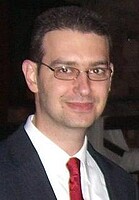
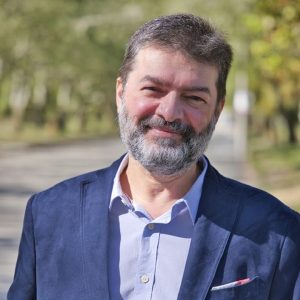
Emery D. Berger is a Professor at the Manning College of Information and Computer Sciences, University of Massachusetts Amherst, and an Amazon Scholar at Amazon Web Services. He received his Ph.D. in Computer Science from the University of Texas at Austin in 2002 and has held visiting positions at Microsoft Research and the Barcelona Supercomputing Center. His research focuses on systems that improve reliability, security, and performance, with core interests in: Programming languages and runtime systems Operating systems and memory management Performance optimization and causal profiling Software debugging and AI-assisted tools He has received numerous prestigious awards, including: ACM Fellow (2019) Best Paper Awards (FAST, OOPSLA, SOSP) NSF CAREER Award 5 SIGPLAN Research Highlights 5 CACM Research Highlights Microsoft SEIF Award He advises PhD, Master's, and undergraduate students in the PLASMA Lab, which develops impactful systems like Scalene (Python profiler), Coz (causal profiler), and CSrankings. His work has influenced industry tools, including memory managers in macOS and Windows.
Michalis Kokologiannakis is an Assistant Professor in the Department of Computer Science at ETH Zurich, Switzerland. Previously, he was affiliated with the Max Planck Institute for Software Systems (MPI-SWS) in Germany where he completed his PhD. His research focuses on programming languages, compilers, and software verification, with particular emphasis on: Automated verification and testing of concurrent programs Weak memory models employed by modern microprocessors Stateless model checking techniques Formal methods for program analysis His work has led to the development of several verification tools including GenMC (a stateless model checker for C/C++ programs under weak memory models) and Kater (a tool that automates weak memory model metatheory and consistency checking). Dr. Kokologiannakis has published extensively at top-tier programming languages and verification conferences including PLDI, POPL, OOPSLA, and CAV. His research has pioneered advances in stateless model checking, partial order reduction, and verification under weak memory consistency models. He completed his MEng at the National Technical University of Athens (NTUA) before earning his PhD from MPI-SWS.
Michael F. P. O'Boyle is a Professor of Computer Science at the University of Edinburgh's School of Informatics. He is a leading researcher in compiler technology, specializing in optimizing compilation, machine learning for compilation, and heterogeneous systems. His work addresses the critical challenges of compiling software for increasingly diverse hardware architectures in the post-Moore's Law era. Professor O'Boyle's research interests focus on: Optimizing compilation techniques Machine learning applications in compilation Heterogeneous computing systems Program synthesis Neural machine translation for code Hardware/software co-design His recent publications demonstrate a strong focus on tensor optimization, compiler infrastructure for heterogeneous systems, and machine learning applications in program analysis and transformation. O'Boyle's work bridges traditional compiler techniques with modern AI-driven approaches to code optimization, addressing the growing complexity of hardware-software interfaces. Professor O'Boyle has received several notable honors and awards: ACM CGO Test of Time award (2017) Senior EPSRC Research Fellow Fellow of the British Computer Society (BCS) He holds significant leadership roles including Director of the ARM Research Centre of Excellence at Edinburgh and Director of the EPSRC Centre for Doctoral Training in Pervasive Parallelism. O'Boyle is also a founding member of HiPEAC, a European network for high-performance and embedded architecture and compilation, and has delivered keynote addresses at major conferences including PPoPP 2019 where he presented his vision for "Rethinking Compilation in a Heterogeneous World."
Georgios Manis is an Associate Professor in the Department of Computer Science and Engineering at the School of Engineering, University of Ioannina, Greece. He holds a PhD from the National Technical University of Athens and has been a faculty member at the University of Ioannina since 2002, progressing from Lecturer to Associate Professor in 2018. He has also served as temporary teaching staff at the University of Patras, University of Crete, and University of Ioannina in the late 1990s and early 2000s. Education: B.Sc. in Computer Engineering (Diploma), National Technical University of Athens (NTUA), 1987–1992 MSc in Advanced Methods in Computer Science (Distributed and Parallel Systems), Queen Mary, University of London, 1992–1993 PhD in Computer Engineering, NTUA, School of Electrical and Computer Engineering, 1993–1997 His research interests lie at the intersection of Biomedical Engineering and Computing Systems , with a strong emphasis on Biomedical Signal Processing , Entropy Analysis , and Machine Learning . He has pioneered work in Bubble Entropy —a parameter-free entropy measure—and developed fast algorithms for entropy computation. His work also extends to compiler design and parallel computing, particularly in the automatic parallelization of recursive functions and loops. The trends in his recent publications reflect a dual focus: (1) biomedical applications involving entropy, heart rate analysis, and disease diagnosis using machine learning (especially Random Forests and SVMs), and (2) high-performance computing, including parallelization techniques and compiler optimizations for multi-core and SVP architectures. His research is highly interdisciplinary, combining signal processing, algorithm design, and clinical applications. Scientific Leadership and Recognition: Guest Editor, Special Issue on “Entropy in Biomedical Engineering”, Entropy (MDPI) Member of the IPAN Laboratory, University of Ioannina Active contributor to IEEE, Elsevier, and MDPI journals He has supervised several graduate students and is involved in funded research projects such as Palimpsest and Homore , focusing on smart systems for cultural interaction and elderly monitoring. His advising contributions are evident in co-authored papers with students like Evanthia Tripoliti and Aristeidis Mastoras. He teaches both undergraduate and postgraduate courses, including Compilers I/II and Biomedical Data Analysis . Laboratories and Teams: He is a member of the IPAN lab at the University of Ioannina, which supports interdisciplinary research in informatics and biomedical applications. His collaborative network includes researchers from Greece and abroad, particularly in the fields of biomedical signal analysis and entropy-based methods.
Antonios Deligiannakis is a Professor at the Department of Electronic and Computer Engineering, Technical University of Crete. His research focuses on databases, sensor networks, online analytical processing (OLAP), approximate query processing, and distributed systems. He holds a Ph.D. in Computer Science from the University of Maryland (2005), an M.Sc. from the same institution (2001), and a Diploma in Electrical & Computer Engineering from the National Technical University of Athens (1999). His career includes postdoctoral work at the University of Athens (2006–2007), a lecturer position there (2007), and an internship at AT&T Labs-Research (2003). He leads the Software Technology and Network Applications Laboratory , contributing to projects like extreme-scale analytics platforms (INFORE) and federated learning systems. Research areas span IoT workflow optimization, communication-efficient distributed learning, and real-time maritime event detection. His work emphasizes scalability, efficiency, and practical implementations for big data challenges. Courses taught include Structured Programming . Notable contributions include DAG* algorithms for IoT workflows, federated learning frameworks, and systems for proactive streaming analytics at scale. He has pioneered methods for outlier detection in sensor networks and efficient query processing over distributed streams.
Vassilios V. Dimakopoulos is a Professor of Parallel Processing at the Department of Computer Science and Engineering, University of Ioannina, Greece. He has been affiliated with the university since 1998, initially as an adjunct professor and later as a regular faculty member. Currently, he serves as the Dean of the School of Engineering and Chairman of the Technical Council of the University of Ioannina. His academic journey includes a Diploma in Computer Engineering from the University of Patras (1990), and M.A.Sc. and Ph.D. degrees in Electrical and Computer Engineering from the University of Victoria, Canada (1992 and 1996, respectively). His research focuses on parallel and distributed systems, parallel programming models, systems software, computer architecture, embedded systems, and performance analysis. He has held administrative roles such as Deputy Chairman of the Department (2014–2017) and Director of Graduate Studies (2016–2020). His contributions include pioneering work on OpenMP runtime systems, adaptive scheduling for embedded multicore architectures, and probabilistic search protocols in dynamic networks. Dimakopoulos is a member of the IEEE and the Technical Chamber of Greece. His work emphasizes bridging compiler design, runtime systems, and hardware constraints to optimize parallel computing efficiency. Recent research trends include hybrid OpenMP-MPI offloading strategies, adaptive task scheduling in heterogeneous environments, and fog computing cost modeling. His administrative leadership spans multiple institutional committees, reflecting his dual role as an academic leader and researcher. His research group collaborates on projects involving high-performance numerical optimization, task-based global optimization for protein folding, and embedded systems integration.
Panos Trahanias is Professor and Vice Chair in the Department of Computer Science at the University of Crete, and heads the Computational Vision and Robotics Laboratory (CVRL) at Foundation for Research and Technology - Hellas (FORTH). His research bridges computational vision, robotics, and embedded systems, with specific focus on humanoid robot navigation, real-time SLAM implementations, and adaptive control systems. Recent investigations include developing climbing quadruped robots, robust grip-lifting mechanisms, and probabilistic contact estimation methods for dynamically challenging terrains. Medical applications feature prominently through neural network approaches for ventilator waveform analysis in critical care settings. Hardware innovation is demonstrated through FPGA-accelerated visual SLAM architectures and reconfigurable embedded systems designed for resource-constrained robotic platforms. His work consistently advances the integration of probabilistic methods, deep learning, and adaptive control in autonomous systems.
Karakostas Vasileios is an Assistant Professor at the Department of Informatics and Telecommunications of the National and Kapodistrian University of Athens. His research focuses on computer architecture, cloud computing, and energy-efficient hardware systems. He specializes in areas such as RISC-V processors, virtual memory systems, and hardware security. Vasileios leads projects like NEUROPULS (neuromorphic secure accelerators) and Vitamin-V (RISC-V-based cloud infrastructure validation). His work emphasizes resilience analysis, performance optimization, and trustworthy development frameworks. Education and employment details are not explicitly provided in the source text, but his extensive publication record since 2011 demonstrates continuous academic engagement. Key research trends include: Memory systems optimization (e.g., TLB hierarchies, elastic translations) GPU and SoC fault tolerance analysis Cloud resource management (ACTiCLOUD, DAPHNE runtime) Open-source hardware validation (Vitamin-V project) Notable contributions include the Gem5-marvel simulator for heterogeneous architectures and BypassD for SSD access acceleration. His work bridges theoretical computer architecture with practical cloud and embedded system applications.
Professor George Korres specializes in Electric Power Engineering at the National Technical University of Athens. His research encompasses power system analysis, protection schemes, and industrial control systems. Teaching responsibilities include courses on: Supervision/Management of Energy Systems Energy Control Centers Power System Protection Recent research focuses on advanced state estimation techniques for modern power grids, particularly hybrid measurement systems combining SCADA and PMU data. Publications demonstrate applications in transmission networks, HVDC systems, distribution grids with renewable integration, and adaptive protection for island systems.
Manolis G.H. Katevenis is a Professor at the Department of Computer Science, University of Crete, and the founder and Head of the Computer Architecture and VLSI Systems (CARV) Laboratory at the Institute of Computer Science (ICS), Foundation for Research and Technology – Hellas (FORTH) in Heraklion, Crete, Greece. He has held academic positions since 1986 and played a pivotal role in establishing the Computer Science Department at the University of Crete. His research spans computer architecture, interconnection networks, VLSI systems, and high-performance computing, with a strong focus on scalable, low-power, manycore systems and RISC-V. He has led numerous European R&D initiatives, including serving as Coordinator of the ExaNeSt project. PhD in Computer Science, University of California, Berkeley (1983) MSc in Electrical Engineering and Computer Science, University of California, Berkeley (1980) Diploma of Electrical Engineering, National Technical University of Athens (1978) Manolis Katevenis's research focuses on advancing scalable system architectures for high-performance and big data computing. His work in computer architecture includes RISC-V, exascale computing, and manycore systems. He has made foundational contributions to interprocessor communication, particularly through remote-write, remote-DMA, and remote-enqueue mechanisms, and has pioneered innovations in interconnection networks and low-latency network interfaces. His research integrates hardware and software co-design to optimize performance, energy efficiency, and scalability in large-scale computing systems. The recent publications highlight a strong trend in exascale computing, interconnection networks, and FPGA-based prototyping of manycore systems. His work emphasizes scalable, low-power architectures, with recurring themes in congestion management, fair scheduling, crossbar design, and hardware-software integration for HPC. The articles span high-impact journals such as IEEE/ACM Transactions on Networking, IEEE Micro, and Computer Networks, reflecting sustained contributions to computer architecture and networking. ACM Doctoral Dissertation Award (1984) David J. Sakrison Memorial Prize (1983) IBM PhD Fellowship (1981–1983) Greek State Fellowship (1973–1978) Stelios Pichoridis Award for Outstanding University Teaching (2015) Member of Academia Europaea (elected 2012) Award by the Secretary General of the Region of Crete (2003) IEEE Milestone recognition for the RISC Project (2015) Manolis Katevenis has supervised over 50 graduate theses and mentored many prominent Greek computer architects, including recipients of the ACM Maurice Wilkes Award. He has served as Principal Investigator or co-PI in over 30 R&D projects with a total budget exceeding 18 million euros, including major European initiatives such as ExaNeSt (which he coordinated), EuroEXA, EcoScale, SARC, ENCORE, and multiple HiPEAC Network of Excellence projects. His leadership extends to project coordination, architectural design, FPGA prototyping, and systems software development. Katevenis founded and leads the CARV Laboratory at FORTH-ICS, a major research team with 80–100 members focused on computer architecture and VLSI systems. The lab has spun off the Distributed Computing Systems (DCS) Laboratory and is central to European exascale computing efforts, including participation in the European Processor Initiative. CARV has developed large-scale prototypes such as the 768-core ExaNeSt system and the Formic FPGA platform for manycore research.
Vasilios V. Dimakopoulos is a Professor at the Department of Computer Engineering and Informatics, University of Ioannina, and has served as Dean of the Polytechnic School (School of Engineering) from 2017 to 2024. He holds a Diploma from the University of Patras, and a Master's and PhD from the University of Victoria, Canada. His research focuses on parallel processing, distributed systems, embedded systems, and performance analysis, leading the research group at ParaGroup . Administrative Roles: Dean of the Polytechnic School (2017-2024) Deputy Chair of the Department of Computer Engineering and Informatics (2014–2017) Director of Graduate Studies (2016–2020) President of the Technical Council of the University of Ioannina (2020–2023) His research group explores system software, computer architecture, and performance optimization , with contributions to both theoretical and applied aspects of parallel computing.
Professor Vasilios Tsaousidis is affiliated with the Department of Electrical and Computer Engineering at Democritus University of Thrace since 2003. He was elected Professor in 2007 and has held visiting positions at MIT (2009) and Technical University of Berlin (2005). His work is conducted within the Programming and Information Processing Laboratory and focuses on DTN , Information-Centric Networking , and Space Internetworking . Education : Applied Mathematics (Aristotle University, Greece), Computer Science PhD (Humboldt University, Berlin) Postdoctoral Experience : Rutgers University, SUNY Stony Brook, Northeastern University His research spans transport/network layers with emphasis on energy-efficient and delay-tolerant protocols. Key areas include congestion control , QoS mechanisms , and reliable data dissemination in challenged environments. His publications from 2023-2025 focus on Kubernetes networking , edge cloud , and blockchain-integrated trust systems , demonstrating adaptability to emerging paradigms like IoT and space networking . Current projects like UMOBILE and SENSKIN explore mobile-centric architectures and structural health monitoring systems. Earlier work with SPICE (2010-2014) pioneered space internetworking protocols for Mars data transmission and space weather applications .
Nikos Spanoudakis is an Assistant Professor at the Department of Electronic Engineering of Hellenic Mediterranean University , with concurrent research collaboration at Technical University of Crete . He holds a PhD in Computer Science (Artificial Intelligence) from Paris Descartes University (2009, "Très Honorable"), an MSc in Organization and Administration from Technical University of Crete, and a Diploma in Computer Engineering and Informatics from University of Patras. Research Focus: Multi-Agent Systems (AOSE, Computational Argumentation), Model-Driven Engineering , Smart Buildings , IoT , and Artificial Intelligence Applications in Ambient Intelligence, Finance, and Education Key Contributions: Created ASEME Methodology and AMOLA Language for agent modeling, developed Gorgias-B argumentation framework, and designed Kouretes Statechart Editor for robotic behavior specification His recent publications reveal a strong trend in Explainable AI (2023: Explainable Argumentation as a Service ), Smart Energy Systems (2025: Engineering IoT-Based Open MAS for Large-Scale V2G/G2V ), and EdTech Innovations (2024: Role Assignment in Programming Courses ). He has received prestigious ACM Senior Member (2023) and IEEE Senior Member (2012) distinctions, along with teaching recognition (2021) from Technical University of Crete. Academic Leadership: Serves as Editor for Springer Nature's Computer Science journal and has reviewed for 15+ top-tier publications including IEEE Intelligent Systems and Journal of Web Semantics Conference Involvement: Program Committee Member for 20+ international conferences (IJCAI, ECAI, AAMAS, AAAI) and organizer of multiple European Agent Systems Summer Schools
Michail G. Lagoudakis is a Professor at the School of Electrical and Computer Engineering (ECE) of the Technical University of Crete (TUC), Greece. He leads the Intelligent Systems Laboratory (InteLLigence), focusing on machine learning, robotics, and decision-making under uncertainty. His academic journey includes a Ph.D. from Duke University (2003) and prior roles at Georgia Tech and AT&T Labs. Education: Ph.D. in Computer Science, Duke University, 2003 M.Sc. in Computer Science, University of Louisiana, 1998 Diploma in Computer Engineering and Informatics, University of Patras, 1995 Research Interests: His work spans reinforcement learning, multi-agent systems, robotics (team coordination, probabilistic methods), and complex systems. Notable projects include the EURECA-PRO university network, RoboCup Kouretes team, and algorithmic advancements like LSPI. Teaching: Courses include Artificial Intelligence, Machine Learning, and Robotics. His teaching philosophy emphasizes hands-on learning with tools like ROS and NAO robots. Projects & Collaborations: Current projects include aerial-ground robot collaboration, dialogue management systems, and solar energy optimization. Earlier work includes auction-based coordination and DPLL solver enhancements (RLSAT). Lab & Teams: The Intelligent Systems Lab develops autonomous systems, robotic platforms, and learning algorithms. The Kouretes team competes in RoboCup leagues, showcasing adaptive multi-agent strategies.
Professor Efstratios Gallopoulos is a faculty member at the Department of Computer Engineering & Informatics , University of Patras, where he holds the Division of Computer Software . He currently serves as Deputy Department Chair and Director of the High Performance Information Systems Laboratory (HPCLab) . His academic career spans multiple institutions including the University of Illinois at Urbana-Champaign, University of California Santa Barbara, and collaborations with INRIA Rennes and NASA Goddard Space Flight Center. Education : B.Sc. in Mathematics (First Class Honours) from Imperial College London (1979) Ph.D. in Computer Science from University of Illinois at Urbana-Champaign (1985) Research Focus : His work centers on Large-scale Scientific Computing with emphasis on Computational Linear Algebra , Parallel/Distributed Processing , and Data Mining . Recent publications highlight innovations in Randomized Numerical Linear Algebra , Heterogeneous Cluster Scheduling , and GPU-Accelerated Inversion Techniques . Article Trends : His research bridges High-Performance Computing with Data Science , focusing on scalable algorithms for Matrix Computations , Recommender Systems , and Biomarker Analysis . The work spans theoretical advancements (e.g., Givens Rotations ) and practical implementations (e.g., pylspack library). Scientific Awards : NASA Group Achievement Award for Massively Parallel Processor (MPP) development ACM SIGWEB Hypertext Ted Nelson Newcomer Award (2012) Advising and Grants : He has advised numerous research projects funded by European Research Council , Hellenic Foundation for Research and Innovation (HFRI) , and international bodies like the US National Science Foundation. Notably, he co-organized the 2015 Gene Golub SIAM Summer School and served as Chair of the SIAM Gene Golub Summer School Committee (2020-24). Labs and Teams : He leads the High Performance Information Systems Laboratory (HPCLab) and co-directs the interdisciplinary graduate program Data Driven Computing and Decision Making . His teams have contributed to the Cedar vector multiprocessor project at UIUC and Text-to-Matrix Generator (TMG) tools for data mining.