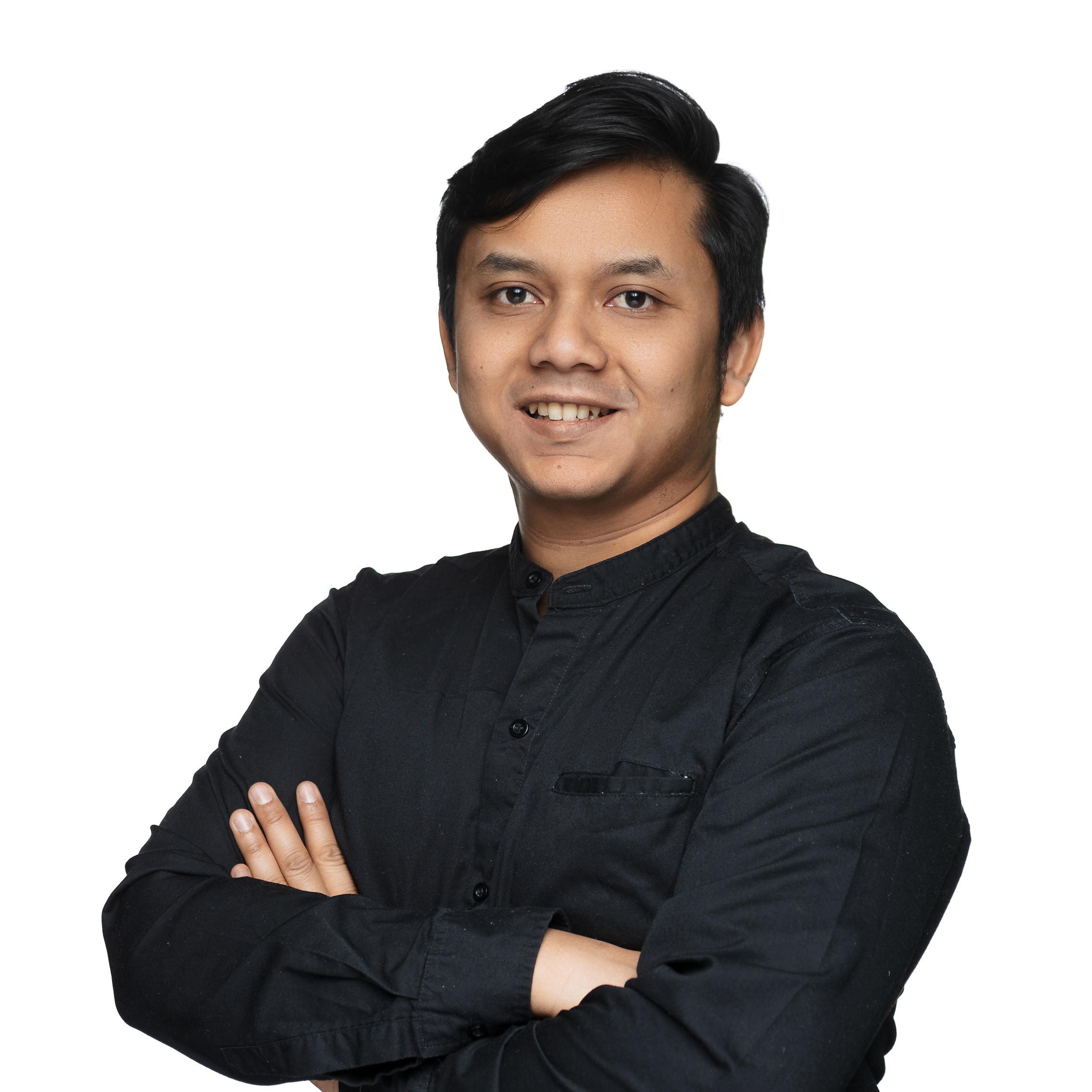
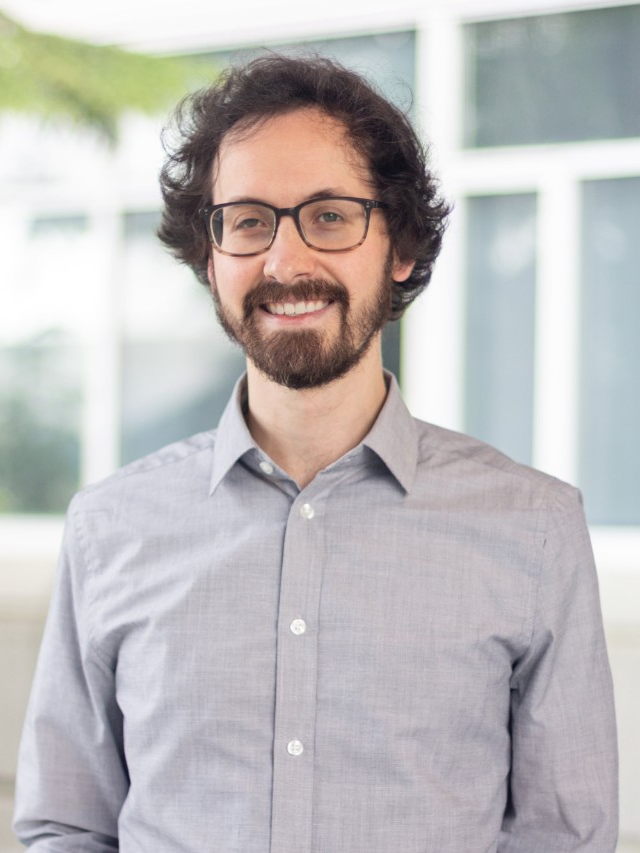
Simone Paolo Ponzetto is an Assistant Professor (Juniorprofessor) at the University of Mannheim since 2013, affiliated with the Research Group Data and Web Science. His research focuses on Semantic Web technologies, Natural Language Processing (NLP), and knowledge acquisition, particularly leveraging collaboratively built resources like Wikipedia. Prior to Mannheim, he held postdoctoral roles at Sapienza University of Rome and research positions at the University of Heidelberg and Stuttgart. His work includes pioneering projects like BabelNet, a multilingual semantic network. Ponzetto earned his PhD in Computational Linguistics from the University of Stuttgart, with interdisciplinary contributions to coreference resolution, semantic relatedness, and ontology learning. Research Interests: Unsupervised/weakly-supervised knowledge extraction Multilingual ontology learning and semantic networks Lexical semantics (word sense disambiguation, semantic similarity) Discourse semantics (coreference resolution, coherence modeling) Professional Contributions: Guest editor for a Artificial Intelligence Journal special issue on AI and Wikipedia Area chair for EMNLP-CoNLL 2012 and EACL 2014 Program committee member for ACL, AAAI, and other top conferences Lab/Team: Active in the Research Group Data and Web Science at Mannheim, advancing AI and NLP applications in collaborative knowledge systems.
Andries "Andy" van Dam is a distinguished Dutch-American professor of computer science at Brown University, where he also served as vice-president for research. Born in Groningen, the Netherlands on December 8, 1938, van Dam has been instrumental in shaping computer science education and research for over five decades. He helped establish Brown's computer science program, serving as its first department chair from 1979 to 1985, and was appointed Thomas J. Watson, Jr. University Professor of Technology and Education in 1995. His educational background includes a B.S. with Honors in Engineering Sciences from Swarthmore College (1960) and M.S. and Ph.D. degrees from the University of Pennsylvania (1963, 1966), where he was the second person to receive a PhD in Computer Science. Van Dam's research interests span computer graphics, hypertext systems, virtual reality, and educational technology. He is particularly known for his pioneering work in hypertext systems, having co-developed the first hypertext system with Ted Nelson in the late 1960s. His influential textbook "Computer Graphics: Principles and Practice" is often referred to as the "Bible" of computer graphics. His work has consistently focused on making complex computing concepts accessible through innovative interfaces and educational approaches. His research publications demonstrate a consistent trajectory from foundational work in computer graphics and hypertext to more recent explorations in immersive virtual reality, digital visual literacy, and next-generation educational software. His work bridges theoretical computer science with practical applications in education, medicine, and scientific visualization. Among his notable honors are: IEEE Centennial Medal (1984) Fellow of the Association for Computing Machinery (1994) ACM SIGGRAPH Distinguished Educator Award (2019) Van Dam has mentored numerous students who have gone on to make significant contributions in computer science, including Randy Pausch, Danah boyd, Scott Draves, and Steven K. Feiner. His teaching extends beyond traditional academic settings, as evidenced by his influence on the character of Andy in the film Toy Story, which pays tribute to his pioneering work in computer graphics. He continues to serve on the technical board of Microsoft Research and as chairman of the Rhode Island Governor's Science and Technology Advisory Council. His research lab has been instrumental in developing innovative approaches to human-computer interaction, with particular focus on post-WIMP (Windows, Icons, Menus, Pointer) interfaces, immersive environments, and educational technologies that transform how we learn and interact with digital information.
Assoc. Prof. Boyan Zhekov, PhD is an active faculty member at the University of Library Studies and Information Technologies (UNIBIT) in Sofia, Bulgaria, where he serves in the Department of Computer Science under the Faculty of Information Sciences. He teaches courses including Case Studies in Digital Transformation (SHEB609) and holds academic appointments at Sofia University "St. Kliment Ohridski" and New Bulgarian University as a visiting lecturer. MSc in Information Technologies from Technical University - Sofia Specialized in IT and Economics across UK, France, Netherlands, South Korea, Japan, and Taiwan His research focuses on the intersection of digital governance and emerging technologies, with significant contributions to Internet of Things applications in public administration, smart city ecosystems, and open data frameworks. His work demonstrates a consistent emphasis on practical implementations of ICT solutions for governmental modernization, particularly through EU-funded projects and national initiatives. Current projects examine IoT business models and startup ecosystems within smart city contexts. Prof. Zhekov actively contributes to European research policy as a Horizon 2020 National Contact Point for Future and Emerging Technologies, ICT, and Secure Societies, while serving on the Programme Committee for ICT. His professional engagement extends to leadership roles in Japanese-Bulgarian academic networks including JICA Alumni Bulgaria and Nihon Tomono Kai. Member of Horizon 2020 National Contact Network Board member of Union of Electronics, Electrical Engineering and Communications (SEES) President of JICA Alumni Bulgaria Vice President of JSPS Alumni Bulgaria His advisory work includes technical ICT audits for EU-funded projects under Operational Program RCBIS (2007-2013) and development of sectoral information strategies for regional governance (2014-2020). Recent projects for the Ministry of Education analyze national research infrastructure roadmaps and map Bulgaria's scientific infrastructure landscape.
Hans-Joachim Hof is a Professor and Vice President for Teaching and Students at Technische Hochschule Ingolstadt (THI), where he has been employed since 2016. He serves as Head of Bachelor Cybersecurity (since 2022), Project Manager for THIsuccessAI (since 2021), and Head of the Research Group 'Security in Mobility' at the CARISSMA Institute of Electric, Connected and Secure Mobility. Additionally, he chairs the Scientific Board of the Center of Entrepreneurship and serves on the Supervisory Board of AININ. Professor, Head of INSecurity - Ingolstadt Applied IT Security Research Group (since WS 2016) Professor of Secure Software Systems, Head of MuSe - Munich IT Security Research Group at HAW Munich (2011-2016) Research Scientist at University of Karlsruhe (2008-2011) Research Assistant at Institute for Telematics, University of Karlsruhe (TH) (2003-2007) Professor Hof holds a doctorate in engineering and completed studies in computer science with a specialization in telematics and reliability architectures of systems, with a minor in law. His research spans automotive security, network security, and IT security, with recent focus on security in the Internet of Things, development processes for Secure Automotive Software, Automotive Blockchains, and Future Automotive Security Architectures. His work bridges theoretical security frameworks with practical automotive applications, particularly in electric vehicle security and battery management systems. Hof's recent publications reveal a strong trend toward automotive cybersecurity, with particular emphasis on electric vehicle infrastructure security, battery management systems, and vehicle security operations centers. His research increasingly addresses the security challenges of connected and autonomous vehicles, with growing attention to trust management systems and the security implications of AI in automotive contexts. The interdisciplinary nature of his work connects computer security with automotive engineering, energy systems, and digital forensics. Professor Hof has received numerous prestigious awards for his research contributions: Multiple Best Paper Awards at SECURWARE (2015, 2016, 2017) Best Paper Awards at CENTRIC (2010, 2012) Best Speaker Award at ESE Congress 2015 IARIA Fellow recognition Best Paper Award at ICIW 2010 As Editor-in-Chief of the International Journal on Advances in Security and Chairman of the German Chapter of the ACM, Hof plays a significant role in shaping security research discourse. His leadership extends to the German Informatics Society where he serves on the Executive Board. His research group INSicherheit (http://insi.science) actively collaborates with industry partners on real-world security challenges. Professor Hof leads the INSecurity research group at THI, which focuses on applied IT security with particular expertise in automotive contexts. The group maintains strong industry connections and operates within the CARISSMA research institute, which specializes in electric, connected, and secure mobility. Their work includes practical security testing, development of security architectures, and analysis of emerging threats in automotive systems, with notable contributions to EV charging security, battery management systems, and vehicle forensics.
Alexandre Bartel is a Professor in the Department of Computing Science at Umeå University, Sweden, specializing in software security and software engineering. His research focuses on system security and analysis of permission-based software stacks, particularly Android. With numerous publications in top-tier security and software engineering conferences and journals, Bartel has established himself as a leading researcher in vulnerability analysis and software security. Bartel's research interests primarily center around software security, with a particular emphasis on Java and Android ecosystems. His work delves into vulnerability analysis, deserialization attacks, control flow integrity, and security mechanisms for complex software systems. He investigates how to verify security properties through efficient algorithms and examines existing software layers from a security perspective. His research bridges theoretical security concepts with practical implementation challenges in real-world systems. Analysis of Bartel's recent publications reveals a strong focus on Java deserialization vulnerabilities, control flow integrity mechanisms, and Android security. His work demonstrates a consistent trajectory from fundamental vulnerability analysis to developing practical security solutions and benchmarks. The research spans both theoretical frameworks and empirical evaluations, with significant contributions to understanding long-term security adoption patterns and developing tools for vulnerability detection. Scientific Awards: Most influential Paper ICSE N-10 Award for IccTA: Detecting Inter-Component Privacy Leaks in Android Apps Bartel actively contributes to the academic community through service roles, having served on program committees for major conferences including ASE, ESEC/FSE, ICSE, and FSE. His research has practical implications for software developers and security practitioners, particularly in the areas of vulnerability detection and security mechanism implementation. While specific grant information isn't detailed in the provided materials, his extensive publication record suggests successful funding for his research initiatives. Though not explicitly detailed in the provided information, Bartel's research likely involves collaboration with students and researchers on projects related to software security analysis. His work on benchmarks like Gleipner and CONFUZZION suggests involvement in developing tools and resources for the security research community.
Ronan Gruenbaum serves as Dean of International Affairs & Program Development at Hult International Business School, leading global partnerships and academic innovation. Previously, he directed the award-winning Bachelor of Business Administration program as Global Director of Undergraduate Learning and Development, and served as Dean of Hult's London undergraduate campus (2016-2022) after joining the institution in 2011 as a full-time professor of marketing technology. His expertise centers on digital transformation in business education, with core research areas including: E-commerce strategy and implementation Social technologies for organizational innovation Hybrid and online learning methodologies Future of work competencies development Business school evolution in digital age Digital marketing ecosystems Analysis of his publications reveals consistent focus on technology's disruptive impact across educational and business landscapes, particularly examining how social media, AI, and Web 2.0 tools necessitate fundamental shifts in teaching methodologies and organizational structures. His work emphasizes practical frameworks for implementing digital solutions while addressing associated risks and measurement challenges. No scientific awards were documented in the source materials. Professional engagement includes extensive conference speaking on educational innovation topics, though specific student advisement records and research grants remain undisclosed. His leadership in developing Hult's undergraduate programs demonstrates applied focus on preparing students for technological disruption in global business environments. Current initiatives indicate strong emphasis on AI integration challenges for business education and strategies for maintaining institutional relevance amid rapid technological change.
Sonia Lopez Alarcon is an Associate Professor in the Department of Computer Engineering at the Kate Gleason College of Engineering, Rochester Institute of Technology (RIT). She has been a faculty member since 2009, teaching core courses like Computer Organization and developing quantum computing curricula including the new CMPE-257 undergraduate course and CMPE-757 graduate course. Her research bridges computer architecture and quantum computing with emphasis on practical quantum circuit implementation. Her educational background includes a Bachelor of Physics and Master's in Device Physics from the University Complutense of Madrid (2002), followed by a PhD in Computer Engineering (2009) where she researched cache hierarchy in simultaneous multithreaded architectures. During her studies, she gained industry experience at Lucent Technologies and Fundetel working on integrated circuit design. Dr. Lopez Alarcon's primary research focuses on Quantum Computing and heterogeneous hardware solutions, specifically quantum circuit compilation processes, scalability challenges, and error resilience techniques. She investigates how to translate theoretical quantum algorithms into executable circuits while managing noise and resource constraints, with applications in optimization problems and physics simulations. Her work connects computer engineering principles to emerging quantum technologies. Analysis of her publication timeline shows a strategic shift from traditional computer architecture (2015-2018 cache/HLS research for GPU/heterogeneous systems) to quantum computing (2019-2021). Recent work explores quantum algorithms for combinatorial optimization (Grover's), quantum simulation of physical systems, and machine learning applications, reflecting her adaptation to the rapidly evolving quantum landscape while maintaining her architectural expertise. Her teaching excellence has been recognized through multiple awards: Kate Gleason College of Engineering Exemplary Performance in Teaching Award (2016, 2017, 2020) Computer Engineering Most Effective Teacher Award (2016) She actively mentors graduate students including Mark Danza (MS Computer Engineering candidate 2025), with whom she collaborated on quantum machine learning research featured in Quantum Zeitgeist (May 2025). She contributes to RIT's quantum information science minor launched in 2022, developing curriculum and supervising student research in this emerging field. Dr. Lopez Alarcon leads quantum computing research efforts within RIT's Department of Computer Engineering, collaborating with colleagues like Cory Merkel on quantum algorithm applications. Her work is supported through her personal research website and integration into university-wide quantum initiatives, positioning her at the forefront of academic quantum computing education and research.
Fajar Juang Ekaputra is a Tenure Track Assistant Professor at the Institute of Data, Process, and Knowledge Management (DPKM), WU Vienna and a part-time Postdoctoral Researcher at the Data Science research unit, TU Wien . With a focus on Semantic Web , Knowledge Graphs , and their integration with Machine Learning in Neurosymbolic AI systems, his work spans domains like Cyber-Physical Systems and Materials Engineering . Education: Dr.techn. (2018), TU Wien M.T. (2010) and S.T. (2008), Institute Teknologi Bandung (ITB) Research Interests center on hybrid AI systems combining Semantic Web and Machine Learning , with applications in Cyber-Physical Systems (e.g., smart grids, smart buildings), data privacy in smart cities, and materials engineering . His 102+ publications include frameworks like SWeMLS-KG and SHACL4Protege . Recent Articles (2024) address explainable AI in cyber-physical systems, privacy trust in data infrastructures, and neurosymbolic frameworks . Earlier works (2023–2022) explore ontology-based data management , auditable AI , and hybrid system architectures . Scientific Awards: Best Paper Awards (ICoDSE 2023, ICoDSE 2016) Best Poster Nomination (SEMANTiCS 2019) PhD Scholarship (Austria’s Agency for Education and Internationalisation, 2012) Advising includes supervising PhD students (e.g., Majlinda Llugiqi, Katrin Schreiberhuber) and master’s theses on topics like knowledge graph characteristics and data quality assessment . He leads projects such as FAIR-AI (FFG-funded, 2024–2026) and SENSE (Horizon Europe, 2023–2025).
Alex X. Liu is a Professor in the Department of Computer Science & Engineering at Michigan State University (2016-2022), currently serving as Chief Information Security Officer and President of Midea Software Engineering Institute. His academic career includes roles as Associate Professor (2012-2016) and Assistant Professor (2006-2012) at the same institution. He holds a Ph.D. and M.S. in Computer Science from The University of Texas at Austin, and a B.S. in Computer Science from Jilin University, China. Education Ph.D. in Computer Science (UT Austin, 2006) M.S. in Computer Science (UT Austin, 2002) B.S. in Computer Science (Jilin University, 1996) Liu's research focuses on Dependable computing , Networking algorithms , Cloud computing , Mobile computing , Privacy computing , and Computer/network security . His work spans secure systems, network protocols, and resource optimization in distributed environments. Recent publications address quantum neural networks , microservices autoscaling , RFID tag recognition , network traffic classification , and hybrid physical-layer authentication , demonstrating expertise at the intersection of AI and network security. Key trends include deep learning applications for cloud systems and robust security protocols. Scientific Awards IET Fellow (2021) IEEE Fellow (2019) ACM Distinguished Scientist (2019) Withrow Distinguished Scholar Awards (Senior 2019, Junior 2011) NSF CAREER Award (2009) IEEE & IFIP William C. Carter Award (2004)
Ayesha Ali is a Professor of Statistics and Director of the Master of Data Science program at the University of Guelph. She holds a PhD in Statistics from the University of Washington (2002) and has expertise in statistical methods for complex high-dimensional systems, including ecological networks, causal inference, and bioinformatics. Her research integrates graphical Markov models, machine learning, and statistical computing to address challenges in plant-pollinator networks, livestock genetics, and disease risk modeling. Education: B.Sc. Honours in Statistics and Actuarial Science, University of Western Ontario (1996) M.Sc. in Statistics, University of Toronto (1998) Ph.D. in Statistics, University of Washington (2002) Research Interests: Graphical Markov models and ecological networks Causal inference and longitudinal data analysis Machine learning and high-dimensional predictive modeling Statistical methods for livestock genetics and animal health Computational statistics and bioinformatics Articles Trends: Her recent work spans interdisciplinary applications, including veterinary oncology biomarker discovery, remote sensing for agricultural suitability, and pipeline development for cross-species transcriptomics. She emphasizes graphical structure exploitation in regression and predictive modeling, with contributions to both theoretical and applied statistical methodologies. Awards: Canadian Journal of Statistics Award (2020) for groundbreaking work on doubly sparse regression NSERC Discovery Grant (2018) NSERC Collaborative Research and Development Grant (2015) Advising & Grants: She has supervised numerous graduate and undergraduate students on projects ranging from plant-pollinator network analysis to bioinformatics. Her grants include NSERC-funded research on milk fatty acid genetics and statistical methods for clustered data. Labs/Teams: Involved in the Bioinformatics program at the University of Guelph, contributing to interdisciplinary research collaborations in ecology and animal science.
Laura Becker is an Assistant Professor at the Department of General Linguistics, University of Freiburg. Her research focuses on linguistic typology, quantitative methodology, and the role of coding efficiency in grammatical structures. She holds a PhD exploring article systems across languages and has contributed to cross-linguistic studies on syntax, morphology, and sociolinguistics. Her work emphasizes statistical rigor and computational tools, such as the glottospace R package for geospatial linguistic analysis. Recent projects include investigating phoneme inventories in Polynesian languages and socio-linguistic influences on conditional constructions. Publications highlight her expertise in morphosyntax, language contact, and corpus-based approaches. No scientific awards are explicitly mentioned in the provided materials. Dr. Becker has advised no recorded students in the available data and has not listed specific grants or labs. Her current research trends prioritize quantitative frameworks to address typological and evolutionary questions in linguistics.
Dr. Matt Amy is an Assistant Professor in the School of Computing Science at Simon Fraser University (SFU), holding the Canada Research Chair in Quantum Computing. His research focuses on quantum compilers, programming languages, and formal verification of quantum programs. He also explores quantum circuit optimization and models of quantum computation. Education: PhD in Computer Science (University of Waterloo, 2019), M.Math in Quantum Information (2013), and B.Math in Computer Science (2011), all from the University of Waterloo. Research Interests: Quantum compilers and languages, circuit optimization, formal verification, and quantum computation models. His work bridges theoretical foundations with practical implementations, emphasizing efficient quantum software development. Recent research trends include advancing quantum compilation techniques, exploring NP-hard optimization problems in quantum circuits, and developing formal methods for quantum program analysis. His work on symbolic synthesis and equational theories for quantum circuits demonstrates a focus on foundational algorithmic challenges. Scientific Awards: Canada Research Chair (2025–present) Advising and Grants: While no current advisees are listed, his research is supported by grants focused on quantum computing and formal methods. He collaborates with industry through SFU’s School of Computing Science. Labs and Teams: Involved with the Tangent Lab, a research group exploring quantum algorithms and software systems at SFU.
Konrad Kowalczyk is an Associate Professor at AGH University of Science and Technology in Krakow, Poland, where he heads the Signal Processing Group within the Faculty of Computer Science, Electronics and Telecommunications. With extensive international experience from institutions including Queen's University Belfast, Stanford University, and Fraunhofer Institute, he has established himself as a leading researcher in audio and speech signal processing. His academic journey includes B.Eng. and M.Sc. degrees from AGH University (2005), a Ph.D. from Queen's University Belfast (2009), and a Habilitation in ICT from AGH University (2020). B.Eng. and M.Sc. in Electronics and Telecommunications, AGH University of Krakow (2005) Ph.D. in Electronics, Queen's University Belfast, UK (2009) Habilitation (D.Sc.) in Information and Communication Technology, AGH University of Krakow (2020) Kowalczyk's research spans multiple cutting-edge areas in audio processing, with particular focus on speech and audio signal processing enhanced by machine learning techniques. His work integrates deep neural networks with traditional signal processing methods to address challenges in array signal processing , speech enhancement , and speaker recognition . The research group he leads explores innovative applications in distributed signal processing for IoT , acoustic event detection , and spatial audio rendering , bridging theoretical advances with practical implementations. His recent publications demonstrate a clear trend toward integrating deep learning with traditional signal processing techniques, particularly in speaker diarization, source separation, and robust speech recognition. The research increasingly focuses on real-world applications requiring reverberation-robust processing , distributed microphone array systems , and end-to-end neural architectures that can operate in challenging acoustic environments. There's a noticeable shift toward more complex, integrated systems that combine multiple signal processing tasks. Stanislaw Staszic Medal for best graduate of AGH (2005) IEEE Best Student Paper Contest finalist (2007) AES Student Technical Paper Award winner (2008) Best Student Paper Award at IWAENC conference (2014) Best Paper Awards at IEEE SPA conferences (2016, 2019) Polish Ministry of Science Scholarship for Distinguished Young Scientists (2016-2019) Prime Minister Award for outstanding scientific achievements (2020) As Principal Investigator, Kowalczyk leads multiple significant research projects including "Acoustic Intelligence" (2024-2028) funded by National Science Center, and "Deep extraction for robust speech recognition" (2023-2028). He has successfully secured funding from prestigious programs including First TEAM from the Foundation for Polish Science, and EU FP7 projects. His research group actively supervises Ph.D., M.Sc., and B.Eng. students, with strong connections to international institutions including Aalto University and IEEE Signal Processing Society. The research output includes numerous journal publications, conference papers, patents, and software implementations that have advanced the field of audio signal processing. Kowalczyk leads the Signal Processing Group at AGH University, which focuses on developing innovative solutions for speech and audio processing challenges. The group maintains strong collaborations with international institutions including Aalto University (Finland), and participates in European research initiatives. Their work spans theoretical development through practical implementation, with applications ranging from medical voice assistants to distributed acoustic sensor networks.
Per Lynggaard is a Professor of Electronics at the Technical University of Denmark (DTU) , leading the B.Eng. program in Electronics. Previously, he held an Associate Professor role at Aalborg University, combining academic excellence with a robust industrial career in technical-scientific research and development. Education: M.Sc. in Electrical Engineering and Information Technology (EE and IT) Ph.D. in Electronics from Aalborg University Research Interests: Focus on Integrated Circuit Design, Wireless Sensor Networks (WSN), Machine Learning, IoT, and Smart City Technologies . His work emphasizes energy-efficient systems, cybersecurity in IoT, AI-driven interference mitigation, and sustainable energy harvesting solutions. He has contributed to UN Sustainable Development Goals through projects addressing smart infrastructure and environmental monitoring. Projects & Collaborations: Leads and participates in EU-funded initiatives such as InnoTech (2023–2025) for green transition solutions and TransportTech (2023–2026) for Industry 4.0 logistics. Active in cybersecurity research via projects like Jamming Against Critical Wireless Communication , aiming to protect critical infrastructure. Awards: Recognized with multiple honors and rewards during his industrial career, though specific names are not listed. His work has been cited widely, with notable impact in IoT security and energy-efficient systems. Advising & Grants: Supervises Turnip T.N. in a PhD project on 6G security protocols. Engaged in securing funding for projects like F2D2: The Community for Dynamic Data (2021–2030), focusing on dynamic data systems and cybersecurity. Labs & Teams: Collaborates in interdisciplinary teams such as the InnoTech TaskForce and F2D2 Community , advancing IoT and AI integration. His research bridges academia and industry, with outputs spanning smart cities, healthcare IoT, and sustainable energy systems.
Twan Basten is a Full Professor in the Electronic Systems group at Eindhoven University of Technology (TU/e). He leads research on embedded and cyber-physical systems, focusing on model-driven design, computational models, and system dependability. He holds an MSc (1993) and PhD (1998) in Computing Science from TU/e, advancing from Assistant to Full Professor by 2009, and became the Electronic Systems group chair in 2013. His research spans international projects (FP5-7, H2020, ECSEL) and Dutch initiatives (STW, NWO, RVO), with over 200 publications and seven best paper awards. He has co-supervised 21 PhD students and actively participates in program committees and conferences. His work contributes to UN Sustainable Development Goals through innovations in smart systems. Education: MSc in Computing Science, TU/e (1993) PhD in Computing Science, TU/e (1998) Research Interests: Explores design methodologies for embedded systems, including scenario-based design, real-time scheduling, and performance analysis. Specializes in model-driven engineering and computational models to ensure system dependability. Active in projects like TRANSACT (real-time systems) and SAM-FMS (flexible manufacturing). Key Contributions: Co-author of 1 book and over 200 scientific publications Recipient of seven best paper awards Co-supervised 21 PhD degrees Senior member of IEEE and lifetime member of ACM Labs & Teams: Leads the Model-Based Design Lab and contributes to EAISI High Tech Systems initiatives. Collaborates on tools like TRACE4CPS for execution trace analysis and CReTS for vehicle platooning simulation.