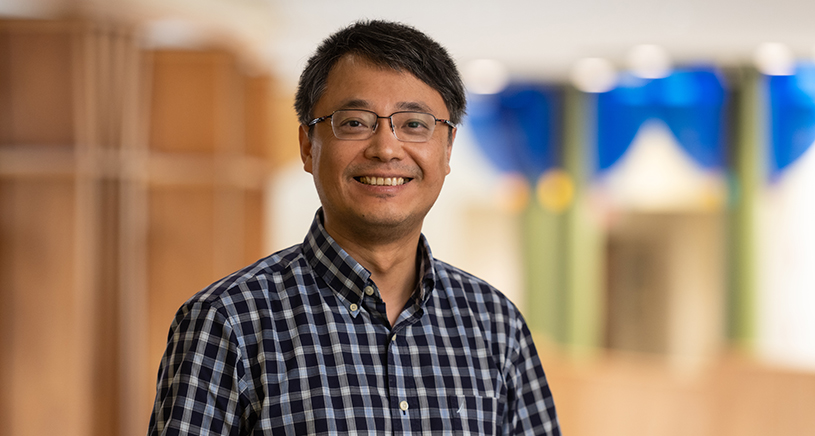
Andrea OLIVERI is a Research Fellow at EURECOM's Digital Security department, focusing on advanced cybersecurity and memory forensics. His work spans OS-agnostic memory analysis, zero-knowledge protocols in forensics, and IoT botnet infiltration. He holds a postdoctoral position and maintains a research website at https://www.s3.eurecom.fr/~iridiumxor/ . Research interests include memory integrity validation, kernel-level forensic techniques, and secure computation methodologies. His recent studies address challenges in cross-platform memory analysis and SGX enclave forensics, while earlier work explored IoT botnet mitigation through undercover software agents. Publications highlight trends in forensic tool development, zero-knowledge approaches for privacy-preserving analysis, and hardware-software interaction in secure environments. No specific awards or grants are listed in the provided information.
Prof. Dr. Dietmar Gallistl is a faculty member at Friedrich-Schiller-Universität Jena, holding the Professorship for Numerical Mathematics within the Faculty of Mathematics and Computer Science. His research focuses on numerical methods for partial differential equations, including mixed finite elements, multiscale methods, adaptive algorithms, and computational homogenization. He teaches courses such as Theory and Numerics of Partial Differential Equations and Iterative Solvers for Partial Differential Equations . His research interests span various areas including discretization techniques for nonlinear PDEs, error analysis, and computational methods for wave propagation. He has contributed to software tools for finite element mesh refinement and numerical simulations. Recent work includes publications on the Gross-Pitaevskii eigenvalue problem, Monge-Ampère equations, and time-harmonic Maxwell equations. Prof. Gallistl's academic work emphasizes rigorous mathematical analysis alongside practical numerical implementation. His teaching materials include lecture notes on computational PDEs and finite element methods available on his university webpage.
John P. Huelsenbeck is the McCreight Chancellor’s Chair in Computational Biology and a Professor at the University of California, Berkeley. His research focuses on developing and applying Bayesian statistical methods to phylogenetic analysis, computational biology, and evolutionary processes. He has contributed extensively to software tools such as MrBayes and RevBayes, which are widely used for Bayesian phylogenetic inference. His work addresses challenges in phylogenetic model selection, accommodating phylogenetic uncertainty, and integrating genomic data into evolutionary studies. Key research areas include Bayesian inference of phylogeny, statistical phylogenetics, and the development of high-performance computational libraries like BEAGLE. He explores topics such as host-parasite cospeciation, molecular clock relaxations, and the impact of dependent evolution in sequence analysis. His projects often involve collaborations in computational methods and their applications to understanding biodiversity, viral evolution (e.g., SARS-CoV-2), and adaptation in desert ecosystems. Publications highlight advancements in phylogenetic algorithms, model choice methodologies, and applications to diverse datasets ranging from bacteriophage evolution to crinoid taxonomy. His work emphasizes rigorous statistical frameworks and computational efficiency, making significant contributions to both theoretical and applied evolutionary biology.
Paulo Romero Martins Maciel is a full professor at the Center for Informatics, Federal University of Pernambuco (UFPE), Brazil, where he has been a member since 2001. He previously served as a professor in the Department of Electrical Engineering at the University of Pernambuco from 1989 to 2003. He completed his graduate degree in electronic engineering from the University of Pernambuco in 1987, followed by master's and doctorate degrees in electronic engineering and computer science from UFPE. During his doctoral studies, he conducted a "sandwich internship" at Eberhard-Karls-Universität Tübingen, Germany (1996-1997), and later spent a sabbatical year at Duke University's Edmund T. Pratt School of Engineering. Graduate Degree: Electronic Engineering, University of Pernambuco (1987) Master's Degree: Electronic Engineering and Computer Science, Federal University of Pernambuco Doctorate: Electronic Engineering and Computer Science, Federal University of Pernambuco Professor Maciel leads the MoDCS Research Group and has established himself as a leading expert in dependability engineering, stochastic modeling, and performance evaluation of computing systems. His research spans cloud computing, edge computing, software aging and rejuvenation, and reliability analysis of complex systems. His work demonstrates a consistent focus on developing mathematical models (particularly Markov chains and Petri nets) to evaluate system behavior under various conditions. Recent research extends into emerging areas including Metaverse infrastructure, drone surveillance systems, satellite communications, and smart agriculture applications. His publication record is impressive with 191 publications and 1,298 citations, showing remarkable productivity and impact across nearly three decades. His most recent work (2024-2025) continues to push boundaries in aging dependability of cloud-edge systems for digital twins, high availability quantification in Metaverse storage, and stochastic modeling of satellite systems. His research methodology consistently applies hierarchical modeling approaches to address complex system interdependencies. Professor Maciel has mentored numerous researchers who have become active contributors in the field, including doctoral students Paulo Pereira and several co-authors who appear in his recent publications. His collaborative network extends across Brazil and internationally, reflecting the global recognition of his expertise.
Parminder Bhatia is a prominent research scientist at Amazon with over 49 publications and 1,400+ citations spanning natural language processing, vision-language models, and medical AI. As a key contributor to Amazon's AI research initiatives, Bhatia has developed influential frameworks including A³Tune for medical vision-language alignment, SIMA for visual-language modality improvement, and ReCode for evaluating code generation robustness. Their work bridges theoretical advances with practical applications across healthcare, software engineering, and multimodal systems. Bhatia's research primarily focuses on enhancing large language models through innovative alignment techniques, efficient fine-tuning strategies, and robustness evaluation frameworks. Key contributions include solving attention distribution challenges in medical VLMs, improving cross-file context understanding for code completion, and developing self-improvement mechanisms for visual-language alignment without external dependencies. Their work demonstrates consistent innovation in addressing fundamental limitations of current AI systems while maintaining practical applicability across diverse domains. Analysis of Bhatia's 15 most recent publications reveals a strong emphasis on medical AI applications (40%), code generation/analysis (30%), and foundational LLM improvements (30%). The research shows an evolving trajectory from basic NLP tasks toward complex multimodal integration, with increasing focus on practical constraints like computational efficiency, robustness to perturbations, and adaptation to specialized domains. Notably, over 60% of recent work involves medical applications, establishing Bhatia as a leader in healthcare AI.
Prof. Nurbay Irmak is an active academic specializing in Metaphysics and Bioethics, with a Ph.D. from the University of Miami, USA. He teaches courses such as Introduction to Philosophy, Bioethics, Ontology, and Metaphysics of Art Objects, indicating a strong engagement with both theoretical and applied philosophy. His research interests focus on: Metaphysics of abstract artifacts Philosophy of language and art Medical and professional ethics Ontological debates in science and technology Authorship and creation in the age of AI His recent publications (2021–2024) reflect a consistent trajectory in analytic metaphysics and bioethics, particularly exploring the nature of artifacts, musical works, and ethical challenges in healthcare. There is a noticeable integration of traditional philosophical inquiry with contemporary issues such as generative AI and digital ontology. He has led significant research projects funded by TÜBİTAK and BAP, including studies on the right to refuse medical treatment in Turkey and the metaphysics of abstract artifacts. While no scientific awards are listed, his work appears in top-tier journals like Synthese , Erkenntnis , and Journal of Medical Ethics . Prof. Irmak serves as the Third Year Advisor, suggesting an active role in student mentorship. He maintains an office (JF510) and holds regular office hours, indicating ongoing academic presence. Affiliation details such as university, school, and department are not specified in the provided text.
Michael L. Collard is an Assistant Professor of Computer Science at the Department of Computer Science , Buchtel College of Arts and Sciences , The University of Akron . He teaches courses in iOS Development and Software Engineering , focusing on modern programming languages like Swift and Objective-C. Research Interests: His work centers on software engineering , source code analysis , and iOS development . Key areas include forward static slicing, code stereotyping, traceability, and tools like srcML for mixed-language software infrastructure. Publications: Recent publications address scalable static slicing ( srcSlice ), source code modeling with XML, stereotype-based feature location, and tools for software visualization. Awards: Recipient of NSF grants (CISE CRI 2013, REU Supplement 2013) and the Most Influential Paper Award at ICPC'13 for his 2003 work on C++ fact extraction. Students: Mentored undergraduate researcher Brian Kovacs through NSF-funded REU. Labs: Cofounder of SDML, LLC , commercializing research tools for source code analysis.
Aurelio F. Bariviera is an Associate Professor of Economics and Financial Mathematics at Universitat Rovira i Virgili, Spain, and a Visiting Professor at Universidad Nacional de La Plata, Argentina. He holds a PhD from Universitat Rovira i Virgili, following postgraduate studies at Università degli Studi di Padova and an undergraduate degree from Universidad Nacional de La Plata. His research focuses on quantitative finance, information theory, econophysics, and financial econometrics. Notably, two of his papers (2017) in Economics Letters and Physica A were recognized as Highly Cited Papers in Web of Science. Education: Bachelor’s Degree: Universidad Nacional de La Plata (Argentina) Postgraduate Diploma: Università degli Studi di Padova (Italy) PhD: Universitat Rovira i Virgili (Spain) Research Interests: Quantitative Finance Information Theory and Entropy Applications Econophysics and Financial Networks Cryptocurrency Market Dynamics Machine Learning in Finance Policy Uncertainty Analysis Recent Article Trends: Focus on cryptocurrency interconnections, market shocks, and regulatory frameworks Analysis of commodity and policy uncertainty impacts using wavelet and copula techniques Applications of clustering and machine learning in financial forecasting Awards: Highly Cited Paper in Web of Science (2017): Economics Letters Highly Cited Paper in Web of Science (2017): Physica A Advising & Grants: Consortium on Cloud Computing, Big Data & Emerging Topics Research projects on cryptocurrency regulation, trajectory clustering, and renewable energy forecasting Labs/Teams: Active in interdisciplinary teams applying data science to finance, transportation systems, and astronomy digitization.
Dr. Henry Hong-Ning Dai is an Associate Professor in the Department of Computer Science at the Faculty of Science, Hong Kong Baptist University (HKBU). He previously held academic positions at Lingnan University and Macau University of Science and Technology, where he advanced from Assistant to Associate Professor. He holds a Ph.D. from the Chinese University of Hong Kong and a D.Eng. from Shanghai Jiao Tong University. Education: Ph.D. in Computer Science and Engineering, Chinese University of Hong Kong (2008) D.Eng. in Computer Technology Application, Shanghai Jiao Tong University (2012) M.Eng. in Computer Science and Engineering, South China University of Technology (2003) B.Eng. in Computer Science and Engineering, South China University of Technology (2000) Dr. Dai's research focuses on security and reliability of VR/AR systems , Internet of Things , blockchain and distributed systems , federated learning , and cyber-physical systems . His work integrates AI, networking, and software engineering to address real-world security and performance challenges in emerging technologies. He has published over 300 papers in top journals and conferences such as IEEE JSAC, TMC, ICSE, INFOCOM, and AAAI, accumulating more than 24,000 citations. The 15 most recent publications (2023–2025) highlight his leadership in VR/AR security (e.g., AcouListener, Meta VR study), blockchain scalability and fairness (e.g., Porygon, Auncel, Justitia), federated and robust learning (e.g., EBS-CFL, FedDP), and edge-AI and wireless security (e.g., HARBOR, Smart Shield). His recent work also explores AI-generated art evaluation and LLM-driven manufacturing systems , showcasing interdisciplinary innovation. Scientific Awards and Recognition: Holder of 1 U.S. patent and 1 Australia innovation patent Winner of more than 17 awards Senior Member of ACM, IEEE, and EAI Dr. Dai has been Principal or Co-Investigator on over 12 research projects totaling HK$16 million, funded by UGC, NSFC, FDCT, and HKBU. He serves as an Associate Editor for IEEE Communications Surveys & Tutorials , IEEE Transactions on Intelligent Transportation Systems , and several other IEEE journals. He has chaired program committees and served on the PC of top conferences including ICSE, KDD, and INFOCOM. He is actively recruiting Ph.D. students and RAs in security, blockchain, and AI. Laboratories and Research Teams: While not explicitly named, Dr. Dai leads a research group focused on secure and intelligent distributed systems, with active projects in blockchain, VR security, and edge AI. His team has developed open-source tools such as VR-SP Detector , PrettySmart , and RLF for smart contract analysis and security assessment.
Professor Andrew Cole is the Head of Discipline in Physics at the School of Natural Sciences, University of Tasmania. He leads the Greenhill Observatory, specializing in optical astronomy research using advanced telescopes. His research focuses on stellar populations in nearby galaxies, exoplanet detection via microlensing, and the evolution of galaxies. He has directed major projects like the Greenhill Observatory development and the TASSIE exoplanet search initiative. Education: PhD in Astronomy, University of Wisconsin-Madison (1999) BSc in Astronomy & Physics, Yale University (1994) Research Interests: Professor Cole investigates resolved stellar populations, exoplanet dynamics, and the interplay between star formation and galaxy evolution. His work combines observational data from ground/space telescopes with computational models to study stellar ages, chemistry, and motions. Funded Projects: "Lifting the Veil on Cold Planets" (Australian Research Council, 2024-2027) "Access to the Legacy Survey for Space and Time" (2022-2024) "Greenhill Observatory Development" (2021-2024) Advising & Grants: He currently supervises 2-3 PhD students annually, focusing on observational/experimental astrophysics. Recent grants total over $2.7M AUD, supporting exoplanet searches, telescope infrastructure, and international collaborations. Labs/Teams: Directs the Greenhill Observatory team and collaborates with global networks on microlensing surveys and JWST data analysis.
Chandra Krintz is a Professor and Vice Chair in the Department of Computer Science at the University of California, Santa Barbara (UCSB). She co-directs the RACELab (Lab for Research on Adaptive Computing Environments) and leads research initiatives in IoT/AI systems, cloud-edge computing, and precision agriculture. Her work focuses on hybrid edge-cloud systems, energy-efficient computing, and agricultural sustainability through projects like SmartFarm and Where's the Bear (WTB). Affiliations: UCSB Computer Science, RACELab Roles: Academic Leadership (Vice Chair), Research Director, NSF-funded projects Research interests span IoT systems, distributed computing, and AI-driven agriculture. Notable projects include SmartFarm for sustainable farming and WTB for wildlife monitoring using edge-cloud integration. She has authored over 100 publications and secured grants from NSF, DOE, and industry partners. Awards: 2022 Best Paper Award (MSDBench) NSF and DOE grants for research in distributed systems and agriculture Teaching: Courses on runtime systems (CS263), cloud-edge IoT (CS190B), and software project management (CS148). Supervised numerous graduate and undergraduate students in research and capstone projects. Labs/Teams: RACELab collaborates with academia and industry on IoT, cloud computing, and AI applications. Key projects include xGFabric, SmartFarm, and WTB, with deployments in environmental monitoring and agricultural analytics.
Steen Lysgaard is a Scientific Software Developer at the Department of Energy Conversion and Storage , Technical University of Denmark . His work focuses on computational materials modeling for energy applications, particularly in battery technology and nanoalloy stability . He actively employs genetic algorithms and machine learning to accelerate materials discovery. His research contributes to UN Sustainable Development Goals in clean energy and climate action . Research Trends The 15 most recent publications highlight his expertise in: Computational methods : Integration of Bayesian evolutionary multitasking , genetic algorithms , and DFT simulations for materials design. Battery technology : Studies on aluminum batteries , zinc-air batteries , and ammonia storage systems. Nanomaterials : Structural stability analysis of nanoalloys , metal halides , and charge transport mechanisms in energy storage compounds. Professional Activities He has presented at conferences on topics such as: Atomic Simulation Environment software (2017) Zinc-air battery materials (2018) Strontium ammines (2010) NH3 diffusion in Mg(NH3)6Cl2 (2010) Contact: stly@dtu.dk
Jake Soloff is an Assistant Professor of Statistics at the University of Michigan. He earned his Ph.D. in Statistics from UC Berkeley in 2022 under advisors Adityanand Guntuboyina and Michael Jordan, followed by a postdoctoral fellowship at the University of Chicago with Rina Foygel Barber and Rebecca Willett. Research Focus: Statistical machine learning, algorithmic stability, empirical Bayes methods, and theoretical analysis of calibration and false discovery rate control. Key Contributions: Developed the Inflated Argmax for stable classification, proposed Cutoff Calibration Error metrics, analyzed distribution-free properties of isotonic regression, and created resampling techniques for stability guarantees. Publication Trends : Recent work emphasizes stability in machine learning pipelines, empirical Bayes optimization for high-dimensional problems, and novel approaches to hypothesis testing with stochastic monotonicity constraints. Software Development : Maintains the NPEB Python package for nonparametric empirical Bayes estimation.
Annie Banbury is a Research Fellow at the Centre for Health Services Research at The University of Queensland. With over 25 years of experience in health sectors across Australia and the UK, her work focuses on telehealth , digital health literacy , and patient engagement for older adults and caregivers of people with dementia. Her research includes Co-designing peer support interventions via group videoconferencing Validating questionnaires to assess telehealth acceptability Addressing digital divides and interpreter service challenges in telehealth Scientific awards include Highly Commended in the National Drug and Alcohol Awards 2011 for the Mull Hypothesis Study Recent articles highlight her leadership in evaluating telehealth expansion, training staff in residential aged care, and integrating digital tools for cancer care , wound care , and dementia support .
Kevin He is an Associate Professor in the Department of Biostatistics at the University of Michigan School of Public Health. He serves as Associate Director of the Kidney Epidemiology and Cost Center (KECC) and leads statistical innovations in survival analysis, healthcare provider profiling, and data integration for biomedical applications. PhD in Biostatistics (University of Michigan, 2012) MS in Biostatistics (University of Michigan, 2008) BS in Statistics (Queen’s University, 2006) MS in Epidemiology (Queen’s University, 2004) BM in Clinical Medicine (Dalian Medical University, 2002) His research focuses on survival analysis for large-scale datasets, machine learning for healthcare provider profiling, and statistical genetics in organ transplantation and chronic disease. He develops data integration frameworks for polygenic risk scores and statistical optimization algorithms for time-varying effects in national registries. The 15 most recent articles highlight his work in survival modeling with time-varying coefficients, federated learning for privacy-preserving data integration, and genomic applications in inflammatory diseases. His methodological contributions span Kronecker product algorithms , proximal optimization , and penalized partial likelihood . He mentors a team including software developers and graduate researchers working on deep learning , frailty models , and distributed computing . His lab maintains the surtvep R package for scalable survival analysis.