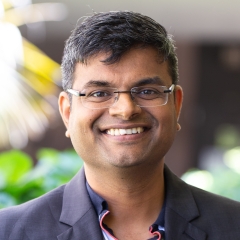
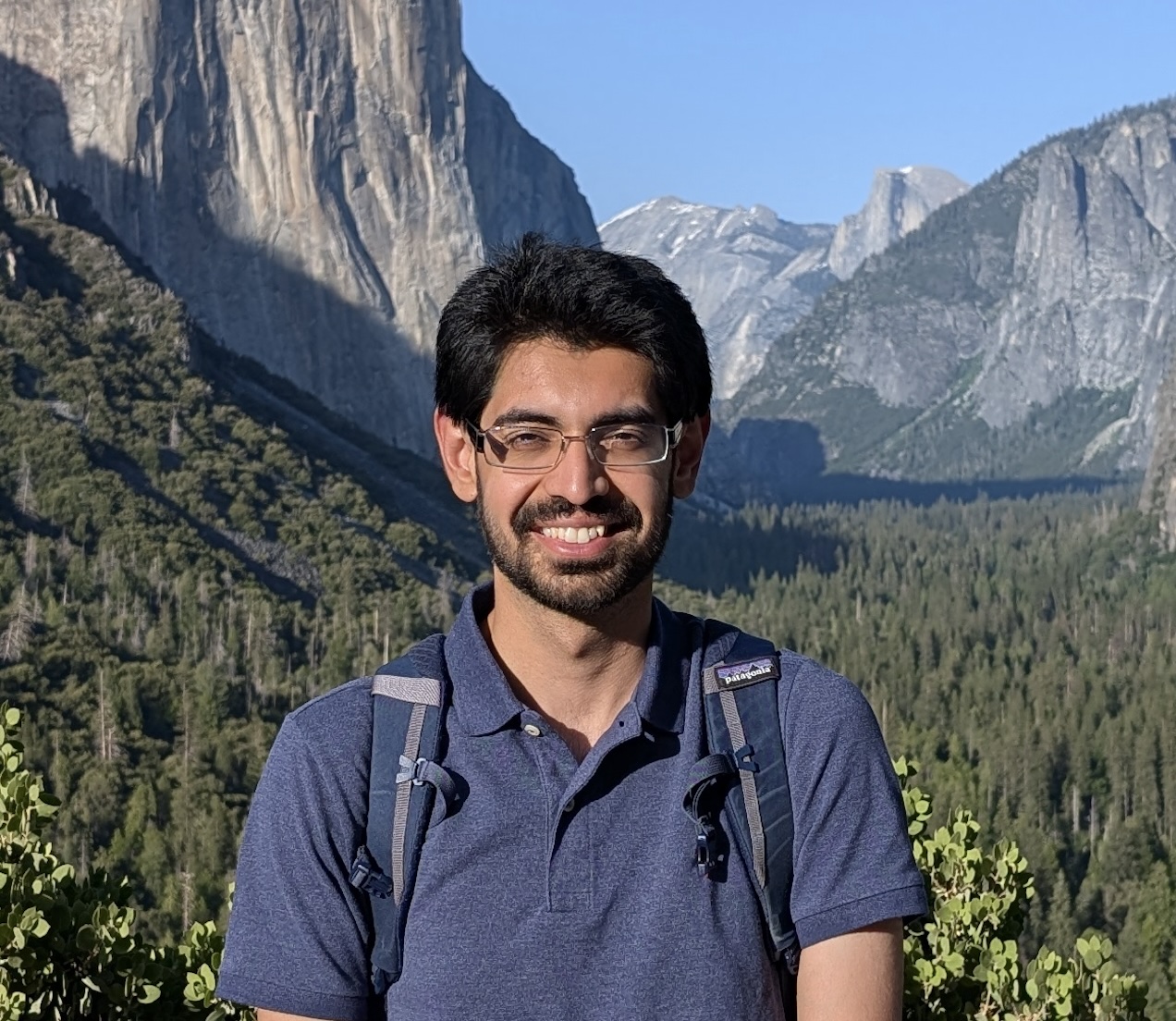
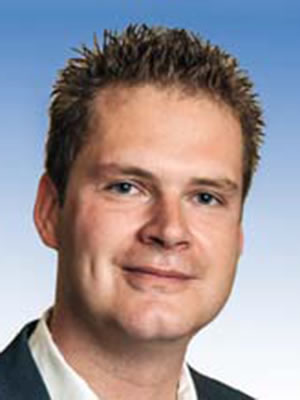
Ryan Doenges is a Distinguished Postdoctoral Fellow at Northeastern University in Boston, working with Amal Ahmed. He holds a PhD from Cornell University under Nate Foster and completed undergraduate studies with Zach Tatlock. His educational background includes: PhD in Computer Science, Cornell University Bachelor's degree, institution unspecified Doenges' research focuses on enhancing programming safety through type systems and verification, specializing in program logics for effects/resources like concurrency and memory. His doctoral work established formal semantics and verification frameworks for the P4 network programming language, ensuring termination and correctness. His publications (2017-2025) show consistent advancement from distributed systems verification to network programming (P4) and foundational program logics, culminating in categorical semantics for separation logic. Key themes include certified equivalence, stateful packet processing, and fibrational weakest preconditions. No scientific awards are documented in available sources. He formally supervised Tia Vu's Master's thesis (Cornell MS, now MIT PhD) and informally mentored eight students including Rudy Peterson (ETH Zürich PhD) and Amanda Xu (UW Madison PhD). No grant details are provided. Doenges collaborates with Amal Ahmed's group at Northeastern and previously worked in Nate Foster's Cornell research team focused on network programming languages.
Jason P. Jue is a Professor of Computer Science at the University of Texas at Dallas and director of the Advanced Networks Research Lab. He holds a Ph.D. in Computer Engineering from UC Davis (1999) following M.S. and B.S. degrees in Electrical Engineering from UCLA (1991) and UC Berkeley (1990). Research Interests: His work focuses on next-generation optical network architectures and protocols, including control and management in optical networks, multi-domain optical network protocols, and survivability methods. He has pioneered research in network slicing, software-defined networking, and AI-driven network optimization. Scientific Contributions: Recipient of the prestigious NSF CAREER Award (2002) Recognized for Ph.D. Education & Research (2005) at UTD's Erik Jonsson School Co-authored 3 IEEE Best Paper Awards (Globecom 2005, ONDM 2010, ICC 2011) Leadership Roles: Currently serves on editorial boards of IEEE Communications Surveys and Tutorials and Springer Photonic Network Communications . Former Associate Editor (2009-2012) for IEEE/OSA Journal of Optical Communications and Networking . Organized key conferences as Technical Program Chair of OptiComm 2000 and Co-Chair of multiple IEEE symposia. Lab & Team: Leads the Advanced Networks Research Lab at UT Dallas, mentoring students and collaborating with researchers like Genya Ishigaki, Riti Gour, and Ashkan Yousefpour. The lab focuses on fog computing, optical network survivability, and AI-driven network resource allocation.
Danny Raz is a Professor at the Technion - Israel Institute of Technology, specializing in computer science and networking. His work focuses on cloud computing, network function virtualization (NFV), resource allocation, and online algorithms. Institution: Technion - Israel Institute of Technology, Haifa, Israel Research interests include: Network Function Virtualization (NFV) and service chaining Stochastic and dynamic resource allocation Online algorithms in random-order models 5G/edge computing infrastructure Blockchain network analytics Over the past decade, his publications in venues like IEEE/ACM Transactions on Networking and INFOCOM address: Optimal deployment of cloud services TCAM-based classification and flow measurement Game-theoretic approaches to load balancing Cost-aware live migration and fault recovery Wireless network optimization (4G/5G) Collaborations with researchers like Yuval Shavitt, Joseph Naor, and Haim Kaplan highlight his interdisciplinary work bridging theory and practice in networking and cloud systems.
Dr. Teodor Buchner is a faculty member at the Faculty of Physics, Warsaw University of Technology. He received his doctoral degree on April 25, 2002, with a dissertation titled "Symbolic dynamics and local ordering measures of selected dynamical systems" under the supervision of Prof. Dr. hab. Jan Jacek Żebrowski. His research focuses on nonlinear dynamics, symbolic dynamics, heart rate variability analysis, electrocardiography, and biomedical physics. Dr. Buchner has made significant contributions to understanding the complex dynamics of physiological systems, particularly focusing on cardiac signals and their relationship with respiratory patterns. His work bridges physics, mathematics, and medical applications, developing novel analytical methods for physiological time series. Analysis of Dr. Buchner's recent publications reveals a strong interdisciplinary focus on applying advanced mathematical and computational techniques to cardiac electrophysiology. His research spans from fundamental theoretical investigations of signal propagation to practical clinical applications, including studies on the effects of SARS-CoV-2 on heart function and the development of deep learning models for ECG analysis. A notable trend is his persistent questioning of conventional assumptions, such as his groundbreaking work on the finite velocity of ECG signal propagation. Dr. Buchner has contributed to educational initiatives at Warsaw University of Technology, including quantum engineering education programs. His work extends beyond traditional physics research into areas such as cryptography and network security, demonstrating the breadth of his expertise and ability to apply physical principles across diverse domains. His research methodology combines theoretical modeling, experimental investigation, and advanced computational techniques to address complex problems in biomedical physics and beyond.
Arpit Gupta is an Associate Professor in the Department of Computer Science at the University of California, Santa Barbara (UCSB), where he co-directs the Systems and Networking Lab (SNL). He also serves as a Faculty Scientist at Lawrence Berkeley National Laboratory and holds the Marjorie & Charles Benton Opportunity Fund Fellowship at the Benton Institute. His research focuses on two main areas: developing production-ready machine learning systems for self-driving networks that ensure secure and performant connectivity with limited infrastructure, and enabling data-driven policymaking to address digital inequity through better broadband measurement and analysis. His work bridges networking, security, and analytics to solve real-world problems at scale. Gupta's research has resulted in several influential systems including Trustee (for ML interpretability in networks), BQT (for broadband plan analysis), PINOT (programmable data collection), netUnicorn (network data collection platform), and netFound (network foundation models). His team develops practical solutions that have been deployed in production environments, including at Tencent. NSF CAREER Award (2025) Google Research Scholar Award (2025) Google ML and Systems Junior Faculty Award (2025) IETF/IRTF Applied Networking Prize (2025, 2023) SIGCOMM Doctoral Dissertation Award (2024) Best Paper Honorable Mention, ACM CCS (2022) As a mentor, he has advised multiple award-winning students including Udit Paul who received the SIGCOMM Doctoral Dissertation Award. His research is supported by substantial funding from NSF (including a $700k CAREER award), DoE, Google, Verizon, Cisco, and state agencies including the California Public Utility Commission.
Jacqueline Walker is an Associate Professor in the Department of Electronic and Computer Engineering at the University of Limerick, Ireland. She is affiliated with the Centre for Research Training in Foundations of Data Science and the Centre for Robotics and Intelligent Systems. Education: Bachelor of Engineering (University of Western Australia, 1993) B.A. (University of Western Australia, 1988) Research Interests span telecommunications synchronization, nonlinear signal processing, and higher-order statistics with applications in biomedical, speech, and music domains. Key areas include: Satellite and network timing transfer Software Defined Radio (SDR) systems Musical sound synthesis and transcription Biomedical signal reconstruction (EMG/MEAP) Jitter analysis and metastability Recent Publications highlight trends in SDR for offshore energy networks (2023), direct-sequence spread spectrum (2021), and cross-disciplinary work in music processing (2014–2003) and biomedical signal analysis (2005–2001). Her work integrates spectral modeling, genetic algorithms, and bispectrum techniques. Labs & Teams: Active in the Centre for Research Training in Foundations of Data Science and Centre for Robotics and Intelligent Systems, focusing on data-driven and robotic applications.
Vishrant Tripathi is an Assistant Professor in the Department of Electrical and Computer Engineering at Purdue University's College of Engineering. He leads the Multi-Agent Intelligent Networks (MAIN) Lab , focusing on communication networks, robotics, and control theory. Prior to Purdue, he earned a Ph.D. in Electrical Engineering and Computer Science at MIT under Prof. Eytan Modiano, with foundational work on age of information metrics in wireless networks. Education: Ph.D. in EECS, MIT (2023) B.Tech. (Honors) in Electrical Engineering, Indian Institute of Technology Bombay (2015) Research interests span real-time wireless networking , multi-agent robotics , edge computing , and federated learning , with an emphasis on optimizing information freshness via age of information (AoI) frameworks. His group develops theoretical models and practical systems for wireless networks in search-and-rescue, industrial monitoring, and autonomous fleets. Recent publications include works on AoI-based scheduling, software-defined networking for UAV swarms, and correlation-aware resource allocation in wireless networks. His research has earned Best Paper Runner-Up Awards at ACM MobiHoc and Best Presentation Awards at LIDS Student Conferences. Teaching highlights include ECE 302 (Probabilistic Methods) at Purdue and TA roles at MIT for courses like 16.36 (Communication Systems) and 6.7700 (Fundamentals of Probability). He is a participant in MIT's Kaufman Teaching Certificate Program. Professional service includes co-chairing LIDS Student Conferences, organizing MIT's LIDS & Stats Tea Talks, and reviewing for IEEE journals and conferences. He also builds wireless systems for drones and autonomous vehicles in collaboration with industry partners like Google and Facebook.
Francesco Raviglione è Ricercatore a tempo determinato (Law 240/10 art.24-a) presso il Department of Electronics and Telecommunications (DET) del Politecnico di Torino. Con expertise in Connected Vehicles , Intelligent Transportation Systems , e Wireless Communication , svolge attività di ricerca e insegnamento. Università: Politecnico di Torino Dipartimento: Electronics and Telecommunications Ruolo: Assistant Professor Interessi di Ricerca: Si concentra su architetture di comunicazione per veicoli autonomi e connessi, con particolare attenzione a 5G-based Collective Perception , Time-Sensitive Networking , e ETSI Standards Compliance . Pubblicazioni Recenti: I suoi ultimi lavori trattano Telemetry Analysis , Dynamic Mapping , e Network Optimization per sistemi veicolari, presentati in conferenze IEEE e MedComNet 2024. Insegnamenti: Collabora in diversi corsi post-laurea tra cui Software-defined Communication Systems , Networking Technologies for Connected Vehicles , e Mobile and Sensor Networks . Patents: Co-inventore di un International Patent per V-Edge , una soluzione per Vehicular Edge Intelligence in bande di spettro non licenziate.
Alessandro Ugolini is an Associate Professor at the Department of Engineering and Architecture, University of Parma , Italy. His academic journey began with a Master’s (2012) and Ph.D. (2016) in Telecommunications Engineering from the University of Parma. Research Focus: Digital communications, satellite systems, underwater optical wireless, synchronization algorithms, and spectral efficiency. Key Labs: SPADiC Lab, University of Parma. Recent Research Trends include non-terrestrial networks, underwater optical communication, and waveform design for satellite links. His work bridges theoretical analysis (e.g., OTFS diversity, PLH code decoding) with practical implementations (e.g., LiDAR-based underwater systems). Scientific Awards: Best Paper Award, IEEE Wireless Communications and Networking Conference (WCNC 2019) Collaborations span institutions like the University of Luxembourg, Chalmers University of Technology, and agencies such as the European Space Agency (ESA-ESTEC). He has contributed to DVB-S2X optimization and interference exploitation in multibeam systems.
Prof. Dr.-Ing. habil. Peter Danielis holds an Extraordinary Professorship in Parallel Systems at the Institute of Computer Science, University of Rostock. His research focuses on parallel and distributed systems with applications in time-sensitive networking, autonomous underwater vehicles, and industrial IoT. He serves as Deputy Director of the Institute of Computer Science (IFI) and participates in editorial boards for multiple conferences and journals. His primary research interests span Parallel Systems , Distributed Computing , and Time-Sensitive Networking , with significant contributions to mobile opportunistic networks and real-time communication in industrial settings. Current projects include cooperative navigation of autonomous underwater vehicles (AUVs) and distributed communication networks for IoT applications. His work bridges theoretical research with industrial implementation, particularly in deterministic networking for critical infrastructure. Analysis of his recent publications (2020-2025) reveals strong emphasis on Time-Sensitive Networking (TSN) for industrial automation, with 7 of 15 recent papers directly addressing TSN scheduling, reliability, and traffic management. Secondary focus areas include Autonomous Underwater Vehicle coordination (3 papers) and Mobile Opportunistic Networks for urban sensing. His methodology combines simulation, protocol design, and real-world validation. Professional affiliations include membership in the Institute of Electrical and Electronics Engineers (IEEE). He serves as TPC member and editorial board member for various conferences and journals. His teaching portfolio covers High Performance Computing, Operating Systems, and Complex Software Systems. As Deputy Director of the Institute of Computer Science, he oversees academic operations while maintaining active research leadership. His laboratory work focuses on real-time communication systems and underwater vehicle networks, utilizing simulation frameworks like OMNeT++ for protocol validation. Current research directions include adaptive TSN scheduling and cooperative AUV navigation in dynamic environments.
Roberto Riggio is a Researcher at the Department of Information Engineering within the College of Engineering at Marche Polytechnic University (UNIVPM) in Italy. His work focuses on cutting-edge networking technologies with an emphasis on edge computing, 5G/6G networks, and software-defined networking solutions. His research has significant implications for the future of telecommunications infrastructure and distributed computing systems. Dr. Riggio's research interests center around network architecture and management, with particular expertise in edge computing, network function virtualization, and federated learning systems. His work explores the intersection of artificial intelligence and networking, developing novel approaches for resource allocation, service placement, and network optimization. His publications demonstrate a strong focus on practical implementations that address real-world challenges in telecommunications, particularly regarding quality of service, latency management, and security in next-generation networks. Analysis of his recent publications reveals a clear research trajectory focusing on the convergence of AI and networking technologies. His work increasingly emphasizes edge-based AI applications, particularly federated learning implementations that maintain data privacy while enabling distributed intelligence. He has made significant contributions to network slicing, zero-touch management, and O-RAN architectures, with applications spanning from vehicular communications to IoT systems. His publications consistently address the critical challenges of latency, resource allocation, and security in modern networked environments. Dr. Riggio actively contributes to the academic community through his research projects and publications, though specific awards or fellowships aren't documented in the available materials. His work appears in reputable venues focused on networking and telecommunications research. While specific details about his advising activities and grant funding aren't provided in the available documentation, his extensive publication record suggests active involvement in research projects. His work appears to be connected to several European research initiatives, particularly those focused on 5G and beyond networks, edge computing, and software-defined networking solutions. The collaborative nature of many publications indicates participation in multi-institutional research efforts. Based on his publication topics, Dr. Riggio likely participates in research groups or labs focused on networking and telecommunications at UNIVPM. His work on projects like AI@EDGE, O-RAN implementations, and network management platforms suggests involvement with specialized research teams developing next-generation networking solutions. His research has practical applications in areas including connected and automated mobility, IoT infrastructure, and content delivery networks.
Dr. Todd Humphreys is an Assistant Professor in the Department of Aerospace Engineering and Engineering Mechanics at The University of Texas at Austin. He directs the Radionavigation Laboratory, focusing on software-defined GPS receivers and LEO-based positioning systems. His research emphasizes defending against GNSS spoofing/jamming and exploring satellite navigation innovations. Research interests include satellite navigation, orbital dynamics, and signal processing with applications in ionospheric remote sensing and cybersecurity. He co-founded Coherent Navigation to develop hardened GPS systems using Iridium signals. Recent work focuses on LEO mega-constellations (Starlink, OneWeb) for resilient PNT solutions, spoofing detection via single/dual-satellite geolocation, and multi-modal fusion for urban navigation (TEXR Dataset). His publications address OFDM signal design for ranging, radar-inertial positioning, and anti-spoofing countermeasures. Current projects involve beamforming optimization for LEO terminals and TITAN inertial-terrain navigation.
David Brumley is a Professor of Electrical and Computer Engineering at Carnegie Mellon University with a courtesy appointment in the Computer Science Department. He previously served as Director of CyLab, CMU's Security and Privacy Institute, from 2015 to 2017. His research focuses on developing systems that automatically check software for exploitable bugs using program analysis with security-specific properties. Brumley received his Ph.D. in Computer Science from Carnegie Mellon University, an MS in Computer Science from Stanford University, and a BA in Mathematics from the University of Northern Colorado. Before his academic career, he served as a Computer Security Officer for Stanford University from 1998-2002. Brumley's research focuses on software security techniques that provide users with guarantees. His work sits at the intersection of model checking, formal methods, compilers, and logic, all applied to security problems. He develops efficient symbolic execution, reasoning about bit-level arithmetic in finite fields, sound decompilation, and decision procedures. His research also extends to network security and applied cryptography, focusing on efficient protocols, signature schemes, and privacy-preserving cryptography. A key aspect of his work involves binary code analysis, which allows reasoning about the security of code that actually executes. Brumley's publication record shows a consistent progression from theoretical foundations in program analysis to practical security systems. His work spans symbolic execution, fuzzing, exploit generation, and binary analysis. The Mayhem Cyber Reasoning System, which won the DARPA Cyber Grand Challenge, represents the culmination of his research vision for automated vulnerability detection and patching. His publications demonstrate how theoretical advances in program analysis can be translated into real-world security tools. USENIX Security Best Paper Awards (2003, 2007) International Conference on Software Engineering Distinguished Paper Award (2014) NSF CAREER Award (2010) United States Presidential Early Career Award for Scientists and Engineers (PECASE) (2010) Sloan Foundation Award (2013) DARPA Cyber Grand Challenge Winner ($2,000,000) (2016) Brumley has mentored numerous PhD students who have gone on to successful careers in academia and industry, including co-founders of ForAllSecure. He served as faculty mentor for the CMU Hacking Team Plaid Parliament of Pwning (PPP), which has been ranked #1 internationally and won DefCon 2013. His research has been supported by significant grants including DARPA programs and the NSF CAREER award. He also runs PicoCTF, an annual computer security contest for high school students that has become one of the largest cybersecurity education initiatives of its kind. Brumley leads the development of security systems through both academic research and commercialization. He is the CEO of ForAllSecure, which commercializes the Mayhem system developed through his academic research. His work bridges the gap between theoretical security research and practical security tools used by industry, creating a pipeline from academic innovation to real-world impact.
Mihai Lazarescu is Associate Professor in the School of Electrical Engineering, Computing and Mathematical Sciences at Curtin University. His research focuses on computer networks, cloud computing security, and wireless sensor networks with particular emphasis on energy efficiency and reliability. His research interests include green networking strategies for software-defined networks, energy management in rechargeable wireless sensor networks considering battery imperfections, and developing forensic readiness frameworks for cloud platforms and IoT ecosystems. Recent work addresses multi-stage upgrade optimization for SDNs with budget constraints. Additional research explores anomaly detection in network traffic, real-time industrial monitoring systems for rotary kilns, and robust stream clustering algorithms for dynamic datasets. His work combines theoretical modeling with practical applications in network infrastructure and cybersecurity.
Dr. Ryan Green is an Assistant Professor in the Department of Electrical and Computer Engineering at Mississippi State University. His academic background includes a Ph.D. in Engineering from Virginia Commonwealth University (2019), an M.S. in Electrical and Computer Engineering from Mississippi State University (2013), and a B.S. in Electrical Engineering from the same institution (2011). His research focuses on cutting-edge wireless technologies including: Smart-city communication infrastructures Internet of Things (IoT) network design Optically transparent antennas and RF filters Wireless medical telemetry systems Biocompatible implantable devices Advanced antenna measurement techniques Analysis of his recent publications reveals strong thematic emphasis on: Novel antenna designs using transparent conductive oxides and e-textiles Biomedical applications of wireless technology (implantable devices, biosensors) Environmental monitoring systems using unmanned platforms Innovations in electromagnetic propagation and measurement Smart-city network infrastructure solutions No scientific awards or student advising relationships are documented in the provided materials.