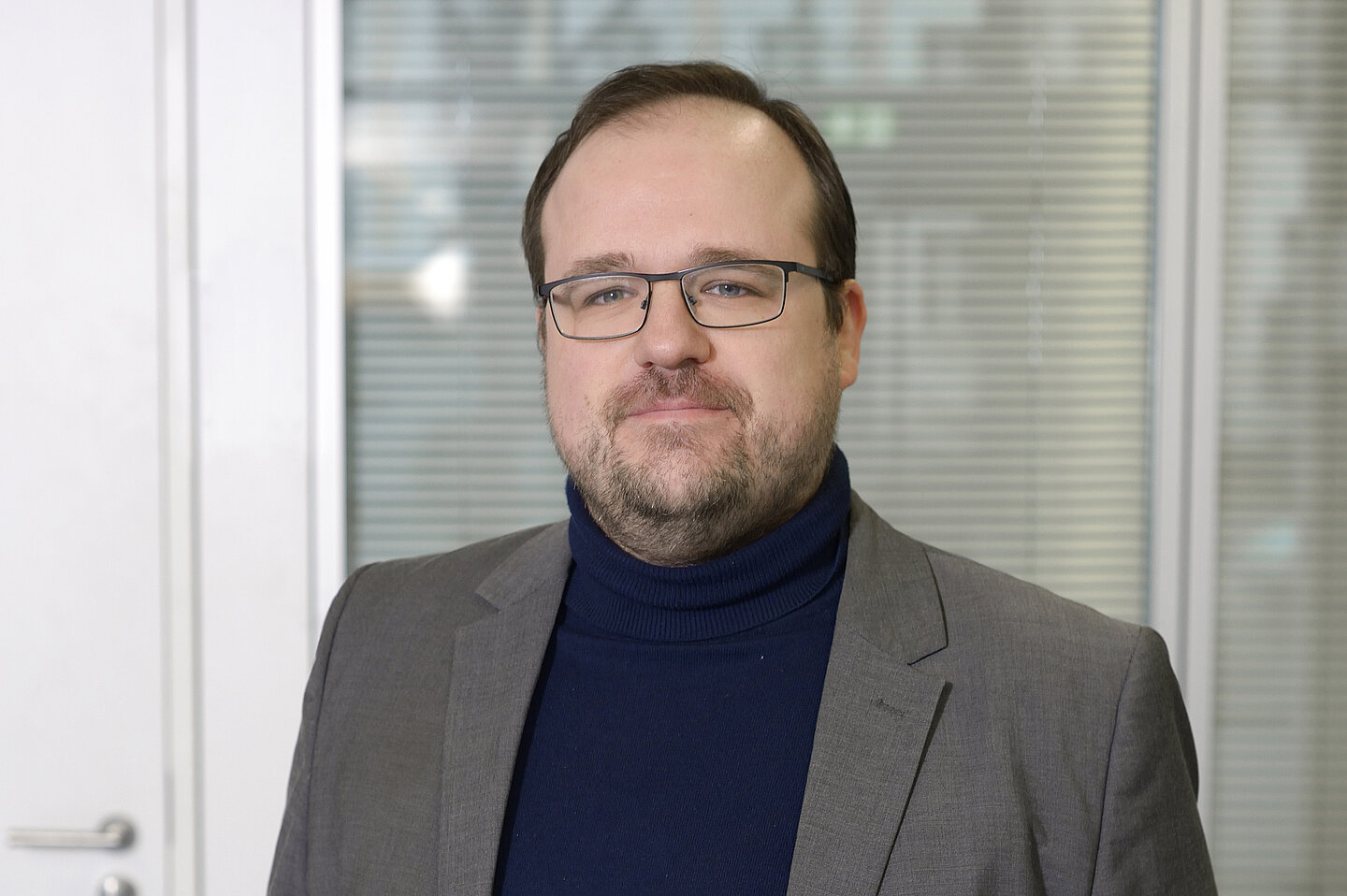
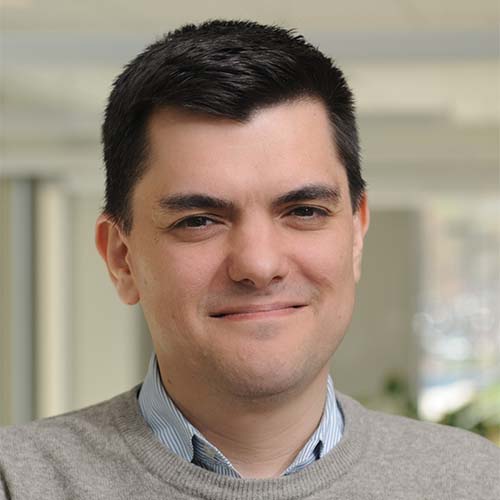
Bo Zhu is an Assistant Professor in the School of Interactive Computing at Georgia Institute of Technology. His research focuses on computational approaches for complex physical systems, including fluid dynamics, topology optimization, and robotics control. He holds a Ph.D. from Stanford University and completed postdoctoral research at MIT CSAIL. He has been recognized with the NSF Career Award (2022) and multiple best paper awards at SIGGRAPH conferences. Education: B.E.-M.S., Software Engineering, Shanghai Jiao Tong University Ph.D., Computer Science, Stanford University Postdoc, EECS, MIT Research Interests: Develops numerical algorithms and machine learning techniques to simulate fluidic systems, soft materials, and multi-scale phenomena. His work emphasizes vorticity preservation, real-time simulation, and physics-based AI integration. Key Contributions: Pioneered Particle Flow Map (PFM) methods for fluid simulation, developed open-source libraries like SimpleX and PFM Hub, and contributed to projects like Genesis physics engine. Over 50 peer-reviewed publications in top venues (SIGGRAPH, NeurIPS, IEEE TVCG). Awards: NSF Career Award (2022) Best Paper Honorable Mention (SIGGRAPH 2025) Best Paper Award (SIGGRAPH Asia 2024) Grants & Projects: Leads NSF-funded research on Physical AI Design, collaborating with Sandia National Labs on real-time CFD solvers. Active in open-source software development for computational physics and graphics.
Kavan Modi is a Professor at the School of Physics and Astronomy, Monash University. His research focuses on quantum information theory applied to dynamics, metrology, computation, thermodynamics, and relativity. He leads the Monash Quantum Information Science (MonQIS) group and serves as Director of the Centre for Quantum Technology at Transport for NSW (2022–2024). Education: B.Sc. Engineering Physics (Embry-Riddle Aeronautical University, 2001), M.A. Physics (University of Texas at Austin, 2004), Ph.D. Physics (University of Texas at Austin, 2008). Postdoctoral positions included the Centre for Quantum Technologies (Singapore, 2008–2011) and Clarendon Lab, Oxford (2011–2013). Joined Monash in 2014. Research interests center on quantum dynamics, non-Markovian processes, and their applications in quantum computing and information science. Projects include developing error correction codes, quantum algorithms for network analysis, and mitigating correlated noise in quantum systems. He has authored over 111 publications, with recent work emphasizing non-Markovian characterization, quantum process tomography, and topology-based quantum algorithms. Awards and grants include leadership in multiple Australian Research Council projects. Advising/Grants: Primary Chief Investigator in projects like 'Quantum Software Platform' (2023–2026) and 'Mitigating Correlated Noise in Quantum Machines' (2020–2021). Supervises graduate students and collaborates globally on quantum information science. Labs/Teams: MonQIS group focuses on foundational and applied quantum research, integrating theory and experimental collaborations.
Jonathan Hauenstein is the Robert and Sara Lumpkins Collegiate Professor in the Department of Applied and Computational Mathematics and Statistics at the University of Notre Dame, serving as Department Chair. He holds a Ph.D. from Notre Dame (2009) and M.S. from Miami University (2005). His research focuses on numerical algebraic geometry and computational methods for solving nonlinear equations, implemented in the Bertini software package. Applications span engineering, ecology, sports science, and machine learning. Education: Ph.D., Applied and Computational Mathematics, University of Notre Dame (2009) M.S., Mathematics, Miami University (2005) Research Interests: Development of numerical algorithms for polynomial systems, real algebraic geometry, and scientific computing. Key areas include homotopy continuation methods, parameter space decomposition, and applications in mechanism design, ecological modeling, and sports biomechanics. His work bridges theoretical mathematics with practical computational tools. Awards: Sloan Research Fellowship DARPA Young Faculty Award Army Research Office Young Investigator Award Office of Naval Research Young Investigator Award College of Science Research Award Advising & Grants: Advised numerous undergraduates, graduate students, and postdoctoral researchers. Active in securing grants for computational mathematics projects, including NSF-funded initiatives. His work emphasizes interdisciplinary collaboration between mathematics and engineering. Labs/Teams: Leads computational algebraic geometry research groups at Notre Dame, focusing on software development (e.g., Bertini) and numerical methods innovation.
Jiri Srba is a Professor at Aalborg University's Department of Computer Science, part of the Technical Faculty of IT and Design. He leads research in the Distributed, Embedded and Intelligent Systems group and contributes to projects like "ControLing wAter In an uRban Environment" and "Collective Adaptive System SynThesIs using Non-zero-sum Games". His office is located at Selma Lagerløfs Vej 300, 9220 Aalborg Øst, Denmark. Contact him at +4599409851 or srba@cs.aau.dk. His core research focuses on formal methods and applied computer science: Model checking and verification of concurrent systems Petri nets and their applications Network protocol verification and synthesis Distributed system correctness Automated reasoning for industrial systems His publication record shows strong emphasis on network verification, model checking optimization, and applying formal methods to environmental systems. Recent work integrates computer science with sustainable engineering, particularly in water management systems and energy control.
Tamon Stephen is a Professor in the Department of Mathematics at Simon Fraser University (SFU), part of the Faculty of Science. His research focuses on operations research, with an emphasis on combinatorial optimization, algorithms, discrete geometry, and computational biology. He holds a Ph.D. in Mathematics from the University of Michigan (2002). His work often bridges theoretical and computational aspects, addressing interdisciplinary applications. Stephen is affiliated with the Centre for Operations Research and Decision Sciences (CORDS) and has contributed to software tools for hypergraph transversals and colorful linear programming. He has taught courses such as Math 208W (Introduction to Operations Research) and has advised projects in metabolic network analysis and scheduling optimization. His office is located at the Surrey campus (SRYC 2886). Key research collaborations include studies on firefighter scheduling, nurse rostering, and metabolic pathway analysis. His methodologies often leverage algorithm design, polytope theory, and discrete mathematics. Stephen actively participates in academic service, organizing seminars and contributing to conferences such as the West Coast Optimization Meeting. His work emphasizes practical applications of theoretical results, with a focus on solving real-world optimization challenges.
Carlisle-Martin is an Associate Department Head and Professor of Practice in the Department of Computer Science & Engineering at Texas A&M University. They also serve as Director of the United States Air Force Academy Center for Cyberspace Research. Their research focuses on computer security, programming languages, and innovative computer science education techniques. Education: Ph.D., Computer Science, Princeton University (1996) B.S., Mathematics and Computer Science, University of Delaware (1991) Research Interests: Malware analysis and detection Cybersecurity frameworks for DNS and network protocols Visual programming tools like RAPTOR for education Ada language modernization and integration Cybersecurity education through CTF competitions Awards: 2016: Meritorious Civilian Service Award (USAF) 2014: SANS Institute Security Award 2009: ACM Distinguished Educator 2008: Colorado Professor of the Year 2007: Arthur S. Flemming Award Advising & Grants: Known for mentoring through cybersecurity initiatives and leading the USAF Academy's cyberspace research programs. No specific grant details listed, but their work aligns with defense and education funding priorities. Labs/Teams: Directs the USAF Academy's Center for Cyberspace Research, focusing on applied cybersecurity solutions and educational outreach.
Alastair F. Donaldson is a Professor and Director of Research in the Department of Computing at Imperial College London, where he leads the FastPL research group. His work bridges formal methods, software testing, and programming languages, with a focus on enhancing the reliability of high-performance and parallel software systems. He has held key roles including Director of Research (since 2023) and previously served as Lecturer (2011–2014), Senior Lecturer (2014–2017), and Reader (2017–2020) before being promoted to Professor in 2020. His research interests include formal verification, compiler testing, GPU programming, concurrency, and fuzzing. He has made significant contributions to the verification of GPU kernels, metamorphic testing of graphics drivers, and the development of tools like GPUVerify and GraphicsFuzz. His work combines theoretical rigor with practical impact, demonstrated by the acquisition of his startup GraphicsFuzz by Google in 2018 and his subsequent roles as Senior Software Engineer and Visiting Researcher at Google. His recent publications reflect a sustained focus on compiler and system reliability, with trends in fuzzing, formal specification, and automated testing of complex systems such as WebGPU, CXL cache coherence, and large language models for code generation. His work increasingly integrates empirical validation with formal techniques to uncover subtle bugs in real-world systems. Scientific awards and recognitions include: 2017 BCS Roger Needham Award EPSRC Early Career Fellowship Fellow of the British Computer Society Best Paper awards at EuroSys 2024, MET 2021, IISWC 2019, IWOCL 2019, and ICST 2016 Best Industry Paper at ICST 2024 ACM SIGSOFT Distinguished Paper at ISSTA 2023 ACM SIGPLAN Most Influential OOPSLA Paper Award (2012 paper), awarded in 2022 Best Student Paper at PPoPP 2014 He has advised numerous PhD students and leads a vibrant research group. He has secured significant research funding and collaborates extensively with industry and academia. His service includes leadership roles such as General Chair of PLDI 2020, PC Chair of ECOOP 2019, and Steering Committee Chair of PLDI (2022–2025). He also serves on the advisory board of PACM-PL and on program committees for top venues including POPL, OOPSLA, PLDI, ICSE, and ISSTA. He leads the FastPL research group, which focuses on the design and implementation of programming tools and techniques for reliable software. The group conducts cutting-edge research in compiler testing, formal methods, and high-performance systems, fostering collaboration across academia and industry.
Caroline Trippel is an Assistant Professor in the Departments of Computer Science and Electrical Engineering at Stanford University. Her research focuses on ensuring correctness and security in computer systems through formal methods, with particular emphasis on hardware verification, memory consistency models, and mitigating vulnerabilities like Spectre/Meltdown. She previously worked at Facebook’s FAIR SysML group before joining Stanford. Education: PhD in Computer Science, Princeton University BS in Computer Engineering, Purdue University Her work has influenced the RISC-V ISA memory consistency model and produced tools like CheckMate, which automatically synthesizes hardware exploits for security verification. She explores privacy-preserving ML, ML-driven hardware optimizations (e.g., neural recommendation), and datacenter reliability. Her research has earned awards including the 2020 ACM SIGARCH Dissertation Award and NVIDIA Fellowship. Key contributions include: Formal analysis of RISC-V memory models Exploitation synthesis frameworks (CheckMate) Hardware-software contracts for security Defenses against microarchitectural side-channel attacks Current projects include: VeriCoder: LLM-enhanced RTL code verification Multi-μPATH synthesis for security validation Near-data processing (RecSSD) for recommendation systems
Sharad Malik is the George Van Ness Lothrop Professor of Engineering at Princeton University's Department of Electrical and Computer Engineering. His research focuses on designing functionally correct and secure computing systems, combining system design with mathematical modeling for verification. He pioneered the Instruction-Level Abstraction (ILA) model for SoC verification and has contributed extensively to Boolean satisfiability (SAT) solvers. Education: PhD (1990), M.S. (1987) in Computer Science from UC Berkeley; B.Tech. (1985) in Electrical Engineering from IIT Delhi. Research Interests: Formal Verification of Digital Systems Hardware Security and Trust Boolean Satisfiability Solvers System-on-Chip (SoC) Design Accelerator-rich Platform Architectures Notable Achievements: IEEE CEDA A. Richard Newton Technical Impact Award (2017) 2013 IEEE/ACM DAC Most Cited Paper Award Princeton President’s Distinguished Teaching Award (2009) Advising & Labs: Leads the Malik Group, advising over 50 graduate students and postdocs. Active in postdoc recruitment and mentorship programs.
Prof. Dr. Oliver Crönertz serves as Dean and Professor of Business Administration and IT-Supported Business Processes at the Faculty of Digital Transformation , HTWK Leipzig. His work bridges digital transformation with business management, focusing on interdisciplinary project management, digital business models, and sustainability. Current roles: Dean, supervising professor for HTWK Robots/nao Team Research areas: Digital Transformation, Business Analytics, Industry 4.0, Stoffstrommanagement Research Trends : Recent publications emphasize digital solutions for environmental management, business process optimization, and smart urban logistics. His work connects Industry 4.0 with financial sustainability and societal impacts of digitalization. Projects : Leads Mittelstand-Digital Zentrum Leipzig-Halle, involved in EXIST-Potentiale, Future Parking, and FAssMII (Feedback-based E-Assessment in STEM).
Sara Vinco is an Associate Professor at the Department of Control and Computer Engineering (DAUIN), Politecnico di Torino, Italy. She specializes in battery simulation, digital twins, and energy-efficient design automation for heterogeneous embedded systems, aligning with Industrial and Information Engineering (Area 0009) and ERC sectors including Computer Architecture and Machine Learning . Her research focuses on advancing cyber-physical systems through simulation frameworks like SystemC-AMS, enabling holistic modeling of analog, digital, and thermal domains. Key projects include data-driven digital twins for EV batteries and low-area digital circuits in industrial/medical applications, supported by commercial contracts such as C-based virtual prototyping. Her recent publications (2022-2023) emphasize machine learning for battery SOH/SOC estimation , energy monitoring in production lines , and multi-domain fault modeling . These works span journals like IEEE Transactions and conferences including DATE and ISLPED. Awarded the FFABR 2017 grant and IEEE FDL Best Paper Award 2011 , she also chairs editorial boards for IEEE Transactions on CAD and DATE Conference. She supervises PhD students Giovanni Pollo (Digital Circuits) and Khaled Alamin (EV Battery Twins), reflecting her leadership in smart systems design.
Hakan Aydin is a Professor and Director of the PhD Program in the Department of Computer Science at George Mason University's Volgenau School of Engineering. He has been teaching at George Mason University since 2001 and has established himself as a leading researcher in real-time embedded systems and energy-aware computing. Education: PhD in Computer Science from the University of Pittsburgh (2001) Hakan Aydin's research primarily focuses on sustainable computing, real-time embedded systems, fault tolerance, Internet-of-Things, and cyber-physical systems. His work bridges theoretical foundations with practical implementations, particularly in energy management for real-time systems. He has developed innovative techniques for reliability-aware power management, dynamic voltage scaling, and energy harvesting in wireless sensor networks. His research has significant implications for extending battery life in mobile devices, improving reliability in safety-critical applications, and enabling sustainable computing practices. Aydin's publications reveal a consistent research trajectory centered around energy efficiency and reliability in real-time systems. His work spans theoretical algorithm development, system-level implementation, and experimental validation. A notable trend is the evolution from single-processor systems to multicore and heterogeneous architectures, reflecting industry trends. His recent work increasingly addresses security aspects of real-time systems and the integration of IoT technologies. Scientific Awards: National Science Foundation CAREER Award (2006) George Mason University Computer Science Department Teaching Award (2006, 2009) Best Paper Award at IEEE Green and Sustainable Computing Conference (IGSC'20) Best Student Paper Award at IEEE International Conference on Embedded Software and Systems (ICESS'15) Best Paper Award at IEEE International Conference on Embedded Computing (EmbeddedCom'14) Best Paper Award at International Workshop on Highly-Reliable Power-Efficient Embedded Designs (HARSH'13) Best Paper Award at ACM International Conference on Modeling, Analysis and Simulation of Wireless and Mobile Systems (MSWIM'11) Hakan Aydin has advised seven PhD students to completion, including Vinay Devadas (2011), Baoxian Zhao (2012), Bo Zhang (2012), Mohammad Atiqul Haque (2016), Maryam Bandari (2016), Arda Gumusalan (2019), and Abhishek Roy (2021). His research has been generously supported by the National Science Foundation through multiple grants, including CSR: Small: Collaborative Research: Towards Reliability-Centric Real-time Computing on Heterogeneous Chip Multiprocessor Systems (2014-2017), CSR: Small: Energy Harvesting for Performance Sensitive Wireless Sensor Networks (2011-2015), and CSR: Small: Collaborative Research: Generalized Reliability-Aware Power Management for Real-Time Embedded Systems (2010-2014). Prof. Aydin has held significant leadership roles in the academic community, serving as the Technical Program Committee Chair of the IEEE RTAS 2011 and General Chair of IEEE RTAS 2012. He is also a member of the Editorial Board of Journal of Real-Time Systems (Springer). His work has established foundational principles in reliability-aware energy management for real-time systems, influencing both academic research and industrial practices in embedded computing.
Wang Jianmin serves as Professor and Doctoral Supervisor at Tongji University's School of Art and Media, concurrently holding the position of Vice Dean since 2014. With a computer science PhD from Sun Yat-sen University, he bridges engineering and media arts through pioneering research in intelligent communication systems and digital media interfaces. His work focuses on human-centered design for emerging technologies, particularly in automotive and virtual environments. His academic foundation includes: PhD in Engineering (Computer Software and Theory), Sun Yat-sen University (2003) Master's in Computational Mathematics, Sun Yat-sen University (1999) Bachelor's in Computational Mathematics, Nankai University (1996) Professor Wang's research centers on intelligent communication systems and digital media art, with significant contributions to automotive human-machine interfaces (HMI), virtual reality applications, and user experience methodologies. His investigations into driver-robot transparency, augmented reality navigation, and mixed-reality educational platforms demonstrate interdisciplinary innovation connecting computer science, cognitive psychology, and design theory. Current projects explore AI-driven media systems for urban environments and safety-critical interaction frameworks. Analysis of his recent publications reveals a cohesive research trajectory focusing on automotive HMI (40% of output), human-robot interaction (30%), and mixed reality applications (30%). His work consistently emphasizes experimental validation through driving simulators and user studies, yielding practical design guidelines for industry implementation. The interdisciplinary nature spans computer science, cognitive ergonomics, and media studies, with increasing emphasis on AI integration in communication systems. His scientific recognition includes national and provincial awards for innovation in human-computer interaction and educational technology: 2019 China Industry-University-Research Innovation Award for automotive HMI systems 2020 China User Experience Alliance Excellence Award 2012 Guangdong Dingying Science and Technology Award Multiple national/provincial science progress awards (2001-2009) 2020 Tongji University Teaching Achievement Award for curriculum development As an educator, Professor Wang mentors graduate students in national design competitions including the 'Core Cup' Future Automotive HMI Challenge and International User Experience Innovation Competition. His research program is supported by substantial funding from diverse sources: National Grants: National Natural Science Foundation projects on driver behavior modeling and cognitive testing Ministry of Education: 15+产学合作 projects for virtual simulation labs and curriculum development Shanghai Municipal: Publicity Department funding for smart city media research Industry Partnerships: Huawei (intelligent vehicle HMI), SAIC Motor (AR-HUD design), and automotive electronics firms He directs Tongji's Media Experiment and Practice Teaching Center and the All-Media Research Institute, leading teams developing virtual simulation platforms for emergency news reporting, intelligent vehicle interaction testing systems, and mixed reality educational tools. Current initiatives focus on AI-enhanced media art for urban applications and next-generation HMI frameworks for autonomous mobility solutions.
Akio Kodaira is affiliated with the Institute of Science Tokyo as a researcher. His work focuses on soft robotics, mechatronics, and advanced actuator design using materials like IPMC (Ionic Polymer-Metal Composites) and flexible fuel cells. Primary institution: Institute of Science Tokyo Research Interests Kodaira's research spans the development of soft robots, thin-film actuators, and bio-inspired mechanical systems. Key areas include IPMC fabrication techniques, energy-efficient actuators using Au/Pt electrodes, and 3D crafts using paper/fabric materials. Publication Trends Recent publications emphasize soft robotics, material hybridization (e.g., paper/fabric-assisted IPMC), and flexible fuel cell applications. His collaborations with researchers like Koichi Suzumori and Hiroyuki Nabae highlight interdisciplinary efforts in mechatronics and mechanical engineering. Collaborations Frequent co-authors include Koichi Suzumori (Professor, Institute of Science Tokyo), Kinji Asaka , and Hiroyuki Nabae . Projects involve thin-film robotics, McKibben muscles, and simulator-based navigation software.
Vinod M. Vokkarane is a Professor in the Department of Electrical and Computer Engineering at the University of Massachusetts Lowell, where he serves as Director of the Center for Smart Cyber-Physical Systems (SCyPS) and Director of Advanced Computer Network Labs. Previously, he was an Associate Professor at University of Massachusetts Dartmouth from 2004 to 2013 and a Visiting Scientist at MIT's Research Laboratory of Electronics from 2011 to 2014. His extensive research portfolio spans multiple domains of advanced networking and cyber-physical systems. Dr. Vokkarane earned his educational foundation with a B.S. from University of Mysore, India (1999), followed by an M.S. (2001) and Ph.D. (2004) in Computer Science from the University of Texas at Dallas. His dissertation focused on optical burst-switched networks, establishing the foundation for his future research trajectory. His research interests center on Cyber-Physical Systems, Network Optimization, Reliability, Smart Grids, and Cyber-Security, with particular expertise in the design, analysis, and modeling of architectures, protocols, and algorithms for ultra-high speed networks including Optical networks, Grid/Cloud networks, and Big-data networks. His work bridges theoretical foundations with practical implementations, often addressing critical challenges in network reliability, security, and efficiency. His research has received significant recognition through numerous best paper awards and substantial external funding. Analysis of his recent publications reveals a clear evolution toward increasingly sophisticated integration of cyber-physical systems with power infrastructure, particularly in the areas of grid resilience and observability. His work has expanded from fundamental optical networking research to address critical infrastructure challenges, with a growing emphasis on machine learning applications for network optimization and power system monitoring. The recent focus on PMU networks, disaster resilience, and cyber restoration demonstrates his strategic pivot toward addressing national security and critical infrastructure protection challenges. UMass Dartmouth Scholar of the Year Award (2011) UMass Dartmouth Chancellor's Innovation in Teaching Award (2010-11) University of Texas at Dallas Computer Science Dissertation of the Year Award (2003-04) Multiple Best Paper Awards including IEEE GLOBECOM 2005, IEEE ANTS 2010, ONDM 2015, ONDM 2016, and IEEE ANTS 2016 Texas Telecommunications Engineering Consortium Fellowship (2002-03) Dr. Vokkarane has successfully mentored numerous graduate students who have contributed significantly to his research projects, with several going on to successful careers in academia and industry. His research has been consistently supported by major funding agencies including NSF, DOE, and USMC, with recent projects totaling over $5 million in funding. Current projects include Unified Post-Disaster Restoration Planning for Cyber-Physical Power Distribution Systems (ONR, $550K), CyberCARE: Northeast University Cybersecurity Center (DOE, $3.5M), and Flexible Spectrum Allocation in Next-Generation Optical Networks (NSF, $350K). He leads the Center for Smart Cyber-Physical Systems (SCyPS) and Advanced Computer Network Labs at UMass Lowell, where his research teams work on cutting-edge problems in network architecture, cyber-physical security, and infrastructure resilience. His labs collaborate extensively with national laboratories and industry partners to translate theoretical advances into practical solutions for real-world infrastructure challenges.